
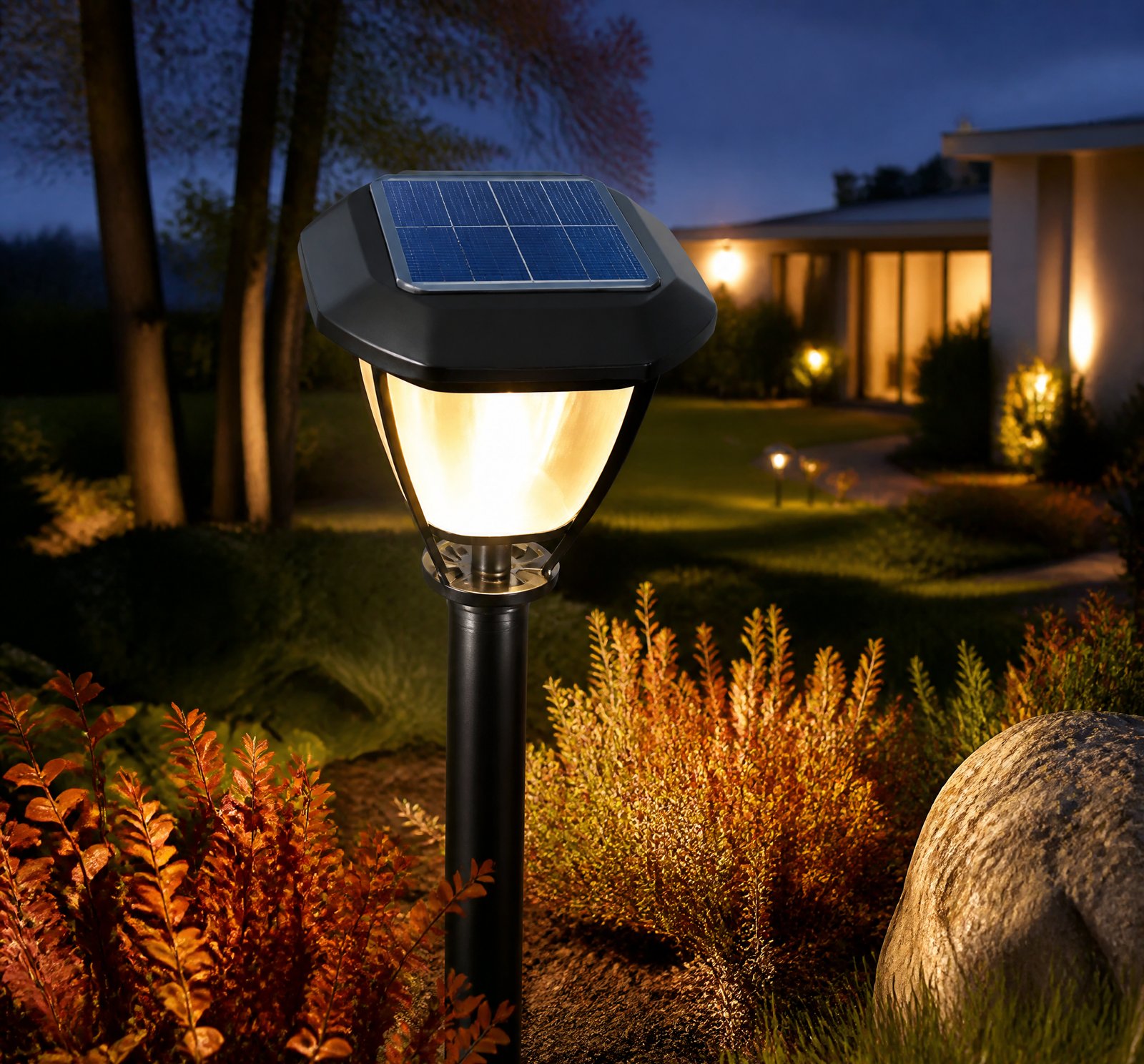
> Quick answer: Perovskite and tandem-junction solar cells could surpass polycrystalline silicon in consumer solar lamps by achieving up to 35% efficiency [3], offering higher performance and tunability. However, instability under moisture, heat, and UV light [3], along with scalability hurdles [7], remain key barriers to widespread adoption in Romania’s outdoor environments.
Perovskite solar lamps are no longer science fiction—they’re on the horizon. As Romania pushes toward renewable energy independence, a new generation of solar lamps powered by perovskite and tandem-junction cells could revolutionize off-grid lighting. These emerging technologies promise greater efficiency and flexibility than traditional polycrystalline silicon (Si) cells, but real-world deployment still faces persistent challenges.
Perovskite’s Efficiency Edge Over Silicon
Perovskite solar cells have surged in prominence due to their strong light absorption and efficient charge transport [6]. When paired with silicon in tandem junctions, they achieve near 35% conversion efficiency—dramatically surpassing standalone silicon or perovskite cells [3]. This is because perovskites excel at capturing blue light, while silicon efficiently absorbs red and infrared wavelengths [4]. Together, they create a broader spectrum capture, maximizing energy output from sunlight.
This tunability is a major advantage over fixed Si cells [3], allowing perovskite-based lamps to adapt to varying light conditions across Romania’s diverse climate zones—from high-altitude regions to coastal cities.
| Technology | Efficiency (Lab) | Key Advantage | Stability Challenge [n] |
|–––-|––––––|–––––-|–––––––––|
| Polycrystalline Silicon | ~18–22% | Proven, stable | High thermal stability |
| Single-Junction Perovskite | 27% [8] | Lightweight, flexible | Moisture, UV, heat [3] |
| Perovskite/Si Tandem | Up to 35% [3] | Broad-spectrum capture | Degradation under stress [12] |
| Triple-Junction Perovskite/Si | 27% (1-year test) [22] | High theoretical output | Outdoor degradation [22] |
Tandem Junctions: Pushing Efficiency Limits
Tandem solar cells stack materials with different bandgaps to capture more of the solar spectrum. The most promising configuration combines wide-bandgap perovskites with crystalline silicon or low-bandgap perovskites [1]. Theoretically, two-junction tandems can reach up to 42% efficiency [17], though real-world performance is limited by absorption losses [17].
Oxford PV’s flexible single-junction perovskites have already hit 27% efficiency in lab settings, verified by Japan’s AIST [8]. If refined, multi-junction systems could exceed 45% efficiency—transforming solar lamps into ultra-efficient, compact energy sources.
Stability Challenges in Real-World Conditions
Despite their promise, perovskite cells degrade rapidly when exposed to oxygen, moisture, heat, or prolonged UV radiation—conditions common in Romanian outdoor environments [3]. One-year outdoor testing revealed significant degradation paths in perovskite modules [22], highlighting the need for improved durability.
Researchers at OIST identified internal material interactions—particularly between the electron-extracting titanium oxide layer and the perovskite layer—as a key cause of rapid deterioration [12]. By inserting a polymer layer between these components, they reduced degradation, offering a viable solution for long-term stability [12].
Scalability: From Lab to Romanian Homes
While perovskites show great scalability potential [7], large-scale deployment in consumer solar lamps remains hindered by durability concerns in solar power stations [7]. Public perception also lags, especially due to the presence of lead in efficient perovskites, raising environmental fears [7].
Still, thin-film perovskite applications—such as ultra-thin coatings on car roofs, building facades, or even phone backs—are envisioned as a decentralized alternative to bulky silicon panels [8]. This could drastically reduce solar infrastructure needs and PV waste, which arises from high material loss during wafer production [15].
Environmental and Cost Advantages
Perovskite-based tandem junctions may reduce the need for additional solar panels, cutting down on future PV waste [15]. Thin-film production methods can also detect and prevent chemical damage early, lowering manufacturing costs [24].
Key Takeaways
- Perovskite-silicon tandem cells can reach up to 35% efficiency, far exceeding traditional polycrystalline silicon [3].
- Degradation from moisture, heat, and UV remains a major barrier, especially in outdoor solar lamps [3].
- OIST researchers improved stability by inserting a polymer layer between reactive layers [12].
- Scalability is promising, but public perception of lead content and long-term durability must be addressed [7].
- Thin-film perovskite applications could decentralize solar energy use in Romania [8].
References
- [1] Perovskites_The_hottest_material_in_solar_cells_Laser__d2fb8c12 — magazine
source passage
near-term. Outlook What makes perovskites the center of the action for large-scale photovoltaics is evident in Figure 1. Their efficiencies are rising faster on the chart than any other emerging technologies, so further research and development is likely to be fruitful. Perovskites also show particular promise for solving the high-priority problem of replacing fossil fuels in generating the vast amount of power our advanced society requires. Tandem cells using a wide bandgap perovskite junction with crystalline silicon or with a low-bandgap perovskite offers a logical improvement to increase output power at reasonable cost. Other design configurations are also promising. Schelhas cites progress in bifacial photovoltaics, which collect light on their back or bottom as well as on the sun-facing side of a solar farm. Removing the metal layer from the bottom of crystalline solar cells lets them collect light reflected from the grass below the collecting panels. She doesn’t expect it to boost energy collection as much as tandem cells, but it would help, and it could be added to tandem cells if the site was suitable. Another option is coating windows of glass-walled buildings with photovoltaic films that absorb some light, but not so much that they darken the inside. Silicon is not an option because it absorbs visible light, but perovskites and other thin-film materials could work. Windows won’t get us terawatts of electricity to generate half of the world’s electricity by 2035, Ha
- [3] Undecided_with_Matt_Ferrell__Is_Solar_About_to_Get_WAY_Better_I_Did_the_Math__w2r9_0NxTW8 — youtube
source passage
light into electricity. Silicon is stuck at one setting, but perovskites can be tuned to match different conditions, which is why they can be so much more efficient. I've got videos that go into more detail if you're interested that I'll link to in the description. The tunability of perovskites also unlocks the power of tandem solar cells. We can tune the perovskites to eat a different wavelength of light from what the silicon can. A light in the range of 380 to 700 nanometers slams into the perovskite and works through that system as normal, but near infrared light at wavelengths of about 800 to 2,500 pierce through the perovskites. Normally, that would just be lost, but a layer of silicon behind the perovskite can absorb it. By working in, well, tandem, the solar cells duo can let us double dip and extract more energy from that same beam of light. They can hit conversion efficiencies of near 35%, which is much better than silicon or perovskite on their own. Now, one final thing before we get into the nitty-gritty of the math, all of the advantages of perovskites come with some drawbacks. Perovskites are temperamental little crystals that degrade when exposed to moisture, heat, and prolonged UV radiation. It's a big problem for any device that's meant to soak up the sun, especially if it wants to compete with that 25-plus year longevity of the humble silicon cell. Overcoming this challenge has been at the forefront of perovskite research. A few companies like Oxford PV have
- [4] Solar-cell_efficiency_-_Wikipedia__113bcf6c — wikipedia
source passage
efficiency, thin film materials show a lot of promise for solar cells in terms of low costs and adaptability to existing structures and frameworks in technology.[67] Since the materials are so thin, they lack the optical absorption of bulk material solar cells. Attempts to correct this have been demonstrated, such as light-trapping schemes promoting light scattering.[68] Also important is thin film surface recombination. Since this is the dominant recombination process of nanoscale thin-film solar cells, it is crucial to their efficiency. Adding a passivating thin layer of silicon dioxide could reduce recombination. Tandem solar cells combine two materials to increase efficiency. In 2022 a device was announced that combined multiple perovskite with multiple layers of silicon. Perovskites demonstrate a remarkable ability to efficiently capture and convert blue light, complementing silicon, which is particularly adept at absorbing red and infrared wavelengths. This unique synergy between perovskites and silicon in solar cell technologies allows for a more comprehensive absorption of the solar spectrum, enhancing the overall efficiency and performance of photovoltaic devices. The cell achieved 32.5% efficiency.[69] – Environmental impact of the energy industry – Energy efficiency – Thermodynamic efficiency limit – Shockley-Queisser limit – Schygulla, Patrick; Beutel, Paul; Heckelmann, Stefan; Höhn, Oliver; Klitzke, Malte; Schön, Jonas; Oliva, Eduard; Predan, Felix; Schachtner, M
- [6] OIST_researchers_improve_perovskite_technology_for_both_solar_cells__56a8995b — magazine
source passage
# OIST researchers improve perovskite technology for both solar cells and LEDs Source: Blog/Web URL: https://www.laserfocusworld.com/test-measurement/research/article/16569113/oist-researchers-improve-perovskite-technology-for-both-solar-cells-and-leds Author: John Wallace Date: 2017-08-21 Perovskite structures have optoelectronic properties that include strong light absorption and good charge transport; these qualities make the perovskite structure particularly well-suited for the design of electronic devices, from solar cells to light sources. The accelerating progress in perovskite technology over the past few years suggest new perovskite-based devices will soon outperform current technology in the energy sector (that is, if perovskite's stability and lifetime problems can be solved). The Energy Materials and Surface Sciences Unit at the Okinawa Institute of Science and Technology Graduate University (OIST; Okinawa, Japan) led by Yabing Qi is at the forefront of this development, with now two new scientific publications focusing on the improvement of perovskite solar cells and a cheaper and smarter way to produce emerging perovskite-based LEDs. Increasing perovskite solar cell lifetimes In just seven years of development, the efficiency of perovskite solar cells has increased to almost rival, and is expected to soon overtake, that of commercial photovoltaic cells, but the perovskite structure still plagued by a short lifespan due to stability issues. OIST scientists have m
- [7] Perovskites_The_hottest_material_in_solar_cells_Laser__d2fb8c12 — magazine
source passage
everyone is looking toward commercialization. The quest now is for the best perovskite for the job. The 2020 roadmap for photovoltaic technology1 says perovskite solar cells are the only polycrystalline thin-film technology offering both efficiency over 20% and a bandgap of at least 1.7 eV. Matching those wideband materials with narrowband materials such as silicon could produce high-efficiency tandem solar cells for power generation. But challenges remain. For instance, all efficient photovoltaic perovskites contain lead. Although the amounts are small and solar cells typically remain encapsulated, it’s hard to sell anything incorporating lead as a green technology to the public. Another concern is the durability of perovskites in large solar power stations—a question that could be settled by long-term field trials assessing the stability. Successful field demonstrations of perovskite modules would be an important step toward market entry. Schelhas is optimistic. “Many of us who work on perovskites think the material has demonstrated enough progress that we can fix any remaining problems. Passivation can often fix interfaces, which are big issues for materials [in general]. Even silicon has its issues.” The 2020 Roadmap further observes that perovskites “have multiple potential pathways to terawatt-scale energy production.” Scaling up for the near-term Although perovskites look like the future for high-volume photovoltaic generation of electric utility power, we can’t wait f
- [8] Undecided_with_Matt_Ferrell__Why_These_Quirky_Advances_Could_Change_Solar_Forever__XAFzRFth1lE — youtube
source passage
of complementary solar cells all tuned to different wavelengths of light. Working together, they can capture more of the light spectrum, and thereby get more juice out of a given amount of sunlight. Oxford’s new flexible perovskites hit 27% efficiency in lab conditions, which has been verified by Japan’s National Institute of Advanced Industrial Science and Technology (AIST). And this could just be the start. Shuaifeng Hu from the Oxford team noted that their device jumped from an efficiency of 6% to 27% in just five years, suggesting future iterations could exceed 45% with further multi-junction tweaks. That would be incredible… if they can pull it off. This is all very well and good, but it’s also not that strange, right? Perovskites have been known to outperform silicon for a while. And while a 45% efficiency could be a game-changer, it’s still just a “could.” So, let’s get weird. The Oxford team believes this ultra-thin coating could turn everyday objects into solar panels. As team member Junke Wang puts it: ”We can envisage perovskite coatings being applied to broader types of surface to generate cheap solar power, such as the roof of cars and buildings and even the backs of mobile phones. If more solar energy can be generated in this way, we can foresee less need in the longer term to use silicon panels or build more and more solar farms.” The cost of solar energy has fallen by over 80% between 2010 and 2021, and as manufacturing technology gets better and solar gets mo
- [12] OIST_scientists_improve_perovskite_solar_cells_and_LEDs__d0360ffd — magazine
source passage
# OIST scientists improve perovskite solar cells and LEDs – News Source: Blog/Web URL: https://compoundsemiconductor.net/article/102302/OIST_Scientists_Improve_Perovskite_Solar_Cells_And_LEDs Author: Date: 2017-08-22 OIST scientists improve perovskite solar cells and LEDs Researchers increase solar cell lifetime by adding polymer layer and produce first perovskite LED using chemical vapour deposition Researchers from the Okinawa Institute of Science and Technology (OIST) in Japan, have published two new scientific publications focusing on the improvement of perovskite solar cells and a cheaper and smarter way to produce emerging perovskite-based LED lights. Perovskite structures are still plagued by a short lifespans due to stability issues. OIST scientists have made constant baby steps in improving the cells stability, identifying the degradations factors and providing solutions towards better solar cell architecture. The new finding, reported in the Journal of Physical Chemistry B, suggests interactions between components of the solar cell itself are responsible for the rapid degradation of the device. More precisely, the titanium oxide layer extracting electrons made available through solar energy "“ effectively creating an electric current "“ causes unwanted deterioration of the neighbouring perovskite layer. The OIST researchers haveinserted in the solar cell an additional layer made from a polymer to prevent direct contact between the titanium oxide and the perovskite l
- [15] Undecided_with_Matt_Ferrell__Why_These_Quirky_Advances_Could_Change_Solar_Forever__XAFzRFth1lE — youtube
source passage
need for more panels and cutting down on PV waste. Silicon may be abundant, but with up to 40% material loss during wafer production, any reduction is worthwhile. So, how close are these technologies to hitting the market? Truth is, they’re all in the early stages of development, with plenty of hurdles to clear before they can even get close to commercialization. Don’t expect to see them anytime soon, but that doesn’t make them any less exciting — these innovations are building blocks for something potentially revolutionary. The KERI team describes their 3D solar design as a “concept car” — a prototype that challenges existing norms but isn’t meant to go straight to production. They believe their core ideas could inspire next-gen products, even if they don’t hit the market exactly as they appear now. Given the complexity, that approach makes sense. In a similar fashion, the Silesian University researchers acknowledge that while their dye concentrators have clear potential, several “key aspects” remain in the research phase. They’re working on optimizing placement, adjusting the ratio of concentrators to PV components, and developing dyes that are stable, durable, eco-friendly, and affordable to produce. You know, simple stuff. They also note that replacing part of the PV cell with a concentrator can reduce overall efficiency, making them best suited for diffuse light conditions or large-scale PV systems where the benefits outweigh the downsides. As for Oxford’s perovskite res
- [17] Perovskites_The_hottest_material_in_solar_cells_Laser__d2fb8c12 — magazine
source passage
as for a single junction. In theory, a two-junction tandem cell could convert up to 42% energy of the incident sunlight into electric current, a three-junction tandem call could convert up to 49% into electricity, and an infinite number of junctions could convert up to 68% into electricity. In practice, absorption and other losses limit efficiency to lower levels. So far, the best conversion efficiency demonstrated for stacking six photovoltaic junctions has been 47.1% using six junction cells based on costly III-V compounds—this was achieved with concentrated sunlight to 143 times its normal power density.2 The NREL table shown in Figure 1 lists the best power-conversion efficiency with six-junction cells at normal solar illumination as-is, at 39.2%. Three- and four-junction cells are available commercially from SolAereo Technologies (Albuquerque, NM) for applications such as powering spacecraft; their power efficiency is 30% to 33%.3 Optimizing materials Perovskites look good for multijunction cells, and their potential for roll-to-roll manufacturing are attractive because it offers ease of fabrication and low use of materials. Wide-bandgap perovskites can be deposited as top layers both on silicon and on other perovskites with lower bandgaps. Results on silicon have advanced rapidly.4 Recently, Oxford PV (Oxford, UK) reported a record efficiency of 29.52% for a tandem perovskite on silicon solar cells.5 The company has talked about commercial products by the summer of 2022
- [22] One-year_outdoor_testing_reveals_degradation_paths_in_perovskite__5138b46a — authority
source passage
# One-year outdoor testing reveals degradation paths in perovskite tandem solar cells – pv magazine Global Source: Blog/Web URL: https://www.pv-magazine.com/2026/06/11/one-year-outdoor-testing-reveals-degradation-paths-in-perovskite-tandem-solar-cells/ Author: Emiliano Bellini Date: 2026-06-11 One-year outdoor testing reveals degradation paths in perovskite tandem solar cells Researchers from the Netherlands Organization for Applied Scientific Research (TNO) and Germany’s Fraunhofer Institute for Solar Energy Systems (Fraunhofer ISE) have conducted a 1-year test to measure the outdoor performance of peroskvsite solar technologies and have found that several factors contribute to significant perovskite degradation. For the testing, the team used triple junction perovskite/perovskite/silicon solar cells with an active area of 1 cm × 1 cm. “We chose triple junction devices as they have a theoretical higher performance limit,” corresponding author Petra Manshanden told pv magazine. “These devices are fairly uncommon and long time outdoor exposure data has not yet been shown.” The device tested is a monolithic triple-junction tandem combining a p-type heterojunction silicon bottom cell with two stacked perovskite subcells. The silicon base is rear-textured with a closed metal rear contact, acting as the near-infrared absorber. On top, a 1.56 electronvolt perovskite middle cell is deposited on indium tin oxide (ITO), with polybis(4-phenyl)(2,4,6-trimethylphenyl)amine and poly(9,9-b
- [24] Solar_Cell_Degradation_Research_Can_Improve_Thin_Film_Solar_Panels__7795e576 — authority
source passage
# Solar Cell Degradation Research Can Improve Thin Film Solar Panels – CleanTechnica Source: Blog/Web URL: https://cleantechnica.com/2012/10/13/solar-cell-degradation-research-can-improve-thin-film-solar-panels/ Author: James Ayre Date: 2012-10-13 Support CleanTechnica's work through a Substack subscription or on Stripe. The Laboratory for Photovoltaics at the University of Luxembourg has recently devised a new method to observe the causes of and prevent solar cell degradation before solar cell production is even finished. This will have huge effects on the solar cell manufacturing industry because of how fast chemical damage to solar cells can happen, and the large costs such damage incurs. Solar panels convert the sun’s light into electrical current through the use of solar cells, which are the generators responsible for the energy solar panels produce. A specific type of solar cells, thin film solar cells, possess a special coating that is what actually absorbs the sun’s energy — this film can be easily degraded during the solar panel production process though. “A thin film solar cell is a stack of several layers. The main one is the layer that absorbs the light and transforms it into electricity. If these absorbers are not processed immediately they lose part of their ability to convert light energy,” says researcher David Regesch of the Laboratory for Photovoltaics, Physics Research Unit at the University of Luxembourg. For the new research, a laser was shone onto a sola
near-term. Outlook What makes perovskites the center of the action for large-scale photovoltaics is evident in Figure 1. Their efficiencies are rising faster on the chart than any other emerging technologies, so further research and development is likely to be fruitful. Perovskites also show particular promise for solving the high-priority problem of replacing fossil fuels in generating the vast amount of power our advanced society requires. Tandem cells using a wide bandgap perovskite junction with crystalline silicon or with a low-bandgap perovskite offers a logical improvement to increase output power at reasonable cost. Other design configurations are also promising. Schelhas cites progress in bifacial photovoltaics, which collect light on their back or bottom as well as on the sun-facing side of a solar farm. Removing the metal layer from the bottom of crystalline solar cells lets them collect light reflected from the grass below the collecting panels. She doesn’t expect it to boost energy collection as much as tandem cells, but it would help, and it could be added to tandem cells if the site was suitable. Another option is coating windows of glass-walled buildings with photovoltaic films that absorb some light, but not so much that they darken the inside. Silicon is not an option because it absorbs visible light, but perovskites and other thin-film materials could work. Windows won’t get us terawatts of electricity to generate half of the world’s electricity by 2035, Ha
light into electricity. Silicon is stuck at one setting, but perovskites can be tuned to match different conditions, which is why they can be so much more efficient. I've got videos that go into more detail if you're interested that I'll link to in the description. The tunability of perovskites also unlocks the power of tandem solar cells. We can tune the perovskites to eat a different wavelength of light from what the silicon can. A light in the range of 380 to 700 nanometers slams into the perovskite and works through that system as normal, but near infrared light at wavelengths of about 800 to 2,500 pierce through the perovskites. Normally, that would just be lost, but a layer of silicon behind the perovskite can absorb it. By working in, well, tandem, the solar cells duo can let us double dip and extract more energy from that same beam of light. They can hit conversion efficiencies of near 35%, which is much better than silicon or perovskite on their own. Now, one final thing before we get into the nitty-gritty of the math, all of the advantages of perovskites come with some drawbacks. Perovskites are temperamental little crystals that degrade when exposed to moisture, heat, and prolonged UV radiation. It's a big problem for any device that's meant to soak up the sun, especially if it wants to compete with that 25-plus year longevity of the humble silicon cell. Overcoming this challenge has been at the forefront of perovskite research. A few companies like Oxford PV have
efficiency, thin film materials show a lot of promise for solar cells in terms of low costs and adaptability to existing structures and frameworks in technology.[67] Since the materials are so thin, they lack the optical absorption of bulk material solar cells. Attempts to correct this have been demonstrated, such as light-trapping schemes promoting light scattering.[68] Also important is thin film surface recombination. Since this is the dominant recombination process of nanoscale thin-film solar cells, it is crucial to their efficiency. Adding a passivating thin layer of silicon dioxide could reduce recombination. Tandem solar cells combine two materials to increase efficiency. In 2022 a device was announced that combined multiple perovskite with multiple layers of silicon. Perovskites demonstrate a remarkable ability to efficiently capture and convert blue light, complementing silicon, which is particularly adept at absorbing red and infrared wavelengths. This unique synergy between perovskites and silicon in solar cell technologies allows for a more comprehensive absorption of the solar spectrum, enhancing the overall efficiency and performance of photovoltaic devices. The cell achieved 32.5% efficiency.[69] – Environmental impact of the energy industry – Energy efficiency – Thermodynamic efficiency limit – Shockley-Queisser limit – Schygulla, Patrick; Beutel, Paul; Heckelmann, Stefan; Höhn, Oliver; Klitzke, Malte; Schön, Jonas; Oliva, Eduard; Predan, Felix; Schachtner, M
# OIST researchers improve perovskite technology for both solar cells and LEDs Source: Blog/Web URL: https://www.laserfocusworld.com/test-measurement/research/article/16569113/oist-researchers-improve-perovskite-technology-for-both-solar-cells-and-leds Author: John Wallace Date: 2017-08-21 Perovskite structures have optoelectronic properties that include strong light absorption and good charge transport; these qualities make the perovskite structure particularly well-suited for the design of electronic devices, from solar cells to light sources. The accelerating progress in perovskite technology over the past few years suggest new perovskite-based devices will soon outperform current technology in the energy sector (that is, if perovskite's stability and lifetime problems can be solved). The Energy Materials and Surface Sciences Unit at the Okinawa Institute of Science and Technology Graduate University (OIST; Okinawa, Japan) led by Yabing Qi is at the forefront of this development, with now two new scientific publications focusing on the improvement of perovskite solar cells and a cheaper and smarter way to produce emerging perovskite-based LEDs. Increasing perovskite solar cell lifetimes In just seven years of development, the efficiency of perovskite solar cells has increased to almost rival, and is expected to soon overtake, that of commercial photovoltaic cells, but the perovskite structure still plagued by a short lifespan due to stability issues. OIST scientists have m
everyone is looking toward commercialization. The quest now is for the best perovskite for the job. The 2020 roadmap for photovoltaic technology1 says perovskite solar cells are the only polycrystalline thin-film technology offering both efficiency over 20% and a bandgap of at least 1.7 eV. Matching those wideband materials with narrowband materials such as silicon could produce high-efficiency tandem solar cells for power generation. But challenges remain. For instance, all efficient photovoltaic perovskites contain lead. Although the amounts are small and solar cells typically remain encapsulated, it’s hard to sell anything incorporating lead as a green technology to the public. Another concern is the durability of perovskites in large solar power stations—a question that could be settled by long-term field trials assessing the stability. Successful field demonstrations of perovskite modules would be an important step toward market entry. Schelhas is optimistic. “Many of us who work on perovskites think the material has demonstrated enough progress that we can fix any remaining problems. Passivation can often fix interfaces, which are big issues for materials [in general]. Even silicon has its issues.” The 2020 Roadmap further observes that perovskites “have multiple potential pathways to terawatt-scale energy production.” Scaling up for the near-term Although perovskites look like the future for high-volume photovoltaic generation of electric utility power, we can’t wait f
of complementary solar cells all tuned to different wavelengths of light. Working together, they can capture more of the light spectrum, and thereby get more juice out of a given amount of sunlight. Oxford’s new flexible perovskites hit 27% efficiency in lab conditions, which has been verified by Japan’s National Institute of Advanced Industrial Science and Technology (AIST). And this could just be the start. Shuaifeng Hu from the Oxford team noted that their device jumped from an efficiency of 6% to 27% in just five years, suggesting future iterations could exceed 45% with further multi-junction tweaks. That would be incredible… if they can pull it off. This is all very well and good, but it’s also not that strange, right? Perovskites have been known to outperform silicon for a while. And while a 45% efficiency could be a game-changer, it’s still just a “could.” So, let’s get weird. The Oxford team believes this ultra-thin coating could turn everyday objects into solar panels. As team member Junke Wang puts it: ”We can envisage perovskite coatings being applied to broader types of surface to generate cheap solar power, such as the roof of cars and buildings and even the backs of mobile phones. If more solar energy can be generated in this way, we can foresee less need in the longer term to use silicon panels or build more and more solar farms.” The cost of solar energy has fallen by over 80% between 2010 and 2021, and as manufacturing technology gets better and solar gets mo
# OIST scientists improve perovskite solar cells and LEDs – News Source: Blog/Web URL: https://compoundsemiconductor.net/article/102302/OIST_Scientists_Improve_Perovskite_Solar_Cells_And_LEDs Author: Date: 2017-08-22 OIST scientists improve perovskite solar cells and LEDs Researchers increase solar cell lifetime by adding polymer layer and produce first perovskite LED using chemical vapour deposition Researchers from the Okinawa Institute of Science and Technology (OIST) in Japan, have published two new scientific publications focusing on the improvement of perovskite solar cells and a cheaper and smarter way to produce emerging perovskite-based LED lights. Perovskite structures are still plagued by a short lifespans due to stability issues. OIST scientists have made constant baby steps in improving the cells stability, identifying the degradations factors and providing solutions towards better solar cell architecture. The new finding, reported in the Journal of Physical Chemistry B, suggests interactions between components of the solar cell itself are responsible for the rapid degradation of the device. More precisely, the titanium oxide layer extracting electrons made available through solar energy "“ effectively creating an electric current "“ causes unwanted deterioration of the neighbouring perovskite layer. The OIST researchers haveinserted in the solar cell an additional layer made from a polymer to prevent direct contact between the titanium oxide and the perovskite l
need for more panels and cutting down on PV waste. Silicon may be abundant, but with up to 40% material loss during wafer production, any reduction is worthwhile. So, how close are these technologies to hitting the market? Truth is, they’re all in the early stages of development, with plenty of hurdles to clear before they can even get close to commercialization. Don’t expect to see them anytime soon, but that doesn’t make them any less exciting — these innovations are building blocks for something potentially revolutionary. The KERI team describes their 3D solar design as a “concept car” — a prototype that challenges existing norms but isn’t meant to go straight to production. They believe their core ideas could inspire next-gen products, even if they don’t hit the market exactly as they appear now. Given the complexity, that approach makes sense. In a similar fashion, the Silesian University researchers acknowledge that while their dye concentrators have clear potential, several “key aspects” remain in the research phase. They’re working on optimizing placement, adjusting the ratio of concentrators to PV components, and developing dyes that are stable, durable, eco-friendly, and affordable to produce. You know, simple stuff. They also note that replacing part of the PV cell with a concentrator can reduce overall efficiency, making them best suited for diffuse light conditions or large-scale PV systems where the benefits outweigh the downsides. As for Oxford’s perovskite res
as for a single junction. In theory, a two-junction tandem cell could convert up to 42% energy of the incident sunlight into electric current, a three-junction tandem call could convert up to 49% into electricity, and an infinite number of junctions could convert up to 68% into electricity. In practice, absorption and other losses limit efficiency to lower levels. So far, the best conversion efficiency demonstrated for stacking six photovoltaic junctions has been 47.1% using six junction cells based on costly III-V compounds—this was achieved with concentrated sunlight to 143 times its normal power density.2 The NREL table shown in Figure 1 lists the best power-conversion efficiency with six-junction cells at normal solar illumination as-is, at 39.2%. Three- and four-junction cells are available commercially from SolAereo Technologies (Albuquerque, NM) for applications such as powering spacecraft; their power efficiency is 30% to 33%.3 Optimizing materials Perovskites look good for multijunction cells, and their potential for roll-to-roll manufacturing are attractive because it offers ease of fabrication and low use of materials. Wide-bandgap perovskites can be deposited as top layers both on silicon and on other perovskites with lower bandgaps. Results on silicon have advanced rapidly.4 Recently, Oxford PV (Oxford, UK) reported a record efficiency of 29.52% for a tandem perovskite on silicon solar cells.5 The company has talked about commercial products by the summer of 2022
# One-year outdoor testing reveals degradation paths in perovskite tandem solar cells – pv magazine Global Source: Blog/Web URL: https://www.pv-magazine.com/2026/06/11/one-year-outdoor-testing-reveals-degradation-paths-in-perovskite-tandem-solar-cells/ Author: Emiliano Bellini Date: 2026-06-11 One-year outdoor testing reveals degradation paths in perovskite tandem solar cells Researchers from the Netherlands Organization for Applied Scientific Research (TNO) and Germany’s Fraunhofer Institute for Solar Energy Systems (Fraunhofer ISE) have conducted a 1-year test to measure the outdoor performance of peroskvsite solar technologies and have found that several factors contribute to significant perovskite degradation. For the testing, the team used triple junction perovskite/perovskite/silicon solar cells with an active area of 1 cm × 1 cm. “We chose triple junction devices as they have a theoretical higher performance limit,” corresponding author Petra Manshanden told pv magazine. “These devices are fairly uncommon and long time outdoor exposure data has not yet been shown.” The device tested is a monolithic triple-junction tandem combining a p-type heterojunction silicon bottom cell with two stacked perovskite subcells. The silicon base is rear-textured with a closed metal rear contact, acting as the near-infrared absorber. On top, a 1.56 electronvolt perovskite middle cell is deposited on indium tin oxide (ITO), with polybis(4-phenyl)(2,4,6-trimethylphenyl)amine and poly(9,9-b
# Solar Cell Degradation Research Can Improve Thin Film Solar Panels – CleanTechnica Source: Blog/Web URL: https://cleantechnica.com/2012/10/13/solar-cell-degradation-research-can-improve-thin-film-solar-panels/ Author: James Ayre Date: 2012-10-13 Support CleanTechnica's work through a Substack subscription or on Stripe. The Laboratory for Photovoltaics at the University of Luxembourg has recently devised a new method to observe the causes of and prevent solar cell degradation before solar cell production is even finished. This will have huge effects on the solar cell manufacturing industry because of how fast chemical damage to solar cells can happen, and the large costs such damage incurs. Solar panels convert the sun’s light into electrical current through the use of solar cells, which are the generators responsible for the energy solar panels produce. A specific type of solar cells, thin film solar cells, possess a special coating that is what actually absorbs the sun’s energy — this film can be easily degraded during the solar panel production process though. “A thin film solar cell is a stack of several layers. The main one is the layer that absorbs the light and transforms it into electricity. If these absorbers are not processed immediately they lose part of their ability to convert light energy,” says researcher David Regesch of the Laboratory for Photovoltaics, Physics Research Unit at the University of Luxembourg. For the new research, a laser was shone onto a sola