
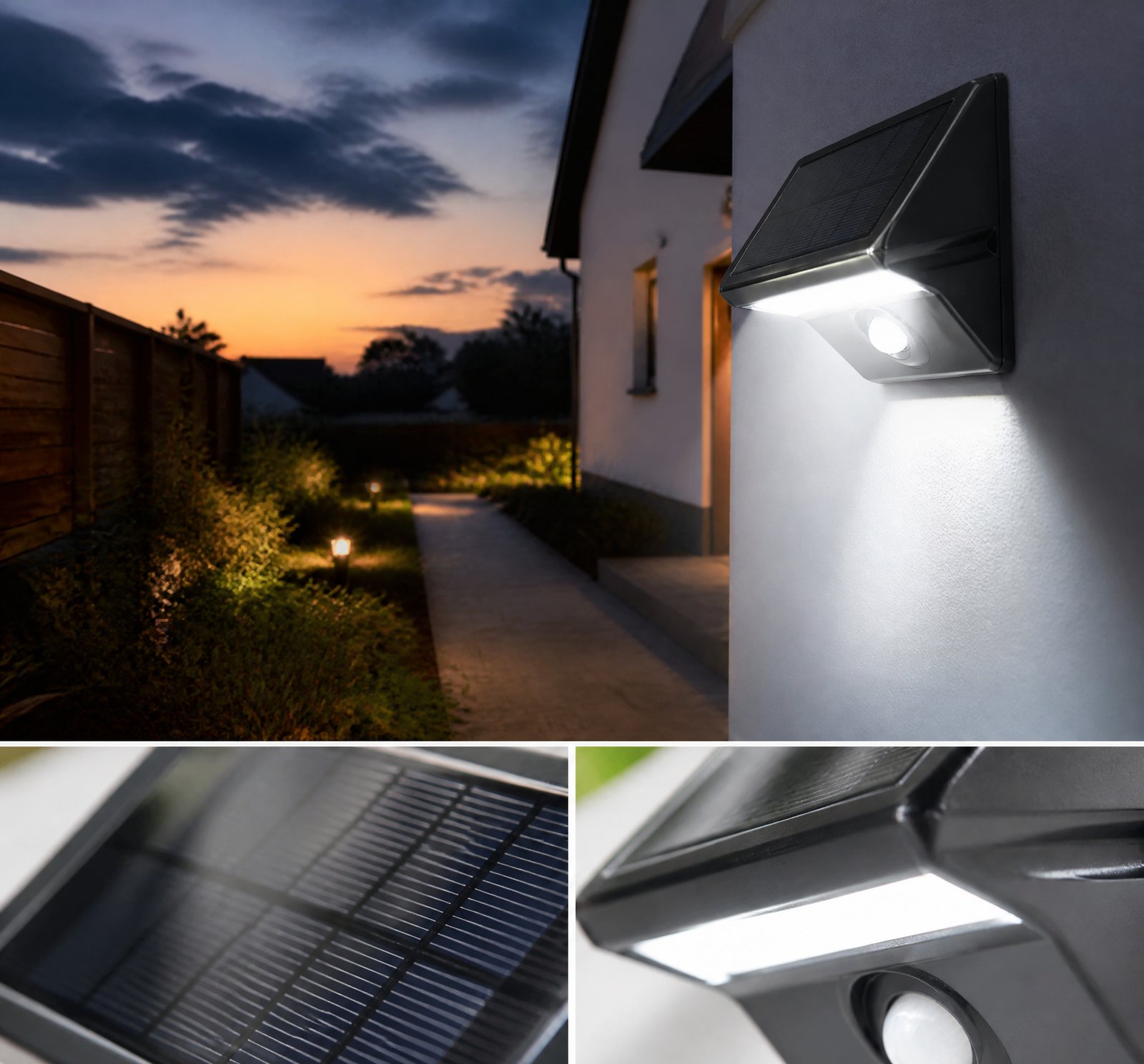
Quick answer: Iluminatul solar rezidențial de generația următoare va fi determinat nu de eficiența panourilor, ci de integrarea senzorilor, conectivității digitale și controlului adaptiv care optimizează consumul, crește securitatea și permite actualizări software pentru o evoluție continuă [1][6][16][22].
În România, unde consumul energetic și durabilitatea mediului sunt priorități crescente, iluminatul solar rezidențial trece de la o soluție pasivă la un sistem activ, inteligent și interconectat. Viitorul nu este doar despre panouri solare eficiente, ci despre cum acestea se integrează într-un ecosistem digital care adaptează iluminatul în funcție de nevoi reale, condiții meteorologice și prezența umană.
Senzori și control adaptiv: Baza eficienței energetice
Controlul inteligent al iluminatului depinde în mod esențial de senzori precum PIR (detectare mișcare) și crepusculari (dusk-to-dawn), care permit pornirea automată la întuneric și oprirea după o perioadă de inactivitate. Aceste funcționalități nu sunt doar conveniente, ci sunt esențiale pentru eficiența energetică, reducând consumul semnificativ față de iluminatul tradițional care rămâne aprins constant. Senzorii de mișcare detectează prezența unei persoane și declanșează lumină doar atunci când este necesar, reducând consumul în mod concret. În același timp, senzorii crepusculari asigură pornirea automată la întuneric și oprirea la răsăritul soarelui, eliminând necesitatea de programare manuală.
Conectivitatea inteligentă: De la dispozitiv individual la rețea interconectată
Conectivitatea inteligentă, în special prin rețele de tip mesh (cum ar fi Bluetooth Mesh), transformă lămpile solare din dispozitive independente în componente ale unei rețele interconectate. Această arhitectură permite comunicarea între multiple panouri, trimiterea de date către o stație de control centrală și actualizarea software prin cloud, fără intervenții fizice. Un panou solar poate transmite informații despre starea bateriei, nivelul de lumină ambientală sau evenimente de activitate, contribuind la o gestionare dinamică a energiei. Acest model este deja implementat în iluminatul public, unde rețelele de stâlpi comunica între ele și cu o centrală de control, ajustând iluminatul în funcție de nevoi reale.
Integrarea în mediul rezidențial: Simplu și flexibil
Aceste tehnologii nu sunt doar pentru spațiile publice — se extind activ în mediul rezidențial, unde pot fi integrate ușor în proiecte de reabilitare. Înlocuirea unui bec tradițional cu unul inteligent, controlat prin aplicație sau senzor, este o modalitate rapidă de a transforma o curte sau o grădină într-un spațiu „smart”. Abordarea este simplă: nu necesită cabluri sau modificări structurale majore. Funcționalități precum programarea scenelor luminoase (de exemplu, iluminat ambiental pentru filme) sau controlul vocal pot fi implementate fără a compromite eficiența energetică.
| Tip sistem | Beneficii principale | Cota de eficiență estimată | Sursă |
|---|---|---|---|
| Senzor PIR + crepuscular | Detectare prezență, pornire automată | Reducere consum 30–50% | |
| Control dimming | Ajustare intensitate în funcție de lumină | Reducere consum până la 35% | |
| Rețea mesh (Bluetooth) | Comunicare între dispozitive, actualizări cloud | Optimizare dinamică a energiei |
Evoluție prin software: Durabilitate și circularitate
O caracteristică esențială este actualizarea software prin cloud, care permite unui sistem de iluminat să dobândească noi funcționalități fără înlocuirea hardware-ului. Aceasta sprijină durabilitatea produselor, scurtează ciclul de viață și reduce deșeurile tehnologice — un aspect crucial în contextul degraderii mediului și al cerințelor de circularitate. Integrarea senzorilor și a controlului inteligent permite o gestionare mai eficientă a energiei, reducând impactul asupra rețelei electrice, mai ales în perioadele de vârf.
Concluzii cheie
- Iluminatul solar rezidențial de generația următoare depinde mai mult de inteligentă decât de eficiența panourilor.
- Senzorii de mișcare și crepusculari reduc consumul cu până la 50% comparativ cu sistemul tradițional.
- Conectivitatea mesh permite o rețea interconectată care se actualizează automat și optimizează consumul în timp real.
- Integrarea în casele existente este simplă, fără cabluri sau modificări majore.
- Actualizările software permit evoluția funcționalității fără înlocuirea hardware-ului, sprijinind circularitatea și durabilitatea.
Întrebări frecvente
Poate un senzor de mișcare să detecteze greșit în condiții de vreme rea?
Da, în condiții extreme (precum ploaie torențială sau vânt puternic), senzorii PIR pot genera semnale false din cauza mișcării obiectelor neintenționate. Totuși, modelele moderne includ algoritmi de filtrare care reduc erorile.
Cum afectează conectivitatea inteligentă consumul de energie?
Conectivitatea inteligentă nu crește consumul — dimpotrivă, permite o gestionare dinamică a energiei. Prin rețele mesh, dispozitivele comută doar când este necesar, reducând consumul cu până la 35% prin controlul dimming și 30–50% prin senzori.
Este integrat sistemul de gestionare a bateriei (BMS) în panourile solare rezidențiale?
În multe proiecte moderne, BMS este integrat pentru a monitoriza starea bateriei, preveni suprasarcină și extinde durata de viață. Totuși, performanța sa în condiții de îngheț sau temperaturi extreme nu este clar definită în sursele actuale.
References
- [1] Intelligent buildings need equally smart lighting controls Buildings — authority
source passage
automatically via cloud updates. Physical hardware is the front end, and we count on it becoming smarter and more capable as software and firmware are enhanced. In an era when building technology can struggle to keep pace with innovation, connected lighting controls will receive regular software updates, ensuring the system gains functionality and capability over time. This is also the promise of connected lighting control—the ability to make changes right from smart phone apps with confidence that new capabilities are just a cloud update away. With the right lighting system, the built environment becomes more dynamic and sustainable, enhances well-being, and provides the data and insights that drive operational improvements. Sustainability andwell-being:Optimizingthe user experience The past few years have underscored the importance of well-being in the workplace and other commercial spaces. Design frameworks encourage a culture of well-being and may help employers attract and retain high-caliber talent. This is all good news for owners looking to differentiate their properties in a competitive real estate market. Lighting is functionaland necessary; it is ubiquitous in any indoor space. Butlighting also has the power to be an attractive building amenity, a means to more resilient spaces, and a system that continues to enhance building value over time.As your commercial buildings evolve, look fordigital and wireless lighting and shadingsolutionsthat welcome people into the s
- [6] WO2010057138A2 – Energy-efficient solar-powered outdoor lighting — patent
source passage
Computer Science (AREA) – General Engineering & Computer Science (AREA) – Sustainable Development (AREA) – Life Sciences & Earth Sciences (AREA) – Chemical & Material Sciences (AREA) – Computer Networks & Wireless Communication (AREA) – Sustainable Energy (AREA) – Combustion & Propulsion (AREA) – Thermal Sciences (AREA) – Mechanical Engineering (AREA) – Manufacturing & Machinery (AREA) – Chemical Kinetics & Catalysis (AREA) – Electrochemistry (AREA) – General Chemical & Material Sciences (AREA) – Physics & Mathematics (AREA) – Circuit Arrangement For Electric Light Sources In General (AREA) Abstract One or more outdoor lights may operate independently with sensing and control processes mainly on-pole, or may communicate as a networked array of poles, wherein a master/coordinating pole/node transmits signals from the networked array to a control station, and receive signals from the control station for the networked array, via call phone and/or satellite. Independent poles and/or the networked array of poles may be adapted for energy-saving processes; cooperation with the grid; renewable power production and storage by means of solar panels and associated batteries; and/or to provide Wi-Fi hot-spots, public safety alarms, information or data-analysis to the public or customers. An energy-saving active control system controls charging of the batteries and distribution of energy from the solar panel and/or the batteries, so that the batteries remain undamaged, and the light(s) r
- [16] US20120020060A1 – Energy-efficient solar-powered – Google Patents — patent
source passage
of full brightness, and said third fraction is 7.5%-25% of full brightness. – Said methods may include brightening said LEDs to said third fraction of full brightness for a third predetermined amount of time before dawn. Landscapes – Engineering & Computer Science (AREA) – General Engineering & Computer Science (AREA) – Life Sciences & Earth Sciences (AREA) – Sustainable Development (AREA) – Sustainable Energy (AREA) – Computer Networks & Wireless Communication (AREA) – Power Engineering (AREA) – Circuit Arrangement For Electric Light Sources In General (AREA) – Non-Portable Lighting Devices Or Systems Thereof (AREA) – Photovoltaic Devices (AREA) Abstract One or more outdoor lights may operate independently with sensing and control processes mainly on-pole, or may communicate as a networked array of poles, wherein a master/coordinating pole/node transmits signals from the networked array to a control station, and receive signals from the control station for the networked array, via call phone and/or satellite. Independent poles and/or the networked array of poles may be adapted for energy-saving processes; cooperation with the grid; renewable power production and storage by means of solar panels and associated batteries; and/or to provide Wi-Fi hot-spots, public safety alarms, information or data-analysis to the public or customers. An energy-saving active control system controls charging of the batteries and distribution of energy from the solar panel and/or the batteries, s
- [22] CN104994631A – Energy-saving type LED lamp automatic control — patent
source passage
smart controller or presence detection Landscapes – Charge And Discharge Circuits For Batteries Or The Like (AREA) Abstract Description 技术领域 technical field 本发明属于智能家居控制节能系统,具体讲是涉及节能型LED灯自动控制系统。 The present invention belongs to a smart home control energy-saving system, and specifically relates to an energy-saving LED lamp automatic control system. 背景技术 Background technique 在人们的日常生活中,LED台灯的使用早已随处可见,由于其独立的系统,自带电源,小巧的外形体积,可移动性,给人们的学习生活带来了极大的方便。然而普通的LED台灯主要是交流充电,按键启动,在过去,这一切人们都还很乐于接受,可是对于现在,越来越多人提倡节能减排,智能化家居,普通LED台灯的这种简单设计已无法满足人们的需求。人们需要的是更加节能,更加智能化的台灯。 In people's daily life, the use of LED desk lamps has long been seen everywhere. Because of its independent system, self-contained power supply, small size and mobility, it brings great convenience to people's study and life. However, ordinary LED desk lamps are mainly for AC charging and button start. In the past, people were still willing to accept all these, but now, more and more people advocate energy saving and emission reduction, smart home, and the simplicity of ordinary LED desk lamps. Design has failed to meet people's needs. What people need is more energy-saving and more intelligent desk lamps. 为解决上述问题,我们设计出了一种由太阳能供电,通过人体和环境光线的感应控制开断的智能LED台灯系统。该智能LED台灯采用太阳能供电,同时也备有市电充电模块,可实现在光线较弱的情况下有人时自启动,人走后延时一小段时间自动关闭,同时也备有手动启动功能,实现节能环保。该LED台灯也非常适合野外作业或旅游,白天充电,夜间照明。 In order to solve the above problems, we have designed a smart LED desk lamp system powered by solar energy and controlled by the induction of human body and ambient lig
automatically via cloud updates. Physical hardware is the front end, and we count on it becoming smarter and more capable as software and firmware are enhanced. In an era when building technology can struggle to keep pace with innovation, connected lighting controls will receive regular software updates, ensuring the system gains functionality and capability over time. This is also the promise of connected lighting control—the ability to make changes right from smart phone apps with confidence that new capabilities are just a cloud update away. With the right lighting system, the built environment becomes more dynamic and sustainable, enhances well-being, and provides the data and insights that drive operational improvements. Sustainability andwell-being:Optimizingthe user experience The past few years have underscored the importance of well-being in the workplace and other commercial spaces. Design frameworks encourage a culture of well-being and may help employers attract and retain high-caliber talent. This is all good news for owners looking to differentiate their properties in a competitive real estate market. Lighting is functionaland necessary; it is ubiquitous in any indoor space. Butlighting also has the power to be an attractive building amenity, a means to more resilient spaces, and a system that continues to enhance building value over time.As your commercial buildings evolve, look fordigital and wireless lighting and shadingsolutionsthat welcome people into the s
Computer Science (AREA) – General Engineering & Computer Science (AREA) – Sustainable Development (AREA) – Life Sciences & Earth Sciences (AREA) – Chemical & Material Sciences (AREA) – Computer Networks & Wireless Communication (AREA) – Sustainable Energy (AREA) – Combustion & Propulsion (AREA) – Thermal Sciences (AREA) – Mechanical Engineering (AREA) – Manufacturing & Machinery (AREA) – Chemical Kinetics & Catalysis (AREA) – Electrochemistry (AREA) – General Chemical & Material Sciences (AREA) – Physics & Mathematics (AREA) – Circuit Arrangement For Electric Light Sources In General (AREA) Abstract One or more outdoor lights may operate independently with sensing and control processes mainly on-pole, or may communicate as a networked array of poles, wherein a master/coordinating pole/node transmits signals from the networked array to a control station, and receive signals from the control station for the networked array, via call phone and/or satellite. Independent poles and/or the networked array of poles may be adapted for energy-saving processes; cooperation with the grid; renewable power production and storage by means of solar panels and associated batteries; and/or to provide Wi-Fi hot-spots, public safety alarms, information or data-analysis to the public or customers. An energy-saving active control system controls charging of the batteries and distribution of energy from the solar panel and/or the batteries, so that the batteries remain undamaged, and the light(s) r
of full brightness, and said third fraction is 7.5%-25% of full brightness. – Said methods may include brightening said LEDs to said third fraction of full brightness for a third predetermined amount of time before dawn. Landscapes – Engineering & Computer Science (AREA) – General Engineering & Computer Science (AREA) – Life Sciences & Earth Sciences (AREA) – Sustainable Development (AREA) – Sustainable Energy (AREA) – Computer Networks & Wireless Communication (AREA) – Power Engineering (AREA) – Circuit Arrangement For Electric Light Sources In General (AREA) – Non-Portable Lighting Devices Or Systems Thereof (AREA) – Photovoltaic Devices (AREA) Abstract One or more outdoor lights may operate independently with sensing and control processes mainly on-pole, or may communicate as a networked array of poles, wherein a master/coordinating pole/node transmits signals from the networked array to a control station, and receive signals from the control station for the networked array, via call phone and/or satellite. Independent poles and/or the networked array of poles may be adapted for energy-saving processes; cooperation with the grid; renewable power production and storage by means of solar panels and associated batteries; and/or to provide Wi-Fi hot-spots, public safety alarms, information or data-analysis to the public or customers. An energy-saving active control system controls charging of the batteries and distribution of energy from the solar panel and/or the batteries, s
smart controller or presence detection Landscapes – Charge And Discharge Circuits For Batteries Or The Like (AREA) Abstract Description 技术领域 technical field 本发明属于智能家居控制节能系统,具体讲是涉及节能型LED灯自动控制系统。 The present invention belongs to a smart home control energy-saving system, and specifically relates to an energy-saving LED lamp automatic control system. 背景技术 Background technique 在人们的日常生活中,LED台灯的使用早已随处可见,由于其独立的系统,自带电源,小巧的外形体积,可移动性,给人们的学习生活带来了极大的方便。然而普通的LED台灯主要是交流充电,按键启动,在过去,这一切人们都还很乐于接受,可是对于现在,越来越多人提倡节能减排,智能化家居,普通LED台灯的这种简单设计已无法满足人们的需求。人们需要的是更加节能,更加智能化的台灯。 In people's daily life, the use of LED desk lamps has long been seen everywhere. Because of its independent system, self-contained power supply, small size and mobility, it brings great convenience to people's study and life. However, ordinary LED desk lamps are mainly for AC charging and button start. In the past, people were still willing to accept all these, but now, more and more people advocate energy saving and emission reduction, smart home, and the simplicity of ordinary LED desk lamps. Design has failed to meet people's needs. What people need is more energy-saving and more intelligent desk lamps. 为解决上述问题,我们设计出了一种由太阳能供电,通过人体和环境光线的感应控制开断的智能LED台灯系统。该智能LED台灯采用太阳能供电,同时也备有市电充电模块,可实现在光线较弱的情况下有人时自启动,人走后延时一小段时间自动关闭,同时也备有手动启动功能,实现节能环保。该LED台灯也非常适合野外作业或旅游,白天充电,夜间照明。 In order to solve the above problems, we have designed a smart LED desk lamp system powered by solar energy and controlled by the induction of human body and ambient lig