
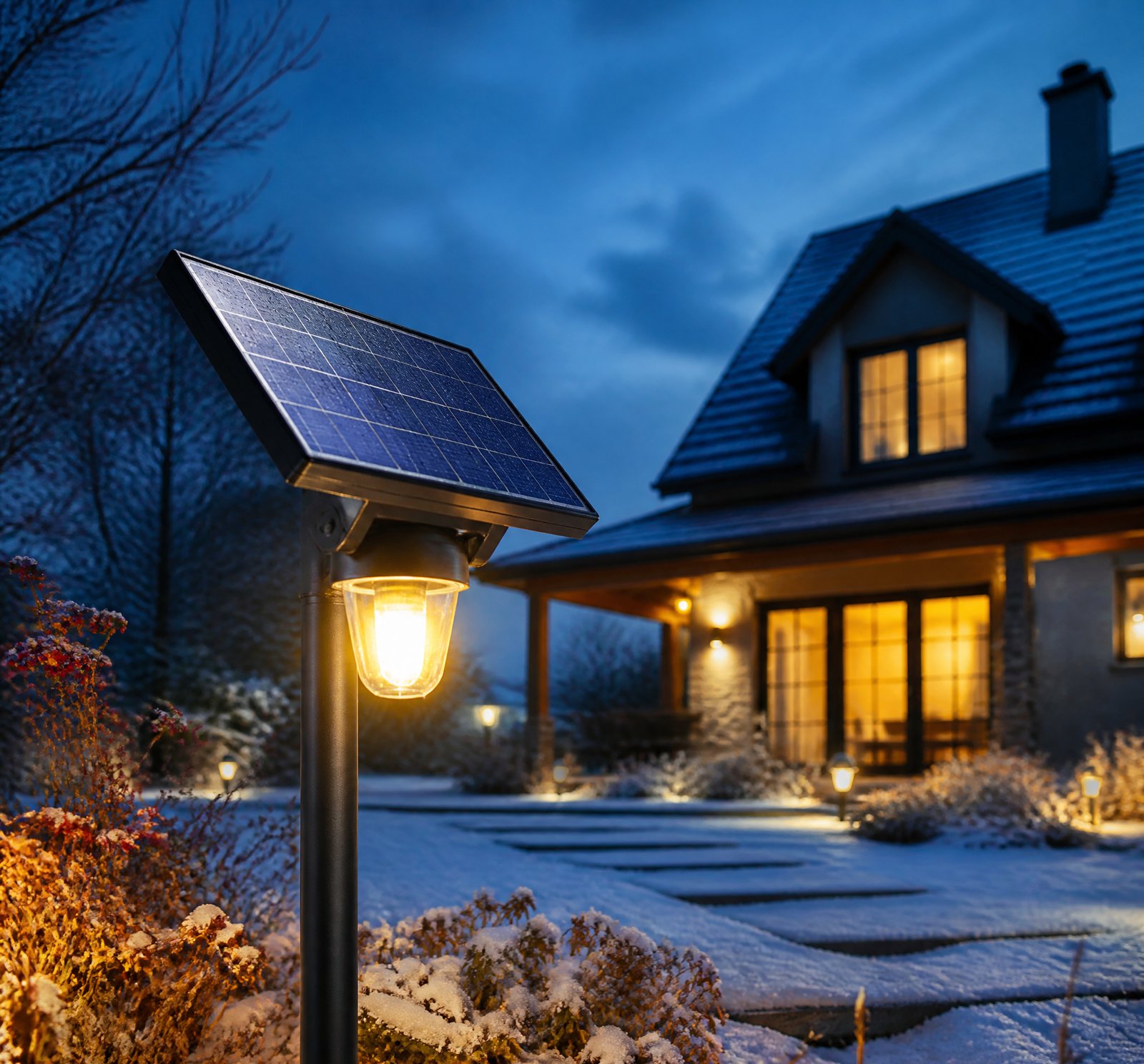
> Quick answer: Manufacturing shortcuts that reduce solar lamp lifespan include using low-quality LEDs, poor soldering, inadequate heat management, thin-film solar cell defects, and substandard battery integration. These flaws accelerate degradation, reduce efficiency, and shorten operational life [5][10][19].
The growing popularity of solar lamps in Romania is driven by energy independence, reduced electricity bills, and environmental benefits. However, many consumers face premature failures due to manufacturing shortcuts that compromise durability. Understanding these hidden flaws—backed by industry research—helps buyers choose long-lasting, reliable solar lighting systems.
Common Manufacturing Shortcuts That Shorten Solar Lamp Life
Many manufacturers cut corners to reduce costs, often at the expense of longevity. These shortcuts are especially prevalent in budget-friendly models sold online and in local markets. The most common include:
Poor Thermal Design and Heat Management
Heat is a major enemy of both solar panels and LEDs. When heat isn’t properly dissipated, it accelerates degradation in solar cells and reduces LED output [9]. For every degree Celsius above 25°C, solar panel efficiency drops by as much as 0.353% [9]. Cheap solar lamps often omit heat sinks or use low-quality materials that trap heat, causing rapid performance decline.
Substandard Solar Cell Quality
Thin-film solar cells are particularly vulnerable to production defects like contact corrosion, metal migration across the pn junction, and anti-reflective coating breakage [5]. These flaws cause permanent efficiency loss over time [19]. Additionally, non-identical cells within a panel can create “hot spots” due to thermal imbalance, leading to localized overheating and eventual failure [5].
Inadequate Soldering and Aging Materials
Aging of tin-lead solder can lead to cracking and open-circuit faults in solar modules [5]. This compromises electrical connections and reduces system reliability. Low-cost lamps often use solder with inferior thermal stability, accelerating failure under temperature fluctuations common in Romanian climates.
Over-Driven or Low-Quality LEDs
LEDs are marketed for their 50,000-hour lifespan [10], but actual performance depends on thermal management and driver quality. Some manufacturers use LEDs with poor lumen maintenance—light output drops to 70% of initial value much faster than expected [4]. This is especially true in models that lack proper heat dissipation or use under-rated drivers.
Weak or Non-Functional Bypass Diodes
Bypass diodes protect solar cells from reverse current damage when one cell is shaded or faulty [5]. When these diodes fail due to heat or electrical stress, the entire panel can degrade [5]. Cheaply built lamps often skip or undersize these components, increasing risk during partial shading or cloudy days.
Faulty Battery Integration
Lithium-ion or lead-acid batteries degrade faster when poorly integrated. Many solar lamps use batteries with low cycle life (as few as 500 cycles) and no protection circuits, leading to overcharging or deep discharge [5]. This drastically shortens overall system life, even if the LEDs and solar panels still function.
Use of Low-Efficiency or Short-Lived Lamp Technologies
Some budget models still use incandescent or fluorescent bulbs. Incandescent lamps have short lifespans (1,000–2,000 hours) and suffer from filament notching—reducing life by up to 50% [3][7]. Compact fluorescents (CFLs) also lose 20–30% of their light output over time, with rapid decay in the first months [12]. These technologies are outdated for solar applications.
| Feature | High-Quality Solar Lamp | Low-Cost Shortcut |
|——–|————————–|——————-|
| Solar Panel Type | Monocrystalline with anti-reflective coating [5] | Thin-film with poor coating [19] |
| LED Driver | Temperature-stable, with thermal regulation | No heat sink, overdriven [4] |
| Bypass Diodes | Functional, robust [5] | Omitted or low-grade |
| Battery | 1,000+ cycle life with protection [5] | 500-cycle, no protection |
| Lifespan (LED) | 50,000 hours with 70% lumen maintenance [4] | 20,000 hours, 50% output loss [12] |
Key Takeaways
- Heat is the silent killer: Poor thermal design reduces solar panel efficiency and LED longevity [9].
- Solder and connections matter: Aging solder and weak joints cause open circuits and early failure [5].
- Avoid fluorescent and incandescent bulbs: They degrade quickly and are inefficient for solar use [3][12].
- Check for bypass diodes and battery protection: These prevent catastrophic failures [5].
- LED lifespan is measured by lumen maintenance, not burnout [4].
Frequently Asked Questions
[
{
“q”: “How long should a quality solar lamp last in Romania?”,
“a”: “A high-quality solar lamp with proper thermal design and components should last 5 to 10 years, with LED output remaining above 70% of initial brightness [4].”
},
{
“q”: “Why do some solar lamps fail within a year?”,
“a”: “Common causes include poor soldering, overheating due to no heat sink, and use of low-grade batteries or LEDs [5][9]. These shortcuts reduce lifespan to under 1,000 hours [3].”
},
{
“q”: “Can temperature damage solar panels in summer?”,
“a”: “Yes. Heat reduces solar panel efficiency by 0.353% per °C above 25°C [9]. In hot Romanian summers, this can cut daily output by up to 20%.”
}
]
References
- [3] The Lighting Handbook_ Reference and Application — book
source passage
especially for fine-wire filaments, the notching is so deep as to almost sever the wire. Thus, faster spot evaporation due to this notching and reduced filament strength become the dominant factors influencing lamp life. Predicted lamp life may be reduced by as much as one-half from this cause. Filament notching is associated with at least three factors (primarily occurring in fine-wire filament lamps): (1) low-temperature filament operation, as in long-life lamp types such as 10,000—100,000-h designs; (2) small filament wire sizes, typically less than 0.025 mm (0.001 in.) in diameter; and (3) use of direct current. Depreciation During Life. Over a period of time, in- candescent filaments evaporate and become smaller, which increases their resistance. In multiple circuits, the increase in filament resistance causes a reduction in amperes, watts and lumens. A further reduction in lumen output is caused by the absorption of light by the deposit of the evaporated tungsten particles on the bulb. Figure 6-13a shows the change in watts, lumens and lumens per watt for a 200-W lamp. In series circuits having constant-current regulators, the increase in filament resistance during life causes an increase in the voltage across the lamp and a conse- quent increase in wattage and generated lumens. This increase in lumens is offset to varying degrees by the absorption of light by the tungsten deposit on the bulb. In low-current lamps the net depreciation in light output during life is very
- [4] Lighting Design Basics — book
source passage
As is typical for all light sources, over a lamp’s lifetime, the light that is produced is reduced. Lumen maintenance evaluates how much of that light is lost by the end of the lamp’s life. This number becomes especially important when evaluating LED lamps and fixtures since LEDs do not fail like other light sources do. As described, the life span of an LED is determined when the lumen output has been reduced to 70 percent. Initial Cost Versus Operating Cost The initial cost is the amount that the client will spend to purchase and install the lighting. The operating cost includes the electricity to run it and the cost to purchase and replace the lamps. Generally speaking, the initial cost is minor compared to the cost of the energy required to operate the lamps over the life of the system. If a life cycle cost analysis is completed, the efficacy and life of the lamps become very important to keep the operating costs down. When selecting light sources for a project, it is important to understand which of the attributes discussed are the most important. Once the requirements are prioritized, it is much easier to select the most appropriate source. Chapter 5 evaluates the major lamp families using the criteria established here. Chapter 4 DAYLIGHTING Before the appropriate artificial light source can be selected, it is important to consider how daylight can be used effectively. Daylight is highly desirable as a light source because people respond very positively to it. Also, with
- [5] Introduction to Photovoltaic Systems — book
source passage
over time, inhibiting solar radiation on the solar cells. ■ Degradation of Solar Cells — Solar cells degenerate over time due to: ❑ Contact corrosion and separation ❑ Migration of metals across the pn junction of cells ❑ Breakage of the anti-reflective coating ❑ Boron-oxygen complexes causing disruption of p-type material in cells ■ Cell Short Circuit — Short circuit is a common fault in thin film cells and frequently occurs at cell interconnections. ■ Cracked Cells — Caused by thermal stress, damage from hail or gravel impacts, and damage from events during manufacturing, cracked cells lead to circuit breakage. Interconnected busbars are used to prevent circuit opening from cracked cells. ■ Aging or impurities in solders — Tin-lead solder ages, separates and cracks, increasing the strength of series interconnections. ■ Module Structure Aging — Aging and open-circuit faults occur most frequently in the junction box and bus wiring. ■ Module Short Circuit — Manufacturing defects and insulation degradation result in module components breaking. Electrochemical corrosion, cracking, and delamination can short circuit modules. ■ Glass Fracture — Glass fracture can be caused by hail impact or by vandalism, thermal stress and wind. ■ Hot Spots — Non -identical and cracked cells can create thermal damage called a hot spot . ■ Bypass Diode Failure — Usually bypass diodes fail because they are underrated for voltage or because they overheat. Defective bypass diodes do not work properly t
- [7] The IESNA lighting handbook_ A review — book
source passage
at random points. In some cases, especially for fine-wire filaments, the notch- ing is so deep as to almost sever the w ire. Faster spot evapo- ration due to high temperatures at this notch and reduced fil- ament strength become the dominant factors influencing lamp life. Predicted lamp life can be reduced by as much as one-half from this cause. Filament notching is associated w ith at least three factors (primarily occurring in fme-wire filament lamps): (1) low- temperature filament operation, as in long-hfe lamps with 10,000- to l(X).000-h designs; (2) small filament wire sizes, typically less than 0.025 mm (0.001 in.) in diameter; and (3) direct current operation. Depreciation During Life. Over a period of time, incan- descent filaments evaporate and become smaller, which in- creases their resistance. In multiple circuits, the increase in filament resistance reduces current, power, and light. A fur- ther reduction in light output is caused by the absorption of light by the deposit of the evaporated tungsten particles on the bulb. In series circuits having constant-current regulators, the 6-14 LIGHT SOURCES w c 0)O 0) 55E 180 140 100 60 20 / r— > —7— /./ /v- i ^^^— OV^< t\s .^^<^9(r ^^ Je^^ 6M slA?:? f-f^V I ^- ^P?^t \^, _7^^s.^^ 400 300 200 = c a> CD 100 Q- 40 60 80 100 120 Percent normal volts a 140 Figure 6-19. Effect of voltage and current variation on the operating characteristics of: (a) incandescent filament lamps in general lighting (multiple) circuits and (b) tungs
- [9] How_long_do_rooftop_residential_solar_panels_last_-_pv_magazine_Global__7bebb092 — authority
source passage
to decline, in some cases significantly. All panels also suffer something called light induced degradation (LID), in which panels lose efficiency within the first hours of being exposed to the sun. LID varies from panel to panel based on the quality of the crystalline silicon wafers, but usually results in a one-time, 1% to 3% loss in efficiency, said testing laboratory PVEL, PV Evolution Labs. Weather conditions The exposure to weather conditions is the main driver in panel degradation. Heat is a key factor in both real-time panel performance and degradation over time. Ambient heat negatively affects the performance and efficiency of electrical components, according to NREL. By checking the manufacturer’s data sheet, a panel’s temperature coefficient can be found, which will demonstrate the panel’s ability to perform in higher temperatures, said SolarCalculator.com. Heat exchange also drives degradation through a process called thermal cycling. When it is warm, materials expand, and when the temperature lowers, they contract. This movement slowly causes microcracks to form in the panel over time, lowering output.The coefficient explains how much efficiency is lost by each degree of Celsius increased above the standard temperature of 25 C. For example, a temperature coefficient of -0.353% means that for every degree Celsius above 25, 0.353% of total production capability is lost. In its annual Module Score Card study, PVEL analyzed 36 operational solar projects in India, and
- [10] Lighting_-_Wikipedia__997723be — wikipedia
source passage
LED technologies. LED lamps provide significant energy savings over incandescent and fluorescent lamps.[62] According to the Energy Saving Trust, LED lamps use only 10% power compared to a standard incandescent bulb, where compact fluorescent lamps use 20% and energy saving halogen lamps 70%. The lifetime is also much longer — up to 50,000 hours. The downside when they were first popularized was the initial cost. By 2018, production costs dropped, performance increased, and energy consumption was reduced. While the initially cost of LEDs is still higher than incandescent lamps, the savings are so dramatic that there are very few instances that LEDs are not the most economical choice. Scattered light from outdoor illumination may have effects on the environment and human health.[63] For instance, one study conducted by the American Medical Association[64] warned on the use of high blue content white LEDs in street lighting, due to their higher impact on human health and environment, compared to low blue content light sources (e.g. High Pressure Sodium, phosphor-coated or PC amber LEDs, and low CCT LEDs). Light pollution is a growing problem in reaction to excess light being given off by numerous signs, houses, and buildings. Polluting light is often wasted light involving unnecessary energy costs and carbon dioxide emissions. Light pollution is described as artificial light that is excessive or intrudes where it is not wanted. Well-designed lighting sends light only where it i
- [12] Compact_fluorescent_lamp_-_Wikipedia__8c4c746c — wikipedia
source passage
the actual lifetime of any lamp depends on many factors, including operating voltage, manufacturing defects, exposure to voltage spikes, mechanical shock, frequency of cycling on and off, lamp orientation, and ambient operating temperature, among other factors.[30] The life of a CFL is significantly shorter if it is turned on and off frequently or is used in a totally enclosed fixture. This happens because the electrodes in a CFL undergo sputtering every time it is turned on; this also happens in fluorescent tubes. Material from the electrodes is ejected every time sputtering occurs and it is deposited on the fluorescent tube's walls, showing as lamp end darkening. In the case of a 5-minute on/off cycle the lifespan of some CFLs may be reduced to that of incandescent light bulbs. The US Energy Star program suggests that fluorescent lamps be left on when leaving a room for less than 15 minutes to mitigate this problem.[31] CFLs emit less light later in their lives than when they are new. The light output decay is exponential, with the fastest losses being soon after the lamp is first used. By the end of their lives, CFLs can be expected to emit 70–80% of their original light output.[32] The response of the human eye to light is logarithmic. That is, while the human eye is highly sensitive to changes in the intensity of faint light sources, it is less sensitive to changes in the intensity of brighter light sources since the pupils compensate by dilating or constricting.[33] So,
- [19] Solar_Cell_Degradation_Research_Can_Improve_Thin_Film_Solar_Panels__7795e576 — authority
source passage
# Solar Cell Degradation Research Can Improve Thin Film Solar Panels – CleanTechnica Source: Blog/Web URL: https://cleantechnica.com/2012/10/13/solar-cell-degradation-research-can-improve-thin-film-solar-panels/ Author: James Ayre Date: 2012-10-13 Support CleanTechnica's work through a Substack subscription or on Stripe. The Laboratory for Photovoltaics at the University of Luxembourg has recently devised a new method to observe the causes of and prevent solar cell degradation before solar cell production is even finished. This will have huge effects on the solar cell manufacturing industry because of how fast chemical damage to solar cells can happen, and the large costs such damage incurs. Solar panels convert the sun’s light into electrical current through the use of solar cells, which are the generators responsible for the energy solar panels produce. A specific type of solar cells, thin film solar cells, possess a special coating that is what actually absorbs the sun’s energy — this film can be easily degraded during the solar panel production process though. “A thin film solar cell is a stack of several layers. The main one is the layer that absorbs the light and transforms it into electricity. If these absorbers are not processed immediately they lose part of their ability to convert light energy,” says researcher David Regesch of the Laboratory for Photovoltaics, Physics Research Unit at the University of Luxembourg. For the new research, a laser was shone onto a sola
especially for fine-wire filaments, the notching is so deep as to almost sever the wire. Thus, faster spot evaporation due to this notching and reduced filament strength become the dominant factors influencing lamp life. Predicted lamp life may be reduced by as much as one-half from this cause. Filament notching is associated with at least three factors (primarily occurring in fine-wire filament lamps): (1) low-temperature filament operation, as in long-life lamp types such as 10,000—100,000-h designs; (2) small filament wire sizes, typically less than 0.025 mm (0.001 in.) in diameter; and (3) use of direct current. Depreciation During Life. Over a period of time, in- candescent filaments evaporate and become smaller, which increases their resistance. In multiple circuits, the increase in filament resistance causes a reduction in amperes, watts and lumens. A further reduction in lumen output is caused by the absorption of light by the deposit of the evaporated tungsten particles on the bulb. Figure 6-13a shows the change in watts, lumens and lumens per watt for a 200-W lamp. In series circuits having constant-current regulators, the increase in filament resistance during life causes an increase in the voltage across the lamp and a conse- quent increase in wattage and generated lumens. This increase in lumens is offset to varying degrees by the absorption of light by the tungsten deposit on the bulb. In low-current lamps the net depreciation in light output during life is very
As is typical for all light sources, over a lamp’s lifetime, the light that is produced is reduced. Lumen maintenance evaluates how much of that light is lost by the end of the lamp’s life. This number becomes especially important when evaluating LED lamps and fixtures since LEDs do not fail like other light sources do. As described, the life span of an LED is determined when the lumen output has been reduced to 70 percent. Initial Cost Versus Operating Cost The initial cost is the amount that the client will spend to purchase and install the lighting. The operating cost includes the electricity to run it and the cost to purchase and replace the lamps. Generally speaking, the initial cost is minor compared to the cost of the energy required to operate the lamps over the life of the system. If a life cycle cost analysis is completed, the efficacy and life of the lamps become very important to keep the operating costs down. When selecting light sources for a project, it is important to understand which of the attributes discussed are the most important. Once the requirements are prioritized, it is much easier to select the most appropriate source. Chapter 5 evaluates the major lamp families using the criteria established here. Chapter 4 DAYLIGHTING Before the appropriate artificial light source can be selected, it is important to consider how daylight can be used effectively. Daylight is highly desirable as a light source because people respond very positively to it. Also, with
over time, inhibiting solar radiation on the solar cells. ■ Degradation of Solar Cells — Solar cells degenerate over time due to: ❑ Contact corrosion and separation ❑ Migration of metals across the pn junction of cells ❑ Breakage of the anti-reflective coating ❑ Boron-oxygen complexes causing disruption of p-type material in cells ■ Cell Short Circuit — Short circuit is a common fault in thin film cells and frequently occurs at cell interconnections. ■ Cracked Cells — Caused by thermal stress, damage from hail or gravel impacts, and damage from events during manufacturing, cracked cells lead to circuit breakage. Interconnected busbars are used to prevent circuit opening from cracked cells. ■ Aging or impurities in solders — Tin-lead solder ages, separates and cracks, increasing the strength of series interconnections. ■ Module Structure Aging — Aging and open-circuit faults occur most frequently in the junction box and bus wiring. ■ Module Short Circuit — Manufacturing defects and insulation degradation result in module components breaking. Electrochemical corrosion, cracking, and delamination can short circuit modules. ■ Glass Fracture — Glass fracture can be caused by hail impact or by vandalism, thermal stress and wind. ■ Hot Spots — Non -identical and cracked cells can create thermal damage called a hot spot . ■ Bypass Diode Failure — Usually bypass diodes fail because they are underrated for voltage or because they overheat. Defective bypass diodes do not work properly t
at random points. In some cases, especially for fine-wire filaments, the notch- ing is so deep as to almost sever the w ire. Faster spot evapo- ration due to high temperatures at this notch and reduced fil- ament strength become the dominant factors influencing lamp life. Predicted lamp life can be reduced by as much as one-half from this cause. Filament notching is associated w ith at least three factors (primarily occurring in fme-wire filament lamps): (1) low- temperature filament operation, as in long-hfe lamps with 10,000- to l(X).000-h designs; (2) small filament wire sizes, typically less than 0.025 mm (0.001 in.) in diameter; and (3) direct current operation. Depreciation During Life. Over a period of time, incan- descent filaments evaporate and become smaller, which in- creases their resistance. In multiple circuits, the increase in filament resistance reduces current, power, and light. A fur- ther reduction in light output is caused by the absorption of light by the deposit of the evaporated tungsten particles on the bulb. In series circuits having constant-current regulators, the 6-14 LIGHT SOURCES w c 0)O 0) 55E 180 140 100 60 20 / r— > —7— /./ /v- i ^^^— OV^< t\s .^^<^9(r ^^ Je^^ 6M slA?:? f-f^V I ^- ^P?^t \^, _7^^s.^^ 400 300 200 = c a> CD 100 Q- 40 60 80 100 120 Percent normal volts a 140 Figure 6-19. Effect of voltage and current variation on the operating characteristics of: (a) incandescent filament lamps in general lighting (multiple) circuits and (b) tungs
to decline, in some cases significantly. All panels also suffer something called light induced degradation (LID), in which panels lose efficiency within the first hours of being exposed to the sun. LID varies from panel to panel based on the quality of the crystalline silicon wafers, but usually results in a one-time, 1% to 3% loss in efficiency, said testing laboratory PVEL, PV Evolution Labs. Weather conditions The exposure to weather conditions is the main driver in panel degradation. Heat is a key factor in both real-time panel performance and degradation over time. Ambient heat negatively affects the performance and efficiency of electrical components, according to NREL. By checking the manufacturer’s data sheet, a panel’s temperature coefficient can be found, which will demonstrate the panel’s ability to perform in higher temperatures, said SolarCalculator.com. Heat exchange also drives degradation through a process called thermal cycling. When it is warm, materials expand, and when the temperature lowers, they contract. This movement slowly causes microcracks to form in the panel over time, lowering output.The coefficient explains how much efficiency is lost by each degree of Celsius increased above the standard temperature of 25 C. For example, a temperature coefficient of -0.353% means that for every degree Celsius above 25, 0.353% of total production capability is lost. In its annual Module Score Card study, PVEL analyzed 36 operational solar projects in India, and
LED technologies. LED lamps provide significant energy savings over incandescent and fluorescent lamps.[62] According to the Energy Saving Trust, LED lamps use only 10% power compared to a standard incandescent bulb, where compact fluorescent lamps use 20% and energy saving halogen lamps 70%. The lifetime is also much longer — up to 50,000 hours. The downside when they were first popularized was the initial cost. By 2018, production costs dropped, performance increased, and energy consumption was reduced. While the initially cost of LEDs is still higher than incandescent lamps, the savings are so dramatic that there are very few instances that LEDs are not the most economical choice. Scattered light from outdoor illumination may have effects on the environment and human health.[63] For instance, one study conducted by the American Medical Association[64] warned on the use of high blue content white LEDs in street lighting, due to their higher impact on human health and environment, compared to low blue content light sources (e.g. High Pressure Sodium, phosphor-coated or PC amber LEDs, and low CCT LEDs). Light pollution is a growing problem in reaction to excess light being given off by numerous signs, houses, and buildings. Polluting light is often wasted light involving unnecessary energy costs and carbon dioxide emissions. Light pollution is described as artificial light that is excessive or intrudes where it is not wanted. Well-designed lighting sends light only where it i
the actual lifetime of any lamp depends on many factors, including operating voltage, manufacturing defects, exposure to voltage spikes, mechanical shock, frequency of cycling on and off, lamp orientation, and ambient operating temperature, among other factors.[30] The life of a CFL is significantly shorter if it is turned on and off frequently or is used in a totally enclosed fixture. This happens because the electrodes in a CFL undergo sputtering every time it is turned on; this also happens in fluorescent tubes. Material from the electrodes is ejected every time sputtering occurs and it is deposited on the fluorescent tube's walls, showing as lamp end darkening. In the case of a 5-minute on/off cycle the lifespan of some CFLs may be reduced to that of incandescent light bulbs. The US Energy Star program suggests that fluorescent lamps be left on when leaving a room for less than 15 minutes to mitigate this problem.[31] CFLs emit less light later in their lives than when they are new. The light output decay is exponential, with the fastest losses being soon after the lamp is first used. By the end of their lives, CFLs can be expected to emit 70–80% of their original light output.[32] The response of the human eye to light is logarithmic. That is, while the human eye is highly sensitive to changes in the intensity of faint light sources, it is less sensitive to changes in the intensity of brighter light sources since the pupils compensate by dilating or constricting.[33] So,
# Solar Cell Degradation Research Can Improve Thin Film Solar Panels – CleanTechnica Source: Blog/Web URL: https://cleantechnica.com/2012/10/13/solar-cell-degradation-research-can-improve-thin-film-solar-panels/ Author: James Ayre Date: 2012-10-13 Support CleanTechnica's work through a Substack subscription or on Stripe. The Laboratory for Photovoltaics at the University of Luxembourg has recently devised a new method to observe the causes of and prevent solar cell degradation before solar cell production is even finished. This will have huge effects on the solar cell manufacturing industry because of how fast chemical damage to solar cells can happen, and the large costs such damage incurs. Solar panels convert the sun’s light into electrical current through the use of solar cells, which are the generators responsible for the energy solar panels produce. A specific type of solar cells, thin film solar cells, possess a special coating that is what actually absorbs the sun’s energy — this film can be easily degraded during the solar panel production process though. “A thin film solar cell is a stack of several layers. The main one is the layer that absorbs the light and transforms it into electricity. If these absorbers are not processed immediately they lose part of their ability to convert light energy,” says researcher David Regesch of the Laboratory for Photovoltaics, Physics Research Unit at the University of Luxembourg. For the new research, a laser was shone onto a sola