
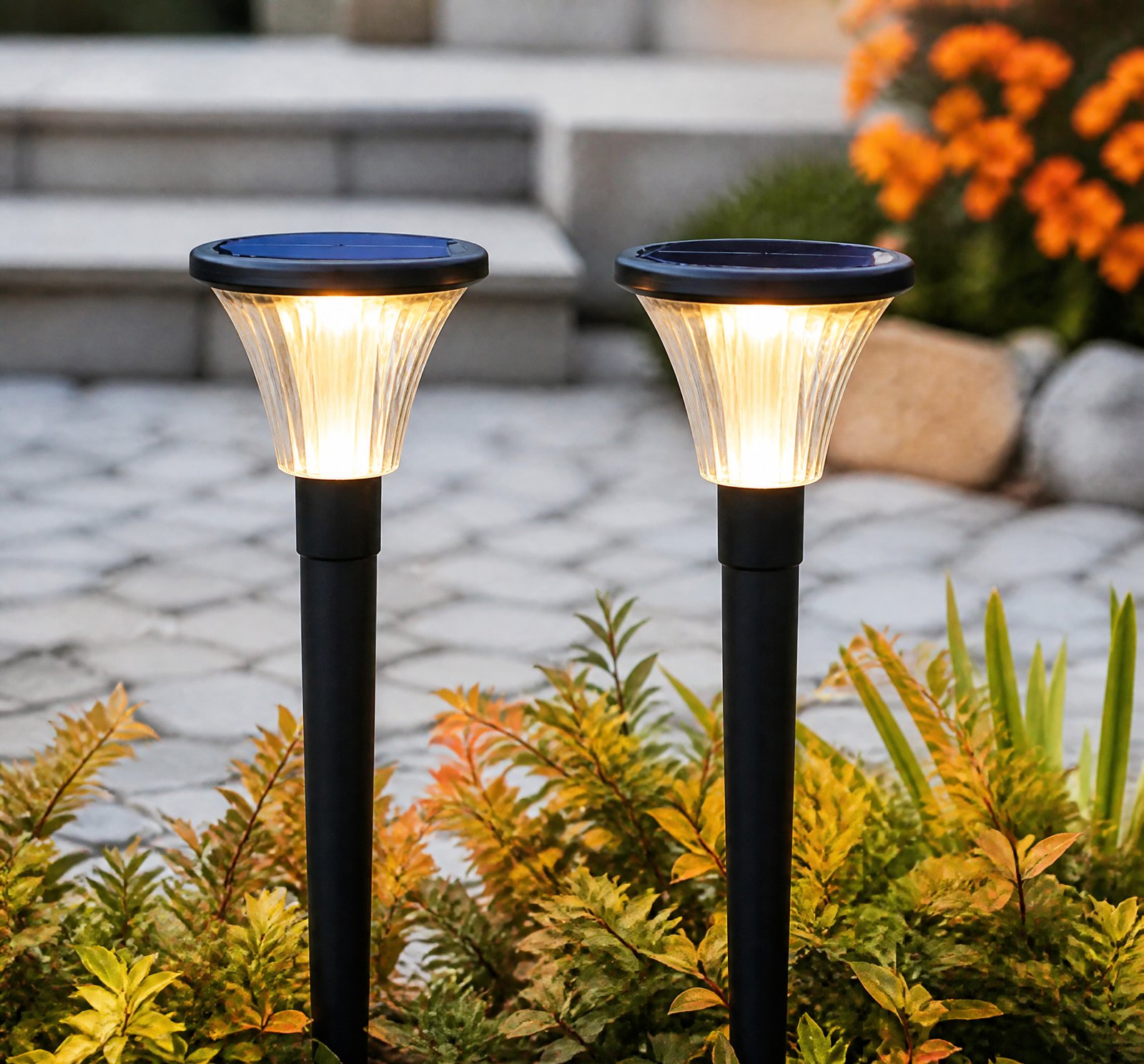
> Quick answer: Moisture ingress at the IP64 and IP65 levels can lead to electrolytic corrosion of SMD LED solder joints, with IP65 offering better protection against water jets. However, no specific data quantifies how this translates into failure rates after three years in Romania’s weather [9].
Moisture ingress is a critical issue for electronic components in solar lamps, especially under harsh Romanian weather conditions. This article delves into the differences between IP64 and IP65 ratings regarding moisture penetration and its impact on SMD LED solder joints over three years.
Moisture Ingress and Corrosion Mechanisms
Moisture is a primary driver of electronic corrosion in solar lighting systems, particularly when combined with temperature fluctuations and ionic contaminants [4]. Electrolytic corrosion can occur when moisture interacts with metal surfaces like solder joints, leading to electrochemical reactions that degrade performance over time. IP65 ratings offer higher protection against water jets compared to IP64, suggesting a reduced risk of moisture ingress under similar conditions [9].
Environmental Stressors and SMD LED Degradation
Environmental stressors such as humidity, temperature cycling, UV exposure, and particulate contamination all play roles in the degradation of solar lighting systems. Temperature cycling can cause thermal expansion and contraction, potentially opening micro-cracks that allow moisture to penetrate and initiate corrosion [4][13]. Even with robust encapsulation, accelerated aging tests simulate decades of field exposure in just months, showing that moisture can permeate over time through vulnerable points like the top of capacitors or at material interfaces [8][14].
IP Ratings and Their Impact on Reliability
While higher IP ratings like IP65 offer better protection against environmental degradation, they do not eliminate the risk entirely. The long-term integrity of gaskets, adhesives, or potting materials under real-world conditions is also crucial. UV-induced degradation can lead to non-uniform corrosion patterns that complicate reliability testing [10][21]. This implies that even if moisture ingress occurs, the resulting corrosion may not manifest immediately or uniformly.
Comparative Analysis of IP64 vs. IP65
| Rating | Protection Level | Common Applications |
|–––|––––––|–––––––|
| IP64 | Dust-tight; Protected against water spray from all directions | General outdoor lighting in moderate conditions |
| IP65 | Dust-tight; Protected against water jets from any direction | Harsh outdoor environments with frequent rain or high humidity |
Key Takeaways
- Moisture ingress is a major contributor to electronic corrosion in solar lighting systems.
- Higher IP ratings like IP65 offer better protection against moisture but do not eliminate the risk entirely.
- Environmental stressors such as humidity, temperature cycling, UV exposure, and particulate contamination all influence long-term reliability.
Frequently Asked Questions
[
{
„q”: „Does higher IP rating guarantee no corrosion over time?”,
„a”: „Higher IP ratings like IP65 offer better protection against water ingress but do not eliminate the risk entirely. Moisture can still permeate over time through vulnerable points, leading to potential corrosion [13].”
},
{
„q”: „How does temperature cycling affect solder joints in solar lamps?”,
„a”: „Temperature cycling causes thermal expansion and contraction, potentially opening micro-cracks that allow moisture to penetrate and initiate corrosion. This effect is particularly pronounced over long periods of exposure [4][13].”
},
{
„q”: „What role does UV exposure play in SMD LED degradation?”,
„a”: „UV exposure can lead to non-uniform corrosion patterns, complicating reliability testing. Even with robust encapsulation, UV-induced degradation can cause moisture to permeate through vulnerable points [10][21].”
}
]
References
- [4] Battling_corrosion_to_keep_solar_panels_humming_LabNews__5e2d80ae — authority
source passage
see what happens over time. “Instead of waiting for 30 years of operation outside under the sun, we bring our PV panels inside to expose them to much higher concentrations of light or put them in thermal chambers to simulate the equivalent of years of temperature cycles,” Olga says. Accelerated lifetime experiments show in six months what could happen over decades, she says. Sandia also studies the mechanisms underlying corrosion. “That’s a greater challenge,” Eric says. “In atmospheric corrosion we have the chemistry of the atmosphere, the particles landing on surfaces, relative humidity, temperature, and so on. We have to understand the interplay of these factors and their interaction with the metal surface.”
- [8] US8847063B2_-_Encapsulation_of_solar_cells_-_Google_Patents__afa4ee8d — patent
source passage
after application by a curtain coater the adhesive was cured in the module in a Mid IR oven having a temperature profile of 120° C. and a speed of 0.5 m per minute for a length of 5 m. The electrical capabilities were measured before and after the 10 day aging process set down in the Humidity Freeze test described in IEC 1215, which comprised 10 cycles of 24 hours with the temperature varying from −40° C. to 85° C. in 85% relative Humidity (RH) Sample Characterization: Electrical characterization of the specimen has been done before and after conditioning, results are summarized in table 6 below None of the samples were showing discoloration or delamination and were passing the wet leakage current test as described in the IEC 1215 after the conditioning. In accordance with the requirements of IEC 1215 after conditioning a sample should not show any open circuit or leakage current, any visual defect and any decrease in maximum power should not be greater than 5% all of which the thin film modules of the present invention using the encapsulant alone (i.e. no adhesive layer required). These findings are totally contrary to the expectations of the industry and use of a silicone encapsulant as hereinbefore described is able to provide the level of protection suitable for solar or photovoltaic module of a polycrystalline Silicon wafer type. In this case the only difference from example 8 was the change in the solar cells used. The adhesive and encapsulant compositions were as descr
- [9] Advanced_silicone_gels_protect_IGBT7_modules_in_PV_inverters__ca968923 — magazine
source passage
gels also exhibit excellent thermal stability, the ability of a material to retain its physical properties when subjected to heat. Importantly, these gels maintain their flexibility and strength through repeated heating and cooling cycles, a common occurrence since solar power production and ambient temperatures increase during the day before power production stops and ambient temperatures fall at night. In power electronics like IGBT7 modules, thermal cycling is also important because load cycling and switching losses can cause temperatures to fluctuate significantly. Moisture resistance and high-voltage protection Advanced silicone gels resist moisture and contaminants that can cause short circuits or corrosion in electronics. When poured into an electronic enclosure, these gels encapsulate electronics and fill voids between IGBTs. Photovoltaic inverters are usually housed in metal or plastic cabinets, but poorly sealed doors, vents or cable entry points can allow the ingress of unwanted substances. Because PV enclosure cabinets are often located outdoors, the ingress of moisture and dust are concerns. These contaminants can also enter an enclosure during routine checks or maintenance activities. To help prevent contamination, PV enclosures are sealed using mechanical gaskets, but these seals are not enough. Ingress Protection (IP) standards describe the degree of protection that a sealed enclosure provides. Higher IP ratings denote greater levels of protection against wate
- [10] Fraunhofer_ISE_evaluates_common_UV_tests_for_TOPCon_modules_for__b48bffd7 — authority
source passage
it remains necessary to further analyze the phenomenon to more accurately predict the long-term effects of UV-induced degradation on module yield.” The investigations by the Fraunhofer ISE research team indicate that UV irradiation during the tests destabilizes the modules to such an extent that they lose a great deal of efficiency during dark storage after UV exposure. Subsequent irradiation with sunlight, on the other hand, leads to a significant recovery effect. Field tests at the Fraunhofer ISE Outdoor Performance Lab with TOPCon modules and analyses of 'field returns' at the institute's CalLab PV Modules, indicate that this stabilization process provides degradation measurements that are significantly closer to the values measured in practice. Some PV modules showed hardly any degradation after UV testing at 60 kilowatt hours per square meter, which roughly corresponds to the UV exposure in one year in Germany, and subsequent stabilization under sunlight. Other modules still showed significant power losses of up to 5 percent even after stabilization. Overall, however, the degradation is significantly less drastic than the standard UV tests suggest. Laboratory UV tests simulate the natural UV radiation to which PV modules are exposed in the field and on roofs, but significantly increase the intensity of the irradiation to accelerate aging and thus be able to predict long-term power losses. Last modified:
- [13] Inverters_and_power_modules_are_key_in_energy_management_-_PV_Tech__2a128211 — authority
source passage
their chemical decomposition. The usual test conditions for lifetime predictions (e.g. T=85 degrees Celsius, F=85% rH) lead to over-testing of the components and to non-representative failures, especially in DC capacitors with the design shown above. For well-founded lifetime predictions, the test conditions must be adapted and further correlated with field data. Moisture ingress Thermally coupled permeation simulations were carried out to visualise the moisture ingress numerically and to provide a base for simulated lifetime estimation. The analytical results show that the moisture ingress starts from the top of the capacitor in the area of the plastic cap. Therefore, the material characteristics of the polyurethane encapsulation and the foil stack were determined experimentally at T=50 degrees Celsius and T=85 degrees Celsius with F=85% rH in each case and the resulting time-dependent moisture distribution in the capacitor was simulated (Figure 4). The results after t=~500 hours initially show a distribution of moisture in the PU above the metallisation. After t=~5,000 hours, the distribution of moisture in the PU has progressed, with the higher diffusion coefficient at T=85 degrees Celsius becoming apparent by the deeper penetration. After ~10,000 hours, the moisture has also diffused into the films. The higher diffusion coefficient of the films at T=85 degrees Celsius is also reflected in the simulation results. In summary, it can be concluded that the accelerated tests f
- [14] US8847063B2_-_Encapsulation_of_solar_cells_-_Google_Patents__afa4ee8d — patent
source passage
% of diallylmaleate cure inhibitor, 0.11 weight % of platinum catalyst and 0.38 weight % of dimethylhydrogen siloxy terminated trifluoropropyl silsesquioxane. The encapsulant was applied onto the module manually and after levelling, was cured in a standard oven at a temperature of 120° C. for 20 mins. The electrical capabilities were measured before and after the 10 day aging process set down in the Humidity Freeze test described in IEC 1646, which comprised 10 cycles of 24 hours with the temperature varying from −40° C. to 85° C. in 85% relative Humidity (RH) and the results are provided in Table 4 below None of the samples tested showed any discoloration or delamination and all samples passed the standard wet leakage current test as defined in the IEC 1646 after the conditioning period. In accordance with the requirements of IEC 1646 after conditioning a sample should not show any open circuit or leakage current, any visual defect and any decrease in maximum power should not be greater than 5% all of which the thin film modules of the present invention using the encapsulant alone (i.e. no adhesive layer required). These findings are totally contrary to the expectations of the industry and use of a silicone encapsulant as hereinbefore described is able to provide the level of protection suitable for solar or photovoltaic module. With the exception that the glass was washed with ethanol instead of acetone and that a different type of commercially available solar cell was used
- [21] UV-induced_Degradation_Comparative_Analysis_of_PV_Module__8e39c653 — authority
source passage
# UV-induced Degradation: Comparative Analysis of PV Module Testing and Stabilization Procedures Against Outdoor Behavior Source: Blog/Web URL: https://publica.fraunhofer.de/entities/publication/d003192d-eeaf-487a-bc2a-5d0543d40cc9 Author: Gebhardt; Paul; Rivera Aguilar; Mariella Josefina; Fokuhl; Esther; Reise; Christian; Frey; Hyrie; Schnabel; Erdmut; Pander; Matthias; Hädrich; Ingrid Date: 2026-03-27 Options 2026 Journal Article Title UV-induced Degradation: Comparative Analysis of PV Module Testing and Stabilization Procedures Against Outdoor Behavior Abstract UV-induced degradation (UVID) represents a critical reliability concern for TOPCon-based photovoltaic modules, yet the correlation between laboratory testing and real-world performance remains poorly understood. This study validates indoor UVID testing protocols against outdoor degradation through comprehensive analysis of four module types across five outdoor sites with up to 28 months of field exposure. We demonstrate that post-UV stabilization via brief light soaking is essential for accurate laboratory assessment, effectively reversing dark storage effects that otherwise confound UVID measurements. Comparative analysis reveals a strong relation between indoor testing (following IEC 61215-2:2021 MQT10) and outdoor degradation when proper stabilization is applied, with indoor slightly but consistently overestimating field degradation for TOPCon modules. Notably, while dark storage effects cause significant power l
see what happens over time. “Instead of waiting for 30 years of operation outside under the sun, we bring our PV panels inside to expose them to much higher concentrations of light or put them in thermal chambers to simulate the equivalent of years of temperature cycles,” Olga says. Accelerated lifetime experiments show in six months what could happen over decades, she says. Sandia also studies the mechanisms underlying corrosion. “That’s a greater challenge,” Eric says. “In atmospheric corrosion we have the chemistry of the atmosphere, the particles landing on surfaces, relative humidity, temperature, and so on. We have to understand the interplay of these factors and their interaction with the metal surface.”
after application by a curtain coater the adhesive was cured in the module in a Mid IR oven having a temperature profile of 120° C. and a speed of 0.5 m per minute for a length of 5 m. The electrical capabilities were measured before and after the 10 day aging process set down in the Humidity Freeze test described in IEC 1215, which comprised 10 cycles of 24 hours with the temperature varying from −40° C. to 85° C. in 85% relative Humidity (RH) Sample Characterization: Electrical characterization of the specimen has been done before and after conditioning, results are summarized in table 6 below None of the samples were showing discoloration or delamination and were passing the wet leakage current test as described in the IEC 1215 after the conditioning. In accordance with the requirements of IEC 1215 after conditioning a sample should not show any open circuit or leakage current, any visual defect and any decrease in maximum power should not be greater than 5% all of which the thin film modules of the present invention using the encapsulant alone (i.e. no adhesive layer required). These findings are totally contrary to the expectations of the industry and use of a silicone encapsulant as hereinbefore described is able to provide the level of protection suitable for solar or photovoltaic module of a polycrystalline Silicon wafer type. In this case the only difference from example 8 was the change in the solar cells used. The adhesive and encapsulant compositions were as descr
gels also exhibit excellent thermal stability, the ability of a material to retain its physical properties when subjected to heat. Importantly, these gels maintain their flexibility and strength through repeated heating and cooling cycles, a common occurrence since solar power production and ambient temperatures increase during the day before power production stops and ambient temperatures fall at night. In power electronics like IGBT7 modules, thermal cycling is also important because load cycling and switching losses can cause temperatures to fluctuate significantly. Moisture resistance and high-voltage protection Advanced silicone gels resist moisture and contaminants that can cause short circuits or corrosion in electronics. When poured into an electronic enclosure, these gels encapsulate electronics and fill voids between IGBTs. Photovoltaic inverters are usually housed in metal or plastic cabinets, but poorly sealed doors, vents or cable entry points can allow the ingress of unwanted substances. Because PV enclosure cabinets are often located outdoors, the ingress of moisture and dust are concerns. These contaminants can also enter an enclosure during routine checks or maintenance activities. To help prevent contamination, PV enclosures are sealed using mechanical gaskets, but these seals are not enough. Ingress Protection (IP) standards describe the degree of protection that a sealed enclosure provides. Higher IP ratings denote greater levels of protection against wate
it remains necessary to further analyze the phenomenon to more accurately predict the long-term effects of UV-induced degradation on module yield.” The investigations by the Fraunhofer ISE research team indicate that UV irradiation during the tests destabilizes the modules to such an extent that they lose a great deal of efficiency during dark storage after UV exposure. Subsequent irradiation with sunlight, on the other hand, leads to a significant recovery effect. Field tests at the Fraunhofer ISE Outdoor Performance Lab with TOPCon modules and analyses of 'field returns' at the institute's CalLab PV Modules, indicate that this stabilization process provides degradation measurements that are significantly closer to the values measured in practice. Some PV modules showed hardly any degradation after UV testing at 60 kilowatt hours per square meter, which roughly corresponds to the UV exposure in one year in Germany, and subsequent stabilization under sunlight. Other modules still showed significant power losses of up to 5 percent even after stabilization. Overall, however, the degradation is significantly less drastic than the standard UV tests suggest. Laboratory UV tests simulate the natural UV radiation to which PV modules are exposed in the field and on roofs, but significantly increase the intensity of the irradiation to accelerate aging and thus be able to predict long-term power losses. Last modified:
their chemical decomposition. The usual test conditions for lifetime predictions (e.g. T=85 degrees Celsius, F=85% rH) lead to over-testing of the components and to non-representative failures, especially in DC capacitors with the design shown above. For well-founded lifetime predictions, the test conditions must be adapted and further correlated with field data. Moisture ingress Thermally coupled permeation simulations were carried out to visualise the moisture ingress numerically and to provide a base for simulated lifetime estimation. The analytical results show that the moisture ingress starts from the top of the capacitor in the area of the plastic cap. Therefore, the material characteristics of the polyurethane encapsulation and the foil stack were determined experimentally at T=50 degrees Celsius and T=85 degrees Celsius with F=85% rH in each case and the resulting time-dependent moisture distribution in the capacitor was simulated (Figure 4). The results after t=~500 hours initially show a distribution of moisture in the PU above the metallisation. After t=~5,000 hours, the distribution of moisture in the PU has progressed, with the higher diffusion coefficient at T=85 degrees Celsius becoming apparent by the deeper penetration. After ~10,000 hours, the moisture has also diffused into the films. The higher diffusion coefficient of the films at T=85 degrees Celsius is also reflected in the simulation results. In summary, it can be concluded that the accelerated tests f
% of diallylmaleate cure inhibitor, 0.11 weight % of platinum catalyst and 0.38 weight % of dimethylhydrogen siloxy terminated trifluoropropyl silsesquioxane. The encapsulant was applied onto the module manually and after levelling, was cured in a standard oven at a temperature of 120° C. for 20 mins. The electrical capabilities were measured before and after the 10 day aging process set down in the Humidity Freeze test described in IEC 1646, which comprised 10 cycles of 24 hours with the temperature varying from −40° C. to 85° C. in 85% relative Humidity (RH) and the results are provided in Table 4 below None of the samples tested showed any discoloration or delamination and all samples passed the standard wet leakage current test as defined in the IEC 1646 after the conditioning period. In accordance with the requirements of IEC 1646 after conditioning a sample should not show any open circuit or leakage current, any visual defect and any decrease in maximum power should not be greater than 5% all of which the thin film modules of the present invention using the encapsulant alone (i.e. no adhesive layer required). These findings are totally contrary to the expectations of the industry and use of a silicone encapsulant as hereinbefore described is able to provide the level of protection suitable for solar or photovoltaic module. With the exception that the glass was washed with ethanol instead of acetone and that a different type of commercially available solar cell was used
# UV-induced Degradation: Comparative Analysis of PV Module Testing and Stabilization Procedures Against Outdoor Behavior Source: Blog/Web URL: https://publica.fraunhofer.de/entities/publication/d003192d-eeaf-487a-bc2a-5d0543d40cc9 Author: Gebhardt; Paul; Rivera Aguilar; Mariella Josefina; Fokuhl; Esther; Reise; Christian; Frey; Hyrie; Schnabel; Erdmut; Pander; Matthias; Hädrich; Ingrid Date: 2026-03-27 Options 2026 Journal Article Title UV-induced Degradation: Comparative Analysis of PV Module Testing and Stabilization Procedures Against Outdoor Behavior Abstract UV-induced degradation (UVID) represents a critical reliability concern for TOPCon-based photovoltaic modules, yet the correlation between laboratory testing and real-world performance remains poorly understood. This study validates indoor UVID testing protocols against outdoor degradation through comprehensive analysis of four module types across five outdoor sites with up to 28 months of field exposure. We demonstrate that post-UV stabilization via brief light soaking is essential for accurate laboratory assessment, effectively reversing dark storage effects that otherwise confound UVID measurements. Comparative analysis reveals a strong relation between indoor testing (following IEC 61215-2:2021 MQT10) and outdoor degradation when proper stabilization is applied, with indoor slightly but consistently overestimating field degradation for TOPCon modules. Notably, while dark storage effects cause significant power l