
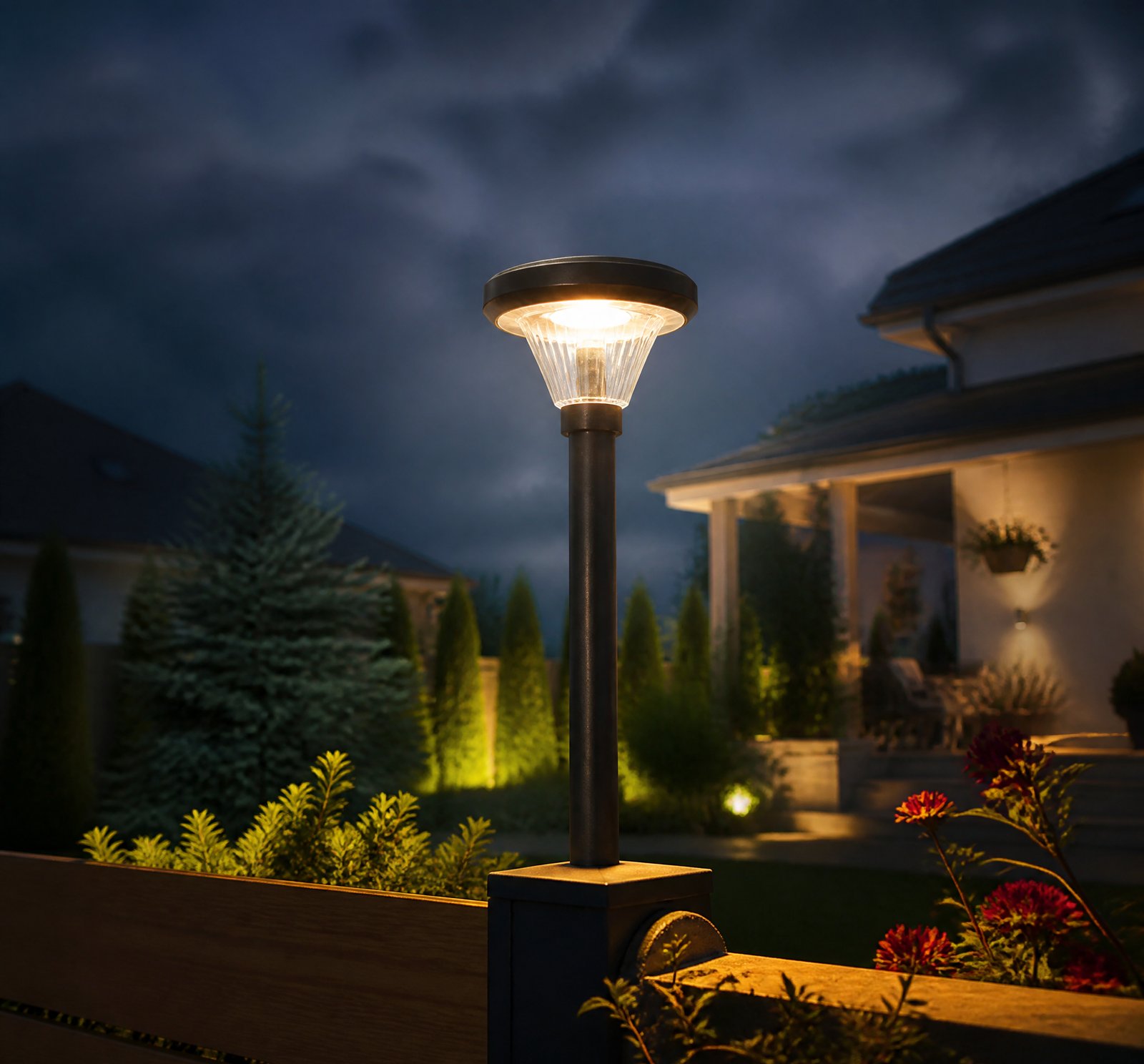
> Quick answer: High-purity aluminum (grades 1050-1070) or UV-stabilized engineering plastics like polycarbonate are commonly used for IP65-rated solar lamp housings in Romania. However, additional protective coatings and sealing are essential to resist corrosion from road salt and humidity [8][10].
In Romania’s harsh climate, solar lamps face significant challenges due to high humidity, temperature swings, and exposure to road salt. The materials used for IP65-rated housings must offer both durability and resistance to corrosion. This article explores the grades of aluminum and plastic commonly employed in these applications and highlights their performance under Romanian conditions.
Aluminum Grades: Thermal Conductivity vs. Corrosion Resistance
Aluminum alloys such as 1050, 1060, and 1070 are frequently used for solar lamp housings due to their superior thermal conductivity [14]. These high-purity aluminum grades (99.5% to 99.7%) excel at dissipating heat from the lamp components [14], but they have limited inherent corrosion resistance [8][10].
Corrosion Concerns with Aluminum
Aluminum, especially in its pure forms like 1060 and 1070, is prone to pitting and galvanic corrosion when exposed to chloride-based environments, such as those found near roads treated with salt [8][10]. Without additional protective measures, these metals can degrade over time, compromising the integrity of solar lamp housings.
Plastic Grades: Moldability and Impact Resistance
Polycarbonate (PC), PMMA (acrylic), and PETG are popular choices for plastic housings due to their moldability, impact resistance, and non-conductivity [15][25]. These materials provide excellent protection against water ingress and environmental stressors [16].
Durability Under Harsh Conditions
While plastics resist moisture and UV degradation under normal conditions, prolonged exposure to road salt and high humidity can lead to material degradation. Over time, these plastics may experience embrittlement, cracking, or loss of mechanical integrity [10][25].
Protective Coatings: Essential for Longevity
Material selection alone is not enough—additional protective measures are crucial for ensuring long-term durability [8][16].
Aluminum Protection
Aluminum housings often require multi-stage coatings or nanocomposite films to block water vapor and corrosive gases, enhancing their resistance to chloride-based corrosion [5][8]. However, these coatings can be expensive and vulnerable to damage from mechanical impact or poor application [8].
Plastic Protection
Plastics benefit from UV stabilizers and chemical resistance additives to prevent degradation under prolonged sun exposure and salt spray conditions [25][16]. Accelerated corrosion testing using salt spray chambers and thermal cycling is essential for predicting long-term performance [9][12].
IP65 Rating: Not a Complete Guarantee
While the IP65 rating ensures protection against dust and water ingress, it does not guarantee internal components are safe from corrosion. Moisture and salt can still infiltrate small openings or accumulate over time, leading to electrolysis and corrosion of internal electronics [6][10].
Internal Corrosion Risks
Dissimilar metals in solar lamp housings increase the risk of galvanic corrosion when exposed to moisture and road salt [22]. The Romanian climate, with its high humidity and frequent use of road salts during winter months, exacerbates these risks. Ensuring proper sealing and material stability is crucial for long-term reliability.
Comparison Table: Aluminum vs. Plastic
| Feature | Aluminum (1050-1070) | Polycarbonate/PMMA/PETG |
|––––––––|––––––––––––––––|––––––––––––––––|
| Thermal Conductivity | High | Low |
| Corrosion Resistance | Limited without coatings [8][10] | Moderate to high with UV stabilizers [25][16] |
| Impact Resistance | Medium | High |
| Cost | Higher with protective coatings | Lower |
Key Takeaways
- Material Selection: High-purity aluminum and engineering plastics are commonly used for IP65-rated solar lamp housings.
- Corrosion Protection: Additional coatings or stabilizers are essential to enhance corrosion resistance in Romanian conditions.
- Testing Requirements: Accelerated testing is necessary to predict long-term performance in corrosive environments.
Frequently Asked Questions
[{
„q”: „What grades of aluminum are commonly used for solar lamp housings?”,
„a”: „Aluminum grades 1050, 1060, and 1070 are commonly used due to their high purity and thermal conductivity. However, they require protective coatings to resist corrosion [8][14].”
}, {
„q”: „How do plastics perform in Romanian weather conditions?”,
„a”: „Engineering polymers like polycarbonate (PC), PMMA (acrylic), and PETG are moldable and impact-resistant but may degrade due to prolonged exposure to road salt and humidity. UV stabilizers are necessary for long-term stability [25][16].”
}, {
„q”: „What is the importance of protective coatings?”,
„a”: „Protective coatings or nanocomposite films are essential for enhancing corrosion resistance in both aluminum and plastic housings, especially under harsh Romanian weather conditions [8][16][9].”
}]
References
- [5] Battling_corrosion_to_keep_solar_panels_humming_News_Releases__3dd95c0c — authority
source passage
2 percent? Maybe we’ll see some that are a half percent, maybe we’ll see some that are 10 percent. Was it a bad original product or was it installed in Costa Rica where the humidity is 80 percent every day?” she said. Spoerke’s team wants to block corrosion altogether. Collaborating with Texas A&M professor Jaime Grunlan, the team is developing nanocomposite films made from inexpensive materials as barriers against water vapor and corrosive gases. The team hopes such composite materials, some 100 times thinner than a human hair, will improve ways to protect solar cells from corrosion. Inorganic components and organic polymers that make up thin films must be designed and mixed carefully. “It’s about assembling those structures in the right way so that you can use inexpensive materials and still get the benefits you want,” Spoerke said. “If you build a house, it’s not just piling together the drywall and two-by-fours and shingles. You’ve got to use the two-by-fours to make the frame, set the drywall on the two-by-fours, and assemble the shingles on the roof.” Thin films aren’t the sole answer, but “I can envision that a technology like the one that we’re developing could be part of a collaborative materials system to help replace glass in next-generation PV applications,” he said. Systems containing metal subject to corrosion Sandia has studied corrosion for decades, analyzing the problem in all kinds of systems because anything containing metal is susceptible. Solar cells’ ele
- [6] PV_Connectors_Energy__075705d0 — authority
source passage
of some metals to high humidity and other environmental stressors; – Supply-chain pressures that lead to cost-cuts in manufacturing, including materials substitution and reduction; – Prevalence of low-quality replacement connectors that are vulnerable to ingress of moisture /and particulates. A Four-Part Investigation Our research spans these topic areas: Onsite inspections include visual inspections for evidence of cross-mating, separation or loose connections, and signs of heat deformation; and thermal inspection via a handheld long-wave infrared camera. Onsite data collection will include connector type, manufacturer and serial number, if known, location of connector in the array, and site metadata, including module make and model, system age, climate zone, exposure to extreme weather, etc. This task will also include development of a master spreadsheet to ensure thorough and consistent data across multiple sites. Connectors removed from photovoltaic systems as a result of onsite inspections, commercially off-the-shelf connectors and connectors obtained via the project’s mail-in program, will be subjected to materials characterization and forensics analysis. The COTS connectors will represent a statistically significant number of each type, based on such data as market share, unit price, morphology and country of origin, and will provide important data on the variation in quality of connectors being sold in the US. Techno-economic analysis (TEA) data will be collected in p
- [8] US10386058B1_-_LED_luminaire_-_Google_Patents__e5fc98f9 — patent
source passage
output decreases. Existing cast aluminum fixtures are a good solution for dissipating heat because aluminum has very good theimal conductive properties that transfer the heat away from the LED light engine to maintain a desired junction temperature of the LED. While this aluminum housing is good at heat dissipation, it is not very good at corrosion resistance, has design limitations, and is heavy. Poorly designed aluminum heat sink housings with the use of higher power LEDs can create many of these problems. Corrosion is a significant issue and a problem for aluminum lighting fixtures. There have been advances made in coating aluminum fixtures to help against corrosion which include expensive multi-stage coatings but these are still susceptible to corrosion in environments that have salt and other types of chemicals and contaminants. These aluminum fixtures can easily deteriorate from both the outside due to the failure of the coating and the inside of the fixture which does not have a protective coating. Another disadvantage of the aluminum LED fixture housing is material cost and the need to perform secondary operations for assembly. Thus, there is a need for a type of lighting fixture that is corrosion resistant inside and outside and yet solves the existing issues with aluminum LED fixtures including high cost and high weight. The present invention relates to a light-emitting diode (LED) luminaire. In an embodiment of the invention, the LED luminaire is corrosion resistan
- [9] Battling_corrosion_to_keep_solar_panels_humming_News_Releases__3dd95c0c — authority
source passage
might spray salt continuously on a surface to qualify coatings and body materials to ensure they’ll be safe and reliable over a product’s lifetime. Engineers use corrosion chambers to study different materials in systems that must meet particular corrosion requirements, or to expose an electronic component to the environment to see what happens over time. “Instead of waiting for 30 years of operation outside under the sun, we bring our PV panels inside to expose them to much higher concentrations of light or put them in thermal chambers to simulate the equivalent of years of temperature cycles,” Lavrova said. Accelerated lifetime experiments show in six months what could happen over decades, she said. Sandia also studies mechanisms underlying corrosion. “That’s a greater challenge,” Schindelholz said. “In atmospheric corrosion we have the chemistry of the atmosphere, the particles landing on surfaces, relative humidity, temperature and so on. We have to understand the interplay of these factors and their interaction with the metal surface.”
- [10] Reliability_requirements_for_offshore_PV_systems_-_PV_Tech__6eb94b41 — magazine
source passage
spray corrosion is a significant challenge in the marine environment. Salt spray contains chloride-containing microdroplets, forming a diffuse system where chloride ions disrupt the protective layer of metals, reducing their mechanical strength. Additionally, salt deposition on module surfaces reduces surface resistance, increasing the risk of leakage current. Furthermore, salt deposition can cause shading, leading to decreased power generation efficiency. High levels of UV radiation in the marine environment can have negative effects on the materials and efficiency of PV modules. Prolonged exposure to UV radiation can lead to material ageing in PV modules, manifested as material hardening, embrittlement, colour changes, etc., thereby affecting the structural stability and performance of the modules. Intense UV radiation can also promote the oxidation and decomposition of organic substances on the surface of glass films, causing wrinkling, cracking, peeling of the film layers and the formation of rainbow spots on the glass surface, resulting in reduced transparency. Offshore areas are often subject to strong winds, posing greater wind loads on PV modules. High winds can directly lead to module damage, thereby reducing the performance of PV systems. Freezing is another challenge in the marine environment. Freezing can damage the structure and electrical components of PV systems, affecting power generation efficiency. Low temperatures can affect the performance of module materi
- [12] Battling_corrosion_to_keep_solar_panels_humming_LabNews__5e2d80ae — authority
source passage
see what happens over time. “Instead of waiting for 30 years of operation outside under the sun, we bring our PV panels inside to expose them to much higher concentrations of light or put them in thermal chambers to simulate the equivalent of years of temperature cycles,” Olga says. Accelerated lifetime experiments show in six months what could happen over decades, she says. Sandia also studies the mechanisms underlying corrosion. “That’s a greater challenge,” Eric says. “In atmospheric corrosion we have the chemistry of the atmosphere, the particles landing on surfaces, relative humidity, temperature, and so on. We have to understand the interplay of these factors and their interaction with the metal surface.”
- [14] US9810416B2_-_Method_for_manufacturing_a_lamp-housing-type__dea72050 — patent
source passage
⅓ to ⅕ of the materials used by conventional die-cast aluminum. The cost of the present invention is only ½ to ⅓ of that of conventional die-cast aluminum. The weight of the lighting device made in the lamp housing of the present invention is also less than half of the conventional one made of die-cast housing. For example, the lighting industry usually adopts high purity aluminum plates of 1050, 1060 and 1070. The heat conductivity of pure aluminum is 237 W/m·K. Aluminum content of 1050 aluminum plate is 99.5% with heat conductivity of 209 W/m·K. Aluminum content of 1060 aluminum plate is 99.6% and the heat conductivity of it should be between 1050 aluminum plate and 1070 aluminum plate. Aluminum content of 1070 aluminum plate is 99.7% with heat conductivity of 226 W/m·K. The heat conductivity of high purity aluminum plate is greatly higher than that of the sectional aluminum which is about 209 W/m·K and much higher than that of die-cast aluminum which is about 95 W/m·K. Therefore, the heat-sink of the present invention provides an excellent heat dissipation effect. For a traditional die-cast aluminum LED bulb or PAR lamp, the circuit board and the lamp-housing-type heat-sink usually contact with each other with only a small area. Heat cannot be transmitted smoothly from the circuit board to the lamp-housing-type heat-sink on this arrangement. Unlike the conventional art, the lamp-housing-type heat-sink 2 of the present invention is composed of a heat-sinking surface 21 and
- [15] Solar_road_stud_-_Wikipedia__81cd184a — wikipedia
source passage
# Solar road stud – Wikipedia Source: Blog/Web URL: https://en.wikipedia.org/wiki/Solar_road_stud Author: Date: 2010-07-24 Solar road studs are flashing solar cell powered LED low-maintenance lighting devices that delineate road edges and centrelines. Embedded in the road surface, they are an electronic improvement on the traditional cat's eyes[1] and raised pavement marker in that they may give drivers a larger reaction window. Averaging about 100 mm square or 100 mm diameter and about 40 mm thick, units are extremely robust to avoid damage by passing vehicles, and are normally constructed of engineering plastics and polycarbonates. Use of solar road studs reduces the necessity of headlight main beams and the accompanying hazard of dazzling oncoming drivers. They are also more visible in rain and fog conditions where the old type retroreflectors and road markings are problematic. The solar cells charge batteries or capacitors during sunlit hours, over which period the flashing LEDs are turned off by a photodetector.[2] Some examples of uses are listed:[3] – Ground lights to warn traffic of an upcoming road hazard or road work. – Improving road illumination in general within the city at night. – Improving road illumination on winding hazardous back roads at night. – Improving road illumination at industrial or shipping sites. – Remote airstrip runway lighting. – Lighting for outdoor mining operations. – Adding or improving illumination on farms for animal or equipment. – At h
- [16] Engineered_Materials_Services_in_Mexico_-_UL_Solutions__58028d2d — authority
source passage
corrosion, swelling, color change, degradation and mechanical performance for parts used in coastal or high salinity regions. IPX4 Water Splash Protection Test Evaluate an automotive component’s ability to withstand water splashes from any direction, confirming reliable performance under rain, road spray and moisture exposure. This test is commonly required for exterior or semi exposed components such as sensors, lighting modules, connectors and electronic housings that may encounter rain, road splash or moisture during normal vehicle operation. Paint performance test Evaluate the durability and visual quality of automotive coatings. Testing includes adhesion, gloss retention, color evaluation, cure and thickness. PCB evaluations tests Environmental, mechanical and functional assessments on printed circuit boards (PCB) used in automotive electronics. Testing includes vibration, thermal shock, temperature/humidity exposure, solder joint integrity and performance under harsh automotive environments. Interior material evaluation Characterize materials used inside the vehicle, including dashboards, seats, door panels, headliners, carpets, lighting housings and coatings. Evaluations cover mechanical properties, fogging color and gloss stability, and aging under heat, light and humidity. Artificial weathering tests Use ultraviolet (UV) and xenon-arc light sources to replicate long-term exposure to sunlight, moisture and temperature changes. This testing predicts how automotive mate
- [22] Benefits_of_protecting_solar_equipment_with_corrosion_inhibitor__d0f5a88b — magazine
source passage
# Benefits of protecting solar equipment with corrosion inhibitor Source: Blog/Web URL: https://solarbuildermag.com/featured/benefits-of-protecting-solar-equipment-with-corrosion-inhibitor/ Author: Contributing Author Date: 2022-09-22 From small solar powered LED lighting to massive solar farms, as well as wind turbines of all sizes, critical components must be able to stand up to constant exposure to sun, rain, dew, humidity, wind, and dust for the life of the system. The challenge is that the internal components, electronics, and wiring of solar panels, inverters, meters, cooling fans, racks, and wiring, as well as wind generators, rotor blades, and towers are susceptible to corrosion and electrolysis, which can compromise function and lifespan. Accumulated dust can also obscure solar panels, reducing their effectiveness in collecting energy from the sun. In response, industry professionals are turning to a unique anti-corrosion protectant, cleaner, and lubricant called StrikeHold. The spray was originally developed to preserve and maintain U.S. military weapons and heavy equipment for use in some of the harshest working conditions in the world. Today it is used to protect circuit boards, electrical circuits, and metal components in corrosive environments while improving electrical continuity and contacts. The spray not only protects the wide range of renewable energy equipment comprised of such components, but also extends its usable life and facilitates more efficient ene
- [25] US9259662B2_-_Photovoltaic_panel-interfaced_solar-greenhouse__c7a2275d — patent
source passage
and chemical resistance properties as well as resistance to mechanical damage provides added benefits for certain solarhouse distillation operations such as the making of sea salt from seawater while co-generating solar electricity as illustrated, for example, in the embodiment of FIG. 3 . In one embodiment, the transparent vapor-condensing solarhouse ceiling is made from a number of transparent materials selected from the group consisting of colorless or clear transparent plastics, such as Acrylic (polymethylamethacrylate), Butyrate (cellulose acetate butyrate), Lexan (polycarbonate), and PETG (glycol modified polyethylene terephthalate), polypropylene, polyethylene (or polyethene) and polyethylene HD, thermally conductive transparent plastics, colorless and transparent conductive paint, colorless glass, borosilicate glass, Pyrex glass, sol-gel, silicone rubber, quartz mineral, transparent cellulose nanofiber/epoxy resin nanocomposites, glass-ceramic materials, transparent ceramics, clear transparent plastics containing certain anti-reflection materials or coatings, clear glass containing certain anti-reflection materials or coatings and combinations thereof. According to one embodiment, an insulating base support material is preferably used on the back or bottom of the photovoltaic panel. This material can also be used on certain side walls of the system and generally lessens the heat loss through conduction. Suitable insulation materials include, but are not limited to, po
2 percent? Maybe we’ll see some that are a half percent, maybe we’ll see some that are 10 percent. Was it a bad original product or was it installed in Costa Rica where the humidity is 80 percent every day?” she said. Spoerke’s team wants to block corrosion altogether. Collaborating with Texas A&M professor Jaime Grunlan, the team is developing nanocomposite films made from inexpensive materials as barriers against water vapor and corrosive gases. The team hopes such composite materials, some 100 times thinner than a human hair, will improve ways to protect solar cells from corrosion. Inorganic components and organic polymers that make up thin films must be designed and mixed carefully. “It’s about assembling those structures in the right way so that you can use inexpensive materials and still get the benefits you want,” Spoerke said. “If you build a house, it’s not just piling together the drywall and two-by-fours and shingles. You’ve got to use the two-by-fours to make the frame, set the drywall on the two-by-fours, and assemble the shingles on the roof.” Thin films aren’t the sole answer, but “I can envision that a technology like the one that we’re developing could be part of a collaborative materials system to help replace glass in next-generation PV applications,” he said. Systems containing metal subject to corrosion Sandia has studied corrosion for decades, analyzing the problem in all kinds of systems because anything containing metal is susceptible. Solar cells’ ele
of some metals to high humidity and other environmental stressors; – Supply-chain pressures that lead to cost-cuts in manufacturing, including materials substitution and reduction; – Prevalence of low-quality replacement connectors that are vulnerable to ingress of moisture /and particulates. A Four-Part Investigation Our research spans these topic areas: Onsite inspections include visual inspections for evidence of cross-mating, separation or loose connections, and signs of heat deformation; and thermal inspection via a handheld long-wave infrared camera. Onsite data collection will include connector type, manufacturer and serial number, if known, location of connector in the array, and site metadata, including module make and model, system age, climate zone, exposure to extreme weather, etc. This task will also include development of a master spreadsheet to ensure thorough and consistent data across multiple sites. Connectors removed from photovoltaic systems as a result of onsite inspections, commercially off-the-shelf connectors and connectors obtained via the project’s mail-in program, will be subjected to materials characterization and forensics analysis. The COTS connectors will represent a statistically significant number of each type, based on such data as market share, unit price, morphology and country of origin, and will provide important data on the variation in quality of connectors being sold in the US. Techno-economic analysis (TEA) data will be collected in p
output decreases. Existing cast aluminum fixtures are a good solution for dissipating heat because aluminum has very good theimal conductive properties that transfer the heat away from the LED light engine to maintain a desired junction temperature of the LED. While this aluminum housing is good at heat dissipation, it is not very good at corrosion resistance, has design limitations, and is heavy. Poorly designed aluminum heat sink housings with the use of higher power LEDs can create many of these problems. Corrosion is a significant issue and a problem for aluminum lighting fixtures. There have been advances made in coating aluminum fixtures to help against corrosion which include expensive multi-stage coatings but these are still susceptible to corrosion in environments that have salt and other types of chemicals and contaminants. These aluminum fixtures can easily deteriorate from both the outside due to the failure of the coating and the inside of the fixture which does not have a protective coating. Another disadvantage of the aluminum LED fixture housing is material cost and the need to perform secondary operations for assembly. Thus, there is a need for a type of lighting fixture that is corrosion resistant inside and outside and yet solves the existing issues with aluminum LED fixtures including high cost and high weight. The present invention relates to a light-emitting diode (LED) luminaire. In an embodiment of the invention, the LED luminaire is corrosion resistan
might spray salt continuously on a surface to qualify coatings and body materials to ensure they’ll be safe and reliable over a product’s lifetime. Engineers use corrosion chambers to study different materials in systems that must meet particular corrosion requirements, or to expose an electronic component to the environment to see what happens over time. “Instead of waiting for 30 years of operation outside under the sun, we bring our PV panels inside to expose them to much higher concentrations of light or put them in thermal chambers to simulate the equivalent of years of temperature cycles,” Lavrova said. Accelerated lifetime experiments show in six months what could happen over decades, she said. Sandia also studies mechanisms underlying corrosion. “That’s a greater challenge,” Schindelholz said. “In atmospheric corrosion we have the chemistry of the atmosphere, the particles landing on surfaces, relative humidity, temperature and so on. We have to understand the interplay of these factors and their interaction with the metal surface.”
spray corrosion is a significant challenge in the marine environment. Salt spray contains chloride-containing microdroplets, forming a diffuse system where chloride ions disrupt the protective layer of metals, reducing their mechanical strength. Additionally, salt deposition on module surfaces reduces surface resistance, increasing the risk of leakage current. Furthermore, salt deposition can cause shading, leading to decreased power generation efficiency. High levels of UV radiation in the marine environment can have negative effects on the materials and efficiency of PV modules. Prolonged exposure to UV radiation can lead to material ageing in PV modules, manifested as material hardening, embrittlement, colour changes, etc., thereby affecting the structural stability and performance of the modules. Intense UV radiation can also promote the oxidation and decomposition of organic substances on the surface of glass films, causing wrinkling, cracking, peeling of the film layers and the formation of rainbow spots on the glass surface, resulting in reduced transparency. Offshore areas are often subject to strong winds, posing greater wind loads on PV modules. High winds can directly lead to module damage, thereby reducing the performance of PV systems. Freezing is another challenge in the marine environment. Freezing can damage the structure and electrical components of PV systems, affecting power generation efficiency. Low temperatures can affect the performance of module materi
see what happens over time. “Instead of waiting for 30 years of operation outside under the sun, we bring our PV panels inside to expose them to much higher concentrations of light or put them in thermal chambers to simulate the equivalent of years of temperature cycles,” Olga says. Accelerated lifetime experiments show in six months what could happen over decades, she says. Sandia also studies the mechanisms underlying corrosion. “That’s a greater challenge,” Eric says. “In atmospheric corrosion we have the chemistry of the atmosphere, the particles landing on surfaces, relative humidity, temperature, and so on. We have to understand the interplay of these factors and their interaction with the metal surface.”
⅓ to ⅕ of the materials used by conventional die-cast aluminum. The cost of the present invention is only ½ to ⅓ of that of conventional die-cast aluminum. The weight of the lighting device made in the lamp housing of the present invention is also less than half of the conventional one made of die-cast housing. For example, the lighting industry usually adopts high purity aluminum plates of 1050, 1060 and 1070. The heat conductivity of pure aluminum is 237 W/m·K. Aluminum content of 1050 aluminum plate is 99.5% with heat conductivity of 209 W/m·K. Aluminum content of 1060 aluminum plate is 99.6% and the heat conductivity of it should be between 1050 aluminum plate and 1070 aluminum plate. Aluminum content of 1070 aluminum plate is 99.7% with heat conductivity of 226 W/m·K. The heat conductivity of high purity aluminum plate is greatly higher than that of the sectional aluminum which is about 209 W/m·K and much higher than that of die-cast aluminum which is about 95 W/m·K. Therefore, the heat-sink of the present invention provides an excellent heat dissipation effect. For a traditional die-cast aluminum LED bulb or PAR lamp, the circuit board and the lamp-housing-type heat-sink usually contact with each other with only a small area. Heat cannot be transmitted smoothly from the circuit board to the lamp-housing-type heat-sink on this arrangement. Unlike the conventional art, the lamp-housing-type heat-sink 2 of the present invention is composed of a heat-sinking surface 21 and
# Solar road stud – Wikipedia Source: Blog/Web URL: https://en.wikipedia.org/wiki/Solar_road_stud Author: Date: 2010-07-24 Solar road studs are flashing solar cell powered LED low-maintenance lighting devices that delineate road edges and centrelines. Embedded in the road surface, they are an electronic improvement on the traditional cat's eyes[1] and raised pavement marker in that they may give drivers a larger reaction window. Averaging about 100 mm square or 100 mm diameter and about 40 mm thick, units are extremely robust to avoid damage by passing vehicles, and are normally constructed of engineering plastics and polycarbonates. Use of solar road studs reduces the necessity of headlight main beams and the accompanying hazard of dazzling oncoming drivers. They are also more visible in rain and fog conditions where the old type retroreflectors and road markings are problematic. The solar cells charge batteries or capacitors during sunlit hours, over which period the flashing LEDs are turned off by a photodetector.[2] Some examples of uses are listed:[3] – Ground lights to warn traffic of an upcoming road hazard or road work. – Improving road illumination in general within the city at night. – Improving road illumination on winding hazardous back roads at night. – Improving road illumination at industrial or shipping sites. – Remote airstrip runway lighting. – Lighting for outdoor mining operations. – Adding or improving illumination on farms for animal or equipment. – At h
corrosion, swelling, color change, degradation and mechanical performance for parts used in coastal or high salinity regions. IPX4 Water Splash Protection Test Evaluate an automotive component’s ability to withstand water splashes from any direction, confirming reliable performance under rain, road spray and moisture exposure. This test is commonly required for exterior or semi exposed components such as sensors, lighting modules, connectors and electronic housings that may encounter rain, road splash or moisture during normal vehicle operation. Paint performance test Evaluate the durability and visual quality of automotive coatings. Testing includes adhesion, gloss retention, color evaluation, cure and thickness. PCB evaluations tests Environmental, mechanical and functional assessments on printed circuit boards (PCB) used in automotive electronics. Testing includes vibration, thermal shock, temperature/humidity exposure, solder joint integrity and performance under harsh automotive environments. Interior material evaluation Characterize materials used inside the vehicle, including dashboards, seats, door panels, headliners, carpets, lighting housings and coatings. Evaluations cover mechanical properties, fogging color and gloss stability, and aging under heat, light and humidity. Artificial weathering tests Use ultraviolet (UV) and xenon-arc light sources to replicate long-term exposure to sunlight, moisture and temperature changes. This testing predicts how automotive mate
# Benefits of protecting solar equipment with corrosion inhibitor Source: Blog/Web URL: https://solarbuildermag.com/featured/benefits-of-protecting-solar-equipment-with-corrosion-inhibitor/ Author: Contributing Author Date: 2022-09-22 From small solar powered LED lighting to massive solar farms, as well as wind turbines of all sizes, critical components must be able to stand up to constant exposure to sun, rain, dew, humidity, wind, and dust for the life of the system. The challenge is that the internal components, electronics, and wiring of solar panels, inverters, meters, cooling fans, racks, and wiring, as well as wind generators, rotor blades, and towers are susceptible to corrosion and electrolysis, which can compromise function and lifespan. Accumulated dust can also obscure solar panels, reducing their effectiveness in collecting energy from the sun. In response, industry professionals are turning to a unique anti-corrosion protectant, cleaner, and lubricant called StrikeHold. The spray was originally developed to preserve and maintain U.S. military weapons and heavy equipment for use in some of the harshest working conditions in the world. Today it is used to protect circuit boards, electrical circuits, and metal components in corrosive environments while improving electrical continuity and contacts. The spray not only protects the wide range of renewable energy equipment comprised of such components, but also extends its usable life and facilitates more efficient ene
and chemical resistance properties as well as resistance to mechanical damage provides added benefits for certain solarhouse distillation operations such as the making of sea salt from seawater while co-generating solar electricity as illustrated, for example, in the embodiment of FIG. 3 . In one embodiment, the transparent vapor-condensing solarhouse ceiling is made from a number of transparent materials selected from the group consisting of colorless or clear transparent plastics, such as Acrylic (polymethylamethacrylate), Butyrate (cellulose acetate butyrate), Lexan (polycarbonate), and PETG (glycol modified polyethylene terephthalate), polypropylene, polyethylene (or polyethene) and polyethylene HD, thermally conductive transparent plastics, colorless and transparent conductive paint, colorless glass, borosilicate glass, Pyrex glass, sol-gel, silicone rubber, quartz mineral, transparent cellulose nanofiber/epoxy resin nanocomposites, glass-ceramic materials, transparent ceramics, clear transparent plastics containing certain anti-reflection materials or coatings, clear glass containing certain anti-reflection materials or coatings and combinations thereof. According to one embodiment, an insulating base support material is preferably used on the back or bottom of the photovoltaic panel. This material can also be used on certain side walls of the system and generally lessens the heat loss through conduction. Suitable insulation materials include, but are not limited to, po