
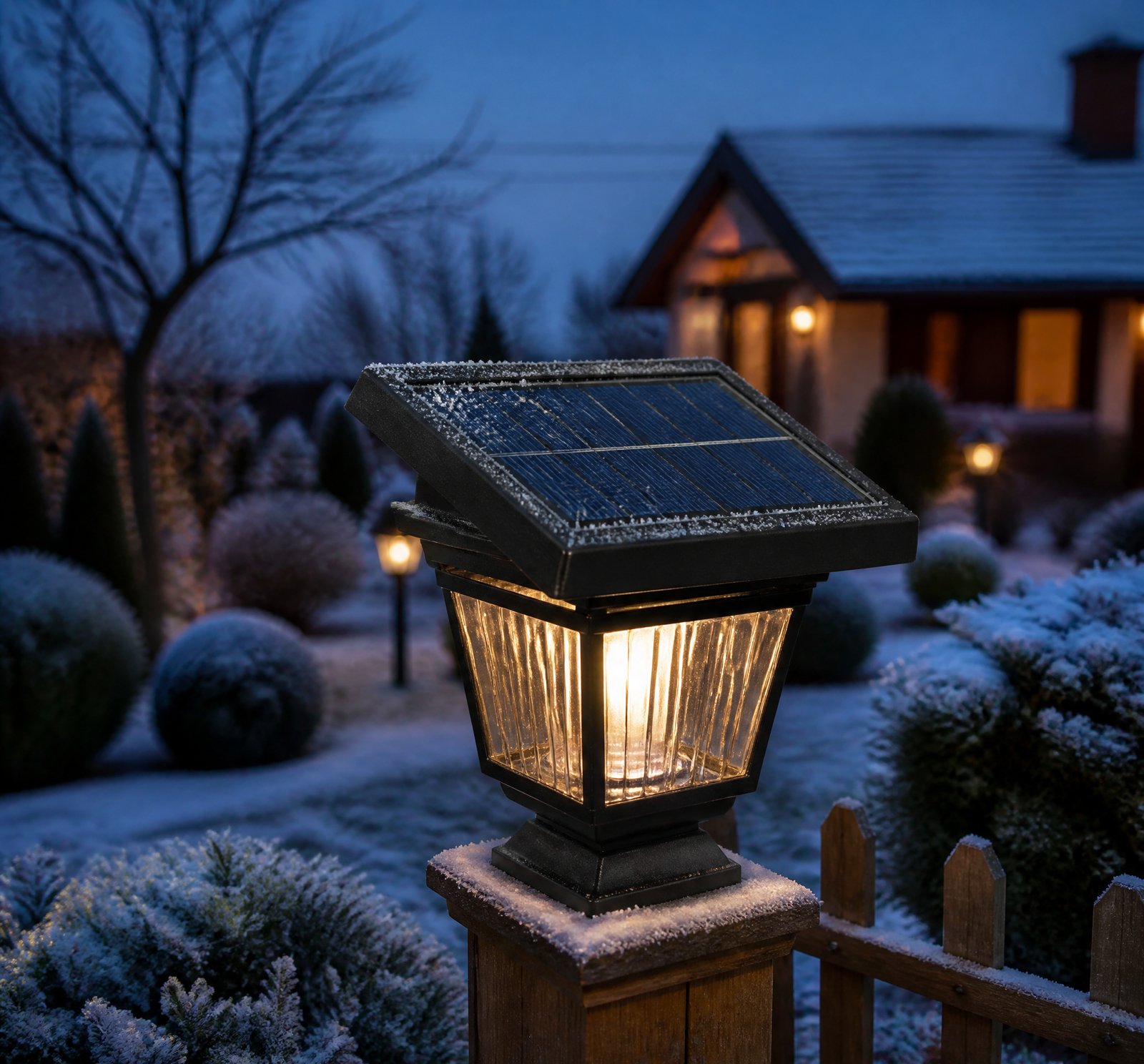
Quick answer: Creșterea eficienței LED-urilor (lm/W) permite panourilor și bateriilor de dimensiuni fixe să producă mai multă lumină. Aceasta se datorează transformării eficiente a energiei solare în lumină, reducând consumul și creșterii duratei de funcționare fără creșterea dimensiunilor componente [3], [9].
În România, unde energia solară devine tot mai accesibilă, lămpile solare reprezintă o soluție durabilă și economică pentru iluminatul stradal, interioar, sau în spații izolate. Cu toate acestea, performanța lor depinde în mare măsură de eficiența LED-urilor utilizate. O eficiență crescută în luminozitate pe watt (lm/W) înseamnă că aceeași cantitate de energie solară captată poate fi transformată într-o lumină mai puternică și mai eficientă — fără a crește dimensiunile panoului sau ale bateriei [3], [9]. Acest factor este esențial pentru optimizarea sistemelelor solare în condițiile climatice variate din România.
Eficacitatea LED-urilor: motorul eficienței sistemelor solare
Eficacitatea LED-urilor, măsurată în lumeni pe watt (lm/W), este un indicator-cheie în performanța iluminatului solar. Pe măsură ce această eficiență crește, sistemul poate oferi un flux luminos mai mare cu aceeași cantitate de energie captată de panoul solar și stocată în baterie [3], [9]. În comparație cu becurile incandescente sau fluorescente, LED-urile consumă mult mai puțină energie pentru a produce aceeași intensitate luminasă, ceea ce face din ele ideal pentru aplicații solare unde energia este limitată [1], [3].
În ultimii ani, eficacitatea LED-urilor a crescut semnificativ — triplându-se până în 2020 — în timp ce eficacitatea becurilor fluorescente compacte (CFL) a rămas relativ constantă [17]. Această evoluție a dus la o scădere a costului total al iluminatului solar, transformând LED-urile într-o alegere tot mai atractivă, chiar și în comparație cu tehnologiile tradiționale [17].
Reducerea dimensiunii panourilor și bateriilor
O eficiență mai mare a LED-urilor înseamnă că pot fi utilizate panouri solare mai mici și baterii cu capacitate mai mică pentru a oferi același nivel de iluminare [3], [9]. Acest lucru este esențial în România, unde spațiile pentru instalarea panourilor sunt adesea limitate (în grădini, terase, interioare). Dimensiuni reduse ale componentelor înseamnă costuri inițiale mai mici, facilități de instalare și o integrare mai ușoară în spațiile urbane sau rurale.
De asemenea, eficiența LED-urilor are un impact direct asupra duratei de viață a bateriei. Sistemele cu LED-uri eficiente necesită mai puține cicluri de încărcare-descărcare, ceea ce reduce uzura și crește durata de viață a bateriei și a controllerului de încărcare [6]. Aceasta înseamnă mai puține înlocuiri pe termen lung și o reducere a costurilor de întreținere — un avantaj major în zonele cu acces limitat la servicii de întreținere.
Dependența de temperatură și impactul climatic în România
Eficiența LED-urilor este influențată și de temperatura de funcționare. În general, eficacitatea crește la temperaturi mai scăzute, ceea ce face ca LED-urile să fie o alegere excelentă pentru România în perioadele reci de iarnă sau în zonele montane [3], [18]. În contrast, în climatul cald și în zonele urbane cu temperaturi ridicate în timpul nopții, eficacitatea poate scădea ușor din cauza încălzirii componentelor [18].
Această caracteristică arată că, în proiectarea sistemelor solare pentru România, trebuie luată în calcul variația temperaturii sezoniere. Cu toate acestea, eficiența crescută a LED-urilor permite o rezistență mai mare la variații termice, menținând o performanță stabilă în condiții extreme [19], [24].
Comparativ: LED vs. alte tehnologii pentru iluminat solar
| Tehnologie | Eficacitate (lm/W) | Durată de viață | Cost inițial | Impact asupra bateriei |
|---|---|---|---|---|
| LED | Peste 200 [19], [24] | 50.000+ ore | Mediu | Redus (mai puține cicluri) [6] |
| CFL | 60–80 [17] | 8.000–10.000 ore | Scăzut | Mai mare (mai multe cicluri) |
| Incandescent | 10–15 | 1.000 ore | Foarte scăzut | Foarte mare |
Această comparație arată clar de ce LED-urile sunt superioare pentru iluminatul solar, chiar și în condiții de costuri inițiale mai mari — economiile pe termen lung sunt semnificative.
Concluzii cheie
- Eficacitatea LED-urilor crește constant, permind lumină mai puternică cu aceeași energie solară [3], [9].
- Dimensiunile panourilor și bateriilor pot fi reduse fără a compromite performanța [3], [9].
- Durata de viață a bateriei crește datorită consumului mai scăzut de energie [6].
- LED-urile sunt mai eficiente în clima rece, tipică României în iarnă [3], [18].
- Investiția inițială în LED-uri se recuperează rapid prin economii de energie și întreținere [17], [19].
References
- [1] The case for solar-powered LED lighting Buildings — authority
source passage
lighting (assuming that the lighting design incorporates multiple LED installations to compensate for shadows in a space measuring 4 feet square). The relatively low lumen output ratings of LED lamps are often times compensated for when looking at the foot-candle levels at the illuminated surfaces. In other words, for outdoor lighting applications, SolarOne estimates that an LED lamp rated at 45 lumens per watt will perform equivalently to a fluorescent bulb rated at 75 lumens per watt. This facet of LEDs offer an enormous side benefit to areas with dark-sky mandates. 2. Optimized system efficiency Solar cells and LEDs share many characteristics – even in the assembly process. For example, both solar cells and LEDs require sorting and balancing to optimize performance. The SOLED mc2 LED Lamp and Lamp Driver is configured to effectively eliminate the need for balancing resistors and their associated losses. Perhaps more significantly, through its range of testing and field experience, SolarOne has identified "sweet spots" in LED operation that optimize current flows and light levels with solar panel and battery costs. The trade-offs are quite different than grid-connected or even automotive applications. This translates into almost a 10% improvement in overall system efficiency. 3. Fine tuned to user needs
- [3] SolarOne Solutions Announces 60 Improvement in LED Lamp Understanding — authority
source passage
# SolarOne® Solutions Announces 60% Improvement in LED Lamp Efficiency – News Source: Blog/Web URL: https://eepower.com/news/solarone-solutions-announces-60-improvement-in-led-lamp-efficiency/ Author: Jeff Shepard Date: 2007-02-06 SolarOne® Solutions Announces 60% Improvement in LED Lamp Efficiency SolarOne® Solutions claims that its standard solar LED lighting systems are now 60% brighter for the same amount of solar energy. The company’s new HL600 lamp delivers 600 lumens at steady-state operating conditions. At over 70 lumens per watt, the HL600 effectively surpasses the lumen per watt performance of many fluorescent bulbs. Outdoor conditions can adversely affect the efficiency of fluorescent bulbs, particularly in cold weather, whereas LED’s efficiency increases under the same conditions. The HL600 replaces the HL380 lamp, rated at 380 lumens, used in SolarOne’s standard product line of lighting systems for general illumination of parking lots, pathways, bus shelters and other pedestrian and low speed areas. The company has been using the higher powered lamp in the field and conducting independent tests on it since last fall. The increased efficiency and brighter lights ultimately result in lower costs to the customer, whether it’s in the form of greater distances between lighting poles or smaller solar panels and battery banks for the same light output. Since it started working with LEDs as a light source, the company claims it has been able to reduce the lumen-hour cost
- [6] US10563827B2 – Solar powered illumination system – Google Patents — patent
source passage
index. The reduction in heat effect on the illumination panel increases a lifespan of the illumination panel by manifolds. The LED module intakes less power to generate a luminescence equivalent to other light sources such as high-pressure sodium lamps, metal halide lamps, and high intensity lamps. The LED modules in the present system also has a wide area coverage by using less power input even comparing conventional LED modules in the market. The conservation of the power leads to running of the rechargeable batteries for 2-3 times longer than the rechargeable batteries implemented in the conventional illumination systems. The illumination system facilitates decrease in a number of charging/discharging cycles of the rechargeable battery, which in turn results in longer battery and charge controller lifetime. The illumination system further has reduced maintenance cost primarily due to the longer lifetime. It is to be understood that the phraseology or terminology employed herein is for the purpose of description and not of limitation. Therefore, while the embodiments herein have been described in terms of preferred embodiments, those skilled in the art will recognize that the embodiments herein can be practiced with modification within the spirit and scope of the claims. Claims (6) 1. A solar based illumination system comprising: a solar panel unit, having at least one solar panel, a rechargeable battery and a charge controller electrically interconnecting the solar panel a
- [9] 6 Trends In Solar Area Lighting – EdisonReport — magazine
source passage
# 6 Trends In Solar Area Lighting Source: Blog/Web URL: https://edisonreport.com/2020/08/18/6-trends-in-solar-area-lighting/ Author: Randy Reid Date: 2020-08-18 Emeryville, CA | August 18, 2020 Distributors, contractors, and specifiers have to keep up with many changes in lighting technology. One of the growing outdoor lighting categories is solar area lights. The global solar lighting market is projected to more than double to $10.8 billion USD by 2024, up from $5.2 billion USD in 2019, a compound annual growth rate (CAGR) of 15.6%, according to the research firm Markets and Markets. Here are six trends in solar area luminaires to be aware of: – Independently aim-able solar panels and LED modules. This allows optimization of solar collection as well as directing light where it is most needed. Placing the solar panel on an angle, equal to the local latitude, will maximize solar energy collection, year-round (https://www.soltechlighting.com/blog/solar-panel-optimization/ ). Angling the solar panel also allows rain, wind, and gravity to naturally clean the solar panel surface. – Increased light output. LED fixture efficacy can now exceed 200 lpW, for some models. This LED efficiency is combining with dramatically improving solar panel and battery power+efficiency, so that some solar area lights can now achieve 9,000+ lumens for a 50W floodlight fixture. – Increased LED run times. The same combination of dramatic efficiency improvements for the LEDs, solar panels, and battery te
- [17] Future of LEDs Lower Cost Higher Efficacy – GreenBuildingAdvisor — authority
source passage
# Future of LEDs: Lower Cost, Higher Efficacy – GreenBuildingAdvisor Source: Blog/Web URL: https://www.greenbuildingadvisor.com/article/future-of-leds-lower-cost-higher-efficacy Author: Scott Gibson Date: 2014-04-14 Light-emitting diodes (LEDs) have been more expensive than compact fluorescent lamps, but the gap is narrowing and the cost of these two types of lights should be comparable in roughly a decade, according to the U.S. Energy Information Administration’s annual energy predictions. At the same time, the efficacy of LEDs — the amount of light in lumens per watt of electricity — will continue to go up, more than tripling by 2020 as the efficacy of CFLs remains about the same. Incandescent bulbs that meet new federal energy standards will be cheapest option on the market until new standards taking effect in 2020 eliminate them entirely, the EIA said. In the meantime, incandescents will continue to have the lowest efficacy of the three. A typical 60-watt incandescent light bulb produces about 16 lumens per watt and lasts an average of 1,000 hours. Halogen incandescents produce about 20 lumens per watt. An equivalent CFL produces about 67 lumens per watt, the EIA said, and lasts 10 times longer. LEDs currently produce about 83 lumens per watt and last about 30,000 hours. The full report, the EIA’s Annual Energy Outlook 2014, will be released in stages during the month of April. The final parts of the report will be out by the end of the month. Weekly Newsletter Get buildi
- [18] Green Lighting IKEA's Commitment — book
source passage
life, but this needs to be determined based on project specifics. Some manu- facturers offer fewer luminaire options where output can only be varied by selecting a higher or lower current. Site modifications can give more control to the contractor than intended. If field changes are made, the life of the installation as well as its cost effectiveness will be altered. LED light sources are likely to gain traction in the outdoor lighting market sooner than some indoor applications. This is helped by the larger size of cast aluminum outdoor luminaire housings, and their ability to act as a required heat sink. Also, the nighttime temperatures in which outdoor lighting operates are more easily within the tolerance for LED operation. This may not be true, however, for hot climates where temperatures do not drop at night. Some manufacturers publish tables for light loss factors under a range of climate conditions. Consult these tables when determining light loss factors for lighting modeling. Energy savings case studies are now numerous for LED retrofits. Following are two examples of small projects with good results: CASE STUDY A hotel replaced 250-watt (295-watt with ballast) MH luminaires with 104-watt LED area lights with a lower lumen output and similar color temperature. The installed cost was partially offset by an efficiency rebate, and resulted in a 5.9-year payback including savings on maintenance, and with electric costs at $0.13 per kWh. An additional benefit was the red
- [19] LED Lighting Technologies, Design, and Applications — book
source passage
they gradually dim and should be replaced once they dim to 70%. Since the LED light’s lifetime is long, less maintenance work on the LED light source is required. Hence, this significantly reduces costs and increases profitability for horticulture industry. Energy efficiency: As measured by radiated power output (lumens) divided by the electrical power input (watts), LED units are very efficient, especially when compared to traditional incandescent bulbs. The energy efficiency of LED lights continues to improve every year. The latest report stated that the LED efficiency had already hit more than 200 lm/W [20]. This means less energy use for plants, thereby saving money. Studies also show that LED lights produce more plant out- put compared to conventional light sources [16, 19]. Radiant heat: LEDs produce almost no radiant heat and so can be positioned close to plants, ensuring maximum light interception. Hence, reduce photon loss and save money. Custom lighting: LEDs produce light in a very narrow wavelength range, so units can be designed to produce light of desired wavelengths, or combined to generate white light. LED arrays of blue and red light that increase photosynthesis can be positioned within crop canopies and close to plants, as shown in Figure 6.18. This further enhances the absorption at lower leaves. Plant productivity: Many studies show that LED lighting produces relatively more crop output compared to overhead HPS lighting. There are many benefits of using LE
- [24] LED bulb efficiency expected to continue improving as cost declines — authority
source passage
# LED bulb efficiency expected to continue improving as cost declines – U.S. Energy Information Administration (EIA) Source: Blog/Web URL: https://www.eia.gov/TODAYINENERGY/detail.php?id=15471 Author: Date: 2026-06-18 Technology improvements for general service lighting, driven by federal efficiency standards, are leading to increased reliability and bulb life. As efficiency increases, residential electricity consumption for lighting declines over time. Although the initial purchase price is higher for more efficient technologies than for traditional bulbs, significant savings are achieved over the life of the bulb (also called a lamp). Lighting standards mandated by the Energy Independence and Security Act of 2007 affect general service lighting, the bulbs most commonly used for residential lighting. At the beginning of 2014, these standards required the production of higher-efficiency alternatives to traditional 40- to 60-Watt-equivalent incandescent lamps, which follow prior standards for 75-Watt and 100-Watt lamps. Between now and 2020, halogen incandescent lamps will be able to comply with applicable standards for general service lighting—a standard that traditional incandescent lamps cannot meet. An additional round of standards taking effect in 2020 will likely be too stringent for halogen incandescent lamps to meet, and major manufacturers have already focused development on more-efficient technologies. The efficiency (also called efficacy—the light output per unit of
lighting (assuming that the lighting design incorporates multiple LED installations to compensate for shadows in a space measuring 4 feet square). The relatively low lumen output ratings of LED lamps are often times compensated for when looking at the foot-candle levels at the illuminated surfaces. In other words, for outdoor lighting applications, SolarOne estimates that an LED lamp rated at 45 lumens per watt will perform equivalently to a fluorescent bulb rated at 75 lumens per watt. This facet of LEDs offer an enormous side benefit to areas with dark-sky mandates. 2. Optimized system efficiency Solar cells and LEDs share many characteristics – even in the assembly process. For example, both solar cells and LEDs require sorting and balancing to optimize performance. The SOLED mc2 LED Lamp and Lamp Driver is configured to effectively eliminate the need for balancing resistors and their associated losses. Perhaps more significantly, through its range of testing and field experience, SolarOne has identified "sweet spots" in LED operation that optimize current flows and light levels with solar panel and battery costs. The trade-offs are quite different than grid-connected or even automotive applications. This translates into almost a 10% improvement in overall system efficiency. 3. Fine tuned to user needs
# SolarOne® Solutions Announces 60% Improvement in LED Lamp Efficiency – News Source: Blog/Web URL: https://eepower.com/news/solarone-solutions-announces-60-improvement-in-led-lamp-efficiency/ Author: Jeff Shepard Date: 2007-02-06 SolarOne® Solutions Announces 60% Improvement in LED Lamp Efficiency SolarOne® Solutions claims that its standard solar LED lighting systems are now 60% brighter for the same amount of solar energy. The company’s new HL600 lamp delivers 600 lumens at steady-state operating conditions. At over 70 lumens per watt, the HL600 effectively surpasses the lumen per watt performance of many fluorescent bulbs. Outdoor conditions can adversely affect the efficiency of fluorescent bulbs, particularly in cold weather, whereas LED’s efficiency increases under the same conditions. The HL600 replaces the HL380 lamp, rated at 380 lumens, used in SolarOne’s standard product line of lighting systems for general illumination of parking lots, pathways, bus shelters and other pedestrian and low speed areas. The company has been using the higher powered lamp in the field and conducting independent tests on it since last fall. The increased efficiency and brighter lights ultimately result in lower costs to the customer, whether it’s in the form of greater distances between lighting poles or smaller solar panels and battery banks for the same light output. Since it started working with LEDs as a light source, the company claims it has been able to reduce the lumen-hour cost
index. The reduction in heat effect on the illumination panel increases a lifespan of the illumination panel by manifolds. The LED module intakes less power to generate a luminescence equivalent to other light sources such as high-pressure sodium lamps, metal halide lamps, and high intensity lamps. The LED modules in the present system also has a wide area coverage by using less power input even comparing conventional LED modules in the market. The conservation of the power leads to running of the rechargeable batteries for 2-3 times longer than the rechargeable batteries implemented in the conventional illumination systems. The illumination system facilitates decrease in a number of charging/discharging cycles of the rechargeable battery, which in turn results in longer battery and charge controller lifetime. The illumination system further has reduced maintenance cost primarily due to the longer lifetime. It is to be understood that the phraseology or terminology employed herein is for the purpose of description and not of limitation. Therefore, while the embodiments herein have been described in terms of preferred embodiments, those skilled in the art will recognize that the embodiments herein can be practiced with modification within the spirit and scope of the claims. Claims (6) 1. A solar based illumination system comprising: a solar panel unit, having at least one solar panel, a rechargeable battery and a charge controller electrically interconnecting the solar panel a
# 6 Trends In Solar Area Lighting Source: Blog/Web URL: https://edisonreport.com/2020/08/18/6-trends-in-solar-area-lighting/ Author: Randy Reid Date: 2020-08-18 Emeryville, CA | August 18, 2020 Distributors, contractors, and specifiers have to keep up with many changes in lighting technology. One of the growing outdoor lighting categories is solar area lights. The global solar lighting market is projected to more than double to $10.8 billion USD by 2024, up from $5.2 billion USD in 2019, a compound annual growth rate (CAGR) of 15.6%, according to the research firm Markets and Markets. Here are six trends in solar area luminaires to be aware of: – Independently aim-able solar panels and LED modules. This allows optimization of solar collection as well as directing light where it is most needed. Placing the solar panel on an angle, equal to the local latitude, will maximize solar energy collection, year-round (https://www.soltechlighting.com/blog/solar-panel-optimization/ ). Angling the solar panel also allows rain, wind, and gravity to naturally clean the solar panel surface. – Increased light output. LED fixture efficacy can now exceed 200 lpW, for some models. This LED efficiency is combining with dramatically improving solar panel and battery power+efficiency, so that some solar area lights can now achieve 9,000+ lumens for a 50W floodlight fixture. – Increased LED run times. The same combination of dramatic efficiency improvements for the LEDs, solar panels, and battery te
# Future of LEDs: Lower Cost, Higher Efficacy – GreenBuildingAdvisor Source: Blog/Web URL: https://www.greenbuildingadvisor.com/article/future-of-leds-lower-cost-higher-efficacy Author: Scott Gibson Date: 2014-04-14 Light-emitting diodes (LEDs) have been more expensive than compact fluorescent lamps, but the gap is narrowing and the cost of these two types of lights should be comparable in roughly a decade, according to the U.S. Energy Information Administration’s annual energy predictions. At the same time, the efficacy of LEDs — the amount of light in lumens per watt of electricity — will continue to go up, more than tripling by 2020 as the efficacy of CFLs remains about the same. Incandescent bulbs that meet new federal energy standards will be cheapest option on the market until new standards taking effect in 2020 eliminate them entirely, the EIA said. In the meantime, incandescents will continue to have the lowest efficacy of the three. A typical 60-watt incandescent light bulb produces about 16 lumens per watt and lasts an average of 1,000 hours. Halogen incandescents produce about 20 lumens per watt. An equivalent CFL produces about 67 lumens per watt, the EIA said, and lasts 10 times longer. LEDs currently produce about 83 lumens per watt and last about 30,000 hours. The full report, the EIA’s Annual Energy Outlook 2014, will be released in stages during the month of April. The final parts of the report will be out by the end of the month. Weekly Newsletter Get buildi
life, but this needs to be determined based on project specifics. Some manu- facturers offer fewer luminaire options where output can only be varied by selecting a higher or lower current. Site modifications can give more control to the contractor than intended. If field changes are made, the life of the installation as well as its cost effectiveness will be altered. LED light sources are likely to gain traction in the outdoor lighting market sooner than some indoor applications. This is helped by the larger size of cast aluminum outdoor luminaire housings, and their ability to act as a required heat sink. Also, the nighttime temperatures in which outdoor lighting operates are more easily within the tolerance for LED operation. This may not be true, however, for hot climates where temperatures do not drop at night. Some manufacturers publish tables for light loss factors under a range of climate conditions. Consult these tables when determining light loss factors for lighting modeling. Energy savings case studies are now numerous for LED retrofits. Following are two examples of small projects with good results: CASE STUDY A hotel replaced 250-watt (295-watt with ballast) MH luminaires with 104-watt LED area lights with a lower lumen output and similar color temperature. The installed cost was partially offset by an efficiency rebate, and resulted in a 5.9-year payback including savings on maintenance, and with electric costs at $0.13 per kWh. An additional benefit was the red
they gradually dim and should be replaced once they dim to 70%. Since the LED light’s lifetime is long, less maintenance work on the LED light source is required. Hence, this significantly reduces costs and increases profitability for horticulture industry. Energy efficiency: As measured by radiated power output (lumens) divided by the electrical power input (watts), LED units are very efficient, especially when compared to traditional incandescent bulbs. The energy efficiency of LED lights continues to improve every year. The latest report stated that the LED efficiency had already hit more than 200 lm/W [20]. This means less energy use for plants, thereby saving money. Studies also show that LED lights produce more plant out- put compared to conventional light sources [16, 19]. Radiant heat: LEDs produce almost no radiant heat and so can be positioned close to plants, ensuring maximum light interception. Hence, reduce photon loss and save money. Custom lighting: LEDs produce light in a very narrow wavelength range, so units can be designed to produce light of desired wavelengths, or combined to generate white light. LED arrays of blue and red light that increase photosynthesis can be positioned within crop canopies and close to plants, as shown in Figure 6.18. This further enhances the absorption at lower leaves. Plant productivity: Many studies show that LED lighting produces relatively more crop output compared to overhead HPS lighting. There are many benefits of using LE
# LED bulb efficiency expected to continue improving as cost declines – U.S. Energy Information Administration (EIA) Source: Blog/Web URL: https://www.eia.gov/TODAYINENERGY/detail.php?id=15471 Author: Date: 2026-06-18 Technology improvements for general service lighting, driven by federal efficiency standards, are leading to increased reliability and bulb life. As efficiency increases, residential electricity consumption for lighting declines over time. Although the initial purchase price is higher for more efficient technologies than for traditional bulbs, significant savings are achieved over the life of the bulb (also called a lamp). Lighting standards mandated by the Energy Independence and Security Act of 2007 affect general service lighting, the bulbs most commonly used for residential lighting. At the beginning of 2014, these standards required the production of higher-efficiency alternatives to traditional 40- to 60-Watt-equivalent incandescent lamps, which follow prior standards for 75-Watt and 100-Watt lamps. Between now and 2020, halogen incandescent lamps will be able to comply with applicable standards for general service lighting—a standard that traditional incandescent lamps cannot meet. An additional round of standards taking effect in 2020 will likely be too stringent for halogen incandescent lamps to meet, and major manufacturers have already focused development on more-efficient technologies. The efficiency (also called efficacy—the light output per unit of