
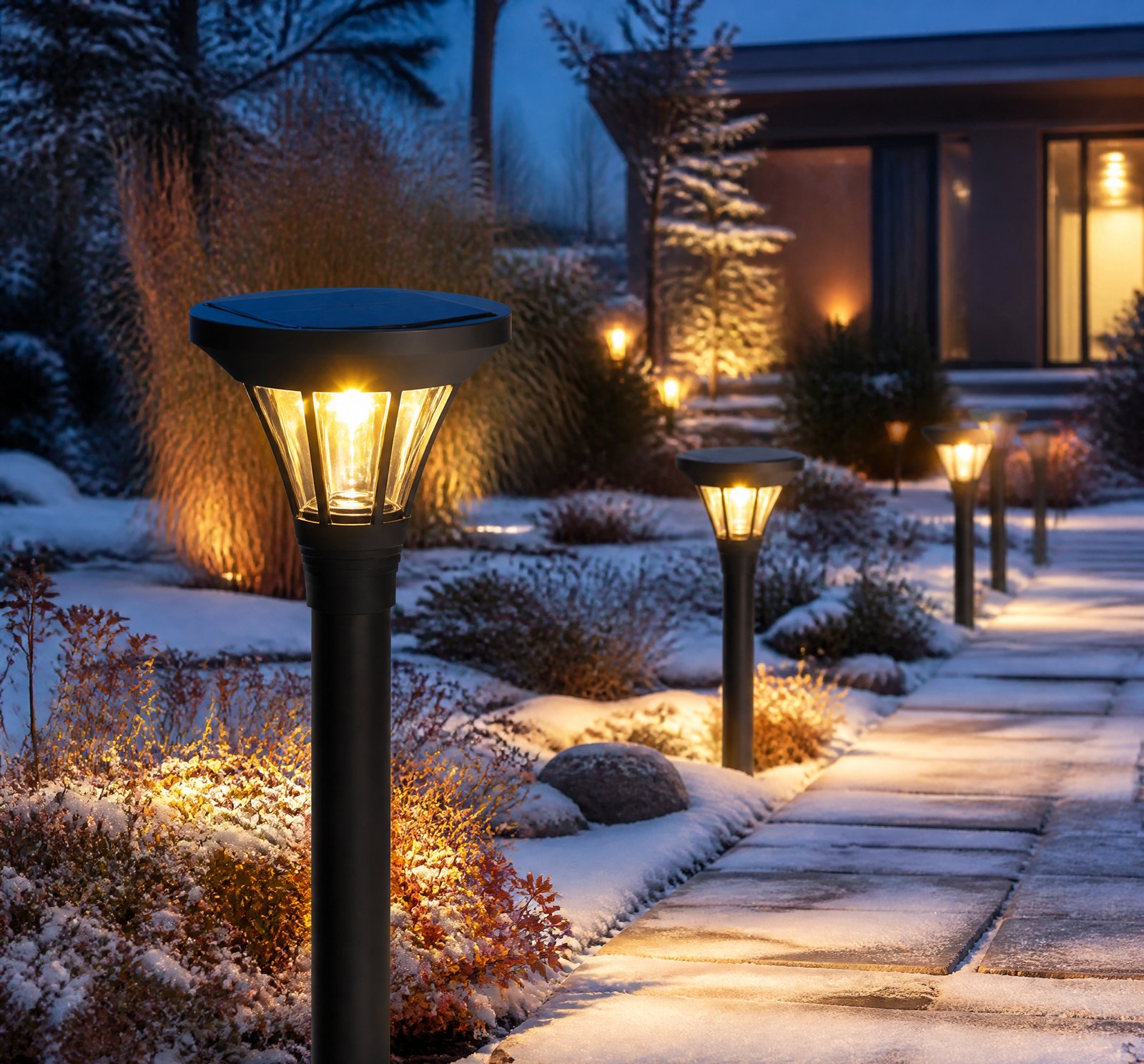
> Quick answer: The integrity of housing seals, gaskets, and cable entries is crucial for the long-term waterproof performance of solar lamps. Failures in these components can lead to water ingress, causing short circuits, corrosion, and premature failure [1][3].
Maintaining Long-Term Waterproof Performance: The Role of Seals, Gaskets, and Cable Entries
The longevity and reliability of solar lamps in Romania are significantly influenced by the effectiveness of their waterproofing systems. This article delves into how housing seals, gaskets, and cable entries contribute to long-term performance and what can go wrong if these components fail.
The Importance of Housing Seals
Housing seals, gaskets, and cable entries serve as the primary defense against environmental ingress in solar lamps [1][3]. When these components are compromised, water and humidity can penetrate the housing, leading to short circuits, corrosion, and premature failure of electronic components such as switches, processors, and batteries. A housing is considered „waterproof” if it remains dry after submersion in water to a depth of at least three feet for one hour [6][15]. This standard emphasizes the rigorous demands placed on sealing systems.
Gaskets under compression are commonly used to achieve this level of waterproofing, especially in battery-operated devices where the internal environment must remain dry [6][15]. However, their effectiveness is not static and can be challenged by thermal cycling and material mismatch. Different materials—such as metals, plastics, and glass—expand and contract at varying rates with temperature changes [3], leading to micro-cracks that allow water and humidity to enter over time [3].
Cable Entries: Another Weakened Link
Cable entries are another critical weak point in solar lamp design. Even if the housing and gaskets are robust, poorly designed or degraded cable entries can become primary ingress points for moisture and particulates [4][9]. In industrial and coastal environments, salt spray and high humidity can accelerate corrosion of metal housings and mounting hardware, compromising structural integrity and further degrading seals [9][10].
This suggests that material selection and sealing design must be co-optimized, particularly for harsh environments. In coastal installations where iron or regular steel bodies oxidize quickly, even minor corrosion can lead to rapid failure of the entire system within months [10].
The Role of Internal Gas Pressure
Internal gas pressure further complicates sealing performance in battery-operated devices. Dry cells generate hydrogen and carbon dioxide over time, especially at elevated temperatures [6][23]. In a sealed housing, these gases accumulate, increasing internal pressure. If not properly vented, this pressure can deform or rupture seals, leading to failure even if the housing was initially intact [23].
A gas discharge vent assembly may be necessary to prevent pressure-related seal failure, especially in long-term deployments [6].
Advanced Materials and Design Innovations
Advanced materials offer promising solutions. Silicone gels, for instance, exhibit excellent thermal stability and maintain flexibility through repeated heating and cooling cycles [8]. These gels resist moisture and contaminants, preventing short circuits and corrosion and are particularly effective in environments with high thermal cycling.
Similarly, innovations like the Windproof Module with tempered glass, transparent mesh backsheet, and steel frame demonstrate that structural integrity and material durability can be enhanced through integrated design. Such systems are engineered to withstand extreme weather, including wind, rain, and temperature extremes [17].
Key Takeaways
- Housing seals, gaskets, and cable entries are critical for long-term waterproof performance.
- Thermal cycling and material mismatch can compromise sealing system integrity over time.
- Proper venting is necessary to manage internal gas pressure and prevent seal failure.
Frequently Asked Questions
[
{
„q”: „How do thermal cycles affect the seals of solar lamps?”,
„a”: „Thermal cycles cause different materials in a lamp housing—such as metals, plastics, and glass—to expand and contract at varying rates. This can lead to micro-cracks that allow water ingress over time [3].”
},
{
„q”: „What role does salt spray play in the degradation of solar lamps?”,
„a”: „In coastal environments, salt spray accelerates corrosion of metal housings and mounting hardware, compromising structural integrity and degrading seals. This can lead to rapid failure within months [10].”
},
{
„q”: „Why is venting important for battery-operated solar lamps?”,
„a”: „Dry cells generate hydrogen and carbon dioxide over time, increasing internal pressure in a sealed housing. Proper venting prevents this pressure from deforming or rupturing seals [23].”
}
]
References
- [1] US8585245B2_-_Systems_and_methods_for_sealing_-_Google_Patents__154e7e2e — patent
source passage
systems, such as the lighting systems may be used in a variety of applications and deployed in many different settings and environments. Lighting fixtures may be used in environments that are prone to exposure to natural elements, such as rain, snow, heat, cold, humidity, water or wind. These and other natural elements may cause problems and even malfunctions of lighting units which may include electronic and/or electrical components. Short circuit contacts may be caused by water or humidity which may destroy the electronic components such as switches or processors, thus decreasing the life span of the lighting fixtures and increasing the maintenance cost. Shielding the lighting units from these natural elements may become even more challenging as the rates of extension and contraction of different materials used for building the lighting fixtures may vary. This variation in extension and contraction rates between different materials may cause seals to crack along the interfaces of these materials. The cracks may provide openings for leakages, which may be even exacerbated by future contractions and expansions of materials as some parts of lighting units expand much more than other parts. The present disclosure addresses these issues by providing a reliable and comprehensive enclosure system that seals a lighting fixture from outside elements. The systems, apparatuses and techniques of the present disclosure provide a lasting seal for the lighting fixture regardless of the ra
- [3] US8585245B2_-_Systems_and_methods_for_sealing_-_Google_Patents__154e7e2e — patent
source passage
may cause problems and even malfunctions of lighting units which may include electronic and/or electrical components. Short circuit contacts may be caused by water or humidity which may destroy the electronic components such as switches or processors, thus decreasing the life span of the lighting fixtures and increasing the maintenance cost. Shielding the lighting units from these natural elements may become even more challenging as the rates of extension and contraction of different materials used for building the lighting fixtures may vary. This variation in extension and contraction rates between different materials may cause seals to crack along the interfaces of these materials. The cracks may provide openings for leakages, which may be even exacerbated by future contractions and expansions of materials as some parts of lighting units expand much more than other parts. – the present disclosure addresses these issues by providing a reliable and comprehensive enclosure system that seals a lighting fixture from outside elements. – the systems, apparatuses and techniques of the present disclosure provide a lasting seal for the lighting fixture regardless of the rates of expansion and contraction different materials may experience. – the systems, apparatuses and techniques described herein also allow for a water-tight seal regardless of sizes and lengths of enclosure components. – the solution presented may utilize one or more silicone gaskets in combination with one or more
- [4] PV_Connectors_Energy__075705d0 — authority
source passage
of some metals to high humidity and other environmental stressors; – Supply-chain pressures that lead to cost-cuts in manufacturing, including materials substitution and reduction; – Prevalence of low-quality replacement connectors that are vulnerable to ingress of moisture /and particulates. A Four-Part Investigation Our research spans these topic areas: Onsite inspections include visual inspections for evidence of cross-mating, separation or loose connections, and signs of heat deformation; and thermal inspection via a handheld long-wave infrared camera. Onsite data collection will include connector type, manufacturer and serial number, if known, location of connector in the array, and site metadata, including module make and model, system age, climate zone, exposure to extreme weather, etc. This task will also include development of a master spreadsheet to ensure thorough and consistent data across multiple sites. Connectors removed from photovoltaic systems as a result of onsite inspections, commercially off-the-shelf connectors and connectors obtained via the project’s mail-in program, will be subjected to materials characterization and forensics analysis. The COTS connectors will represent a statistically significant number of each type, based on such data as market share, unit price, morphology and country of origin, and will provide important data on the variation in quality of connectors being sold in the US. Techno-economic analysis (TEA) data will be collected in p
- [6] US4237526A_-_Battery_operated_device_having_a_waterproof_housing__4018fa31 — patent
source passage
or housing for the lamp is considered to be "waterproof” if the interior of the lamp remains dry after the lamp has been submerged in water to a depth of at least three feet for a period of at least one hour. It is common practice to employ a gasket under compression to seal the housing of the electrical lamp to satisfy the waterproof requirement. – a dry galvanic cell develops gas during the normal course of storage and discharge reactions within the cell. – the volume of gas generated by a dry cell with respect to time is dependent upon the selected electrochemical system for the cell, the chemistry of the source materials, and the conditions of storage and use of the cell. – the type of sealing arrangement used for the cell container will determine the rate and extent to which generated gas will escape the cell container and outer finish into the surrounding housing. – primary dry cells based on manganese dioxide and zinc electrodes relatively moderate to heavy gassing of H 2 and CO 2 is an inherent characteristic. – commercially available Leclanche and zinc chloride primary dry cells are usually vented. Accordingly, evolved hydrogen and CO 2 readily escape from such cells. – the present invention is, in general, most useful in devices containing a vented primary dry cell based on a manganese dioxide and zinc electrode system. – Devices of the subject invention are designed to contain and operate on a given number of unit cells of a specific size or alternatively a multice
- [8] Advanced_silicone_gels_protect_IGBT7_modules_in_PV_inverters__ca968923 — magazine
source passage
gels also exhibit excellent thermal stability, the ability of a material to retain its physical properties when subjected to heat. Importantly, these gels maintain their flexibility and strength through repeated heating and cooling cycles, a common occurrence since solar power production and ambient temperatures increase during the day before power production stops and ambient temperatures fall at night. In power electronics like IGBT7 modules, thermal cycling is also important because load cycling and switching losses can cause temperatures to fluctuate significantly. Moisture resistance and high-voltage protection Advanced silicone gels resist moisture and contaminants that can cause short circuits or corrosion in electronics. When poured into an electronic enclosure, these gels encapsulate electronics and fill voids between IGBTs. Photovoltaic inverters are usually housed in metal or plastic cabinets, but poorly sealed doors, vents or cable entry points can allow the ingress of unwanted substances. Because PV enclosure cabinets are often located outdoors, the ingress of moisture and dust are concerns. These contaminants can also enter an enclosure during routine checks or maintenance activities. To help prevent contamination, PV enclosures are sealed using mechanical gaskets, but these seals are not enough. Ingress Protection (IP) standards describe the degree of protection that a sealed enclosure provides. Higher IP ratings denote greater levels of protection against wate
- [9] Environmental_Conditions_That_Impact_Industrial_Lighting_Reliability__ab57af9a — magazine
source passage
to humidity, washdowns or salt spray may experience accelerated corrosion of fixture housings and mounting hardware. Over time, this corrosion can compromise both lighting performance and fixture integrity. Lighting systems designed for these environments often incorporate protective finishes, corrosion-resistant materials and sealed enclosures to help maintain durability under these conditions. Vibration and Mechanical Stress Continuous vibration from heavy industrial equipment is another factor that can affect lighting reliability. Fixtures mounted near motors, conveyors or other machinery may experience constant mechanical stress over time. Although LED lighting technology is generally more robust than traditional light sources, poorly designed fixtures can still suffer failures related to vibration. Drivers, electrical connections, and mechanical components may loosen or degrade if they are not engineered to withstand these conditions. Fixtures tested for vibration resistance and designed with rugged mechanical construction are better suited for environments where equipment operates continuously. Considering Environmental Conditions in Lighting Design Lighting plays a critical role in maintaining safe and efficient operations across industrial facilities. However, environmental factors such as dust, chemical exposure, high temperatures, moisture and vibration can all influence how reliably lighting systems perform over time. Evaluating these environmental conditions durin
- [10] Solar_Street_Light_From_Germany__Why_Solar_Street_Lighting_Fails_in_Storms_Structural_Integrity_for_EPC_Projects__yvEyflD92L4 — youtube
source passage
# Why Solar Street Lighting Fails in Storms? (Structural Integrity for EPC Projects) Source: YouTube — Solar Street Light From Germany URL: https://www.youtube.com/watch?v=yvEyflD92L4 Video ID: yvEyflD92L4 Transcript: generated The long-term durability of a solar street lighting project doesn't depend only on the battery. It also depends on how strong and stable the structure is. Often, lights collapse during powerful storms or the body corrodes within just a few months due to salty air. This puts your entire investment at serious risk. Why do such mechanical failures occur? In today's technical discussion, we'll explore the real secrets behind the durability of solar street lighting systems. In coastal or industrial areas, salt in the air causes iron or regular steel bodies to oxidize quickly and develop rust. Once holes form in the structure, rainwater can directly reach the battery and circuitry, rendering the entire system unusable. On the other hand, low-quality plastic bodies tend to crack under excessive sunlight. Once this kind of damage begins, it becomes nearly impossible to repair and significantly increases the overall project cost. When lights are installed on tall poles, wind pressure or wind load increases significantly. If the bracket or overall mechanical design isn't properly engineered, even winds of 100 km/h can cause the light to detach from the pole and fall. This is not only a financial loss, but also a serious safety hazard. We need to understand why m
- [15] US4237526A_-_Battery_operated_device_having_a_waterproof_housing__4018fa31 — patent
source passage
for such devices containing a gas discharge vent assembly for continuously discharging gas from the interior of the housing. A variety of battery operated electrical devices are commercially available which are suitable for use outdoors in the rain as well as for general use in and about water. One such common device which falls into this class is a portable waterproof battery operated electric lamp such as a lantern or flashlight. The housing for the lamp is of necessity watertight so that the battery cells and the interior electrical system stay dry. In recent practice and as used herein the casing or housing for the lamp is considered to be "waterproof" if the interior of the lamp remains dry after the lamp has been submerged in water to a depth of at least three feet for a period of at least one hour. It is common practice to employ a gasket under compression to seal the housing of the electrical lamp to satisfy the waterproof requirement. A dry galvanic cell develops gas during the normal course of storage and discharge reactions within the cell. The volume of gas generated by a dry cell with respect to time is dependent upon the selected electrochemical system for the cell, the chemistry of the source materials, and the conditions of storage and use of the cell. The type of sealing arrangement used for the cell container will determine the rate and extent to which generated gas will escape the cell container and outer finish into the surrounding housing. In primary dry
- [17] Single-glass_versus_double-glass_a_deep_dive_into_module_reliability__0ece19d6 — magazine
source passage
and the long-term stable development of the entire industry. “The essence of technology innovation revolves around the long-term customer value,” Chris Zou, vice president of Jolywood told PV Tech. “The criterion for judging whether we are on the right path is whether we bring reliable long-term value to clients.” Jolywood Windproof Module: higher reliability for climate challenges Last year, Jolywood released the Windproof Module, featuring n-type fully tempered one-stop encapsulation solution. The combination of tempered glass, transparent mesh backsheet and Backbone steel frame renders the Windproof Module as one of the most reliable options for extreme climate challenges, ensuring a high energy yield capability throughout the entire lifecycle. In addition to tempered glass for protection against hail, the Backbone steel frame used in Windproof Module provides additional reliability during other extreme weather events like windstorms and snowstorms. Thanks to its unique design in both material and construction, the Backbone steel frame boasts a strength that is 50% greater than that of traditional aluminium frames. This enhanced strength reduces the likelihood of the frame’s hole positions tearing during windstorms and minimises the risk of module deformation under severe wind and snow conditions. “More attention shall be paid to a manufacturer’s commitment to quality and innovation,” Zou said. “This market calls for more rational participants to get it back on track. Manu
- [23] US4237526A_-_Battery_operated_device_having_a_waterproof_housing__4018fa31 — patent
source passage
basis) gives 0.0283 cc/24 hours/square inch of zinc area at 20° C. and 0.2375 cc/24 hours/square inch of zinc area at 45° C. Thus knowing the number and size of cells to be used in a given device, and the expected maximum temperature to which it may be exposed over extended periods, it is possible to estimate the approximate hydrogen evolution rate to be anticipated. The evolution of hydrogen and carbon dioxide from the above noted vented primary dry cells is not ordinarily troublesome since these gases escape relatively quickly through unsealed structures. However, in gas tight waterproof structures the gases which evolve from the dry battery cells are contained within the housing of the device and in time may accumulate to cause a potentially undesirable condition. It was originally believed that any generation of gas would be accompanied by an increase in gas pressure and that a conventional pressure actuated resealable vent mechanism could be used for releasing this gas without affecting the waterproof characteristic of the device. However with plastic housings of polyolefin little, if any, pressure differential between the interior and exterior of the device was shown to exist. Analysis of the gas showed a loss of oxygen as well as an increase in hydrogen. It is now postulated that a constant gas pressure is established in the air space within the sealed housing, with the evolved hydrogen, as it accumulates, occupying the space vacated by oxygen. The oxygen is slowly con
systems, such as the lighting systems may be used in a variety of applications and deployed in many different settings and environments. Lighting fixtures may be used in environments that are prone to exposure to natural elements, such as rain, snow, heat, cold, humidity, water or wind. These and other natural elements may cause problems and even malfunctions of lighting units which may include electronic and/or electrical components. Short circuit contacts may be caused by water or humidity which may destroy the electronic components such as switches or processors, thus decreasing the life span of the lighting fixtures and increasing the maintenance cost. Shielding the lighting units from these natural elements may become even more challenging as the rates of extension and contraction of different materials used for building the lighting fixtures may vary. This variation in extension and contraction rates between different materials may cause seals to crack along the interfaces of these materials. The cracks may provide openings for leakages, which may be even exacerbated by future contractions and expansions of materials as some parts of lighting units expand much more than other parts. The present disclosure addresses these issues by providing a reliable and comprehensive enclosure system that seals a lighting fixture from outside elements. The systems, apparatuses and techniques of the present disclosure provide a lasting seal for the lighting fixture regardless of the ra
may cause problems and even malfunctions of lighting units which may include electronic and/or electrical components. Short circuit contacts may be caused by water or humidity which may destroy the electronic components such as switches or processors, thus decreasing the life span of the lighting fixtures and increasing the maintenance cost. Shielding the lighting units from these natural elements may become even more challenging as the rates of extension and contraction of different materials used for building the lighting fixtures may vary. This variation in extension and contraction rates between different materials may cause seals to crack along the interfaces of these materials. The cracks may provide openings for leakages, which may be even exacerbated by future contractions and expansions of materials as some parts of lighting units expand much more than other parts. – the present disclosure addresses these issues by providing a reliable and comprehensive enclosure system that seals a lighting fixture from outside elements. – the systems, apparatuses and techniques of the present disclosure provide a lasting seal for the lighting fixture regardless of the rates of expansion and contraction different materials may experience. – the systems, apparatuses and techniques described herein also allow for a water-tight seal regardless of sizes and lengths of enclosure components. – the solution presented may utilize one or more silicone gaskets in combination with one or more
of some metals to high humidity and other environmental stressors; – Supply-chain pressures that lead to cost-cuts in manufacturing, including materials substitution and reduction; – Prevalence of low-quality replacement connectors that are vulnerable to ingress of moisture /and particulates. A Four-Part Investigation Our research spans these topic areas: Onsite inspections include visual inspections for evidence of cross-mating, separation or loose connections, and signs of heat deformation; and thermal inspection via a handheld long-wave infrared camera. Onsite data collection will include connector type, manufacturer and serial number, if known, location of connector in the array, and site metadata, including module make and model, system age, climate zone, exposure to extreme weather, etc. This task will also include development of a master spreadsheet to ensure thorough and consistent data across multiple sites. Connectors removed from photovoltaic systems as a result of onsite inspections, commercially off-the-shelf connectors and connectors obtained via the project’s mail-in program, will be subjected to materials characterization and forensics analysis. The COTS connectors will represent a statistically significant number of each type, based on such data as market share, unit price, morphology and country of origin, and will provide important data on the variation in quality of connectors being sold in the US. Techno-economic analysis (TEA) data will be collected in p
or housing for the lamp is considered to be "waterproof” if the interior of the lamp remains dry after the lamp has been submerged in water to a depth of at least three feet for a period of at least one hour. It is common practice to employ a gasket under compression to seal the housing of the electrical lamp to satisfy the waterproof requirement. – a dry galvanic cell develops gas during the normal course of storage and discharge reactions within the cell. – the volume of gas generated by a dry cell with respect to time is dependent upon the selected electrochemical system for the cell, the chemistry of the source materials, and the conditions of storage and use of the cell. – the type of sealing arrangement used for the cell container will determine the rate and extent to which generated gas will escape the cell container and outer finish into the surrounding housing. – primary dry cells based on manganese dioxide and zinc electrodes relatively moderate to heavy gassing of H 2 and CO 2 is an inherent characteristic. – commercially available Leclanche and zinc chloride primary dry cells are usually vented. Accordingly, evolved hydrogen and CO 2 readily escape from such cells. – the present invention is, in general, most useful in devices containing a vented primary dry cell based on a manganese dioxide and zinc electrode system. – Devices of the subject invention are designed to contain and operate on a given number of unit cells of a specific size or alternatively a multice
gels also exhibit excellent thermal stability, the ability of a material to retain its physical properties when subjected to heat. Importantly, these gels maintain their flexibility and strength through repeated heating and cooling cycles, a common occurrence since solar power production and ambient temperatures increase during the day before power production stops and ambient temperatures fall at night. In power electronics like IGBT7 modules, thermal cycling is also important because load cycling and switching losses can cause temperatures to fluctuate significantly. Moisture resistance and high-voltage protection Advanced silicone gels resist moisture and contaminants that can cause short circuits or corrosion in electronics. When poured into an electronic enclosure, these gels encapsulate electronics and fill voids between IGBTs. Photovoltaic inverters are usually housed in metal or plastic cabinets, but poorly sealed doors, vents or cable entry points can allow the ingress of unwanted substances. Because PV enclosure cabinets are often located outdoors, the ingress of moisture and dust are concerns. These contaminants can also enter an enclosure during routine checks or maintenance activities. To help prevent contamination, PV enclosures are sealed using mechanical gaskets, but these seals are not enough. Ingress Protection (IP) standards describe the degree of protection that a sealed enclosure provides. Higher IP ratings denote greater levels of protection against wate
to humidity, washdowns or salt spray may experience accelerated corrosion of fixture housings and mounting hardware. Over time, this corrosion can compromise both lighting performance and fixture integrity. Lighting systems designed for these environments often incorporate protective finishes, corrosion-resistant materials and sealed enclosures to help maintain durability under these conditions. Vibration and Mechanical Stress Continuous vibration from heavy industrial equipment is another factor that can affect lighting reliability. Fixtures mounted near motors, conveyors or other machinery may experience constant mechanical stress over time. Although LED lighting technology is generally more robust than traditional light sources, poorly designed fixtures can still suffer failures related to vibration. Drivers, electrical connections, and mechanical components may loosen or degrade if they are not engineered to withstand these conditions. Fixtures tested for vibration resistance and designed with rugged mechanical construction are better suited for environments where equipment operates continuously. Considering Environmental Conditions in Lighting Design Lighting plays a critical role in maintaining safe and efficient operations across industrial facilities. However, environmental factors such as dust, chemical exposure, high temperatures, moisture and vibration can all influence how reliably lighting systems perform over time. Evaluating these environmental conditions durin
# Why Solar Street Lighting Fails in Storms? (Structural Integrity for EPC Projects) Source: YouTube — Solar Street Light From Germany URL: https://www.youtube.com/watch?v=yvEyflD92L4 Video ID: yvEyflD92L4 Transcript: generated The long-term durability of a solar street lighting project doesn't depend only on the battery. It also depends on how strong and stable the structure is. Often, lights collapse during powerful storms or the body corrodes within just a few months due to salty air. This puts your entire investment at serious risk. Why do such mechanical failures occur? In today's technical discussion, we'll explore the real secrets behind the durability of solar street lighting systems. In coastal or industrial areas, salt in the air causes iron or regular steel bodies to oxidize quickly and develop rust. Once holes form in the structure, rainwater can directly reach the battery and circuitry, rendering the entire system unusable. On the other hand, low-quality plastic bodies tend to crack under excessive sunlight. Once this kind of damage begins, it becomes nearly impossible to repair and significantly increases the overall project cost. When lights are installed on tall poles, wind pressure or wind load increases significantly. If the bracket or overall mechanical design isn't properly engineered, even winds of 100 km/h can cause the light to detach from the pole and fall. This is not only a financial loss, but also a serious safety hazard. We need to understand why m
for such devices containing a gas discharge vent assembly for continuously discharging gas from the interior of the housing. A variety of battery operated electrical devices are commercially available which are suitable for use outdoors in the rain as well as for general use in and about water. One such common device which falls into this class is a portable waterproof battery operated electric lamp such as a lantern or flashlight. The housing for the lamp is of necessity watertight so that the battery cells and the interior electrical system stay dry. In recent practice and as used herein the casing or housing for the lamp is considered to be "waterproof" if the interior of the lamp remains dry after the lamp has been submerged in water to a depth of at least three feet for a period of at least one hour. It is common practice to employ a gasket under compression to seal the housing of the electrical lamp to satisfy the waterproof requirement. A dry galvanic cell develops gas during the normal course of storage and discharge reactions within the cell. The volume of gas generated by a dry cell with respect to time is dependent upon the selected electrochemical system for the cell, the chemistry of the source materials, and the conditions of storage and use of the cell. The type of sealing arrangement used for the cell container will determine the rate and extent to which generated gas will escape the cell container and outer finish into the surrounding housing. In primary dry
and the long-term stable development of the entire industry. “The essence of technology innovation revolves around the long-term customer value,” Chris Zou, vice president of Jolywood told PV Tech. “The criterion for judging whether we are on the right path is whether we bring reliable long-term value to clients.” Jolywood Windproof Module: higher reliability for climate challenges Last year, Jolywood released the Windproof Module, featuring n-type fully tempered one-stop encapsulation solution. The combination of tempered glass, transparent mesh backsheet and Backbone steel frame renders the Windproof Module as one of the most reliable options for extreme climate challenges, ensuring a high energy yield capability throughout the entire lifecycle. In addition to tempered glass for protection against hail, the Backbone steel frame used in Windproof Module provides additional reliability during other extreme weather events like windstorms and snowstorms. Thanks to its unique design in both material and construction, the Backbone steel frame boasts a strength that is 50% greater than that of traditional aluminium frames. This enhanced strength reduces the likelihood of the frame’s hole positions tearing during windstorms and minimises the risk of module deformation under severe wind and snow conditions. “More attention shall be paid to a manufacturer’s commitment to quality and innovation,” Zou said. “This market calls for more rational participants to get it back on track. Manu
basis) gives 0.0283 cc/24 hours/square inch of zinc area at 20° C. and 0.2375 cc/24 hours/square inch of zinc area at 45° C. Thus knowing the number and size of cells to be used in a given device, and the expected maximum temperature to which it may be exposed over extended periods, it is possible to estimate the approximate hydrogen evolution rate to be anticipated. The evolution of hydrogen and carbon dioxide from the above noted vented primary dry cells is not ordinarily troublesome since these gases escape relatively quickly through unsealed structures. However, in gas tight waterproof structures the gases which evolve from the dry battery cells are contained within the housing of the device and in time may accumulate to cause a potentially undesirable condition. It was originally believed that any generation of gas would be accompanied by an increase in gas pressure and that a conventional pressure actuated resealable vent mechanism could be used for releasing this gas without affecting the waterproof characteristic of the device. However with plastic housings of polyolefin little, if any, pressure differential between the interior and exterior of the device was shown to exist. Analysis of the gas showed a loss of oxygen as well as an increase in hydrogen. It is now postulated that a constant gas pressure is established in the air space within the sealed housing, with the evolved hydrogen, as it accumulates, occupying the space vacated by oxygen. The oxygen is slowly con