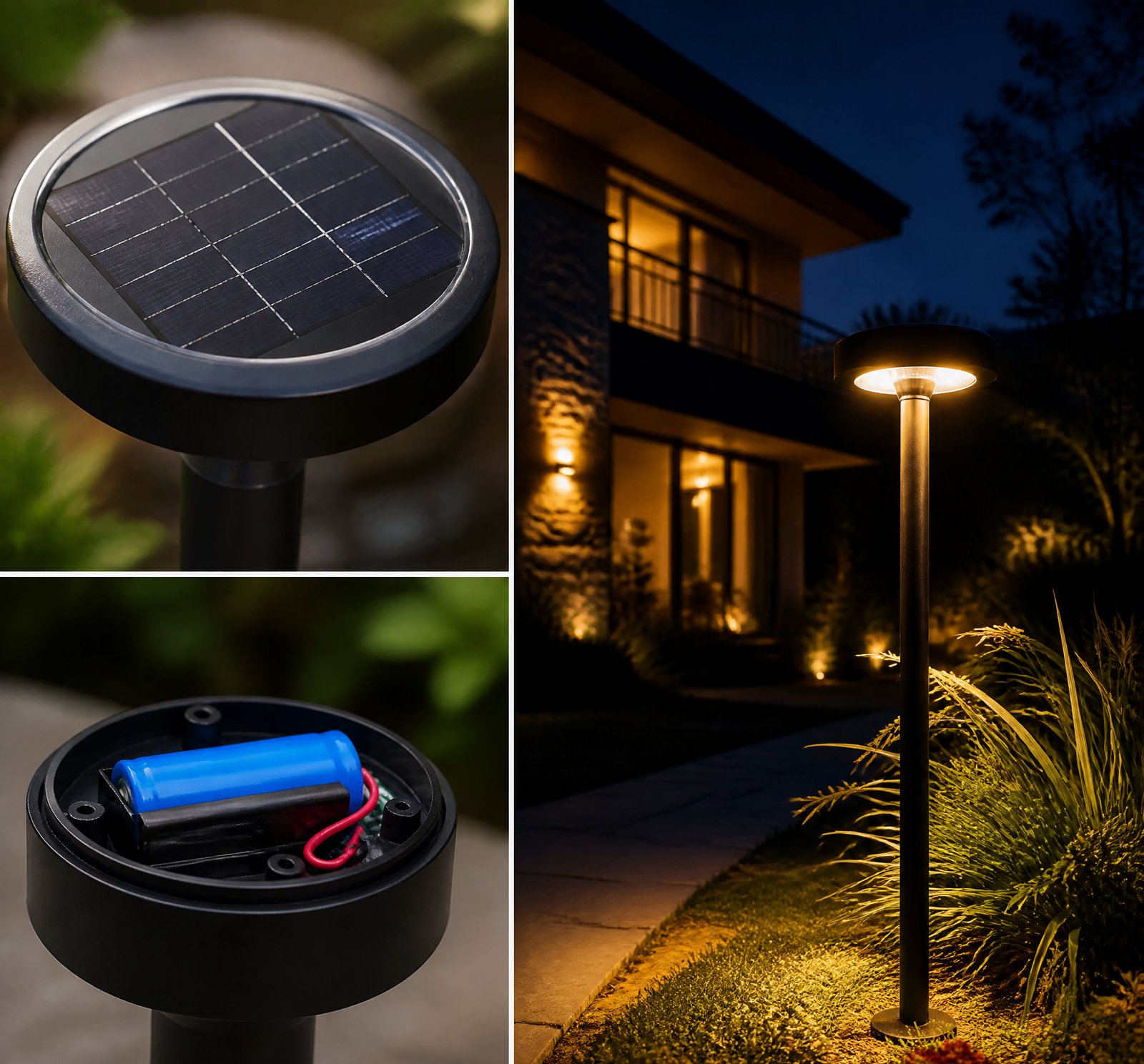
> Quick answer: CE and RoHS certifications require solar lamp manufacturers to eliminate hazardous substances like lead, cadmium, and mercury from all components in products sold in Romania [11][7]. This mandates the use of lead-free solder for SMD LED assemblies and restricts materials used in battery casings.
Romania’s strict adherence to EU regulations means that solar lamp manufacturers must navigate a complex landscape of certifications and compliance standards. CE and RoHS certifications play pivotal roles, dictating material choices from the smallest solder joint to the largest battery component. Understanding how these directives shape product design is crucial for both manufacturers and consumers.
The Impact of CE Marking
CE marking is mandatory for products sold in the EU, including Romania [11]. This certification signifies compliance with all applicable EU directives, such as the Restriction of Hazardous Substances (RoHS) Directive [11]. For solar lamps, this means that every component must meet RoHS requirements to bear the CE mark.
RoHS Restrictions on SMD LED Soldering
The RoHS directive restricts ten hazardous substances in concentrations exceeding 0.1% by weight in homogeneous materials, including lead, mercury, cadmium, hexavalent chromium, polybrominated biphenyls (PBB), and polybrominated diphenyl ethers (PBDE) [7]. These restrictions directly affect the soldering used for SMD LEDs.
- Solder Composition: RoHS mandates the use of lead-free solder alloys like SnAgCu (SAC) for SMD LED connections, replacing traditional tin-lead solders [20].
- Manufacturing Challenges: Lead-free solder can be harder and less ductile than conventional options, increasing the risk of cracking under mechanical stress in solar lamps exposed to environmental changes [20].
LiFePO4 Battery Compliance with RoHS
While RoHS does not specifically restrict lithium or iron phosphate [7], it applies to all components within the battery system. This means:
- Lead-Free Soldering: Any solder used in battery management systems (BMS) must be lead-free, adhering to RoHS standards [7].
- Casing Materials: The casing and internal components of LiFePO4 batteries must not contain restricted substances like cadmium or mercury above the 0.1% threshold [7].
Safety and Performance Compliance
The CE marking also ensures compliance with other EU directives such as the Low Voltage Directive (LVD) and Electromagnetic Compatibility (EMC) Directive [11]. TÜV Rheinland and Intertek offer certification services, verifying safety, standard conformity, and quality in photovoltaic components and lighting products [17][22].
RoHS Compliance Success
Despite initial concerns that lead-free solder would increase product failure rates [13], most contemporary consumer electronics are now compliant. However, the transition has required rigorous material and process innovation to maintain reliability.
Comparison Table: Lead-Free vs Traditional Soldering in Solar Lamps
| Property | Lead-Free (SAC) | Traditional (Tin-Lead) |
|––––––|––––––––|––––––––|
| Ductility | Lower | Higher |
| Thermal Stress | Higher risk of cracks | Lower risk |
| Environmental Impact | Safer, RoHS-compliant | Restricted by RoHS |
Future Trends in Solar Lamp Materials
Emerging initiatives like the European Green Deal and Digital Product Passport (DPP) aim to promote circularity and transparency in materials used. This could further drive innovations in sustainable and recyclable battery design.
Key Takeaways
- CE and RoHS certifications enforce lead-free soldering and prohibit hazardous substances in all solar lamp components.
- Lead-free solder can pose reliability challenges but has been widely adopted despite initial concerns.
- Future trends may include stricter sustainability requirements for materials used in LiFePO4 batteries.
Frequently Asked Questions
[
{
„q”: „What does RoHS certification mean for SMD LED soldering?”,
„a”: „RoHS mandates lead-free solder, such as SnAgCu (SAC), which replaces traditional tin-lead solders. This ensures compliance with hazardous substance restrictions [7].”
},
{
„q”: „How do CE and RoHS certifications affect LiFePO4 batteries in solar lamps?”,
„a”: „CE and RoHS require that all components, including BMS soldering and casing materials, are free from restricted substances like lead, cadmium, and mercury [7].”
},
{
„q”: „What testing services support CE and RoHS compliance for solar lamps?”,
„a”: „TÜV Rheinland and Intertek provide essential certification services, including safety, standard conformity, and quality testing to ensure CE and RoHS compliance [17][22].”
}
]
References
- [7] RoHS_-_Wikipedia__b4e0c10f — wikipedia
source passage
persons or goods, excluding electric two-wheel vehicles which are not type-approved; – non-road mobile machinery made available exclusively for professional use; – active implantable medical devices; – photovoltaic panels intended to be used in a system that is designed, assembled and installed by professionals for permanent use at a defined location to produce energy from solar light for public, commercial, industrial and residential applications; – equipment specifically designed solely for the purposes of research and development only made available on a business-to-business basis. According to Hewlett-Packard: "The European Union is gradually narrowing the scope of and expiring many of the current RoHS exemptions. In addition, it is likely that new substance restrictions will be introduced in the next several years."[18] Some exemptions:[22] – Lead as an alloying element in steel containing up to 0.35% lead by weight, aluminium containing up to 0.4% lead by weight, and copper alloy containing up to 4% lead by weight is permitted.[23] (Category 6c) – Lead in high melting temperature type solders (i.e. lead-based solder alloys containing 85% or more lead by weight). (Category 7a) – "Lead in solders for servers, storage and storage array systems, network infrastructure equipment for switching, transmission, and network management for telecommunications." (Category 7b) – Limited amounts of mercury in fluorescent and other light bulbs where it is essential to their functioning
- [11] TalkRoHSArchive_1_-_Wikipedia__710e4bdd — wikipedia
source passage
as per Module A of Annex II of 768/2008/CE. With CE marking, the responsibility is now to be shared between manufacturers and importers and distributors. CE declaration remains the manufacturer’s obligation, while the release of compliant products onto the EU market becomes the responsibility of importers and distributors. The CE mark will now not only mean that an electrical or electronic product complies with all applicable regulations – for example, the low voltage directive or the electromagnetic compatibility requirement – the CE mark will also mean compliance with RoHS. Thus product compliance and conformity assessment will now include the obligation to comply with RoHS. No new restricted substances have been introduced and the publication of the directive is expected this year." The reference I'd like to use comes from the free consumer information service of an international testing company (See Consumer Information on RoHS II, P. 10: http://newsletter.sgs.com/eNewsletterPro/uploadedimages/000006/SGS-Consumer-Compact-Feb2011-EN-11.pdf. Would it be ok to use it?? Thanks. Portrino (talk) 09:06, 13 April 2011 (UTC) – WP:ELN and they would be happy to advise you. Best. –Old Moonraker (talk) 09:25, 13 April 2011 (UTC) [1]. Peter Hartmann, the Director of Market and Customer Relations for the Advanced Optics division of Schott states "This is incredibly unfortunate, as the best thing you can do to take all hazardous substances out of bioavailability is melt them into glass
- [13] RoHS_-_Wikipedia__b4e0c10f — wikipedia
source passage
to the finished joint. However, components such as Ball grid arrays (BGA) which come with lead-free solder balls and leadless parts are often not compatible with lead-containing processes.[57] There are no de minimis exemptions, e.g., for micro-businesses. This economic effect was anticipated and at least some attempts at mitigating the effect were made.[58] Another form of economic effect is the cost of product failures during the switch to RoHS compliance. For example, tin whiskers were responsible for a 5% failure rate in certain components of Swiss Swatch watches in 2006, prior to the July implementation of RoHS, reportedly triggering a US$1 billion recall.[59][60] Swatch responded to this by applying for an exemption to RoHS compliance, but this was denied.[61][62] RoHS helps reduce damage to people and the environment in third-world countries where much of today's "high-tech waste" ends up.[14][63][64] The use of lead-free solders and components reduces risks to electronics industry workers in prototype and manufacturing operations. Contact with solder paste no longer represents the same health hazard as it used to.[65] Contrary to the predictions of widespread component failure and reduced reliability, RoHS's first anniversary (July 2007) passed with little fanfare.[66] Most contemporary consumer electronics are RoHS compliant. As of 2013, millions of compliant products are in use worldwide. Many electronics companies keep "RoHS status" pages on their corporate website
- [17] Photovoltaic_Module_Testing_and_Certification_WO_TÜV__90d54ee4 — authority
source passage
global market leader for PV module testing and certification, we have built a worldwide reputation for excellence reflected in the acceptance and recognition our quality mark enjoys. Upon successful completion of testing, our customers earn the right to display our test mark, a sign of quality, transparency and reliability. – Laboratory tests on samples for a module family or type – Recurring factory inspection – Certificate and TÜV Rheinland test mark – Certificate of conformity (CoC) or declarations for individual markets – Bankability reports In addition to our certification services we offer a variety of quality assurance measures, stress tests and value added services. Quality assurance measures for PV modules such as: – PID – potential-induced degradation – Electro-luminescence and IR imaging – RoHS conformity testing – Pre-/Post-shipment inspections – Ageing of micro-cracks – LID test (light induced degradation) – LeTID Stress tests such as: – Fire tests – Corrosion tests (e.g., salt mist, ammonia and Sulphur dioxide) – Outdoor long-term tests in different climate zones – Transport and environmental simulation on PV module shipping units – Sand abrasion tests – Snow load testing (non-uniform, heavy snow load) Added value services such as: – Quality Controlled PV – Energy yield testing under actual climate conditions in relevant target markets – PV Module Power Measurements BIPV – qualification of building-integrated PV such as: – Risk analysis – Roof integration – Faca
- [20] TalkRoHSArchive_1_-_Wikipedia__710e4bdd — wikipedia
source passage
for the statement Care must be taken in selection of RoHS solders as some formulations are harder with less ductility, increasing the likelihood of cracks instead of plastic deformation, which is typical for lead-containing solders. This is surely true, but it uses the same reference. I've changed that to 'reference needed'. I've also moved the NIST reference to external links since it is a good source of information. I have removed this Restricting lead content in solder for electronics requires expensive retooling of assembly lines and different platings for the leads of the electronic parts[citation needed] as far as I can tell this isn't true. Except the bit about using different platings for leads – which must be lead free – but is this not obvious? 87.102.32.76 (talk) 23:48, 16 July 2010 (UTC) – Firstly I don't see the need for the mention of the tradename – hence a previous editors advert concern. – Secondly without context there is no way this image shows that one process is more or less reliable than another. What it shows appears to be the cross-section of a solder joint – is it a broken joint or what. Additionally the image is too small to be useful sorry. – This article needs reliable references, and any images may need references to the relavent paper. As it is the image is not suitable; it explains neither what it shows (in sufficient detail), or gives context of the image (age, operating conditions etc). A single image is unlikely to demonstrate solder reliabil
- [22] Lighting_Testing_and_Certification_Resources_-_Intertek__a1a79233 — authority
source passage
# Lighting Testing and Certification Resources Source: Blog/Web URL: https://www.intertek.com/lighting/resources/ Author: Date: 2013-09-20 Want more? Browse through our latest resources and stay up to date with industry trends, changing standards and market opportunities. White Papers Compliance 101: Ten Common Questions About Product Compliance UKCA Mandatory Marking Guidance Document Product Listing & Marking Strategies Automotive Lighting: Photometric Concepts, Calibration, and Measurement UAE ECAS Compliance: Manufacturer Guidance Verify the Ingress Protection provided by your lighting product’s enclosure California Energy Commission (CEC) Title 20 and Title 24 The Comprehensive Guide to the RoHS 2 Directive for Lighting Products ANSI/UL 1598 4th Edition – What You Need to Know Energy Efficiency – Overview of Popular Lighting Certification Programs & Initiatives Energy Efficiency – DOE Compliance & Enforcement for Lighting Products Q&A Guide ENERGY STAR® Product Specification for Lamps V1.0 – Overview and New Compliance Requirements IECEE CB Scheme – Definitive Q&A Guide to International Approvals for Lighting Products FMVSS 108 for Transportation Lighting – Guide to Recent Revisions Certification Process for LED Lighting – Common Standards in North America and Europe Ingress Protection for Lighting Products – IP vs. UL Rated for Wet Locations Photobiological Safety of Lamps and Lamp Systems (IEC/EN 62471) for LEDs For a complete listing of white papers, please see: https
persons or goods, excluding electric two-wheel vehicles which are not type-approved; – non-road mobile machinery made available exclusively for professional use; – active implantable medical devices; – photovoltaic panels intended to be used in a system that is designed, assembled and installed by professionals for permanent use at a defined location to produce energy from solar light for public, commercial, industrial and residential applications; – equipment specifically designed solely for the purposes of research and development only made available on a business-to-business basis. According to Hewlett-Packard: "The European Union is gradually narrowing the scope of and expiring many of the current RoHS exemptions. In addition, it is likely that new substance restrictions will be introduced in the next several years."[18] Some exemptions:[22] – Lead as an alloying element in steel containing up to 0.35% lead by weight, aluminium containing up to 0.4% lead by weight, and copper alloy containing up to 4% lead by weight is permitted.[23] (Category 6c) – Lead in high melting temperature type solders (i.e. lead-based solder alloys containing 85% or more lead by weight). (Category 7a) – "Lead in solders for servers, storage and storage array systems, network infrastructure equipment for switching, transmission, and network management for telecommunications." (Category 7b) – Limited amounts of mercury in fluorescent and other light bulbs where it is essential to their functioning
as per Module A of Annex II of 768/2008/CE. With CE marking, the responsibility is now to be shared between manufacturers and importers and distributors. CE declaration remains the manufacturer’s obligation, while the release of compliant products onto the EU market becomes the responsibility of importers and distributors. The CE mark will now not only mean that an electrical or electronic product complies with all applicable regulations – for example, the low voltage directive or the electromagnetic compatibility requirement – the CE mark will also mean compliance with RoHS. Thus product compliance and conformity assessment will now include the obligation to comply with RoHS. No new restricted substances have been introduced and the publication of the directive is expected this year." The reference I'd like to use comes from the free consumer information service of an international testing company (See Consumer Information on RoHS II, P. 10: http://newsletter.sgs.com/eNewsletterPro/uploadedimages/000006/SGS-Consumer-Compact-Feb2011-EN-11.pdf. Would it be ok to use it?? Thanks. Portrino (talk) 09:06, 13 April 2011 (UTC) – WP:ELN and they would be happy to advise you. Best. –Old Moonraker (talk) 09:25, 13 April 2011 (UTC) [1]. Peter Hartmann, the Director of Market and Customer Relations for the Advanced Optics division of Schott states "This is incredibly unfortunate, as the best thing you can do to take all hazardous substances out of bioavailability is melt them into glass
to the finished joint. However, components such as Ball grid arrays (BGA) which come with lead-free solder balls and leadless parts are often not compatible with lead-containing processes.[57] There are no de minimis exemptions, e.g., for micro-businesses. This economic effect was anticipated and at least some attempts at mitigating the effect were made.[58] Another form of economic effect is the cost of product failures during the switch to RoHS compliance. For example, tin whiskers were responsible for a 5% failure rate in certain components of Swiss Swatch watches in 2006, prior to the July implementation of RoHS, reportedly triggering a US$1 billion recall.[59][60] Swatch responded to this by applying for an exemption to RoHS compliance, but this was denied.[61][62] RoHS helps reduce damage to people and the environment in third-world countries where much of today's "high-tech waste" ends up.[14][63][64] The use of lead-free solders and components reduces risks to electronics industry workers in prototype and manufacturing operations. Contact with solder paste no longer represents the same health hazard as it used to.[65] Contrary to the predictions of widespread component failure and reduced reliability, RoHS's first anniversary (July 2007) passed with little fanfare.[66] Most contemporary consumer electronics are RoHS compliant. As of 2013, millions of compliant products are in use worldwide. Many electronics companies keep "RoHS status" pages on their corporate website
global market leader for PV module testing and certification, we have built a worldwide reputation for excellence reflected in the acceptance and recognition our quality mark enjoys. Upon successful completion of testing, our customers earn the right to display our test mark, a sign of quality, transparency and reliability. – Laboratory tests on samples for a module family or type – Recurring factory inspection – Certificate and TÜV Rheinland test mark – Certificate of conformity (CoC) or declarations for individual markets – Bankability reports In addition to our certification services we offer a variety of quality assurance measures, stress tests and value added services. Quality assurance measures for PV modules such as: – PID – potential-induced degradation – Electro-luminescence and IR imaging – RoHS conformity testing – Pre-/Post-shipment inspections – Ageing of micro-cracks – LID test (light induced degradation) – LeTID Stress tests such as: – Fire tests – Corrosion tests (e.g., salt mist, ammonia and Sulphur dioxide) – Outdoor long-term tests in different climate zones – Transport and environmental simulation on PV module shipping units – Sand abrasion tests – Snow load testing (non-uniform, heavy snow load) Added value services such as: – Quality Controlled PV – Energy yield testing under actual climate conditions in relevant target markets – PV Module Power Measurements BIPV – qualification of building-integrated PV such as: – Risk analysis – Roof integration – Faca
for the statement Care must be taken in selection of RoHS solders as some formulations are harder with less ductility, increasing the likelihood of cracks instead of plastic deformation, which is typical for lead-containing solders. This is surely true, but it uses the same reference. I've changed that to 'reference needed'. I've also moved the NIST reference to external links since it is a good source of information. I have removed this Restricting lead content in solder for electronics requires expensive retooling of assembly lines and different platings for the leads of the electronic parts[citation needed] as far as I can tell this isn't true. Except the bit about using different platings for leads – which must be lead free – but is this not obvious? 87.102.32.76 (talk) 23:48, 16 July 2010 (UTC) – Firstly I don't see the need for the mention of the tradename – hence a previous editors advert concern. – Secondly without context there is no way this image shows that one process is more or less reliable than another. What it shows appears to be the cross-section of a solder joint – is it a broken joint or what. Additionally the image is too small to be useful sorry. – This article needs reliable references, and any images may need references to the relavent paper. As it is the image is not suitable; it explains neither what it shows (in sufficient detail), or gives context of the image (age, operating conditions etc). A single image is unlikely to demonstrate solder reliabil
# Lighting Testing and Certification Resources Source: Blog/Web URL: https://www.intertek.com/lighting/resources/ Author: Date: 2013-09-20 Want more? Browse through our latest resources and stay up to date with industry trends, changing standards and market opportunities. White Papers Compliance 101: Ten Common Questions About Product Compliance UKCA Mandatory Marking Guidance Document Product Listing & Marking Strategies Automotive Lighting: Photometric Concepts, Calibration, and Measurement UAE ECAS Compliance: Manufacturer Guidance Verify the Ingress Protection provided by your lighting product’s enclosure California Energy Commission (CEC) Title 20 and Title 24 The Comprehensive Guide to the RoHS 2 Directive for Lighting Products ANSI/UL 1598 4th Edition – What You Need to Know Energy Efficiency – Overview of Popular Lighting Certification Programs & Initiatives Energy Efficiency – DOE Compliance & Enforcement for Lighting Products Q&A Guide ENERGY STAR® Product Specification for Lamps V1.0 – Overview and New Compliance Requirements IECEE CB Scheme – Definitive Q&A Guide to International Approvals for Lighting Products FMVSS 108 for Transportation Lighting – Guide to Recent Revisions Certification Process for LED Lighting – Common Standards in North America and Europe Ingress Protection for Lighting Products – IP vs. UL Rated for Wet Locations Photobiological Safety of Lamps and Lamp Systems (IEC/EN 62471) for LEDs For a complete listing of white papers, please see: https