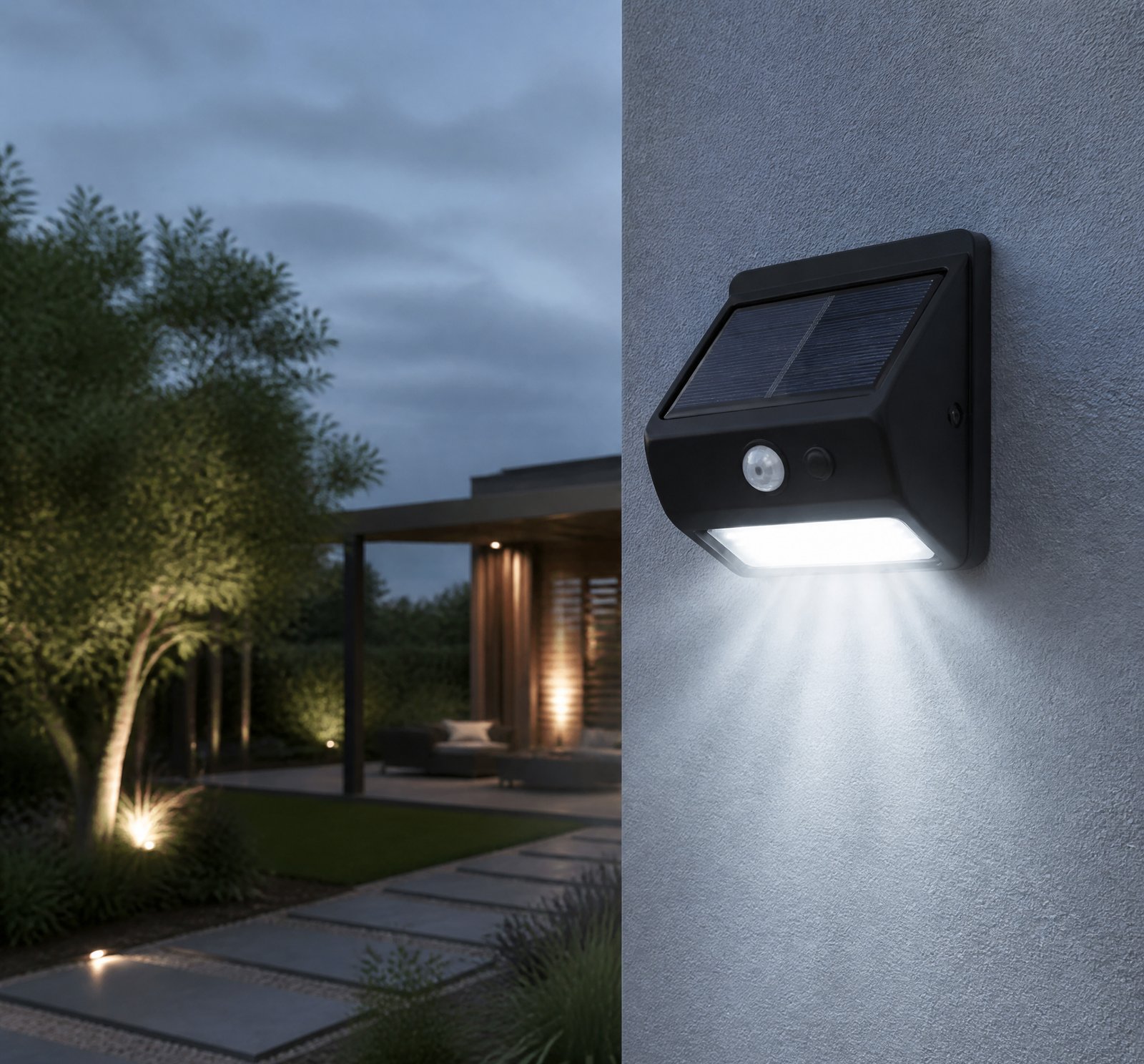
> Quick answer: A solar lamp sold in Romania must comply with EU directives: CE marking ensures safety and environmental standards, RoHS restricts hazardous substances, and WEEE mandates recycling responsibilities. The CE mark signifies compliance but does not guarantee performance or sustainability [8][13][24].
To sell a solar lamp in Romania, manufacturers need to navigate three critical European Union (EU) regulatory frameworks: the CE marking scheme, the Restriction of Hazardous Substances (RoHS) Directive, and the Waste Electrical and Electronic Equipment (WEEE) Directive. These directives ensure product safety, environmental protection, and proper end-of-life management.
Understanding CE Marking for Solar Lamps
CE marking is a mandatory conformity mark that indicates compliance with EU health, safety, and environmental standards [8]. For solar lamps, this includes adherence to the Low Voltage Directive (LVD) and the Electromagnetic Compatibility (EMC) Directive. These ensure the product is safe to use and does not interfere with other electronic devices [8][13].
Key Requirements:
- Low Voltage Directive (LVD): Ensures electrical safety.
- Electromagnetic Compatibility (EMC): Prevents interference with other electronics.
The CE mark also signifies compliance with RoHS, which restricts the use of hazardous substances such as lead and mercury [13]. While the CE mark confirms legal compliance, it does not provide detailed performance metrics or specific testing procedures beyond general requirements [2][4].
RoHS Compliance for Solar Lamps
RoHS compliance requires that solar lamps do not exceed maximum concentration values (MCVs) set by the directive for hazardous substances like lead and mercury [13]. The European Commission has phased out most exemptions, particularly for lighting products containing mercury. This means that solar lamps with mercury-containing components are no longer permitted on the EU market unless under specific, time-limited exemptions [13].
Key Restrictions:
- Mercury: Limited to 5 ppm in most lamp types.
- Lead: Restricted across all electronic and electrical equipment (EEE).
RoHS compliance is verified through documentation but does not require a specific mark on the product; it is demonstrated alongside the CE marking [8][13].
WEEE Compliance for Solar Lamps
The WEEE Directive ensures proper collection, recycling, and recovery of electrical and electronic waste. For solar lamps sold in Romania, manufacturers must register with a WEEE compliance scheme and label products with the crossed-out wheeled bin symbol [24]. They are also responsible for financing treatment, recovery, and recycling at the end-of-life stage.
Key Responsibilities:
- Registration: Manufacturers must register with a WEEE compliance scheme.
- Labeling: Products must be labeled with the crossed-out wheeled bin symbol.
- Recycling Channels: Ensure products can be collected and recycled through designated channels [24][25].
Interrelation of CE Marking, RoHS, and WEEE
The CE marking encompasses all applicable EU directives, including RoHS and WEEE. This umbrella certification confirms that the solar lamp meets safety and environmental standards but does not guarantee performance or energy efficiency [8]. RoHS compliance is verified through testing and documentation, while WEEE compliance is demonstrated through registration, labeling, and participation in recycling schemes.
Technical Documentation Requirements:
- Supplier Information: Name and address.
- Model Identifier: Unique model ID.
- Declared Values: Luminous flux, colour rendering index (CRI), on-mode power, standby power [24][25].
Key Takeaways
- A solar lamp sold in Romania must bear the CE mark to prove compliance with EU safety, RoHS, and WEEE directives.
- The CE mark ensures legal compliance but does not guarantee performance or environmental sustainability.
- Detailed technical documentation is required for compliance verification.
Frequently Asked Questions
[
{
„q”: „What is the role of the CE marking in solar lamp sales?”,
„a”: „The CE marking confirms that a solar lamp meets EU safety and environmental standards, including RoHS and WEEE directives [8][13].”
},
{
„q”: „How does RoHS compliance impact solar lamps?”,
„a”: „RoHS restricts hazardous substances like lead and mercury in solar lamps to specified maximum concentration values (MCVs) [13].”
},
{
„q”: „What does WEEE compliance require for solar lamp manufacturers?”,
„a”: „Manufacturers must register with a WEEE scheme, label products with the crossed-out bin symbol, and ensure recyclability through designated channels [24][25].”
}
]
References
- [2] Light_products_testing_and_certification_WO_TÜV_Rheinland__320157ae — authority
source passage
# Light products testing and certification Source: Blog/Web URL: https://www.tuv.com/world/en/testing-lamps-luminaires-light-components.html Author: TÜV Rheinland Date: 2026-01-01 Our test marks for the safety, standard conformity and quality of your lighting products Manufacturers of lamps, luminaires and the associated components must meet the requirements of numerous standards such as EN IEC 60598, EN 61347 or EN IEC 62031 – to name just a few. In addition, certifications are often demanded in order to place products on international markets and to prevail against competitors. Through our worldwide presence and cooperation, we offer you support to achieve international country approvals. With our tests and certifications, you ensure the conformity of your lamps, luminaires, light sources and lighting components and make the high quality of your products visible to your customers. Below you will find a selection of certificates and services. – ENEC & ENEC+ Certificate – Bauart geprüft (Type Approved Mark) – GS mark (tested safety) – cTUVus (North America and Canada) – CoC UAE (United Arab Emirates) EN IEC 60598 and more: Our services for your lamps, luminaires, light sources and lighting components The requirements for your lighting products and the associated tests are extensive. In a personal meeting, we analyze your needs together and create individual solutions for you. Get in touch with us! Green Product Mark for Luminaries Our certification for sustainable luminaires
- [4] Light_products_testing_and_certification_UK_TÜV_Rheinland__46370af9 — authority
source passage
# Light products testing and certification Source: Blog/Web URL: https://www.tuv.com/united-kingdom/en/lighting-technology.html Author: TÜV Rheinland Date: 2026-01-01 Our test marks for the safety, standard conformity and quality of your lighting products Manufacturers of lamps, luminaires and the associated components must meet the requirements of numerous standards such as EN IEC 60598, EN 61347 or EN IEC 62031 – to name just a few. In addition, certifications are often demanded in order to place products on international markets and to prevail against competitors. Through our worldwide presence and cooperation, we offer you support to achieve international country approvals. With our tests and certifications, you ensure the conformity of your lamps, luminaires, light sources and lighting components and make the high quality of your products visible to your customers. Below you will find a selection of certificates and services. – ENEC & ENEC+ Certificate – Bauart geprüft (Type Approved Mark) – GS mark (tested safety) – cTUVus (North America and Canada) – CoC UAE (United Arab Emirates) EN IEC 60598 and more: Our services for your lamps, luminaires, light sources and lighting components The requirements for your lighting products and the associated tests are extensive. In a personal meeting, we analyze your needs together and create individual solutions for you. Get in touch with us! Green Product Mark for Luminaries Our certification for sustainable luminaires Sustainabilit
- [8] TalkRoHSArchive_1_-_Wikipedia__710e4bdd — wikipedia
source passage
as per Module A of Annex II of 768/2008/CE. With CE marking, the responsibility is now to be shared between manufacturers and importers and distributors. CE declaration remains the manufacturer’s obligation, while the release of compliant products onto the EU market becomes the responsibility of importers and distributors. The CE mark will now not only mean that an electrical or electronic product complies with all applicable regulations – for example, the low voltage directive or the electromagnetic compatibility requirement – the CE mark will also mean compliance with RoHS. Thus product compliance and conformity assessment will now include the obligation to comply with RoHS. No new restricted substances have been introduced and the publication of the directive is expected this year." The reference I'd like to use comes from the free consumer information service of an international testing company (See Consumer Information on RoHS II, P. 10: http://newsletter.sgs.com/eNewsletterPro/uploadedimages/000006/SGS-Consumer-Compact-Feb2011-EN-11.pdf. Would it be ok to use it?? Thanks. Portrino (talk) 09:06, 13 April 2011 (UTC) – WP:ELN and they would be happy to advise you. Best. –Old Moonraker (talk) 09:25, 13 April 2011 (UTC) [1]. Peter Hartmann, the Director of Market and Customer Relations for the Advanced Optics division of Schott states "This is incredibly unfortunate, as the best thing you can do to take all hazardous substances out of bioavailability is melt them into glass
- [13] SGS_RSTS_Cloud_-_PublicationsEU_Ends_Exemptions_for_the_use_of__46a89b1b — authority
source passage
# Foreign User Function in SCIP Database Platform Source: Blog/Web URL: https://eecloud.sgs.com/Article.aspx?n=270 Author: Date: 2022-02-15 Under RoHS Directive, electrical and electronic equipment whose content of hazardous substances exceeds the limit requirements shall not be put on the EU market, except if time-limited and application-specific exemptions are granted by the Commission. The exemptions for all EEEs are listed in Annex III, meanwhile, the exemptions in Annex IV are only suitable for medical devices and monitoring and control instruments. A limited number of exemptions for the use of mercury in specific lamp categories, such as fluorescent lamps, are currently listed in the Directive. Most of these exemptions for general lighting will be discontinued as assessments conducted by the Commission since 2016 concluded that safe, mercury-free alternatives are widely available for fluorescent lamps. The European Commission has adopted 12 delegated acts on 16 December 2021, ending a broad range of existing exemptions for the use of mercury in lamps. The new rules aim to increase the protection of health and the environment form this hazardous substance, as well as boost innovation and promote cleaner products. On a case-by-case basis, transition periods of 12 and 18 months will be granted to allow economic operators to adjust to the new rules. For certain lamp categories, mainly for special purposes like in the industrial or medical sector, for which sufficient reliab
- [24] Delegated_regulation_-_20192015_-_EN_-_EUR-Lex__47d01e28 — authority
source passage
provide the data to support such claims. (1) Directive 2012/19/EU of the European Parliament and of the Council of 4 July 2012 on waste electrical and electronic equipment (WEEE) (OJ L 197, 24.7.2012, p. 38). ANNEX VI Technical documentation 1. The technical documentation referred to in point 1(d) of Article 3 shall include:(a) the name and address of the supplier; (b) supplier’s model identifier; (c) the model identifier of all equivalent models already placed on the market; (d) identification and signature of the person empowered to bind the supplier; (e) the declared and measured values for the following technical parameters: (1) useful luminous flux (Φuse) in lm; (2) colour rendering index (CRI); (3) on-mode power (Pon) in W; (4) beam angle in degrees for directional light sources (DLS); (5) correlated colour temperature (CCT) in K for FL and HID light sources; (6) 'standby power (Psb) in W, including when it is zero; (7) networked standby power (Pnet) in W for connected light sources (CLS); (8) displacement factor (cos φ1) for LED and OLED mains light sources; (9) colour consistency in MacAdam ellipse steps for LED and OLED light sources; (10) luminance-HLLS in cd/mm2 (only for HLLS) (11) flicker metric (PstLM) for LED and OLED light sources; (12) stroboscopic effect metric (SVM) for LED and OLED light sources; (13) excitation purity, only for CTLS, for the following colours and dominant wavelength within the given range: Colour Dominant wave-length range Blue 440 nm — 4
- [25] Delegated_regulation_-_20192015_-_EN_-_EUR-Lex__47d01e28 — authority
source passage
the EU market stopped. 2. Information to be displayed in the documentation for a containing product If a light source is placed on the market as a part in a containing product, the technical documentation for the containing product shall clearly identify the contained light source(s), including the energy efficiency class. If a light source is placed on the market as a part in a containing product, the following text shall be displayed, clearly legible, in the user manual or booklet of instructions: ‘This product contains a light source of energy efficiency class <X>’, where <X> shall be replaced by the energy efficiency class of the contained light source. If the product contains more than one light source, the sentence can be in the plural, or repeated per light source, as suitable. 3. Information to be displayed on the supplier’s free access website: (a) The reference control settings, and instructions on how they can be implemented, where applicable; (b) Instructions on how to remove lighting control parts and/or non-lighting parts, if any, or how to switch them off or minimize their power consumption; (c) If the light source is dimmable: a list of dimmers it is compatible with, and the light source — dimmer compatibility standard(s) it is compliant with, if any; (d) If the light source contains mercury: instructions on how to clean up the debris in case of accidental breakage; (e) Recommendations on how to dispose of the light source at the end of its life in line with D
# Light products testing and certification Source: Blog/Web URL: https://www.tuv.com/world/en/testing-lamps-luminaires-light-components.html Author: TÜV Rheinland Date: 2026-01-01 Our test marks for the safety, standard conformity and quality of your lighting products Manufacturers of lamps, luminaires and the associated components must meet the requirements of numerous standards such as EN IEC 60598, EN 61347 or EN IEC 62031 – to name just a few. In addition, certifications are often demanded in order to place products on international markets and to prevail against competitors. Through our worldwide presence and cooperation, we offer you support to achieve international country approvals. With our tests and certifications, you ensure the conformity of your lamps, luminaires, light sources and lighting components and make the high quality of your products visible to your customers. Below you will find a selection of certificates and services. – ENEC & ENEC+ Certificate – Bauart geprüft (Type Approved Mark) – GS mark (tested safety) – cTUVus (North America and Canada) – CoC UAE (United Arab Emirates) EN IEC 60598 and more: Our services for your lamps, luminaires, light sources and lighting components The requirements for your lighting products and the associated tests are extensive. In a personal meeting, we analyze your needs together and create individual solutions for you. Get in touch with us! Green Product Mark for Luminaries Our certification for sustainable luminaires
# Light products testing and certification Source: Blog/Web URL: https://www.tuv.com/united-kingdom/en/lighting-technology.html Author: TÜV Rheinland Date: 2026-01-01 Our test marks for the safety, standard conformity and quality of your lighting products Manufacturers of lamps, luminaires and the associated components must meet the requirements of numerous standards such as EN IEC 60598, EN 61347 or EN IEC 62031 – to name just a few. In addition, certifications are often demanded in order to place products on international markets and to prevail against competitors. Through our worldwide presence and cooperation, we offer you support to achieve international country approvals. With our tests and certifications, you ensure the conformity of your lamps, luminaires, light sources and lighting components and make the high quality of your products visible to your customers. Below you will find a selection of certificates and services. – ENEC & ENEC+ Certificate – Bauart geprüft (Type Approved Mark) – GS mark (tested safety) – cTUVus (North America and Canada) – CoC UAE (United Arab Emirates) EN IEC 60598 and more: Our services for your lamps, luminaires, light sources and lighting components The requirements for your lighting products and the associated tests are extensive. In a personal meeting, we analyze your needs together and create individual solutions for you. Get in touch with us! Green Product Mark for Luminaries Our certification for sustainable luminaires Sustainabilit
as per Module A of Annex II of 768/2008/CE. With CE marking, the responsibility is now to be shared between manufacturers and importers and distributors. CE declaration remains the manufacturer’s obligation, while the release of compliant products onto the EU market becomes the responsibility of importers and distributors. The CE mark will now not only mean that an electrical or electronic product complies with all applicable regulations – for example, the low voltage directive or the electromagnetic compatibility requirement – the CE mark will also mean compliance with RoHS. Thus product compliance and conformity assessment will now include the obligation to comply with RoHS. No new restricted substances have been introduced and the publication of the directive is expected this year." The reference I'd like to use comes from the free consumer information service of an international testing company (See Consumer Information on RoHS II, P. 10: http://newsletter.sgs.com/eNewsletterPro/uploadedimages/000006/SGS-Consumer-Compact-Feb2011-EN-11.pdf. Would it be ok to use it?? Thanks. Portrino (talk) 09:06, 13 April 2011 (UTC) – WP:ELN and they would be happy to advise you. Best. –Old Moonraker (talk) 09:25, 13 April 2011 (UTC) [1]. Peter Hartmann, the Director of Market and Customer Relations for the Advanced Optics division of Schott states "This is incredibly unfortunate, as the best thing you can do to take all hazardous substances out of bioavailability is melt them into glass
# Foreign User Function in SCIP Database Platform Source: Blog/Web URL: https://eecloud.sgs.com/Article.aspx?n=270 Author: Date: 2022-02-15 Under RoHS Directive, electrical and electronic equipment whose content of hazardous substances exceeds the limit requirements shall not be put on the EU market, except if time-limited and application-specific exemptions are granted by the Commission. The exemptions for all EEEs are listed in Annex III, meanwhile, the exemptions in Annex IV are only suitable for medical devices and monitoring and control instruments. A limited number of exemptions for the use of mercury in specific lamp categories, such as fluorescent lamps, are currently listed in the Directive. Most of these exemptions for general lighting will be discontinued as assessments conducted by the Commission since 2016 concluded that safe, mercury-free alternatives are widely available for fluorescent lamps. The European Commission has adopted 12 delegated acts on 16 December 2021, ending a broad range of existing exemptions for the use of mercury in lamps. The new rules aim to increase the protection of health and the environment form this hazardous substance, as well as boost innovation and promote cleaner products. On a case-by-case basis, transition periods of 12 and 18 months will be granted to allow economic operators to adjust to the new rules. For certain lamp categories, mainly for special purposes like in the industrial or medical sector, for which sufficient reliab
provide the data to support such claims. (1) Directive 2012/19/EU of the European Parliament and of the Council of 4 July 2012 on waste electrical and electronic equipment (WEEE) (OJ L 197, 24.7.2012, p. 38). ANNEX VI Technical documentation 1. The technical documentation referred to in point 1(d) of Article 3 shall include:(a) the name and address of the supplier; (b) supplier’s model identifier; (c) the model identifier of all equivalent models already placed on the market; (d) identification and signature of the person empowered to bind the supplier; (e) the declared and measured values for the following technical parameters: (1) useful luminous flux (Φuse) in lm; (2) colour rendering index (CRI); (3) on-mode power (Pon) in W; (4) beam angle in degrees for directional light sources (DLS); (5) correlated colour temperature (CCT) in K for FL and HID light sources; (6) 'standby power (Psb) in W, including when it is zero; (7) networked standby power (Pnet) in W for connected light sources (CLS); (8) displacement factor (cos φ1) for LED and OLED mains light sources; (9) colour consistency in MacAdam ellipse steps for LED and OLED light sources; (10) luminance-HLLS in cd/mm2 (only for HLLS) (11) flicker metric (PstLM) for LED and OLED light sources; (12) stroboscopic effect metric (SVM) for LED and OLED light sources; (13) excitation purity, only for CTLS, for the following colours and dominant wavelength within the given range: Colour Dominant wave-length range Blue 440 nm — 4
the EU market stopped. 2. Information to be displayed in the documentation for a containing product If a light source is placed on the market as a part in a containing product, the technical documentation for the containing product shall clearly identify the contained light source(s), including the energy efficiency class. If a light source is placed on the market as a part in a containing product, the following text shall be displayed, clearly legible, in the user manual or booklet of instructions: ‘This product contains a light source of energy efficiency class <X>’, where <X> shall be replaced by the energy efficiency class of the contained light source. If the product contains more than one light source, the sentence can be in the plural, or repeated per light source, as suitable. 3. Information to be displayed on the supplier’s free access website: (a) The reference control settings, and instructions on how they can be implemented, where applicable; (b) Instructions on how to remove lighting control parts and/or non-lighting parts, if any, or how to switch them off or minimize their power consumption; (c) If the light source is dimmable: a list of dimmers it is compatible with, and the light source — dimmer compatibility standard(s) it is compliant with, if any; (d) If the light source contains mercury: instructions on how to clean up the debris in case of accidental breakage; (e) Recommendations on how to dispose of the light source at the end of its life in line with D