
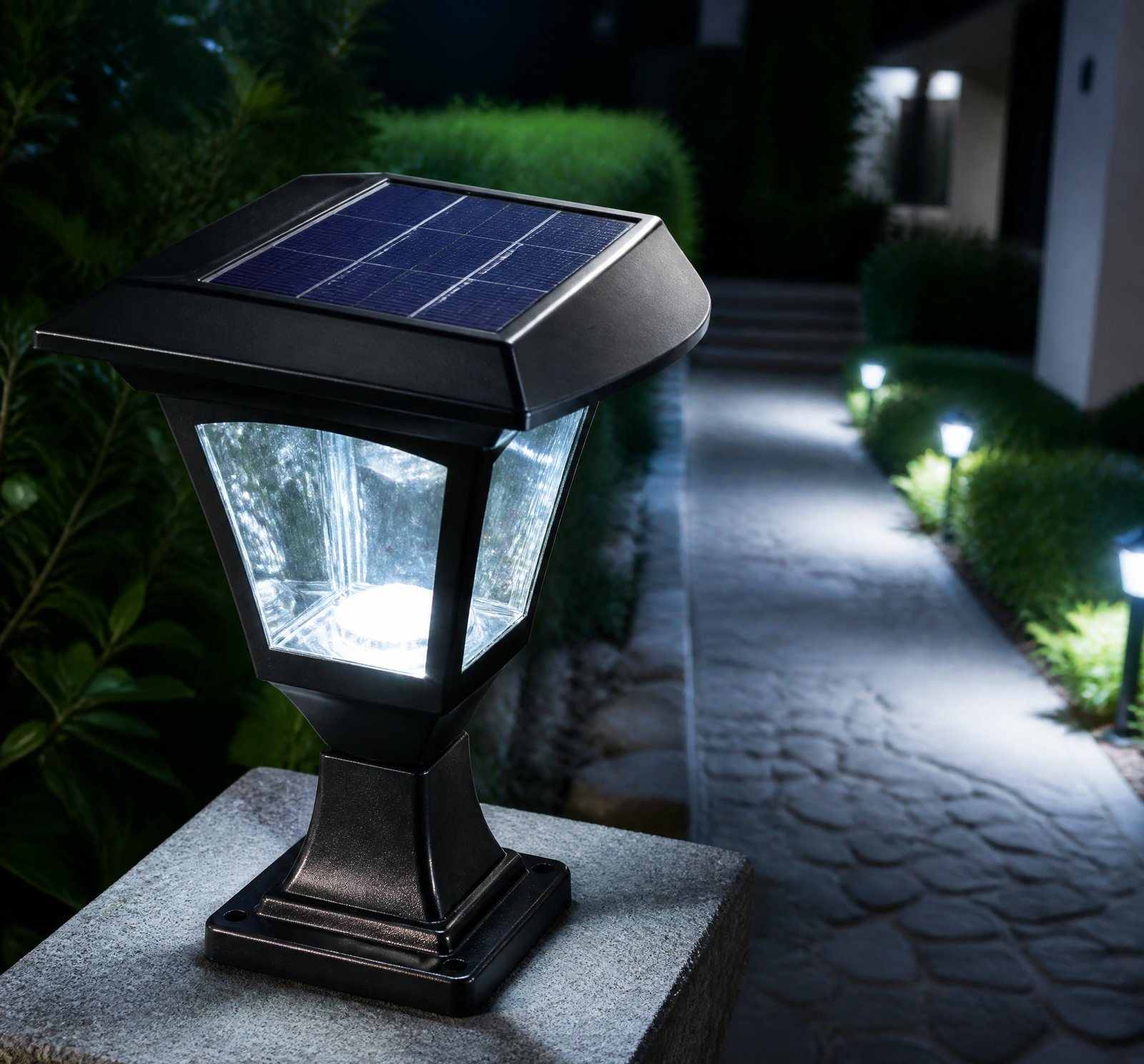
> Quick answer: While specific data for Romania is unavailable, cold temperatures significantly impair battery function, leading to failure in solar lighting systems [1][8]. Thermal insulation, particularly placing batteries near solar panels, helps maintain optimal temperature ranges, preventing freezing and maintaining system efficacy.
Cold weather poses significant challenges to the reliability of outdoor solar lamps, especially when it comes to battery performance. One critical issue is battery freezing, which can render these systems ineffective during winter months. This article explores how thermal insulation can mitigate this problem and enhance overall system resilience in Romania.
Understanding Battery Freezing and Its Impact
Cold temperatures significantly impair standard lithium batteries’ ability to accept charge or deliver sufficient power [18]. Below 10°C, battery performance declines sharply, and prolonged exposure to freezing temperatures leads to internal chemical layer buildup, causing permanent damage known as battery starvation [1].
The Role of Temperature Extremes
Temperature extremes are a major factor in the degradation and failure of solar lighting systems. Both heat and cold can cause significant damage to electronic components and batteries, leading to premature system failure [8][18]. In winter conditions where temperatures drop well below operational thresholds, the inability of batteries to function at their optimal levels becomes a critical issue.
Passive Thermal Management Strategies
Thermal insulation is a key solution to mitigate cold-related battery failure. A patent describes a design that places the battery in heat transfer proximity to the solar cell array [7][24]. This setup ensures that heat absorbed by the panel during daylight hours elevates the battery’s temperature, maintaining its operational range even in low ambient conditions.
Balancing Protection Against Overheating and Freezing
Systems must balance protection against both overheating and freezing. Insulation or thermal coupling is essential for cold-weather resilience [24]. For instance, placing batteries remotely from panels prevents overheating in hot weather but fails to address the issue of reaching operational temperatures during colder months.
Battery Selection and Thermal Design Interdependence
High-capacity LiFePO4 batteries are better suited to withstand temperature fluctuations and can last up to 12 years [8]. This suggests that battery selection and thermal design go hand in hand. Even high-quality batteries may fail without proper insulation or heat retention mechanisms, emphasizing the need for robust design considerations.
Comparison of Battery Types
| Battery Type | Lifespan | Temperature Tolerance |
|––––––-|–––––-|––––––––|
| Recycled Lithium-Ion | 2 years [18] | Poor |
| LiFePO4 | Up to 12 years [8]| Excellent |
Addressing Additional Cold-Weather Challenges
Beyond battery performance, cold weather introduces other challenges. Snow accumulation reduces energy generation, and while bifacial modules can mitigate this by capturing reflected light, they do not address battery issues [20]. Additionally, ice and snow can add weight to wiring, increasing the risk of system failure if components are not designed for such conditions.
Key Takeaways
- Cold temperatures significantly impair the performance of standard lithium batteries in solar lighting systems.
- Thermal insulation is essential to maintain optimal battery temperature ranges during freezing conditions.
- Passive thermal management strategies, like placing batteries near solar panels, can prevent cold-related failures.
- High-capacity LiFePO4 batteries are better suited for long-term reliability in cold climates.
References
- [1] Solar_Street_Light_From_Germany__Why_Solar_Street_Lights_Fail_in_Winter_Ultimate_Technical_Guide_for_B2B_Projects__Ua7I1YwH3DU — youtube
source passage
# Why Solar Street Lights Fail in Winter? (Ultimate Technical Guide for B2B Projects) Source: YouTube — Solar Street Light From Germany URL: https://www.youtube.com/watch?v=Ua7I1YwH3DU Video ID: Ua7I1YwH3DU Transcript: generated You've invested thousands of dollars in a large-scale solar project, but just 3 months later, the streets are dark by midnight. No light, no security. This isn't just a technical glitch, it's a total project failure and a massive financial loss for your company. Why does the battery fail to charge even with expensive systems? Today, we reveal the silent killer, the technical reasons behind charging failure and how to stop it forever. The biggest culprit is the use of polycrystalline panels. With an efficiency of only 17%, they are a disaster for B2B projects. On cloudy days or during winter, these panels fail to generate the minimum voltage required to trigger the charging process. This leads to battery starvation. When a battery stays partially charged for weeks, internal chemical layers build up, causing permanent damage. This is exactly why your lights shut off in the middle of the night. Even if the panel generates some power, an outdated PWM controller wastes 40% of it. It's like trying to fill a bucket with a massive hole in the bottom. Enough energy never reaches the battery. This leaves the streets dark, increasing the risk of accidents and crime. In a professional B2B environment, these small technical mistakes can destroy your company's enti
- [7] US5367442A_-_Self-contained_solar_powered_lamp_-_Google_Patents__17774f1c — patent
source passage
specified by the manufacturer. At temperatures higher than the operating temperature, the charge acceptance capabilities of the electrical storage device decrease substantially. This is undesirable because sunlight to power the solar cell array is available only during a relatively short period of time each day. The current level generated by the solar cell array when in excess of the charge acceptance of the electrical storage device causes it to overheat and sustain damage, thereby causing the overall performance of the solar powered lamp to deteriorate. In one approach to overcome this problem, the electrical storage device may be arranged remote from the solar cell array. Although this prevents the electrical storage device from absorbing heat generated by the solar cell array, thus, maintaining the operating temperature at a normal level in hot weather, it is not satisfactory during cold weather because the electrical storage device is unable to provide current sufficient to illuminate the bulb at temperatures below its operating temperature. The electrical storage device is therefore typically placed in heat transfer proximity to the solar cell array so that heat absorbed by the solar cell array on a sunny day helps elevate the temperature of the power source to its normal operating temperature even if the ambient temperature is low. Moreover, existing solar lighting devices are configured in a manner which does not provide for the flow of air through the lamp. This fur
- [8] Solar_Street_Light_From_Germany__Why_90_of_Solar_Street_Light_Projects_Fail_Get_Professional_Solutions_DEL_Illumi__yw1s3KMKtQc — youtube
source passage
# Why 90% of Solar Street Light Projects Fail? Get Professional Solutions | DEL Illumination Source: YouTube — Solar Street Light From Germany URL: https://www.youtube.com/watch?v=yw1s3KMKtQc Video ID: yw1s3KMKtQc Transcript: generated Did you know that 90% of solar street light projects fail within the first two years? It's a shocking statistic, especially when you've invested thousands of dollars. Today, we are exposing the top mistakes that kill solar projects and how to avoid them. Choosing cheap batteries. Many manufacturers use recycled lithium-ion cells or low capacity lead-acid batteries. These cannot handle deep discharge cycles and die quickly in extreme heat or cold. At Del, we use high-capacity LiFePO4 batteries designed with German precision. These batteries offer over 2,000 cycles and are built to last up to 12 years, even in harsh industrial environments. Low-quality controllers. If your light stays on during the day or turns off at midnight, the controller is to blame. Most failed projects use controllers that aren't waterproof, leading to moisture damage and short circuits. Improper installation. Even the best solar light will fail if it's placed in the shade of trees or buildings. A layer of dust can also block 30% of energy. Most installers ignore the angle of the sun, causing the battery to never reach a full charge. Using low-grade materials for the body. In coastal or rainy areas, cheap plastic or thin aluminum housings corrode and rust within months. Th
- [18] Solar_Street_Light_From_Germany__The_Science_of_Solar_Battery_Failure_How_to_Achieve_a_12_Year_Lifespan__lu_n9o8-I80 — youtube
source passage
# The Science of Solar Battery Failure: How to Achieve a 12 Year Lifespan Source: YouTube — Solar Street Light From Germany URL: https://www.youtube.com/watch?v=lu_n9o8-I80 Video ID: lu_n9o8-I80 Transcript: generated The success of a solar street light project largely depends on its battery. However, statistics show that 80% of projects suffer battery failure within just 2 years. Why do solar batteries lose their ability to hold charge so quickly? Today, we will analyze the deep technical reasons behind battery failure and explore how a proper design can solve this problem for good. Most low-cost solar lights use lead-acid batteries or recycled lithium cells. These have a very low cycle life, typically only 300 to 500 full charge cycles. As a result, the batteries often swell or become completely dead even before reaching 2 years of use. This creates a significant financial risk, especially for large-scale B2B projects. Batteries are most heavily affected by temperature. Below 10°C or above 50°C, standard lithium batteries struggle to charge properly. In extreme desert heat or polar cold conditions, these batteries can suffer permanent damage. As a result, the maintenance cost of the entire project increases significantly. A battery pack consists of multiple individual cells. Without a smart BMS, battery management system, the voltage between these cells becomes unbalanced. This imbalance can lead to overcharging or even short circuits. Without a robust management system, it
- [20] Bifacial_solar_modules_shine_in_snowy_-_pv_magazine_Global__308ec4a1 — authority
source passage
# Bifacial solar modules shine in snowy environments – pv magazine Global Source: Blog/Web URL: https://www.pv-magazine.com/2022/05/23/bifacial-solar-modules-shine-in-snowy-environments/ Author: Anne Fischer Date: 2022-05-23 From pv magazine USA As solar costs have dropped, it now makes economic sense to implement them even in the deep north, yet there is concern about the effects of snow on energy generation. While solar panels operate best in colder temperatures, panels covered in snow will generate less energy, known as snow loss. A study conducted at Western University in Ontario, Canada, shows how to beat snow losses using solar energy systems. The difference between bifacial and monofacial modules is that bifacial modules absorb light from the front and back, while monofacial only collect sunlight on the front. The study analyzed snow losses on these two types of systems using hourly data including energy, solar irradiation and albedo, the measure of the diffuse reflection of solar radiation. The researchers found by using bifacial solar modules instead of trading monofacial, snow losses could be cut from double digits to just 2% on an annual basis. The bifacial solar installation had a 19% gain largely from the reflection of the snow compared to the traditional monofacial systems. The study was conducted at a pair of solar arrays that used both monofacial and bifacial modules, and data was generated in both summer and winter to determine snow loss. A camera was aimed a
- [24] US5367442A_-_Self-contained_solar_powered_lamp_-_Google_Patents__17774f1c — patent
source passage
when in excess of the charge acceptance of the electrical storage device causes it to overheat and sustain damage, thereby causing the overall performance of the solar powered lamp to deteriorate. – the electrical storage device may be arranged remote from the solar cell array. Although this prevents the electrical storage device from absorbing heat generated by the solar cell array, thus, maintaining the operating temperature at a normal level in hot weather, it is not satisfactory during cold weather because the electrical storage device is unable to provide current sufficient to illuminate the bulb at temperatures below its operating temperature. – the electrical storage device is therefore typically placed in heat transfer proximity to the solar cell array so that heat absorbed by the solar cell array on a sunny day helps elevate the temperature of the power source to its normal operating temperature even if the ambient temperature is low. – existing solar lighting devices are configured in a manner which does not provide for the flow of air through the lamp. This further contributes to higher temperatures and inefficient performance at such temperatures. – Prior configurations of solar lighting devices comprise a plurality of parts which are held together In an arrangement such that they are easily dislodged during use and are difficult and time-consuming to reassemble or repair. – the present invention provides a solar powered lamp configured to function more efficientl
# Why Solar Street Lights Fail in Winter? (Ultimate Technical Guide for B2B Projects) Source: YouTube — Solar Street Light From Germany URL: https://www.youtube.com/watch?v=Ua7I1YwH3DU Video ID: Ua7I1YwH3DU Transcript: generated You've invested thousands of dollars in a large-scale solar project, but just 3 months later, the streets are dark by midnight. No light, no security. This isn't just a technical glitch, it's a total project failure and a massive financial loss for your company. Why does the battery fail to charge even with expensive systems? Today, we reveal the silent killer, the technical reasons behind charging failure and how to stop it forever. The biggest culprit is the use of polycrystalline panels. With an efficiency of only 17%, they are a disaster for B2B projects. On cloudy days or during winter, these panels fail to generate the minimum voltage required to trigger the charging process. This leads to battery starvation. When a battery stays partially charged for weeks, internal chemical layers build up, causing permanent damage. This is exactly why your lights shut off in the middle of the night. Even if the panel generates some power, an outdated PWM controller wastes 40% of it. It's like trying to fill a bucket with a massive hole in the bottom. Enough energy never reaches the battery. This leaves the streets dark, increasing the risk of accidents and crime. In a professional B2B environment, these small technical mistakes can destroy your company's enti
specified by the manufacturer. At temperatures higher than the operating temperature, the charge acceptance capabilities of the electrical storage device decrease substantially. This is undesirable because sunlight to power the solar cell array is available only during a relatively short period of time each day. The current level generated by the solar cell array when in excess of the charge acceptance of the electrical storage device causes it to overheat and sustain damage, thereby causing the overall performance of the solar powered lamp to deteriorate. In one approach to overcome this problem, the electrical storage device may be arranged remote from the solar cell array. Although this prevents the electrical storage device from absorbing heat generated by the solar cell array, thus, maintaining the operating temperature at a normal level in hot weather, it is not satisfactory during cold weather because the electrical storage device is unable to provide current sufficient to illuminate the bulb at temperatures below its operating temperature. The electrical storage device is therefore typically placed in heat transfer proximity to the solar cell array so that heat absorbed by the solar cell array on a sunny day helps elevate the temperature of the power source to its normal operating temperature even if the ambient temperature is low. Moreover, existing solar lighting devices are configured in a manner which does not provide for the flow of air through the lamp. This fur
# Why 90% of Solar Street Light Projects Fail? Get Professional Solutions | DEL Illumination Source: YouTube — Solar Street Light From Germany URL: https://www.youtube.com/watch?v=yw1s3KMKtQc Video ID: yw1s3KMKtQc Transcript: generated Did you know that 90% of solar street light projects fail within the first two years? It's a shocking statistic, especially when you've invested thousands of dollars. Today, we are exposing the top mistakes that kill solar projects and how to avoid them. Choosing cheap batteries. Many manufacturers use recycled lithium-ion cells or low capacity lead-acid batteries. These cannot handle deep discharge cycles and die quickly in extreme heat or cold. At Del, we use high-capacity LiFePO4 batteries designed with German precision. These batteries offer over 2,000 cycles and are built to last up to 12 years, even in harsh industrial environments. Low-quality controllers. If your light stays on during the day or turns off at midnight, the controller is to blame. Most failed projects use controllers that aren't waterproof, leading to moisture damage and short circuits. Improper installation. Even the best solar light will fail if it's placed in the shade of trees or buildings. A layer of dust can also block 30% of energy. Most installers ignore the angle of the sun, causing the battery to never reach a full charge. Using low-grade materials for the body. In coastal or rainy areas, cheap plastic or thin aluminum housings corrode and rust within months. Th
# The Science of Solar Battery Failure: How to Achieve a 12 Year Lifespan Source: YouTube — Solar Street Light From Germany URL: https://www.youtube.com/watch?v=lu_n9o8-I80 Video ID: lu_n9o8-I80 Transcript: generated The success of a solar street light project largely depends on its battery. However, statistics show that 80% of projects suffer battery failure within just 2 years. Why do solar batteries lose their ability to hold charge so quickly? Today, we will analyze the deep technical reasons behind battery failure and explore how a proper design can solve this problem for good. Most low-cost solar lights use lead-acid batteries or recycled lithium cells. These have a very low cycle life, typically only 300 to 500 full charge cycles. As a result, the batteries often swell or become completely dead even before reaching 2 years of use. This creates a significant financial risk, especially for large-scale B2B projects. Batteries are most heavily affected by temperature. Below 10°C or above 50°C, standard lithium batteries struggle to charge properly. In extreme desert heat or polar cold conditions, these batteries can suffer permanent damage. As a result, the maintenance cost of the entire project increases significantly. A battery pack consists of multiple individual cells. Without a smart BMS, battery management system, the voltage between these cells becomes unbalanced. This imbalance can lead to overcharging or even short circuits. Without a robust management system, it
# Bifacial solar modules shine in snowy environments – pv magazine Global Source: Blog/Web URL: https://www.pv-magazine.com/2022/05/23/bifacial-solar-modules-shine-in-snowy-environments/ Author: Anne Fischer Date: 2022-05-23 From pv magazine USA As solar costs have dropped, it now makes economic sense to implement them even in the deep north, yet there is concern about the effects of snow on energy generation. While solar panels operate best in colder temperatures, panels covered in snow will generate less energy, known as snow loss. A study conducted at Western University in Ontario, Canada, shows how to beat snow losses using solar energy systems. The difference between bifacial and monofacial modules is that bifacial modules absorb light from the front and back, while monofacial only collect sunlight on the front. The study analyzed snow losses on these two types of systems using hourly data including energy, solar irradiation and albedo, the measure of the diffuse reflection of solar radiation. The researchers found by using bifacial solar modules instead of trading monofacial, snow losses could be cut from double digits to just 2% on an annual basis. The bifacial solar installation had a 19% gain largely from the reflection of the snow compared to the traditional monofacial systems. The study was conducted at a pair of solar arrays that used both monofacial and bifacial modules, and data was generated in both summer and winter to determine snow loss. A camera was aimed a
when in excess of the charge acceptance of the electrical storage device causes it to overheat and sustain damage, thereby causing the overall performance of the solar powered lamp to deteriorate. – the electrical storage device may be arranged remote from the solar cell array. Although this prevents the electrical storage device from absorbing heat generated by the solar cell array, thus, maintaining the operating temperature at a normal level in hot weather, it is not satisfactory during cold weather because the electrical storage device is unable to provide current sufficient to illuminate the bulb at temperatures below its operating temperature. – the electrical storage device is therefore typically placed in heat transfer proximity to the solar cell array so that heat absorbed by the solar cell array on a sunny day helps elevate the temperature of the power source to its normal operating temperature even if the ambient temperature is low. – existing solar lighting devices are configured in a manner which does not provide for the flow of air through the lamp. This further contributes to higher temperatures and inefficient performance at such temperatures. – Prior configurations of solar lighting devices comprise a plurality of parts which are held together In an arrangement such that they are easily dislodged during use and are difficult and time-consuming to reassemble or repair. – the present invention provides a solar powered lamp configured to function more efficientl