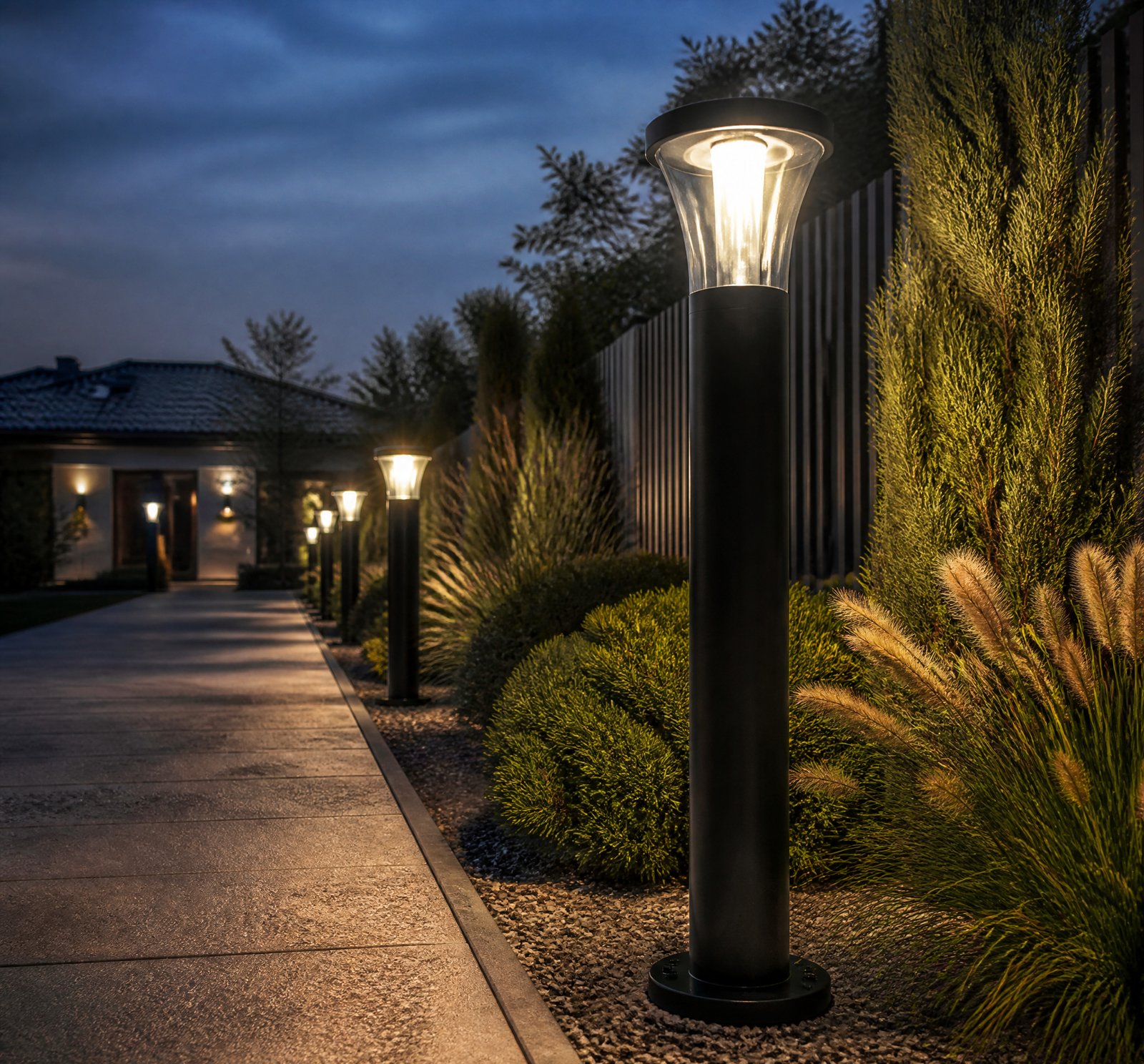
> Quick answer: Premium solar lamps outperform low-cost models through rigorous quality control, superior materials, and culturally informed design. They feature better battery life, consistent light output, and robust construction [7,11], while generic versions often fail due to poor workmanship, inadequate protection, and degraded components [7,11]. Consumer preferences like switch type and color also vary by region, affecting adoption [10].
Solar lighting is transforming off-grid life across Romania, offering reliable, clean energy for homes, rural communities, and public spaces. Yet not all solar lamps are created equal. While low-cost models flood the market, premium options stand apart through deliberate engineering, testing, and user-centered design. Understanding these manufacturing differences helps consumers choose wisely and ensures long-term impact.
Quality Control and Testing Standards
Premium solar lamps undergo rigorous testing protocols that low-cost generics often skip. These include laboratory assessments and real-world field trials to evaluate durability and performance under actual conditions [1,7]. Such testing reveals critical flaws in cheap models, such as poor mechanical design, weak cable connections, and inadequate overcurrent protection for LEDs [7,11]. These failures lead to early breakdowns, reduced light output due to degraded LEDs, and shortened battery life [7,11]. In contrast, premium manufacturers invest in quality control systems to ensure consistent performance and reliability, building consumer trust in the technology [1].
Design Features That Matter to Romanian Users
Design preferences are not one-size-fits-all. Research shows users across regions prioritize light output, portability, ease of use, safety, and battery life [7]. In Romania, where homes may lack grid access and power outages are common, durable, portable lamps with long runtime are highly valued. Users prefer built-in switches over pull switches for convenience and brightness, and bright white light output enhances visibility and usability [4,10]. While not specific to Romania, cultural nuances—like color preferences in funeral contexts in Uganda [10]—highlight the importance of local insight in product design. Manufacturers who adapt to regional needs gain stronger market acceptance.
Cost vs. Value: The Real Price of Low-Cost Lamps
Initial investment for PicoPV systems ranges from $36 to $120 USD [7], which can be prohibitive for low-income households in Romania with limited access to financing [7,19]. While premium lamps cost more upfront, they offer greater long-term value through extended lifespan, consistent performance, and lower maintenance. Cheap models may seem affordable but often fail within months due to poor materials, leading to higher replacement costs and frustration. The true cost includes not just the purchase price but also reliability and energy efficiency over time.
| Feature | Premium Solar Lamps | Low-Cost Generic Models |
|–––|–––––––|–––––––––|
| Battery Life | 2–5 years with proper care [7] | Often <1 year due to poor quality [7,11] |
| Light Output | Consistent, high lumens [7] | Degrades quickly over time [7,11] |
| Build Quality | Durable materials, reinforced joints [4] | Flimsy cables, weak switches [7,11] |
| Protection | Overcurrent, overcharge safeguards [7] | Rarely included [7,11] |
| Warranty | 1–2 years or more [5] | Often none [5] |
Market Transparency and Trusted Platforms
To combat low-quality products, initiatives like Lighting Global provide verified data on solar lamps meeting minimum standards [2]. This platform lists technical specs, pricing, runtime, battery type, certifications, and distributor contacts [5], enabling users to compare products objectively. By linking specifications to geographic distributor info, Lighting Global empowers Romanians to make informed choices and avoid scams or substandard gear [2,5].
Key Takeaways
- Premium solar lamps use robust materials and pass real-world testing, while low-cost models often fail due to poor workmanship [7,11].
- User preferences in Romania favor portability, built-in switches, and bright white light [4,10].
- High upfront cost of premium lamps is offset by longer lifespan and consistent performance.
- Platforms like Lighting Global help consumers avoid low-quality products by offering transparent, verified data [5].
- Cultural and regional design considerations improve adoption and user satisfaction [10].
Frequently Asked Questions
[
{
„q”: „How long do premium solar lamps last compared to generic ones?”,
„a”: „Premium solar lamps typically last 2–5 years with proper care, while low-cost models often fail within a year due to poor battery quality and weak components [7,11].”
},
{
„q”: „Why do some low-cost solar lamps fail quickly?”,
„a”: „They often lack overcurrent protection, use degraded LEDs, and have weak connectors and switches that fail under normal use [7,11].”
},
{
„q”: „Are there trusted sources for comparing solar lamp quality in Romania?”,
„a”: „Yes—Lighting Global offers verified product data, including specs, warranty, and distributor contacts, helping consumers make informed choices [5].”
}
]
References
- [1] Impacts_of_PicoPV_and_Consumer_Research_-_energypedia__2ed9d7cd — authority
source passage
# Impacts of PicoPV and Consumer Research Source: Blog/Web URL: https://energypedia.info/wiki/Impacts_of_PicoPV_and_Consumer_Research Author: Date: 2018-08-01 Impacts of PicoPV and Consumer Research Overview As experience with other renewable technologies show, lack of social acceptance and incongruity with cultural values and norms are common barriers during the implementation phase. Therefore, it is important to investigate in users needs and behavior patterns. Additionally, experience shows that laboratory test have to be complemented with field tests in order to test the solar lanterns under real-life conditions. Due to the fact that many bad quality products exists, it is also important to test selected products in a field test. GIZ Energising Development has conducted various tests in different countries, such as Bangladesh, Bolivia, Ethiopia, Mozambique, Nicaragua, Peru, Senegal and Uganda. Approaches of these tests differ, results and outlook are presented within this articles. Performance of Solar Lamps More than 100 firms are offering PicoPV products in developing countries today, but most products are of very low quality, with serious implications for consumer trust in the new technology. Early lab tests have focused the awareness of governments and donors on the importance of quality control and customer information – however, field tests in sufficient countries with sufficient sample sizes are needed for a better understanding of PicoPV performance under real-lif
- [2] D-Lab_Off-Grid_Energy_Group_launches_Solar_Lighting_Product__84d6451b — authority
source passage
and programs working to increase access to solar energy products where they are most needed,” Verploegen says. “Our job was to figure out what was missing.” Verploegen was intrigued by the work coming out of MIT’s Comprehensive Initiative on Technology Evaluation (CITE). CITE has developed and piloted a methodology for evaluating products intended for the developing world focusing on the dimensions of suitability, scalability, and sustainability. Their first study of solar lanterns available in Uganda, published in early 2015, included a comparative chart of solar lanterns available in Uganda. “CITE is pioneering a rigorous methodology for evaluation,” comments Verploegen. “What D-Lab’s Off-Grid Energy wanted to bring to the table was the rapid dissemination of comparable product specifications linked to geographically organized distributor contact information around the world.” Verploegen didn’t have to start from scratch. Inspired by CITE’s Uganda Solar Lantern study, Verploegen researched the availability of solar lighting product information that was global in scale. He found Lighting Global, the World Bank Group platform, which has been providing basic information on solar lighting products that meet minimum quality standards since 2009 and continuously updates their database. In developing this resource, D-Lab’s Off-Grid Energy Group working from Lighting Global’s database (in fact, they will include only products that have passed Lighting Global’s quality assurance sta
- [4] Impacts_of_PicoPV_and_Consumer_Research_-_energypedia__2ed9d7cd — authority
source passage
Outstanding Products). Particular technical improvements concluded from the Ugandan field tests are: manufacturers need to improve products’ solar fraction, equip lamps only with advanced charge controllers, and work on the robustness of the products, and of the connection parts in particular. Problems were: frequent deep-discharge of batteries, low battery life-spans and overall unsatisfactory lighting service were the frequently observed. Apart from that, the components that most often caused lamps to fail were cables, plugs, input jacks and switches. These parts are obviously under extreme stress when lamps are in everyday use by extended families with several children, and when modules are put down for charging on the ground in the courtyard (while lamps are kept inside to protect them against thieves). [1] In Ethiopia, broken switches and deeply discharged batteries were a frequent problem. Robustness has to be improved as well, because users often carry their systems around due to fear of theft. General Experiences Field Tests The GIZ PicoPV country survey results underpin that an ‘one-size-fits-all’ lamp model does not exist. The lamp models were rated differently by users across different continents, and they were liked and disliked for different reasons. However, there are some aspects that turned out to be important for consumers in all the test countries. Aspect's Customers Above all, light quality, including the size of the light cone and light intensity, mattered
- [5] D-Lab_Off-Grid_Energy_Group_launches_Solar_Lighting_Product__84d6451b — authority
source passage
information on model, manufacturer, price (in U.S. dollars), lighting output, settings and runtime, battery and solar panel specifications, features and accessories, as well as information on the warranty and certifications for some 50 products. “It is exciting to see our colleagues at D-Lab building upon CITE’s approach to develop and release such an important resource for people living in poverty,” comments Joanne Mathias, associate director of CITE. “Access to information such as this is invaluable if technology is to truly improve lives and livelihoods in the developing world.” Verploegen has a South Sudanese friend now living in the Boston-area who will be visiting his home country soon. “Phillip knows I’ve been studying solar lanterns,” Verploegen says, “and he asked me how to advise friends and family on which solar lanterns to buy. Now I can point him to this resource. His friends can click on South Sudan and find a review of products and distributors as well as detailed technical specifications in the full comparative chart.” He continues, “If the product they want is not available in South Sudan, they can use the database to look at for products available in neighboring countries such as Uganda, Kenya, and Ethiopia, and even set up businesses to import the products to their communities.” “Our goal is getting the right product into the hands of the people who need solar lighting the most and increasing the odds that investments made in these products serve the purcha
- [7] Basic_Energy_Services_-_Solar_PV_SHS_Solar_Lanterns_-_energypedia__0ac0436c — authority
source passage
of solar lanterns through laboratory tests of 12 solar lanterns on the market in 2009. From this tests, some of the technical problems that were observed with solar lanterns include: Poor mechanical design and workmanship; Missing over-current protection of the LED; Poor electrical design; Insufficient light output; Bad quality of the LEDs; Solar panels and batteries did not show nominal values; Defective protection of the battery; and Defective ballast for CFLs or LEDs.[2] As a result, a detailed test procedure is recommended as well as a series of technical requirements to improve the quality and the sustainability of the lanterns.Lighting Africa also rigorously tests the various lighting products on the market and they their specifications that should give the customer satisfaction for the products.The system should give a bright light, be affordable, multipurpose (lighting two rooms, charging a phone), portable, easy to use, safe and secure and have a long battery life.[8] Costs of PicoPV Systems Initial investment cost of PicoPV systems ranges from 36 US$ to 120 US$. Such relatively high initial investment costs prevents the large-scale diffusion of PicoPV lanterns among low income strata for the time being, given their severely restricted household budgets (typically US$ 2-5 per month for lighting, with no buffer for savings) and lack of access to financial services.[2] In contrast, monthly costs are low (2 US$ to 9 US$, except for the poorest price performer) in compar
- [10] Impacts_of_PicoPV_and_Consumer_Research_-_energypedia__2ed9d7cd — authority
source passage
think ahead and are not interested in products that may be relatively cheap but have to be replaced after a short time. There is also concern among all potential retailers that maintenance and repair services may be a major hurdle towards the development of PicoPV markets in rural areas, where there is no local expertise on these new kinds of products. The field survey also revealed certain reservations by different consumer groups against some visual design features that will have to be taken into account for any successful PicoPV marketing strategy. For example, people had very particular positive or negative associations with certain colors or forms which might have an impact on their purchasing decision even though they said that these product features were not decisive factors. One lantern, for example, reminded Ugandan women of a camera, which limited its attractiveness, while in Nicaragua people particularly liked the handy format of the lamp. In Mozambique, one of the lamp models was described as “masculine” so that women would hesitate to use it. In Uganda, white is associated with religious ceremonies like funerals and therefore not regarded an appropriate color for a lamp. In Ethiopia, a large angle of radiation was preferred over a high number of lumens. Portable lamps were favored. Users preferred a built-in switch instead of a pull switch. Furthermore, bright, white light was clearly chosen over yellow colored light. Regulators in order to adjust the level of br
# Impacts of PicoPV and Consumer Research Source: Blog/Web URL: https://energypedia.info/wiki/Impacts_of_PicoPV_and_Consumer_Research Author: Date: 2018-08-01 Impacts of PicoPV and Consumer Research Overview As experience with other renewable technologies show, lack of social acceptance and incongruity with cultural values and norms are common barriers during the implementation phase. Therefore, it is important to investigate in users needs and behavior patterns. Additionally, experience shows that laboratory test have to be complemented with field tests in order to test the solar lanterns under real-life conditions. Due to the fact that many bad quality products exists, it is also important to test selected products in a field test. GIZ Energising Development has conducted various tests in different countries, such as Bangladesh, Bolivia, Ethiopia, Mozambique, Nicaragua, Peru, Senegal and Uganda. Approaches of these tests differ, results and outlook are presented within this articles. Performance of Solar Lamps More than 100 firms are offering PicoPV products in developing countries today, but most products are of very low quality, with serious implications for consumer trust in the new technology. Early lab tests have focused the awareness of governments and donors on the importance of quality control and customer information – however, field tests in sufficient countries with sufficient sample sizes are needed for a better understanding of PicoPV performance under real-lif
and programs working to increase access to solar energy products where they are most needed,” Verploegen says. “Our job was to figure out what was missing.” Verploegen was intrigued by the work coming out of MIT’s Comprehensive Initiative on Technology Evaluation (CITE). CITE has developed and piloted a methodology for evaluating products intended for the developing world focusing on the dimensions of suitability, scalability, and sustainability. Their first study of solar lanterns available in Uganda, published in early 2015, included a comparative chart of solar lanterns available in Uganda. “CITE is pioneering a rigorous methodology for evaluation,” comments Verploegen. “What D-Lab’s Off-Grid Energy wanted to bring to the table was the rapid dissemination of comparable product specifications linked to geographically organized distributor contact information around the world.” Verploegen didn’t have to start from scratch. Inspired by CITE’s Uganda Solar Lantern study, Verploegen researched the availability of solar lighting product information that was global in scale. He found Lighting Global, the World Bank Group platform, which has been providing basic information on solar lighting products that meet minimum quality standards since 2009 and continuously updates their database. In developing this resource, D-Lab’s Off-Grid Energy Group working from Lighting Global’s database (in fact, they will include only products that have passed Lighting Global’s quality assurance sta
Outstanding Products). Particular technical improvements concluded from the Ugandan field tests are: manufacturers need to improve products’ solar fraction, equip lamps only with advanced charge controllers, and work on the robustness of the products, and of the connection parts in particular. Problems were: frequent deep-discharge of batteries, low battery life-spans and overall unsatisfactory lighting service were the frequently observed. Apart from that, the components that most often caused lamps to fail were cables, plugs, input jacks and switches. These parts are obviously under extreme stress when lamps are in everyday use by extended families with several children, and when modules are put down for charging on the ground in the courtyard (while lamps are kept inside to protect them against thieves). [1] In Ethiopia, broken switches and deeply discharged batteries were a frequent problem. Robustness has to be improved as well, because users often carry their systems around due to fear of theft. General Experiences Field Tests The GIZ PicoPV country survey results underpin that an ‘one-size-fits-all’ lamp model does not exist. The lamp models were rated differently by users across different continents, and they were liked and disliked for different reasons. However, there are some aspects that turned out to be important for consumers in all the test countries. Aspect's Customers Above all, light quality, including the size of the light cone and light intensity, mattered
information on model, manufacturer, price (in U.S. dollars), lighting output, settings and runtime, battery and solar panel specifications, features and accessories, as well as information on the warranty and certifications for some 50 products. “It is exciting to see our colleagues at D-Lab building upon CITE’s approach to develop and release such an important resource for people living in poverty,” comments Joanne Mathias, associate director of CITE. “Access to information such as this is invaluable if technology is to truly improve lives and livelihoods in the developing world.” Verploegen has a South Sudanese friend now living in the Boston-area who will be visiting his home country soon. “Phillip knows I’ve been studying solar lanterns,” Verploegen says, “and he asked me how to advise friends and family on which solar lanterns to buy. Now I can point him to this resource. His friends can click on South Sudan and find a review of products and distributors as well as detailed technical specifications in the full comparative chart.” He continues, “If the product they want is not available in South Sudan, they can use the database to look at for products available in neighboring countries such as Uganda, Kenya, and Ethiopia, and even set up businesses to import the products to their communities.” “Our goal is getting the right product into the hands of the people who need solar lighting the most and increasing the odds that investments made in these products serve the purcha
of solar lanterns through laboratory tests of 12 solar lanterns on the market in 2009. From this tests, some of the technical problems that were observed with solar lanterns include: Poor mechanical design and workmanship; Missing over-current protection of the LED; Poor electrical design; Insufficient light output; Bad quality of the LEDs; Solar panels and batteries did not show nominal values; Defective protection of the battery; and Defective ballast for CFLs or LEDs.[2] As a result, a detailed test procedure is recommended as well as a series of technical requirements to improve the quality and the sustainability of the lanterns.Lighting Africa also rigorously tests the various lighting products on the market and they their specifications that should give the customer satisfaction for the products.The system should give a bright light, be affordable, multipurpose (lighting two rooms, charging a phone), portable, easy to use, safe and secure and have a long battery life.[8] Costs of PicoPV Systems Initial investment cost of PicoPV systems ranges from 36 US$ to 120 US$. Such relatively high initial investment costs prevents the large-scale diffusion of PicoPV lanterns among low income strata for the time being, given their severely restricted household budgets (typically US$ 2-5 per month for lighting, with no buffer for savings) and lack of access to financial services.[2] In contrast, monthly costs are low (2 US$ to 9 US$, except for the poorest price performer) in compar
think ahead and are not interested in products that may be relatively cheap but have to be replaced after a short time. There is also concern among all potential retailers that maintenance and repair services may be a major hurdle towards the development of PicoPV markets in rural areas, where there is no local expertise on these new kinds of products. The field survey also revealed certain reservations by different consumer groups against some visual design features that will have to be taken into account for any successful PicoPV marketing strategy. For example, people had very particular positive or negative associations with certain colors or forms which might have an impact on their purchasing decision even though they said that these product features were not decisive factors. One lantern, for example, reminded Ugandan women of a camera, which limited its attractiveness, while in Nicaragua people particularly liked the handy format of the lamp. In Mozambique, one of the lamp models was described as “masculine” so that women would hesitate to use it. In Uganda, white is associated with religious ceremonies like funerals and therefore not regarded an appropriate color for a lamp. In Ethiopia, a large angle of radiation was preferred over a high number of lumens. Portable lamps were favored. Users preferred a built-in switch instead of a pull switch. Furthermore, bright, white light was clearly chosen over yellow colored light. Regulators in order to adjust the level of br