
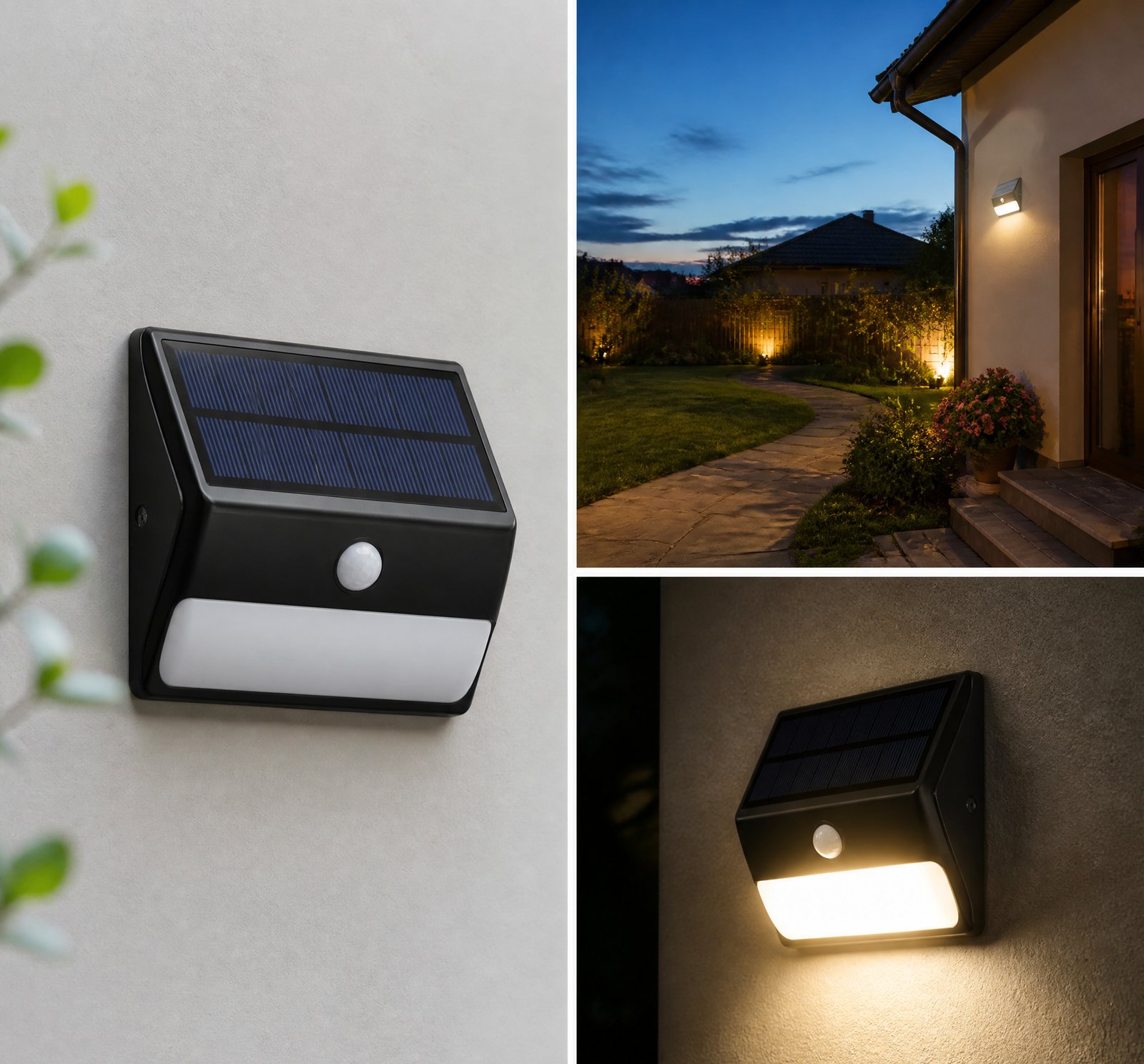
> Quick answer: Dusk-to-dawn solar lamps in urban Romania use ambient light sensors to detect when outdoor light drops below a set lux threshold, typically around 500 lux [1]. Hysteresis prevents rapid on-off cycling by delaying turn-off for up to an hour after light levels rise, avoiding false triggers from passing cars or streetlights [17]. This ensures stable, energy-efficient lighting.
Urban Romania’s streets face a unique lighting challenge: balancing safety, energy efficiency, and light pollution. Solar-powered street lamps equipped with dusk-to-dawn photosensors are increasingly being deployed to meet these demands. These smart devices don’t just turn on at sunset—they intelligently adapt to complex urban environments where ambient light fluctuates due to streetlights, vehicle headlights, and seasonal changes [1,2,3,4,5,8]. Understanding how they work is key to maximizing their performance.
How Photosensors Detect Light Levels and Set Lux Thresholds
Dusk-to-dawn photosensors use ambient light sensors or photocells to continuously measure surrounding illumination [1,3,9,10]. When light levels fall below a pre-set threshold—often around 500 lux—the sensor triggers the solar lamp to turn on [1,2,4,5,8]. This threshold is crucial: too high, and lights activate prematurely; too low, and they may remain off during critical evening hours [1]. In cities like Bucharest or Cluj-Napoca, where artificial light sources are dense, setting the right lux level prevents false activation due to nearby streetlights or passing headlights [1].
The optimal threshold varies by location and time of year. In winter, when daylight is shorter, a lower threshold helps maintain consistent lighting. In summer, a higher threshold avoids unnecessary illumination during extended daylight [2,4,5,8]. These systems must adapt dynamically to seasonal changes, ensuring lights remain off during bright summer evenings and on during darker winter nights [2,4,5,8].
Why Hysteresis Prevents Flickering in Urban Settings
One of the biggest challenges in urban lighting is rapid on-off cycling caused by transient light fluctuations—like a car passing or a streetlight turning on [17]. To solve this, photosensors implement hysteresis, a built-in delay mechanism. For example, if the turn-on threshold is 500 lux, the turn-off threshold might be set higher, say 700 lux, and the system waits at least an hour before switching off after light levels rise [17]. This buffer prevents lights from flickering due to brief shadows from clouds or passing vehicles.
Hysteresis ensures long-term reliability and energy savings. Without it, constant switching would waste power and accelerate wear on electronic components [17]. In Romania’s variable climate, where overcast days and fluctuating traffic patterns are common, hysteresis is not optional—it’s essential for stable, efficient operation.
Overcoming Urban Challenges: Dust, Seasonality, and Sensor Accuracy
Even with advanced sensors, real-world conditions can interfere. Dust, snow, or mud on the photocell surface can distort readings, leading to incorrect on/off signals [1]. Some systems allow users to adjust the activation light level [1], offering customization in polluted or snowy areas. In winter months, snow accumulation can block sensors entirely, requiring maintenance or self-cleaning designs.
Seasonal daylight variation also demands adaptive control. Automated systems use environmental sensors—including light-level detectors and motion sensors—to adjust timing across months [2,4,5,8]. This ensures lights aren’t left on during long summer nights or switched off too early in short winter days. Such smart integration reduces energy waste and improves public safety.
| Feature | Standard Photosensor | Smart Sensor with Hysteresis |
|–––|––––––––|––––––––––-|
| Lux Threshold | Fixed (e.g., 500 lux) [1] | Adjustable based on context [1] |
| Response to Fluctuations | Prone to false triggers [17] | Resists brief changes via delay [17] |
| Seasonal Adaptation | Manual adjustment needed | Automatic via sensor fusion [2,4,5,8] |
| Maintenance Need | High (dust/snow interference) [1] | Lower (self-cleaning or robust design) |
Key Takeaways
- Dusk-to-dawn solar lamps in Romania use ambient light sensors to activate at a set lux threshold, typically around 500 lux [1].
- Hysteresis prevents flickering by delaying turn-off for up to an hour after ambient light rises [17].
- Urban environments require adaptive systems to handle seasonal changes and artificial light interference [2,4,5,8].
- Contaminants like dust or snow can distort sensor readings, requiring maintenance or advanced designs [1].
- Smart sensors combining light, motion, and weather data optimize performance year-round [2,4,5,8].
References
- [1] US20210029802A1_-_System_For_Dynamic_Switching_Control_Of_A__778bbef8 — patent
source passage
to (i) turn on a luminaire at dusk i.e. when the measured light intensity falls below a pre-determined threshold light intensity and (ii) turn off the luminaire at dawn when the measured light intensity exceeds the pre-determined threshold light intensity. The photocells utilize semiconductors to control the flow of electric current through them. When the semiconductors are exposed to a certain level of light, current starts to flow through them and the luminaire is shut off. Some of these photocell sensors allow a user to choose the light level that will activate the semiconductor. As the light fades during the evening, the current flow reduces and stops eventually, causing the luminaire to turn on. – These systems are thus effective in reducing the lighting energy consumption. However, with time, contaminants such as dust, snow, and mud settle on the surface of the photocells. The photocells are generally incapable of detecting such contaminants. The settlement of contaminants on the surface of the photocells causes the light intensity measured by the photocells to be lower than the actual ambient light intensity. This leads to false triggering of the luminaries, which is not desired. – Thus, since the threshold light intensity is constant (factory set), the system turns on the luminaries even when there is sufficient ambient light, thereby leading to wastage of energy. Further, carrying out maintenance and cleaning of such luminaries is also not practical as the photocells
- [17] US20170055324A1_-_Apparatus_retrofit_kit_and_-_Google_Patents__f5522dda — patent
source passage
cause an illumination level or intensity level, or even color temperature, emitted by a light source of the luminaire to adjust upward at some time or point before the light source is turned OFF during a dusk-to-dawn portion of a daily or diurnal cycle, or alternatively at some time or point after the light source is initially turned ON during a dusk-to-dawn portion of a daily or diurnal cycle. – the time or point for the upward adjustment may be specified in various manners, for instance as a time period (e.g., 1 hour) before turn OFF, or as a percentage (e.g., 6%) or fraction (e.g., 1/12) of the total dusk-to-dawn portion of the daily or diurnal cycle before turn OFF. – a time period e.g., 1 hour – a percentage e.g., 6% – fraction e.g., 1/12 – one or more illumination adjustment or dimming schedules may include more than one downward, and/or more than one upward adjustments to non-zero illumination levels which are scheduled to occur between the initial turn ON and turn OFF associated with dusk and dawn conditions, respectively. – one or more illumination adjustment or dimming schedules may specify turn ON and turn OFF conditions and/or parameters. – the at least one controller or other circuitry may implement conventional motion sensing or motion activated operation in conjunction with the illumination adjustment or dimming schedule operation. – the at least one controller or other circuitry may cause the light sources to emit at a maximum illumination level or intensity i
to (i) turn on a luminaire at dusk i.e. when the measured light intensity falls below a pre-determined threshold light intensity and (ii) turn off the luminaire at dawn when the measured light intensity exceeds the pre-determined threshold light intensity. The photocells utilize semiconductors to control the flow of electric current through them. When the semiconductors are exposed to a certain level of light, current starts to flow through them and the luminaire is shut off. Some of these photocell sensors allow a user to choose the light level that will activate the semiconductor. As the light fades during the evening, the current flow reduces and stops eventually, causing the luminaire to turn on. – These systems are thus effective in reducing the lighting energy consumption. However, with time, contaminants such as dust, snow, and mud settle on the surface of the photocells. The photocells are generally incapable of detecting such contaminants. The settlement of contaminants on the surface of the photocells causes the light intensity measured by the photocells to be lower than the actual ambient light intensity. This leads to false triggering of the luminaries, which is not desired. – Thus, since the threshold light intensity is constant (factory set), the system turns on the luminaries even when there is sufficient ambient light, thereby leading to wastage of energy. Further, carrying out maintenance and cleaning of such luminaries is also not practical as the photocells
cause an illumination level or intensity level, or even color temperature, emitted by a light source of the luminaire to adjust upward at some time or point before the light source is turned OFF during a dusk-to-dawn portion of a daily or diurnal cycle, or alternatively at some time or point after the light source is initially turned ON during a dusk-to-dawn portion of a daily or diurnal cycle. – the time or point for the upward adjustment may be specified in various manners, for instance as a time period (e.g., 1 hour) before turn OFF, or as a percentage (e.g., 6%) or fraction (e.g., 1/12) of the total dusk-to-dawn portion of the daily or diurnal cycle before turn OFF. – a time period e.g., 1 hour – a percentage e.g., 6% – fraction e.g., 1/12 – one or more illumination adjustment or dimming schedules may include more than one downward, and/or more than one upward adjustments to non-zero illumination levels which are scheduled to occur between the initial turn ON and turn OFF associated with dusk and dawn conditions, respectively. – one or more illumination adjustment or dimming schedules may specify turn ON and turn OFF conditions and/or parameters. – the at least one controller or other circuitry may implement conventional motion sensing or motion activated operation in conjunction with the illumination adjustment or dimming schedule operation. – the at least one controller or other circuitry may cause the light sources to emit at a maximum illumination level or intensity i