
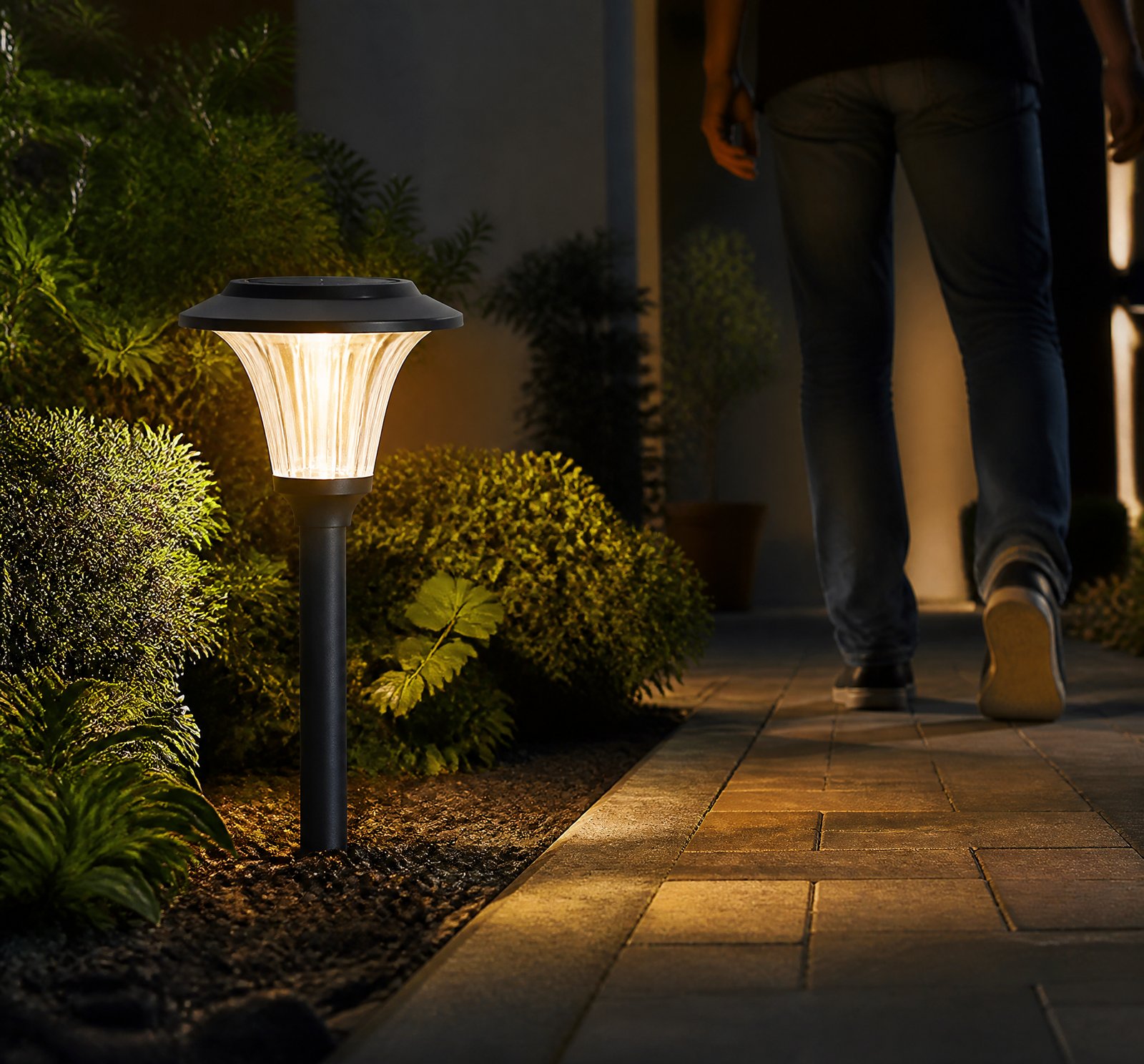
> Quick answer: A PIR motion sensor detects human movement by sensing changes in infrared radiation emitted by a body within its field of view [2][8]. It uses pyroelectric elements to detect rapid temperature fluctuations, triggered by moving warm objects like humans [17][12].
Passive Infrared (PIR) sensors are widely used in outdoor solar lamps for motion detection. These devices work by sensing changes in infrared radiation emitted by human bodies within their field of view. However, the effectiveness and reliability of these sensors can vary significantly based on several factors, including environmental conditions, sensor design, and placement.
How PIR Sensors Detect Movement
A PIR motion sensor detects movement by sensing changes in infrared radiation—specifically, the heat emitted by a human body—within its field of view [2][8]. All objects above absolute zero emit infrared radiation, with the human body typically radiating energy in the 8–14 micron wavelength range, peaking around 9–10 micrometers [17][22].
The sensor detects variations in this infrared radiation pattern caused by a moving object entering or leaving the monitored area. When a person moves across the sensor’s field of view, the detected infrared energy changes rapidly, triggering a signal that indicates motion [17][12]. This change is detected by pyroelectric elements within the sensor, which generate voltage in response to temperature fluctuations [2][17].
Detection Mechanism and Lens Design
The detection mechanism relies on dividing the sensor into multiple sensing zones using a compound optical system like a Fresnel lens [2][18]. These lenses focus infrared radiation from different sub-volumes of space onto the sensor’s pyroelectric elements [2][18]. When a person moves from one zone to another, the sensor detects a sequence of increasing and decreasing infrared levels, interpreted as motion [2][16].
The design of the lens—its curvature, surface area, and structure—directly determines the sensor’s detection angle and distance. A larger Fresnel lens can expand the detection range and improve sensitivity [9][18]. Some systems allow for adjustable mounting structures to orient the sensor toward specific areas requiring motion detection [3][18].
Realistic Detection Angles and Distances
While realistic detection angles and distances for PIR sensors in outdoor environments are influenced by multiple factors, the sources do not specify exact numerical ranges. However, they indicate that PIR sensors can achieve „wide and adjustable detection angles” and „long detection distances,” particularly in security light systems designed for outdoor use [3][18].
The lens design determines the sensor’s range, with larger or more precisely engineered lenses enabling longer detection distances [9][18]. For example, a patent describes a PIR motion sensing security light capable of long-range detection and high lumen output [3][18]. However, no exact figures for distance (e.g., 5 meters, 10 meters) or angular coverage (e.g., 90°, 120°) are provided.
Environmental Impact on PIR Sensors
Environmental conditions significantly affect the performance of PIR sensors outdoors. Rain, wind-blown leaves, and branches can cause false positives by disrupting the infrared field [1][4]. In cold climates, people wearing insulated clothing may have minimal temperature contrast with the background, making it difficult for the sensor to detect their presence [4].
Conversely, in warm climates, a person walking on hot pavement may have a body temperature similar to the environment, reducing motion detection effectiveness [4]. These climatic variations mean that while PIR sensors can achieve long detection distances and wide angles in ideal conditions, real-world performance is highly dependent on local weather conditions.
Sensor Integration and Design Trade-offs
The physical placement of the PIR sensor relative to the light source is critical for optimal illumination. In some configurations, central placement within the lamp housing creates a shadow effect that reduces emitted light efficiency [9][19]. To mitigate this, newer designs position the PIR sensor on the side or back of the lamp housing, allowing better detection and illumination without obstruction [15][19].
Comparison with Alternative Motion Detection Technologies
While PIR sensors detect heat changes, Doppler radar sensors emit microwave signals (e.g., 10.525 GHz) and analyze frequency shifts caused by moving objects [7][10][21]. Radar sensors can detect motion through walls or non-metallic barriers and distinguish between different types of movement [7][10].
Unlike PIRs, radar sensors are less affected by environmental factors like rain or temperature changes [1][4]. While not quantitatively compared in the sources, combining PIR with radar could improve reliability and reduce false positives.
Key Takeaways
- PIR motion sensors detect human movement through infrared radiation emitted by bodies.
- Detection angles and distances vary widely based on lens design but can be optimized.
- Environmental conditions significantly impact sensor performance; cold or hot climates affect detection effectiveness.
- Strategic positioning of the PIR sensor within solar lamps is crucial for optimal illumination.
Frequently Asked Questions
[
{„q”: „How do PIR sensors detect human movement outdoors?”, „a”: „PIR sensors detect changes in infrared radiation emitted by a human body, with rapid temperature fluctuations triggering motion signals [2][8].”},
{„q”: „What factors affect the detection range of outdoor PIR sensors?”, „a”: „Factors include lens design and environmental conditions like rain or temperature contrast. A larger Fresnel lens can expand the range [9][18].”},
{„q”: „How does sensor placement impact lighting efficiency in solar lamps?”, „a”: „Central placement can create shadows, reducing light output. Positioning sensors on the side or back avoids obstruction and improves performance [15][19].”}
]
References
- [1] US8232909B2_-_Doppler_radar_motion_detector_for_an_outdoor__bfcc35d2 — patent
source passage
MITIGATION OR ADAPTATION AGAINST CLIMATE CHANGE – Y02B—CLIMATE CHANGE MITIGATION TECHNOLOGIES RELATED TO BUILDINGS, e.g. HOUSING, HOUSE APPLIANCES OR RELATED END-USER APPLICATIONS – Y02B20/00—Energy efficient lighting technologies, e.g. halogen lamps or gas discharge lamps – Y02B20/40—Control techniques providing energy savings, e.g. smart controller or presence detection Definitions – the present invention relates to the field of motion detection in an outdoor environment. More specifically, the invention relates to apparatus and methods for using Doppler radar in a motion detection application for an outdoor light fixture. – PIR sensors passive infrared sensors – Traditional motion-sensing products use passive infrared (PIR) sensors to recognize moving heat sources, such as people, animals, or car engines. – PIR sensors have been the standard technology used in outdoor motion-sensing products for years, and the effectiveness of PIR sensors is typically determined by the design of the motion-sensing apparatus, the quality of the components used in making the motion sensing apparatus, and the current weather conditions. Rain, and wind-blown leaves and branches cause false positives, or false tripping, of a typical PIR motion sensor. Further, the typical PIR motion sensor performs differently in heat than it does in cold. Therefore, depending on where a user lives geographically, climate can have an effect on the performance of the PIR motion sensor and accordingly the fixture
- [2] US20040169145A1_-_PIR_motion_sensor_-_Google_Patents__fc6ec8aa — patent
source passage
(PIR) motion sensor, which detects changes in far infrared radiation (8-14 micron wavelength) due to temperature differences between an object (e.g. a human) and its background environment. – PIR passive infrared – motion sensors Upon detection, motion sensors generally transmit an indication to a host system, which may in turn activate an intrusion “alarm”, change room lighting, open a door, or perform some other function. – One way to provide motion sensing capabilities is to provide an infrared camera. Motion in the monitored space can be tracked easily by observing the output of the camera. However, such cameras are expensive. Hence, the need for simple, relatively inexpensive PIR motion sensors, using, e.g., simple pyroelectric detectors. Because the detectors can be a significant part of the cost (5-10%) of a typical PIR motion sensor, most PIR motion sensors employ only one or two such detectors. – a typical PIR motion sensor is designed with multiple optical components (e.g. lenses or mirrors). Each component of such “compound optics” focuses the infrared radiation from objects within a respective sub-volume of the monitored space into an image appearing over the detector. – the monitored sub-volumes can be interleaved with non-monitored sub-volumes, so that a radiation producing target (e.g., a human) passing from sub-volume to sub-volume causes a “target radiation/background radiation/target radiation” pattern at the detector. In the case of humans, this pattern cau
- [3] US10757787B2_-_LED_security_light_with_integrated_motion_sensor__9db299cf — patent
source passage
– the PIR motion sensor in conjunction with an IR ray signal detection circuitry detects and decides if the IR ray signals received represents a motion signal and outputs a voltage signal to the power control unit to turn on the light emitting unit for performing an illumination mode for a preset time duration before being turned off. – the PIR motion sensing unit is typically connected to the junction box through an angle adjustable structure, such that it can be adjusted to a direction requiring detection of motion intrusion occurrence and the light emitting unit is accordingly turned on to achieve a purpose of security protection. – a PIR motion sensing security light configured as above is characterized with a wide and adjustable detection angle, a capacity to perform a high lumens output and a long detection distance. – One shortage is that, when the PIR motion sensing security light is used for indoor applications, such as in a storage room or in a basement, the assembly of the PIR motion sensing security light is a bit too bulky and may not be conveniently used for indoor applications as for outdoor applications. – people generally do not need very high illumination level for security protection like the outdoor living need. – a related art U.S. Pat. No. 7,327,254B2 disclosed a PIR light bulb with sensing function to improve an installation convenience, however it reduced detection scope, loss of detection direction adjustable feature and lower lumens output for applic
- [4] US8232909B2_-_Doppler_radar_motion_detector_for_an_outdoor__bfcc35d2 — patent
source passage
of motion detection in an outdoor environment. More specifically, the invention relates to apparatus and methods for using Doppler radar in a motion detection application for an outdoor light fixture. Traditional motion-sensing products use passive infrared (PIR) sensors to recognize moving heat sources, such as people, animals, or car engines. PIR sensors have been the standard technology used in outdoor motion-sensing products for years, and the effectiveness of PIR sensors is typically determined by the design of the motion-sensing apparatus, the quality of the components used in making the motion sensing apparatus, and the current weather conditions. Rain, and wind-blown leaves and branches cause false positives, or false tripping, of a typical PIR motion sensor. Further, the typical PIR motion sensor performs differently in heat than it does in cold. Therefore, depending on where a user lives geographically, climate can have an effect on the performance of the PIR motion sensor and accordingly the fixture. In cold climates people are generally wearing insulated coats. The outer surface of the coat can be a similar temperature to the surrounding environment, thereby making it difficult to detect a person's motion. On the other hand, in warm climates, a person body temperature while walking across a paved driveway may be the same temperature or substantially close to the same temperature as the pavement, thereby making it difficult for the PIR sensors to detect motion. Ano
- [7] US12356527B1_-_Multimode_lighting_system_-_Google_Patents__19b45a32 — patent
source passage
spinning the device, tossing the device, etc. in particular directions or a certain number of times. Motion sensors detect the motion of objects in a specific area. A Passive Infrared (PIR) motion sensor is a device that detects motion by measuring changes in infrared radiation caused by the movement of warm objects. PIR sensors are called “passive” because they do not emit any energy on its own; rather PIR sensors simply detect the infrared radiation emitted or reflected by other objects. Microwave motion detection operates by emitting continuous microwave signals into the monitored area and analyzing the reflections caused by moving objects. The motion detection sensor contains a transmitter that emits microwave signals, typically in the gigahertz (e.g., 10.525 GHz) range, and a receiver that captures the reflected signals. When there is no motion, the emitted and received signals match, indicating a static environment. However, when an object enters the monitored zone and disrupts the microwave pattern, the sensor detects a Doppler shift in the reflected signals due to the object's movement. The Doppler shift is caused by the change in frequency as the object approaches or moves away from the sensor. The sensor's electronics analyze these frequency changes to determine the speed, direction, and presence of motion. Different types of motion sensors may be used to detect motion in various directions and through objects (e.g., walls) by blocking or allowing the signal to pass
- [8] Passive_infrared_sensor_-_Wikipedia__6200011b — wikipedia
source passage
# Passive infrared sensor – Wikipedia Source: Blog/Web URL: https://en.wikipedia.org/wiki/Passive_infrared_sensor Author: Date: 2005-05-31 A passive infrared sensor (PIR sensor) is an electronic device that measures infrared (IR) radiation emitted by objects in its field of view. They are most commonly used in motion detectors, including security alarms and automatic lighting systems. PIR sensors detect general movement but do not provide information on the source of motion; for that purpose, an imaging IR sensor is required. PIR sensors are often referred to simply as "PIR", or sometimes "PID" (passive infrared detector). The term "passive" indicates that the device does not emit energy, but detects infrared radiation (heat) emitted or reflected by objects. All objects with a temperature above absolute zero emit heat energy in the form of electromagnetic radiation. Usually this radiation isn't visible to the human eye because it radiates at infrared wavelengths, but it can be detected by electronic devices designed for such a purpose. A PIR-based motion detector is used to sense movement of people, animals, or other objects. They are commonly used in burglar alarms and automatically activated lighting systems. A PIR sensor detects changes in the amount of infrared radiation impinging upon it, which varies depending on the temperature and surface characteristics of objects in its field of view.[2] When an object, such as a person, passes in front of a background (e.g. a wall)
- [9] US10757787B2_-_LED_security_light_with_integrated_motion_sensor__9db299cf — patent
source passage
and transmitting light emitted from the LED light emitting unit and is further constructed with a metallic screw-in lamp cap for adapting to an AC power source. – the PIR motion sensing unit is positioned along a central space of the light bulb housing. The bottom of the PIR motion sensing unit is surrounded by LEDs (light emitting diodes) of the light emitting unit, and the top of the PIR motion sensing unit is configured with a small Fresnel lens slightly protruding out of the shell surface of the light bulb housing for receiving IR ray signals generated from an intruder. – the detection angle and detection distance of the PIR motion sensor are determined by the curvature and surface area of the Fresnel lens designed. – the PIR light bulb is configured and limited to a much smaller detection angle and much shorter detection range. – the PIR motion sensing unit is an opaque packaged component which is positioned along the central line of the light bulb housing, and therefore it creates a shadow effect in the center of the PIR light bulb. – the PIR light bulb is triggered to be turned on by the PIR motion sensing unit to emit LED light, the LED light therefore is partially blocked by the body of the PIR motion sensing unit. – This arrangement in fact is a dilemma between optimizing a detection capacity and optimizing an illumination capacity. – the larger the Fresnel lens is designed the larger the shadow area blocks the illumination of the PIR light bulb. – the PIR motion se
- [10] US12356527B1_-_Multimode_lighting_system_-_Google_Patents__19b45a32 — patent
source passage
movement of warm objects. PIR sensors are called “passive” because they do not emit any energy on its own; rather PIR sensors simply detect the infrared radiation emitted or reflected by other objects. – Microwave motion detection operates by emitting continuous microwave signals into the monitored area and analyzing the reflections caused by moving objects. – the motion detection sensor contains a transmitter that emits microwave signals, typically in the gigahertz (e.g., 10.525 GHz) range, and a receiver that captures the reflected signals. When there is no motion, the emitted and received signals match, indicating a static environment. – the sensor detects a Doppler shift in the reflected signals due to the object's movement. – the Doppler shift is caused by the change in frequency as the object approaches or moves away from the sensor. – the sensor's electronics analyze these frequency changes to determine the speed, direction, and presence of motion. – Different types of motion sensors may be used to detect motion in various directions and through objects (e.g., walls) by blocking or allowing the signal to pass through. – motion detectors may be used to turn on or off lights when motion is detected or change the mode of operation based on the amount, type, and distance to the detected motion. For example, the brightness of the LED may be increased when motion is detected nearer (or farther from) the exemplary lighting system 400 . – Global positioning/navigation sensors
- [12] WO2022192395A1_-_Passive_infrared_sensor_-_Google_Patents__72576e5c — patent
source passage
with the distance of the person from the sensor, as illustrated by signals 211 and 212 in graph 200- B; example peak-to-peak voltage values for the signals, as a function of distance from the sensor, are indicated in table 213. Finally, the output signal can vary with the speed at which the person is moving, as illustrated by signals 221 (“speed 1”) and 222 (“speed 2”) in graph 200-C. [0007] The design of PIR sensors is such that only fairly rapid changes in temperature of an object compared with background temperature will raise an alarm. Thus, although acceptable for use as a motion sensor, they are less practical for use in occupancy sensors, which should be able to detect the presence of a person, even if the person is stationary. Due to their low cost and power demands, however, it would be advantageous to devise an occupancy sensor utilizing a PIR sensor, rather than more expensive and complex technologies. SUMMARY [0008] To address deficiencies of the prior art, disclosed is a device for occupancy detection of a space using a passive infrared (PIR) sensor having a fixed field of view; the PIR sensor includes at least two pyroelectric infrared elements. The device includes an infrared reflector positioned proximate to the PIR sensor for re-directing infrared radiation received from within a monitored space toward the PIR sensor; an electromechanical device coupled to the infrared reflector and operable to alter a pointing angle thereof in response to a control signal; a
- [15] US10757787B2_-_LED_security_light_with_integrated_motion_sensor__9db299cf — patent
source passage
a top of the LED lamp and the LED lamp illuminates horizontally. – FIG. 13E and FIG. 13F are a perspective view and a front view of the eleventh embodiment of the present disclosure, wherein the PIR motion sensing unit is rotated to a back of the LED lamp and the LED lamp illuminates vertically. – FIG. 14A and FIG. 14B are a perspective view and a front view of a twelfth embodiment of the security light having two head donut shaped LED lamps and two adjustable PIR motion sensing units being integrated in the two LED lamps according to the present disclosure, respectively. – FIG. 14C and FIG. 14D are a perspective view and a front view of the twelfth embodiment of the present disclosure, wherein the two PIR motion sensing units are rotated to an outer side of the two LED lamps, respectively. – Numbering terms such as “first”, “second” or “third” can be used to describe various components, signals or the like, which are for distinguishing one component/signal from another one only, and are not intended to, nor should be construed to impose any substantive limitations on the components, signals or the like. – FIG. 1A and FIG. 1B are a perspective view and an exploded view of a traditional PIR motion sensing security light 1 which includes two LED lamps 21 , one PIR motion sensing unit 11 and a power control unit installed and hidden inside a junction box 41 to be mounted and fastened to a wall electric outlet (not shown). – the traditional PIR motion sensing security light 1 is
- [16] US6791458B2_-_Dual_technology_occupancy_sensor_-_Google_Patents__6eff855c — patent
source passage
sensor of the motion sensor switch monitors an area, such as an office, conference room in a building, or a home, for the presence of movement. Specifically, the motion sensor detects a change in the infrared energy radiating from regions in the area monitored by different sensing lobes of the PIR detector, which generally have a pass band within the 8-14 ⁇ m infrared range. If a person enters the monitored area, the person changes the amount of infrared energy being detected by the PIR detector. Therefore, the magnitude of the signal output by PIR detector, which is representative of the amount of detected infrared energy, will change. A motion sensor circuit in the motion sensor switch processes this signal, and provides a signal to a controller indicating that the amount of infrared energy received by the infrared detector has changed. – the controller interprets the signal provided by the motion sensor circuit, along with the signal provided by ambient light level sensor. If the signal provided by ambient light level sensor indicates that the ambient light in the monitored area is low (e.g., very little natural light is present in the monitored area), the control circuit will turn on or increase the brightness of the lights in the monitored area. However, if the signal provided by ambient light level sensor indicates that the ambient light in the monitored area is sufficient (e.g., due to sunlight, etc.), the control circuit may not turn on or brighten the lights, or may
- [17] US10307060B2_-_Mesh_network_personal_emergency_-_Google_Patents__67fec078 — patent
source passage
and waits for the reflected energy to bounce back. When a person moves into the field of microwave energy, it changes the amount of reflected energy or the time it takes for the reflection to arrive, and the radar sends a signal over the mesh network to indicate a person is crossing the zone and optionally opens the door. Similarly, an ultrasonic transducer can be used to send sound waves, bouncing them off a target and waiting for the echo. Passive motion sensors can be used as well. In one embodiment, the motion sensing such as those on lights (and security systems) is a passive system that detects infrared energy. These sensors are known as PIR (passive infrared) detectors or pyroelectric sensors. The sensor is sensitive to the temperature of a human body which has a skin temperature of about 93 degrees F. and radiates infrared energy with a wavelength between 9 and 10 micrometers. Therefore, the sensors are typically sensitive in the range of 8 to 12 micrometers. The sensor can be a photo-sensor—the infrared light bumps electrons off a substrate, and the electrons are detected and amplified into a signal that is then sent over the mesh network to the controller. The sensor looks for a rapid change in the amount of infrared energy. When a person walks by, the amount of infrared energy in the field of view changes rapidly and is detected. The motion sensor can be a wide field of view by using suitable lens covering the sensor to focus and bend light through plastic lenses.
- [18] US10757787B2_-_LED_security_light_with_integrated_motion_sensor__9db299cf — patent
source passage
the junction box, both are electrically coupled to the power control unit inside the junction box. The PIR motion sensing unit includes a condensing lens and a PIR motion sensor. The condensing lens may be a Fresnel lens, a dot lens or others. The Fresnel lens through its dimension and structural design collects and remotely converges IR (infrared) ray signals into a focal point where the PIR motion sensor is positioned to receive the focused IR ray signals generated from a moving body. The PIR motion sensor in conjunction with an IR ray signal detection circuitry detects and decides if the IR ray signals received represents a motion signal and outputs a voltage signal to the power control unit to turn on the light emitting unit for performing an illumination mode for a preset time duration before being turned off. The PIR motion sensing unit is typically connected to the junction box through an angle adjustable structure, such that it can be adjusted to a direction requiring detection of motion intrusion occurrence and the light emitting unit is accordingly turned on to achieve a purpose of security protection. A PIR motion sensing security light configured as above is characterized with a wide and adjustable detection angle, a capacity to perform a high lumens output and a long detection distance. One shortage is that, when the PIR motion sensing security light is used for indoor applications, such as in a storage room or in a basement, the assembly of the PIR motion sensin
- [19] US10757787B2_-_LED_security_light_with_integrated_motion_sensor__9db299cf — patent
source passage
sensor and the IR ray signal detection circuitry. The PIR motion sensor together with the IR ray signal detection circuitry is not much taller in construction than the surrounding LEDs, and therefore, it does not create any shadow effect. The first part housing and the second part housing are fastened together through a connection mechanism. For a bulb housing construction, the first part housing and the second part housing could be coupled and fastened by twisting a threaded construction respectively designed on the connecting edges of the first part housing and the second part housing or by using an ultrasonic welding technology. For a non-bulb shaped lamp housing, the first part housing and the second part housing could be coupled and fastened together by screws or any similar means. However, the connection mechanism can be any other method which can fasten the first part housing and the second part housing together without restriction. So configured the present disclosure has advantages compared with the above two related arts in terms of much wider detection scope, longer detection range and a high illumination output without a shadow effect. The present disclosure when compared with a traditional PIR motion sensing security light also has two advantages; the first advantage is a more compact product structure without a bulky PIR motion sensing unit, wherein the PIR motion sensor instead is built inside a lamp housing of the PIR motion sensing security light. The second
- [21] US8232909B2_-_Doppler_radar_motion_detector_for_an_outdoor__bfcc35d2 — patent
source passage
1025 . Once a determination is made at step 1030 that the lamp 150 has been on for the complete duration, the lamp 150 is turned off at step 1035 . – the motion detector system 100 again determines the sensitivity setting at step 1040 and begins detecting for motion at step 1045 . – the complete duration for lamp “on” time 970 is determined according to where the mode setting control knob 750 is positioned. – the relay or triac is energized at step 1020 when either the Doppler radar sensor or the PIR sensor 210 detects that there is motion within the monitored area 300 . Landscapes – Engineering & Computer Science (AREA) – Radar, Positioning & Navigation (AREA) – Remote Sensing (AREA) – Computer Networks & Wireless Communication (AREA) – Physics & Mathematics (AREA) – General Physics & Mathematics (AREA) – General Engineering & Computer Science (AREA) – Radar Systems Or Details Thereof (AREA) Abstract A motion detector system includes the ability to detect motion through the use of a Doppler radar sensor or a combination of PIR sensors and a Doppler radar sensor. The system includes an outdoor light fixture having one or more lamps and a housing coupled to the outdoor light fixture. The housing includes a Doppler radar sensor and a microprocessor for analyzing the signals received by the Doppler radar sensor. Alternatively, the housing includes a combination of PIR sensors and a Doppler radar sensor and a microprocessor for analyzing the signals received from these sensors. T
- [22] US20040169145A1_-_PIR_motion_sensor_-_Google_Patents__fc6ec8aa — patent
source passage
a dimension that is orthogonal to the dimension in which the elements of the other detector are wired. The signals from the detectors are combined to determine motion and size of object. The detector elements can also be configured differently from each other as in the first embodiment, and the polarities of signals can be used to determine direction of motion. In yet another embodiment the detectors can be of the same size but have optics of different focal lengths. Description – This is a continuation-in-part of U.S. patent application Ser. No. 10/338,862, filed Mar. 14, 2003. Priority is also claimed from U.S. provisional application serial No. 60/441,571, filed Jan. 21, 2003. – I. Field of the Invention – The present invention relates generally to motion sensors. – II. Background of the Invention – Motion sensors are used in security systems to detect movement in a monitored space. One type of sensor is a passive infrared (PIR) motion sensor, which detects changes in far infrared radiation (8-14 micron wavelength) due to temperature differences between an object (e.g. a human) and its background environment. Upon detection, motion sensors generally transmit an indication to a host system, which may in turn activate an intrusion “alarm”, change room lighting, open a door, or perform some other function. – One way to provide motion sensing capabilities is to provide an infrared camera. Motion in the monitored space can be tracked easily by observing the output of the camera
MITIGATION OR ADAPTATION AGAINST CLIMATE CHANGE – Y02B—CLIMATE CHANGE MITIGATION TECHNOLOGIES RELATED TO BUILDINGS, e.g. HOUSING, HOUSE APPLIANCES OR RELATED END-USER APPLICATIONS – Y02B20/00—Energy efficient lighting technologies, e.g. halogen lamps or gas discharge lamps – Y02B20/40—Control techniques providing energy savings, e.g. smart controller or presence detection Definitions – the present invention relates to the field of motion detection in an outdoor environment. More specifically, the invention relates to apparatus and methods for using Doppler radar in a motion detection application for an outdoor light fixture. – PIR sensors passive infrared sensors – Traditional motion-sensing products use passive infrared (PIR) sensors to recognize moving heat sources, such as people, animals, or car engines. – PIR sensors have been the standard technology used in outdoor motion-sensing products for years, and the effectiveness of PIR sensors is typically determined by the design of the motion-sensing apparatus, the quality of the components used in making the motion sensing apparatus, and the current weather conditions. Rain, and wind-blown leaves and branches cause false positives, or false tripping, of a typical PIR motion sensor. Further, the typical PIR motion sensor performs differently in heat than it does in cold. Therefore, depending on where a user lives geographically, climate can have an effect on the performance of the PIR motion sensor and accordingly the fixture
(PIR) motion sensor, which detects changes in far infrared radiation (8-14 micron wavelength) due to temperature differences between an object (e.g. a human) and its background environment. – PIR passive infrared – motion sensors Upon detection, motion sensors generally transmit an indication to a host system, which may in turn activate an intrusion “alarm”, change room lighting, open a door, or perform some other function. – One way to provide motion sensing capabilities is to provide an infrared camera. Motion in the monitored space can be tracked easily by observing the output of the camera. However, such cameras are expensive. Hence, the need for simple, relatively inexpensive PIR motion sensors, using, e.g., simple pyroelectric detectors. Because the detectors can be a significant part of the cost (5-10%) of a typical PIR motion sensor, most PIR motion sensors employ only one or two such detectors. – a typical PIR motion sensor is designed with multiple optical components (e.g. lenses or mirrors). Each component of such “compound optics” focuses the infrared radiation from objects within a respective sub-volume of the monitored space into an image appearing over the detector. – the monitored sub-volumes can be interleaved with non-monitored sub-volumes, so that a radiation producing target (e.g., a human) passing from sub-volume to sub-volume causes a “target radiation/background radiation/target radiation” pattern at the detector. In the case of humans, this pattern cau
– the PIR motion sensor in conjunction with an IR ray signal detection circuitry detects and decides if the IR ray signals received represents a motion signal and outputs a voltage signal to the power control unit to turn on the light emitting unit for performing an illumination mode for a preset time duration before being turned off. – the PIR motion sensing unit is typically connected to the junction box through an angle adjustable structure, such that it can be adjusted to a direction requiring detection of motion intrusion occurrence and the light emitting unit is accordingly turned on to achieve a purpose of security protection. – a PIR motion sensing security light configured as above is characterized with a wide and adjustable detection angle, a capacity to perform a high lumens output and a long detection distance. – One shortage is that, when the PIR motion sensing security light is used for indoor applications, such as in a storage room or in a basement, the assembly of the PIR motion sensing security light is a bit too bulky and may not be conveniently used for indoor applications as for outdoor applications. – people generally do not need very high illumination level for security protection like the outdoor living need. – a related art U.S. Pat. No. 7,327,254B2 disclosed a PIR light bulb with sensing function to improve an installation convenience, however it reduced detection scope, loss of detection direction adjustable feature and lower lumens output for applic
of motion detection in an outdoor environment. More specifically, the invention relates to apparatus and methods for using Doppler radar in a motion detection application for an outdoor light fixture. Traditional motion-sensing products use passive infrared (PIR) sensors to recognize moving heat sources, such as people, animals, or car engines. PIR sensors have been the standard technology used in outdoor motion-sensing products for years, and the effectiveness of PIR sensors is typically determined by the design of the motion-sensing apparatus, the quality of the components used in making the motion sensing apparatus, and the current weather conditions. Rain, and wind-blown leaves and branches cause false positives, or false tripping, of a typical PIR motion sensor. Further, the typical PIR motion sensor performs differently in heat than it does in cold. Therefore, depending on where a user lives geographically, climate can have an effect on the performance of the PIR motion sensor and accordingly the fixture. In cold climates people are generally wearing insulated coats. The outer surface of the coat can be a similar temperature to the surrounding environment, thereby making it difficult to detect a person's motion. On the other hand, in warm climates, a person body temperature while walking across a paved driveway may be the same temperature or substantially close to the same temperature as the pavement, thereby making it difficult for the PIR sensors to detect motion. Ano
spinning the device, tossing the device, etc. in particular directions or a certain number of times. Motion sensors detect the motion of objects in a specific area. A Passive Infrared (PIR) motion sensor is a device that detects motion by measuring changes in infrared radiation caused by the movement of warm objects. PIR sensors are called “passive” because they do not emit any energy on its own; rather PIR sensors simply detect the infrared radiation emitted or reflected by other objects. Microwave motion detection operates by emitting continuous microwave signals into the monitored area and analyzing the reflections caused by moving objects. The motion detection sensor contains a transmitter that emits microwave signals, typically in the gigahertz (e.g., 10.525 GHz) range, and a receiver that captures the reflected signals. When there is no motion, the emitted and received signals match, indicating a static environment. However, when an object enters the monitored zone and disrupts the microwave pattern, the sensor detects a Doppler shift in the reflected signals due to the object's movement. The Doppler shift is caused by the change in frequency as the object approaches or moves away from the sensor. The sensor's electronics analyze these frequency changes to determine the speed, direction, and presence of motion. Different types of motion sensors may be used to detect motion in various directions and through objects (e.g., walls) by blocking or allowing the signal to pass
# Passive infrared sensor – Wikipedia Source: Blog/Web URL: https://en.wikipedia.org/wiki/Passive_infrared_sensor Author: Date: 2005-05-31 A passive infrared sensor (PIR sensor) is an electronic device that measures infrared (IR) radiation emitted by objects in its field of view. They are most commonly used in motion detectors, including security alarms and automatic lighting systems. PIR sensors detect general movement but do not provide information on the source of motion; for that purpose, an imaging IR sensor is required. PIR sensors are often referred to simply as "PIR", or sometimes "PID" (passive infrared detector). The term "passive" indicates that the device does not emit energy, but detects infrared radiation (heat) emitted or reflected by objects. All objects with a temperature above absolute zero emit heat energy in the form of electromagnetic radiation. Usually this radiation isn't visible to the human eye because it radiates at infrared wavelengths, but it can be detected by electronic devices designed for such a purpose. A PIR-based motion detector is used to sense movement of people, animals, or other objects. They are commonly used in burglar alarms and automatically activated lighting systems. A PIR sensor detects changes in the amount of infrared radiation impinging upon it, which varies depending on the temperature and surface characteristics of objects in its field of view.[2] When an object, such as a person, passes in front of a background (e.g. a wall)
and transmitting light emitted from the LED light emitting unit and is further constructed with a metallic screw-in lamp cap for adapting to an AC power source. – the PIR motion sensing unit is positioned along a central space of the light bulb housing. The bottom of the PIR motion sensing unit is surrounded by LEDs (light emitting diodes) of the light emitting unit, and the top of the PIR motion sensing unit is configured with a small Fresnel lens slightly protruding out of the shell surface of the light bulb housing for receiving IR ray signals generated from an intruder. – the detection angle and detection distance of the PIR motion sensor are determined by the curvature and surface area of the Fresnel lens designed. – the PIR light bulb is configured and limited to a much smaller detection angle and much shorter detection range. – the PIR motion sensing unit is an opaque packaged component which is positioned along the central line of the light bulb housing, and therefore it creates a shadow effect in the center of the PIR light bulb. – the PIR light bulb is triggered to be turned on by the PIR motion sensing unit to emit LED light, the LED light therefore is partially blocked by the body of the PIR motion sensing unit. – This arrangement in fact is a dilemma between optimizing a detection capacity and optimizing an illumination capacity. – the larger the Fresnel lens is designed the larger the shadow area blocks the illumination of the PIR light bulb. – the PIR motion se
movement of warm objects. PIR sensors are called “passive” because they do not emit any energy on its own; rather PIR sensors simply detect the infrared radiation emitted or reflected by other objects. – Microwave motion detection operates by emitting continuous microwave signals into the monitored area and analyzing the reflections caused by moving objects. – the motion detection sensor contains a transmitter that emits microwave signals, typically in the gigahertz (e.g., 10.525 GHz) range, and a receiver that captures the reflected signals. When there is no motion, the emitted and received signals match, indicating a static environment. – the sensor detects a Doppler shift in the reflected signals due to the object's movement. – the Doppler shift is caused by the change in frequency as the object approaches or moves away from the sensor. – the sensor's electronics analyze these frequency changes to determine the speed, direction, and presence of motion. – Different types of motion sensors may be used to detect motion in various directions and through objects (e.g., walls) by blocking or allowing the signal to pass through. – motion detectors may be used to turn on or off lights when motion is detected or change the mode of operation based on the amount, type, and distance to the detected motion. For example, the brightness of the LED may be increased when motion is detected nearer (or farther from) the exemplary lighting system 400 . – Global positioning/navigation sensors
with the distance of the person from the sensor, as illustrated by signals 211 and 212 in graph 200- B; example peak-to-peak voltage values for the signals, as a function of distance from the sensor, are indicated in table 213. Finally, the output signal can vary with the speed at which the person is moving, as illustrated by signals 221 (“speed 1”) and 222 (“speed 2”) in graph 200-C. [0007] The design of PIR sensors is such that only fairly rapid changes in temperature of an object compared with background temperature will raise an alarm. Thus, although acceptable for use as a motion sensor, they are less practical for use in occupancy sensors, which should be able to detect the presence of a person, even if the person is stationary. Due to their low cost and power demands, however, it would be advantageous to devise an occupancy sensor utilizing a PIR sensor, rather than more expensive and complex technologies. SUMMARY [0008] To address deficiencies of the prior art, disclosed is a device for occupancy detection of a space using a passive infrared (PIR) sensor having a fixed field of view; the PIR sensor includes at least two pyroelectric infrared elements. The device includes an infrared reflector positioned proximate to the PIR sensor for re-directing infrared radiation received from within a monitored space toward the PIR sensor; an electromechanical device coupled to the infrared reflector and operable to alter a pointing angle thereof in response to a control signal; a
a top of the LED lamp and the LED lamp illuminates horizontally. – FIG. 13E and FIG. 13F are a perspective view and a front view of the eleventh embodiment of the present disclosure, wherein the PIR motion sensing unit is rotated to a back of the LED lamp and the LED lamp illuminates vertically. – FIG. 14A and FIG. 14B are a perspective view and a front view of a twelfth embodiment of the security light having two head donut shaped LED lamps and two adjustable PIR motion sensing units being integrated in the two LED lamps according to the present disclosure, respectively. – FIG. 14C and FIG. 14D are a perspective view and a front view of the twelfth embodiment of the present disclosure, wherein the two PIR motion sensing units are rotated to an outer side of the two LED lamps, respectively. – Numbering terms such as “first”, “second” or “third” can be used to describe various components, signals or the like, which are for distinguishing one component/signal from another one only, and are not intended to, nor should be construed to impose any substantive limitations on the components, signals or the like. – FIG. 1A and FIG. 1B are a perspective view and an exploded view of a traditional PIR motion sensing security light 1 which includes two LED lamps 21 , one PIR motion sensing unit 11 and a power control unit installed and hidden inside a junction box 41 to be mounted and fastened to a wall electric outlet (not shown). – the traditional PIR motion sensing security light 1 is
sensor of the motion sensor switch monitors an area, such as an office, conference room in a building, or a home, for the presence of movement. Specifically, the motion sensor detects a change in the infrared energy radiating from regions in the area monitored by different sensing lobes of the PIR detector, which generally have a pass band within the 8-14 ⁇ m infrared range. If a person enters the monitored area, the person changes the amount of infrared energy being detected by the PIR detector. Therefore, the magnitude of the signal output by PIR detector, which is representative of the amount of detected infrared energy, will change. A motion sensor circuit in the motion sensor switch processes this signal, and provides a signal to a controller indicating that the amount of infrared energy received by the infrared detector has changed. – the controller interprets the signal provided by the motion sensor circuit, along with the signal provided by ambient light level sensor. If the signal provided by ambient light level sensor indicates that the ambient light in the monitored area is low (e.g., very little natural light is present in the monitored area), the control circuit will turn on or increase the brightness of the lights in the monitored area. However, if the signal provided by ambient light level sensor indicates that the ambient light in the monitored area is sufficient (e.g., due to sunlight, etc.), the control circuit may not turn on or brighten the lights, or may
and waits for the reflected energy to bounce back. When a person moves into the field of microwave energy, it changes the amount of reflected energy or the time it takes for the reflection to arrive, and the radar sends a signal over the mesh network to indicate a person is crossing the zone and optionally opens the door. Similarly, an ultrasonic transducer can be used to send sound waves, bouncing them off a target and waiting for the echo. Passive motion sensors can be used as well. In one embodiment, the motion sensing such as those on lights (and security systems) is a passive system that detects infrared energy. These sensors are known as PIR (passive infrared) detectors or pyroelectric sensors. The sensor is sensitive to the temperature of a human body which has a skin temperature of about 93 degrees F. and radiates infrared energy with a wavelength between 9 and 10 micrometers. Therefore, the sensors are typically sensitive in the range of 8 to 12 micrometers. The sensor can be a photo-sensor—the infrared light bumps electrons off a substrate, and the electrons are detected and amplified into a signal that is then sent over the mesh network to the controller. The sensor looks for a rapid change in the amount of infrared energy. When a person walks by, the amount of infrared energy in the field of view changes rapidly and is detected. The motion sensor can be a wide field of view by using suitable lens covering the sensor to focus and bend light through plastic lenses.
the junction box, both are electrically coupled to the power control unit inside the junction box. The PIR motion sensing unit includes a condensing lens and a PIR motion sensor. The condensing lens may be a Fresnel lens, a dot lens or others. The Fresnel lens through its dimension and structural design collects and remotely converges IR (infrared) ray signals into a focal point where the PIR motion sensor is positioned to receive the focused IR ray signals generated from a moving body. The PIR motion sensor in conjunction with an IR ray signal detection circuitry detects and decides if the IR ray signals received represents a motion signal and outputs a voltage signal to the power control unit to turn on the light emitting unit for performing an illumination mode for a preset time duration before being turned off. The PIR motion sensing unit is typically connected to the junction box through an angle adjustable structure, such that it can be adjusted to a direction requiring detection of motion intrusion occurrence and the light emitting unit is accordingly turned on to achieve a purpose of security protection. A PIR motion sensing security light configured as above is characterized with a wide and adjustable detection angle, a capacity to perform a high lumens output and a long detection distance. One shortage is that, when the PIR motion sensing security light is used for indoor applications, such as in a storage room or in a basement, the assembly of the PIR motion sensin
sensor and the IR ray signal detection circuitry. The PIR motion sensor together with the IR ray signal detection circuitry is not much taller in construction than the surrounding LEDs, and therefore, it does not create any shadow effect. The first part housing and the second part housing are fastened together through a connection mechanism. For a bulb housing construction, the first part housing and the second part housing could be coupled and fastened by twisting a threaded construction respectively designed on the connecting edges of the first part housing and the second part housing or by using an ultrasonic welding technology. For a non-bulb shaped lamp housing, the first part housing and the second part housing could be coupled and fastened together by screws or any similar means. However, the connection mechanism can be any other method which can fasten the first part housing and the second part housing together without restriction. So configured the present disclosure has advantages compared with the above two related arts in terms of much wider detection scope, longer detection range and a high illumination output without a shadow effect. The present disclosure when compared with a traditional PIR motion sensing security light also has two advantages; the first advantage is a more compact product structure without a bulky PIR motion sensing unit, wherein the PIR motion sensor instead is built inside a lamp housing of the PIR motion sensing security light. The second
1025 . Once a determination is made at step 1030 that the lamp 150 has been on for the complete duration, the lamp 150 is turned off at step 1035 . – the motion detector system 100 again determines the sensitivity setting at step 1040 and begins detecting for motion at step 1045 . – the complete duration for lamp “on” time 970 is determined according to where the mode setting control knob 750 is positioned. – the relay or triac is energized at step 1020 when either the Doppler radar sensor or the PIR sensor 210 detects that there is motion within the monitored area 300 . Landscapes – Engineering & Computer Science (AREA) – Radar, Positioning & Navigation (AREA) – Remote Sensing (AREA) – Computer Networks & Wireless Communication (AREA) – Physics & Mathematics (AREA) – General Physics & Mathematics (AREA) – General Engineering & Computer Science (AREA) – Radar Systems Or Details Thereof (AREA) Abstract A motion detector system includes the ability to detect motion through the use of a Doppler radar sensor or a combination of PIR sensors and a Doppler radar sensor. The system includes an outdoor light fixture having one or more lamps and a housing coupled to the outdoor light fixture. The housing includes a Doppler radar sensor and a microprocessor for analyzing the signals received by the Doppler radar sensor. Alternatively, the housing includes a combination of PIR sensors and a Doppler radar sensor and a microprocessor for analyzing the signals received from these sensors. T
a dimension that is orthogonal to the dimension in which the elements of the other detector are wired. The signals from the detectors are combined to determine motion and size of object. The detector elements can also be configured differently from each other as in the first embodiment, and the polarities of signals can be used to determine direction of motion. In yet another embodiment the detectors can be of the same size but have optics of different focal lengths. Description – This is a continuation-in-part of U.S. patent application Ser. No. 10/338,862, filed Mar. 14, 2003. Priority is also claimed from U.S. provisional application serial No. 60/441,571, filed Jan. 21, 2003. – I. Field of the Invention – The present invention relates generally to motion sensors. – II. Background of the Invention – Motion sensors are used in security systems to detect movement in a monitored space. One type of sensor is a passive infrared (PIR) motion sensor, which detects changes in far infrared radiation (8-14 micron wavelength) due to temperature differences between an object (e.g. a human) and its background environment. Upon detection, motion sensors generally transmit an indication to a host system, which may in turn activate an intrusion “alarm”, change room lighting, open a door, or perform some other function. – One way to provide motion sensing capabilities is to provide an infrared camera. Motion in the monitored space can be tracked easily by observing the output of the camera