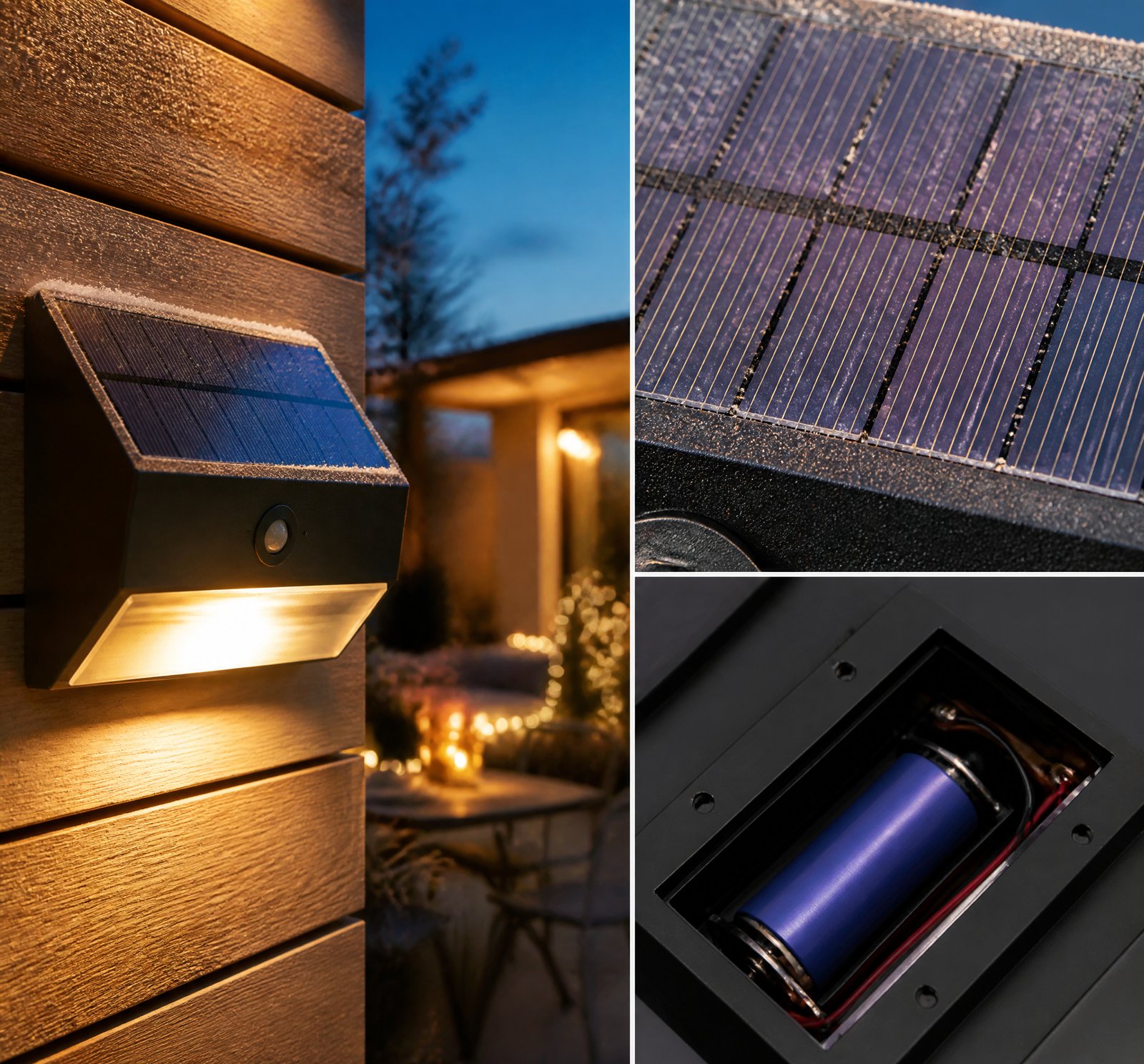
> Quick answer: High-efficiency SMD LEDs with good lumen maintenance (e.g., L70/L80 ratings) differ from generic LEDs in design, thermal management, and adherence to standardized testing like LM-80/TM-21. Generic LEDs often lack consistent data, leading to unpredictable performance [5]. High-efficiency LEDs are engineered for superior thermal control critical for long-term performance.
Understanding the distinction between high-efficiency SMD LEDs with good lumen maintenance and generic LEDs is essential for ensuring reliable lighting solutions, particularly in applications like solar lamps. This article delves into the technical nuances that make these high-efficiency LEDs stand out from their less sophisticated counterparts.
What Distinguishes High-Efficiency SMD LEDs?
High-efficiency SMD LEDs with good lumen maintenance are engineered with superior thermal management systems to maintain optimal operating temperatures [3]. These LEDs often feature heat sinks made of aluminum or other conductive materials, effectively dissipating heat and preventing junction temperature from rising to levels that accelerate lumen depreciation [18][19].
Superior Thermal Design
Thermal control is critical as the performance and lifespan of LEDs are heavily influenced by junction temperature. High-efficiency SMD LEDs adhere to standardized testing protocols such as LM-80/TM-21, ensuring predictable long-term performance [5]. This standardization allows manufacturers like Lumileds and Samsung to provide verifiable data, which is crucial for regulatory certifications [24][25].
Standardized Testing Protocols
Generic LEDs often lack consistent lumen maintenance data, leading to variability in real-world performance and reliability [5]. In contrast, high-efficiency SMD LEDs are validated through rigorous testing methods like LM-80, which requires a minimum of 6,000 hours of operation with regular data collection intervals [12].
How is Lumen Maintenance Measured?
Lumen maintenance for LED light sources is measured through standardized testing methods developed by the Illuminating Engineering Society (IES). The foundational standard, LM-80, specifies how to measure lumen depreciation under controlled conditions [12]. This test involves monitoring luminous flux, chromaticity, color temperature (CCT), and color rendering index (CRI) over time.
Test Methodology
LM-80 testing is conducted independently of the final luminaire in a standard environment to ensure comparability across laboratories. The resulting data are used with TM-21, which provides a statistical method for extrapolating LM-80 data into long-term projections [7][11].
#### Comparison Table: Testing Standards
| Standard | Purpose |
|–––-|–––|
| LM-80 | Measures lumen depreciation of LED light sources under controlled conditions. |
| TM-21 | Extrapolates LM-80 data for long-term performance projections. |
Key Limitations and Considerations
While LM-80/TM-21 are essential for evaluating LED sources, they do not fully capture the real-world performance of the entire lighting system [2][15]. The IES has recognized this gap by developing LM-84 to measure lumen and color maintenance at the product level [14].
System-Level Performance
The actual lumen maintenance in a luminaire depends on additional factors such as thermal design, drive current, and environmental conditions. Even if an LED chip maintains high output, other components like drivers and optical materials may degrade faster, leading to premature failure [2][10].
Industry Standardization Gaps
Despite advancements in testing standards, the industry still lacks full standardization for evaluating the rated life of entire luminaires [5]. This means users must rely on manufacturer claims, which may not always reflect real-world conditions [7][20].
Real-World Implications
The lack of a single standardized method complicates performance evaluation and cost-benefit analysis. For solar lamps, where system efficiency and component longevity are crucial, this can impact maintenance requirements and energy savings over time [1].
Key Takeaways
- High-efficiency SMD LEDs with good lumen maintenance are distinguished by superior thermal design and adherence to LM-80/TM-21 testing protocols.
- Generic LEDs often lack consistent performance data, leading to unpredictable long-term reliability.
- While LM-80/TM-21 provide critical insights into LED behavior, system-level performance depends on additional factors like thermal management and environmental conditions.
References
- [1] The_case_for_solar-powered_LED_lighting_Buildings__1496c42d — authority
source passage
lighting (assuming that the lighting design incorporates multiple LED installations to compensate for shadows in a space measuring 4 feet square). The relatively low lumen output ratings of LED lamps are often times compensated for when looking at the foot-candle levels at the illuminated surfaces. In other words, for outdoor lighting applications, SolarOne estimates that an LED lamp rated at 45 lumens per watt will perform equivalently to a fluorescent bulb rated at 75 lumens per watt. This facet of LEDs offer an enormous side benefit to areas with dark-sky mandates. 2. Optimized system efficiency Solar cells and LEDs share many characteristics – even in the assembly process. For example, both solar cells and LEDs require sorting and balancing to optimize performance. The SOLED mc2 LED Lamp and Lamp Driver is configured to effectively eliminate the need for balancing resistors and their associated losses. Perhaps more significantly, through its range of testing and field experience, SolarOne has identified "sweet spots" in LED operation that optimize current flows and light levels with solar panel and battery costs. The trade-offs are quite different than grid-connected or even automotive applications. This translates into almost a 10% improvement in overall system efficiency. 3. Fine tuned to user needs
- [2] Lumen-maintenance_testing_for_LED_lamps_light_engines_Buildings__ea530613 — authority
source passage
# Lumen-maintenance testing for LED lamps, light engines and luminaires (MAGAZINE) Source: Blog/Web URL: https://www.buildings.com/architecture/interiors/article/55255355/lumen-maintenance-testing-for-led-lamps-light-engines-and-luminaires-magazine Author: Date: 2012-02-02 +++++ This article was published in the February 2012 issue of LEDs Magazine. View the Table of Contents and download the PDF file of the complete February 2012 issue. +++++ It is widely understood that measuring lumen maintenance is critically important for determining the life of LED lighting products. In the past few years, the Illuminating Engineering Society of North America (IESNA) has developed two test methods that address the lumen maintenance of LED light sources used in such products. LM-80 is an approved method for measuring lumen depreciation of LED light sources, and TM-21 is a technical memorandum which specifies how to extrapolate the LM-80 data in order to make long-term lumen-maintenance projections. Beyond the LED, other components at the LED lighting-system level also can impact the long-term lumen maintenance. These components include, but are not limited to, LED lamps, engines, luminaires, drivers, thermal-management devices and optical components. Over time, these components may experience some change or degradation. In particular, the plastic elements used in the optics may change in several ways, including light transmittance, haze and undesired color change. In turn, the overall li
- [3] US8138690B2_-_LED-based_lighting_methods_apparatus_and__f68cf36a — patent
source passage
in the fixtures. – a lumen is a measure of perceived power of light. Conventionally, it is known that the intensity of light emitted by the lighting fixtures tends to fall over time. This effect is termed as ‘lumen maintenance.’ – the power management module may also be concerned with ‘lumen maintenance’ of the lighting fixtures by regulating power to the lighting fixture 102 (e.g. in response to sensor feedback in the environment). – power management devices such as pumps, drivers, regulators, controllers, supervisors, and references (a voltage reference) may be used for controlling power in the lighting systems 102 . – the power management module 112 may also be involved in management of these power devices. – the power management module 112 powers one or more sensors. – the thermal management module 114 in the lighting systems 102 may manage and control the thermal properties of the lighting fixtures. – the thermal management module 114 may provide hardware such as heat sinks, cooling mechanisms (fans, jet air, and liquids), heat pipes, thermo-siphons, and adhesive based materials for dissipation of heat. – the heat sink may be provided as an outside enclosure. – the outside enclosure in this case, may act both a protective covering as well as heat sink. – the heat sink may be made of aluminum or some other metal known in the art. – heat may be generated due to high intensity beam of infrared rays. – the sensor 120 associated with the thermal management module 114 may inst
- [5] Lighting_community_outlines_challenges_for_LED_industry_-_News__8be8c397 — magazine
source passage
development manager with Lumileds, says that his company specifies its white and colored Luxeon LEDs as having an average lumen maintenance of 70% (i.e. the lumen output drops by 30%) at 50,000 h. This is a useful starting point, although this level of degradation is unsuitable for some applications. (It should be pointed out that other light sources also experience lumen degradation.) Conversely, some applications simply don t require such long lifetimes. Carsten Schaffarz, manager of product management and marketing with Vossloh-Schwabe, identified the lack of standardization in the LED industry as a problem for companies trying to evaluate the cost benefit of using LEDs rather than other light sources. "There are few standards, and performance varies from one manufacturer to another," he said. "The cost benefit is difficult to define and it is down to the end-user to undertake the final evaluation." LEDs will only be used to replace existing light sources if the advantages are clear and if higher costs are justifiable. Fortunately, acceptable benefits can be psychological as well as economic, especially in Europe, where in general more value is placed on light quality. An example was given by Alan Oliver, sales and marketing director for Telectra, a company that has installed lighting systems in aircraft for airlines including Virgin Atlantic and KLM. The principal advantages of LED-based lights in this application are ease of maintenance, safety, and the ability to adjust
- [7] Understanding_the_difference_between_LED_rated_life_and_Buildings__730bf80c — authority
source passage
# Understanding the difference between LED rated life and lumen-maintenance life (MAGAZINE) Source: Blog/Web URL: https://www.buildings.com/home/article/55259473/understanding-the-difference-between-led-rated-life-and-lumen-maintenance-life-magazine Author: Date: 2011-10-21 With the completion of the IES test method TM-21-11 (see page 9), the SSL industry now has a standard method of obtaining long-term lumen-maintenance information for LED light sources. The method is made up of two steps. First, the LED light sources must be tested per LM-80. The new TM-21 method is then applied to the collected measurement data to make lumen-maintenance projections, including in-situ temperature calculations. However, there is still one measure that is missing: the rated life for LED light sources. Rated life is an essential reliability property for LED integrators that design LED luminaires, providing luminaire users with warranty and usage information Rated life The rated life of a lamp or light source is defined, per ANSI/IES RP-16, as “the life value assigned to a particular type lamp. This is commonly a statistically-determined estimate of median operational life.” The rated life in hours of an LED lamp or light source, specified by the manufacturer, applies under certain operational conditions and for defined failure criteria. The statistical measure for the rated life is designated Bp and is measured in hours, where p is a percentage. For example, a B50 rated life of 1,000 hours mea
- [10] Technical_Reports_Briefs_-_Department_of_Energy__eaa7baa3 — authority
source passage
Testing Findings for Solid-State Lighting Luminaires Provides findings from the DOE LED Systems Reliability Consortium Hammer Test on commercial SSL luminaires, a highly accelerated life test method intended to produce failures in SSL luminaires in a reasonable test period, and provide insight into potential failure modes. (48 pages, December 2013) – Lumen Maintenance and Light Loss Factors: Consequences of Current Design Practices for LEDs This article, from the IES journal LEUKOS, discusses the complications related to lamp lumen depreciation (LLD) and LEDs, compares the performance of some conventional and LED products, and examines alternatives to the current recommended approach for determining LLDs for LED products. (December 2013) – Life-Cycle Assessment of Energy and Environmental Impacts of LED Lighting Products This three-part DOE study assesses the life-cycle environmental and resource costs in the manufacturing, transport, use, and disposal of LED lighting products in relation to comparable traditional lighting technologies.- Part 1: Review of the Life-Cycle Energy Consumption of Incandescent, Compact Fluorescent, and LED Lamps (54 pages, February 2012—Updated August 2012) – Part 2: LED Manufacturing and Performance (79 pages, June 2012) – Part 3: LED Environmental Testing (211 pages, March 2013) – Complete Report Summary – Accounting for Uncertainty in Lumen Measurements This study provides a detailed and step-by-step method for determining uncertainty in lumen m
- [11] IES_updates_LED_Lumen_Maintenance_document_Buildings__9733044f — authority
source passage
# IES updates LED Lumen Maintenance document (MAGAZINE) Source: Blog/Web URL: https://www.buildings.com/home/article/55259320/ies-updates-led-lumen-maintenance-document-magazine Author: Date: 2014-04-22 For continuous improvement in technology to be possible, it's critical that corresponding testing standards are established and continue to be reviewed and improved. The solid-state lighting (SSL) industry is no exception. In 2008, IES published LM-80 for recommending how to test LED lumen maintenance. Three years later TM-21 was published as a recommendation for projecting long-term lumen maintenance of LEDs using the test data collected per LM-80. Based on the continuous improvement principle, IES is in the process of publishing an addendum to LM-80 and TM-21. LM-80 and TM-21 have been widely used by manufacturers, testing laboratories, government specifications, and in other ways. On a large scale, the overall LED lumen maintenance information provided and used in the industry has been more consistent since these two documents were published, which demonstrates their benefits. At the time LM-80 was developed, experts in the IES committee believed that the test duration should be long enough so that sufficient data could be collected to use mathematical models to make a reliable projection. Furthermore, experts also believed that multiple LED case temperatures should be tested in order to make interpolations of the test data, as well as to make comparisons. For these reasons
- [12] Knowledge_Base__d64b9e2d — authority
source passage
environment. The gasket will not shrink over time giving year after year of reliable service. LED Testing Standards LM-80-08 LM-80-08 is the latest testing standard for LED diodes and applies to the LED sources in a standard test environment, independent of a specific lighting fixture. Testing is performed for a minimum of 6,000 hours with data collection every 1,000 hours. During testing, LEDs are assessed for failure, chromaticity, luminous flux, color temperature (CCT) and color rendering (CRI). LM-80-08 allows the creation, by LED manufacturers, of predicted life charts to establish expected design life. It is not a direct measure of LED system performance, but it will provide the lighting professional with assurance that the LEDs used in our products have been tested for chromaticity stability and predicted lumen maintenance. We only use chips that have been tested to this standard. TM-21-11 TM-21-11is an industry accepted statistical method that utilizes LM-80-08 data combined with specific fixture measurements to project long-term lumen maintenance of LED light sources. LEDs, by their nature, will last a very long time when utilized in a properly designed environment, but this performance is dependent on the design parameters of the actual fixture. Drive current, in-situ temperature and other environmental factors can dramatically affect useful LED life. TM-21-11 gives the lighting professional a basis to judge long-term lumen maintenance life expectancy of a specific
- [14] New_standards_will_enable_lumen_maintenance_projections_Buildings__373ebe28 — authority
source passage
# New standards will enable lumen maintenance projections for SSL (MAGAZINE) Source: Blog/Web URL: https://www.buildings.com/home/article/55259249/new-standards-will-enable-lumen-maintenance-projections-for-ssl-magazine Author: Date: 2013-04-30 In August 2011, the Illuminating Engineering Society (IES) published a document to provide the SSL industry with a recommendation for projecting long-term lumen maintenance for LEDs. The document, TM-21-11, reflects over three years of dedication and hard work by the experts on the IES Testing Procedures Committee (TPC). Though not perfect, TM-21- 11 gives users a consistent, reasonable, and reliable approach to make lumen maintenance projections for LEDs used in SSL products. This document is a useful tool for SSL product design, development, and qualification for manufacturers, specifiers, and qualifiers. Because components other than LEDs, such as optical elements, also contribute toward lumen decay over time in LED lamps and luminaires, an SSL final product-level lumen maintenance test is also necessary. To that end, the IES TPC started to develop a new document, LM-84, to describe lumen and color maintenance testing procedures. For SSL products — and some major components used in the products — common qualification and reliability tests used by manufacturers prior to a product being released are no longer sufficient for achieving a reasonable time to market. The longer lifetime of SSL products compared to other lighting products w
- [15] LED_Life_Standards_In_And_Out_Of_Luminaires_-_Electronic_Design__258a2761 — magazine
source passage
is progress. An Illuminating Engineering Society of North America standard (designated LM-80, IESNA Approved Method for Measuring Lumen Maintenance of LED Light Sources) will provide a common procedure for making lumen maintenance measurements at the LED device, array, or module levels. As of last September, the IES committee that developed LM-80 voted to move the initiative to the IES board of directors for final approval. Still, the DoE notes, as “the lifetime of an LED source is one important indicator of LED luminaire life, it would be misleading to rate the entire LED luminaire based solely on the LED source. There is often a huge gap between the warranted life of a product and the expected life of the LED source in that product. Further, reliability of fixtures that include replaceable LED engines and replaceable components should be assessed differently than reliability of entirely integrated fixtures.” Don Tuite (retired) writes about Analog and Power issues for Electronic Design’s magazine and website. He has a BSEE and an M.S in Technical Communication, and has worked for companies in aerospace, broadcasting, test equipment, semiconductors, publishing, and media relations, focusing on developing insights that link technology, business, and communications. Don is also a ham radio operator (NR7X), private pilot, and motorcycle rider, and he’s not half bad on the 5-string banjo.
- [18] Characterization_of_Optical_and_Electrical_Properties_of_Solid-State__b6f9cbcd — magazine
source passage
# Characterization of Optical and Electrical Properties of Solid-State Lighting Products as a Function of Temperature Source: Blog/Web URL: https://store.ies.org/product/lm-82-20-approved-method-characterization-of-optical-and-electrical-properties-of-solid-state-lighting-products-as-a-function-of-temperature/?v=eb65bcceaa5f Author: Date: 2026-01-01 Product Description The performance (e.g., luminous flux, life) of light emitting diodes (LEDs) depends strongly on the temperature at the LED junction, and this temperature can vary depending on how the LED is integrated into the luminaire and on the application environment. LED light engines and integrated LED lamps are used in many different types of luminaires, including those for decorative lighting and non-directional applications. This document establishes consistent methods of measurement and data presentation for ease of interpretation and comparison, which will assist luminaire manufacturers in selecting suitable LED light engines and integrated LED lamps for each luminaire product. It defines the procedures to measure optical and electrical properties as a function of temperature of LED light engines and integrated LED lamps. This document is also applicable to LED luminaires. Page count: 7 pages Publisher: Illuminating Engineering Society (2020) SKU: ANSI/IES LM-82-20 ISBN-13: 978-0-87995-055-2 Chapters: – 1.0 Introduction and Scope 2.0 Normative References 3.0 Definitions 4.0 Ambient and Physical Test Conditions 5.0 E
- [19] Characterization_of_Optical_and_Electrical_Properties_of_Solid-State__b6f9cbcd — authority
source passage
# Characterization of Optical and Electrical Properties of Solid-State Lighting Products as a Function of Temperature Source: Blog/Web URL: https://store.ies.org/product/lm-82-20-approved-method-characterization-of-optical-and-electrical-properties-of-solid-state-lighting-products-as-a-function-of-temperature/?v=eb65bcceaa5f Author: Date: 2026-01-01 Product Description The performance (e.g., luminous flux, life) of light emitting diodes (LEDs) depends strongly on the temperature at the LED junction, and this temperature can vary depending on how the LED is integrated into the luminaire and on the application environment. LED light engines and integrated LED lamps are used in many different types of luminaires, including those for decorative lighting and non-directional applications. This document establishes consistent methods of measurement and data presentation for ease of interpretation and comparison, which will assist luminaire manufacturers in selecting suitable LED light engines and integrated LED lamps for each luminaire product. It defines the procedures to measure optical and electrical properties as a function of temperature of LED light engines and integrated LED lamps. This document is also applicable to LED luminaires. Page count: 7 pages Publisher: Illuminating Engineering Society (2020) SKU: ANSI/IES LM-82-20 ISBN-13: 978-0-87995-055-2 Chapters: – 1.0 Introduction and Scope 2.0 Normative References 3.0 Definitions 4.0 Ambient and Physical Test Conditions 5.0 E
- [20] DOE_Publishes_Updated_Recommendations_for_Testing_and__8a12392f — authority
source passage
# DOE Publishes Updated Recommendations for Testing and Reporting LED Luminaire Lifetime Source: Blog/Web URL: https://www.led-professional.com/resources-1/led-reports-roadmaps/doe-publishes-updated-recommendations-for-testing-and-reporting-led-luminaire-lifetime Author: Date: 2011-07-21 What for the Guideline is intended: Like the first edition of the guide, this second edition is a set of recommendations for reporting and demonstrating luminaire product lifetime. Initially, we sought to provide guidance for the Lighting Facts® program, which gives users, retailers, and manufacturers a common short-form reporting mechanism to improve the quality of solid-state lighting products on the market. The Lighting Facts label provides a summary of key performance criteria but does not include lifetime, for which there have been numerous requests. Ideally, it would be the addition of a single number, e.g., “eight years.” We attempted, in the first edition, to suggest some descriptions which would better describe lifetime, and it is fair to say that there are fewer wild claims in the marketplace. Yet there is still not an accepted protocol for measuring and characterizing lifetime. In part, this is due to cost, as a fair number of product samples must be tested to get good numbers, but it is also due in some measure to the industry’s early emphasis on lumen depreciation. Until recently, LED products have been described as “different” from conventional technologies—LEDs will just get di
- [24] When_Very_High_Light_Output_and_Efficiency_Are_-_EdisonReport__34b3cf68 — magazine
source passage
# When Very High Light Output and Efficiency Are Required for Demanding Applications, New LUXEON 7070 Checks All the Boxes Source: Blog/Web URL: https://edisonreport.com/2021/08/31/when-very-high-light-output-and-efficiency-are-required-for-demanding-applications-new-luxeon-7070-checks-all-the-boxes/ Author: Jacob Wright Date: 2021-08-31 With up to 2000lm per LED, LUXEON 7070 delivers the power, efficacy and solution cost reductions luminaire manufacturers need San Jose, CA – August 31, 2021 – More lumens, higher efficacy, and lower system costs are the driving forces behind new designs for a broad range of indoor and outdoor high light output applications. Lumileds new LUXEON 7070, introduced today, is designed to outperform similar lead-frame and ceramic high-power solutions with leading efficacy and light output in a robust, small surface mount package. For any new or redesigned street light, high/low bay, horticulture, or other application that requires many thousands of lumens, LUXEON 7070 will be the clear choice. “Across seven critical parameters, lumens per emitter, lumens per Watt, lumens per dollar, system cost, optical compatibility, ruggedness and lumen maintenance, LUXEON 7070 is the clear best overall value for new designs,” said Noman Rangwala, Product Line Director at Lumileds. “We’ve worked in advance with Future Lighting Solutions, LEDiL and Carclo to develop asymmetric and symmetric optical systems available at launch so that manufacturers can immediately t
- [25] Samsung_LED_package_stands_the_test_of_time_-_News__fcb88d90 — magazine
source passage
# Samsung LED package stands the test of time – News Source: Blog/Web URL: https://compoundsemiconductor.net/article/88523/Samsung_LED_package_stands_the_test_of_time Author: Date: 2011-09-22 Samsung LED package stands the test of time The firm has received independent accreditation which will enhance its ability to create quality products and also independently test these products, improving time to market and product reliability. Samsung LED has announced that its mid-power 2323 LED package has now exceeded 6,000 hours of independent, EPA recognised 3rd party IES LM80 testing. The company is now able to provide LM80 test data upon request. IES LM-80-2008 is the industry standard that defines the method for testing LED lamps, arrays and modules to determine their lumen depreciation characteristics. The goal of LM-80 is to allow a reliable comparison of test results among laboratories by establishing uniform test methods. This test data now enables LED luminaire and lamp manufacturers to satisfy ENERGY STAR Lumen maintenance requirements and lessens the qualification time for ENERGY STAR qualification while using the Samsung LED 2323 LED package. “We realise the importance ENERGY STAR certification plays in regards to utility rebates and are pleased to offer LM80 data to our customers as a guide for expected lumen maintenance,” stated Kevin Kim, CMO, VP Samsung LED. “This data along with other stringent quality assurance measures reinforces Samsung LED’s commitment to quality
lighting (assuming that the lighting design incorporates multiple LED installations to compensate for shadows in a space measuring 4 feet square). The relatively low lumen output ratings of LED lamps are often times compensated for when looking at the foot-candle levels at the illuminated surfaces. In other words, for outdoor lighting applications, SolarOne estimates that an LED lamp rated at 45 lumens per watt will perform equivalently to a fluorescent bulb rated at 75 lumens per watt. This facet of LEDs offer an enormous side benefit to areas with dark-sky mandates. 2. Optimized system efficiency Solar cells and LEDs share many characteristics – even in the assembly process. For example, both solar cells and LEDs require sorting and balancing to optimize performance. The SOLED mc2 LED Lamp and Lamp Driver is configured to effectively eliminate the need for balancing resistors and their associated losses. Perhaps more significantly, through its range of testing and field experience, SolarOne has identified "sweet spots" in LED operation that optimize current flows and light levels with solar panel and battery costs. The trade-offs are quite different than grid-connected or even automotive applications. This translates into almost a 10% improvement in overall system efficiency. 3. Fine tuned to user needs
# Lumen-maintenance testing for LED lamps, light engines and luminaires (MAGAZINE) Source: Blog/Web URL: https://www.buildings.com/architecture/interiors/article/55255355/lumen-maintenance-testing-for-led-lamps-light-engines-and-luminaires-magazine Author: Date: 2012-02-02 +++++ This article was published in the February 2012 issue of LEDs Magazine. View the Table of Contents and download the PDF file of the complete February 2012 issue. +++++ It is widely understood that measuring lumen maintenance is critically important for determining the life of LED lighting products. In the past few years, the Illuminating Engineering Society of North America (IESNA) has developed two test methods that address the lumen maintenance of LED light sources used in such products. LM-80 is an approved method for measuring lumen depreciation of LED light sources, and TM-21 is a technical memorandum which specifies how to extrapolate the LM-80 data in order to make long-term lumen-maintenance projections. Beyond the LED, other components at the LED lighting-system level also can impact the long-term lumen maintenance. These components include, but are not limited to, LED lamps, engines, luminaires, drivers, thermal-management devices and optical components. Over time, these components may experience some change or degradation. In particular, the plastic elements used in the optics may change in several ways, including light transmittance, haze and undesired color change. In turn, the overall li
in the fixtures. – a lumen is a measure of perceived power of light. Conventionally, it is known that the intensity of light emitted by the lighting fixtures tends to fall over time. This effect is termed as ‘lumen maintenance.’ – the power management module may also be concerned with ‘lumen maintenance’ of the lighting fixtures by regulating power to the lighting fixture 102 (e.g. in response to sensor feedback in the environment). – power management devices such as pumps, drivers, regulators, controllers, supervisors, and references (a voltage reference) may be used for controlling power in the lighting systems 102 . – the power management module 112 may also be involved in management of these power devices. – the power management module 112 powers one or more sensors. – the thermal management module 114 in the lighting systems 102 may manage and control the thermal properties of the lighting fixtures. – the thermal management module 114 may provide hardware such as heat sinks, cooling mechanisms (fans, jet air, and liquids), heat pipes, thermo-siphons, and adhesive based materials for dissipation of heat. – the heat sink may be provided as an outside enclosure. – the outside enclosure in this case, may act both a protective covering as well as heat sink. – the heat sink may be made of aluminum or some other metal known in the art. – heat may be generated due to high intensity beam of infrared rays. – the sensor 120 associated with the thermal management module 114 may inst
development manager with Lumileds, says that his company specifies its white and colored Luxeon LEDs as having an average lumen maintenance of 70% (i.e. the lumen output drops by 30%) at 50,000 h. This is a useful starting point, although this level of degradation is unsuitable for some applications. (It should be pointed out that other light sources also experience lumen degradation.) Conversely, some applications simply don t require such long lifetimes. Carsten Schaffarz, manager of product management and marketing with Vossloh-Schwabe, identified the lack of standardization in the LED industry as a problem for companies trying to evaluate the cost benefit of using LEDs rather than other light sources. "There are few standards, and performance varies from one manufacturer to another," he said. "The cost benefit is difficult to define and it is down to the end-user to undertake the final evaluation." LEDs will only be used to replace existing light sources if the advantages are clear and if higher costs are justifiable. Fortunately, acceptable benefits can be psychological as well as economic, especially in Europe, where in general more value is placed on light quality. An example was given by Alan Oliver, sales and marketing director for Telectra, a company that has installed lighting systems in aircraft for airlines including Virgin Atlantic and KLM. The principal advantages of LED-based lights in this application are ease of maintenance, safety, and the ability to adjust
# Understanding the difference between LED rated life and lumen-maintenance life (MAGAZINE) Source: Blog/Web URL: https://www.buildings.com/home/article/55259473/understanding-the-difference-between-led-rated-life-and-lumen-maintenance-life-magazine Author: Date: 2011-10-21 With the completion of the IES test method TM-21-11 (see page 9), the SSL industry now has a standard method of obtaining long-term lumen-maintenance information for LED light sources. The method is made up of two steps. First, the LED light sources must be tested per LM-80. The new TM-21 method is then applied to the collected measurement data to make lumen-maintenance projections, including in-situ temperature calculations. However, there is still one measure that is missing: the rated life for LED light sources. Rated life is an essential reliability property for LED integrators that design LED luminaires, providing luminaire users with warranty and usage information Rated life The rated life of a lamp or light source is defined, per ANSI/IES RP-16, as “the life value assigned to a particular type lamp. This is commonly a statistically-determined estimate of median operational life.” The rated life in hours of an LED lamp or light source, specified by the manufacturer, applies under certain operational conditions and for defined failure criteria. The statistical measure for the rated life is designated Bp and is measured in hours, where p is a percentage. For example, a B50 rated life of 1,000 hours mea
Testing Findings for Solid-State Lighting Luminaires Provides findings from the DOE LED Systems Reliability Consortium Hammer Test on commercial SSL luminaires, a highly accelerated life test method intended to produce failures in SSL luminaires in a reasonable test period, and provide insight into potential failure modes. (48 pages, December 2013) – Lumen Maintenance and Light Loss Factors: Consequences of Current Design Practices for LEDs This article, from the IES journal LEUKOS, discusses the complications related to lamp lumen depreciation (LLD) and LEDs, compares the performance of some conventional and LED products, and examines alternatives to the current recommended approach for determining LLDs for LED products. (December 2013) – Life-Cycle Assessment of Energy and Environmental Impacts of LED Lighting Products This three-part DOE study assesses the life-cycle environmental and resource costs in the manufacturing, transport, use, and disposal of LED lighting products in relation to comparable traditional lighting technologies.- Part 1: Review of the Life-Cycle Energy Consumption of Incandescent, Compact Fluorescent, and LED Lamps (54 pages, February 2012—Updated August 2012) – Part 2: LED Manufacturing and Performance (79 pages, June 2012) – Part 3: LED Environmental Testing (211 pages, March 2013) – Complete Report Summary – Accounting for Uncertainty in Lumen Measurements This study provides a detailed and step-by-step method for determining uncertainty in lumen m
# IES updates LED Lumen Maintenance document (MAGAZINE) Source: Blog/Web URL: https://www.buildings.com/home/article/55259320/ies-updates-led-lumen-maintenance-document-magazine Author: Date: 2014-04-22 For continuous improvement in technology to be possible, it's critical that corresponding testing standards are established and continue to be reviewed and improved. The solid-state lighting (SSL) industry is no exception. In 2008, IES published LM-80 for recommending how to test LED lumen maintenance. Three years later TM-21 was published as a recommendation for projecting long-term lumen maintenance of LEDs using the test data collected per LM-80. Based on the continuous improvement principle, IES is in the process of publishing an addendum to LM-80 and TM-21. LM-80 and TM-21 have been widely used by manufacturers, testing laboratories, government specifications, and in other ways. On a large scale, the overall LED lumen maintenance information provided and used in the industry has been more consistent since these two documents were published, which demonstrates their benefits. At the time LM-80 was developed, experts in the IES committee believed that the test duration should be long enough so that sufficient data could be collected to use mathematical models to make a reliable projection. Furthermore, experts also believed that multiple LED case temperatures should be tested in order to make interpolations of the test data, as well as to make comparisons. For these reasons
environment. The gasket will not shrink over time giving year after year of reliable service. LED Testing Standards LM-80-08 LM-80-08 is the latest testing standard for LED diodes and applies to the LED sources in a standard test environment, independent of a specific lighting fixture. Testing is performed for a minimum of 6,000 hours with data collection every 1,000 hours. During testing, LEDs are assessed for failure, chromaticity, luminous flux, color temperature (CCT) and color rendering (CRI). LM-80-08 allows the creation, by LED manufacturers, of predicted life charts to establish expected design life. It is not a direct measure of LED system performance, but it will provide the lighting professional with assurance that the LEDs used in our products have been tested for chromaticity stability and predicted lumen maintenance. We only use chips that have been tested to this standard. TM-21-11 TM-21-11is an industry accepted statistical method that utilizes LM-80-08 data combined with specific fixture measurements to project long-term lumen maintenance of LED light sources. LEDs, by their nature, will last a very long time when utilized in a properly designed environment, but this performance is dependent on the design parameters of the actual fixture. Drive current, in-situ temperature and other environmental factors can dramatically affect useful LED life. TM-21-11 gives the lighting professional a basis to judge long-term lumen maintenance life expectancy of a specific
# New standards will enable lumen maintenance projections for SSL (MAGAZINE) Source: Blog/Web URL: https://www.buildings.com/home/article/55259249/new-standards-will-enable-lumen-maintenance-projections-for-ssl-magazine Author: Date: 2013-04-30 In August 2011, the Illuminating Engineering Society (IES) published a document to provide the SSL industry with a recommendation for projecting long-term lumen maintenance for LEDs. The document, TM-21-11, reflects over three years of dedication and hard work by the experts on the IES Testing Procedures Committee (TPC). Though not perfect, TM-21- 11 gives users a consistent, reasonable, and reliable approach to make lumen maintenance projections for LEDs used in SSL products. This document is a useful tool for SSL product design, development, and qualification for manufacturers, specifiers, and qualifiers. Because components other than LEDs, such as optical elements, also contribute toward lumen decay over time in LED lamps and luminaires, an SSL final product-level lumen maintenance test is also necessary. To that end, the IES TPC started to develop a new document, LM-84, to describe lumen and color maintenance testing procedures. For SSL products — and some major components used in the products — common qualification and reliability tests used by manufacturers prior to a product being released are no longer sufficient for achieving a reasonable time to market. The longer lifetime of SSL products compared to other lighting products w
is progress. An Illuminating Engineering Society of North America standard (designated LM-80, IESNA Approved Method for Measuring Lumen Maintenance of LED Light Sources) will provide a common procedure for making lumen maintenance measurements at the LED device, array, or module levels. As of last September, the IES committee that developed LM-80 voted to move the initiative to the IES board of directors for final approval. Still, the DoE notes, as “the lifetime of an LED source is one important indicator of LED luminaire life, it would be misleading to rate the entire LED luminaire based solely on the LED source. There is often a huge gap between the warranted life of a product and the expected life of the LED source in that product. Further, reliability of fixtures that include replaceable LED engines and replaceable components should be assessed differently than reliability of entirely integrated fixtures.” Don Tuite (retired) writes about Analog and Power issues for Electronic Design’s magazine and website. He has a BSEE and an M.S in Technical Communication, and has worked for companies in aerospace, broadcasting, test equipment, semiconductors, publishing, and media relations, focusing on developing insights that link technology, business, and communications. Don is also a ham radio operator (NR7X), private pilot, and motorcycle rider, and he’s not half bad on the 5-string banjo.
# Characterization of Optical and Electrical Properties of Solid-State Lighting Products as a Function of Temperature Source: Blog/Web URL: https://store.ies.org/product/lm-82-20-approved-method-characterization-of-optical-and-electrical-properties-of-solid-state-lighting-products-as-a-function-of-temperature/?v=eb65bcceaa5f Author: Date: 2026-01-01 Product Description The performance (e.g., luminous flux, life) of light emitting diodes (LEDs) depends strongly on the temperature at the LED junction, and this temperature can vary depending on how the LED is integrated into the luminaire and on the application environment. LED light engines and integrated LED lamps are used in many different types of luminaires, including those for decorative lighting and non-directional applications. This document establishes consistent methods of measurement and data presentation for ease of interpretation and comparison, which will assist luminaire manufacturers in selecting suitable LED light engines and integrated LED lamps for each luminaire product. It defines the procedures to measure optical and electrical properties as a function of temperature of LED light engines and integrated LED lamps. This document is also applicable to LED luminaires. Page count: 7 pages Publisher: Illuminating Engineering Society (2020) SKU: ANSI/IES LM-82-20 ISBN-13: 978-0-87995-055-2 Chapters: – 1.0 Introduction and Scope 2.0 Normative References 3.0 Definitions 4.0 Ambient and Physical Test Conditions 5.0 E
# Characterization of Optical and Electrical Properties of Solid-State Lighting Products as a Function of Temperature Source: Blog/Web URL: https://store.ies.org/product/lm-82-20-approved-method-characterization-of-optical-and-electrical-properties-of-solid-state-lighting-products-as-a-function-of-temperature/?v=eb65bcceaa5f Author: Date: 2026-01-01 Product Description The performance (e.g., luminous flux, life) of light emitting diodes (LEDs) depends strongly on the temperature at the LED junction, and this temperature can vary depending on how the LED is integrated into the luminaire and on the application environment. LED light engines and integrated LED lamps are used in many different types of luminaires, including those for decorative lighting and non-directional applications. This document establishes consistent methods of measurement and data presentation for ease of interpretation and comparison, which will assist luminaire manufacturers in selecting suitable LED light engines and integrated LED lamps for each luminaire product. It defines the procedures to measure optical and electrical properties as a function of temperature of LED light engines and integrated LED lamps. This document is also applicable to LED luminaires. Page count: 7 pages Publisher: Illuminating Engineering Society (2020) SKU: ANSI/IES LM-82-20 ISBN-13: 978-0-87995-055-2 Chapters: – 1.0 Introduction and Scope 2.0 Normative References 3.0 Definitions 4.0 Ambient and Physical Test Conditions 5.0 E
# DOE Publishes Updated Recommendations for Testing and Reporting LED Luminaire Lifetime Source: Blog/Web URL: https://www.led-professional.com/resources-1/led-reports-roadmaps/doe-publishes-updated-recommendations-for-testing-and-reporting-led-luminaire-lifetime Author: Date: 2011-07-21 What for the Guideline is intended: Like the first edition of the guide, this second edition is a set of recommendations for reporting and demonstrating luminaire product lifetime. Initially, we sought to provide guidance for the Lighting Facts® program, which gives users, retailers, and manufacturers a common short-form reporting mechanism to improve the quality of solid-state lighting products on the market. The Lighting Facts label provides a summary of key performance criteria but does not include lifetime, for which there have been numerous requests. Ideally, it would be the addition of a single number, e.g., “eight years.” We attempted, in the first edition, to suggest some descriptions which would better describe lifetime, and it is fair to say that there are fewer wild claims in the marketplace. Yet there is still not an accepted protocol for measuring and characterizing lifetime. In part, this is due to cost, as a fair number of product samples must be tested to get good numbers, but it is also due in some measure to the industry’s early emphasis on lumen depreciation. Until recently, LED products have been described as “different” from conventional technologies—LEDs will just get di
# When Very High Light Output and Efficiency Are Required for Demanding Applications, New LUXEON 7070 Checks All the Boxes Source: Blog/Web URL: https://edisonreport.com/2021/08/31/when-very-high-light-output-and-efficiency-are-required-for-demanding-applications-new-luxeon-7070-checks-all-the-boxes/ Author: Jacob Wright Date: 2021-08-31 With up to 2000lm per LED, LUXEON 7070 delivers the power, efficacy and solution cost reductions luminaire manufacturers need San Jose, CA – August 31, 2021 – More lumens, higher efficacy, and lower system costs are the driving forces behind new designs for a broad range of indoor and outdoor high light output applications. Lumileds new LUXEON 7070, introduced today, is designed to outperform similar lead-frame and ceramic high-power solutions with leading efficacy and light output in a robust, small surface mount package. For any new or redesigned street light, high/low bay, horticulture, or other application that requires many thousands of lumens, LUXEON 7070 will be the clear choice. “Across seven critical parameters, lumens per emitter, lumens per Watt, lumens per dollar, system cost, optical compatibility, ruggedness and lumen maintenance, LUXEON 7070 is the clear best overall value for new designs,” said Noman Rangwala, Product Line Director at Lumileds. “We’ve worked in advance with Future Lighting Solutions, LEDiL and Carclo to develop asymmetric and symmetric optical systems available at launch so that manufacturers can immediately t
# Samsung LED package stands the test of time – News Source: Blog/Web URL: https://compoundsemiconductor.net/article/88523/Samsung_LED_package_stands_the_test_of_time Author: Date: 2011-09-22 Samsung LED package stands the test of time The firm has received independent accreditation which will enhance its ability to create quality products and also independently test these products, improving time to market and product reliability. Samsung LED has announced that its mid-power 2323 LED package has now exceeded 6,000 hours of independent, EPA recognised 3rd party IES LM80 testing. The company is now able to provide LM80 test data upon request. IES LM-80-2008 is the industry standard that defines the method for testing LED lamps, arrays and modules to determine their lumen depreciation characteristics. The goal of LM-80 is to allow a reliable comparison of test results among laboratories by establishing uniform test methods. This test data now enables LED luminaire and lamp manufacturers to satisfy ENERGY STAR Lumen maintenance requirements and lessens the qualification time for ENERGY STAR qualification while using the Samsung LED 2323 LED package. “We realise the importance ENERGY STAR certification plays in regards to utility rebates and are pleased to offer LM80 data to our customers as a guide for expected lumen maintenance,” stated Kevin Kim, CMO, VP Samsung LED. “This data along with other stringent quality assurance measures reinforces Samsung LED’s commitment to quality