
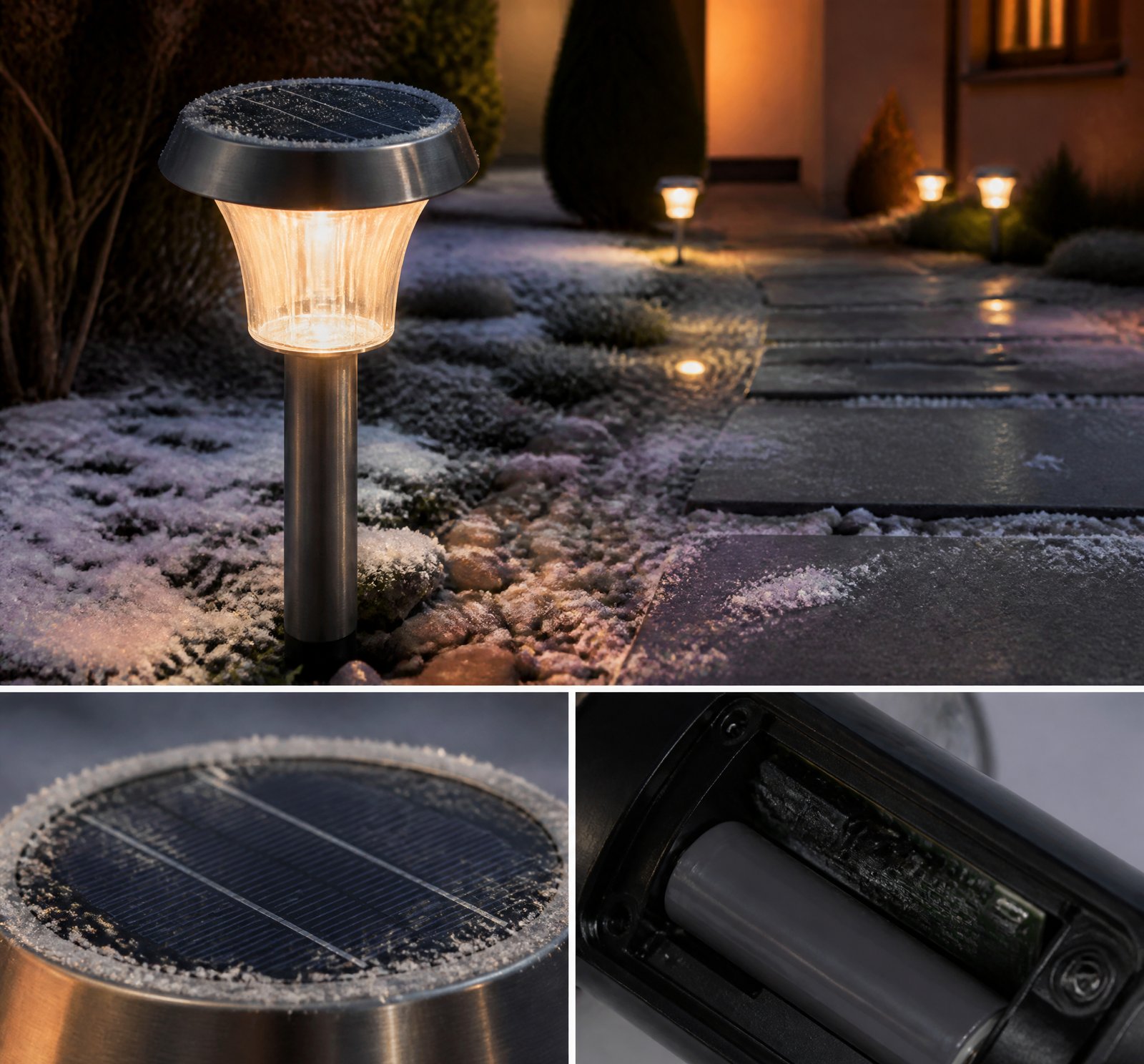
Quick answer: Invențiile fundamentale ale lampelor solare integrate moderne includ controlerul MPPT pentru optimizarea încărcării bateriilor [4], controlul adaptiv al luminii bazat pe mișcare prin senzori PIR [7] și integrarea celulelor fotovoltaice în arhitectură, inclusiv pe suprafețe curbate [2]. Aceste tehnologii maximizează eficiența energetică și funcționalitatea în condiții reale.
În România, unde energia electrică fluctuează și costurile cresc, iluminatul solar integrat devine o soluție hotărâtoare pentru gospodării, curți și spații publice. Dar ce stă în spatele performanței ridicate a acestor sisteme? Nu este doar o panou solar și o baterie — ci o combinație de invenții tehnologice revoluționare care fac posibilă eficiența, durabilitatea și economia de energie. Acest articol dezvăluie cele trei invenții cheie care definesc lampa solară modernă, cu dovezi din brevete și cercetare reală.
Controlerul MPPT: Optimizarea eficienței energiei solare
Controlerul MPPT (Maximum Power Point Tracking) este invenția care transformă o lampă solară obișnuită într-un sistem inteligent și eficient. Acest dispozitiv ajustează în timp real tensiunea și curentul între panoul solar și bateria de stocare, asigurând că energia este extrasă la punctul maxim de putere [4]. În condiții variabile de lumină — cum ar fi în zilele înnorite sau diminețile timpurii — MPPT poate crește eficiența sistemului cu până la 30% comparativ cu controlerele tradiționale [4].
Din punct de vedere tehnic, MPPT permit integrarea tuturor componentelor — circuitul de încărcare, driverul LED și sistemul de control — într-un singur microprocesor, reducând complexitatea și costurile de întreținere [4]. De asemenea, unele modele moderne permit comunicare prin LoRa, oferind control și monitorizare la distanță [4]. Această funcționalitate este esențială în zonele rurale din România, unde accesul fizic la echipamente poate fi dificil.
Control adaptiv al intensității în funcție de mișcare
O altă invenție esențială este sistemul de control adaptiv al luminii bazat pe mișcare, care utilizează senzori PIR (Passive Infrared) pentru a detecta prezența oamenilor sau animalelor [7]. În loc să lumineze constant, lampile solare reduc intensitatea la un nivel minim când nu sunt detectate mișcări, apoi se activează automat la apariția unei persoane [7].
Această tehnologie oferă două beneficii majore: economisirea energiei și creșterea siguranței. Prin reducerea luminii la minim, consumul scade semnificativ, prelungind durata de funcționare în timpul nopții [7]. În plus, evită orbirea și disconfortul vizual asociat cu luminile strălucitoare, fiind ideală pentru iluminatul de grădină sau al aleilor [7].
Integrarea celulelor panoului solar: Eficiență spațială și estetică
În trecut, panourile solare erau deseori rigide și vizibile, limitând opțiunile de instalare. Acum, o invenție majoră este integrarea celulelor fotovoltaice în materiale de construcție, inclusiv pe suprafețe curbate [2]. Tehnologia celulelor subțiri permite fabricarea de panouri flexibile care pot fi incorporate în acoperișuri, țigle solare sau BIPV (Building-Integrated Photovoltaics) [2].
Această abordare transformă clădirile în surse de energie active. În România, unde multe locuințe au acoperișuri cu unghiuri diverse, acest tip de integrare permite instalarea eficientă chiar pe suprafețe neintuitive. De asemenea, asigură o estetică discretă și modernă, fără a compromite funcționalitatea [2].
Comparație între tipurile de panouri solare integrate
| Tip panou | Flexibilitate | Eficiență | Integritate arhitecturală | [2] |
|---|---|---|---|---|
| Poli-cristalin | Mică | Medie | Măsurată | [2] |
| Monocristalin | Medie | Ridicată | Excelentă | [2] |
| Subțire / FIPV | Mare | Medie | Foarte bună | [2] |
Concluzii cheie
Invențiile care stau la baza lampelor solare moderne — controlerul MPPT [4], senzorul PIR pentru control adaptiv [7] și integrarea celulelor fotovoltaice în arhitectură [2] — nu sunt doar tehnologii separate, ci o combinație care creează soluții complete, eficiente și durabile. În România, aceste inovații permit reducerea costurilor de energie, creșterea siguranței și o integrare estetică perfectă în mediul urban și rural.
Key Takeaways
- Controlerul MPPT maximizează eficiența încărcării bateriilor în condiții variabile de lumină [4].
- Senzorii PIR reduc consumul de energie prin controlul adaptiv al luminii [7].
- Integrarea celulelor solare în arhitectură (BIPV) oferă o soluție estetică și eficientă [2].
- Sistemele moderne pot fi monitorizate și controlate la distanță prin tehnologii precum LoRa [4].
- Panourile subțiri și flexibile permit instalarea pe suprafețe curbate, creșterea eficienței spațiului [2].
Întrebări frecvente
Care este cel mai eficient tip de panou solar pentru iluminat în România?
Panourile monocristaline oferă cea mai mare eficiență în condiții de lumină redusă, ideal pentru regiunile cu vreme variabilă [2].
Cum funcționează MPPT la temperaturi scăzute?
MPPT ajustează automat punctul de putere maximă, menținând eficiența chiar în condiții de frig, un avantaj esențial în România [4].
Poate un senzor PIR detecta animalele într-o lampă solară?
Da, senzorii PIR detectează mișcări termice, inclusiv ale animalelor mici, activând lumina doar când este necesar [7].
References
- [2] Renewable Energy Solutions Solar Lighting — book
source passage
a sunny area with light-colored surfaces; you could see a significant boost in your energy production. Further propelling solar technology is the advancement of thin-film solar cells. These are lightweight and flexible, allowing for a range of applications that rigid panels cannot accommodate. They can be integrated into building materials or even installed on curved surfaces, expanding the possibilities of solar implementation in both residential and commercial settings. Imagine solar panels seamlessly blending into the building's architecture or even incorporated into your car's surface! This kind of innovation promotes not only practicality but also aesthetic integration into our environments. An equally exciting area of development is the emergence of solar tiles, also known as building-integrated photovoltaics (BIPV). These tiles replace standard roofing materials with energy-generating components that blend in beautifully with the home’s design. Homeowners often worry that traditional solar panels disrupt the visual appeal of their residences, but with solar tiles, you can maintain your home's character while generating clean energy. It’s like having your cake and eating it too! A stylish roof can now produce electricity, safeguarding your wallet and the planet simultaneously. As we think about efficiency, let’s not overlook solar tracking systems. These devices move solar panels throughout the day to follow the sun’s path, ensuring that the panels capture the maximum a
- [4] US10856380B2 – Photovoltaic lighting system – Google Patents — patent
source passage
effects through the aforementioned configuration. – the present invention can solve a disadvantage in that a microprocessor must be included in each of elements as in a conventional technology because the MPPT circuit unit 120 , the battery charging unit 130 , and the lighting driver 150 can be integrated and controlled by the single microprocessor 170 . – maintenance is easy because the mobile terminal 300 and the server 200 can directly or indirectly control each of the lighting systems 100 through LoRa-based communication. Landscapes – Engineering & Computer Science (AREA) – Computer Networks & Wireless Communication (AREA) – General Engineering & Computer Science (AREA) – Power Engineering (AREA) – Physics & Mathematics (AREA) – General Physics & Mathematics (AREA) – Life Sciences & Earth Sciences (AREA) – Sustainable Development (AREA) – Signal Processing (AREA) – Human Computer Interaction (AREA) – Circuit Arrangement For Electric Light Sources In General (AREA) – Charge And Discharge Circuits For Batteries Or The Like (AREA) Abstract Provided in one embodiment of the present invention is a photovoltaic the lighting system comprising: an MPPT circuit unit for controlling a battery charging voltage by calculating the maximum power point of electrical energy generated from a photovoltaic panel; a battery charging unit for charging and discharging, in a battery, the electrical energy controlled by the MPPT circuit unit; a lighting unit in which a plurality of LEDs are comb
- [7] US9629220B2 – Sensor-based controllable LED lighting system — patent
source passage
features found throughout this patent application. Expandable memory and expandable data storage circuitry where memory and or data storage chips can also be utilized to integrate and function to accommodate the features mentioned. The Luminaire of this disclosure also has an option to channel and provide power from energy harvesting devices such as solar power and kinetic energy interface power channeling technology, where circuits transfer power generated from external devices such as wave-energy harvesting from ocean currents, micro-hydro power systems, dams and hydroelectric power, river hydroelectric power, solar, and kinetic energy harvesting devices, and other energy harvesting devices, as such become available, into the city's power grid, or back to power companies for energy credits. The enclosures and any lens filters may be designed to minimize glare and reflectivity problems, and where flicker rate may be >200 Hz. This may enhance human safety even though many LED sources today already have built in safety features. The manufacturing of the devices must ensure that the appropriate safety features are in place, including any fuses, reset buttons, circuit breakers, or other such devices. All parameters may depend upon which LEDs will be used for each individual application. Even street lights in different locales may use different LEDs and corresponding parameters. CCR (Constant Current Reduction) may be used to reduce EMP generation and flicker. However, both CCR,
a sunny area with light-colored surfaces; you could see a significant boost in your energy production. Further propelling solar technology is the advancement of thin-film solar cells. These are lightweight and flexible, allowing for a range of applications that rigid panels cannot accommodate. They can be integrated into building materials or even installed on curved surfaces, expanding the possibilities of solar implementation in both residential and commercial settings. Imagine solar panels seamlessly blending into the building's architecture or even incorporated into your car's surface! This kind of innovation promotes not only practicality but also aesthetic integration into our environments. An equally exciting area of development is the emergence of solar tiles, also known as building-integrated photovoltaics (BIPV). These tiles replace standard roofing materials with energy-generating components that blend in beautifully with the home’s design. Homeowners often worry that traditional solar panels disrupt the visual appeal of their residences, but with solar tiles, you can maintain your home's character while generating clean energy. It’s like having your cake and eating it too! A stylish roof can now produce electricity, safeguarding your wallet and the planet simultaneously. As we think about efficiency, let’s not overlook solar tracking systems. These devices move solar panels throughout the day to follow the sun’s path, ensuring that the panels capture the maximum a
effects through the aforementioned configuration. – the present invention can solve a disadvantage in that a microprocessor must be included in each of elements as in a conventional technology because the MPPT circuit unit 120 , the battery charging unit 130 , and the lighting driver 150 can be integrated and controlled by the single microprocessor 170 . – maintenance is easy because the mobile terminal 300 and the server 200 can directly or indirectly control each of the lighting systems 100 through LoRa-based communication. Landscapes – Engineering & Computer Science (AREA) – Computer Networks & Wireless Communication (AREA) – General Engineering & Computer Science (AREA) – Power Engineering (AREA) – Physics & Mathematics (AREA) – General Physics & Mathematics (AREA) – Life Sciences & Earth Sciences (AREA) – Sustainable Development (AREA) – Signal Processing (AREA) – Human Computer Interaction (AREA) – Circuit Arrangement For Electric Light Sources In General (AREA) – Charge And Discharge Circuits For Batteries Or The Like (AREA) Abstract Provided in one embodiment of the present invention is a photovoltaic the lighting system comprising: an MPPT circuit unit for controlling a battery charging voltage by calculating the maximum power point of electrical energy generated from a photovoltaic panel; a battery charging unit for charging and discharging, in a battery, the electrical energy controlled by the MPPT circuit unit; a lighting unit in which a plurality of LEDs are comb
features found throughout this patent application. Expandable memory and expandable data storage circuitry where memory and or data storage chips can also be utilized to integrate and function to accommodate the features mentioned. The Luminaire of this disclosure also has an option to channel and provide power from energy harvesting devices such as solar power and kinetic energy interface power channeling technology, where circuits transfer power generated from external devices such as wave-energy harvesting from ocean currents, micro-hydro power systems, dams and hydroelectric power, river hydroelectric power, solar, and kinetic energy harvesting devices, and other energy harvesting devices, as such become available, into the city's power grid, or back to power companies for energy credits. The enclosures and any lens filters may be designed to minimize glare and reflectivity problems, and where flicker rate may be >200 Hz. This may enhance human safety even though many LED sources today already have built in safety features. The manufacturing of the devices must ensure that the appropriate safety features are in place, including any fuses, reset buttons, circuit breakers, or other such devices. All parameters may depend upon which LEDs will be used for each individual application. Even street lights in different locales may use different LEDs and corresponding parameters. CCR (Constant Current Reduction) may be used to reduce EMP generation and flicker. However, both CCR,