
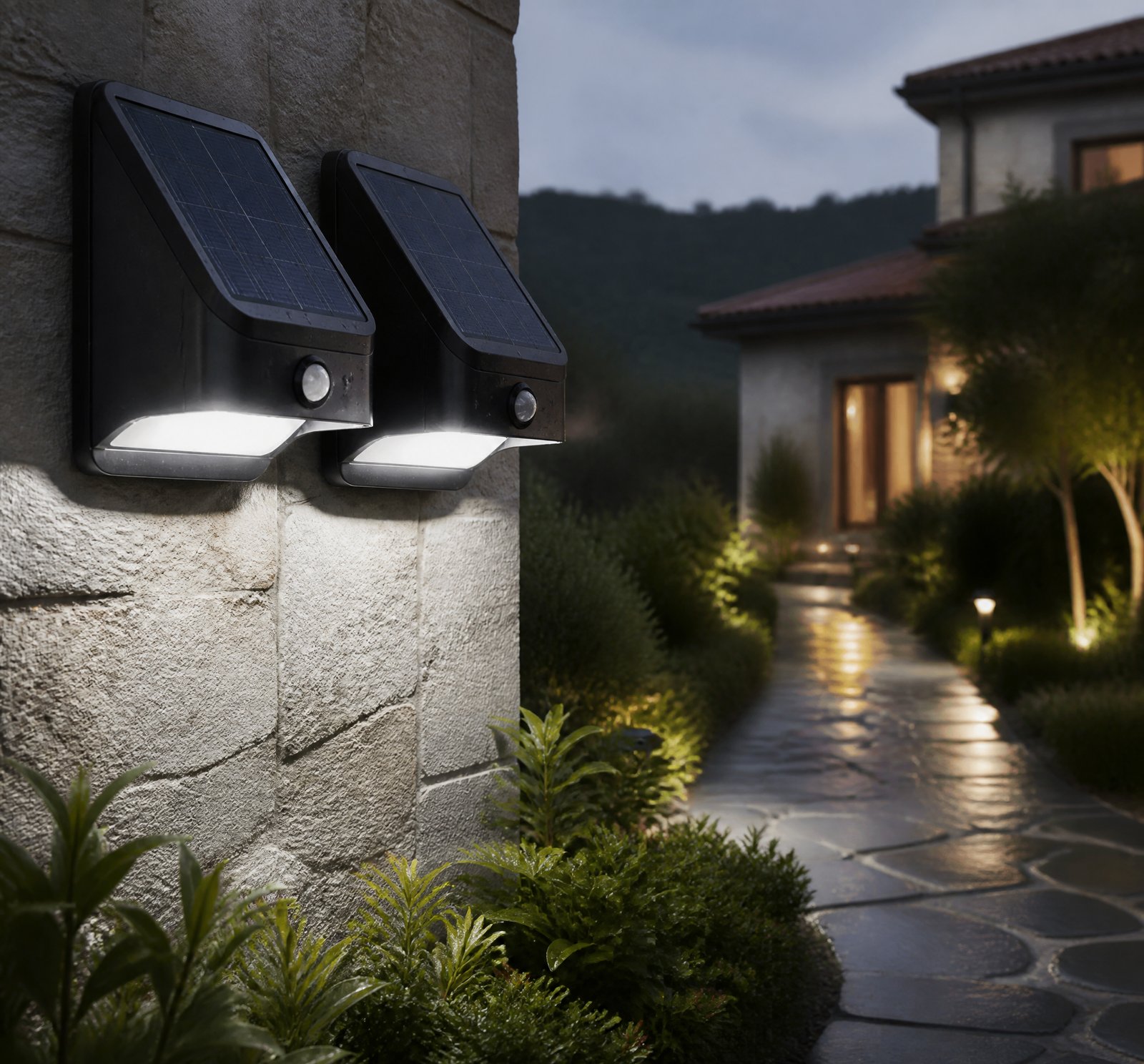
> Quick answer: The brightness of a solar lamp after 3-5 years depends on lumen depreciation and thermal management. LEDs can degrade faster due to high temperatures, while drivers often fail before the LED dims significantly [3][16].
Understanding Lumen Depreciation in Solar Lamps
To determine whether your solar lamp will remain usefully bright after 3-5 years, you need to understand lumen depreciation and thermal management. LEDs are marketed with lifetime claims of 50,000 to 100,000 hours [1][4], but these figures often reflect idealized conditions rather than real-world performance [2][3]. The key metric for useful brightness is lumen maintenance at L70—when output drops to 70% of its original levels [4].
Lumen Depreciation and Heat Management
Lumen depreciation is not uniform across all LEDs. High-power LEDs degrade more rapidly when heat is not effectively dissipated [8]. Poorly heat-sunk white LEDs degrade faster than red or green ones, with blue and white falling in between [23]. This means that the color and packaging of the LED significantly affect long-term performance.
Even though an LED may maintain 95% of its initial lumen output after 40,000 hours [13], the driver—a component that regulates current—may fail earlier due to heat stress. Mounting a fixture in direct sunlight increases thermal stress, shortening lifespan [16]. Thus, a solar lamp’s useful life depends on both the LED and its weakest thermal link.
Real-World Performance and Testing Standards
The discrepancy between manufacturer claims and real-world performance is significant. High-quality designs can meet or exceed expectations, as shown by the DoE testing of Philips’ L Prize-winning LED lamp, which maintained 95.6% lumen output after 40,890 hours [13]. However, such performance isn’t typical across the market due to inconsistent testing standards and reporting [3][21].
Key Factors Affecting Solar Lamp Longevity
- Lumen Maintenance (L70): The point at which an LED’s light output drops to 70% of its original levels is a critical metric for useful brightness.
- Temperature Sensitivity: High operating temperatures accelerate lumen depreciation, making heat management crucial.
- Driver Performance: The driver often fails before the LED due to heat stress, impacting overall lamp longevity [16].
Environmental and User Factors
The battery and solar panel are often assumed to be the first components to fail in a solar lamp. However, they may outlast the LED and driver if properly maintained [12]. The solar panel’s efficiency can decline over time due to UV exposure and weathering, but this degradation is generally slower than that of electronic components.
Key Takeaways
- Thermal Management: Effective heat management extends both LED and driver longevity.
- Real-World Conditions: Manufacturer claims often do not reflect real-world use; testing standards are critical for reliable performance data [3][21].
- System Integration: The weakest component in the thermal chain determines a solar lamp’s useful life.
Frequently Asked Questions
[{„q”: „What is lumen depreciation?”, „a”: „Lumen depreciation refers to the gradual loss of light output over time, measured as the point at which an LED’s brightness drops to 70% (L70) [4].” }, {„q”: „How does heat affect solar lamp longevity?”, „a”: „Heat accelerates lumen depreciation in LEDs and can cause drivers to fail prematurely due to thermal stress. Effective cooling is critical for long-term performance [8][16].” }, {„q”: „What standards should I look for when buying a solar lamp?”, „a”: „Look for products with standardized testing like LM-80 and TM-21, which project lumen maintenance more reliably than manufacturer claims alone [10][21].” }]
References
- [1] New_IDA_LED_Lighting_Practical_Guide_DarkSky_International__5711810c — authority
source passage
of potentially harmful blue light. (see below). Relative to other commonly-used outdoor lamps, LEDs are thought to be extremely long-lived. Laboratory studies indicate lifetime ratings in the range of 25,000-100,000 hours of continuous operation, making them virtually maintenance-free. When turned on, LEDs are instantly at full brightness, unlike HID lamps that have a significant time delay. LEDs also have very low minimum energy thresholds to produce light, meaning they can be dimmed to much lower illumination levels when less light is needed, resulting in further energy savings. Product Selection Considerations Choosing LED products for outdoor lighting applications involves a series of considerations and tradeoffs. These include: – Luminous Efficiency (Watts-to-lumens): How many lumens of light are produced per input Watt of electricity? More importantly, how many lumens from the light source are meeting the task (“Fixture Lumens” vs. “Lamp Lumens”) – Lumen Output: How much light is produced relative to the amount required for a particular task? When replacing existing fixtures it is important to use the only level of illumination needed, and not to adopt unneeded increases in brightness. – Correlated Color Temperature (CCT): Does the light have a “warm” or “cool” color quality? – Color Rendering Index (CRI): How accurately does the light render colors to the human eye? A high CRI is not needed for all situations. The need for good color rendition should be considered rela
- [2] LED_Life_Standards_In_And_Out_Of_Luminaires_-_Electronic_Design__258a2761 — magazine
source passage
# LED Life Standards In And Out Of Luminaires Source: Blog/Web URL: https://www.electronicdesign.com/technologies/industrial/boards/article/21789940/led-life-standards-in-and-out-of-luminaires Author: Don Tuite Date: 2009-03-26 The U.S. Department of Energy (DoE) notes that LED luminaires and replacement lamps available today often claim long life, usually 50,000 hours, based solely on the estimated lumen depreciation of the LED. But the DoE also says that life claims ought to account for the whole system. The lifetimes of incandescent, fluorescent, and high-intensity discharge lamps are generally estimated through industry standards. Typically, a large, statistically significant sample of lamps is operated until 50% have failed. That point, in terms of operating hours, defines the “rated life” for that lamp. LEDs are different. They usually don’t fail abruptly. Their light output slowly diminishes over time. Moreover, they can have such long lives that life testing and acquiring real application data on long-term reliability becomes problematic—new versions of products are available before current ones can be fully tested. Finally, they’re often integrated permanently into the fixture, making their replacement difficult or impossible. Coupled with that, the light output and useful life of individual LEDs are more influenced by electrical and thermal conditions determined by the luminaire and system design, rather than by native properties of the LEDs themselves. All of that
- [3] How_to_measure_LED_lamp_life_-_Electronic_Design__73f56efa — magazine
source passage
# How to measure LED lamp life Source: Blog/Web URL: https://www.electronicdesign.com/technologies/components/lighting/lighting-systems/article/21193520/how-to-measure-led-lamp-life Author: Date: 2011-07-22 In fact, LED lumen depreciation quite often doesn't determine the lifetime of a well-made luminaire. The report further says many manufacturers estimate luminaire lifetime using LED lumen maintenance figures, which can give misleading results. This practice can be particularly bad for fixture manufacturers because it impacts whether or not the fixture will last as long as the manufacturer's warranty. "The statement '100,000 hours of LED luminaire lifetime' is gradually giving way to the realization that there is little consistency, very little published data, and few hard facts around so-called luminaire lifetime numbers," says the report. But the situation is better at the LED package level, it says, where reputable manufacturers have thousands of hours of data under varying conditions. All in all, there is still no accepted protocol for measuring and characterizing LED fixture lifetime. One reason is that it can be costly to make such measurements due to the large number of product samples such tests require. "But as we learn more about the behavior of these LED 'systems,' it becomes evident that the life of a fixture may be considerably shorter than what is indicated by nominal light depreciation, albeit still generally longer than many incumbent lighting solutions," th
- [4] LED_Lighting_in_Museums_and_Art_Galleries_Technical_-_Canadaca__7f9b6307 — authority
source passage
replacement. The convention for defining LED lifetime is 70% of original brightness, abbreviated as L70. The lifespan (L70) of LED lamps is so much longer than all previous lamps (Table 1) that it changes the way one thinks of bulb replacement. Instead of the twice-a-year replacement needed for halogens, LED lamps will need changing just once a decade. Long lamp lifetime offers several advantages to museums, not just the reduction of labour but also the reduction of the risk to collections due to accidents during lamp changes. Lumen output (brightness of LEDs) Initially, white LEDs only came in low lumen (lm) ratings, often as low as 50 lm. For the museum situation of low-intensity lighting at close quarters (such as in display cases), this was a boon. For lighting at a distance from high ceilings, it was a problem. Those who considered LED lamps in 2011 faced problems finding ones with sufficient intensity, not to mention good-quality light. Today, most manufacturers provide reliable advice on which LED lamp to use when replacing a particular size of incandescent lamp. More sophisticated users can rely on the lumen and beam intensity data provided by manufacturers. Why warranties matter To make good LEDs, manufacturers must select phosphors with the right spectrum, arrange the phosphors and the blue (or violet) LEDs so that the correct portion of the LEDs is absorbed by the phosphors, manufacture them in large quantities that are identical and make sure the mix remains stabl
- [8] LED_package_designs_tackle_lumen_depreciation_issues_-_News__dda53ead — magazine
source passage
lumen depreciation issues by properly extracting the heat and by packaging the LEDs in materials that do not degrade over time. Even traditional light sources, such as incandescent, halogen, fluorescent and metal halide lamps exhibit light output degradation over their operating life. Figure 3 shows a comparison of light output variation over time for different white-light sources. The high-power LEDs have very low light output degradation, according to the preliminary data in figure 3. Advances in device construction, light extraction and heat sinking have enabled the development of high-power LEDs that offer improved luminous efficacy and better lumen maintenance. These advances have made white LED technology more feasible for general lighting applications. If the LED industry can sustain these development trends, solid-state lighting could have significant market penetration in the next 5 to 10 years. The future of LEDs in lighting With LED performance improving, solid-state lighting is attracting more attention from the lighting world. The general illumination marketplace is huge, but penetrating that marketplace will require higher value LED products. Manufacturers will have to continue working on longer-lasting white LEDs with higher efficacy, higher luminous flux and improved color properties. The Lighting Research Center is currently identifying the parameters that can be improved to provide quality lighting that is acceptable to human subjects. Illumination using LED
- [10] Lumen-maintenance_testing_for_LED_lamps_light_engines_Buildings__ea530613 — authority
source passage
# Lumen-maintenance testing for LED lamps, light engines and luminaires (MAGAZINE) Source: Blog/Web URL: https://www.buildings.com/architecture/interiors/article/55255355/lumen-maintenance-testing-for-led-lamps-light-engines-and-luminaires-magazine Author: Date: 2012-02-02 +++++ This article was published in the February 2012 issue of LEDs Magazine. View the Table of Contents and download the PDF file of the complete February 2012 issue. +++++ It is widely understood that measuring lumen maintenance is critically important for determining the life of LED lighting products. In the past few years, the Illuminating Engineering Society of North America (IESNA) has developed two test methods that address the lumen maintenance of LED light sources used in such products. LM-80 is an approved method for measuring lumen depreciation of LED light sources, and TM-21 is a technical memorandum which specifies how to extrapolate the LM-80 data in order to make long-term lumen-maintenance projections. Beyond the LED, other components at the LED lighting-system level also can impact the long-term lumen maintenance. These components include, but are not limited to, LED lamps, engines, luminaires, drivers, thermal-management devices and optical components. Over time, these components may experience some change or degradation. In particular, the plastic elements used in the optics may change in several ways, including light transmittance, haze and undesired color change. In turn, the overall li
- [12] The_Best_Solar_Path_Lights_Family_Handyman__678b96d2 — reddit
source passage
lights do wear out over time, but their lifespan can vary depending on several factors,” Price says. “The batteries in these lights typically last between one to three years. Over time, the battery’s capacity will diminish, leading to shorter illumination periods. Solar panels themselves can also degrade, losing efficiency after several years of exposure to the elements. The materials used in the lights, such as plastics and metals, will also experience wear and tear due to weather conditions like UV exposure, rain, and temperature changes.” Price also notes that the LEDs used in solar lights tend to “have a long lifespan, often up to 50,000 hours, so they are unlikely to be the first component to fail. Regular maintenance, such as cleaning the solar panels and checking the battery connections, can help prolong the life of your solar path lights.” How long do solar path lights last? Solar path lights span two to five years, depending on the materials they’re crafted from. The update of the lighted also dictates their longevity. What is the downside of solar path lights? The only downside to solar-powered lights is that when seasons begin to change, and darkness sets in earlier, the lights can lose their charge, which normally lasts for eight to twelve hours. Once the weather changes, the light’s performance can also change temporarily. Also, don’t forget to check out these awesome solar fence lights and solar lights for camping.
- [13] DOE_testing_of_L_Prize_LED_lamp_passes_40000_hours_Buildings__a51eac96 — authority
source passage
# DOE testing of L Prize LED lamp passes 40,000 hours Source: Blog/Web URL: https://www.buildings.com/building-systems-om/lighting/article/55256384/doe-testing-of-l-prize-led-lamp-passes-40000-hours Author: Maury Wright Date: 2015-08-18 Lumen maintenance remains over 95% on average for the L Prize-winning Philips LED lamps and the testing reveals tiny chromaticity shifts as well. The US Department of Energy (DOE) solid-state lighting (SSL) program has published an update to its report on the ongoing performance testing of the Philips LED lamp that won the Bright Tomorrow Lighting Prize (L Prize) back in 2011. Long-term testing on 31 lamps reveals average lumen maintenance of 95.6% after 40,890 hours of operation with no lamps having failed over the course of testing. Philips Lighting was awarded the L Prize in the 60W-equivalent lamp category back in the summer of 2011. The DOE program required a lamp design that truly exceeded 60W incandescent lamp performance including 900-lm output and 90 CRI or better. The DOE tested the Philips lamp for 18 months before declaring the lamp the L Prize winner and awarding Philips $10 million. The DOE continues to laud the benefits of the L Prize program as the testing of the winning lamp continues. The latest update includes the fact that the worst-performing lamp yielded lumen maintenance of 93.7% with the best lamp delivering 97.5%. The long-term testing indicates that degradation to L70, or 70% of initial output, would require 194,765 h
- [16] Article_LED_Driver_Lifetime_Economic_and_Environmental_Issue__2a2bba47 — authority
source passage
the maximum rated power output of the driver, the fixture manufacturer reduces the electrical and thermal stress on the driver – Fixture Position: The simple measure of mounting the fixture in shade rather than in direct sunlight reduces its operating temperature and extends its lifetime What this means is that the lifetime rating in the LED driver’s datasheet and the fixture’s compliance with the DLC 50,000 hours requirement are not a definitive guarantee of the lifetime of the luminaire. Rather, they are a scientifically tested data point which allows the user to calculate an exact estimate of the lifetime of the luminaire when used in the conditions specific to their application. How to Evaluate Competing LED Drivers for Lifetime Value The 50,000 hour lifetime rating, then, is one important indicator of a driver’s reliability. If all reputable drivers offer a 50,000 hour rating, how can you compare the reliability of competing drivers? As stated above, take note of the case temperature qualifier to the 50,000 hour statement. The higher the case temperature, the longer the driver’s lifetime under any given operating conditions. Evaluation can also take account of other standard measures of reliability. Some drivers’ datasheets will display a Telcordia lifetime rating, a calculated measure derived from analysis of all the components inside a system. Prospective buyers can also learn from the lived experience of users. We pride ourselves on providing reliable LED drivers in t
- [21] Understanding_the_difference_between_LED_rated_life_and_Buildings__730bf80c — authority
source passage
# Understanding the difference between LED rated life and lumen-maintenance life (MAGAZINE) Source: Blog/Web URL: https://www.buildings.com/home/article/55259473/understanding-the-difference-between-led-rated-life-and-lumen-maintenance-life-magazine Author: Date: 2011-10-21 With the completion of the IES test method TM-21-11 (see page 9), the SSL industry now has a standard method of obtaining long-term lumen-maintenance information for LED light sources. The method is made up of two steps. First, the LED light sources must be tested per LM-80. The new TM-21 method is then applied to the collected measurement data to make lumen-maintenance projections, including in-situ temperature calculations. However, there is still one measure that is missing: the rated life for LED light sources. Rated life is an essential reliability property for LED integrators that design LED luminaires, providing luminaire users with warranty and usage information Rated life The rated life of a lamp or light source is defined, per ANSI/IES RP-16, as “the life value assigned to a particular type lamp. This is commonly a statistically-determined estimate of median operational life.” The rated life in hours of an LED lamp or light source, specified by the manufacturer, applies under certain operational conditions and for defined failure criteria. The statistical measure for the rated life is designated Bp and is measured in hours, where p is a percentage. For example, a B50 rated life of 1,000 hours mea
- [23] LED_package_designs_tackle_lumen_depreciation_issues_-_News__dda53ead — magazine
source passage
et al. 2000 and 2001a). Yet, despite this information, as well as numerous articles which have shown that 5 mm white LEDs degrade very rapidly, many manufacturers continue to claim that they will last 100,000 hours. Another recent publication showed that even the different colored 5 mm LEDs do not degrade the same way over time (Narendran et al. 2001b). These LEDs were tested in a temperature-controlled room, and they were mounted on printed circuit boards as shown in figure 1. The light output degradation of LEDs with different colors is shown in figure 2. The light output of the red LEDs depreciated at a much slower rate than that of the white LEDs, while green and blue LEDs degraded at an intermediate rate. LEDs packaged inside an enclosed fixture, where the ambient temperature is higher than in the temperature-controlled study, will experience higher degradation rates. Therefore, the claim of 100,000 hours life for LED fixtures that use housed arrays of 5 mm LEDs, white or colored, is deceiving. The LEDs may indeed last 100,000 hours, but their light output may not be sufficient for the fixture s intended application. A useful life of 5000 hours may be more appropriate for the 5 mm LED fixtures. Newer LED packages Standard 5 mm LED packages were originally designed for use in indicator applications, but their design does not allow for sufficient heat transfer from the LED chip to keep it cool during operation. As the temperature of the chip increases, the device degrades
of potentially harmful blue light. (see below). Relative to other commonly-used outdoor lamps, LEDs are thought to be extremely long-lived. Laboratory studies indicate lifetime ratings in the range of 25,000-100,000 hours of continuous operation, making them virtually maintenance-free. When turned on, LEDs are instantly at full brightness, unlike HID lamps that have a significant time delay. LEDs also have very low minimum energy thresholds to produce light, meaning they can be dimmed to much lower illumination levels when less light is needed, resulting in further energy savings. Product Selection Considerations Choosing LED products for outdoor lighting applications involves a series of considerations and tradeoffs. These include: – Luminous Efficiency (Watts-to-lumens): How many lumens of light are produced per input Watt of electricity? More importantly, how many lumens from the light source are meeting the task (“Fixture Lumens” vs. “Lamp Lumens”) – Lumen Output: How much light is produced relative to the amount required for a particular task? When replacing existing fixtures it is important to use the only level of illumination needed, and not to adopt unneeded increases in brightness. – Correlated Color Temperature (CCT): Does the light have a “warm” or “cool” color quality? – Color Rendering Index (CRI): How accurately does the light render colors to the human eye? A high CRI is not needed for all situations. The need for good color rendition should be considered rela
# LED Life Standards In And Out Of Luminaires Source: Blog/Web URL: https://www.electronicdesign.com/technologies/industrial/boards/article/21789940/led-life-standards-in-and-out-of-luminaires Author: Don Tuite Date: 2009-03-26 The U.S. Department of Energy (DoE) notes that LED luminaires and replacement lamps available today often claim long life, usually 50,000 hours, based solely on the estimated lumen depreciation of the LED. But the DoE also says that life claims ought to account for the whole system. The lifetimes of incandescent, fluorescent, and high-intensity discharge lamps are generally estimated through industry standards. Typically, a large, statistically significant sample of lamps is operated until 50% have failed. That point, in terms of operating hours, defines the “rated life” for that lamp. LEDs are different. They usually don’t fail abruptly. Their light output slowly diminishes over time. Moreover, they can have such long lives that life testing and acquiring real application data on long-term reliability becomes problematic—new versions of products are available before current ones can be fully tested. Finally, they’re often integrated permanently into the fixture, making their replacement difficult or impossible. Coupled with that, the light output and useful life of individual LEDs are more influenced by electrical and thermal conditions determined by the luminaire and system design, rather than by native properties of the LEDs themselves. All of that
# How to measure LED lamp life Source: Blog/Web URL: https://www.electronicdesign.com/technologies/components/lighting/lighting-systems/article/21193520/how-to-measure-led-lamp-life Author: Date: 2011-07-22 In fact, LED lumen depreciation quite often doesn't determine the lifetime of a well-made luminaire. The report further says many manufacturers estimate luminaire lifetime using LED lumen maintenance figures, which can give misleading results. This practice can be particularly bad for fixture manufacturers because it impacts whether or not the fixture will last as long as the manufacturer's warranty. "The statement '100,000 hours of LED luminaire lifetime' is gradually giving way to the realization that there is little consistency, very little published data, and few hard facts around so-called luminaire lifetime numbers," says the report. But the situation is better at the LED package level, it says, where reputable manufacturers have thousands of hours of data under varying conditions. All in all, there is still no accepted protocol for measuring and characterizing LED fixture lifetime. One reason is that it can be costly to make such measurements due to the large number of product samples such tests require. "But as we learn more about the behavior of these LED 'systems,' it becomes evident that the life of a fixture may be considerably shorter than what is indicated by nominal light depreciation, albeit still generally longer than many incumbent lighting solutions," th
replacement. The convention for defining LED lifetime is 70% of original brightness, abbreviated as L70. The lifespan (L70) of LED lamps is so much longer than all previous lamps (Table 1) that it changes the way one thinks of bulb replacement. Instead of the twice-a-year replacement needed for halogens, LED lamps will need changing just once a decade. Long lamp lifetime offers several advantages to museums, not just the reduction of labour but also the reduction of the risk to collections due to accidents during lamp changes. Lumen output (brightness of LEDs) Initially, white LEDs only came in low lumen (lm) ratings, often as low as 50 lm. For the museum situation of low-intensity lighting at close quarters (such as in display cases), this was a boon. For lighting at a distance from high ceilings, it was a problem. Those who considered LED lamps in 2011 faced problems finding ones with sufficient intensity, not to mention good-quality light. Today, most manufacturers provide reliable advice on which LED lamp to use when replacing a particular size of incandescent lamp. More sophisticated users can rely on the lumen and beam intensity data provided by manufacturers. Why warranties matter To make good LEDs, manufacturers must select phosphors with the right spectrum, arrange the phosphors and the blue (or violet) LEDs so that the correct portion of the LEDs is absorbed by the phosphors, manufacture them in large quantities that are identical and make sure the mix remains stabl
lumen depreciation issues by properly extracting the heat and by packaging the LEDs in materials that do not degrade over time. Even traditional light sources, such as incandescent, halogen, fluorescent and metal halide lamps exhibit light output degradation over their operating life. Figure 3 shows a comparison of light output variation over time for different white-light sources. The high-power LEDs have very low light output degradation, according to the preliminary data in figure 3. Advances in device construction, light extraction and heat sinking have enabled the development of high-power LEDs that offer improved luminous efficacy and better lumen maintenance. These advances have made white LED technology more feasible for general lighting applications. If the LED industry can sustain these development trends, solid-state lighting could have significant market penetration in the next 5 to 10 years. The future of LEDs in lighting With LED performance improving, solid-state lighting is attracting more attention from the lighting world. The general illumination marketplace is huge, but penetrating that marketplace will require higher value LED products. Manufacturers will have to continue working on longer-lasting white LEDs with higher efficacy, higher luminous flux and improved color properties. The Lighting Research Center is currently identifying the parameters that can be improved to provide quality lighting that is acceptable to human subjects. Illumination using LED
# Lumen-maintenance testing for LED lamps, light engines and luminaires (MAGAZINE) Source: Blog/Web URL: https://www.buildings.com/architecture/interiors/article/55255355/lumen-maintenance-testing-for-led-lamps-light-engines-and-luminaires-magazine Author: Date: 2012-02-02 +++++ This article was published in the February 2012 issue of LEDs Magazine. View the Table of Contents and download the PDF file of the complete February 2012 issue. +++++ It is widely understood that measuring lumen maintenance is critically important for determining the life of LED lighting products. In the past few years, the Illuminating Engineering Society of North America (IESNA) has developed two test methods that address the lumen maintenance of LED light sources used in such products. LM-80 is an approved method for measuring lumen depreciation of LED light sources, and TM-21 is a technical memorandum which specifies how to extrapolate the LM-80 data in order to make long-term lumen-maintenance projections. Beyond the LED, other components at the LED lighting-system level also can impact the long-term lumen maintenance. These components include, but are not limited to, LED lamps, engines, luminaires, drivers, thermal-management devices and optical components. Over time, these components may experience some change or degradation. In particular, the plastic elements used in the optics may change in several ways, including light transmittance, haze and undesired color change. In turn, the overall li
lights do wear out over time, but their lifespan can vary depending on several factors,” Price says. “The batteries in these lights typically last between one to three years. Over time, the battery’s capacity will diminish, leading to shorter illumination periods. Solar panels themselves can also degrade, losing efficiency after several years of exposure to the elements. The materials used in the lights, such as plastics and metals, will also experience wear and tear due to weather conditions like UV exposure, rain, and temperature changes.” Price also notes that the LEDs used in solar lights tend to “have a long lifespan, often up to 50,000 hours, so they are unlikely to be the first component to fail. Regular maintenance, such as cleaning the solar panels and checking the battery connections, can help prolong the life of your solar path lights.” How long do solar path lights last? Solar path lights span two to five years, depending on the materials they’re crafted from. The update of the lighted also dictates their longevity. What is the downside of solar path lights? The only downside to solar-powered lights is that when seasons begin to change, and darkness sets in earlier, the lights can lose their charge, which normally lasts for eight to twelve hours. Once the weather changes, the light’s performance can also change temporarily. Also, don’t forget to check out these awesome solar fence lights and solar lights for camping.
# DOE testing of L Prize LED lamp passes 40,000 hours Source: Blog/Web URL: https://www.buildings.com/building-systems-om/lighting/article/55256384/doe-testing-of-l-prize-led-lamp-passes-40000-hours Author: Maury Wright Date: 2015-08-18 Lumen maintenance remains over 95% on average for the L Prize-winning Philips LED lamps and the testing reveals tiny chromaticity shifts as well. The US Department of Energy (DOE) solid-state lighting (SSL) program has published an update to its report on the ongoing performance testing of the Philips LED lamp that won the Bright Tomorrow Lighting Prize (L Prize) back in 2011. Long-term testing on 31 lamps reveals average lumen maintenance of 95.6% after 40,890 hours of operation with no lamps having failed over the course of testing. Philips Lighting was awarded the L Prize in the 60W-equivalent lamp category back in the summer of 2011. The DOE program required a lamp design that truly exceeded 60W incandescent lamp performance including 900-lm output and 90 CRI or better. The DOE tested the Philips lamp for 18 months before declaring the lamp the L Prize winner and awarding Philips $10 million. The DOE continues to laud the benefits of the L Prize program as the testing of the winning lamp continues. The latest update includes the fact that the worst-performing lamp yielded lumen maintenance of 93.7% with the best lamp delivering 97.5%. The long-term testing indicates that degradation to L70, or 70% of initial output, would require 194,765 h
the maximum rated power output of the driver, the fixture manufacturer reduces the electrical and thermal stress on the driver – Fixture Position: The simple measure of mounting the fixture in shade rather than in direct sunlight reduces its operating temperature and extends its lifetime What this means is that the lifetime rating in the LED driver’s datasheet and the fixture’s compliance with the DLC 50,000 hours requirement are not a definitive guarantee of the lifetime of the luminaire. Rather, they are a scientifically tested data point which allows the user to calculate an exact estimate of the lifetime of the luminaire when used in the conditions specific to their application. How to Evaluate Competing LED Drivers for Lifetime Value The 50,000 hour lifetime rating, then, is one important indicator of a driver’s reliability. If all reputable drivers offer a 50,000 hour rating, how can you compare the reliability of competing drivers? As stated above, take note of the case temperature qualifier to the 50,000 hour statement. The higher the case temperature, the longer the driver’s lifetime under any given operating conditions. Evaluation can also take account of other standard measures of reliability. Some drivers’ datasheets will display a Telcordia lifetime rating, a calculated measure derived from analysis of all the components inside a system. Prospective buyers can also learn from the lived experience of users. We pride ourselves on providing reliable LED drivers in t
# Understanding the difference between LED rated life and lumen-maintenance life (MAGAZINE) Source: Blog/Web URL: https://www.buildings.com/home/article/55259473/understanding-the-difference-between-led-rated-life-and-lumen-maintenance-life-magazine Author: Date: 2011-10-21 With the completion of the IES test method TM-21-11 (see page 9), the SSL industry now has a standard method of obtaining long-term lumen-maintenance information for LED light sources. The method is made up of two steps. First, the LED light sources must be tested per LM-80. The new TM-21 method is then applied to the collected measurement data to make lumen-maintenance projections, including in-situ temperature calculations. However, there is still one measure that is missing: the rated life for LED light sources. Rated life is an essential reliability property for LED integrators that design LED luminaires, providing luminaire users with warranty and usage information Rated life The rated life of a lamp or light source is defined, per ANSI/IES RP-16, as “the life value assigned to a particular type lamp. This is commonly a statistically-determined estimate of median operational life.” The rated life in hours of an LED lamp or light source, specified by the manufacturer, applies under certain operational conditions and for defined failure criteria. The statistical measure for the rated life is designated Bp and is measured in hours, where p is a percentage. For example, a B50 rated life of 1,000 hours mea
et al. 2000 and 2001a). Yet, despite this information, as well as numerous articles which have shown that 5 mm white LEDs degrade very rapidly, many manufacturers continue to claim that they will last 100,000 hours. Another recent publication showed that even the different colored 5 mm LEDs do not degrade the same way over time (Narendran et al. 2001b). These LEDs were tested in a temperature-controlled room, and they were mounted on printed circuit boards as shown in figure 1. The light output degradation of LEDs with different colors is shown in figure 2. The light output of the red LEDs depreciated at a much slower rate than that of the white LEDs, while green and blue LEDs degraded at an intermediate rate. LEDs packaged inside an enclosed fixture, where the ambient temperature is higher than in the temperature-controlled study, will experience higher degradation rates. Therefore, the claim of 100,000 hours life for LED fixtures that use housed arrays of 5 mm LEDs, white or colored, is deceiving. The LEDs may indeed last 100,000 hours, but their light output may not be sufficient for the fixture s intended application. A useful life of 5000 hours may be more appropriate for the 5 mm LED fixtures. Newer LED packages Standard 5 mm LED packages were originally designed for use in indicator applications, but their design does not allow for sufficient heat transfer from the LED chip to keep it cool during operation. As the temperature of the chip increases, the device degrades