
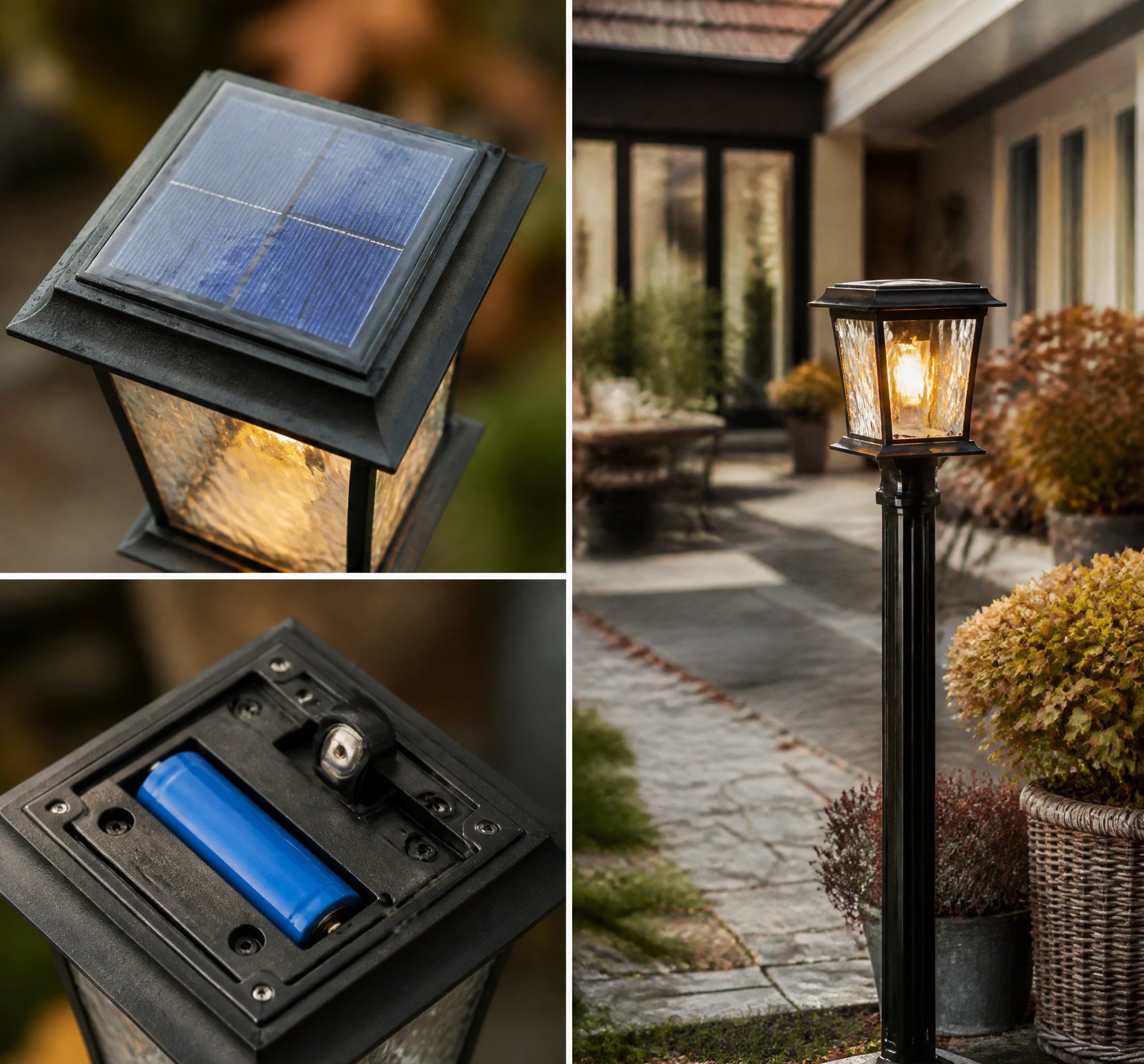
> Quick answer: Solar lamps in Romania use solar panels to charge batteries during daylight, powering LEDs via a driver that activates automatically in low light [6,7,10,17,24]. A PIR sensor detects motion, triggering full brightness only when needed, reducing energy use by at least 30% [2,3]. This system functions across seasons, though winter’s shorter days and lower intensity reduce energy generation [15,16].
Solar-powered lighting is transforming outdoor illumination in Romania, offering sustainable, low-maintenance solutions for streets, gardens, and rural areas. These systems use a precise interplay of solar panels, batteries, LED drivers, and PIR sensors to deliver intelligent, energy-efficient lighting that turns on automatically at dusk and activates only when motion is detected [6,7,8,10,17,21]. This automation not only enhances security but also significantly reduces energy waste—systems can cut consumption by at least 30% compared to traditional lighting [2,3].
How Solar Panels, Batteries, and LED Drivers Work Together
The solar panel converts sunlight into electrical energy [6,7,10,17,24], which charges the battery during the day [2,3,4,6,7,8,10,11,17]. The battery stores this energy, ensuring power is available at night or during low-light conditions [4,6,7,8,10,11,17,24]. To prolong battery life, systems often include a battery management system that regulates charging and discharging cycles [2,3], preventing overcharging or overdischarging, which can damage the battery [24]. Some designs use multiple batteries to increase storage capacity [5], while others incorporate programmable charge controllers to adapt to seasonal changes [16].
The LED driver controls the power supply to the light, adjusting brightness based on ambient light levels or motion detection [6,7,8,10,17,21]. During daylight, the system keeps LEDs in a low-power quiescent mode to minimize energy use [4,7]. When ambient light drops below a threshold—typically at dusk—the driver activates the LEDs at a low intensity, ensuring visibility without wasting power.
Role of PIR Sensors in Motion-Activated Lighting
PIR (Passive Infrared) sensors detect heat signatures from moving people or animals within a defined range [2,3,5,8,12,16,20,22]. Once motion is detected, the system triggers the LED driver to increase brightness to full intensity [2,3]. After a set period of inactivity—typically 10 to 60 seconds—the LEDs dim or turn off completely, conserving stored energy [2,3]. Some systems incorporate timer mechanisms to detect additional motion after the initial timeout, preventing premature shutdown [8]. This motion-based logic ensures lights are only on when needed, enhancing both security and efficiency.
Seasonal Variations in Performance Across Romania
Romania experiences distinct seasonal changes, with shorter daylight hours and lower solar intensity in winter [15,16]. This reduces the energy harvested by solar panels, potentially limiting the duration of nighttime illumination. However, well-designed systems can still deliver full-night coverage due to optimized battery storage and efficient charge management [10,15,16]. To improve winter performance, installing panels at an increased tilt angle helps reduce snow, dust, and rain accumulation, maintaining surface efficiency [16]. Additionally, systems with programmable charge controllers adjust energy use based on seasonal daylight patterns, ensuring consistent operation [16].
| Feature | Summer Performance | Winter Performance |
|–––|–––––––|–––––––|
| Sunlight Duration | 14–16 hours/day [15] | 8–9 hours/day [15] |
| Solar Energy Output | High [15] | Reduced [16] |
| Battery Charging | Efficient | Requires optimized management [16] |
| Nighttime Illumination | Full coverage possible | May require reduced duration [10] |
Safety, Limitations, and Design Considerations
While highly efficient, solar lamps are vulnerable to extreme temperature fluctuations and overcharging if control systems fail [24]. Batteries can degrade faster in cold climates, especially when subjected to repeated deep discharges [24]. Therefore, selecting systems with robust battery management and weather-resistant components is essential for long-term reliability in Romania’s variable climate.
Key Takeaways
- Solar lamps use solar panels to charge batteries, storing energy for nighttime use [6,7,10,17,24].
- A PIR sensor triggers full brightness only when motion is detected, reducing energy use by at least 30% [2,3].
- Winter performance can be optimized with tilted panels and programmable charge controllers [16].
- Proper battery management prevents overcharging and extends system lifespan [2,3,24].
References
- [5] US9920895B2_-_Street_light_-_Google_Patents__b32f25f2 — patent
source passage
the generators are not being driven to generate sufficient power to illuminate the lamp. – the illumination control circuit to turn the lamp on/off may be replaced with a light sensor for switching on the lamp when the ambient light is low and switching off the lamp when the ambient light is bright. – the lights may be provided with a motion sensor for detecting the presence of vehicles/people in the vicinity of the light and the control circuits may be adapted to increase the brightness of the lamps on detection of movement and to decrease the brightness of the lamps on detection of no movement. – the street lights may be connected to other street lights in a network, the network of street lights being controllable either individually or in parallel from a Central Management System. – the network connection may be wired or wireless, and is typically by radio frequency, the control circuits of each light being provided with a transmitter and receiver. – a solar panel is provided, we adapt the acronym SHERS to S&SHERS, i.e. Solar and Small-Hours-Energy-Replacement-System. – SHERS Solar and Small-Hours-Energy-Replacement-System. – the battery or sets of batteries may be duplicated. This enables one battery to be charged as much as possible during one day from the solar panel. The other battery having been previously fully charged is then used during the night following the one day. The one battery is then fully charged following solar charging during the night's low tariff peri
- [8] WO2019126812A1_-_Inductive_power_solar_light_with_microwave__008db675 — patent
source passage
– the solar light When the solar light is positioned so that the solar panel is receiving light, the solar light will charge the battery. Solar light is converted to electricity by the solar panel and then to an inductive power transmitting loop via an oscillating circuit. The oscillation in the circuit creates a magnetic field around the inductive power transmitting loop that is continually expanding and collapsing. As the magnetic field expands and collapses it cuts across the conductors in the inductive power receiving loop. This generates electrical power on the lower, i.e., lighting, portion of the solar light which is run through a battery charge circuit to recharge the internal battery. – Lighting components are in low power quiescent mode during charge cycle. – FIG. 12 illustrates the integration of a motion detector and timer, wherein the light intensity might be adjusted due to sensing of motion in close proximity to the solar device. Additionally, the timer will be utilized to determine if the motion detector senses any additional movement after a specified time period has elapsed. In such an embodiment, the timer serves as a count-down timer. – FIG. 13 (Solar Light – Low Light Cycle) – When solar or other irradiation of the solar panel drops to the point that usable power is no longer generated by the solar panel, the solar light will switch to lighting mode. – the inductive power loop is quiescent, and the lighting component is active. – the power stored througho
- [16] US10563827B2_-_Solar_powered_illumination_system_-_Google_Patents__f82b6692 — patent
source passage
possesses high efficiency in cloudy, rainy, snowy and dusty areas due to efficient charging of the rechargeable battery and energy conservation. The illumination system further implements a programmable charge controller or a motion sensor in areas where the daytime is too short. The illumination system increases a power back-up to 14-20 days. When the motion sensor detects an object movement from a specific distance, the illumination system starts working with 100% of power, otherwise the illumination system works at 20-40% of a rated power value based on pre-defined programming. Furthermore, the charge controllers are programmed based on duration of a night in a geographical location such as 8 hours in summer and 12-14 hours in winter. On the basis of night duration, a light intensity is programmed to be at 100% for the first 4 hours, 50% for the following 4 hours and 20% for the rest of the night until the sunrise. According to one embodiment herein, for installing the illumination system in desert or snowy areas following customizations are adopted: – – a. Increasing a tilt angle of the solar panels during installation without decrease in the solar light absorption. The solution reduces an accumulation of dust, snow and rain on the surface of the solar panel. – b. Using a self-cleansing Nano-coating on the solar panels to decrease a friction on the surface of the solar panel which also prevents the accumulation of dust, snow and rain on the surface of the solar panel. Acc
- [24] Solar_lamp_-_Wikipedia__3c516988 — wikipedia
source passage
could cause problems.[6] A battery is usually housed within a metal or plastic case. Inside the case are electrodes including cathodes and anodes where chemical reactions occur. A separator also exists between cathode and anode which stops the electrodes reacting together at the same time as allowing electrical charge to flow freely between the two. Lastly, the collector conducts a charge from the battery to outside.[7] Batteries inside solar lamps usually use gel electrolyte technology with high performance in deep discharging, in order to enable use in extreme ranges of temperature.[citation needed] It may also use lead-acid, nickel metal hydride, nickel cadmium, or lithium. This part of the lamp saves up energy from the solar panel and provides power when needed at night when there is no light energy available. In general, the efficiency of photovoltaic energy conversion is limited for physical reasons. Around 24% of solar radiation of a long wavelength is not absorbed. 33% is heat lost to surroundings, and further losses are of approximately 15-20%. Only 23% is absorbed, which means a battery is a crucial part of solar lamp.[8] This section controls the entire working systems to protect battery charge. It ensures, under any circumstances including extreme weather conditions with large temperature difference, the battery does not overcharge or over discharge and damage the battery even further.[citation needed] This section also includes additional parts such as light cont
the generators are not being driven to generate sufficient power to illuminate the lamp. – the illumination control circuit to turn the lamp on/off may be replaced with a light sensor for switching on the lamp when the ambient light is low and switching off the lamp when the ambient light is bright. – the lights may be provided with a motion sensor for detecting the presence of vehicles/people in the vicinity of the light and the control circuits may be adapted to increase the brightness of the lamps on detection of movement and to decrease the brightness of the lamps on detection of no movement. – the street lights may be connected to other street lights in a network, the network of street lights being controllable either individually or in parallel from a Central Management System. – the network connection may be wired or wireless, and is typically by radio frequency, the control circuits of each light being provided with a transmitter and receiver. – a solar panel is provided, we adapt the acronym SHERS to S&SHERS, i.e. Solar and Small-Hours-Energy-Replacement-System. – SHERS Solar and Small-Hours-Energy-Replacement-System. – the battery or sets of batteries may be duplicated. This enables one battery to be charged as much as possible during one day from the solar panel. The other battery having been previously fully charged is then used during the night following the one day. The one battery is then fully charged following solar charging during the night's low tariff peri
– the solar light When the solar light is positioned so that the solar panel is receiving light, the solar light will charge the battery. Solar light is converted to electricity by the solar panel and then to an inductive power transmitting loop via an oscillating circuit. The oscillation in the circuit creates a magnetic field around the inductive power transmitting loop that is continually expanding and collapsing. As the magnetic field expands and collapses it cuts across the conductors in the inductive power receiving loop. This generates electrical power on the lower, i.e., lighting, portion of the solar light which is run through a battery charge circuit to recharge the internal battery. – Lighting components are in low power quiescent mode during charge cycle. – FIG. 12 illustrates the integration of a motion detector and timer, wherein the light intensity might be adjusted due to sensing of motion in close proximity to the solar device. Additionally, the timer will be utilized to determine if the motion detector senses any additional movement after a specified time period has elapsed. In such an embodiment, the timer serves as a count-down timer. – FIG. 13 (Solar Light – Low Light Cycle) – When solar or other irradiation of the solar panel drops to the point that usable power is no longer generated by the solar panel, the solar light will switch to lighting mode. – the inductive power loop is quiescent, and the lighting component is active. – the power stored througho
possesses high efficiency in cloudy, rainy, snowy and dusty areas due to efficient charging of the rechargeable battery and energy conservation. The illumination system further implements a programmable charge controller or a motion sensor in areas where the daytime is too short. The illumination system increases a power back-up to 14-20 days. When the motion sensor detects an object movement from a specific distance, the illumination system starts working with 100% of power, otherwise the illumination system works at 20-40% of a rated power value based on pre-defined programming. Furthermore, the charge controllers are programmed based on duration of a night in a geographical location such as 8 hours in summer and 12-14 hours in winter. On the basis of night duration, a light intensity is programmed to be at 100% for the first 4 hours, 50% for the following 4 hours and 20% for the rest of the night until the sunrise. According to one embodiment herein, for installing the illumination system in desert or snowy areas following customizations are adopted: – – a. Increasing a tilt angle of the solar panels during installation without decrease in the solar light absorption. The solution reduces an accumulation of dust, snow and rain on the surface of the solar panel. – b. Using a self-cleansing Nano-coating on the solar panels to decrease a friction on the surface of the solar panel which also prevents the accumulation of dust, snow and rain on the surface of the solar panel. Acc
could cause problems.[6] A battery is usually housed within a metal or plastic case. Inside the case are electrodes including cathodes and anodes where chemical reactions occur. A separator also exists between cathode and anode which stops the electrodes reacting together at the same time as allowing electrical charge to flow freely between the two. Lastly, the collector conducts a charge from the battery to outside.[7] Batteries inside solar lamps usually use gel electrolyte technology with high performance in deep discharging, in order to enable use in extreme ranges of temperature.[citation needed] It may also use lead-acid, nickel metal hydride, nickel cadmium, or lithium. This part of the lamp saves up energy from the solar panel and provides power when needed at night when there is no light energy available. In general, the efficiency of photovoltaic energy conversion is limited for physical reasons. Around 24% of solar radiation of a long wavelength is not absorbed. 33% is heat lost to surroundings, and further losses are of approximately 15-20%. Only 23% is absorbed, which means a battery is a crucial part of solar lamp.[8] This section controls the entire working systems to protect battery charge. It ensures, under any circumstances including extreme weather conditions with large temperature difference, the battery does not overcharge or over discharge and damage the battery even further.[citation needed] This section also includes additional parts such as light cont