
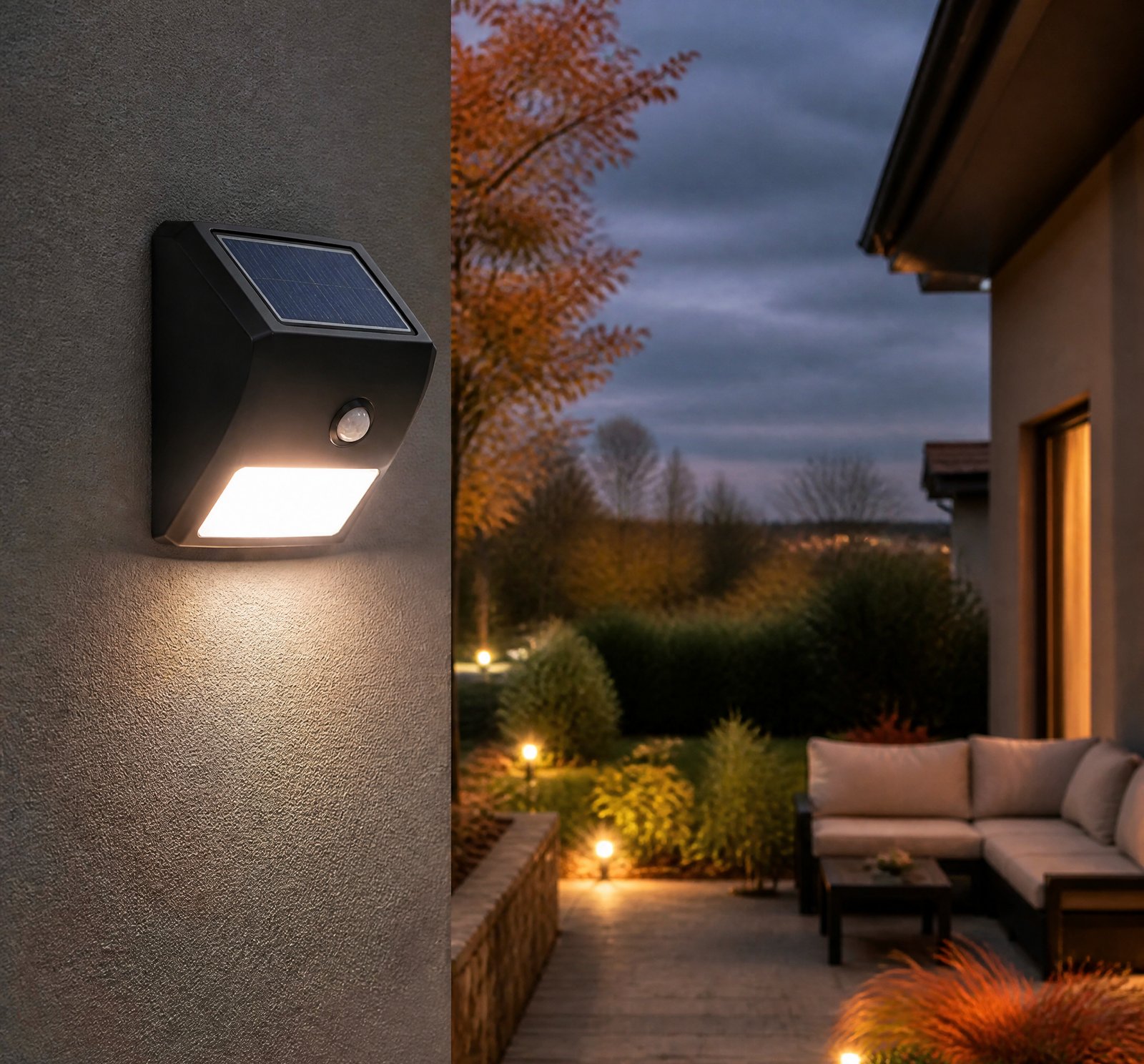
> Quick answer: Lumen output in solar lamps decreases over time due to lumen depreciation, primarily caused by elevated junction temperatures and material degradation, even though LEDs don’t suddenly fail. Proper thermal management and high lumen maintenance designs can slow this decline, with some LEDs retaining 90% output after 9,000 hours [4].
Solar lamps are a popular solution for off-grid lighting in Romania, especially in rural areas with inconsistent electricity access. While they are praised for long lifespans, many users notice their brightness gradually fades over time—even when the lamp still turns on. This phenomenon is not a malfunction but a natural process called lumen depreciation. Understanding why this happens—and how to prevent it—can help you choose better products and extend your solar lamp’s performance.
What Causes Lumen Depreciation in Solar Lamps?
Lumen depreciation refers to the gradual reduction in light output over time, even as the LED remains functional. Unlike sudden failure, this decline is consistent and predictable [1]. While all light sources experience some depreciation, LEDs are significantly better than incandescent or fluorescent types [3]. However, their brightness still drops due to internal factors.
The primary driver of lumen depreciation is heat. When an LED operates, it generates heat at the semiconductor junction. If this heat isn’t properly dissipated, junction temperatures can exceed 150 °C—well beyond safe limits [6][7]. High temperatures accelerate the degradation of materials within the LED, reducing light output over time. This is especially critical in solar lamps, where poor heat sinking or long exposure to midday sun can push components beyond their thermal thresholds.
How Temperature Affects LED Longevity
Proper thermal management is essential to maintain brightness. Studies show that elevated junction temperatures directly reduce light output and shorten LED lifespan [6][7]. Without effective heatsinks, the heat builds up in the lamp’s housing, especially during prolonged daytime charging or evening operation. Over time, this thermal stress causes irreversible changes in the phosphor layer and semiconductor structure, leading to permanent brightness loss.
Even small increases in temperature can have a significant impact. For example, a 10 °C rise in junction temperature can cut an LED’s lifespan by up to 50% [6]. This is why high-quality solar lamps in Romania—particularly those used year-round in sunny regions—must include robust thermal designs, including heat-dissipating materials and airflow channels.
Lumen Maintenance: The Key to Sustained Brightness
To combat depreciation, manufacturers now emphasize “lumen maintenance,” a measure of how well an LED preserves its initial output over time [4]. Some advanced LEDs, like those from Lumileds, maintain 90% of their original brightness after 9,000 hours of use—far better than conventional models that may drop to just 40% in the same period [4]. These high-performance LEDs are engineered with improved chip designs, better light extraction, and enhanced heat dissipation.
Over 50,000 hours, such LEDs are projected to retain 70% of their initial output [4]. This level of performance is increasingly important for solar lamps used in security, street lighting, or home use, where consistent illumination matters.
Understanding LED Lifetime Standards: L70 and B50
The lighting industry uses standardized metrics to assess longevity. The most common is L70, which defines the point at which an LED’s output drops to 70% of its initial lumens [1][24]. This is considered the practical end of useful life, even if the LED still functions.
The full specification is often stated as B50-L70—meaning that 50% of a batch of lamps will still output at least 70% of their original brightness after the stated number of hours [1][24]. The U.S. Department of Energy (DoE) notes that many LED products claim 50,000-hour lifespans based solely on lumen depreciation estimates [11]. However, DoE emphasizes that lifetime claims should reflect the entire system—including drivers, lenses, and heatsinks—not just the LEDs alone [11].
| Feature | Standard LED | High-Maintenance LED (e.g., Lumileds) |
|–––|–––––-|–––––––––––––-|
| Output after 9,000 hours | ~40% [4] | ~90% [4] |
| Projected output after 50,000 hours | ~70% | ~70% [4] |
| Key factor | Poor thermal management | Advanced heat sinking and design [6][7] |
Choosing the Right Solar Lamp for Romania
When selecting a solar lamp in Romania, prioritize models with:
- Certified L70/B50 ratings [1][24]
- Effective heat dissipation (metal housings, vents)
- High luminous efficiency (lumens per watt) [8]
- Protection against UV and weather damage
Avoid cheap models with plastic enclosures and no thermal design, as they degrade faster under Romania’s variable climate—especially in summer heat or winter cold.
Key Takeaways
- Lumen depreciation causes solar lamp brightness to fade even without failure [1].
- High junction temperatures are the main cause of brightness loss [6][7].
- High lumen maintenance LEDs can retain 90% output after 9,000 hours [4].
- L70/B50 standards help predict usable lifespan [1][24].
- Total system design—drivers, heatsinks, lenses—impacts long-term performance [11].
Frequently Asked Questions
„`json
[
{
„q”: „Does a solar lamp stop working when brightness fades?”,
„a”: „No. Lumen depreciation is a gradual decline, not a failure. The lamp continues to function, but output drops to 70% or less over time [1][24].”
},
{
„q”: „How long do high-quality solar lamps last in Romania?”,
„a”: „With proper thermal management, quality solar lamps can last 50,000 hours or more, maintaining 70% output (L70) [4][11].”
},
{
„q”: „Can I prevent lumen depreciation in my solar lamp?”,
„a”: „You can’t stop it entirely, but placing the lamp in shaded areas during peak sun and choosing models with effective heatsinks helps slow degradation [6][7].”
}
]
„`
References
- [1] What_Happened_To_The_100000-Hour_LED_Bulbs_-_Hackaday__a70b0bb9 — authority
source passage
in Douglas MacArthur’s famous line, old LEDs don’t die, they just fade away. We all know what an incandescent lamp failure looks like: one second it’s burning bright; the next, it’s not (and every once-in-a-while, you hear a pop followed by a faint jingling as the liberated filament richochets inside the bulb). Power supplies aside, LEDs typically don’t fail with so much fanfare. Instead, they gradually lose brightness as they age. In the lighting industry, this is known as lumen depreciation, and is a separate failure mode from the catastrophic failure we usually think about. As it turns out, lumen depreciation happens to incandescent bulbs, too. By the end of their 1,000 hour life, the output has typically dropped 10-15%, but nobody ever notices. With LEDs, the effect is much worse, and the output continues to fall as the device ages. At some point, the LED is no longer producing enough light to fulfill its original purpose, even though it hasn’t “burned out.” Research says that most users won’t notice a gradual 30% drop in light levels; accordingly the industry has defined L70, the time at which the output has dropped to 70% of its initial level, as an endpoint for measuring LED bulb lifetime. Based on how it’s estimated, this measure is typically stated as B50-L70, the point at which 50% of an initial sample of bulbs will retain 70% of their rated output. Color Shift Happens But is Unpredictable Something else happens as phosphor-based white LEDs age: they change color. T
- [3] LED_package_designs_tackle_lumen_depreciation_issues_-_News__dda53ead — magazine
source passage
lumen depreciation issues by properly extracting the heat and by packaging the LEDs in materials that do not degrade over time. Even traditional light sources, such as incandescent, halogen, fluorescent and metal halide lamps exhibit light output degradation over their operating life. Figure 3 shows a comparison of light output variation over time for different white-light sources. The high-power LEDs have very low light output degradation, according to the preliminary data in figure 3. Advances in device construction, light extraction and heat sinking have enabled the development of high-power LEDs that offer improved luminous efficacy and better lumen maintenance. These advances have made white LED technology more feasible for general lighting applications. If the LED industry can sustain these development trends, solid-state lighting could have significant market penetration in the next 5 to 10 years. The future of LEDs in lighting With LED performance improving, solid-state lighting is attracting more attention from the lighting world. The general illumination marketplace is huge, but penetrating that marketplace will require higher value LED products. Manufacturers will have to continue working on longer-lasting white LEDs with higher efficacy, higher luminous flux and improved color properties. The Lighting Research Center is currently identifying the parameters that can be improved to provide quality lighting that is acceptable to human subjects. Illumination using LED
- [4] LED_output_doesnt_dwindle_Laser_Focus_World__fd46adfc — magazine
source passage
# LED output doesn't dwindle Source: Blog/Web URL: https://www.laserfocusworld.com/lasers-sources/article/16552304/led-output-doesnt-dwindle Author: Date: 2002-09-01 Light-emitting diodes (LEDs) intended for general illumination have a lot going for them—they are rugged, they produce high-quality white light, and they last. But to the everyday people who may one day light their houses with LEDs, the lifetime of a light source means more than just the number of hours it shines before it winks out for good. Although today's white-light-emitting LEDs are quite reliable, lasting for many thousands of hours, they are also just as reliably fade in output over time. Engineers at Lumileds (San Jose, CA) have developed LEDs that fade less over time (a characteristic known in the industry as high "lumen maintenance"). They have improved their devices so that they now produce 90% of their original output after 9000 h—in contrast to 40% after 9000 h for conventional LEDs. The new emitters are projected to maintain 70% of their original output after 50,000 h. New package Back when visible LEDs were used as indicator lights and little else, they were molded into bullet-shaped epoxy packages. Even now, after the advent of high-brightness gallium nitride-based blue- and white-emitting LEDs, the epoxy bullet still exists in the form of the standard 5-mm package. But, in these devices, the epoxy encapsulant is affected by the ultraviolet or blue output of the LED chip, with the result that the
- [6] Improving_Thermal_Management_of_LEDs__e8b2adf3 — magazine
source passage
# Improving Thermal Management of LEDs Source: Blog/Web URL: https://www.powersystemsdesign.com/articles/improving-thermal-management-of-leds/36/7009 Author: Mark Youmans; Cree Date: 2014-04-28 Many LED failures are temperature related since an LED’s performance and projected lifetime correlate tightly to thermal management and the resulting junction temperature of the LED semiconductor chip. Elevated junction temperatures cause a reduction in light output and accelerated LED lifetime degradation. Proper thermal management of an LED luminaire is vital for performance (see Figure 1). Measuring and validating thermal design assumptions is necessary to ensure quality and reliability of SSL products. Click image to enlarge Figure 1: Proper thermal management of an LED luminaire is vital for performance Some performance characteristics experience a recoverable change, such as light output, color and voltage, while others, such as lifetime, can experience a non-recoverable degradation due to high operating temperatures. However, exceeding the maximum operating temperature specification, which is typically a 150 °C junction temperature, can cause damage to LEDs, so care must be taken to operate LEDs below this limit. Light output issues Important performance characteristics and implications of improper thermal management include light output, as elevated junction temperatures cause recoverable light output reduction. As the junction temperature increases, the light output of the LED
- [7] Improving_Thermal_Management_of_LEDs__3125a03c — magazine
source passage
# Improving Thermal Management of LEDs Source: Blog/Web URL: https://www.powersystemsdesign.com/articles/improving-thermal-management-of-leds/22/7009 Author: Mark Youmans; Cree Date: 2014-04-28 Many LED failures are temperature related since an LED’s performance and projected lifetime correlate tightly to thermal management and the resulting junction temperature of the LED semiconductor chip. Elevated junction temperatures cause a reduction in light output and accelerated LED lifetime degradation. Proper thermal management of an LED luminaire is vital for performance (see Figure 1). Measuring and validating thermal design assumptions is necessary to ensure quality and reliability of SSL products. Click image to enlarge Figure 1: Proper thermal management of an LED luminaire is vital for performance Some performance characteristics experience a recoverable change, such as light output, color and voltage, while others, such as lifetime, can experience a non-recoverable degradation due to high operating temperatures. However, exceeding the maximum operating temperature specification, which is typically a 150 °C junction temperature, can cause damage to LEDs, so care must be taken to operate LEDs below this limit. Light output issues Important performance characteristics and implications of improper thermal management include light output, as elevated junction temperatures cause recoverable light output reduction. As the junction temperature increases, the light output of the LED
- [8] New_IDA_LED_Lighting_Practical_Guide_DarkSky_International__5711810c — authority
source passage
of potentially harmful blue light. (see below). Relative to other commonly-used outdoor lamps, LEDs are thought to be extremely long-lived. Laboratory studies indicate lifetime ratings in the range of 25,000-100,000 hours of continuous operation, making them virtually maintenance-free. When turned on, LEDs are instantly at full brightness, unlike HID lamps that have a significant time delay. LEDs also have very low minimum energy thresholds to produce light, meaning they can be dimmed to much lower illumination levels when less light is needed, resulting in further energy savings. Product Selection Considerations Choosing LED products for outdoor lighting applications involves a series of considerations and tradeoffs. These include: – Luminous Efficiency (Watts-to-lumens): How many lumens of light are produced per input Watt of electricity? More importantly, how many lumens from the light source are meeting the task (“Fixture Lumens” vs. “Lamp Lumens”) – Lumen Output: How much light is produced relative to the amount required for a particular task? When replacing existing fixtures it is important to use the only level of illumination needed, and not to adopt unneeded increases in brightness. – Correlated Color Temperature (CCT): Does the light have a “warm” or “cool” color quality? – Color Rendering Index (CRI): How accurately does the light render colors to the human eye? A high CRI is not needed for all situations. The need for good color rendition should be considered rela
- [11] LED_Life_Standards_In_And_Out_Of_Luminaires_-_Electronic_Design__258a2761 — magazine
source passage
# LED Life Standards In And Out Of Luminaires Source: Blog/Web URL: https://www.electronicdesign.com/technologies/industrial/boards/article/21789940/led-life-standards-in-and-out-of-luminaires Author: Don Tuite Date: 2009-03-26 The U.S. Department of Energy (DoE) notes that LED luminaires and replacement lamps available today often claim long life, usually 50,000 hours, based solely on the estimated lumen depreciation of the LED. But the DoE also says that life claims ought to account for the whole system. The lifetimes of incandescent, fluorescent, and high-intensity discharge lamps are generally estimated through industry standards. Typically, a large, statistically significant sample of lamps is operated until 50% have failed. That point, in terms of operating hours, defines the “rated life” for that lamp. LEDs are different. They usually don’t fail abruptly. Their light output slowly diminishes over time. Moreover, they can have such long lives that life testing and acquiring real application data on long-term reliability becomes problematic—new versions of products are available before current ones can be fully tested. Finally, they’re often integrated permanently into the fixture, making their replacement difficult or impossible. Coupled with that, the light output and useful life of individual LEDs are more influenced by electrical and thermal conditions determined by the luminaire and system design, rather than by native properties of the LEDs themselves. All of that
- [24] Power_Management_Chapter_18_Electronic_Lighting__d807eaea — magazine
source passage
# Power Management Chapter 18: Electronic Lighting Source: Blog/Web URL: https://www.electronicdesign.com/technologies/power/article/21199583/power-management-chapter-18-electronic-lighting Author: Sam Davis Date: 2018-08-28 Electronic lighting using LEDs is one of today’s most rapidly evolving technologies. The major reason for this growth is the development of white LEDs whose efficiency keeps increasing. By 2020, the U.S. Department of Energy (DoE) estimates that commercial LED lighting efficiency will be as high as 258 lumens per watt, or two and a half times as efficient as today’s fluorescent lamps, resulting in 90% energy savings. By then, the DoE predicts the cost of LEDs will fall by 80% and global penetration will be 60%. With an average lifespan of over 100,000 hours, LEDs last more than 10 times longer than any other light source. However, LED lifetimes are rated differently than incandescent lights that fail when the filament breaks. One definition for an LED’s typical lifetime is the average number of hours until light falls to 70% of initial brightness. The commercial LED marketplace calls for low-cost lighting, which requires minimal cost components. LEDs operate with a dc voltage so the incoming ac must be rectified and reduced to a low voltage for the LED driver. The LED power circuit can be non-isolated so it may not need an input transformer. However, there is one component that must be chosen carefully, the electrolytic or tantalum capacitor used in the r
in Douglas MacArthur’s famous line, old LEDs don’t die, they just fade away. We all know what an incandescent lamp failure looks like: one second it’s burning bright; the next, it’s not (and every once-in-a-while, you hear a pop followed by a faint jingling as the liberated filament richochets inside the bulb). Power supplies aside, LEDs typically don’t fail with so much fanfare. Instead, they gradually lose brightness as they age. In the lighting industry, this is known as lumen depreciation, and is a separate failure mode from the catastrophic failure we usually think about. As it turns out, lumen depreciation happens to incandescent bulbs, too. By the end of their 1,000 hour life, the output has typically dropped 10-15%, but nobody ever notices. With LEDs, the effect is much worse, and the output continues to fall as the device ages. At some point, the LED is no longer producing enough light to fulfill its original purpose, even though it hasn’t “burned out.” Research says that most users won’t notice a gradual 30% drop in light levels; accordingly the industry has defined L70, the time at which the output has dropped to 70% of its initial level, as an endpoint for measuring LED bulb lifetime. Based on how it’s estimated, this measure is typically stated as B50-L70, the point at which 50% of an initial sample of bulbs will retain 70% of their rated output. Color Shift Happens But is Unpredictable Something else happens as phosphor-based white LEDs age: they change color. T
lumen depreciation issues by properly extracting the heat and by packaging the LEDs in materials that do not degrade over time. Even traditional light sources, such as incandescent, halogen, fluorescent and metal halide lamps exhibit light output degradation over their operating life. Figure 3 shows a comparison of light output variation over time for different white-light sources. The high-power LEDs have very low light output degradation, according to the preliminary data in figure 3. Advances in device construction, light extraction and heat sinking have enabled the development of high-power LEDs that offer improved luminous efficacy and better lumen maintenance. These advances have made white LED technology more feasible for general lighting applications. If the LED industry can sustain these development trends, solid-state lighting could have significant market penetration in the next 5 to 10 years. The future of LEDs in lighting With LED performance improving, solid-state lighting is attracting more attention from the lighting world. The general illumination marketplace is huge, but penetrating that marketplace will require higher value LED products. Manufacturers will have to continue working on longer-lasting white LEDs with higher efficacy, higher luminous flux and improved color properties. The Lighting Research Center is currently identifying the parameters that can be improved to provide quality lighting that is acceptable to human subjects. Illumination using LED
# LED output doesn't dwindle Source: Blog/Web URL: https://www.laserfocusworld.com/lasers-sources/article/16552304/led-output-doesnt-dwindle Author: Date: 2002-09-01 Light-emitting diodes (LEDs) intended for general illumination have a lot going for them—they are rugged, they produce high-quality white light, and they last. But to the everyday people who may one day light their houses with LEDs, the lifetime of a light source means more than just the number of hours it shines before it winks out for good. Although today's white-light-emitting LEDs are quite reliable, lasting for many thousands of hours, they are also just as reliably fade in output over time. Engineers at Lumileds (San Jose, CA) have developed LEDs that fade less over time (a characteristic known in the industry as high "lumen maintenance"). They have improved their devices so that they now produce 90% of their original output after 9000 h—in contrast to 40% after 9000 h for conventional LEDs. The new emitters are projected to maintain 70% of their original output after 50,000 h. New package Back when visible LEDs were used as indicator lights and little else, they were molded into bullet-shaped epoxy packages. Even now, after the advent of high-brightness gallium nitride-based blue- and white-emitting LEDs, the epoxy bullet still exists in the form of the standard 5-mm package. But, in these devices, the epoxy encapsulant is affected by the ultraviolet or blue output of the LED chip, with the result that the
# Improving Thermal Management of LEDs Source: Blog/Web URL: https://www.powersystemsdesign.com/articles/improving-thermal-management-of-leds/36/7009 Author: Mark Youmans; Cree Date: 2014-04-28 Many LED failures are temperature related since an LED’s performance and projected lifetime correlate tightly to thermal management and the resulting junction temperature of the LED semiconductor chip. Elevated junction temperatures cause a reduction in light output and accelerated LED lifetime degradation. Proper thermal management of an LED luminaire is vital for performance (see Figure 1). Measuring and validating thermal design assumptions is necessary to ensure quality and reliability of SSL products. Click image to enlarge Figure 1: Proper thermal management of an LED luminaire is vital for performance Some performance characteristics experience a recoverable change, such as light output, color and voltage, while others, such as lifetime, can experience a non-recoverable degradation due to high operating temperatures. However, exceeding the maximum operating temperature specification, which is typically a 150 °C junction temperature, can cause damage to LEDs, so care must be taken to operate LEDs below this limit. Light output issues Important performance characteristics and implications of improper thermal management include light output, as elevated junction temperatures cause recoverable light output reduction. As the junction temperature increases, the light output of the LED
# Improving Thermal Management of LEDs Source: Blog/Web URL: https://www.powersystemsdesign.com/articles/improving-thermal-management-of-leds/22/7009 Author: Mark Youmans; Cree Date: 2014-04-28 Many LED failures are temperature related since an LED’s performance and projected lifetime correlate tightly to thermal management and the resulting junction temperature of the LED semiconductor chip. Elevated junction temperatures cause a reduction in light output and accelerated LED lifetime degradation. Proper thermal management of an LED luminaire is vital for performance (see Figure 1). Measuring and validating thermal design assumptions is necessary to ensure quality and reliability of SSL products. Click image to enlarge Figure 1: Proper thermal management of an LED luminaire is vital for performance Some performance characteristics experience a recoverable change, such as light output, color and voltage, while others, such as lifetime, can experience a non-recoverable degradation due to high operating temperatures. However, exceeding the maximum operating temperature specification, which is typically a 150 °C junction temperature, can cause damage to LEDs, so care must be taken to operate LEDs below this limit. Light output issues Important performance characteristics and implications of improper thermal management include light output, as elevated junction temperatures cause recoverable light output reduction. As the junction temperature increases, the light output of the LED
of potentially harmful blue light. (see below). Relative to other commonly-used outdoor lamps, LEDs are thought to be extremely long-lived. Laboratory studies indicate lifetime ratings in the range of 25,000-100,000 hours of continuous operation, making them virtually maintenance-free. When turned on, LEDs are instantly at full brightness, unlike HID lamps that have a significant time delay. LEDs also have very low minimum energy thresholds to produce light, meaning they can be dimmed to much lower illumination levels when less light is needed, resulting in further energy savings. Product Selection Considerations Choosing LED products for outdoor lighting applications involves a series of considerations and tradeoffs. These include: – Luminous Efficiency (Watts-to-lumens): How many lumens of light are produced per input Watt of electricity? More importantly, how many lumens from the light source are meeting the task (“Fixture Lumens” vs. “Lamp Lumens”) – Lumen Output: How much light is produced relative to the amount required for a particular task? When replacing existing fixtures it is important to use the only level of illumination needed, and not to adopt unneeded increases in brightness. – Correlated Color Temperature (CCT): Does the light have a “warm” or “cool” color quality? – Color Rendering Index (CRI): How accurately does the light render colors to the human eye? A high CRI is not needed for all situations. The need for good color rendition should be considered rela
# LED Life Standards In And Out Of Luminaires Source: Blog/Web URL: https://www.electronicdesign.com/technologies/industrial/boards/article/21789940/led-life-standards-in-and-out-of-luminaires Author: Don Tuite Date: 2009-03-26 The U.S. Department of Energy (DoE) notes that LED luminaires and replacement lamps available today often claim long life, usually 50,000 hours, based solely on the estimated lumen depreciation of the LED. But the DoE also says that life claims ought to account for the whole system. The lifetimes of incandescent, fluorescent, and high-intensity discharge lamps are generally estimated through industry standards. Typically, a large, statistically significant sample of lamps is operated until 50% have failed. That point, in terms of operating hours, defines the “rated life” for that lamp. LEDs are different. They usually don’t fail abruptly. Their light output slowly diminishes over time. Moreover, they can have such long lives that life testing and acquiring real application data on long-term reliability becomes problematic—new versions of products are available before current ones can be fully tested. Finally, they’re often integrated permanently into the fixture, making their replacement difficult or impossible. Coupled with that, the light output and useful life of individual LEDs are more influenced by electrical and thermal conditions determined by the luminaire and system design, rather than by native properties of the LEDs themselves. All of that
# Power Management Chapter 18: Electronic Lighting Source: Blog/Web URL: https://www.electronicdesign.com/technologies/power/article/21199583/power-management-chapter-18-electronic-lighting Author: Sam Davis Date: 2018-08-28 Electronic lighting using LEDs is one of today’s most rapidly evolving technologies. The major reason for this growth is the development of white LEDs whose efficiency keeps increasing. By 2020, the U.S. Department of Energy (DoE) estimates that commercial LED lighting efficiency will be as high as 258 lumens per watt, or two and a half times as efficient as today’s fluorescent lamps, resulting in 90% energy savings. By then, the DoE predicts the cost of LEDs will fall by 80% and global penetration will be 60%. With an average lifespan of over 100,000 hours, LEDs last more than 10 times longer than any other light source. However, LED lifetimes are rated differently than incandescent lights that fail when the filament breaks. One definition for an LED’s typical lifetime is the average number of hours until light falls to 70% of initial brightness. The commercial LED marketplace calls for low-cost lighting, which requires minimal cost components. LEDs operate with a dc voltage so the incoming ac must be rectified and reduced to a low voltage for the LED driver. The LED power circuit can be non-isolated so it may not need an input transformer. However, there is one component that must be chosen carefully, the electrolytic or tantalum capacitor used in the r