
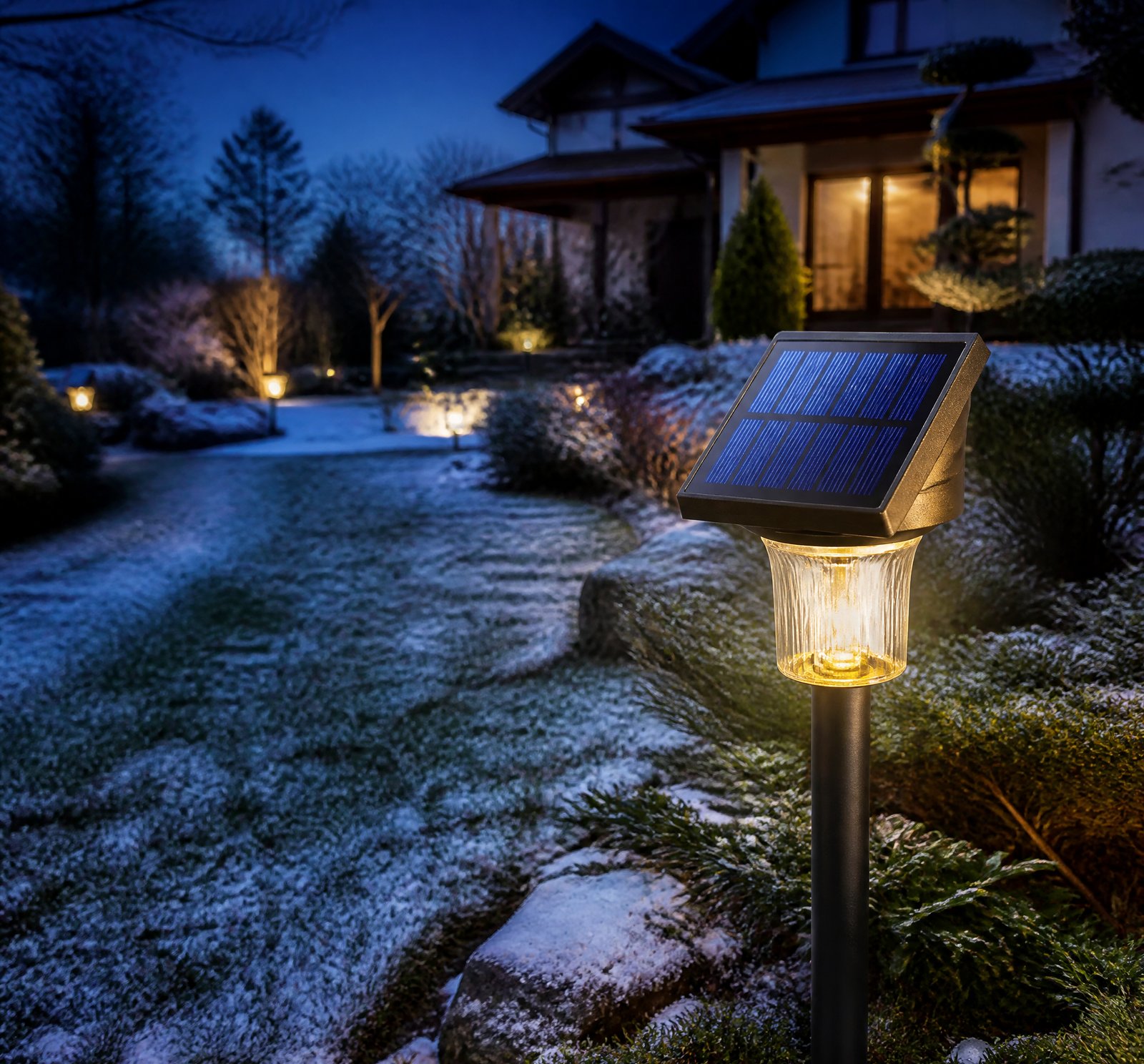
> Quick answer: Elevated junction temperatures reduce light output and accelerate LED degradation, halving the lifetime for every 10°C rise above 150°C [7]. Proper thermal management is crucial for extending operational life and maintaining efficiency [3][7].
Understanding how LED temperature affects solar lamp lifespan and efficiency can significantly impact your lighting system’s performance. In Romania, where solar lamps are increasingly popular due to their eco-friendly nature and cost savings, it’s vital to ensure that these devices operate at optimal temperatures for maximum longevity.
The Impact of Junction Temperature on LED Performance
Elevated junction temperatures directly reduce light output and accelerate the degradation of LED performance [1][2][5][7]. LEDs emit a considerable amount of heat during operation—up to 70% of electrical input can be converted into heat rather than light in high-power applications [19]. This means that without effective thermal management, junction temperatures rise, compromising both efficiency and reliability [18][19].
When the junction temperature exceeds safe limits (typically around 150°C), LEDs experience non-recoverable effects on their lifetime. For every 10°C rise above this limit, an LED’s lifespan can be reduced by up to 50% [7]. This underscores that maintaining junction temperatures within safe limits is essential for reliable operation.
Thermal Management Strategies
Effective thermal management strategies include the use of heat sinks, which maximize surface area and airflow to enhance heat dissipation. The design of these heat sinks is critical, as they must be positioned to draw heat away from the LED circuit board and allow for sufficient air flow [23]. Some advanced designs incorporate pivoting joints that also serve as thermal transfer pathways, enabling both adjustability and efficient heat removal [18][23].
Simulation tools are used to model and validate thermal designs, allowing engineers to predict junction temperatures and optimize performance before physical prototyping. These tools are essential for ensuring that thermal design assumptions are met, particularly in complex systems like retrofit LED bulbs or multi-LED luminaires [17]. The ability to simulate thermal behavior enables manufacturers to select appropriate materials, geometries, and cooling strategies, thereby improving reliability and performance [17][20].
Degradation Mechanisms and Lifespan Metrics
The degradation mechanisms associated with high temperatures include flux decay, chromatic shifts, and increased thermal resistance. These changes are not fully reversible; while some parameters like light output may recover when cooled, the cumulative damage to the semiconductor structure leads to permanent degradation [1][2]. The most common failure mode is gradual dimming over time, rather than sudden failure [3].
LED lifetimes are typically defined by the point at which light output drops to 50% of its initial value. Under optimal conditions, LED lifespans can range from 25,000 to 100,000 hours [3][14][16][25]. However, these projections are contingent on proper thermal design and stable operating environments [16][20].
Environmental Considerations
In outdoor applications such as solar lamps, the components are exposed to variable environmental temperatures. Without adequate heat sinking, junction temperatures can exceed safe limits, especially during peak solar irradiance [6][15]. This is particularly relevant in Romania, where seasonal temperature fluctuations can significantly impact thermal management.
Key Takeaways
- Elevated junction temperatures reduce light output and accelerate LED degradation.
- Proper thermal management extends operational life and maintains efficiency.
- Simulation tools help optimize heat dissipation designs before manufacturing.
- LEDs’ lifespan is defined by the point at which light output drops to 50% of its initial value.
References
- [1] Improving_Thermal_Management_of_LEDs__3125a03c — magazine
source passage
# Improving Thermal Management of LEDs Source: Blog/Web URL: https://www.powersystemsdesign.com/articles/improving-thermal-management-of-leds/22/7009 Author: Mark Youmans; Cree Date: 2014-04-28 Many LED failures are temperature related since an LED’s performance and projected lifetime correlate tightly to thermal management and the resulting junction temperature of the LED semiconductor chip. Elevated junction temperatures cause a reduction in light output and accelerated LED lifetime degradation. Proper thermal management of an LED luminaire is vital for performance (see Figure 1). Measuring and validating thermal design assumptions is necessary to ensure quality and reliability of SSL products. Click image to enlarge Figure 1: Proper thermal management of an LED luminaire is vital for performance Some performance characteristics experience a recoverable change, such as light output, color and voltage, while others, such as lifetime, can experience a non-recoverable degradation due to high operating temperatures. However, exceeding the maximum operating temperature specification, which is typically a 150 °C junction temperature, can cause damage to LEDs, so care must be taken to operate LEDs below this limit. Light output issues Important performance characteristics and implications of improper thermal management include light output, as elevated junction temperatures cause recoverable light output reduction. As the junction temperature increases, the light output of the LED
- [2] Improving_Thermal_Management_of_LEDs__e8b2adf3 — magazine
source passage
# Improving Thermal Management of LEDs Source: Blog/Web URL: https://www.powersystemsdesign.com/articles/improving-thermal-management-of-leds/36/7009 Author: Mark Youmans; Cree Date: 2014-04-28 Many LED failures are temperature related since an LED’s performance and projected lifetime correlate tightly to thermal management and the resulting junction temperature of the LED semiconductor chip. Elevated junction temperatures cause a reduction in light output and accelerated LED lifetime degradation. Proper thermal management of an LED luminaire is vital for performance (see Figure 1). Measuring and validating thermal design assumptions is necessary to ensure quality and reliability of SSL products. Click image to enlarge Figure 1: Proper thermal management of an LED luminaire is vital for performance Some performance characteristics experience a recoverable change, such as light output, color and voltage, while others, such as lifetime, can experience a non-recoverable degradation due to high operating temperatures. However, exceeding the maximum operating temperature specification, which is typically a 150 °C junction temperature, can cause damage to LEDs, so care must be taken to operate LEDs below this limit. Light output issues Important performance characteristics and implications of improper thermal management include light output, as elevated junction temperatures cause recoverable light output reduction. As the junction temperature increases, the light output of the LED
- [3] Thermal_Management_LED_professional_-_LED_Lighting_Technology__72b2f5fa — authority
source passage
# Thermal Management Source: Blog/Web URL: https://www.led-professional.com/technology/thermal-management Author: Date: 2010-07-13 Technology | Jul 16, 2010 As we all know, the life span of an LED depends on the semi-conductor material used as well as the current/heat relationship. The light output of the LED becomes weaker and weaker and once it reaches 50% of its initial value, the life expectancy of the LED has, by definition, been reached. A life span of a few hundred and up to 100,000 hours is possible, but only when avoiding high temperatures which drastically reduce the length of the LED’s life. Read more » Technology | Jul 28, 2010 A recent advance by ASU researchers in developing nanowires could lead to more efficient photovoltaic cells for generating energy from sunlight, and to better light-emitting diodes (LEDs) that could replace less energy-efficient incandescent light bulbs. Read more » Technology | Jul 28, 2010 Electricity-guzzling cooling systems could soon be a lot smaller, quieter and more economical thanks to an exotic metal alloy discovered by an international collaboration working at the National Institute of Standards and Technology (NIST)’s Center for Neutron Research (NCNR).* Read more » Technology | Jul 29, 2010 Researchers have demonstrated a new technology using tiny "ionic wind engines" that might dramatically improve computer chip cooling, possibly addressing a looming threat to future advances in computers and electronics. Read more » Technology
- [5] LEDs_Shine_On_Through_Thermal_Management_Electronic_Design__08aae28a — magazine
source passage
# LEDs Shine On Through Thermal Management Source: Blog/Web URL: https://www.electronicdesign.com/technologies/components/lighting/leds/article/21800875/leds-shine-on-through-thermal-management Author: Terry Luxmore Date: 2015-06-17 LEDs last longer and operate more efficiently when maintained at lower operating temperatures, as they effectively flow heat away from the active device junctions. Lighting products based on light-emitting diodes (LEDs) are gaining a stronger foothold in many different application areas—consumer, commercial, industrial, and even military products. LEDs provide illumination in everything from automotive headlights to outdoor systems. Key to the design of these LED-based products is proper thermal management: LEDs that run too hot can suffer reduced operating efficiency and dramatically shortened operating lifetimes. Therefore, thermal design becomes critical to maintaining LED p-n junction temperatures that fall within the recommended limits for those devices. This report will review some of the LED types currently being used and the impact of elevated diode junction temperatures on them. It will also explore different LED thermal-management approaches and materials that have proven effective in reducing LED junction temperatures, as well as briefly look at some of the computer simulation software that can help mitigate the design challenges involved in flowing heat away from the LEDs. LED lighting is often considered an efficient means of electric
- [6] Cooling_bifacial_PV_thermal_solar_panels_with_jet_impingement__7a32ff7c — authority
source passage
that emerges from the upper channel. The bifacial solar panel and the surrounding air exchange heat,” the group said. “At the top of the testing portion, six rows of 48 halogen lamps each serve as solar simulators to mimic sun irradiance, according to the collector measurements. Each lamp has a 500 W heat flux and measures 118 mm in length.” Comparing the results of the setup and the model, the latter was validated with accuracy rates of 94.53% for thermal efficiency and 98.91% for electrical efficiency. The group was able to input different measurements in the numerical model, finding that the systems operate within the temperature and electrical efficiency ranges of 304.39 K to 339.54 K and 9.39% to 11.22%, respectively. “Conversely, thermal efficiencies directly correlate with air velocity and solar irradiation. The system’s thermal efficiency and output air temperature range from 33.86% to 62.28% and 302.07 K to 318.75 K, respectively,” the scientists added. “Furthermore, the PV temperature has an inverse relationship with mass flow rate and a direct relationship with solar irradiation. On the other hand, there is an inverse link between solar irradiation and mass flow rate and electrical efficiency.” The researchers have also conducted an economic and environmental analysis of the system. They assumed a 20-year lifespan for the BPVT, with eight hours of operation per day. “Regarding cost-benefit ratio (CBR), the variations range from 0.1363 to 9.3445, with an average of
- [7] LEDs_Shine_On_Through_Thermal_Management_Electronic_Design__08aae28a — magazine
source passage
for thermal management. For example, standard LED lights typically replace traditional incandescent bulbs for indoor lighting applications. Though operating at much lower power levels (less than 10 W) than incandescent bulbs, they still require thermal management. LEDs used in other applications, such as outdoor lighting and ceiling lights, have higher power levels (and thus generate more heat), which demands more comprehensive thermal-management solutions like larger heat sinks. Heat can wreak havoc on an LED, since excess heat will impact performance and operating life expectancy. Every 10°C rise above the maximum operating-temperature limit can reduce an LED’s lifetime by as much as 50% (Fig. 2). Higher operating temperatures also result in reduced lighting efficiency for an LED, with less light output at higher LED PN junction temperatures. Furthermore, the operating temperature can affect the color of light produced by an LED. For spectrum-sensitive applications, the optical wavelength of an LED can shift with increasing operating temperature, with elevated operating temperatures contributing to poor system performance or even system failures. 2. Useful operating lifetimes of high-brightness white LEDs will vary as a function of operating temperature. Simply put, effective thermal management becomes more important as the industry moves to higher-power/brightness LEDs and higher-density LED arrays, which are generating more power and heat in smaller spaces. Practical ther
- [14] New_IDA_LED_Lighting_Practical_Guide_DarkSky_International__5711810c — authority
source passage
of potentially harmful blue light. (see below). Relative to other commonly-used outdoor lamps, LEDs are thought to be extremely long-lived. Laboratory studies indicate lifetime ratings in the range of 25,000-100,000 hours of continuous operation, making them virtually maintenance-free. When turned on, LEDs are instantly at full brightness, unlike HID lamps that have a significant time delay. LEDs also have very low minimum energy thresholds to produce light, meaning they can be dimmed to much lower illumination levels when less light is needed, resulting in further energy savings. Product Selection Considerations Choosing LED products for outdoor lighting applications involves a series of considerations and tradeoffs. These include: – Luminous Efficiency (Watts-to-lumens): How many lumens of light are produced per input Watt of electricity? More importantly, how many lumens from the light source are meeting the task (“Fixture Lumens” vs. “Lamp Lumens”) – Lumen Output: How much light is produced relative to the amount required for a particular task? When replacing existing fixtures it is important to use the only level of illumination needed, and not to adopt unneeded increases in brightness. – Correlated Color Temperature (CCT): Does the light have a “warm” or “cool” color quality? – Color Rendering Index (CRI): How accurately does the light render colors to the human eye? A high CRI is not needed for all situations. The need for good color rendition should be considered rela
- [15] LED_lamp_-_WikipediaLight-emitting_diode_-_WikipediaLED_circuit_-_Wiki__b8e2933f — wikipedia
source passage
(red + blue) which support greenhouse production in minimum time and with high quality and quantity.[citation needed] As LEDs are cool, plants can be placed very close to light sources without overheating or scorching, requiring much less space for intense cultivation than with hot-running lighting.[citation needed] White LED lamps have achieved market dominance in applications where high efficiency is important at low power levels. Some of these applications include flashlights, solar-powered garden or walkway lights, and bicycle lights. Colored LED lamps are now commercially used for traffic signal lamps, where the ability to emit bright light of the required color is essential, and in strings of holiday lights. LED automotive lamps are widely used for their long life and small size. Multiple LEDs are used in applications where more light output than available from a single LED is required. By about 2010 LED technology came to dominate the outdoor lighting industry, as earlier LEDs were not bright enough for outdoor lighting. A study completed in 2014 concluded that color temperature and accuracy of LED lights was easily recognized by consumers, with preference towards LEDs at natural color temperatures.[82] LEDs are now able to match the brightness and warmer color temperature that consumers desire from their outdoor lighting system. LEDs are increasingly used for street lighting in place of mercury and sodium lamps due to their lower running and lamp replacement costs. Ho
- [16] Light-emitting_diode_physics_-_Wikipedia__2650c9ea — wikipedia
source passage
efficient, operating LEDs at higher electric currents creates more heat, which can compromise LED lifetime. High-brightness LEDs often operate at 350 mA, which is a compromise between light output, efficiency, and longevity.[14] Instead of increasing current levels, luminance is usually increased by combining multiple LEDs in one bulb. Solving the problem of efficiency droop would mean that household LED light bulbs would need fewer LEDs, which would significantly reduce costs. Researchers at the U.S. Naval Research Laboratory have found a way to lessen the efficiency droop. They found that the droop arises from non-radiative Auger recombination of the injected carriers. They created quantum wells with a soft confinement potential to lessen the non-readiative Auger processes.[16] Solid-state devices such as LEDs are subject to very limited wear and tear if operated at low currents and at low temperatures. Typical lifetimes quoted are 25,000 to 100,000 hours, but heat and current settings can extend or shorten this time significantly.[17] It is important to note that these projections are based on a standard test that may not accelerate all the potential mechanisms that can induce failures in LEDs.[18] The most common symptom of LED failure is the gradual lowering of light output. Sudden failures, although rare, can also occur. Early red LEDs were notable for their short service life. With the development of high-power LEDs, the devices are subjected to higher junction tempera
- [17] Energy_Efficiency_and_Thermal_Simulations_of_a_Retrofit_LED__0fecbf09 — authority
source passage
# Energy Efficiency and Thermal Simulations of a Retrofit LED Light Bulb by the University of Turku Source: Blog/Web URL: https://www.led-professional.com/resources-1/articles/energy-efficiency-and-thermal-simulations-of-a-retrofit-led-light-bulb-by-the-university-of-turku-1 Author: Date: 2016-07-04 Thermal management has a great influence on the reliability and on the life span of an LED light. The operational life of a LED light does not normally end suddenly but most likely the LED light encounters a steady reduction of light production at the end of its useful life span. Major decrease in light generation during theexpected normal lifetime of an LED is most likely caused by too high LED chip temperatures. This is a consequence of either failed thermal design or wrongly chosen ambient conditions of the light. LEDs are not the only parts generating heat in LED lights. Some parts of the driver can reach high temperatures. Cooling them might not be as important as LEDs, but it makes sense to include these in the complete thermal model of an LED light. There are numerous software tools for thermal and fluid dynamics simulations: ANSYS-CFX, Comsol Multiphysics, CoventorWare, FLUENT, STAR-CD, FEATFLOW (open-source) – just to name a few of them. Some of them solve complex fluid dynamics problems and some of them are FEM tools intended for solving various kinds of physical problems. In this study Comsol Multiphysics software and Heat Transfer Module were used. Comsol Multiphysics
- [18] US20140233246A1_-_Pivoting_thermal_transfer_joint_-_Google_Patents__5065e1bf — patent
source passage
with the insulation above the ceiling level. Non-IC fixtures are typically shallower than IC fixtures. These luminaires may also be utilized in remodeling situations or new constructions. – More recently, due to the cost and energy savings, lighting emitting diodes (LED) having been utilized to provide lighting in various types of fixtures. LED light sources contain the LED circuit board, which is driven by a driver typically installed adjacent the frame. These parts create the light output. However, light emitting diodes rely on thermal management techniques and structures to dissipate heat generated by the LED during operation. Maintaining a proper junction temperature is an important component to developing an efficient LED-based lighting system, as the LEDs perform with a higher efficacy when run at cooler temperatures. Conversely, when LED lights run at higher than normal temperatures; it not only lowers their efficiency but also reduces their life span and potentially makes the LEDs less reliable. – Thus, there is a need in the art to provide use of LED lights in the recessed luminaires in order to utilize their long life and high efficiency while also providing adjustability for aiming of the light being emitted therefrom. However, achieving this goal has been difficult due to the thermal management requirements of the LED luminaires. – The present disclosure is directed to inventive methods and apparatuses for providing a pivoting LED recessed luminaire which has appr
- [19] Thermal_management_of_high-power_LEDs_-_Wikipedia__c07ec6ab — wikipedia
source passage
# Thermal management of high-power LEDs – Wikipedia Source: Blog/Web URL: https://en.wikipedia.org/wiki/Thermal_management_of_high-power_LEDs Author: Date: 2008-02-27 High power light-emitting diodes (LEDs) can use 350 milliwatts or more in a single LED. Most of the electricity in an LED becomes heat rather than light – about 70% heat and 30% light.[1] If this heat is not removed, the LEDs run at high temperatures, which not only lowers their efficiency, but also makes the LED less reliable, shortens its lifespan. Thus, thermal management of high power LEDs is a crucial area of the research and development. Limiting both the junction and the phosphor particles temperatures to a low value is required, which will guarantee desired LED lifetime.[2][3] Thermal management is a universal problem having to do with power density, which occurs both at higher powers or in smaller devices. Many lighting applications wish to combine a high light flux with an extremely small light emitting substrate, causing concerns with LED power management to be particularly acute. In order to maintain a low junction temperature to keep good performance of an LED, every method of removing heat from LEDs should be considered. Conduction, convection, and radiation are the three means of heat transfer. Typically, LEDs are encapsulated in a transparent polyurethane-based resin, which is a poor thermal conductor. Nearly all heat produced is conducted through the back side of the chip.[4] Heat is generated f
- [20] Characterization_of_Optical_and_Electrical_Properties_of_Solid-State__b6f9cbcd — magazine
source passage
# Characterization of Optical and Electrical Properties of Solid-State Lighting Products as a Function of Temperature Source: Blog/Web URL: https://store.ies.org/product/lm-82-20-approved-method-characterization-of-optical-and-electrical-properties-of-solid-state-lighting-products-as-a-function-of-temperature/?v=eb65bcceaa5f Author: Date: 2026-01-01 Product Description The performance (e.g., luminous flux, life) of light emitting diodes (LEDs) depends strongly on the temperature at the LED junction, and this temperature can vary depending on how the LED is integrated into the luminaire and on the application environment. LED light engines and integrated LED lamps are used in many different types of luminaires, including those for decorative lighting and non-directional applications. This document establishes consistent methods of measurement and data presentation for ease of interpretation and comparison, which will assist luminaire manufacturers in selecting suitable LED light engines and integrated LED lamps for each luminaire product. It defines the procedures to measure optical and electrical properties as a function of temperature of LED light engines and integrated LED lamps. This document is also applicable to LED luminaires. Page count: 7 pages Publisher: Illuminating Engineering Society (2020) SKU: ANSI/IES LM-82-20 ISBN-13: 978-0-87995-055-2 Chapters: – 1.0 Introduction and Scope 2.0 Normative References 3.0 Definitions 4.0 Ambient and Physical Test Conditions 5.0 E
- [23] US20140233246A1_-_Pivoting_thermal_transfer_joint_-_Google_Patents__5065e1bf — patent
source passage
by a driver typically installed adjacent the frame. These parts create the light output. – light emitting diodes rely on thermal management techniques and structures to dissipate heat generated by the LED during operation. Maintaining a proper junction temperature is an important component to developing an efficient LED-based lighting system, as the LEDs perform with a higher efficacy when run at cooler temperatures. Conversely, when LED lights run at higher than normal temperatures; it not only lowers their efficiency but also reduces their life span and potentially makes the LEDs less reliable. – the present disclosure is directed to inventive methods and apparatuses for providing a pivoting LED recessed luminaire which has appropriate structure for maintaining proper operating temperatures for long life of the LEDs and efficient operation. – the apparatus utilizes a joint which provides for at least two degrees of freedom. That is, the luminaire may be adjusted to move about a vertical axis and about a horizontal axis. Despite this ability to move the luminaires to multiple positions desired by, for example a light designer, the joint also functions to remove heat created by the luminaires, for example LEDs. – a source sink which is pivotable about one of a horizontal axis and a vertical axis. – the source sink is most proximate the LED circuit board and is first to receive the heat created at the circuit board. – a second intermediate sink is positioned in thermal communi
- [25] Everything_You_Should_Know_About_Panel_Lights_-_Schneider_Electric__6974aed3 — authority
source passage
LED panel lights. Color temperature plays a significant role in determining the light's appearance and its ability to create a desired mood. For indoor lighting applications that necessitate a warm and inviting ambiance, LED panel lights with color temperatures ranging between 3000K and 4000K are highly recommended. What Are the Benefits of LED Panel Lights? LED panel lights offer numerous benefits that make them a popular choice for various lighting applications. These advanced lighting solutions combine cutting-edge technology with energy efficiency and exceptional performance. One of the primary advantages of LED panel lights is their remarkable energy efficiency. LED technology consumes significantly less electricity compared to traditional lighting options, resulting in reduced energy bills and a smaller carbon footprint. This efficiency is due to the conversion of electrical energy into light with minimal wasted heat, ensuring maximum energy utilization. LED panel lights also boast an extended lifespan, typically lasting up to 50,000 hours or more. This longevity eliminates the need for frequent replacements, reducing maintenance costs and inconvenience. Additionally, LED lights are highly durable and resistant to shock, vibrations, and extreme temperature variations, ensuring reliability in demanding environments. Moreover, LED panel lights provide exceptional light quality with uniform distribution and no flickering or glare. They offer a wide range of color temperatu
# Improving Thermal Management of LEDs Source: Blog/Web URL: https://www.powersystemsdesign.com/articles/improving-thermal-management-of-leds/22/7009 Author: Mark Youmans; Cree Date: 2014-04-28 Many LED failures are temperature related since an LED’s performance and projected lifetime correlate tightly to thermal management and the resulting junction temperature of the LED semiconductor chip. Elevated junction temperatures cause a reduction in light output and accelerated LED lifetime degradation. Proper thermal management of an LED luminaire is vital for performance (see Figure 1). Measuring and validating thermal design assumptions is necessary to ensure quality and reliability of SSL products. Click image to enlarge Figure 1: Proper thermal management of an LED luminaire is vital for performance Some performance characteristics experience a recoverable change, such as light output, color and voltage, while others, such as lifetime, can experience a non-recoverable degradation due to high operating temperatures. However, exceeding the maximum operating temperature specification, which is typically a 150 °C junction temperature, can cause damage to LEDs, so care must be taken to operate LEDs below this limit. Light output issues Important performance characteristics and implications of improper thermal management include light output, as elevated junction temperatures cause recoverable light output reduction. As the junction temperature increases, the light output of the LED
# Improving Thermal Management of LEDs Source: Blog/Web URL: https://www.powersystemsdesign.com/articles/improving-thermal-management-of-leds/36/7009 Author: Mark Youmans; Cree Date: 2014-04-28 Many LED failures are temperature related since an LED’s performance and projected lifetime correlate tightly to thermal management and the resulting junction temperature of the LED semiconductor chip. Elevated junction temperatures cause a reduction in light output and accelerated LED lifetime degradation. Proper thermal management of an LED luminaire is vital for performance (see Figure 1). Measuring and validating thermal design assumptions is necessary to ensure quality and reliability of SSL products. Click image to enlarge Figure 1: Proper thermal management of an LED luminaire is vital for performance Some performance characteristics experience a recoverable change, such as light output, color and voltage, while others, such as lifetime, can experience a non-recoverable degradation due to high operating temperatures. However, exceeding the maximum operating temperature specification, which is typically a 150 °C junction temperature, can cause damage to LEDs, so care must be taken to operate LEDs below this limit. Light output issues Important performance characteristics and implications of improper thermal management include light output, as elevated junction temperatures cause recoverable light output reduction. As the junction temperature increases, the light output of the LED
# Thermal Management Source: Blog/Web URL: https://www.led-professional.com/technology/thermal-management Author: Date: 2010-07-13 Technology | Jul 16, 2010 As we all know, the life span of an LED depends on the semi-conductor material used as well as the current/heat relationship. The light output of the LED becomes weaker and weaker and once it reaches 50% of its initial value, the life expectancy of the LED has, by definition, been reached. A life span of a few hundred and up to 100,000 hours is possible, but only when avoiding high temperatures which drastically reduce the length of the LED’s life. Read more » Technology | Jul 28, 2010 A recent advance by ASU researchers in developing nanowires could lead to more efficient photovoltaic cells for generating energy from sunlight, and to better light-emitting diodes (LEDs) that could replace less energy-efficient incandescent light bulbs. Read more » Technology | Jul 28, 2010 Electricity-guzzling cooling systems could soon be a lot smaller, quieter and more economical thanks to an exotic metal alloy discovered by an international collaboration working at the National Institute of Standards and Technology (NIST)’s Center for Neutron Research (NCNR).* Read more » Technology | Jul 29, 2010 Researchers have demonstrated a new technology using tiny "ionic wind engines" that might dramatically improve computer chip cooling, possibly addressing a looming threat to future advances in computers and electronics. Read more » Technology
# LEDs Shine On Through Thermal Management Source: Blog/Web URL: https://www.electronicdesign.com/technologies/components/lighting/leds/article/21800875/leds-shine-on-through-thermal-management Author: Terry Luxmore Date: 2015-06-17 LEDs last longer and operate more efficiently when maintained at lower operating temperatures, as they effectively flow heat away from the active device junctions. Lighting products based on light-emitting diodes (LEDs) are gaining a stronger foothold in many different application areas—consumer, commercial, industrial, and even military products. LEDs provide illumination in everything from automotive headlights to outdoor systems. Key to the design of these LED-based products is proper thermal management: LEDs that run too hot can suffer reduced operating efficiency and dramatically shortened operating lifetimes. Therefore, thermal design becomes critical to maintaining LED p-n junction temperatures that fall within the recommended limits for those devices. This report will review some of the LED types currently being used and the impact of elevated diode junction temperatures on them. It will also explore different LED thermal-management approaches and materials that have proven effective in reducing LED junction temperatures, as well as briefly look at some of the computer simulation software that can help mitigate the design challenges involved in flowing heat away from the LEDs. LED lighting is often considered an efficient means of electric
that emerges from the upper channel. The bifacial solar panel and the surrounding air exchange heat,” the group said. “At the top of the testing portion, six rows of 48 halogen lamps each serve as solar simulators to mimic sun irradiance, according to the collector measurements. Each lamp has a 500 W heat flux and measures 118 mm in length.” Comparing the results of the setup and the model, the latter was validated with accuracy rates of 94.53% for thermal efficiency and 98.91% for electrical efficiency. The group was able to input different measurements in the numerical model, finding that the systems operate within the temperature and electrical efficiency ranges of 304.39 K to 339.54 K and 9.39% to 11.22%, respectively. “Conversely, thermal efficiencies directly correlate with air velocity and solar irradiation. The system’s thermal efficiency and output air temperature range from 33.86% to 62.28% and 302.07 K to 318.75 K, respectively,” the scientists added. “Furthermore, the PV temperature has an inverse relationship with mass flow rate and a direct relationship with solar irradiation. On the other hand, there is an inverse link between solar irradiation and mass flow rate and electrical efficiency.” The researchers have also conducted an economic and environmental analysis of the system. They assumed a 20-year lifespan for the BPVT, with eight hours of operation per day. “Regarding cost-benefit ratio (CBR), the variations range from 0.1363 to 9.3445, with an average of
for thermal management. For example, standard LED lights typically replace traditional incandescent bulbs for indoor lighting applications. Though operating at much lower power levels (less than 10 W) than incandescent bulbs, they still require thermal management. LEDs used in other applications, such as outdoor lighting and ceiling lights, have higher power levels (and thus generate more heat), which demands more comprehensive thermal-management solutions like larger heat sinks. Heat can wreak havoc on an LED, since excess heat will impact performance and operating life expectancy. Every 10°C rise above the maximum operating-temperature limit can reduce an LED’s lifetime by as much as 50% (Fig. 2). Higher operating temperatures also result in reduced lighting efficiency for an LED, with less light output at higher LED PN junction temperatures. Furthermore, the operating temperature can affect the color of light produced by an LED. For spectrum-sensitive applications, the optical wavelength of an LED can shift with increasing operating temperature, with elevated operating temperatures contributing to poor system performance or even system failures. 2. Useful operating lifetimes of high-brightness white LEDs will vary as a function of operating temperature. Simply put, effective thermal management becomes more important as the industry moves to higher-power/brightness LEDs and higher-density LED arrays, which are generating more power and heat in smaller spaces. Practical ther
of potentially harmful blue light. (see below). Relative to other commonly-used outdoor lamps, LEDs are thought to be extremely long-lived. Laboratory studies indicate lifetime ratings in the range of 25,000-100,000 hours of continuous operation, making them virtually maintenance-free. When turned on, LEDs are instantly at full brightness, unlike HID lamps that have a significant time delay. LEDs also have very low minimum energy thresholds to produce light, meaning they can be dimmed to much lower illumination levels when less light is needed, resulting in further energy savings. Product Selection Considerations Choosing LED products for outdoor lighting applications involves a series of considerations and tradeoffs. These include: – Luminous Efficiency (Watts-to-lumens): How many lumens of light are produced per input Watt of electricity? More importantly, how many lumens from the light source are meeting the task (“Fixture Lumens” vs. “Lamp Lumens”) – Lumen Output: How much light is produced relative to the amount required for a particular task? When replacing existing fixtures it is important to use the only level of illumination needed, and not to adopt unneeded increases in brightness. – Correlated Color Temperature (CCT): Does the light have a “warm” or “cool” color quality? – Color Rendering Index (CRI): How accurately does the light render colors to the human eye? A high CRI is not needed for all situations. The need for good color rendition should be considered rela
(red + blue) which support greenhouse production in minimum time and with high quality and quantity.[citation needed] As LEDs are cool, plants can be placed very close to light sources without overheating or scorching, requiring much less space for intense cultivation than with hot-running lighting.[citation needed] White LED lamps have achieved market dominance in applications where high efficiency is important at low power levels. Some of these applications include flashlights, solar-powered garden or walkway lights, and bicycle lights. Colored LED lamps are now commercially used for traffic signal lamps, where the ability to emit bright light of the required color is essential, and in strings of holiday lights. LED automotive lamps are widely used for their long life and small size. Multiple LEDs are used in applications where more light output than available from a single LED is required. By about 2010 LED technology came to dominate the outdoor lighting industry, as earlier LEDs were not bright enough for outdoor lighting. A study completed in 2014 concluded that color temperature and accuracy of LED lights was easily recognized by consumers, with preference towards LEDs at natural color temperatures.[82] LEDs are now able to match the brightness and warmer color temperature that consumers desire from their outdoor lighting system. LEDs are increasingly used for street lighting in place of mercury and sodium lamps due to their lower running and lamp replacement costs. Ho
efficient, operating LEDs at higher electric currents creates more heat, which can compromise LED lifetime. High-brightness LEDs often operate at 350 mA, which is a compromise between light output, efficiency, and longevity.[14] Instead of increasing current levels, luminance is usually increased by combining multiple LEDs in one bulb. Solving the problem of efficiency droop would mean that household LED light bulbs would need fewer LEDs, which would significantly reduce costs. Researchers at the U.S. Naval Research Laboratory have found a way to lessen the efficiency droop. They found that the droop arises from non-radiative Auger recombination of the injected carriers. They created quantum wells with a soft confinement potential to lessen the non-readiative Auger processes.[16] Solid-state devices such as LEDs are subject to very limited wear and tear if operated at low currents and at low temperatures. Typical lifetimes quoted are 25,000 to 100,000 hours, but heat and current settings can extend or shorten this time significantly.[17] It is important to note that these projections are based on a standard test that may not accelerate all the potential mechanisms that can induce failures in LEDs.[18] The most common symptom of LED failure is the gradual lowering of light output. Sudden failures, although rare, can also occur. Early red LEDs were notable for their short service life. With the development of high-power LEDs, the devices are subjected to higher junction tempera
# Energy Efficiency and Thermal Simulations of a Retrofit LED Light Bulb by the University of Turku Source: Blog/Web URL: https://www.led-professional.com/resources-1/articles/energy-efficiency-and-thermal-simulations-of-a-retrofit-led-light-bulb-by-the-university-of-turku-1 Author: Date: 2016-07-04 Thermal management has a great influence on the reliability and on the life span of an LED light. The operational life of a LED light does not normally end suddenly but most likely the LED light encounters a steady reduction of light production at the end of its useful life span. Major decrease in light generation during theexpected normal lifetime of an LED is most likely caused by too high LED chip temperatures. This is a consequence of either failed thermal design or wrongly chosen ambient conditions of the light. LEDs are not the only parts generating heat in LED lights. Some parts of the driver can reach high temperatures. Cooling them might not be as important as LEDs, but it makes sense to include these in the complete thermal model of an LED light. There are numerous software tools for thermal and fluid dynamics simulations: ANSYS-CFX, Comsol Multiphysics, CoventorWare, FLUENT, STAR-CD, FEATFLOW (open-source) – just to name a few of them. Some of them solve complex fluid dynamics problems and some of them are FEM tools intended for solving various kinds of physical problems. In this study Comsol Multiphysics software and Heat Transfer Module were used. Comsol Multiphysics
with the insulation above the ceiling level. Non-IC fixtures are typically shallower than IC fixtures. These luminaires may also be utilized in remodeling situations or new constructions. – More recently, due to the cost and energy savings, lighting emitting diodes (LED) having been utilized to provide lighting in various types of fixtures. LED light sources contain the LED circuit board, which is driven by a driver typically installed adjacent the frame. These parts create the light output. However, light emitting diodes rely on thermal management techniques and structures to dissipate heat generated by the LED during operation. Maintaining a proper junction temperature is an important component to developing an efficient LED-based lighting system, as the LEDs perform with a higher efficacy when run at cooler temperatures. Conversely, when LED lights run at higher than normal temperatures; it not only lowers their efficiency but also reduces their life span and potentially makes the LEDs less reliable. – Thus, there is a need in the art to provide use of LED lights in the recessed luminaires in order to utilize their long life and high efficiency while also providing adjustability for aiming of the light being emitted therefrom. However, achieving this goal has been difficult due to the thermal management requirements of the LED luminaires. – The present disclosure is directed to inventive methods and apparatuses for providing a pivoting LED recessed luminaire which has appr
# Thermal management of high-power LEDs – Wikipedia Source: Blog/Web URL: https://en.wikipedia.org/wiki/Thermal_management_of_high-power_LEDs Author: Date: 2008-02-27 High power light-emitting diodes (LEDs) can use 350 milliwatts or more in a single LED. Most of the electricity in an LED becomes heat rather than light – about 70% heat and 30% light.[1] If this heat is not removed, the LEDs run at high temperatures, which not only lowers their efficiency, but also makes the LED less reliable, shortens its lifespan. Thus, thermal management of high power LEDs is a crucial area of the research and development. Limiting both the junction and the phosphor particles temperatures to a low value is required, which will guarantee desired LED lifetime.[2][3] Thermal management is a universal problem having to do with power density, which occurs both at higher powers or in smaller devices. Many lighting applications wish to combine a high light flux with an extremely small light emitting substrate, causing concerns with LED power management to be particularly acute. In order to maintain a low junction temperature to keep good performance of an LED, every method of removing heat from LEDs should be considered. Conduction, convection, and radiation are the three means of heat transfer. Typically, LEDs are encapsulated in a transparent polyurethane-based resin, which is a poor thermal conductor. Nearly all heat produced is conducted through the back side of the chip.[4] Heat is generated f
# Characterization of Optical and Electrical Properties of Solid-State Lighting Products as a Function of Temperature Source: Blog/Web URL: https://store.ies.org/product/lm-82-20-approved-method-characterization-of-optical-and-electrical-properties-of-solid-state-lighting-products-as-a-function-of-temperature/?v=eb65bcceaa5f Author: Date: 2026-01-01 Product Description The performance (e.g., luminous flux, life) of light emitting diodes (LEDs) depends strongly on the temperature at the LED junction, and this temperature can vary depending on how the LED is integrated into the luminaire and on the application environment. LED light engines and integrated LED lamps are used in many different types of luminaires, including those for decorative lighting and non-directional applications. This document establishes consistent methods of measurement and data presentation for ease of interpretation and comparison, which will assist luminaire manufacturers in selecting suitable LED light engines and integrated LED lamps for each luminaire product. It defines the procedures to measure optical and electrical properties as a function of temperature of LED light engines and integrated LED lamps. This document is also applicable to LED luminaires. Page count: 7 pages Publisher: Illuminating Engineering Society (2020) SKU: ANSI/IES LM-82-20 ISBN-13: 978-0-87995-055-2 Chapters: – 1.0 Introduction and Scope 2.0 Normative References 3.0 Definitions 4.0 Ambient and Physical Test Conditions 5.0 E
by a driver typically installed adjacent the frame. These parts create the light output. – light emitting diodes rely on thermal management techniques and structures to dissipate heat generated by the LED during operation. Maintaining a proper junction temperature is an important component to developing an efficient LED-based lighting system, as the LEDs perform with a higher efficacy when run at cooler temperatures. Conversely, when LED lights run at higher than normal temperatures; it not only lowers their efficiency but also reduces their life span and potentially makes the LEDs less reliable. – the present disclosure is directed to inventive methods and apparatuses for providing a pivoting LED recessed luminaire which has appropriate structure for maintaining proper operating temperatures for long life of the LEDs and efficient operation. – the apparatus utilizes a joint which provides for at least two degrees of freedom. That is, the luminaire may be adjusted to move about a vertical axis and about a horizontal axis. Despite this ability to move the luminaires to multiple positions desired by, for example a light designer, the joint also functions to remove heat created by the luminaires, for example LEDs. – a source sink which is pivotable about one of a horizontal axis and a vertical axis. – the source sink is most proximate the LED circuit board and is first to receive the heat created at the circuit board. – a second intermediate sink is positioned in thermal communi
LED panel lights. Color temperature plays a significant role in determining the light's appearance and its ability to create a desired mood. For indoor lighting applications that necessitate a warm and inviting ambiance, LED panel lights with color temperatures ranging between 3000K and 4000K are highly recommended. What Are the Benefits of LED Panel Lights? LED panel lights offer numerous benefits that make them a popular choice for various lighting applications. These advanced lighting solutions combine cutting-edge technology with energy efficiency and exceptional performance. One of the primary advantages of LED panel lights is their remarkable energy efficiency. LED technology consumes significantly less electricity compared to traditional lighting options, resulting in reduced energy bills and a smaller carbon footprint. This efficiency is due to the conversion of electrical energy into light with minimal wasted heat, ensuring maximum energy utilization. LED panel lights also boast an extended lifespan, typically lasting up to 50,000 hours or more. This longevity eliminates the need for frequent replacements, reducing maintenance costs and inconvenience. Additionally, LED lights are highly durable and resistant to shock, vibrations, and extreme temperature variations, ensuring reliability in demanding environments. Moreover, LED panel lights provide exceptional light quality with uniform distribution and no flickering or glare. They offer a wide range of color temperatu