
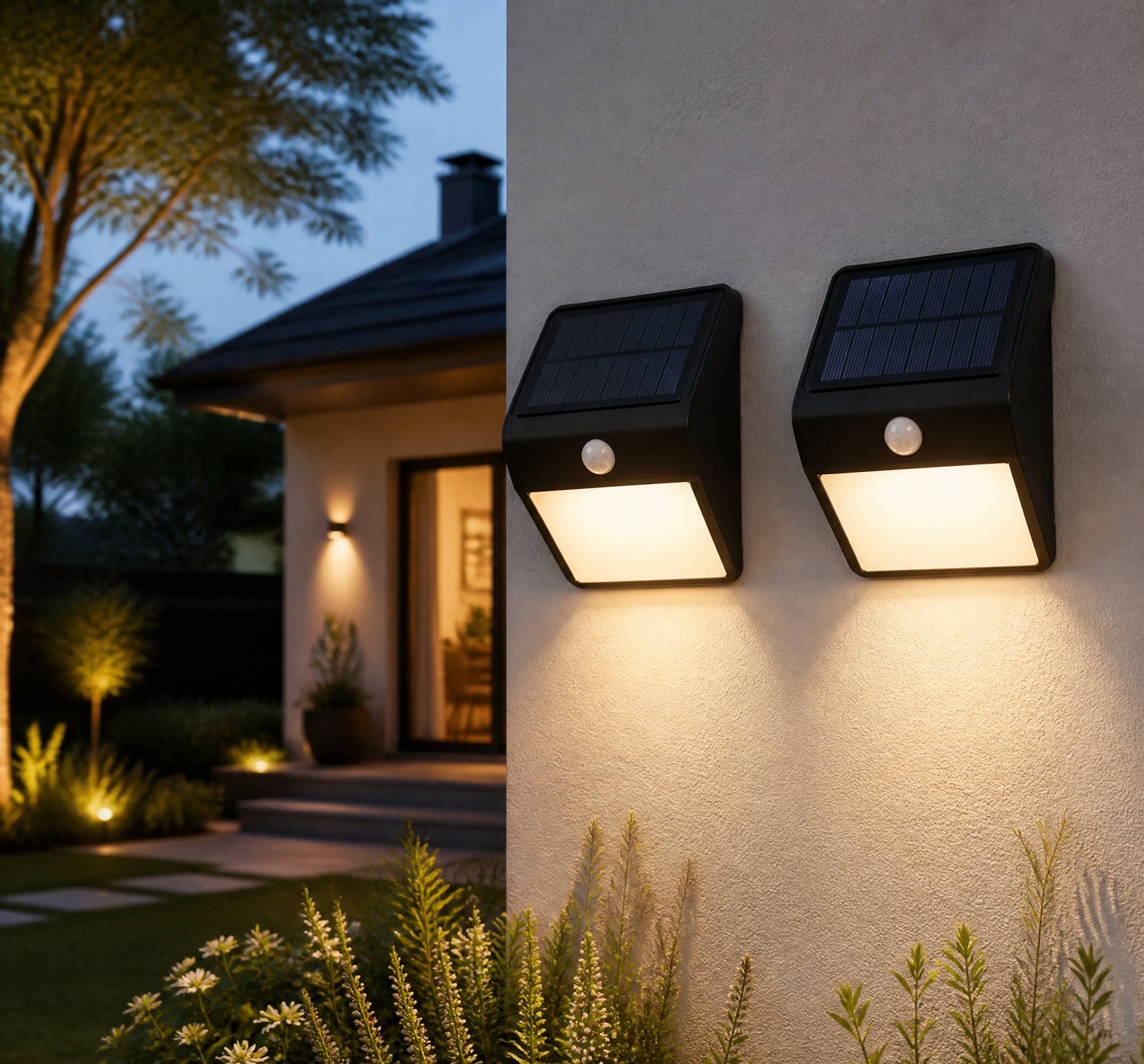
> Quick answer: 6500K cool-white SMD LEDs typically achieve a CRI of 80–85 with poor red rendering (R9), while warm-white LEDs offer higher CRIs ≥90, making them superior for security applications requiring accurate color recognition [4][21].
In Romania’s rapidly advancing technological landscape, the choice between different types of LED lamps is crucial for various applications, particularly in security systems. Understanding how the Color Rendering Index (CRI) and R9 values affect object recognition can significantly impact the effectiveness of your lighting choices.
CRI Values of 6500K Cool-White SMD LEDs
The Color Rendering Index (CRI) measures a light source’s ability to accurately reproduce colors compared to a natural daylight reference. 6500K cool-white SMD LEDs typically achieve a CRI range of 80–85 [4]. This lower CRI is due to the higher color temperature, which often results in spectral gaps that affect the rendering of certain colors, particularly deep reds (R9) with an average value around 20 [4][13].
While some high-performance LEDs can achieve CRIs above 90 through multi-phosphor or multi-chip systems, such performance is not typical for standard 6500K cool-white SMD LEDs [8][13]. Therefore, the CRI of 6500K LEDs is generally lower than that of warm-white alternatives.
Impact on Object Recognition in Security
The CRI value significantly affects object recognition in security applications. A low CRI, such as that commonly found in 6500K cool-white LEDs (80–85), can lead to unnatural color appearance, making it difficult to accurately identify colors like reds [4][25]. This is especially problematic for security systems where accurate identification of clothing, vehicle colors, or skin tones is crucial.
The R9 metric, which measures the rendering of saturated reds, is particularly critical in such applications. Standard CRI (Ra) only averages the first eight test color samples (R1–R8), so a high Ra value can mask poor red rendering [25]. As a result, even with a CRI of 85, these LEDs may still fail to render reds accurately.
Comparison: Cool-White vs Warm-White LEDs
| Feature | 6500K Cool-White SMD LED | Warm-White LED (2700K–3000K) |
|––––––––-|–––––––––––––|––––––––––––––-|
| Typical CRI Range | 80–85 [4] | ≥90 [8][21] |
| R9 Value | ≤20 [4] | ≥90 [8][21] |
| Suitability for Security | Limited due to poor red rendering | Excellent for accurate color reproduction |
Warm-White LEDs: Superior for High Fidelity Applications
Warm-white LEDs (e.g., 2700K–3000K) are more likely to achieve high CRI values of ≥90, especially when designed with phosphor blends that enhance spectral completeness [4][8]. These warm-white LEDs are often used in applications requiring high color fidelity, such as museums and art galleries [3][21].
The sources indicate that warm-white LEDs can achieve excellent CRI values (≥90) and R9 values (≥90), making them superior for security applications where accurate color rendering is critical [21]. While cool-white LEDs are more efficient and better suited for general illumination, their lower CRI and poor R9 performance make them less suitable for applications where object recognition depends on faithful color reproduction.
Limitations of the CRI Metric
The discrepancy between CRI and actual color rendering quality is a key limitation of the CRI metric. The CRI is calculated using only 8–14 test color samples, which are insufficient to capture the full range of human color perception [7][10]. This allows manufacturers to „tune” the spectral power distribution (SPD) of LEDs to score well on the CRI test while still having poor rendering of specific colors, particularly in the red spectrum [4][16].
For example, a 6500K LED may achieve a CRI of 85 by optimizing for the first eight test colors but still fail to render deep reds (R9) effectively [4][25]. The physical constraints of LED phosphor technology make it more challenging to achieve high CRI at higher CCTs, particularly in standard SMD LEDs.
Advanced High-CRI LED Systems
While typical 6500K cool-white SMD LEDs have mediocre CRIs (80–85), the most advanced LED systems—such as multi-chip or multi-phosphor designs—can achieve CRI values exceeding 95 across a wide range of CCTs [8][13]. These systems use multiple LEDs or phosphors to create a more continuous and balanced spectrum, thereby improving both CRI and R9 [8].
However, such high-performance LEDs are not standard in commercial products due to cost, complexity, and efficiency trade-offs [13]. This underscores a critical gap between technological possibility and market reality.
Labeling and Transparency
A significant issue is the lack of standardized labeling for R9 and CRI. While CRI is sometimes listed on product packaging, it is often absent or not standardized, especially in Europe where labels focus only on energy efficiency [17]. Even when CRI is listed, R9—the most important metric for red rendering—is rarely provided, making it difficult to assess true color quality [17][21].
This lack of transparency is particularly problematic for security applications, where accurate color rendering is essential but not easily verifiable.
Conclusion
6500K cool-white SMD LEDs typically achieve a CRI range of 80–85 with poor red rendering (R9), limiting their effectiveness in security applications. Warm-white LEDs, by contrast, are more likely to achieve high CRIs and R9 values, making them superior for such applications. However, the CRI metric’s limitations mean that high performance is often not standard in commercial products.
Key Takeaways
- 6500K cool-white SMD LEDs have a typical CRI of 80–85 with poor red rendering [4][21].
- Warm-white LEDs (≥90 CRI, ≥90 R9) are superior for security applications requiring accurate color recognition.
- The CRI metric has limitations and does not always reflect true color quality.
Frequently Asked Questions
[
{
„q”: „What is the typical CRI range of 6500K cool-white SMD LEDs?”,
„a”: „The typical CRI range for 6500K cool-white SMD LEDs is between 80 and 85 [4].”
},
{
„q”: „How do warm-white LEDs compare to cool-white in security systems?”,
„a”: „Warm-white LEDs are superior for security applications because they achieve higher CRI values (≥90) and R9 values (≥90), ensuring accurate color rendering [8][21].”
},
{
„q”: „What are the limitations of using the CRI metric?”,
„a”: „The CRI metric is calculated using only a limited number of test colors, which can result in poor color rendering for certain hues like deep reds (R9) [7][25].”
}
]
References
- [3] State-of-the-art_interior_illumination_Bridgelux_Inc_LED_Lighting__b16ac2a2 — authority
source passage
a product so that the customer can see the goods faithfully represented in a catalogue or on the screen, lamps emitting “natural” light should be used. The same applies to display/shop illumination. Colour Rendering Index (CRI) At this point, it should be quite obvious that the issue of the “naturalness” of light is not only important, but also very comprehensive and subjective, as the human brain tends to involuntarily correct its observations depending on illumination, and our sight is susceptible to optical illusions. The process of determining whether the radiation emitted by an incandescent bulb or another device used for illumination purposes is actually similar to the daylight, in terms of components and their intensity, requires conducting precise measurements over a wide spectrum of frequencies. In order to simplify it by reducing it to a single value, the CRI index is commonly used. CRI stands for Colour Rendering Index. The CRI values range from 0 to 100, where the upper limit indicates the ideal imitation of averaged sun radiation (within its visible spectrum). In practice, this means that objects illuminated by such a light source appear the same to the human eye or camera sensors as they do under a clear sky on a sunny day. The optimum value is CRI ≥ 80 (household or public utility space illumination), whereas CRI exceeding 90 is required practically only in professional settings (medical applications, exhibitions, etc.). TM-30 system Note that there is no scien
- [4] LED_Lighting_in_Museums_and_Art_Galleries_Technical_-_Canadaca__7f9b6307 — authority
source passage
good lighting and at least 90 for excellent lighting. Note: one should still confirm the Duv and CRI values, just in case the lamp is some new and strange technology for red lamps. Figure 3 also shows that as of 2018, LEDs with good and excellent R9 tended to be made with a colour temperature below 4000 K, whereas LEDs made with a colour temperature above 4000 K (blue circles) clustered in the CRI range of 80 to 85, with R9 dropping to an average of 20. Correlation of CRI with R9 and Duv The fact that there are many variations on mediocre spectra but only one kind of ideal spectrum (smooth, complete and a slope like some kind of daylight) explains the narrowing of the cloud of data points on the Duv plot as it approaches the right-hand side of the graph in Figure 3. If CRI or its eventual replacement, Rf, approaches the ideal of the benchmark light sources (100 at the right-hand side of the graph), then all other parameters that capture some part of the colour vision puzzle must also approach their ideal (Duv must collapse to 0, R9 must approach 100). Since R9 measures only part of the spectrum, and CRI averages all of it, R9 can fall far from 100 even as CRI gets close to 100 (Figure 3). This is true of all other sample colours too, but for lamps dependent on fluorescence, like most LED lamps, far red, R9, is the most difficult. Hence the role of R9 as a top indicator for excellence. The good news for museums and art galleries is that manufacturers of LED lamps of excellent
- [7] High-CRI_LED_lighting_-_Wikipedia__ceaf9d1f — wikipedia
source passage
calculated from a mathematical model of sunlight are used. These reference sources were selected to approximate incandescent lamps and sunlight, respectively.[2] The CRI measure in use in 2017 was developed by the CIE in 1974 and slightly updated in 1995.[6] The measure has two main flaws. Its color differences are measured in a non-uniform color space. Its color sample set has just 8 items, which is too few to test lights with complex spectra. A light manufacturer can tune its SPD to the sample set to achieve an artificially high CRI. In 2015, the Illuminating Engineering Society (IES) produced a replacement to the CRI measure[7] that uses a newer color space and 99 color samples. In 2017, the CIE published an almost identical measure,[8] but it did not deprecate its 1995 CRI measure. Color Rendering Index (CRI) is determined[9] by the distinctions in the chromaticities of fifteen test color samples (TCS), where objects are illuminated by the light source to be evaluated and a reference illuminant with the same CCT. The higher the CRI value, the smaller the differences between indices will be. A CRI value of 100 indicates optimal performance for a light source, while a low CRI value may cause some colors to appear unnatural. The most commonly used CRI value is called Ra, which is the average of the first eight indices (R1-R8). Less well known but more accurate is the extended CRI (Re), which averages R1-R15 and thus provides a more accurate measure of color fidelity by accou
- [8] Japan_sets_white_LED_targets_as_technology_improves_-_News__58fe3a46 — magazine
source passage
in the red region, which makes them poor at rendering deep-red colors. Compared to a traditional blue LED with a YAG phosphor, the combination of blue, cyan and orange phosphors pumped with a near-UV chip represents a major improvement in lumen output at color temperatures of below 4000 K, while further CRI enhancement is achieved by adding a fourth phosphor emitting in the deep-red region. The highest CRI value for commercial white LEDs is about 90, which falls just short of the value of 100 defined for incandescent lamps. Radkov described a range of white LED blends with four-color phosphors, which had CRI values exceeding 95 over the entire range of color temperatures from 2500 to 8000 K. In some cases the CRI values (particularly the R9 component, which refers to the rendering of deep-red colors) can approach the theoretical maximum value of 100. Although there is a trade-off between luminous efficacy and color rendering, improvements continue to be made to both parameters through optimization of phosphor blends. A number of novel and diverse applications were discussed during the meeting. LED manufacturers were encouraged to start producing LEDs for plant cultivation by a research team from Vilnius University, Lithuania. Gintautas Tamulaitis from the team described how replacing conventional light sources with LEDs enhances photosynthetic productivity and leads to better plant morphology. Key wavelengths include 640 and 660 nm – where light is absorbed by chlorophyll – a
- [10] LED_Lighting_in_Museums_and_Art_Galleries_Technical_-_Canadaca__7f9b6307 — authority
source passage
difference between the lamp and the reference. The final score is an average of the scores across all samples in the set. Since 1974, the industry standard for calculating colour rendering has been the method developed by the International Commission on Illumination (CIE). This method uses fourteen colour samples. Eight are pastels. Their average colour rendering (Ra) by a light source defines the colour rendering index (CRI) of that light source. The six other colour samples are saturated colours and are used for individual colour rendering calculations. The most important of these is a saturated red, called R9. The CIE method for calculation of CRI remains the worldwide convention for lamp specifications. The CRI score is sometimes on the lamp carton and always available online from the distributor or manufacturer. In the past, for fluorescent lamps, CCI recommended a minimum CRI of 85 and stated that a CRI of 90 or above was preferable. Acceptance of a CRI below 100 (below what benchmark lighting provides) has always been a compromise between the technology of the time and energy savings, mediated by the imprecise business of what discrepancies are perceptible in what situations with what colours and by whom. Given current LED technology, and the growing availability of very high-quality LED lamps, we have shifted to recommending a CRI of 90 and above. In 2015, a new method for characterizing colour rendering, known as TM-30-15 (Royer and Houser 2015), was adopted by the I
- [13] LED_professional_Symposium_Expert_Talks_on_Light__Facing_the_Challenges_of_SpectralEngineering_With_a_New_Software_Tool__kesqTxPgbRs — youtube
source passage
alone with no other contribution the second one is a mixture of light composed by the five leds of the fixture the color is perceived as the same since there is practically no variation in the coloring diagram but the difference in the cri is clearly appreciable if we take a look on the capabilities of the system when comparing to the commercial white leds we can see that it is possible to achieve very high ampere rate of values we can have cri 80 combinations with mp ratio above 1 and since it is greater than 4 000 kelvins moreover if we look at the chart on the right we can see that it is possible to achieve cri 95 values from 2400 kelvins to beyond 7000 kelvins the white leds working alone have both sierra 84 and their election was related to the high energy efficiency they have however if we select leds taking into account the mp ratio we can have a system that can achieve practically an imp ratio available on the market at 4 000 kelvins for example we can have a cri-80 combination with an mp radio that can go from 0.4 to 0.8 if we look at the c arriver society chart we can have values of c or i-95 from 2000 kelvins to 7000 kelvins and beyond this means that we have the technology to achieve practically any value available on the market and this technology on a multi-channel system depends more on the global selection of leds than the individual selection of white leds of the fixture we're creating furthermore the relationship between cct and pair radio and cri is not app
- [16] WikipediaReference_deskArchivesScience2017_March_8_-_Wikipedia__57515a59 — wikipedia
source passage
some of these applications are reducing since the research into phosphor white LEDs means some degree of spectrum tunability is now achieved using multichip LEDs with a white LED as I mentioned (see e.g. [7]). Besides that I also came across some sources mentioning using more than 3 colours [8] [file.scirp.org/pdf/CS20120100016_16408165.pdf[predatory publication]] (one seems commercial, one research), I'm not sure whether these are at all common but ultimately most manufacturers are going to concentrate on what works and is cost effective etc, not in proving they can create a broad SPD RGB LED. While broad SPD may be related, it isn't necessarily the target anyway. CRI is generally more important although the usefulness of CRI to LED colour rendering performance is often questioned for LEDs anyway [9] [10] [11] [12] [13]. Not that this means such a peaky SPD is considered good, in fact IIRC (and also what I think I saw from a quick skim through the sources) one of the concerns is that peaky spectrum can achieve a decent CRI but even there a different peaky spectrum may often be better yet achieve a lower CRI. But this also doesn't mean the typical idea is just need a broad SPD with no peaks in the visible spectrum. And this is complicated by other targets like luminous efficacy, CCT etc too. E.g. I didn't look that well into this research [14], but it sounds like they're suggesting using low CRI lighting in unimportant places. (Although 2007 is very old in LED research.) Typi
- [17] LED_Lighting_in_Museums_and_Art_Galleries_Technical_-_Canadaca__7f9b6307 — authority
source passage
known as LED Lighting Facts is provided by some manufacturers on their LED lamps. It adds CRI to the Lighting Facts list. Unfortunately, even this voluntary label does not provide R9; one must obtain it from a lamp catalogue or a list, such as those provided in the section LED lamps listed by CRI and R9. Lamp labels in Europe Standardized labels for lamps in countries of the European Union are simply the same as those used for electrical products in general and only provide energy efficiency information. The label for luminaires does add additional information to alert consumers to the type of lamp that can be installed, so as to reduce fire risk due to overheating by incandescent lamps. Other characteristics of the lamp such as voltage, wattage and colour temperature will almost always be on the packaging or on the lamp itself, but CRI and R9 are usually absent. In such cases, one needs to examine the markings directly on the lamp for colour temperature and to obtain the manufacturer’s catalogue or specifications sheet for CRI and R9. Markings directly on the lamps Markings directly on electric lamps, including LED lamps, usually provide voltage, wattage and colour temperature. Colour temperature may be provided as either a number (“2700K” on the lamp on the left side of Figure 14) or an English phrase such as “warm white” (lamp on the right side of Figure 14), a habit developed for fluorescent lamps. Although these phrases are translated in marketing and technical brochures
- [21] LED_Lighting_in_Museums_and_Art_Galleries_Technical_-_Canadaca__7f9b6307 — authority
source passage
become a practical indicator of the best LED lamps among those already scoring well on the average CRI. – Duv: measures deviation of the light from ideal white, towards either a pink tone (negative number) or a green tone (positive number). – CCT (correlated colour temperature of a light source, often shortened to colour temperature): refers to the temperature of a hot object that would emit the same kind of white light. It is measured in degrees Kelvin (K). An unfortunate confusion arises in terminology since “warm” light has a lower colour temperature and “cool” light has a higher colour temperature. Here are our definitions of good-quality and excellent-quality light. (Energy Star is provided for reference.) Excellent-quality light: CRI at least 90. R9 at least 90. Duv at purchase within a range between −0.003 and +0.003. Traditional incandescent lamps and halogen lamps meet these criteria. Good-quality light: CRI at least 90. R9 at least 50. Duv at purchase within a range between −0.003 and +0.003. These CRI and R9 targets were also proposed in the 2012 draft of the Voluntary California Quality LED Lamp Specification (Flamm et al. 2012), but by the time of final ratification in 2016, this specification had dropped to a CRI of 82 and made no mention of R9 (Pasha et al. 2017). The CRI target of 90 has recently been proposed for a new Japanese standard on museum lighting (Yoshizawa et al. 2017). We have discovered that with current technology, LED lamps with a CRI of 90+ wil
- [25] Color_rendering_index_-_Wikipedia__2958596b — wikipedia
source passage
reference. (The Euclidean metric is used to calculate the color difference in CIEUVW.) The special CRI is simply . Finally, the general color rendering index is the mean of the special CRIs: 51. A reference source, such as black-body radiation, is defined as having a CRI of 100. This is why incandescent lamps have that rating, as they are, in effect, almost black-body radiators.[23] The best possible faithfulness to a reference is specified by CRI = 100, while the very poorest is specified by a CRI below zero. A high CRI by itself does not imply a good rendition of color, because the reference itself may have an imbalanced SPD if it has an extreme color temperature. Ra is the average value of R1–R8; other values from R9 to R15 are not used in the calculation of Ra, including R9 "saturated red", R13 "skin color (light)", and R15 "skin color (medium)", which are all difficult colors to faithfully reproduce. R9 is a vital index in high-CRI lighting, as many applications require red lights, such as film and video lighting, medical lighting, art lighting, etc. However, in the general CRI (Ra) calculation R9 is not included. R9 is one of the numbers of Ri refers to test color samples (TCS), which is one score in extended CRI. It is the number rates the light source's color revealing ability towards TCS 09. And it describes the specific ability of light to accurately reproduce the red color of objects. Many lights manufacturers or retailers do not point out the score of R9, while it
a product so that the customer can see the goods faithfully represented in a catalogue or on the screen, lamps emitting “natural” light should be used. The same applies to display/shop illumination. Colour Rendering Index (CRI) At this point, it should be quite obvious that the issue of the “naturalness” of light is not only important, but also very comprehensive and subjective, as the human brain tends to involuntarily correct its observations depending on illumination, and our sight is susceptible to optical illusions. The process of determining whether the radiation emitted by an incandescent bulb or another device used for illumination purposes is actually similar to the daylight, in terms of components and their intensity, requires conducting precise measurements over a wide spectrum of frequencies. In order to simplify it by reducing it to a single value, the CRI index is commonly used. CRI stands for Colour Rendering Index. The CRI values range from 0 to 100, where the upper limit indicates the ideal imitation of averaged sun radiation (within its visible spectrum). In practice, this means that objects illuminated by such a light source appear the same to the human eye or camera sensors as they do under a clear sky on a sunny day. The optimum value is CRI ≥ 80 (household or public utility space illumination), whereas CRI exceeding 90 is required practically only in professional settings (medical applications, exhibitions, etc.). TM-30 system Note that there is no scien
good lighting and at least 90 for excellent lighting. Note: one should still confirm the Duv and CRI values, just in case the lamp is some new and strange technology for red lamps. Figure 3 also shows that as of 2018, LEDs with good and excellent R9 tended to be made with a colour temperature below 4000 K, whereas LEDs made with a colour temperature above 4000 K (blue circles) clustered in the CRI range of 80 to 85, with R9 dropping to an average of 20. Correlation of CRI with R9 and Duv The fact that there are many variations on mediocre spectra but only one kind of ideal spectrum (smooth, complete and a slope like some kind of daylight) explains the narrowing of the cloud of data points on the Duv plot as it approaches the right-hand side of the graph in Figure 3. If CRI or its eventual replacement, Rf, approaches the ideal of the benchmark light sources (100 at the right-hand side of the graph), then all other parameters that capture some part of the colour vision puzzle must also approach their ideal (Duv must collapse to 0, R9 must approach 100). Since R9 measures only part of the spectrum, and CRI averages all of it, R9 can fall far from 100 even as CRI gets close to 100 (Figure 3). This is true of all other sample colours too, but for lamps dependent on fluorescence, like most LED lamps, far red, R9, is the most difficult. Hence the role of R9 as a top indicator for excellence. The good news for museums and art galleries is that manufacturers of LED lamps of excellent
calculated from a mathematical model of sunlight are used. These reference sources were selected to approximate incandescent lamps and sunlight, respectively.[2] The CRI measure in use in 2017 was developed by the CIE in 1974 and slightly updated in 1995.[6] The measure has two main flaws. Its color differences are measured in a non-uniform color space. Its color sample set has just 8 items, which is too few to test lights with complex spectra. A light manufacturer can tune its SPD to the sample set to achieve an artificially high CRI. In 2015, the Illuminating Engineering Society (IES) produced a replacement to the CRI measure[7] that uses a newer color space and 99 color samples. In 2017, the CIE published an almost identical measure,[8] but it did not deprecate its 1995 CRI measure. Color Rendering Index (CRI) is determined[9] by the distinctions in the chromaticities of fifteen test color samples (TCS), where objects are illuminated by the light source to be evaluated and a reference illuminant with the same CCT. The higher the CRI value, the smaller the differences between indices will be. A CRI value of 100 indicates optimal performance for a light source, while a low CRI value may cause some colors to appear unnatural. The most commonly used CRI value is called Ra, which is the average of the first eight indices (R1-R8). Less well known but more accurate is the extended CRI (Re), which averages R1-R15 and thus provides a more accurate measure of color fidelity by accou
in the red region, which makes them poor at rendering deep-red colors. Compared to a traditional blue LED with a YAG phosphor, the combination of blue, cyan and orange phosphors pumped with a near-UV chip represents a major improvement in lumen output at color temperatures of below 4000 K, while further CRI enhancement is achieved by adding a fourth phosphor emitting in the deep-red region. The highest CRI value for commercial white LEDs is about 90, which falls just short of the value of 100 defined for incandescent lamps. Radkov described a range of white LED blends with four-color phosphors, which had CRI values exceeding 95 over the entire range of color temperatures from 2500 to 8000 K. In some cases the CRI values (particularly the R9 component, which refers to the rendering of deep-red colors) can approach the theoretical maximum value of 100. Although there is a trade-off between luminous efficacy and color rendering, improvements continue to be made to both parameters through optimization of phosphor blends. A number of novel and diverse applications were discussed during the meeting. LED manufacturers were encouraged to start producing LEDs for plant cultivation by a research team from Vilnius University, Lithuania. Gintautas Tamulaitis from the team described how replacing conventional light sources with LEDs enhances photosynthetic productivity and leads to better plant morphology. Key wavelengths include 640 and 660 nm – where light is absorbed by chlorophyll – a
difference between the lamp and the reference. The final score is an average of the scores across all samples in the set. Since 1974, the industry standard for calculating colour rendering has been the method developed by the International Commission on Illumination (CIE). This method uses fourteen colour samples. Eight are pastels. Their average colour rendering (Ra) by a light source defines the colour rendering index (CRI) of that light source. The six other colour samples are saturated colours and are used for individual colour rendering calculations. The most important of these is a saturated red, called R9. The CIE method for calculation of CRI remains the worldwide convention for lamp specifications. The CRI score is sometimes on the lamp carton and always available online from the distributor or manufacturer. In the past, for fluorescent lamps, CCI recommended a minimum CRI of 85 and stated that a CRI of 90 or above was preferable. Acceptance of a CRI below 100 (below what benchmark lighting provides) has always been a compromise between the technology of the time and energy savings, mediated by the imprecise business of what discrepancies are perceptible in what situations with what colours and by whom. Given current LED technology, and the growing availability of very high-quality LED lamps, we have shifted to recommending a CRI of 90 and above. In 2015, a new method for characterizing colour rendering, known as TM-30-15 (Royer and Houser 2015), was adopted by the I
alone with no other contribution the second one is a mixture of light composed by the five leds of the fixture the color is perceived as the same since there is practically no variation in the coloring diagram but the difference in the cri is clearly appreciable if we take a look on the capabilities of the system when comparing to the commercial white leds we can see that it is possible to achieve very high ampere rate of values we can have cri 80 combinations with mp ratio above 1 and since it is greater than 4 000 kelvins moreover if we look at the chart on the right we can see that it is possible to achieve cri 95 values from 2400 kelvins to beyond 7000 kelvins the white leds working alone have both sierra 84 and their election was related to the high energy efficiency they have however if we select leds taking into account the mp ratio we can have a system that can achieve practically an imp ratio available on the market at 4 000 kelvins for example we can have a cri-80 combination with an mp radio that can go from 0.4 to 0.8 if we look at the c arriver society chart we can have values of c or i-95 from 2000 kelvins to 7000 kelvins and beyond this means that we have the technology to achieve practically any value available on the market and this technology on a multi-channel system depends more on the global selection of leds than the individual selection of white leds of the fixture we're creating furthermore the relationship between cct and pair radio and cri is not app
some of these applications are reducing since the research into phosphor white LEDs means some degree of spectrum tunability is now achieved using multichip LEDs with a white LED as I mentioned (see e.g. [7]). Besides that I also came across some sources mentioning using more than 3 colours [8] [file.scirp.org/pdf/CS20120100016_16408165.pdf[predatory publication]] (one seems commercial, one research), I'm not sure whether these are at all common but ultimately most manufacturers are going to concentrate on what works and is cost effective etc, not in proving they can create a broad SPD RGB LED. While broad SPD may be related, it isn't necessarily the target anyway. CRI is generally more important although the usefulness of CRI to LED colour rendering performance is often questioned for LEDs anyway [9] [10] [11] [12] [13]. Not that this means such a peaky SPD is considered good, in fact IIRC (and also what I think I saw from a quick skim through the sources) one of the concerns is that peaky spectrum can achieve a decent CRI but even there a different peaky spectrum may often be better yet achieve a lower CRI. But this also doesn't mean the typical idea is just need a broad SPD with no peaks in the visible spectrum. And this is complicated by other targets like luminous efficacy, CCT etc too. E.g. I didn't look that well into this research [14], but it sounds like they're suggesting using low CRI lighting in unimportant places. (Although 2007 is very old in LED research.) Typi
known as LED Lighting Facts is provided by some manufacturers on their LED lamps. It adds CRI to the Lighting Facts list. Unfortunately, even this voluntary label does not provide R9; one must obtain it from a lamp catalogue or a list, such as those provided in the section LED lamps listed by CRI and R9. Lamp labels in Europe Standardized labels for lamps in countries of the European Union are simply the same as those used for electrical products in general and only provide energy efficiency information. The label for luminaires does add additional information to alert consumers to the type of lamp that can be installed, so as to reduce fire risk due to overheating by incandescent lamps. Other characteristics of the lamp such as voltage, wattage and colour temperature will almost always be on the packaging or on the lamp itself, but CRI and R9 are usually absent. In such cases, one needs to examine the markings directly on the lamp for colour temperature and to obtain the manufacturer’s catalogue or specifications sheet for CRI and R9. Markings directly on the lamps Markings directly on electric lamps, including LED lamps, usually provide voltage, wattage and colour temperature. Colour temperature may be provided as either a number (“2700K” on the lamp on the left side of Figure 14) or an English phrase such as “warm white” (lamp on the right side of Figure 14), a habit developed for fluorescent lamps. Although these phrases are translated in marketing and technical brochures
become a practical indicator of the best LED lamps among those already scoring well on the average CRI. – Duv: measures deviation of the light from ideal white, towards either a pink tone (negative number) or a green tone (positive number). – CCT (correlated colour temperature of a light source, often shortened to colour temperature): refers to the temperature of a hot object that would emit the same kind of white light. It is measured in degrees Kelvin (K). An unfortunate confusion arises in terminology since “warm” light has a lower colour temperature and “cool” light has a higher colour temperature. Here are our definitions of good-quality and excellent-quality light. (Energy Star is provided for reference.) Excellent-quality light: CRI at least 90. R9 at least 90. Duv at purchase within a range between −0.003 and +0.003. Traditional incandescent lamps and halogen lamps meet these criteria. Good-quality light: CRI at least 90. R9 at least 50. Duv at purchase within a range between −0.003 and +0.003. These CRI and R9 targets were also proposed in the 2012 draft of the Voluntary California Quality LED Lamp Specification (Flamm et al. 2012), but by the time of final ratification in 2016, this specification had dropped to a CRI of 82 and made no mention of R9 (Pasha et al. 2017). The CRI target of 90 has recently been proposed for a new Japanese standard on museum lighting (Yoshizawa et al. 2017). We have discovered that with current technology, LED lamps with a CRI of 90+ wil
reference. (The Euclidean metric is used to calculate the color difference in CIEUVW.) The special CRI is simply . Finally, the general color rendering index is the mean of the special CRIs: 51. A reference source, such as black-body radiation, is defined as having a CRI of 100. This is why incandescent lamps have that rating, as they are, in effect, almost black-body radiators.[23] The best possible faithfulness to a reference is specified by CRI = 100, while the very poorest is specified by a CRI below zero. A high CRI by itself does not imply a good rendition of color, because the reference itself may have an imbalanced SPD if it has an extreme color temperature. Ra is the average value of R1–R8; other values from R9 to R15 are not used in the calculation of Ra, including R9 "saturated red", R13 "skin color (light)", and R15 "skin color (medium)", which are all difficult colors to faithfully reproduce. R9 is a vital index in high-CRI lighting, as many applications require red lights, such as film and video lighting, medical lighting, art lighting, etc. However, in the general CRI (Ra) calculation R9 is not included. R9 is one of the numbers of Ri refers to test color samples (TCS), which is one score in extended CRI. It is the number rates the light source's color revealing ability towards TCS 09. And it describes the specific ability of light to accurately reproduce the red color of objects. Many lights manufacturers or retailers do not point out the score of R9, while it