
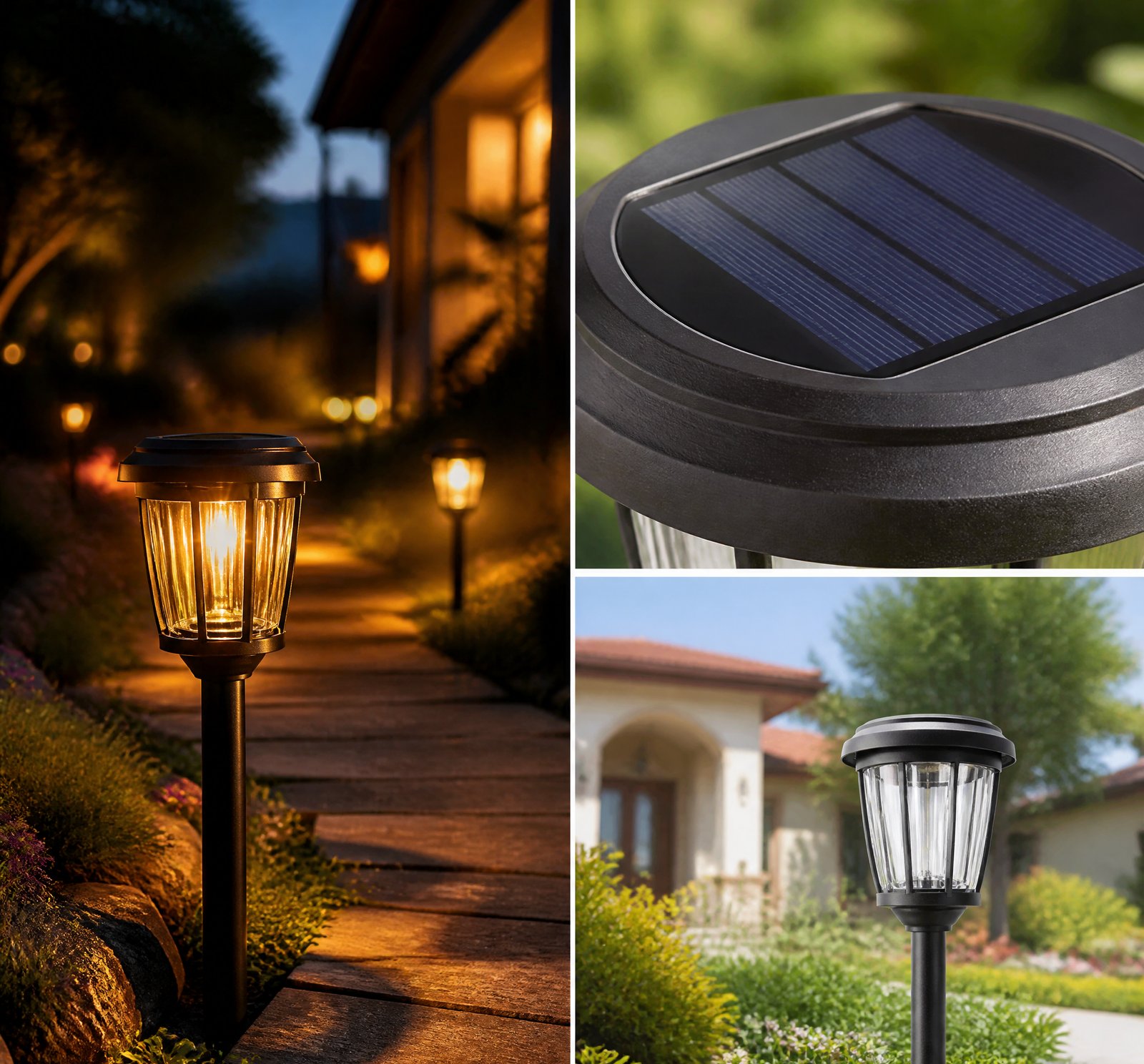
> Quick answer: Solar lamp producers in Romania must comply with the EU’s WEEE Directive, which imposes Extended Producer Responsibility (EPR) for end-of-life management, particularly focusing on battery recycling [7][13]. Producers are financially and operationally responsible for collection and recycling.
To sell solar lamps successfully in Romania, manufacturers must navigate the complex landscape of environmental regulations set forth by the European Union. The Waste Electrical and Electronic Equipment (WEEE) Directive is a cornerstone of these rules, imposing Extended Producer Responsibility (EPR) on producers to manage their products’ end-of-life stages [7][13]. This article will outline the key compliance requirements and highlight specific obligations for solar lamp producers.
Key WEEE Directive Obligations
Under the WEEE Directive, solar lamp producers are required to take financial and operational responsibility for the collection, recycling, and recovery of their products at end-of-life. This includes managing hazardous components like batteries, which pose significant environmental risks [1][15]. The directive supports two main EPR models: one where producers organize collection and recycling either individually or through a Producer Responsibility Organization (PRO), and another where producers contribute financially to a central fund that finances recycling activities without direct operational control [15].
Producers’ Responsibilities
- Financial Responsibility: Cover the costs of collecting, treating, recovering, and disposing of waste.
- Operational Control: Organize collection and handling through PROs or directly as an individual producer.
For example, in Switzerland, organizations like SWICO and SENS manage e-waste collection and recycling, allowing consumers to return devices free of charge at designated points [13]. While Romania’s specific national EPR scheme for solar lamps is not detailed here, the EU-wide framework requires similar systems to be in place [7][15].
Extended Producer Responsibility (EPR) Registration
Producers selling solar lamps in Romania must register and comply with national implementation mechanisms. This registration process ensures that producers are accountable for the end-of-life management of their products, including reporting on collection and recycling performance [7][13]. Although the exact registration and reporting requirements for Romania are not specified, the EU’s harmonized approach suggests that national EPR schemes must align with the WEEE Directive.
Registration Process Overview
- Register with National Authorities: Producers must register with Romanian authorities to comply with local regulations.
- Report on Performance: Regularly report collection and recycling metrics to ensure compliance.
End-of-Life Collection Schemes
The end-of-life management of solar lamps, particularly their batteries, is critical due to the environmental and health risks associated with improper disposal [1]. Producers are responsible for ensuring that these components are recycled properly. The WEEE Directive mandates the use of EPR mechanisms to manage waste batteries from off-grid solar systems (SHS) and mini-grids [15].
Collection Infrastructure
- Retail Take-back Points: Consumers can return products at designated retail points.
- Municipal Collection Points: Municipalities may provide collection bins for e-waste.
Compliance with RoHS Directive
Solar lamp producers must also comply with the Restriction of Hazardous Substances (RoHS) Directive, which bans the use of hazardous substances like mercury in electrical and electronic equipment [20]. The European Commission has ended most exemptions for mercury in lamps, requiring producers to ensure their products meet these stringent environmental standards [20].
Key Compliance Factors
- Hazardous Substance Restrictions: Ensure no restricted substances are used.
- Reporting Requirements: Adhere to reporting guidelines on substance usage and disposal.
Additional Regulatory Frameworks
The EU is developing the Corporate Sustainability Due Diligence Directive (CSDDD) and Forced Labor Regulation, which will increase demand for supply chain transparency and due diligence [24]. These regulations require companies to assess and mitigate environmental and social risks across their supply chains, including the use of forced or child labor [4][24].
Supply Chain Transparency
- Environmental Impact: Assess and manage environmental impact.
- Social Responsibility: Ensure ethical labor practices throughout the supply chain.
Key Takeaways
- Solar lamp producers in Romania must comply with EU WEEE Directive for end-of-life management, focusing on battery recycling [15].
- Producers are financially and operationally responsible for collection and recycling through EPR mechanisms [7][13].
- RoHS compliance is mandatory to ensure no hazardous substances like mercury are used in products [20].
Frequently Asked Questions
[
{
„q”: „What are the main responsibilities of solar lamp producers under the WEEE Directive?”,
„a”: „Solar lamp producers must take financial and operational responsibility for collecting, recycling, and recovering their products. This includes managing hazardous components like batteries. [1][15]„
},
{
„q”: „How do producers comply with EPR registration requirements in Romania?”,
„a”: „Producers need to register with Romanian authorities and report on collection and recycling performance regularly. The exact process is aligned with EU-wide WEEE Directive requirements. [7][13]„
},
{
„q”: „What are the implications of RoHS compliance for solar lamp producers?”,
„a”: „Solar lamps must not contain hazardous substances like mercury, and producers must ensure their products meet these strict environmental standards to comply with RoHS. [20]„
}
]
References
- [1] End-of-Life_Management_of_Batteries_in_the_Off-Grid_Solar__05387438 — authority
source passage
and hazardous waste. This paper aims to introduce the realities of managing e-waste and battery waste in the context of developing countries, with a specific focus on energy access projects. While chapter 2 gives an overview on the characteristics and required management pathways of most important e-waste fractions from off-grid power installations, chapters 3 to 5 specifically focus on the management of waste batteries from mini- grids and SHS. This focus is justified by the fact that batteries are typically the components with the shortest lifespan. Thus, it is the first waste fraction generated in large volumes only a few years after introducing mini-grids and SHS to a region. On top of this, waste batteries are associated with particularly pronounced environmental and health concerns so that this waste stream requires particular attention by energy-access projects and wider decision-making circles. – Chapters 2-4: see publication (PDF). 5 Options for Energy Access Projects This chapter aims at giving recommendations and directions to project managers and practitioners involved in publicly or privately funded attempts to broaden access to electricity in off-grid areas of developing countries and emerging economies (here referred to as ‘energy-access projects’). Generally, there is an increasing consensus that energy-access projects and solar power companies can and should consider the above described issues around end-of-life management in their activities and try to imple
- [4] IFC_Presents_Sustainability_Standards_Shaping_Utility_Solar__d4ee5d96 — magazine
source passage
financing. Agostinelli emphasizes that IFC expects developers to implement full supply-chain due diligence covering modules, cells, wafers, ingots, and polysilicon. This includes traceability systems, supplier codes of conduct, ESG risk screening, legal commitments against forced and child labor, and continuous monitoring. Developers must be able to demonstrate not only where their equipment comes from, but also how ESG risks are managed across every tier of the supply chain. Agostinelli concluded by reiterating that Equator Principles and IFC’s Performance Standards have effectively become global benchmarks for managing environmental and social risks in solar projects. Applying the full risk-mitigation hierarchy and conducting rigorous due diligence are essential, particularly when it comes to land use, biodiversity, water demand, worker health and safety, labor conditions, and social impacts. A full video presentation on this topic, titled Sustainability Requirements For Solar Financing, can be accessed here.
- [7] Extended_producer_responsibility_-_Wikipedia__9b2d96b2 — wikipedia
source passage
In the United Kingdom an extended producer responsibility system is going to be implemented over the coming years. The government has already shared guidance with those most affected. The core issue is with identifying a way to encourage polluters to take on the responsibility rather than pass on the cost to suppliers or end consumers[54] In India, the E-Waste (Management and Handling) Rules, 2011 introduced the concept of EPR for the first time, while the E-Waste (Management) Rules, 2016 set more stringent targets for collection of end-of-life products and simplified the process of applying for EPR authorization. In 2016, government expanded the EPR approach to tackle plastic waste through the Plastic Waste Management Rules, 2016.[citation needed] In the Indian system, the trading mechanism is similar to the carbon trading mechanism, where EPR certificates are generated and traded further between the producers and brand owners.[16] In Austria, the polluter-pays principle was introduced on 1 January 2023. Thus, the costs of recycling are paid by the companies that produce it. In Germany, since the adoption of EPR, "between 1991 and 1998, the per capita consumption of packaging was reduced from 94.7 kg to 82 kg, resulting in a reduction of 13.4%".[8] Furthermore, due to Germany's influence in EPR, the "European Commission developed one waste directive" for all EU member states […] One major goal was to have all member states recycle "25% of all packaging material"[8] and the g
- [13] Electronic_waste_by_country_-_Wikipedia__e2dd9746 — wikipedia
source passage
October 2008, The Chinese State Council also approved a "draft regulation on the management of electronic waste."[6] This regulation is intended to promote the continued use of resources through recycling and to monitor the end-of-life treatment of electronics. Under the new regulations, recycling of electronics by the consumer is mandated. It also requires the recycling of unnecessary materials discarded in the manufacturing process.[7] Some European countries implemented laws prohibiting the disposal of electronic waste in landfills in the 1990s. "This created an e-waste processing industry in Europe." In Switzerland, the first electronic waste recycling system was implemented in 1991, beginning with collection of old refrigerators. Over the years, all other electric and electronic devices were gradually included in the system. Legislation followed in 1998, and since January 2005 it has been possible to return all electronic waste to the sales points and other collection points free of charge. There are two established producer responsibility organizations: SWICO, mainly handling information, communication, and organization technology, and SENS, responsible for electrical appliances. The total amount of recycled electronic waste exceeds 10 kg per capita per year.[8] Additionally, the European Union has implemented several directives and regulations that place the responsibility for "recovery, reuse and recycling" on the manufacturer. The Waste Electrical and Electronic Equi
- [15] End-of-Life_Management_of_Batteries_in_the_Off-Grid_Solar__05387438 — authority
source passage
should be aware that collection and sound recycling of Li-ion (LMO and LFP types) is associated with net costs. 5.4 Policy Energy access projects and solar power companies can also engage and support the development of policies for sound management of battery waste and e-waste in their countries of activities. In particular energy access projects with close government relationships might have considerable possibilities to support positive change in this field. As already indicated in the beginning of this chapter, policies for waste batteries and e-waste should be based on the principle of extended producer responsibility (EPR). While there is a wide range of potential EPR implementation models, most of them can be classified in two main types: – › EPR models where producers and importers are required to collect and recycle defined waste volumes (either individually or via a producer responsibility organization) retaining both financial and operational responsibility; – › EPR models where producers and importers have to pay into a central fund destined to finance sound collection and recycling, thus only retaining financial responsibility without having any control over operations. While both of the above listed models have strengths and weaknesses, the development of all mandatory EPR models require a sound policy framework, including laws and regulations that specify how economic operators that place equipment onto the market are held responsible for waste managing issues.
- [20] SGS_RSTS_Cloud_-_PublicationsEU_Ends_Exemptions_for_the_use_of__46a89b1b — authority
source passage
# Foreign User Function in SCIP Database Platform Source: Blog/Web URL: https://eecloud.sgs.com/Article.aspx?n=270 Author: Date: 2022-02-15 Under RoHS Directive, electrical and electronic equipment whose content of hazardous substances exceeds the limit requirements shall not be put on the EU market, except if time-limited and application-specific exemptions are granted by the Commission. The exemptions for all EEEs are listed in Annex III, meanwhile, the exemptions in Annex IV are only suitable for medical devices and monitoring and control instruments. A limited number of exemptions for the use of mercury in specific lamp categories, such as fluorescent lamps, are currently listed in the Directive. Most of these exemptions for general lighting will be discontinued as assessments conducted by the Commission since 2016 concluded that safe, mercury-free alternatives are widely available for fluorescent lamps. The European Commission has adopted 12 delegated acts on 16 December 2021, ending a broad range of existing exemptions for the use of mercury in lamps. The new rules aim to increase the protection of health and the environment form this hazardous substance, as well as boost innovation and promote cleaner products. On a case-by-case basis, transition periods of 12 and 18 months will be granted to allow economic operators to adjust to the new rules. For certain lamp categories, mainly for special purposes like in the industrial or medical sector, for which sufficient reliab
- [24] SSI_Outlines_ESG_And_Traceability_Standards_For_PV_Supply_Chain__585c4167 — magazine
source passage
from polysilicon manufacturers, development finance institutions, and stakeholders in regions preparing for new regulatory requirements. Upcoming EU legislation, including the Forced Labor Regulation and the Corporate Sustainability Due Diligence Directive (CSDDD), was highlighted as a major driver of demand for SSI certification, as companies seek tools to demonstrate compliance. The SSI is also working to globalize adoption, including in emerging production hubs such as India. Owens detailed the distinction between SSI membership and certification: joining SSI signifies a commitment to its principles, but manufacturers must undergo site-level audits to be considered certified. Members are required to submit at least 2 sites for ESG and traceability standards assessment within the first 24 months of membership. If there is only one site, then the assessment for both ESG and traceability must be done within 12 months of membership. The organization has recently adopted targets requiring all module capacity shipped to Europe and the UK by SSI members must come from SSI-certified sites by 2028. It has made new tools available, including a digital transparency platform and a Buyer’s Guide to support the implementation and communication of certification progress. She concluded by emphasizing the role of SSI in addressing allegations of forced labor and ESG risks reported in earlier years, and the importance of robust traceability systems to maintain confidence in the solar indust
and hazardous waste. This paper aims to introduce the realities of managing e-waste and battery waste in the context of developing countries, with a specific focus on energy access projects. While chapter 2 gives an overview on the characteristics and required management pathways of most important e-waste fractions from off-grid power installations, chapters 3 to 5 specifically focus on the management of waste batteries from mini- grids and SHS. This focus is justified by the fact that batteries are typically the components with the shortest lifespan. Thus, it is the first waste fraction generated in large volumes only a few years after introducing mini-grids and SHS to a region. On top of this, waste batteries are associated with particularly pronounced environmental and health concerns so that this waste stream requires particular attention by energy-access projects and wider decision-making circles. – Chapters 2-4: see publication (PDF). 5 Options for Energy Access Projects This chapter aims at giving recommendations and directions to project managers and practitioners involved in publicly or privately funded attempts to broaden access to electricity in off-grid areas of developing countries and emerging economies (here referred to as ‘energy-access projects’). Generally, there is an increasing consensus that energy-access projects and solar power companies can and should consider the above described issues around end-of-life management in their activities and try to imple
financing. Agostinelli emphasizes that IFC expects developers to implement full supply-chain due diligence covering modules, cells, wafers, ingots, and polysilicon. This includes traceability systems, supplier codes of conduct, ESG risk screening, legal commitments against forced and child labor, and continuous monitoring. Developers must be able to demonstrate not only where their equipment comes from, but also how ESG risks are managed across every tier of the supply chain. Agostinelli concluded by reiterating that Equator Principles and IFC’s Performance Standards have effectively become global benchmarks for managing environmental and social risks in solar projects. Applying the full risk-mitigation hierarchy and conducting rigorous due diligence are essential, particularly when it comes to land use, biodiversity, water demand, worker health and safety, labor conditions, and social impacts. A full video presentation on this topic, titled Sustainability Requirements For Solar Financing, can be accessed here.
In the United Kingdom an extended producer responsibility system is going to be implemented over the coming years. The government has already shared guidance with those most affected. The core issue is with identifying a way to encourage polluters to take on the responsibility rather than pass on the cost to suppliers or end consumers[54] In India, the E-Waste (Management and Handling) Rules, 2011 introduced the concept of EPR for the first time, while the E-Waste (Management) Rules, 2016 set more stringent targets for collection of end-of-life products and simplified the process of applying for EPR authorization. In 2016, government expanded the EPR approach to tackle plastic waste through the Plastic Waste Management Rules, 2016.[citation needed] In the Indian system, the trading mechanism is similar to the carbon trading mechanism, where EPR certificates are generated and traded further between the producers and brand owners.[16] In Austria, the polluter-pays principle was introduced on 1 January 2023. Thus, the costs of recycling are paid by the companies that produce it. In Germany, since the adoption of EPR, "between 1991 and 1998, the per capita consumption of packaging was reduced from 94.7 kg to 82 kg, resulting in a reduction of 13.4%".[8] Furthermore, due to Germany's influence in EPR, the "European Commission developed one waste directive" for all EU member states […] One major goal was to have all member states recycle "25% of all packaging material"[8] and the g
October 2008, The Chinese State Council also approved a "draft regulation on the management of electronic waste."[6] This regulation is intended to promote the continued use of resources through recycling and to monitor the end-of-life treatment of electronics. Under the new regulations, recycling of electronics by the consumer is mandated. It also requires the recycling of unnecessary materials discarded in the manufacturing process.[7] Some European countries implemented laws prohibiting the disposal of electronic waste in landfills in the 1990s. "This created an e-waste processing industry in Europe." In Switzerland, the first electronic waste recycling system was implemented in 1991, beginning with collection of old refrigerators. Over the years, all other electric and electronic devices were gradually included in the system. Legislation followed in 1998, and since January 2005 it has been possible to return all electronic waste to the sales points and other collection points free of charge. There are two established producer responsibility organizations: SWICO, mainly handling information, communication, and organization technology, and SENS, responsible for electrical appliances. The total amount of recycled electronic waste exceeds 10 kg per capita per year.[8] Additionally, the European Union has implemented several directives and regulations that place the responsibility for "recovery, reuse and recycling" on the manufacturer. The Waste Electrical and Electronic Equi
should be aware that collection and sound recycling of Li-ion (LMO and LFP types) is associated with net costs. 5.4 Policy Energy access projects and solar power companies can also engage and support the development of policies for sound management of battery waste and e-waste in their countries of activities. In particular energy access projects with close government relationships might have considerable possibilities to support positive change in this field. As already indicated in the beginning of this chapter, policies for waste batteries and e-waste should be based on the principle of extended producer responsibility (EPR). While there is a wide range of potential EPR implementation models, most of them can be classified in two main types: – › EPR models where producers and importers are required to collect and recycle defined waste volumes (either individually or via a producer responsibility organization) retaining both financial and operational responsibility; – › EPR models where producers and importers have to pay into a central fund destined to finance sound collection and recycling, thus only retaining financial responsibility without having any control over operations. While both of the above listed models have strengths and weaknesses, the development of all mandatory EPR models require a sound policy framework, including laws and regulations that specify how economic operators that place equipment onto the market are held responsible for waste managing issues.
# Foreign User Function in SCIP Database Platform Source: Blog/Web URL: https://eecloud.sgs.com/Article.aspx?n=270 Author: Date: 2022-02-15 Under RoHS Directive, electrical and electronic equipment whose content of hazardous substances exceeds the limit requirements shall not be put on the EU market, except if time-limited and application-specific exemptions are granted by the Commission. The exemptions for all EEEs are listed in Annex III, meanwhile, the exemptions in Annex IV are only suitable for medical devices and monitoring and control instruments. A limited number of exemptions for the use of mercury in specific lamp categories, such as fluorescent lamps, are currently listed in the Directive. Most of these exemptions for general lighting will be discontinued as assessments conducted by the Commission since 2016 concluded that safe, mercury-free alternatives are widely available for fluorescent lamps. The European Commission has adopted 12 delegated acts on 16 December 2021, ending a broad range of existing exemptions for the use of mercury in lamps. The new rules aim to increase the protection of health and the environment form this hazardous substance, as well as boost innovation and promote cleaner products. On a case-by-case basis, transition periods of 12 and 18 months will be granted to allow economic operators to adjust to the new rules. For certain lamp categories, mainly for special purposes like in the industrial or medical sector, for which sufficient reliab
from polysilicon manufacturers, development finance institutions, and stakeholders in regions preparing for new regulatory requirements. Upcoming EU legislation, including the Forced Labor Regulation and the Corporate Sustainability Due Diligence Directive (CSDDD), was highlighted as a major driver of demand for SSI certification, as companies seek tools to demonstrate compliance. The SSI is also working to globalize adoption, including in emerging production hubs such as India. Owens detailed the distinction between SSI membership and certification: joining SSI signifies a commitment to its principles, but manufacturers must undergo site-level audits to be considered certified. Members are required to submit at least 2 sites for ESG and traceability standards assessment within the first 24 months of membership. If there is only one site, then the assessment for both ESG and traceability must be done within 12 months of membership. The organization has recently adopted targets requiring all module capacity shipped to Europe and the UK by SSI members must come from SSI-certified sites by 2028. It has made new tools available, including a digital transparency platform and a Buyer’s Guide to support the implementation and communication of certification progress. She concluded by emphasizing the role of SSI in addressing allegations of forced labor and ESG risks reported in earlier years, and the importance of robust traceability systems to maintain confidence in the solar indust