
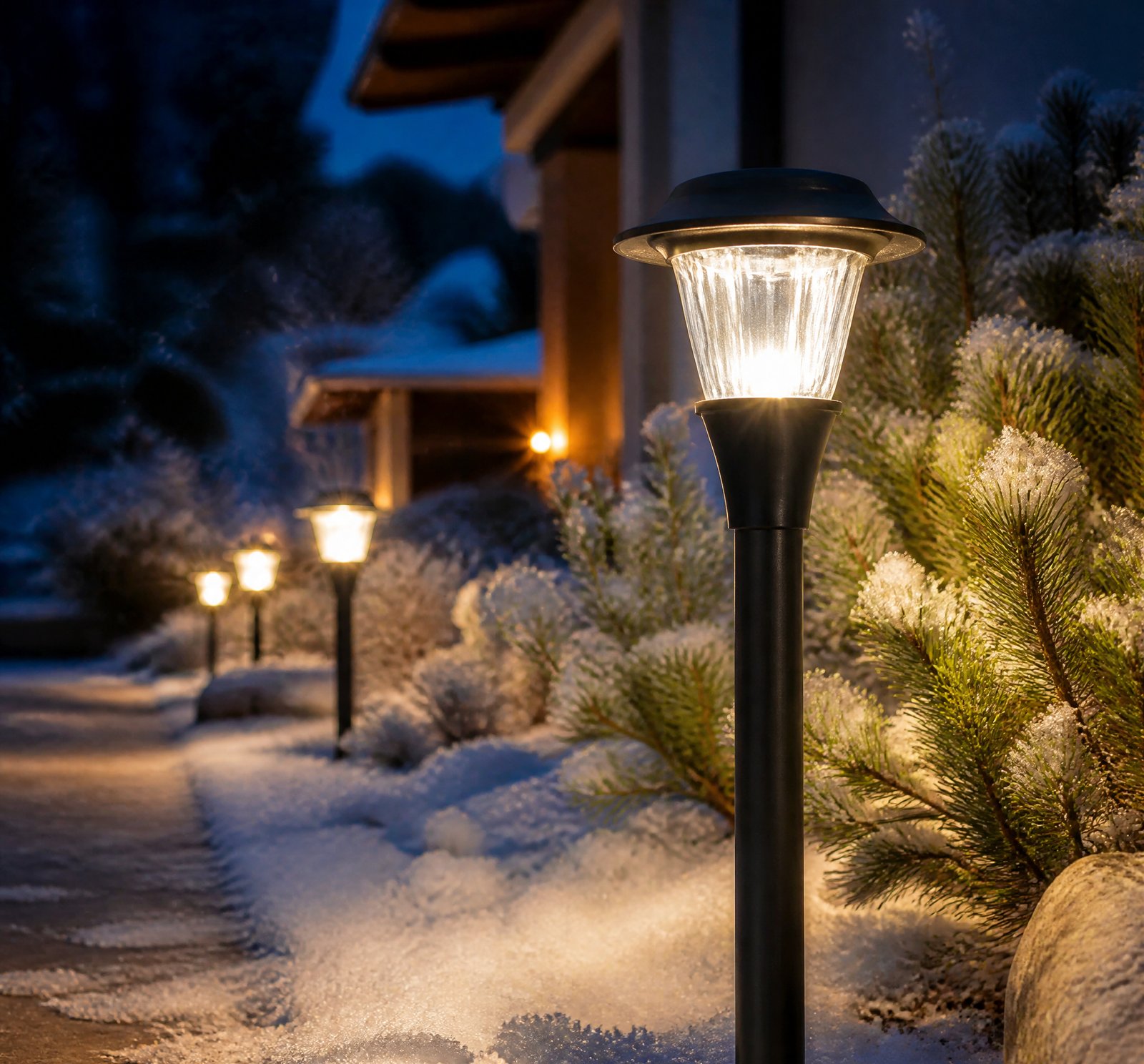
Quick answer: Pentru o lampă solară cu baterie LiFePO4 stocată în iarnă, demontarea este recomandată dacă este expusă la vreme extremă. Stocarea trebuie să aibă loc într-un spațiu cu temperatură camerei, evitând frigul sub zero și căldura excesivă [5][6][7]. Bateriile LiFePO4 pot pierde până la 30% din capacitatea efectivă în temperaturi extreme [22], iar stocarea în spații izolate termic este preferabilă. Panourile solare ar trebui stocate uscate, protejate de umiditate și vânt [2][23].
Pentru români care investesc în iluminat solar pentru grădină, terasă sau intrare, iarna aduce o întrebare crucială: cum să păstrezi o lampă solară cu baterie LiFePO4 în condiții de frig, zăpadă și vânt puternic? Dacă decizi să demontezi dispozitivul, procesul de stocare nu trebuie lăsat la întâmplare. O greșeală poate duce la deteriorarea bateriei sau a panoului înainte de primăvară. Iată cum trebuie să procedezi, bazat pe dovezi reale și recomandări din surse specializate.
Condiții optime de stocare pentru baterii LiFePO4
Stocarea corectă a bateriilor LiFePO4 în iarnă este esențială pentru a păstra eficiența și durabilitatea. Sursele recomandă stocarea într-un spațiu cu temperatură camerei, adică între 10°C și 29°C (50°F – 85°F), pentru a evita reducerea capacității [5]. În condiții de temperaturi extreme, capacitatea efectivă a bateriilor de litiu poate scădea până la 70% din valoarea nominală [22]. Deși LiFePO4 are o stabilitate termică excelentă și este mai rezistentă decât NiCd sau NiMH în condiții de variație termică [11][12][13][14][15][16][17][18][19][20][21][22], nu este recomandat să fie stocate la temperaturi sub zero, mai ales dacă urmează să fie folosite imediat după reasamblare.
Un spațiu bine izolat termic, evitând atât frigul extrem, cât și căldura excesivă, este ideal. În spațiile închise, temperaturile pot ajunge peste 60°C (140°F), ceea ce accelerează degradarea chimică a bateriei [5]. Prin urmare, o cameră uscată, ferită de soarele direct și de surse de căldură, este cea mai bună opțiune.
Cum trebuie stocat panoul solar
Deși panourile solare funcționează mai eficient la temperaturi scăzute, pot fi afectate grav de zăpadă și gheață, care acoperă suprafața și reduc producția de energie [25]. Dacă decizi să le demontezi, este esențial să le stoci într-un loc uscat, protejat de umiditate și deteriorare fizică [2][23]. Carcasa rezistentă la apă (IP65 sau mai mare) oferă protecție împotriva ploii și zăpezii dacă rămâne instalat, dar nu este suficientă pentru condiții extreme de iarnă [2].
Evită stocarea în garajuri neîncălzite sau în spații expuse la vânt puternic, zăpadă grea sau umezeală. Aceste condiții pot provoca deteriorarea structurii, a conexiunilor sau a panoului fotovoltaic [23]. O soluție sigură este stocarea într-un dulap interior, într-o încăpere cu temperatură stabilă, protejată de umiditate.
Stocarea bateriei: nivel de încărcare și BMS
O întrebare frecventă este dacă bateria LiFePO4 trebuie stocată la 100% sau la un nivel intermediar. Sursele nu oferă recomandări detaliate pentru stocare în modul de încărcare parțială, dar în general, LiFePO4 este mai rezistentă decât alte tipuri de baterii la stocare parțială [11][12][13][14][15][16][17][18][19][20][21][22]. Totuși, lipsa unei recomandări clare privind nivelul de încărcare nu permite o recomandare exactă.
În ceea ce privește sistemul de management al bateriei (BMS), care protejează împotriva suprasarcinii și descărcării profunde, nu există informații clare despre dacă trebuie deconectat în timpul stocării [5]. Totuși, dacă bateria este demontată și stocată separat, este recomandat să rămână activă dar izolată.
Comparativ: Tipuri de baterii pentru lampi solare
| Tip baterie | Rezistență la frig | Stocare optimală | Durată de viață |
|---|---|---|---|
| LiFePO4 | Excelentă [11][12][13][14][15][16][17][18][19][20][21][22] | 10–29°C, uscat [5][6][7] | Lungă |
| NiCd | Medie [11][12][13][14][15][16][17][18][19][20][21][22] | Evită frigul extrem | Medie |
| NiMH | Scăzută [11][12][13][14][15][16][17][18][19][20][21][22] | 10–29°C [5] | Scurtă |
Concluzii cheie
- Demontează lampile solare cu baterie LiFePO4 dacă sunt expuse la vreme extremă [2][23].
- Stocarea trebuie să aibă loc într-un spațiu cu temperatură camerei, evitând frigul sub zero și căldura excesivă [5][6][7][22].
- Panourile solare ar trebui stocate uscate, protejate de umiditate și vânt [2][23].
- Bateriile LiFePO4 pot pierde până la 30% din capacitate în condiții de frig extrem [22].
- Nu există recomandări clare pentru nivelul de încărcare sau funcționarea BMS în timpul stocării.
Întrebări frecvente
Poate fi stocată o baterie LiFePO4 la -20°C?
Nu este recomandat. Deși LiFePO4 are o stabilitate termică excelentă [11][12][13][14][15][16][17][18][19][20][21][22], capacitatea efectivă poate scădea până la 70% în condiții extreme [22].
Este mai bine să las lampă solară instalată în iarnă sau să o demontez?
Dacă panoul nu este protejat eficient de zăpadă și vânt, demontarea și stocarea în interior sunt preferabile pentru a preveni deteriorarea [2][23].
Pentru cât timp pot fi stocate bateriile LiFePO4 în mod sigur?
Nu există informații precise în surse, dar stocarea în condiții optime (10–29°C) poate păstra performanța multe luni [5].
References
- [2] Best Solar Lights for 2026 Tried and Tested – The English Home — blog
source passage
can withstand summer showers, they often won’t be completely waterproof. If you want something you can leave out year-round, look out for those that have a higher IP rating, which have a better chance of withstanding snow, wind and heavy rain – an IP65 rating or higher means they’ll be robust enough to withstand more extreme weather conditions. Caring for solar lights Our experts suggest storing your solar lights away during the darker, winter months to protect them from harsh winter frosts. It’s also recommended that you regularly clean the solar panel to ensure it works at optimum capacity. Do solar lights charge on cloudy days? Even on cloudy days, solar lights can still absorb enough daylight to charge, though their performance may be reduced compared to bright, sunny conditions. Thanks to advances in solar technology, many modern solar lights are designed to work efficiently in low light, ensuring your garden still enjoys a gentle glow even when the sun hides behind the clouds. For the best results, place your lights in the brightest available spot to maximise their charging potential throughout the day. Should garden solar lights be left out in the winter? Garden solar lights are built to withstand the changing seasons, including winter. Most models are made from weather-resistant materials that protect against rain, frost, and cold temperatures. However, to keep them in top condition, it’s a good idea to clean the solar panels regularly and, if possible, store the batt
- [5] How to prepare your solar battery bank for winter — authority
source passage
# How to prepare your solar battery bank for winter Source: Blog/Web URL: https://www.solarpowerworldonline.com/2016/11/prepare-solar-battery-bank-ready-winter/ Author: SPW Date: 2016-11-22 By John Connell, vice president of Crown Battery Manufacturing’s SLI Products Group Winter weather can drastically cut battery capacity and lifespan—but it doesn’t have to. Proper storage, depth of discharge and maintenance will help prepare any battery bank for winter and maximize lifespan and capacity. Storing batteries provides protection from cold temperatures Most batteries are rated at 77°F, and their ideal operating temperature is between 50°F and 85°F. Batteries lose about 10% of their capacity for every 15°F to 20°F below 80°F. Their internal chemistries slow down, resistance increases and capacity and charge acceptance drop. This reduced capacity is temporary. However, it can present a problem because most renewable energy systems have the shortest days (i.e. lowest solar production) and highest loads during the winter, when capacity is lower. Common battery storage solutions such as tin shelters, refrigerators or homemade boxes offer little protection from cold winter temperatures. And during the summer, temperatures in such enclosed spaces can exceed 140°F—hot enough to greatly accelerate battery deterioration. A better approach is storing batteries in a well-insulated space with sufficient thermal mass and protection from direct sunlight. AGM and other no- or low-maintenance b
- [6] 7 Best Solar Outdoor Lights of 2026 Lab-Tested and Reviewed — blog
source passage
off the battery even on the dreariest of days. Also consider models with an on/off switch—that way, you can turn off the lights when you don’t need them and conserve battery charge. What’s the best place to store solar lights in the winter, when there’s less sun to power them? Generally, battery-powered devices perform best when stored at room temperature. This would mean keeping them indoors during cold weather. That’s inconvenient—but at least you’ll avoid hitting them with a shovel, plow, or snow blower when they’re safely packed away. How CR Tests Solar Outdoor Lights At our Yonkers, N.Y., facility, we mount samples of each light on a mobile cart and park it outdoors for roughly five hours every day. We test on both sunny and cloudy days. Next, our testers bring each light indoors. We note when the lights go out and score them on how long they stay on. The total times can differ from day to day, depending on sun, cloud, and rain conditions, but the best models always outperform the worst, whether powered during a day with a lot of sun or very little. For scoring, we use the two brightest days from our testing. In addition, we size up ease of use by evaluating how easy each light is to mount and adjust. We also note which models have certain key features—like a switch to turn lights on and off, or the ability to charge them with a separate power cord if the sun isn’t out. Finally, we leave out samples of each light to expose them to rain and heat, noting whether any fixtur
- [7] 7 Best Solar Outdoor Lights of 2026 Lab-Tested and Reviewed — authority
source passage
off the battery even on the dreariest of days. Also consider models with an on/off switch—that way, you can turn off the lights when you don’t need them and conserve battery charge. What’s the best place to store solar lights in the winter, when there’s less sun to power them? Generally, battery-powered devices perform best when stored at room temperature. This would mean keeping them indoors during cold weather. That’s inconvenient—but at least you’ll avoid hitting them with a shovel, plow, or snow blower when they’re safely packed away. How CR Tests Solar Outdoor Lights At our Yonkers, N.Y., facility, we mount samples of each light on a mobile cart and park it outdoors for roughly five hours every day. We test on both sunny and cloudy days. Next, our testers bring each light indoors. We note when the lights go out and score them on how long they stay on. The total times can differ from day to day, depending on sun, cloud, and rain conditions, but the best models always outperform the worst, whether powered during a day with a lot of sun or very little. For scoring, we use the two brightest days from our testing. In addition, we size up ease of use by evaluating how easy each light is to mount and adjust. We also note which models have certain key features—like a switch to turn lights on and off, or the ability to charge them with a separate power cord if the sun isn’t out. Finally, we leave out samples of each light to expose them to rain and heat, noting whether any fixtur
- [11] Solar Light Batteries – The Solar Battery Store — reddit
source passage
density, long cycle life, and excellent thermal stability, LiFePO4 battery packs are perfect for those seeking the best in outdoor solar lighting power solutions. While they come at a higher upfront cost, their overall performance and lifespan make them a valuable investment. Selecting the Right Battery for Your Outdoor Solar Light: When choosing a battery for your outdoor solar light, consider the following factors: 1. Chemistry: Evaluate the pros and cons of each battery chemistry (NiCd, NiMH, and LiFePO4) and determine which one best suits your needs, budget, and environmental concerns. 2. Size: Ensure the battery size is compatible with your solar light. Smaller-sized batteries, such as 1/3 AAA, 2/3 AAA, and 2/3 AA, may be ideal for compact solar lights, while larger sizes, such as 18650 and 32700, are suitable for high-performance lighting systems. 3. Capacity: Choose a battery capacity that meets your desired runtime between charges. Higher-capacity batteries will provide longer runtimes but may be larger and heavier. 4. Temperature Performance: If you live in an area with extreme temperatures, opt for a battery chemistry that performs well in those conditions. NiCad and NiMH batteries generally have good performance in a wide range of temperatures. 5. Cycle Life: Consider the expected cycle life of the battery. While NiCad batteries have a longer cycle life than NiMH, LiFePO4 batteries boast the longest cycle life, making them ideal for long-term outdoor solar lighting
- [12] Solar Light Batteries – The Solar Battery Store — reddit
source passage
density, long cycle life, and excellent thermal stability, LiFePO4 battery packs are perfect for those seeking the best in outdoor solar lighting power solutions. While they come at a higher upfront cost, their overall performance and lifespan make them a valuable investment. Selecting the Right Battery for Your Outdoor Solar Light: When choosing a battery for your outdoor solar light, consider the following factors: 1. Chemistry: Evaluate the pros and cons of each battery chemistry (NiCd, NiMH, and LiFePO4) and determine which one best suits your needs, budget, and environmental concerns. 2. Size: Ensure the battery size is compatible with your solar light. Smaller-sized batteries, such as 1/3 AAA, 2/3 AAA, and 2/3 AA, may be ideal for compact solar lights, while larger sizes, such as 18650 and 32700, are suitable for high-performance lighting systems. 3. Capacity: Choose a battery capacity that meets your desired runtime between charges. Higher-capacity batteries will provide longer runtimes but may be larger and heavier. 4. Temperature Performance: If you live in an area with extreme temperatures, opt for a battery chemistry that performs well in those conditions. NiCad and NiMH batteries generally have good performance in a wide range of temperatures. 5. Cycle Life: Consider the expected cycle life of the battery. While NiCad batteries have a longer cycle life than NiMH, LiFePO4 batteries boast the longest cycle life, making them ideal for long-term outdoor solar lighting
- [13] Solar Light Batteries – Solar Batteries — reddit
source passage
density, long cycle life, and excellent thermal stability, LiFePO4 battery packs are perfect for those seeking the best in outdoor solar lighting power solutions. While they come at a higher upfront cost, their overall performance and lifespan make them a valuable investment. Selecting the Right Battery for Your Outdoor Solar Light: When choosing a battery for your outdoor solar light, consider the following factors: 1. Chemistry: Evaluate the pros and cons of each battery chemistry (NiCd, NiMH, and LiFePO4) and determine which one best suits your needs, budget, and environmental concerns. 2. Size: Ensure the battery size is compatible with your solar light. Smaller-sized batteries, such as 1/3 AAA, 2/3 AAA, and 2/3 AA, may be ideal for compact solar lights, while larger sizes, such as 18650 and 32700, are suitable for high-performance lighting systems. 3. Capacity: Choose a battery capacity that meets your desired runtime between charges. Higher-capacity batteries will provide longer runtimes but may be larger and heavier. 4. Temperature Performance: If you live in an area with extreme temperatures, opt for a battery chemistry that performs well in those conditions. NiCad and NiMH batteries generally have good performance in a wide range of temperatures. 5. Cycle Life: Consider the expected cycle life of the battery. While NiCad batteries have a longer cycle life than NiMH, LiFePO4 batteries boast the longest cycle life, making them ideal for long-term outdoor solar lighting
- [14] Solar Light Batteries – Solar Batteries — reddit
source passage
density, long cycle life, and excellent thermal stability, LiFePO4 battery packs are perfect for those seeking the best in outdoor solar lighting power solutions. While they come at a higher upfront cost, their overall performance and lifespan make them a valuable investment. Selecting the Right Battery for Your Outdoor Solar Light: When choosing a battery for your outdoor solar light, consider the following factors: 1. Chemistry: Evaluate the pros and cons of each battery chemistry (NiCd, NiMH, and LiFePO4) and determine which one best suits your needs, budget, and environmental concerns. 2. Size: Ensure the battery size is compatible with your solar light. Smaller-sized batteries, such as 1/3 AAA, 2/3 AAA, and 2/3 AA, may be ideal for compact solar lights, while larger sizes, such as 18650 and 32700, are suitable for high-performance lighting systems. 3. Capacity: Choose a battery capacity that meets your desired runtime between charges. Higher-capacity batteries will provide longer runtimes but may be larger and heavier. 4. Temperature Performance: If you live in an area with extreme temperatures, opt for a battery chemistry that performs well in those conditions. NiCad and NiMH batteries generally have good performance in a wide range of temperatures. 5. Cycle Life: Consider the expected cycle life of the battery. While NiCad batteries have a longer cycle life than NiMH, LiFePO4 batteries boast the longest cycle life, making them ideal for long-term outdoor solar lighting
- [15] The Solar Battery Store – Searching for solar light — reddit
source passage
density, long cycle life, and excellent thermal stability, LiFePO4 battery packs are perfect for those seeking the best in outdoor solar lighting power solutions. While they come at a higher upfront cost, their overall performance and lifespan make them a valuable investment. Selecting the Right Battery for Your Outdoor Solar Light: When choosing a battery for your outdoor solar light, consider the following factors: 1. Chemistry: Evaluate the pros and cons of each battery chemistry (NiCd, NiMH, and LiFePO4) and determine which one best suits your needs, budget, and environmental concerns. 2. Size: Ensure the battery size is compatible with your solar light. Smaller-sized batteries, such as 1/3 AAA, 2/3 AAA, and 2/3 AA, may be ideal for compact solar lights, while larger sizes, such as 18650 and 32700, are suitable for high-performance lighting systems. 3. Capacity: Choose a battery capacity that meets your desired runtime between charges. Higher-capacity batteries will provide longer runtimes but may be larger and heavier. 4. Temperature Performance: If you live in an area with extreme temperatures, opt for a battery chemistry that performs well in those conditions. NiCad and NiMH batteries generally have good performance in a wide range of temperatures. 5. Cycle Life: Consider the expected cycle life of the battery. While NiCad batteries have a longer cycle life than NiMH, LiFePO4 batteries boast the longest cycle life, making them ideal for long-term outdoor solar lighting
- [16] Solar Light Batteries – The Solar Battery Store — reddit
source passage
density, long cycle life, and excellent thermal stability, LiFePO4 battery packs are perfect for those seeking the best in outdoor solar lighting power solutions. While they come at a higher upfront cost, their overall performance and lifespan make them a valuable investment. Selecting the Right Battery for Your Outdoor Solar Light: When choosing a battery for your outdoor solar light, consider the following factors: 1. Chemistry: Evaluate the pros and cons of each battery chemistry (NiCd, NiMH, and LiFePO4) and determine which one best suits your needs, budget, and environmental concerns. 2. Size: Ensure the battery size is compatible with your solar light. Smaller-sized batteries, such as 1/3 AAA, 2/3 AAA, and 2/3 AA, may be ideal for compact solar lights, while larger sizes, such as 18650 and 32700, are suitable for high-performance lighting systems. 3. Capacity: Choose a battery capacity that meets your desired runtime between charges. Higher-capacity batteries will provide longer runtimes but may be larger and heavier. 4. Temperature Performance: If you live in an area with extreme temperatures, opt for a battery chemistry that performs well in those conditions. NiCad and NiMH batteries generally have good performance in a wide range of temperatures. 5. Cycle Life: Consider the expected cycle life of the battery. While NiCad batteries have a longer cycle life than NiMH, LiFePO4 batteries boast the longest cycle life, making them ideal for long-term outdoor solar lighting
- [17] Solar Light Batteries – The Solar Battery Store — reddit
source passage
density, long cycle life, and excellent thermal stability, LiFePO4 battery packs are perfect for those seeking the best in outdoor solar lighting power solutions. While they come at a higher upfront cost, their overall performance and lifespan make them a valuable investment. Selecting the Right Battery for Your Outdoor Solar Light: When choosing a battery for your outdoor solar light, consider the following factors: 1. Chemistry: Evaluate the pros and cons of each battery chemistry (NiCd, NiMH, and LiFePO4) and determine which one best suits your needs, budget, and environmental concerns. 2. Size: Ensure the battery size is compatible with your solar light. Smaller-sized batteries, such as 1/3 AAA, 2/3 AAA, and 2/3 AA, may be ideal for compact solar lights, while larger sizes, such as 18650 and 32700, are suitable for high-performance lighting systems. 3. Capacity: Choose a battery capacity that meets your desired runtime between charges. Higher-capacity batteries will provide longer runtimes but may be larger and heavier. 4. Temperature Performance: If you live in an area with extreme temperatures, opt for a battery chemistry that performs well in those conditions. NiCad and NiMH batteries generally have good performance in a wide range of temperatures. 5. Cycle Life: Consider the expected cycle life of the battery. While NiCad batteries have a longer cycle life than NiMH, LiFePO4 batteries boast the longest cycle life, making them ideal for long-term outdoor solar lighting
- [18] Solar Light Batteries – The Solar Battery Store — reddit
source passage
density, long cycle life, and excellent thermal stability, LiFePO4 battery packs are perfect for those seeking the best in outdoor solar lighting power solutions. While they come at a higher upfront cost, their overall performance and lifespan make them a valuable investment. Selecting the Right Battery for Your Outdoor Solar Light: When choosing a battery for your outdoor solar light, consider the following factors: 1. Chemistry: Evaluate the pros and cons of each battery chemistry (NiCd, NiMH, and LiFePO4) and determine which one best suits your needs, budget, and environmental concerns. 2. Size: Ensure the battery size is compatible with your solar light. Smaller-sized batteries, such as 1/3 AAA, 2/3 AAA, and 2/3 AA, may be ideal for compact solar lights, while larger sizes, such as 18650 and 32700, are suitable for high-performance lighting systems. 3. Capacity: Choose a battery capacity that meets your desired runtime between charges. Higher-capacity batteries will provide longer runtimes but may be larger and heavier. 4. Temperature Performance: If you live in an area with extreme temperatures, opt for a battery chemistry that performs well in those conditions. NiCad and NiMH batteries generally have good performance in a wide range of temperatures. 5. Cycle Life: Consider the expected cycle life of the battery. While NiCad batteries have a longer cycle life than NiMH, LiFePO4 batteries boast the longest cycle life, making them ideal for long-term outdoor solar lighting
- [19] Solar Light Batteries – Solar Batteries — reddit
source passage
density, long cycle life, and excellent thermal stability, LiFePO4 battery packs are perfect for those seeking the best in outdoor solar lighting power solutions. While they come at a higher upfront cost, their overall performance and lifespan make them a valuable investment. Selecting the Right Battery for Your Outdoor Solar Light: When choosing a battery for your outdoor solar light, consider the following factors: 1. Chemistry: Evaluate the pros and cons of each battery chemistry (NiCd, NiMH, and LiFePO4) and determine which one best suits your needs, budget, and environmental concerns. 2. Size: Ensure the battery size is compatible with your solar light. Smaller-sized batteries, such as 1/3 AAA, 2/3 AAA, and 2/3 AA, may be ideal for compact solar lights, while larger sizes, such as 18650 and 32700, are suitable for high-performance lighting systems. 3. Capacity: Choose a battery capacity that meets your desired runtime between charges. Higher-capacity batteries will provide longer runtimes but may be larger and heavier. 4. Temperature Performance: If you live in an area with extreme temperatures, opt for a battery chemistry that performs well in those conditions. NiCad and NiMH batteries generally have good performance in a wide range of temperatures. 5. Cycle Life: Consider the expected cycle life of the battery. While NiCad batteries have a longer cycle life than NiMH, LiFePO4 batteries boast the longest cycle life, making them ideal for long-term outdoor solar lighting
- [20] Solar Light Batteries – The Solar Battery Store — reddit
source passage
density, long cycle life, and excellent thermal stability, LiFePO4 battery packs are perfect for those seeking the best in outdoor solar lighting power solutions. While they come at a higher upfront cost, their overall performance and lifespan make them a valuable investment. Selecting the Right Battery for Your Outdoor Solar Light: When choosing a battery for your outdoor solar light, consider the following factors: 1. Chemistry: Evaluate the pros and cons of each battery chemistry (NiCd, NiMH, and LiFePO4) and determine which one best suits your needs, budget, and environmental concerns. 2. Size: Ensure the battery size is compatible with your solar light. Smaller-sized batteries, such as 1/3 AAA, 2/3 AAA, and 2/3 AA, may be ideal for compact solar lights, while larger sizes, such as 18650 and 32700, are suitable for high-performance lighting systems. 3. Capacity: Choose a battery capacity that meets your desired runtime between charges. Higher-capacity batteries will provide longer runtimes but may be larger and heavier. 4. Temperature Performance: If you live in an area with extreme temperatures, opt for a battery chemistry that performs well in those conditions. NiCad and NiMH batteries generally have good performance in a wide range of temperatures. 5. Cycle Life: Consider the expected cycle life of the battery. While NiCad batteries have a longer cycle life than NiMH, LiFePO4 batteries boast the longest cycle life, making them ideal for long-term outdoor solar lighting
- [21] The Solar Battery Store – Searching for solar light — reddit
source passage
density, long cycle life, and excellent thermal stability, LiFePO4 battery packs are perfect for those seeking the best in outdoor solar lighting power solutions. While they come at a higher upfront cost, their overall performance and lifespan make them a valuable investment. Selecting the Right Battery for Your Outdoor Solar Light: When choosing a battery for your outdoor solar light, consider the following factors: 1. Chemistry: Evaluate the pros and cons of each battery chemistry (NiCd, NiMH, and LiFePO4) and determine which one best suits your needs, budget, and environmental concerns. 2. Size: Ensure the battery size is compatible with your solar light. Smaller-sized batteries, such as 1/3 AAA, 2/3 AAA, and 2/3 AA, may be ideal for compact solar lights, while larger sizes, such as 18650 and 32700, are suitable for high-performance lighting systems. 3. Capacity: Choose a battery capacity that meets your desired runtime between charges. Higher-capacity batteries will provide longer runtimes but may be larger and heavier. 4. Temperature Performance: If you live in an area with extreme temperatures, opt for a battery chemistry that performs well in those conditions. NiCad and NiMH batteries generally have good performance in a wide range of temperatures. 5. Cycle Life: Consider the expected cycle life of the battery. While NiCad batteries have a longer cycle life than NiMH, LiFePO4 batteries boast the longest cycle life, making them ideal for long-term outdoor solar lighting
- [22] altE Store Do lithium batteries work in extreme temperatures DIY Solar FAQs RoSrpkxfIag — youtube
source passage
# Do lithium batteries work in extreme temperatures? DIY Solar FAQs Source: YouTube — altE Store URL: https://www.youtube.com/watch?v=RoSrpkxfIag Video ID: RoSrpkxfIag Transcript: generated so let's look at like the worst case scenario let's say the power goes up there's a bad storm during the winter I don't know if it's going to be charging to the full capacity because usually in winter months we're getting less Sun hours really the key thing here is that cold cold temperatures are really bad for for Batteries lithium batteries well so what would be the solution like if someone had to walk away from this conversation about batteries and be careful of WEA think about it as as a design factor if you know that your batteries are going to be in a cold environment know that you don't have the full rated capacity to pull out of them at this temperature I can only pull 70% out of these batteries of what they're rated for I'll have add an extra 30% onto the capacity if I plan to use it in those conditions you know when people in those kind of conditions like we were just at a house over by schu's um place and we get the extreme hot and we get the extreme cold we're thinking about like oh we want to put the battery outside but then it's south facing side of the the home where the sun is just pounding on that especially when it's 105 110° so we want to make sure it's in the shape if it is going to be outside youve probably got to put it into some kind of like little insulation box or
- [23] The 10 best outdoor solar lights for 2026 expert-recommended — blog
source passage
consider shielding or even storing outdoor solar lights during seasons when you don't plan to use them or extreme weather conditions, such as major winds and snowstorms. Meet the experts Update, Jan. 21, 2026: We've confirmed current pricing and availability for all products. Our No. 1 pick for best outdoor solar light remains unchanged. The reviews quoted above reflect the most recent versions at the time of publication.
- [25] Solar Photovoltaic Hardening for Resilience Winter Weather — authority
source passage
# Solar Photovoltaic Hardening for Resilience – Winter Weather Source: Blog/Web URL: https://www.energy.gov/cmei/femp/solar-photovoltaic-hardening-resilience-winter-weather Author: Date: 2023-05-04 While solar photovoltaic (PV) installations are best able to reliably take advantage of the sun's energy in climates such as the Southwestern United States (Figure 1), PV systems are also beneficial in parts of the United States with severe winter weather. This page examines the areas of the United States most at risk from severe winter weather and summarizes various approaches that PV system designers, installers, owners, and operators can take to address these hazards throughout the entire PV production lifecycle, from design through post-damage repair. Risk Profile PV modules operate more efficiently in colder weather, as temperatures above 77°F cause decreases in voltage. However, the threat of winter weather, like ice and snow, pose design and operational challenges for PV systems in these areas and can limit power production. More severe winter weather or long-term exposure to winter weather conditions can seriously disable or damage a PV system, leading to repair costs and production losses if the system is not designed to withstand these conditions. Most snow will melt quickly off PV systems or be blown off by wind. Heavier snow or extreme winter weather, however, pose a greater risk to the resilience and longevity of PV installations. During severe snowstorms, the weight o
can withstand summer showers, they often won’t be completely waterproof. If you want something you can leave out year-round, look out for those that have a higher IP rating, which have a better chance of withstanding snow, wind and heavy rain – an IP65 rating or higher means they’ll be robust enough to withstand more extreme weather conditions. Caring for solar lights Our experts suggest storing your solar lights away during the darker, winter months to protect them from harsh winter frosts. It’s also recommended that you regularly clean the solar panel to ensure it works at optimum capacity. Do solar lights charge on cloudy days? Even on cloudy days, solar lights can still absorb enough daylight to charge, though their performance may be reduced compared to bright, sunny conditions. Thanks to advances in solar technology, many modern solar lights are designed to work efficiently in low light, ensuring your garden still enjoys a gentle glow even when the sun hides behind the clouds. For the best results, place your lights in the brightest available spot to maximise their charging potential throughout the day. Should garden solar lights be left out in the winter? Garden solar lights are built to withstand the changing seasons, including winter. Most models are made from weather-resistant materials that protect against rain, frost, and cold temperatures. However, to keep them in top condition, it’s a good idea to clean the solar panels regularly and, if possible, store the batt
# How to prepare your solar battery bank for winter Source: Blog/Web URL: https://www.solarpowerworldonline.com/2016/11/prepare-solar-battery-bank-ready-winter/ Author: SPW Date: 2016-11-22 By John Connell, vice president of Crown Battery Manufacturing’s SLI Products Group Winter weather can drastically cut battery capacity and lifespan—but it doesn’t have to. Proper storage, depth of discharge and maintenance will help prepare any battery bank for winter and maximize lifespan and capacity. Storing batteries provides protection from cold temperatures Most batteries are rated at 77°F, and their ideal operating temperature is between 50°F and 85°F. Batteries lose about 10% of their capacity for every 15°F to 20°F below 80°F. Their internal chemistries slow down, resistance increases and capacity and charge acceptance drop. This reduced capacity is temporary. However, it can present a problem because most renewable energy systems have the shortest days (i.e. lowest solar production) and highest loads during the winter, when capacity is lower. Common battery storage solutions such as tin shelters, refrigerators or homemade boxes offer little protection from cold winter temperatures. And during the summer, temperatures in such enclosed spaces can exceed 140°F—hot enough to greatly accelerate battery deterioration. A better approach is storing batteries in a well-insulated space with sufficient thermal mass and protection from direct sunlight. AGM and other no- or low-maintenance b
off the battery even on the dreariest of days. Also consider models with an on/off switch—that way, you can turn off the lights when you don’t need them and conserve battery charge. What’s the best place to store solar lights in the winter, when there’s less sun to power them? Generally, battery-powered devices perform best when stored at room temperature. This would mean keeping them indoors during cold weather. That’s inconvenient—but at least you’ll avoid hitting them with a shovel, plow, or snow blower when they’re safely packed away. How CR Tests Solar Outdoor Lights At our Yonkers, N.Y., facility, we mount samples of each light on a mobile cart and park it outdoors for roughly five hours every day. We test on both sunny and cloudy days. Next, our testers bring each light indoors. We note when the lights go out and score them on how long they stay on. The total times can differ from day to day, depending on sun, cloud, and rain conditions, but the best models always outperform the worst, whether powered during a day with a lot of sun or very little. For scoring, we use the two brightest days from our testing. In addition, we size up ease of use by evaluating how easy each light is to mount and adjust. We also note which models have certain key features—like a switch to turn lights on and off, or the ability to charge them with a separate power cord if the sun isn’t out. Finally, we leave out samples of each light to expose them to rain and heat, noting whether any fixtur
off the battery even on the dreariest of days. Also consider models with an on/off switch—that way, you can turn off the lights when you don’t need them and conserve battery charge. What’s the best place to store solar lights in the winter, when there’s less sun to power them? Generally, battery-powered devices perform best when stored at room temperature. This would mean keeping them indoors during cold weather. That’s inconvenient—but at least you’ll avoid hitting them with a shovel, plow, or snow blower when they’re safely packed away. How CR Tests Solar Outdoor Lights At our Yonkers, N.Y., facility, we mount samples of each light on a mobile cart and park it outdoors for roughly five hours every day. We test on both sunny and cloudy days. Next, our testers bring each light indoors. We note when the lights go out and score them on how long they stay on. The total times can differ from day to day, depending on sun, cloud, and rain conditions, but the best models always outperform the worst, whether powered during a day with a lot of sun or very little. For scoring, we use the two brightest days from our testing. In addition, we size up ease of use by evaluating how easy each light is to mount and adjust. We also note which models have certain key features—like a switch to turn lights on and off, or the ability to charge them with a separate power cord if the sun isn’t out. Finally, we leave out samples of each light to expose them to rain and heat, noting whether any fixtur
density, long cycle life, and excellent thermal stability, LiFePO4 battery packs are perfect for those seeking the best in outdoor solar lighting power solutions. While they come at a higher upfront cost, their overall performance and lifespan make them a valuable investment. Selecting the Right Battery for Your Outdoor Solar Light: When choosing a battery for your outdoor solar light, consider the following factors: 1. Chemistry: Evaluate the pros and cons of each battery chemistry (NiCd, NiMH, and LiFePO4) and determine which one best suits your needs, budget, and environmental concerns. 2. Size: Ensure the battery size is compatible with your solar light. Smaller-sized batteries, such as 1/3 AAA, 2/3 AAA, and 2/3 AA, may be ideal for compact solar lights, while larger sizes, such as 18650 and 32700, are suitable for high-performance lighting systems. 3. Capacity: Choose a battery capacity that meets your desired runtime between charges. Higher-capacity batteries will provide longer runtimes but may be larger and heavier. 4. Temperature Performance: If you live in an area with extreme temperatures, opt for a battery chemistry that performs well in those conditions. NiCad and NiMH batteries generally have good performance in a wide range of temperatures. 5. Cycle Life: Consider the expected cycle life of the battery. While NiCad batteries have a longer cycle life than NiMH, LiFePO4 batteries boast the longest cycle life, making them ideal for long-term outdoor solar lighting
density, long cycle life, and excellent thermal stability, LiFePO4 battery packs are perfect for those seeking the best in outdoor solar lighting power solutions. While they come at a higher upfront cost, their overall performance and lifespan make them a valuable investment. Selecting the Right Battery for Your Outdoor Solar Light: When choosing a battery for your outdoor solar light, consider the following factors: 1. Chemistry: Evaluate the pros and cons of each battery chemistry (NiCd, NiMH, and LiFePO4) and determine which one best suits your needs, budget, and environmental concerns. 2. Size: Ensure the battery size is compatible with your solar light. Smaller-sized batteries, such as 1/3 AAA, 2/3 AAA, and 2/3 AA, may be ideal for compact solar lights, while larger sizes, such as 18650 and 32700, are suitable for high-performance lighting systems. 3. Capacity: Choose a battery capacity that meets your desired runtime between charges. Higher-capacity batteries will provide longer runtimes but may be larger and heavier. 4. Temperature Performance: If you live in an area with extreme temperatures, opt for a battery chemistry that performs well in those conditions. NiCad and NiMH batteries generally have good performance in a wide range of temperatures. 5. Cycle Life: Consider the expected cycle life of the battery. While NiCad batteries have a longer cycle life than NiMH, LiFePO4 batteries boast the longest cycle life, making them ideal for long-term outdoor solar lighting
density, long cycle life, and excellent thermal stability, LiFePO4 battery packs are perfect for those seeking the best in outdoor solar lighting power solutions. While they come at a higher upfront cost, their overall performance and lifespan make them a valuable investment. Selecting the Right Battery for Your Outdoor Solar Light: When choosing a battery for your outdoor solar light, consider the following factors: 1. Chemistry: Evaluate the pros and cons of each battery chemistry (NiCd, NiMH, and LiFePO4) and determine which one best suits your needs, budget, and environmental concerns. 2. Size: Ensure the battery size is compatible with your solar light. Smaller-sized batteries, such as 1/3 AAA, 2/3 AAA, and 2/3 AA, may be ideal for compact solar lights, while larger sizes, such as 18650 and 32700, are suitable for high-performance lighting systems. 3. Capacity: Choose a battery capacity that meets your desired runtime between charges. Higher-capacity batteries will provide longer runtimes but may be larger and heavier. 4. Temperature Performance: If you live in an area with extreme temperatures, opt for a battery chemistry that performs well in those conditions. NiCad and NiMH batteries generally have good performance in a wide range of temperatures. 5. Cycle Life: Consider the expected cycle life of the battery. While NiCad batteries have a longer cycle life than NiMH, LiFePO4 batteries boast the longest cycle life, making them ideal for long-term outdoor solar lighting
density, long cycle life, and excellent thermal stability, LiFePO4 battery packs are perfect for those seeking the best in outdoor solar lighting power solutions. While they come at a higher upfront cost, their overall performance and lifespan make them a valuable investment. Selecting the Right Battery for Your Outdoor Solar Light: When choosing a battery for your outdoor solar light, consider the following factors: 1. Chemistry: Evaluate the pros and cons of each battery chemistry (NiCd, NiMH, and LiFePO4) and determine which one best suits your needs, budget, and environmental concerns. 2. Size: Ensure the battery size is compatible with your solar light. Smaller-sized batteries, such as 1/3 AAA, 2/3 AAA, and 2/3 AA, may be ideal for compact solar lights, while larger sizes, such as 18650 and 32700, are suitable for high-performance lighting systems. 3. Capacity: Choose a battery capacity that meets your desired runtime between charges. Higher-capacity batteries will provide longer runtimes but may be larger and heavier. 4. Temperature Performance: If you live in an area with extreme temperatures, opt for a battery chemistry that performs well in those conditions. NiCad and NiMH batteries generally have good performance in a wide range of temperatures. 5. Cycle Life: Consider the expected cycle life of the battery. While NiCad batteries have a longer cycle life than NiMH, LiFePO4 batteries boast the longest cycle life, making them ideal for long-term outdoor solar lighting
density, long cycle life, and excellent thermal stability, LiFePO4 battery packs are perfect for those seeking the best in outdoor solar lighting power solutions. While they come at a higher upfront cost, their overall performance and lifespan make them a valuable investment. Selecting the Right Battery for Your Outdoor Solar Light: When choosing a battery for your outdoor solar light, consider the following factors: 1. Chemistry: Evaluate the pros and cons of each battery chemistry (NiCd, NiMH, and LiFePO4) and determine which one best suits your needs, budget, and environmental concerns. 2. Size: Ensure the battery size is compatible with your solar light. Smaller-sized batteries, such as 1/3 AAA, 2/3 AAA, and 2/3 AA, may be ideal for compact solar lights, while larger sizes, such as 18650 and 32700, are suitable for high-performance lighting systems. 3. Capacity: Choose a battery capacity that meets your desired runtime between charges. Higher-capacity batteries will provide longer runtimes but may be larger and heavier. 4. Temperature Performance: If you live in an area with extreme temperatures, opt for a battery chemistry that performs well in those conditions. NiCad and NiMH batteries generally have good performance in a wide range of temperatures. 5. Cycle Life: Consider the expected cycle life of the battery. While NiCad batteries have a longer cycle life than NiMH, LiFePO4 batteries boast the longest cycle life, making them ideal for long-term outdoor solar lighting
density, long cycle life, and excellent thermal stability, LiFePO4 battery packs are perfect for those seeking the best in outdoor solar lighting power solutions. While they come at a higher upfront cost, their overall performance and lifespan make them a valuable investment. Selecting the Right Battery for Your Outdoor Solar Light: When choosing a battery for your outdoor solar light, consider the following factors: 1. Chemistry: Evaluate the pros and cons of each battery chemistry (NiCd, NiMH, and LiFePO4) and determine which one best suits your needs, budget, and environmental concerns. 2. Size: Ensure the battery size is compatible with your solar light. Smaller-sized batteries, such as 1/3 AAA, 2/3 AAA, and 2/3 AA, may be ideal for compact solar lights, while larger sizes, such as 18650 and 32700, are suitable for high-performance lighting systems. 3. Capacity: Choose a battery capacity that meets your desired runtime between charges. Higher-capacity batteries will provide longer runtimes but may be larger and heavier. 4. Temperature Performance: If you live in an area with extreme temperatures, opt for a battery chemistry that performs well in those conditions. NiCad and NiMH batteries generally have good performance in a wide range of temperatures. 5. Cycle Life: Consider the expected cycle life of the battery. While NiCad batteries have a longer cycle life than NiMH, LiFePO4 batteries boast the longest cycle life, making them ideal for long-term outdoor solar lighting
density, long cycle life, and excellent thermal stability, LiFePO4 battery packs are perfect for those seeking the best in outdoor solar lighting power solutions. While they come at a higher upfront cost, their overall performance and lifespan make them a valuable investment. Selecting the Right Battery for Your Outdoor Solar Light: When choosing a battery for your outdoor solar light, consider the following factors: 1. Chemistry: Evaluate the pros and cons of each battery chemistry (NiCd, NiMH, and LiFePO4) and determine which one best suits your needs, budget, and environmental concerns. 2. Size: Ensure the battery size is compatible with your solar light. Smaller-sized batteries, such as 1/3 AAA, 2/3 AAA, and 2/3 AA, may be ideal for compact solar lights, while larger sizes, such as 18650 and 32700, are suitable for high-performance lighting systems. 3. Capacity: Choose a battery capacity that meets your desired runtime between charges. Higher-capacity batteries will provide longer runtimes but may be larger and heavier. 4. Temperature Performance: If you live in an area with extreme temperatures, opt for a battery chemistry that performs well in those conditions. NiCad and NiMH batteries generally have good performance in a wide range of temperatures. 5. Cycle Life: Consider the expected cycle life of the battery. While NiCad batteries have a longer cycle life than NiMH, LiFePO4 batteries boast the longest cycle life, making them ideal for long-term outdoor solar lighting
density, long cycle life, and excellent thermal stability, LiFePO4 battery packs are perfect for those seeking the best in outdoor solar lighting power solutions. While they come at a higher upfront cost, their overall performance and lifespan make them a valuable investment. Selecting the Right Battery for Your Outdoor Solar Light: When choosing a battery for your outdoor solar light, consider the following factors: 1. Chemistry: Evaluate the pros and cons of each battery chemistry (NiCd, NiMH, and LiFePO4) and determine which one best suits your needs, budget, and environmental concerns. 2. Size: Ensure the battery size is compatible with your solar light. Smaller-sized batteries, such as 1/3 AAA, 2/3 AAA, and 2/3 AA, may be ideal for compact solar lights, while larger sizes, such as 18650 and 32700, are suitable for high-performance lighting systems. 3. Capacity: Choose a battery capacity that meets your desired runtime between charges. Higher-capacity batteries will provide longer runtimes but may be larger and heavier. 4. Temperature Performance: If you live in an area with extreme temperatures, opt for a battery chemistry that performs well in those conditions. NiCad and NiMH batteries generally have good performance in a wide range of temperatures. 5. Cycle Life: Consider the expected cycle life of the battery. While NiCad batteries have a longer cycle life than NiMH, LiFePO4 batteries boast the longest cycle life, making them ideal for long-term outdoor solar lighting
density, long cycle life, and excellent thermal stability, LiFePO4 battery packs are perfect for those seeking the best in outdoor solar lighting power solutions. While they come at a higher upfront cost, their overall performance and lifespan make them a valuable investment. Selecting the Right Battery for Your Outdoor Solar Light: When choosing a battery for your outdoor solar light, consider the following factors: 1. Chemistry: Evaluate the pros and cons of each battery chemistry (NiCd, NiMH, and LiFePO4) and determine which one best suits your needs, budget, and environmental concerns. 2. Size: Ensure the battery size is compatible with your solar light. Smaller-sized batteries, such as 1/3 AAA, 2/3 AAA, and 2/3 AA, may be ideal for compact solar lights, while larger sizes, such as 18650 and 32700, are suitable for high-performance lighting systems. 3. Capacity: Choose a battery capacity that meets your desired runtime between charges. Higher-capacity batteries will provide longer runtimes but may be larger and heavier. 4. Temperature Performance: If you live in an area with extreme temperatures, opt for a battery chemistry that performs well in those conditions. NiCad and NiMH batteries generally have good performance in a wide range of temperatures. 5. Cycle Life: Consider the expected cycle life of the battery. While NiCad batteries have a longer cycle life than NiMH, LiFePO4 batteries boast the longest cycle life, making them ideal for long-term outdoor solar lighting
density, long cycle life, and excellent thermal stability, LiFePO4 battery packs are perfect for those seeking the best in outdoor solar lighting power solutions. While they come at a higher upfront cost, their overall performance and lifespan make them a valuable investment. Selecting the Right Battery for Your Outdoor Solar Light: When choosing a battery for your outdoor solar light, consider the following factors: 1. Chemistry: Evaluate the pros and cons of each battery chemistry (NiCd, NiMH, and LiFePO4) and determine which one best suits your needs, budget, and environmental concerns. 2. Size: Ensure the battery size is compatible with your solar light. Smaller-sized batteries, such as 1/3 AAA, 2/3 AAA, and 2/3 AA, may be ideal for compact solar lights, while larger sizes, such as 18650 and 32700, are suitable for high-performance lighting systems. 3. Capacity: Choose a battery capacity that meets your desired runtime between charges. Higher-capacity batteries will provide longer runtimes but may be larger and heavier. 4. Temperature Performance: If you live in an area with extreme temperatures, opt for a battery chemistry that performs well in those conditions. NiCad and NiMH batteries generally have good performance in a wide range of temperatures. 5. Cycle Life: Consider the expected cycle life of the battery. While NiCad batteries have a longer cycle life than NiMH, LiFePO4 batteries boast the longest cycle life, making them ideal for long-term outdoor solar lighting
density, long cycle life, and excellent thermal stability, LiFePO4 battery packs are perfect for those seeking the best in outdoor solar lighting power solutions. While they come at a higher upfront cost, their overall performance and lifespan make them a valuable investment. Selecting the Right Battery for Your Outdoor Solar Light: When choosing a battery for your outdoor solar light, consider the following factors: 1. Chemistry: Evaluate the pros and cons of each battery chemistry (NiCd, NiMH, and LiFePO4) and determine which one best suits your needs, budget, and environmental concerns. 2. Size: Ensure the battery size is compatible with your solar light. Smaller-sized batteries, such as 1/3 AAA, 2/3 AAA, and 2/3 AA, may be ideal for compact solar lights, while larger sizes, such as 18650 and 32700, are suitable for high-performance lighting systems. 3. Capacity: Choose a battery capacity that meets your desired runtime between charges. Higher-capacity batteries will provide longer runtimes but may be larger and heavier. 4. Temperature Performance: If you live in an area with extreme temperatures, opt for a battery chemistry that performs well in those conditions. NiCad and NiMH batteries generally have good performance in a wide range of temperatures. 5. Cycle Life: Consider the expected cycle life of the battery. While NiCad batteries have a longer cycle life than NiMH, LiFePO4 batteries boast the longest cycle life, making them ideal for long-term outdoor solar lighting
# Do lithium batteries work in extreme temperatures? DIY Solar FAQs Source: YouTube — altE Store URL: https://www.youtube.com/watch?v=RoSrpkxfIag Video ID: RoSrpkxfIag Transcript: generated so let's look at like the worst case scenario let's say the power goes up there's a bad storm during the winter I don't know if it's going to be charging to the full capacity because usually in winter months we're getting less Sun hours really the key thing here is that cold cold temperatures are really bad for for Batteries lithium batteries well so what would be the solution like if someone had to walk away from this conversation about batteries and be careful of WEA think about it as as a design factor if you know that your batteries are going to be in a cold environment know that you don't have the full rated capacity to pull out of them at this temperature I can only pull 70% out of these batteries of what they're rated for I'll have add an extra 30% onto the capacity if I plan to use it in those conditions you know when people in those kind of conditions like we were just at a house over by schu's um place and we get the extreme hot and we get the extreme cold we're thinking about like oh we want to put the battery outside but then it's south facing side of the the home where the sun is just pounding on that especially when it's 105 110° so we want to make sure it's in the shape if it is going to be outside youve probably got to put it into some kind of like little insulation box or
consider shielding or even storing outdoor solar lights during seasons when you don't plan to use them or extreme weather conditions, such as major winds and snowstorms. Meet the experts Update, Jan. 21, 2026: We've confirmed current pricing and availability for all products. Our No. 1 pick for best outdoor solar light remains unchanged. The reviews quoted above reflect the most recent versions at the time of publication.
# Solar Photovoltaic Hardening for Resilience – Winter Weather Source: Blog/Web URL: https://www.energy.gov/cmei/femp/solar-photovoltaic-hardening-resilience-winter-weather Author: Date: 2023-05-04 While solar photovoltaic (PV) installations are best able to reliably take advantage of the sun's energy in climates such as the Southwestern United States (Figure 1), PV systems are also beneficial in parts of the United States with severe winter weather. This page examines the areas of the United States most at risk from severe winter weather and summarizes various approaches that PV system designers, installers, owners, and operators can take to address these hazards throughout the entire PV production lifecycle, from design through post-damage repair. Risk Profile PV modules operate more efficiently in colder weather, as temperatures above 77°F cause decreases in voltage. However, the threat of winter weather, like ice and snow, pose design and operational challenges for PV systems in these areas and can limit power production. More severe winter weather or long-term exposure to winter weather conditions can seriously disable or damage a PV system, leading to repair costs and production losses if the system is not designed to withstand these conditions. Most snow will melt quickly off PV systems or be blown off by wind. Heavier snow or extreme winter weather, however, pose a greater risk to the resilience and longevity of PV installations. During severe snowstorms, the weight o