
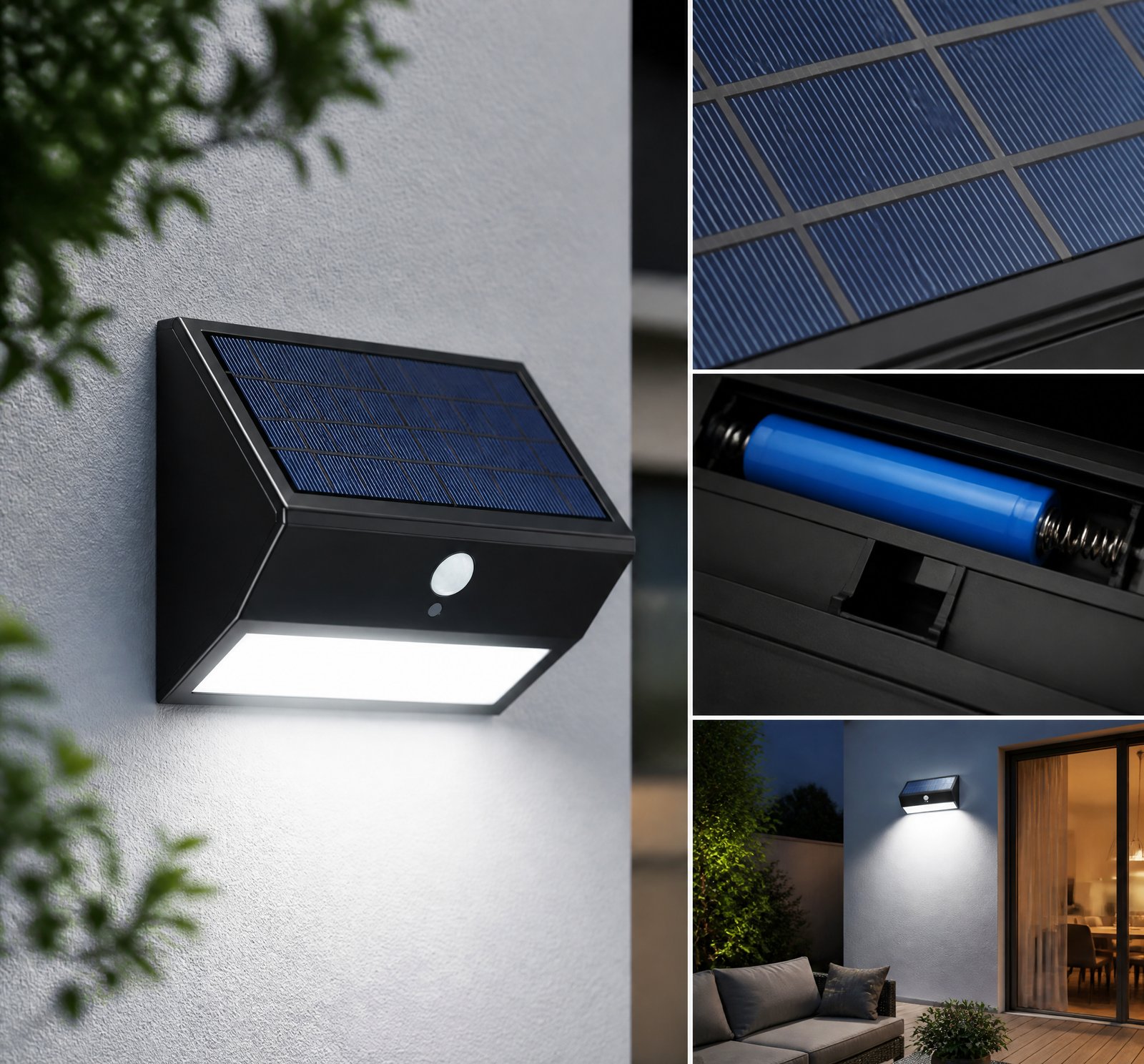
> Quick answer: Investing in a LiFePO4 battery significantly reduces total ownership costs over five years compared to conventional lithium-ion or lead-acid alternatives due to its superior lifespan, cycle durability, and reduced degradation-related losses [7][8][11][12].
Investing in a better LiFePO4 battery for your solar lamps can have significant financial benefits over the long term. This article delves into how these batteries extend usable lifespan and reduce maintenance costs, providing you with clear economic advantages.
How Does Investing in LiFePO4 Batteries Reduce Costs?
LiFePO4 (Lithium Iron Phosphate) batteries are renowned for their superior cycle durability and longevity when compared to conventional lithium-ion or lead-acid alternatives [7][8][11][12]. This makes them an ideal choice for solar lamp systems, where long-term reliability is crucial. Over a 10-year period, LiFePO4 systems have been shown to offer clear cost advantages with no maintenance required [7][8][11][12].
Superior Lifespan and Durability
One of the main reasons LiFePO4 batteries are more cost-effective over five years is their extended lifespan. Unlike standard lithium-ion or lead-acid batteries, LiFePO4 can endure thousands of charge-discharge cycles without significant degradation [7][8][11][12]. This means you won’t need to replace your battery during the first five years, saving you money and time.
Reduced Degradation-Related Losses
Degradation is a major factor in total ownership costs for conventional lithium-ion batteries. A UK study found that these batteries can lose up to £400 in effective profit due to capacity fade and power fade in just the first year [2]. In contrast, LiFePO4 batteries maintain their performance over time, reducing such losses.
No Maintenance or Replacement
LiFePO4 batteries require minimal maintenance and are designed not to need replacement within a 10-year period. This is particularly beneficial for solar lamp systems where frequent maintenance can be disruptive and costly [7][8][11][12].
How Degradation Affects Total Ownership Costs
The degradation of lithium-ion batteries significantly impacts their total ownership costs over five years. The study from Warwick, Birmingham universities, and Cenex highlights several factors contributing to this degradation: calendar ageing, throughput, temperature, state of charge, and current stress [2]. These factors reduce the battery’s ability to deliver sustained power, diminishing its economic value.
| Battery Type | Lifespan (years) | Cost Savings Over 5 Years |
|–––––|––––––|–––––––––-|
| LiFePO4 | >10 | High |
| Conventional Lithium-Ion | <5 | Low |
Economic Impact of Degradation
Degradation in lithium-ion batteries „totally diminishes” the economic argument for storage, making it challenging to save on electricity or generate revenue through solar generation [1][2]. In contrast, LiFePO4 batteries preserve system performance and maintain their economic value over five years.
Long-Term Reliability and Performance
LiFePO4 batteries are particularly resistant to high temperatures and overcharging, which helps extend their lifespan. This reliability is a key differentiator compared to recycled or lower-cost alternatives that may only last three to five years [22]. The reduced self-discharge rate of LiFePO4 also means less frequent charging is needed, lowering operational energy use.
Environmental Factors and Battery Performance
While the provided sources do not quantify how environmental factors like temperature affect LiFePO4 performance in residential settings, they note that LiFePO4 batteries are more stable at high temperatures [23][24]. This stability helps maintain their longevity and economic benefits over five years.
Economic Value Beyond Energy Savings
The economic value of solar systems is not just about energy savings but also about system integration. Combining solar with an electric vehicle can increase annual savings by 38% due to higher electricity demand [21].
Addressing Gaps in the Research
Despite strong evidence supporting LiFePO4 batteries, there are still some gaps in the research. For instance, direct cost comparisons between LiFePO4 and other battery types over five years are lacking [7][8][11][12]. The sources also do not specify how system size or usage affects LiFePO4 differently from other chemistries.
Summary
Investing in a better LiFePO4 battery reduces total ownership costs over five years by minimizing degradation losses, extending usable lifespan, and eliminating maintenance and replacement needs. This makes it the economically superior choice for long-term solar storage, especially when compared to lead-acid or standard lithium-ion batteries [1][2][7][8][11][12].
Key Takeaways
- LiFePO4 batteries last longer than conventional lithium-ion or lead-acid alternatives.
- They reduce degradation-related losses and eliminate the need for maintenance or replacement over five years.
- LiFePO4 batteries are more stable at high temperatures, preserving system performance.
References
- [1] UK_academic_study_questions_economic_benefit_-_Energy-StorageNews__eb36e5aa — magazine
source passage
“Without battery storage, the sum of utility savings and electricity export profits is £727, meaning the battery costs the home owner £1/ annum. When the cost of battery degradation is included, the annual loss to the home owner is significant… and the economic viability of SHS [solar home systems] with electricity storage using lithium ion batteries is totally diminished.” It claims that this battery degradation could cost homeowners £400 in “effective profit” in the first year, with further losses incurred in the following four years of diminishing amounts before the system would need to be replaced. This cost, taken to be around £1,000 in the study, is thought to further lower the economic argument for storage. While increasing the system size could cause the capacity fade, deemed to be the greatest contributor to the cost of degradation, to fall over the five years, the study adds that the impact of a lower capacity fade is reversed by an increased battery replacement cost. “Our results show that for the commercially available battery system operated within a domestic property, the degradation costs are significant, reducing the gains from the PV generation by over a half in the first year,” the study says. “This large drop in storage capacity after the first year reduces the potential for the owner to make savings or earn revenue in subsequent years when it is likely that the value of storage will increase.” However, the same study found that there were consistent saving
- [2] UK_academic_study_questions_economic_benefit_-_Energy-StorageNews__eb36e5aa — magazine
source passage
# UK academic study questions economic benefit of home battery storage, scrutinises degradation costs Source: Blog/Web URL: https://www.energy-storage.news/uk-academic-study-questions-economic-benefit-of-home-battery-storage-scrutinises-degradation-costs/ Author: David Pratt Date: 2017-08-29 There is no economic benefit from installing energy storage with solar PV in UK homes, a new study has suggested, adding that the cost of battery degradation would cost homeowners £400 (US$518) in the first year. The study by researchers at Warwick and Birmingham universities and not-for-profit emissions and decarbonisation consultancy Cenex, was seeking to analyse the viability of residential solar systems using lithium-ion batteries for energy storage in the UK. A battery degradation model was developed based on long-term ageing data collected from more than fifty degradation experiments conducted on commercially available lithium-ion batteries. This was said to account for all established modes of degradation including calendar ageing, capacity throughput, ambient temperature, state of charge, depth of discharge and the applied current. It was then characterised by a reduction in the useable energy capacity of the battery (e.g. capacity fade) and a reduction in the ability of the battery to deliver sustained power (e.g. power fade), resulting from an increase in battery impedance. Try Premium for just $1 – Full premium access for the first month at only $1 – Converts to an annual rate
- [7] 24V_DC_UPS_Solution_for_Industrial_Medical_and_Smart_Infrastructure__aa872e6f — magazine
source passage
at first, high-quality lithium iron phosphate (LiFePO4) cells offer a significantly longer lifespan and cycle durability. Lead-acid batteries are limited in terms of discharge depth and cycle count. When considering total operating costs (TCO) over a period of at least 10 years, the LiFePO4 technology offers clear cost advantages. Additionally, over this period, there is no maintenance required for replacing battery packs. All advantages of the new DC UPS solution at a glance: Direct link to UPSI-2406.
- [8] 24V_DC_UPS_Solution_for_Industrial_Medical_and_Smart_Infrastructure__19f01e59 — magazine
source passage
at first, high-quality lithium iron phosphate (LiFePO4) cells offer a significantly longer lifespan and cycle durability. Lead-acid batteries are limited in terms of discharge depth and cycle count. When considering total operating costs (TCO) over a period of at least 10 years, the LiFePO4 technology offers clear cost advantages. Additionally, over this period, there is no maintenance required for replacing battery packs. All advantages of the new DC UPS solution at a glance: Direct link to UPSI-2406.
- [11] 24V_DC_UPS_Solution_for_Industrial_Medical_and_Smart_Infrastructure__aea2fdac — magazine
source passage
batteries may seem cheaper at first, high-quality lithium iron phosphate (LiFePO4) cells offer a significantly longer lifespan and cycle durability. Lead-acid batteries are limited in terms of discharge depth and cycle count. When considering total operating costs (TCO) over a period of at least 10 years, the LiFePO4 technology offers clear cost advantages. Additionally, over this period, there is no maintenance required for replacing battery packs. All advantages of the new DC UPS solution at a glance: Direct link to UPSI-2406.
- [12] 24V_DC_UPS_Solution_for_Industrial_Medical_and_Smart_Infrastructure__9833827c — magazine
source passage
batteries may seem cheaper at first, high-quality lithium iron phosphate (LiFePO4) cells offer a significantly longer lifespan and cycle durability. Lead-acid batteries are limited in terms of discharge depth and cycle count. When considering total operating costs (TCO) over a period of at least 10 years, the LiFePO4 technology offers clear cost advantages. Additionally, over this period, there is no maintenance required for replacing battery packs. All advantages of the new DC UPS solution at a glance: Direct link to UPSI-2406.
- [21] Substantial_Savings_Possible_By_Combining_EV_Home_Solar__2bdd8579 — authority
source passage
the savings for a homeowner considering an EV + Solar together. As shown in Figure 3, by sizing the solar PV system based on the home’s higher electric load with an EV, a homeowner could save $2,339 per year. That’s a savings increase of $651, or 38% more per year, over the combined savings of $1,688 of the Solar Only and EV Only scenarios. The higher savings are due to the additional solar capacity that WattPlan has calculated in the EV + Solar scenario. In the Solar Only scenario (Figure 4a), the optimal solar PV system size is 3.25 kW, and in the EV + Solar scenario (Figure 4b), the optimal size is 5.5 kW. This is the primary advantage of combining solar with electric vehicles: more electricity use allows for a larger solar PV system and greater savings. Of course, consumers should also take into account capital costs. Comparing the results of combining the EV Only and Solar Only scenarios with the EV + Solar scenario, the simple payback for both cases is approximately 8.5 years (assuming $2.80/W after incentives for solar, and a $5,000 premium for an EV compared to a gas vehicle). The key is that the EV + Solar scenario will continue to provide $651 per year greater savings for every year thereafter. An equivalent payback period with greater lifetime savings lends further credence to the idea that when considering EV + Solar, the whole is greater than the sum of its parts. EV + solar is here to stay The synergy of electric vehicles and solar is obvious: instead of going t
- [22] Reusable_batteries_foster_equity_in_energy_storage_Solar__3963907c — magazine
source passage
# Reusable batteries foster equity in energy storage Source: Blog/Web URL: https://solarbuildermag.com/news/recycled-batteries-foster-equity-in-energy-storage/ Author: Charles W Thurston Date: 2023-08-29 Energy storage is booming for those who can afford it, but the upfront cost can be daunting for low- and middle-income (LMI) households and small businesses. One option for cost-sensitive storage customers is recycled batteries that may only cost half of a typical lithium-ion battery installation. EnergySage pegs the average price of a battery storage system in California at $12,892 for a 10 kWh system, and $25,785 for a 20 kWh system. Add to that the cost of a solar array to charge the batteries, and the total solar + storage bill quickly can double or triple. At these prices, proprietary battery storage systems on the market including Tesla, Enphase and a host of others, typically offer 10-year warranties on their products. Recycled batteries may only last three to five years, but the upfront cost of a system can be halved, according to John Kincaide, President of 2ndLife Batteries, based in Alden, NY. That means more households and more businesses can pony up the cost of adopting battery storage. Extending the life of lead-acid 2ndLife’s lead-acid Enersys SBS 190F absorbent glass mat (AGM) battery offers 190 amp hours, or 9.12 kWh for a 48 volt system comprised of four batteries in serial configuration. The batteries, often acquired from telecom companies that switch out b
- [23] The_Changing_Landscape_of_Battery_Technology_-_EdisonReport__4d1d8253 — magazine
source passage
# The Changing Landscape of Battery Technology Source: Blog/Web URL: https://edisonreport.com/2023/02/07/the-changing-landscape-of-battery-technology/ Author: Industry Announcement Date: 2023-02-07 Richard Raeburn, Emergency Specialist, at Tridonic, explores the reasons why the demand for Lithium Iron Phosphate battery technology is growing, as well as the future developments that will impact the emergency lighting industry. While Nickel Metal Hydride and Nickel Cadmium batteries are still incredibly popular in emergency lighting, there is a definite shift towards Lithium Iron Phosphate (LiFePO4) technology. When compared to the legacy technologies, this newer solution offers a number of benefits. Firstly, this newer technology does not contain Cadmium – a toxic heavy metal that is classified as hazardous waste. LiFePO4 contains no heavy metals so it doesn’t have the same toxicity, making it safer to handle and easier to deal with once it comes to the end of its life. With the fact that LiFePO4 batteries can be recycled to recover the materials used in their electrodes, wiring, and casings, they are considered to have the lowest impact on the environment. In addition, LiFePO4 batteries offer a lower self-discharge rate. This means they operate with periodic top-ups, rather than the constant charge that a nickel battery needs to be able to function. This reduces the power required for charging which lowers overall power consumption. LiFePO4 batteries are hardy and robust, maki
- [24] Advantages_of_Lithium_Iron_Phosphate_LiFePO4_batteries_in__7fd41ec6 — magazine
source passage
# Advantages of Lithium Iron Phosphate (LiFePO4) batteries in solar applications explained Source: Blog/Web URL: https://solarbuildermag.com/batteries/advantages-of-lithium-iron-phosphate-lifepo4-batteries-in-solar-applications-explained/ Author: Contributing Author Date: 2021-03-09 The future of energy storage relies on pushing the envelope. We need battery solutions that have greater capacity, a high power potential, a longer lifespan, are sustainable, safe, and fit into the needs and wants of today’s conscientious consumers. Lithium ion batteries have become a go-to option in on-grid solar power backup systems, and it’s easy to understand why. However, as technology has advanced, a new winner in the race for energy storage solutions has emerged: lithium iron phosphate batteries (LiFePO4). Lithium iron phosphate use similar chemistry to lithium-ion, with iron as the cathode material, and they have a number of advantages over their lithium-ion counterparts. Let’s explore the many reasons that lithium iron phosphate batteries are the future of solar energy storage. Battery Life. Lithium iron phosphate batteries have a lifecycle two to four times longer than lithium-ion. This is in part because the lithium iron phosphate option is more stable at high temperatures, so they are resilient to over charging. Additionally, lithium iron phosphate batteries can be stored for longer periods of time without degrading. The longer life cycle helps in solar power setups in particular, wher
“Without battery storage, the sum of utility savings and electricity export profits is £727, meaning the battery costs the home owner £1/ annum. When the cost of battery degradation is included, the annual loss to the home owner is significant… and the economic viability of SHS [solar home systems] with electricity storage using lithium ion batteries is totally diminished.” It claims that this battery degradation could cost homeowners £400 in “effective profit” in the first year, with further losses incurred in the following four years of diminishing amounts before the system would need to be replaced. This cost, taken to be around £1,000 in the study, is thought to further lower the economic argument for storage. While increasing the system size could cause the capacity fade, deemed to be the greatest contributor to the cost of degradation, to fall over the five years, the study adds that the impact of a lower capacity fade is reversed by an increased battery replacement cost. “Our results show that for the commercially available battery system operated within a domestic property, the degradation costs are significant, reducing the gains from the PV generation by over a half in the first year,” the study says. “This large drop in storage capacity after the first year reduces the potential for the owner to make savings or earn revenue in subsequent years when it is likely that the value of storage will increase.” However, the same study found that there were consistent saving
# UK academic study questions economic benefit of home battery storage, scrutinises degradation costs Source: Blog/Web URL: https://www.energy-storage.news/uk-academic-study-questions-economic-benefit-of-home-battery-storage-scrutinises-degradation-costs/ Author: David Pratt Date: 2017-08-29 There is no economic benefit from installing energy storage with solar PV in UK homes, a new study has suggested, adding that the cost of battery degradation would cost homeowners £400 (US$518) in the first year. The study by researchers at Warwick and Birmingham universities and not-for-profit emissions and decarbonisation consultancy Cenex, was seeking to analyse the viability of residential solar systems using lithium-ion batteries for energy storage in the UK. A battery degradation model was developed based on long-term ageing data collected from more than fifty degradation experiments conducted on commercially available lithium-ion batteries. This was said to account for all established modes of degradation including calendar ageing, capacity throughput, ambient temperature, state of charge, depth of discharge and the applied current. It was then characterised by a reduction in the useable energy capacity of the battery (e.g. capacity fade) and a reduction in the ability of the battery to deliver sustained power (e.g. power fade), resulting from an increase in battery impedance. Try Premium for just $1 – Full premium access for the first month at only $1 – Converts to an annual rate
at first, high-quality lithium iron phosphate (LiFePO4) cells offer a significantly longer lifespan and cycle durability. Lead-acid batteries are limited in terms of discharge depth and cycle count. When considering total operating costs (TCO) over a period of at least 10 years, the LiFePO4 technology offers clear cost advantages. Additionally, over this period, there is no maintenance required for replacing battery packs. All advantages of the new DC UPS solution at a glance: Direct link to UPSI-2406.
at first, high-quality lithium iron phosphate (LiFePO4) cells offer a significantly longer lifespan and cycle durability. Lead-acid batteries are limited in terms of discharge depth and cycle count. When considering total operating costs (TCO) over a period of at least 10 years, the LiFePO4 technology offers clear cost advantages. Additionally, over this period, there is no maintenance required for replacing battery packs. All advantages of the new DC UPS solution at a glance: Direct link to UPSI-2406.
batteries may seem cheaper at first, high-quality lithium iron phosphate (LiFePO4) cells offer a significantly longer lifespan and cycle durability. Lead-acid batteries are limited in terms of discharge depth and cycle count. When considering total operating costs (TCO) over a period of at least 10 years, the LiFePO4 technology offers clear cost advantages. Additionally, over this period, there is no maintenance required for replacing battery packs. All advantages of the new DC UPS solution at a glance: Direct link to UPSI-2406.
batteries may seem cheaper at first, high-quality lithium iron phosphate (LiFePO4) cells offer a significantly longer lifespan and cycle durability. Lead-acid batteries are limited in terms of discharge depth and cycle count. When considering total operating costs (TCO) over a period of at least 10 years, the LiFePO4 technology offers clear cost advantages. Additionally, over this period, there is no maintenance required for replacing battery packs. All advantages of the new DC UPS solution at a glance: Direct link to UPSI-2406.
the savings for a homeowner considering an EV + Solar together. As shown in Figure 3, by sizing the solar PV system based on the home’s higher electric load with an EV, a homeowner could save $2,339 per year. That’s a savings increase of $651, or 38% more per year, over the combined savings of $1,688 of the Solar Only and EV Only scenarios. The higher savings are due to the additional solar capacity that WattPlan has calculated in the EV + Solar scenario. In the Solar Only scenario (Figure 4a), the optimal solar PV system size is 3.25 kW, and in the EV + Solar scenario (Figure 4b), the optimal size is 5.5 kW. This is the primary advantage of combining solar with electric vehicles: more electricity use allows for a larger solar PV system and greater savings. Of course, consumers should also take into account capital costs. Comparing the results of combining the EV Only and Solar Only scenarios with the EV + Solar scenario, the simple payback for both cases is approximately 8.5 years (assuming $2.80/W after incentives for solar, and a $5,000 premium for an EV compared to a gas vehicle). The key is that the EV + Solar scenario will continue to provide $651 per year greater savings for every year thereafter. An equivalent payback period with greater lifetime savings lends further credence to the idea that when considering EV + Solar, the whole is greater than the sum of its parts. EV + solar is here to stay The synergy of electric vehicles and solar is obvious: instead of going t
# Reusable batteries foster equity in energy storage Source: Blog/Web URL: https://solarbuildermag.com/news/recycled-batteries-foster-equity-in-energy-storage/ Author: Charles W Thurston Date: 2023-08-29 Energy storage is booming for those who can afford it, but the upfront cost can be daunting for low- and middle-income (LMI) households and small businesses. One option for cost-sensitive storage customers is recycled batteries that may only cost half of a typical lithium-ion battery installation. EnergySage pegs the average price of a battery storage system in California at $12,892 for a 10 kWh system, and $25,785 for a 20 kWh system. Add to that the cost of a solar array to charge the batteries, and the total solar + storage bill quickly can double or triple. At these prices, proprietary battery storage systems on the market including Tesla, Enphase and a host of others, typically offer 10-year warranties on their products. Recycled batteries may only last three to five years, but the upfront cost of a system can be halved, according to John Kincaide, President of 2ndLife Batteries, based in Alden, NY. That means more households and more businesses can pony up the cost of adopting battery storage. Extending the life of lead-acid 2ndLife’s lead-acid Enersys SBS 190F absorbent glass mat (AGM) battery offers 190 amp hours, or 9.12 kWh for a 48 volt system comprised of four batteries in serial configuration. The batteries, often acquired from telecom companies that switch out b
# The Changing Landscape of Battery Technology Source: Blog/Web URL: https://edisonreport.com/2023/02/07/the-changing-landscape-of-battery-technology/ Author: Industry Announcement Date: 2023-02-07 Richard Raeburn, Emergency Specialist, at Tridonic, explores the reasons why the demand for Lithium Iron Phosphate battery technology is growing, as well as the future developments that will impact the emergency lighting industry. While Nickel Metal Hydride and Nickel Cadmium batteries are still incredibly popular in emergency lighting, there is a definite shift towards Lithium Iron Phosphate (LiFePO4) technology. When compared to the legacy technologies, this newer solution offers a number of benefits. Firstly, this newer technology does not contain Cadmium – a toxic heavy metal that is classified as hazardous waste. LiFePO4 contains no heavy metals so it doesn’t have the same toxicity, making it safer to handle and easier to deal with once it comes to the end of its life. With the fact that LiFePO4 batteries can be recycled to recover the materials used in their electrodes, wiring, and casings, they are considered to have the lowest impact on the environment. In addition, LiFePO4 batteries offer a lower self-discharge rate. This means they operate with periodic top-ups, rather than the constant charge that a nickel battery needs to be able to function. This reduces the power required for charging which lowers overall power consumption. LiFePO4 batteries are hardy and robust, maki
# Advantages of Lithium Iron Phosphate (LiFePO4) batteries in solar applications explained Source: Blog/Web URL: https://solarbuildermag.com/batteries/advantages-of-lithium-iron-phosphate-lifepo4-batteries-in-solar-applications-explained/ Author: Contributing Author Date: 2021-03-09 The future of energy storage relies on pushing the envelope. We need battery solutions that have greater capacity, a high power potential, a longer lifespan, are sustainable, safe, and fit into the needs and wants of today’s conscientious consumers. Lithium ion batteries have become a go-to option in on-grid solar power backup systems, and it’s easy to understand why. However, as technology has advanced, a new winner in the race for energy storage solutions has emerged: lithium iron phosphate batteries (LiFePO4). Lithium iron phosphate use similar chemistry to lithium-ion, with iron as the cathode material, and they have a number of advantages over their lithium-ion counterparts. Let’s explore the many reasons that lithium iron phosphate batteries are the future of solar energy storage. Battery Life. Lithium iron phosphate batteries have a lifecycle two to four times longer than lithium-ion. This is in part because the lithium iron phosphate option is more stable at high temperatures, so they are resilient to over charging. Additionally, lithium iron phosphate batteries can be stored for longer periods of time without degrading. The longer life cycle helps in solar power setups in particular, wher