
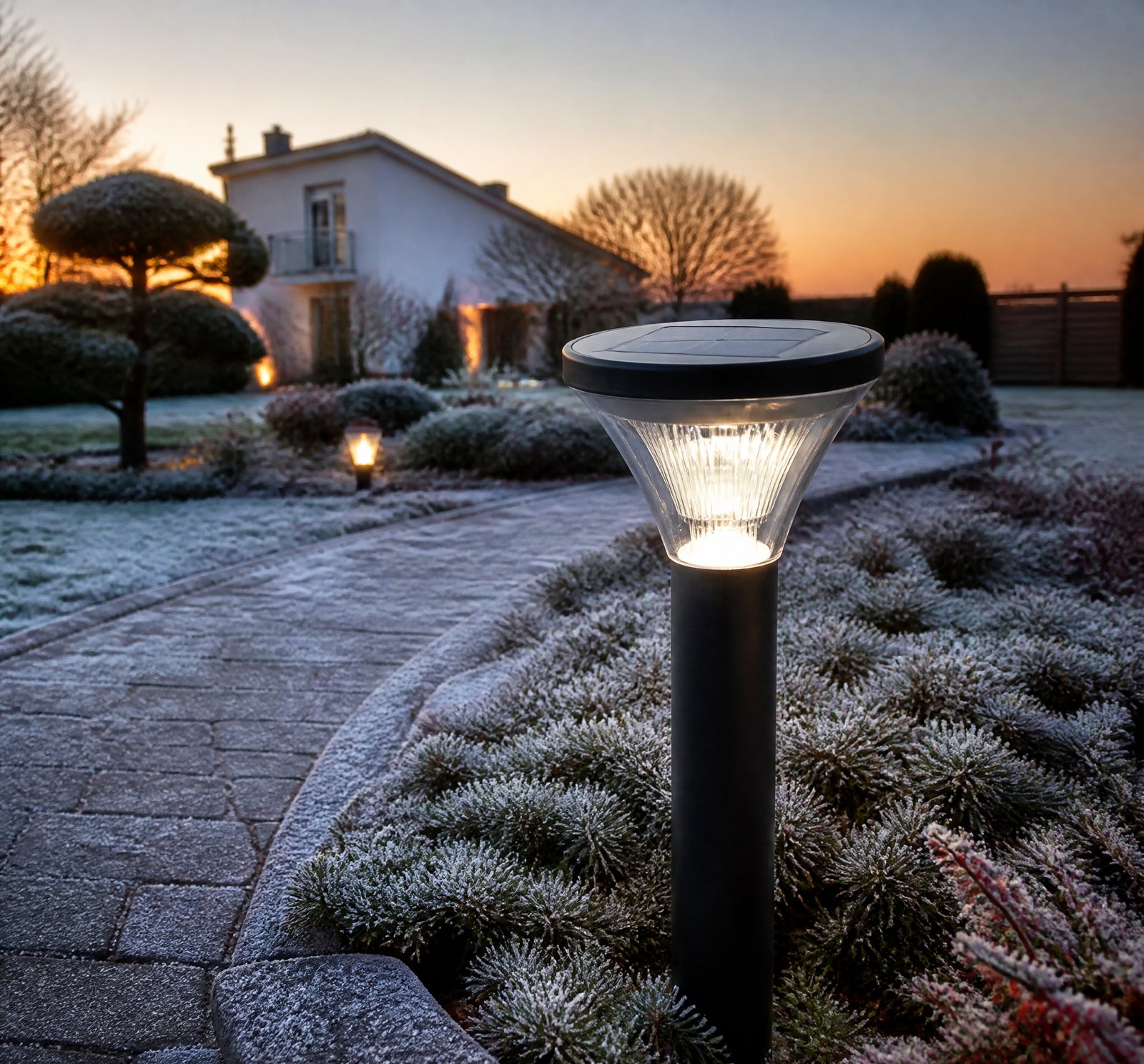
> Quick answer: The lifespan of an outdoor solar lamp is primarily limited by driver circuitry failure and location-specific UV degradation. LEDs degrade more slowly than expected [1], while battery degradation typically occurs within 1-3 years [9].
Understanding the true lifespan of outdoor solar lamps in Romania involves recognizing that these devices are subject to multiple degradation mechanisms. From UV-induced polymer breakdown to electrochemical aging, each component contributes uniquely to the overall longevity of a lamp. This article dives into these processes and their rates, providing insights on how to extend your solar lamp’s life.
Degradation Mechanisms and Their Rates
The lifespan of an outdoor solar lamp is determined not by the intrinsic longevity of its individual components but by the weakest link in a complex system where multiple degradation mechanisms interact [1]. LEDs are often assumed to be the limiting factor due to their long theoretical life, yet evidence shows that catastrophic failure is more commonly caused by non-LED components.
According to a US Department of Energy (DoE) analysis of 5,400 outdoor lamps over 34 million hours, LEDs accounted for only 10% of failures [1]. Driver circuitry was responsible for nearly 60% of failures [1], making the power supply a critical point. The lifetime of any system cannot exceed that of its weakest component, underscoring the importance of robust driver design [1].
LEDs do not typically fail catastrophically but degrade gradually through lumen depreciation—the progressive loss of light output—rather than sudden burnout [11]. L70 is defined as the point where output drops to 70% of initial levels, often reported as B50-L70, meaning 50% of a sample will reach this threshold. While LEDs are expected to last up to 50,000 hours under ideal conditions [9], real-world degradation patterns can vary significantly.
UV Polymer Breakdown and Photovoltaic Panel Degradation
UV-induced degradation (UVID) is a critical factor affecting solar panels. Some modules exhibit strong UV degradation in lab tests equivalent to about one year of exposure in Europe [3][7]. However, the real-world impact is not yet fully confirmed as lab results do not always correlate with field performance [3][7].
Fraunhofer ISE research indicates that UV exposure can destabilize modules during dark storage but subsequent sunlight exposure can reverse this effect through a recovery process [12]. This means standard lab tests may overestimate degradation if they do not include post-UV light soaking. Field data from TOPCon modules show variability, with some exhibiting little to no degradation and others showing up to 5% power loss after UV exposure [12].
The rate of UV degradation in the field is location-dependent. In high-irradiance regions like the Middle East, UV exposure can be 5.4 times greater than in northern Europe, significantly accelerating degradation [4][5]. Studies show that in tropical and desert climates, UV-induced degradation can reach 0.25–0.35% per year, contributing substantially to long-term performance loss [6].
Electrochemical Aging and Battery Degradation
Electrochemical aging and corrosion are significant threats, particularly due to daily exposure to rain, humidity, and groundwater in outdoor environments [8]. The combination of heat, moisture, and electrical current creates ideal conditions for corrosion, which can lead to circuit failure [8].
Battery degradation is another critical factor. Batteries typically last one to three years before capacity diminishes significantly [9], due to chemical aging and repeated charge-discharge cycles.
Thermal Cycling and Mechanical Stress
Thermal cycling driven by daily temperature fluctuations is a major degradation mechanism. Microcracks can form in solar cells and solder bonds, reducing output over time [14][15]. The temperature coefficient measures efficiency loss per degree above 25°C [14][17], with higher ambient temperatures not only reducing real-time efficiency but also accelerating long-term degradation.
Mechanical stress from drops, spills, or rough handling can damage components, especially in portable pico-powered lighting units [8].
Key Takeaways
- Driver circuitry failure is the dominant factor limiting the lifespan of outdoor solar lamps.
- UV-induced degradation varies significantly by location and may be overestimated without accounting for natural recovery processes.
- Battery degradation typically occurs within 1-3 years due to chemical aging and charge-discharge cycles.
References
- [1] What_Happened_To_The_100000-Hour_LED_Bulbs_-_Hackaday__a70b0bb9 — authority
source passage
might be responsible for failures. The US Department of Energy (DoE)’s solid-state lighting program supports research and development of LED technologies, and their website contains volumes of data on LED lighting systems. Their Lifetime and Reliability Fact Sheet contains data on the failure rate of 5,400 outdoor lamps over 34 million hours of operation. Interestingly, the LEDs themselves account for only 10% of the failures; driver circuitry, on the other hand, was responsible almost 60% of the time. The remainder of failures were due to housing problems, which may not be as applicable for bulbs in indoor use. This data shows that at least for catastrophic failures (where the lamp ceases to emit light), extending lifetime means improving the power supplies. Locate the Weakest Link: Component Lifetime The lifetime of a bulb (or power supply) can be no longer than the lifetime of any of its components. Among the components found inside the bulbs, two stand out as life-limiters: the semiconductors and the electrolytic capacitors. Both of these components suffer from a failure rate that is a strong function of temperature. The typical model for this effect, based on the Arrhenius equation, predicts a doubling of lifetime for each 10 degree Celsius decrease in temperature, at least over a limited range. The two longer-lived bulbs use twice as many packages to carry approximately the same number of LED dice as the GE Basic lamp, decreasing thermal resistance to their respective h
- [3] Uncovering_UV_degradation_risks_in_solar_panels_-_pv_magazine__009c501f — magazine
source passage
# Uncovering UV degradation risks in solar panels – pv magazine Global Source: Blog/Web URL: https://www.pv-magazine.com/2025/08/21/uncovering-uv-degradation-risks-in-solar-panels/ Author: Mark Hutchins Date: 2025-08-21 From pv magazine 6/25 “The Hunt for High Efficiency” Can you give some background on recent industry concerns around ultraviolet-induced degradation in PV modules? For around two and a half years, we have been involved in several projects where larger module buyers benchmark different module types against each other in terms of reliability. In this context, we realized that there was strong UV degradation in lab tests for some modules. This came alongside some other issues like mechanical load or damp heat degradation, but the UV degradation was the most surprising to us, and to others in the industry, including some module manufacturers. To put it simply, the applied UV dose in the test typically corresponds to about one year of exposure in Europe. If this lab degradation appeared in the field, this would mean that the economic viability of many large PV projects could be significantly impaired, just because of the amount of UV-related performance loss. And have you seen these levels of UV degradation start to appear in modules already in the field? This is where another recent finding comes in. We quickly realized that these modules did not show stable behavior after UV testing in the lab. Depending on the storage and light conditions, we sometimes saw very
- [4] Solving_the_UV_problem_of_n-type_solar_-_pv_magazine_Global__bfc868bc — magazine
source passage
got from the research community suggests that for these more delicate cell structures, UV is a more significant factor,” said Erion-Lorico. “It was reintroduced into extended reliability tests, including Kiwa PVEL’s PQP.” Devising accelerated tests to accurately predict how UV light will affect PV modules over 30 years in the field poses a significant challenge. Tests can currently accelerate by a factor of around five – meaning that one full year in a UV test chamber would represent five years installed in the field, according to Erion-Lorico’s estimates. “It’s hard to accelerate UV testing much more than we’re already doing and still have the results representative to field conditions, not just frying the module,” he explained. Added complexity also comes from the very different levels of UV exposure modules can experience, depending on where they are installed. Data from the Middle East Solar Industry Association indicate that a module installed in Dubai receives 5.4 times the UV exposure of one installed in Berlin, for example. RETC Chief Executive Cherif Kedir said, in a September 2024 pv magazine webinar, that UV degradation is a cumulative effect and even where testing has shown a module is susceptible to UV damage, longer term observation is needed to indicate the progression over time. “We’re trying to perform long term UV exposures to see if [a PV module] keeps degrading every year,” said Kedir, adding that another unknown is whether even low-level UV degradation co
- [5] Solving_the_UV_problem_of_n-type_solar_-_pv_magazine_Global__bfc868bc — authority
source passage
got from the research community suggests that for these more delicate cell structures, UV is a more significant factor,” said Erion-Lorico. “It was reintroduced into extended reliability tests, including Kiwa PVEL’s PQP.” Devising accelerated tests to accurately predict how UV light will affect PV modules over 30 years in the field poses a significant challenge. Tests can currently accelerate by a factor of around five – meaning that one full year in a UV test chamber would represent five years installed in the field, according to Erion-Lorico’s estimates. “It’s hard to accelerate UV testing much more than we’re already doing and still have the results representative to field conditions, not just frying the module,” he explained. Added complexity also comes from the very different levels of UV exposure modules can experience, depending on where they are installed. Data from the Middle East Solar Industry Association indicate that a module installed in Dubai receives 5.4 times the UV exposure of one installed in Berlin, for example. RETC Chief Executive Cherif Kedir said, in a September 2024 pv magazine webinar, that UV degradation is a cumulative effect and even where testing has shown a module is susceptible to UV damage, longer term observation is needed to indicate the progression over time. “We’re trying to perform long term UV exposures to see if [a PV module] keeps degrading every year,” said Kedir, adding that another unknown is whether even low-level UV degradation co
- [6] UNSW_study_finds_tracker-based_PV_systems_-_pv_magazine_Global__7e8abfb2 — magazine
source passage
installations. Over the course of a typical project lifetime, this difference can accumulate to several percentage points of additional power loss, directly impacting the economics and long-term performance of the PV system. The study also showed that identical PV modules can degrade at markedly different rates depending on their installation location. The key factors driving this variability include UV irradiance, temperature, humidity, and atmospheric conditions such as ozone levels, aerosols, and cloud cover. Among the most challenging environments are tropical and desert regions, where high UV exposure combines with intense thermal and environmental stress, accelerating module degradation. “Current standards significantly underestimate real-world UV exposure, in some cases by orders of magnitude relative to lifetime conditions,” Hoex stressed. “UV exposure varies significantly with location and system configuration, with tracking systems experiencing up to around two times higher degradation rates in high-irradiance regions. In arid and tropical climates, UV-induced degradation can reach about 0.25–0.35%/year, contributing substantially to long-term performance loss.” The novel high-precision model to estimate UV radiation in PV systems was presented in the paper “Closing the UV-Induced Photodegradation Gap Through Global Scale Modeling of Fixed Tilt and Tracking Photovoltaic Systems,” pubished in the IEEE Journal of Photovoltaics. “This work forms part of our group’s bro
- [7] A_better_understanding_of_UV_degradation_-_pv_magazine_Global__cf8fb0c2 — magazine
source passage
# A better understanding of UV degradation – pv magazine Global Source: Blog/Web URL: https://www.pv-magazine.com/2025/07/31/a-better-understanding-of-uv-degradation/ Author: Mark Hutchins Date: 2025-07-31 Can you give some background on recent industry concerns around ultraviolet-induced degradation in PV modules? For around two and a half years, we have been involved in several projects where larger module buyers benchmark different module types against each other in terms of reliability. In this context, we realized that there was strong UV degradation in lab tests for some modules. This came alongside some other issues like mechanical load or damp heat degradation, but the UV degradation was the most surprising to us, and to others in the industry, including some module manufacturers. To put it simply, the applied UV dose in the test typically corresponds to about one year of exposure in Europe. If this lab degradation appeared in the field, this would mean that the economic viability of many large PV projects could be significantly impaired, just because of the amount of UV-related performance loss. And have you seen these levels of UV degradation start to appear in modules already in the field? This is where another recent finding comes in. We quickly realized that these modules did not show stable behavior after UV testing in the lab. Depending on the storage and light conditions, we sometimes saw very strong degradation, but also something like recovery. What the comm
- [8] Preventing_Electronic_Corrosion_in_Solar_Lights_-_Lighting_Global__2847d2ff — authority
source passage
# Preventing Electronic Corrosion in Solar Lights – Lighting Global Source: Blog/Web URL: https://www.lightingglobal.org/preventing-electronic-corrosion-in-solar-lights/ Author: Jen Date: 2013-09-27 Preventing Electronic Corrosion in Solar Lights Lighting Global has published the 14th issue of the Technical Briefing Notes titled “Protection from the Elements Part III: Corrosion of Electronics“. This is the third article in a four-part series examining the environmental durability of pico-powered lighting products. The article describes the chemical processes and environmental mechanisms of electronic corrosion in a solar lighting system, and provides steps manufacturers can take to increase the corrosion resistance of their products. It notes that most pico‐powered lighting products are exposed to intense sunlight and heat on a daily basis. They are also continually moved around because of their portability rendering them vulnerable to drops and spills. Furthermore, they get dirty from ground contact and rough handling, and many will be exposed to water in the form of rainfall, moisture in the air, and groundwater contact making their components vulnerable to corrosion. “The electronic nature of pico‐powered lighting products coupled with their typical service environment creates an atmosphere that can be very conducive to corrosion. The batteries, electronic circuit boards, LED lights, and multiple external connectors (for wires between product components) are all potentiall
- [9] The_Best_Solar_Path_Lights_Family_Handyman__678b96d2 — reddit
source passage
lights do wear out over time, but their lifespan can vary depending on several factors,” Price says. “The batteries in these lights typically last between one to three years. Over time, the battery’s capacity will diminish, leading to shorter illumination periods. Solar panels themselves can also degrade, losing efficiency after several years of exposure to the elements. The materials used in the lights, such as plastics and metals, will also experience wear and tear due to weather conditions like UV exposure, rain, and temperature changes.” Price also notes that the LEDs used in solar lights tend to “have a long lifespan, often up to 50,000 hours, so they are unlikely to be the first component to fail. Regular maintenance, such as cleaning the solar panels and checking the battery connections, can help prolong the life of your solar path lights.” How long do solar path lights last? Solar path lights span two to five years, depending on the materials they’re crafted from. The update of the lighted also dictates their longevity. What is the downside of solar path lights? The only downside to solar-powered lights is that when seasons begin to change, and darkness sets in earlier, the lights can lose their charge, which normally lasts for eight to twelve hours. Once the weather changes, the light’s performance can also change temporarily. Also, don’t forget to check out these awesome solar fence lights and solar lights for camping.
- [11] What_Happened_To_The_100000-Hour_LED_Bulbs_-_Hackaday__a70b0bb9 — authority
source passage
in Douglas MacArthur’s famous line, old LEDs don’t die, they just fade away. We all know what an incandescent lamp failure looks like: one second it’s burning bright; the next, it’s not (and every once-in-a-while, you hear a pop followed by a faint jingling as the liberated filament richochets inside the bulb). Power supplies aside, LEDs typically don’t fail with so much fanfare. Instead, they gradually lose brightness as they age. In the lighting industry, this is known as lumen depreciation, and is a separate failure mode from the catastrophic failure we usually think about. As it turns out, lumen depreciation happens to incandescent bulbs, too. By the end of their 1,000 hour life, the output has typically dropped 10-15%, but nobody ever notices. With LEDs, the effect is much worse, and the output continues to fall as the device ages. At some point, the LED is no longer producing enough light to fulfill its original purpose, even though it hasn’t “burned out.” Research says that most users won’t notice a gradual 30% drop in light levels; accordingly the industry has defined L70, the time at which the output has dropped to 70% of its initial level, as an endpoint for measuring LED bulb lifetime. Based on how it’s estimated, this measure is typically stated as B50-L70, the point at which 50% of an initial sample of bulbs will retain 70% of their rated output. Color Shift Happens But is Unpredictable Something else happens as phosphor-based white LEDs age: they change color. T
- [12] Fraunhofer_ISE_evaluates_common_UV_tests_for_TOPCon_modules_for__b48bffd7 — authority
source passage
it remains necessary to further analyze the phenomenon to more accurately predict the long-term effects of UV-induced degradation on module yield.” The investigations by the Fraunhofer ISE research team indicate that UV irradiation during the tests destabilizes the modules to such an extent that they lose a great deal of efficiency during dark storage after UV exposure. Subsequent irradiation with sunlight, on the other hand, leads to a significant recovery effect. Field tests at the Fraunhofer ISE Outdoor Performance Lab with TOPCon modules and analyses of 'field returns' at the institute's CalLab PV Modules, indicate that this stabilization process provides degradation measurements that are significantly closer to the values measured in practice. Some PV modules showed hardly any degradation after UV testing at 60 kilowatt hours per square meter, which roughly corresponds to the UV exposure in one year in Germany, and subsequent stabilization under sunlight. Other modules still showed significant power losses of up to 5 percent even after stabilization. Overall, however, the degradation is significantly less drastic than the standard UV tests suggest. Laboratory UV tests simulate the natural UV radiation to which PV modules are exposed in the field and on roofs, but significantly increase the intensity of the irradiation to accelerate aging and thus be able to predict long-term power losses. Last modified:
- [14] How_long_do_rooftop_residential_solar_panels_last_-_pv_magazine_Global__7bebb092 — authority
source passage
to decline, in some cases significantly. All panels also suffer something called light induced degradation (LID), in which panels lose efficiency within the first hours of being exposed to the sun. LID varies from panel to panel based on the quality of the crystalline silicon wafers, but usually results in a one-time, 1% to 3% loss in efficiency, said testing laboratory PVEL, PV Evolution Labs. Weather conditions The exposure to weather conditions is the main driver in panel degradation. Heat is a key factor in both real-time panel performance and degradation over time. Ambient heat negatively affects the performance and efficiency of electrical components, according to NREL. By checking the manufacturer’s data sheet, a panel’s temperature coefficient can be found, which will demonstrate the panel’s ability to perform in higher temperatures, said SolarCalculator.com. Heat exchange also drives degradation through a process called thermal cycling. When it is warm, materials expand, and when the temperature lowers, they contract. This movement slowly causes microcracks to form in the panel over time, lowering output.The coefficient explains how much efficiency is lost by each degree of Celsius increased above the standard temperature of 25 C. For example, a temperature coefficient of -0.353% means that for every degree Celsius above 25, 0.353% of total production capability is lost. In its annual Module Score Card study, PVEL analyzed 36 operational solar projects in India, and
- [15] What_forces_cause_solar_panel_degradation_and_failure__8652ad31 — magazine
source passage
# What forces cause solar panel degradation and failure Source: Blog/Web URL: https://www.solarpowerworldonline.com/2017/06/causes-solar-panel-degradation/ Author: Kelly Pickerel Date: 2017-06-05 Although crystalline solar power panels are often sold with 25- to 30-year lifespan guarantees, those 30-year-old modules won’t be performing as well as they did on Day 1. Performance declines as solar cells experience degradation due to unavoidable circumstances like UV exposure and weather cycles. Manufacturers realize this, so solar panels come with a power output or performance warranty that usually guarantees 80% production at 25 years. Panel companies are only comfortable offering this guarantee because of a 2012 NREL study (“Photovoltaic Degradation Rates—An Analytical Review”) that found solar panels degrade about 0.5% to 3% each year, barring any equipment issues. So panels degrade automatically; that’s worked into their performance warranties. There are also outside forces that can contribute to a panel’s degradation and possible failure. We talked with Sarah Kurtz, research fellow at NREL and co-author of that oft-cited 2012 study, on how technology and manufacturing changes, along with installation practices, affect degradation rates. A complex issue According to NREL, modules can fail because of unavoidable elements like thermal cycling, damp heat, humidity freeze and UV exposure. Thermal cycling can cause solder bond failures and cracks in solar cells. Damp heat has bee
- [17] How_long_do_residential_solar_panels_last_pv_magazine_International__a1e59f16 — authority
source passage
materials in their glass, encapsulation, and diffusion barriers. All panels also suffer something called light-induced degradation (LID), in which panels lose efficiency within the first hours of being exposed to the sun. LID varies from panel to panel based on the quality of the crystalline silicon wafers, but usually results in a one-time, 1-3% loss in efficiency, said testing laboratory PVEL, PV Evolution Labs. Weathering The exposure to weather conditions is the main driver in panel degradation. Heat is a key factor in both real-time panel performance and degradation over time. Ambient heat negatively affects the performance and efficiency of electrical components, according to NREL. By checking the manufacturer’s data sheet, a panel’s temperature coefficient can be found, which will demonstrate the panel’s ability to perform in higher temperatures. The coefficient explains how much real-time efficiency is lost by each degree Celsius increase above the standard temperature of 25 degrees Celsius. For example, a temperature coefficient of -0.353% means that for every degree Celsius above 25, 0.353% of total production capability is lost. Heat exchange drives panel degradation through a process called thermal cycling. When it is warm, materials expand, and when the temperature lowers, they contract. This movement slowly causes microcracks to form in the panel over time, lowering output. In its annual Module Score Card study, PVEL analyzed 36 operational solar projects in Ind
might be responsible for failures. The US Department of Energy (DoE)’s solid-state lighting program supports research and development of LED technologies, and their website contains volumes of data on LED lighting systems. Their Lifetime and Reliability Fact Sheet contains data on the failure rate of 5,400 outdoor lamps over 34 million hours of operation. Interestingly, the LEDs themselves account for only 10% of the failures; driver circuitry, on the other hand, was responsible almost 60% of the time. The remainder of failures were due to housing problems, which may not be as applicable for bulbs in indoor use. This data shows that at least for catastrophic failures (where the lamp ceases to emit light), extending lifetime means improving the power supplies. Locate the Weakest Link: Component Lifetime The lifetime of a bulb (or power supply) can be no longer than the lifetime of any of its components. Among the components found inside the bulbs, two stand out as life-limiters: the semiconductors and the electrolytic capacitors. Both of these components suffer from a failure rate that is a strong function of temperature. The typical model for this effect, based on the Arrhenius equation, predicts a doubling of lifetime for each 10 degree Celsius decrease in temperature, at least over a limited range. The two longer-lived bulbs use twice as many packages to carry approximately the same number of LED dice as the GE Basic lamp, decreasing thermal resistance to their respective h
# Uncovering UV degradation risks in solar panels – pv magazine Global Source: Blog/Web URL: https://www.pv-magazine.com/2025/08/21/uncovering-uv-degradation-risks-in-solar-panels/ Author: Mark Hutchins Date: 2025-08-21 From pv magazine 6/25 “The Hunt for High Efficiency” Can you give some background on recent industry concerns around ultraviolet-induced degradation in PV modules? For around two and a half years, we have been involved in several projects where larger module buyers benchmark different module types against each other in terms of reliability. In this context, we realized that there was strong UV degradation in lab tests for some modules. This came alongside some other issues like mechanical load or damp heat degradation, but the UV degradation was the most surprising to us, and to others in the industry, including some module manufacturers. To put it simply, the applied UV dose in the test typically corresponds to about one year of exposure in Europe. If this lab degradation appeared in the field, this would mean that the economic viability of many large PV projects could be significantly impaired, just because of the amount of UV-related performance loss. And have you seen these levels of UV degradation start to appear in modules already in the field? This is where another recent finding comes in. We quickly realized that these modules did not show stable behavior after UV testing in the lab. Depending on the storage and light conditions, we sometimes saw very
got from the research community suggests that for these more delicate cell structures, UV is a more significant factor,” said Erion-Lorico. “It was reintroduced into extended reliability tests, including Kiwa PVEL’s PQP.” Devising accelerated tests to accurately predict how UV light will affect PV modules over 30 years in the field poses a significant challenge. Tests can currently accelerate by a factor of around five – meaning that one full year in a UV test chamber would represent five years installed in the field, according to Erion-Lorico’s estimates. “It’s hard to accelerate UV testing much more than we’re already doing and still have the results representative to field conditions, not just frying the module,” he explained. Added complexity also comes from the very different levels of UV exposure modules can experience, depending on where they are installed. Data from the Middle East Solar Industry Association indicate that a module installed in Dubai receives 5.4 times the UV exposure of one installed in Berlin, for example. RETC Chief Executive Cherif Kedir said, in a September 2024 pv magazine webinar, that UV degradation is a cumulative effect and even where testing has shown a module is susceptible to UV damage, longer term observation is needed to indicate the progression over time. “We’re trying to perform long term UV exposures to see if [a PV module] keeps degrading every year,” said Kedir, adding that another unknown is whether even low-level UV degradation co
got from the research community suggests that for these more delicate cell structures, UV is a more significant factor,” said Erion-Lorico. “It was reintroduced into extended reliability tests, including Kiwa PVEL’s PQP.” Devising accelerated tests to accurately predict how UV light will affect PV modules over 30 years in the field poses a significant challenge. Tests can currently accelerate by a factor of around five – meaning that one full year in a UV test chamber would represent five years installed in the field, according to Erion-Lorico’s estimates. “It’s hard to accelerate UV testing much more than we’re already doing and still have the results representative to field conditions, not just frying the module,” he explained. Added complexity also comes from the very different levels of UV exposure modules can experience, depending on where they are installed. Data from the Middle East Solar Industry Association indicate that a module installed in Dubai receives 5.4 times the UV exposure of one installed in Berlin, for example. RETC Chief Executive Cherif Kedir said, in a September 2024 pv magazine webinar, that UV degradation is a cumulative effect and even where testing has shown a module is susceptible to UV damage, longer term observation is needed to indicate the progression over time. “We’re trying to perform long term UV exposures to see if [a PV module] keeps degrading every year,” said Kedir, adding that another unknown is whether even low-level UV degradation co
installations. Over the course of a typical project lifetime, this difference can accumulate to several percentage points of additional power loss, directly impacting the economics and long-term performance of the PV system. The study also showed that identical PV modules can degrade at markedly different rates depending on their installation location. The key factors driving this variability include UV irradiance, temperature, humidity, and atmospheric conditions such as ozone levels, aerosols, and cloud cover. Among the most challenging environments are tropical and desert regions, where high UV exposure combines with intense thermal and environmental stress, accelerating module degradation. “Current standards significantly underestimate real-world UV exposure, in some cases by orders of magnitude relative to lifetime conditions,” Hoex stressed. “UV exposure varies significantly with location and system configuration, with tracking systems experiencing up to around two times higher degradation rates in high-irradiance regions. In arid and tropical climates, UV-induced degradation can reach about 0.25–0.35%/year, contributing substantially to long-term performance loss.” The novel high-precision model to estimate UV radiation in PV systems was presented in the paper “Closing the UV-Induced Photodegradation Gap Through Global Scale Modeling of Fixed Tilt and Tracking Photovoltaic Systems,” pubished in the IEEE Journal of Photovoltaics. “This work forms part of our group’s bro
# A better understanding of UV degradation – pv magazine Global Source: Blog/Web URL: https://www.pv-magazine.com/2025/07/31/a-better-understanding-of-uv-degradation/ Author: Mark Hutchins Date: 2025-07-31 Can you give some background on recent industry concerns around ultraviolet-induced degradation in PV modules? For around two and a half years, we have been involved in several projects where larger module buyers benchmark different module types against each other in terms of reliability. In this context, we realized that there was strong UV degradation in lab tests for some modules. This came alongside some other issues like mechanical load or damp heat degradation, but the UV degradation was the most surprising to us, and to others in the industry, including some module manufacturers. To put it simply, the applied UV dose in the test typically corresponds to about one year of exposure in Europe. If this lab degradation appeared in the field, this would mean that the economic viability of many large PV projects could be significantly impaired, just because of the amount of UV-related performance loss. And have you seen these levels of UV degradation start to appear in modules already in the field? This is where another recent finding comes in. We quickly realized that these modules did not show stable behavior after UV testing in the lab. Depending on the storage and light conditions, we sometimes saw very strong degradation, but also something like recovery. What the comm
# Preventing Electronic Corrosion in Solar Lights – Lighting Global Source: Blog/Web URL: https://www.lightingglobal.org/preventing-electronic-corrosion-in-solar-lights/ Author: Jen Date: 2013-09-27 Preventing Electronic Corrosion in Solar Lights Lighting Global has published the 14th issue of the Technical Briefing Notes titled “Protection from the Elements Part III: Corrosion of Electronics“. This is the third article in a four-part series examining the environmental durability of pico-powered lighting products. The article describes the chemical processes and environmental mechanisms of electronic corrosion in a solar lighting system, and provides steps manufacturers can take to increase the corrosion resistance of their products. It notes that most pico‐powered lighting products are exposed to intense sunlight and heat on a daily basis. They are also continually moved around because of their portability rendering them vulnerable to drops and spills. Furthermore, they get dirty from ground contact and rough handling, and many will be exposed to water in the form of rainfall, moisture in the air, and groundwater contact making their components vulnerable to corrosion. “The electronic nature of pico‐powered lighting products coupled with their typical service environment creates an atmosphere that can be very conducive to corrosion. The batteries, electronic circuit boards, LED lights, and multiple external connectors (for wires between product components) are all potentiall
lights do wear out over time, but their lifespan can vary depending on several factors,” Price says. “The batteries in these lights typically last between one to three years. Over time, the battery’s capacity will diminish, leading to shorter illumination periods. Solar panels themselves can also degrade, losing efficiency after several years of exposure to the elements. The materials used in the lights, such as plastics and metals, will also experience wear and tear due to weather conditions like UV exposure, rain, and temperature changes.” Price also notes that the LEDs used in solar lights tend to “have a long lifespan, often up to 50,000 hours, so they are unlikely to be the first component to fail. Regular maintenance, such as cleaning the solar panels and checking the battery connections, can help prolong the life of your solar path lights.” How long do solar path lights last? Solar path lights span two to five years, depending on the materials they’re crafted from. The update of the lighted also dictates their longevity. What is the downside of solar path lights? The only downside to solar-powered lights is that when seasons begin to change, and darkness sets in earlier, the lights can lose their charge, which normally lasts for eight to twelve hours. Once the weather changes, the light’s performance can also change temporarily. Also, don’t forget to check out these awesome solar fence lights and solar lights for camping.
in Douglas MacArthur’s famous line, old LEDs don’t die, they just fade away. We all know what an incandescent lamp failure looks like: one second it’s burning bright; the next, it’s not (and every once-in-a-while, you hear a pop followed by a faint jingling as the liberated filament richochets inside the bulb). Power supplies aside, LEDs typically don’t fail with so much fanfare. Instead, they gradually lose brightness as they age. In the lighting industry, this is known as lumen depreciation, and is a separate failure mode from the catastrophic failure we usually think about. As it turns out, lumen depreciation happens to incandescent bulbs, too. By the end of their 1,000 hour life, the output has typically dropped 10-15%, but nobody ever notices. With LEDs, the effect is much worse, and the output continues to fall as the device ages. At some point, the LED is no longer producing enough light to fulfill its original purpose, even though it hasn’t “burned out.” Research says that most users won’t notice a gradual 30% drop in light levels; accordingly the industry has defined L70, the time at which the output has dropped to 70% of its initial level, as an endpoint for measuring LED bulb lifetime. Based on how it’s estimated, this measure is typically stated as B50-L70, the point at which 50% of an initial sample of bulbs will retain 70% of their rated output. Color Shift Happens But is Unpredictable Something else happens as phosphor-based white LEDs age: they change color. T
it remains necessary to further analyze the phenomenon to more accurately predict the long-term effects of UV-induced degradation on module yield.” The investigations by the Fraunhofer ISE research team indicate that UV irradiation during the tests destabilizes the modules to such an extent that they lose a great deal of efficiency during dark storage after UV exposure. Subsequent irradiation with sunlight, on the other hand, leads to a significant recovery effect. Field tests at the Fraunhofer ISE Outdoor Performance Lab with TOPCon modules and analyses of 'field returns' at the institute's CalLab PV Modules, indicate that this stabilization process provides degradation measurements that are significantly closer to the values measured in practice. Some PV modules showed hardly any degradation after UV testing at 60 kilowatt hours per square meter, which roughly corresponds to the UV exposure in one year in Germany, and subsequent stabilization under sunlight. Other modules still showed significant power losses of up to 5 percent even after stabilization. Overall, however, the degradation is significantly less drastic than the standard UV tests suggest. Laboratory UV tests simulate the natural UV radiation to which PV modules are exposed in the field and on roofs, but significantly increase the intensity of the irradiation to accelerate aging and thus be able to predict long-term power losses. Last modified:
to decline, in some cases significantly. All panels also suffer something called light induced degradation (LID), in which panels lose efficiency within the first hours of being exposed to the sun. LID varies from panel to panel based on the quality of the crystalline silicon wafers, but usually results in a one-time, 1% to 3% loss in efficiency, said testing laboratory PVEL, PV Evolution Labs. Weather conditions The exposure to weather conditions is the main driver in panel degradation. Heat is a key factor in both real-time panel performance and degradation over time. Ambient heat negatively affects the performance and efficiency of electrical components, according to NREL. By checking the manufacturer’s data sheet, a panel’s temperature coefficient can be found, which will demonstrate the panel’s ability to perform in higher temperatures, said SolarCalculator.com. Heat exchange also drives degradation through a process called thermal cycling. When it is warm, materials expand, and when the temperature lowers, they contract. This movement slowly causes microcracks to form in the panel over time, lowering output.The coefficient explains how much efficiency is lost by each degree of Celsius increased above the standard temperature of 25 C. For example, a temperature coefficient of -0.353% means that for every degree Celsius above 25, 0.353% of total production capability is lost. In its annual Module Score Card study, PVEL analyzed 36 operational solar projects in India, and
# What forces cause solar panel degradation and failure Source: Blog/Web URL: https://www.solarpowerworldonline.com/2017/06/causes-solar-panel-degradation/ Author: Kelly Pickerel Date: 2017-06-05 Although crystalline solar power panels are often sold with 25- to 30-year lifespan guarantees, those 30-year-old modules won’t be performing as well as they did on Day 1. Performance declines as solar cells experience degradation due to unavoidable circumstances like UV exposure and weather cycles. Manufacturers realize this, so solar panels come with a power output or performance warranty that usually guarantees 80% production at 25 years. Panel companies are only comfortable offering this guarantee because of a 2012 NREL study (“Photovoltaic Degradation Rates—An Analytical Review”) that found solar panels degrade about 0.5% to 3% each year, barring any equipment issues. So panels degrade automatically; that’s worked into their performance warranties. There are also outside forces that can contribute to a panel’s degradation and possible failure. We talked with Sarah Kurtz, research fellow at NREL and co-author of that oft-cited 2012 study, on how technology and manufacturing changes, along with installation practices, affect degradation rates. A complex issue According to NREL, modules can fail because of unavoidable elements like thermal cycling, damp heat, humidity freeze and UV exposure. Thermal cycling can cause solder bond failures and cracks in solar cells. Damp heat has bee
materials in their glass, encapsulation, and diffusion barriers. All panels also suffer something called light-induced degradation (LID), in which panels lose efficiency within the first hours of being exposed to the sun. LID varies from panel to panel based on the quality of the crystalline silicon wafers, but usually results in a one-time, 1-3% loss in efficiency, said testing laboratory PVEL, PV Evolution Labs. Weathering The exposure to weather conditions is the main driver in panel degradation. Heat is a key factor in both real-time panel performance and degradation over time. Ambient heat negatively affects the performance and efficiency of electrical components, according to NREL. By checking the manufacturer’s data sheet, a panel’s temperature coefficient can be found, which will demonstrate the panel’s ability to perform in higher temperatures. The coefficient explains how much real-time efficiency is lost by each degree Celsius increase above the standard temperature of 25 degrees Celsius. For example, a temperature coefficient of -0.353% means that for every degree Celsius above 25, 0.353% of total production capability is lost. Heat exchange drives panel degradation through a process called thermal cycling. When it is warm, materials expand, and when the temperature lowers, they contract. This movement slowly causes microcracks to form in the panel over time, lowering output. In its annual Module Score Card study, PVEL analyzed 36 operational solar projects in Ind