
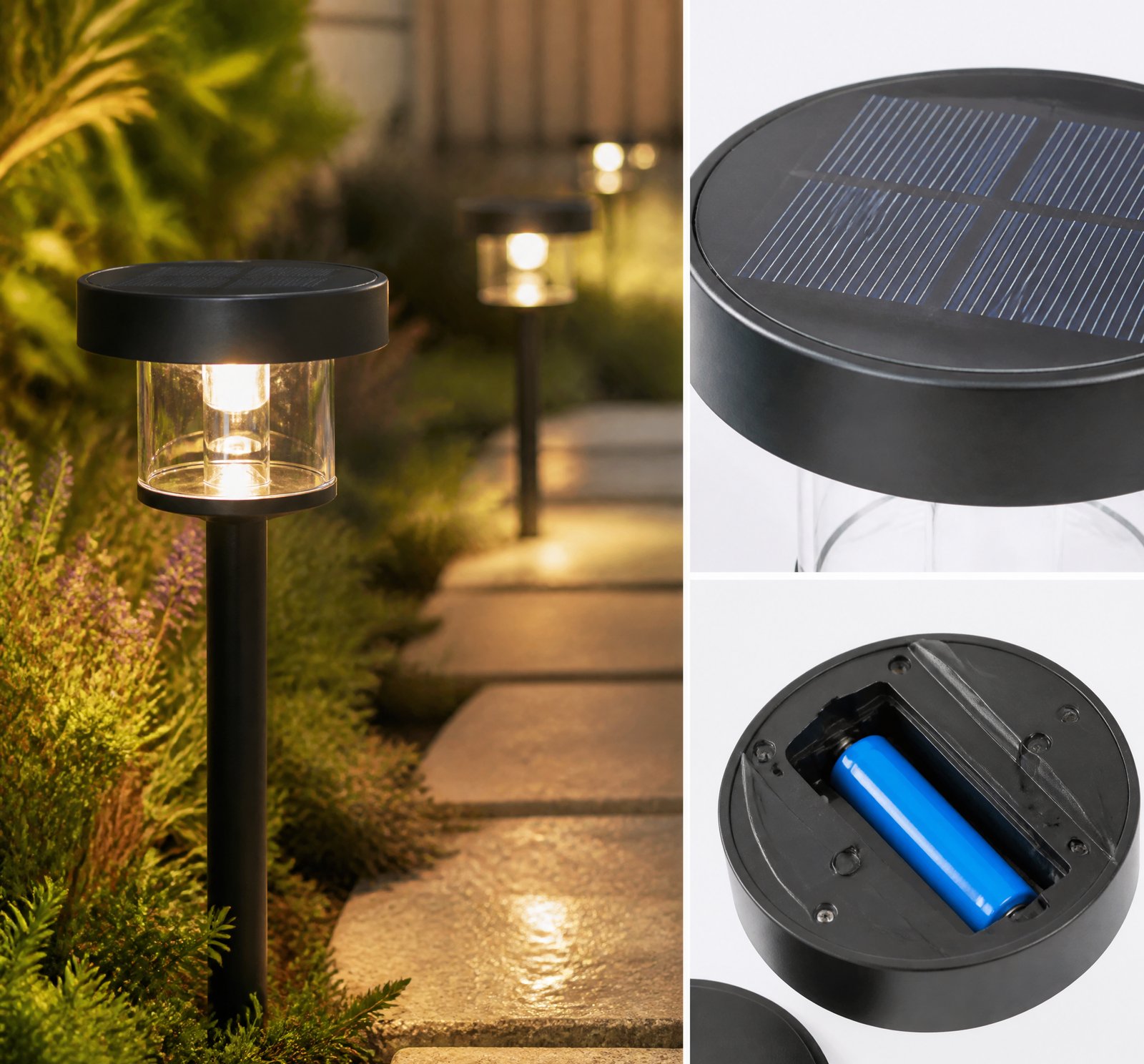
> Quick answer: Temperature management and robust Battery Management Systems (BMS) are key predictors of long service life in solar lamps [13][20]. LFP chemistries support high cycle life, while operational data monitoring enables early failure detection [7][1].
Ensuring Longevity in Solar Lamps: Key Factors for Romanian Households
In Romania’s diverse climate and environment, the longevity of solar lamps is crucial for sustainable lighting solutions. This article delves into the most influential factors that predict long service life in solar lamps, focusing on battery management systems (BMS), temperature control, and cell chemistry.
Temperature Management: A Critical Factor
Temperature emerges as a dominant stressor affecting battery performance and longevity [13][20]. Standard lithium batteries struggle to charge properly below 10°C or above 50°C, with extreme temperatures leading to permanent damage. Managing these environmental conditions is essential for maintaining optimal battery health.
How Temperature Affects Battery Life
Lithium-ion batteries are particularly sensitive to temperature extremes. Below 10°C, the chemical reactions within the battery slow down, reducing charge efficiency and capacity [13]. Conversely, temperatures above 50°C accelerate degradation processes, causing permanent damage and significant reduction in lifespan [20].
The Role of Battery Management Systems (BMS)
A robust BMS is a critical determinant of longevity. Without an intelligent BMS, voltage imbalance between cells can occur, leading to premature failure [13]. Periodic self-imposed discharge measurements and detailed modeling are essential for predicting failures and enabling timely replacement [18].
Smart BMS Features
Smart BMS systems use machine learning to analyze operational data such as voltage curves. These features help predict degradation in commercial LFP/graphite cells with high accuracy, even detecting subtle early signs of failure [1]. Effective monitoring and management through a smart BMS can significantly extend the service life of solar lamp batteries.
Influence of Battery Chemistry
The choice of cell chemistry is another significant predictor of long service life. Low-cost solar lamps often use lead-acid or recycled lithium cells with only 300–500 full charge cycles [13]. In contrast, high-performance systems using LFP (lithium iron phosphate) can achieve up to 12,000 cycles over 25 years [7].
Comparison of Battery Chemistries
| Chemistry | Cycle Life | Safety |
|––––|––––|–––|
| Lead-Acid | 300-500 | Low |
| LFP | 12,000 | High |
Data Quality and Predictive Analytics
Data quality is crucial for accurate failure prediction. Features like temperature, float voltage, and ohmic resistance are used as inputs for machine learning models that predict battery health [1][2]. Tracking these features over time provides a baseline for detecting degradation.
Early Detection Through Data Monitoring
Monitoring operational data during the first 10% of a battery’s life is essential. This early detection allows timely intervention, preventing premature failure and ensuring prolonged service life [20].
System Design and Integration
System design plays a significant role in extending battery longevity. For instance, all-in-one solar street lights with integrated components can reduce external exposure and improve thermal management [19]. Large-scale storage systems using liquid cooling and 1,500-volt configurations have improved efficiency and energy density, indirectly supporting longer life.
Integrated Systems for Better Performance
Integrated solar lamps minimize external exposure and optimize thermal management, contributing to enhanced battery performance. Design considerations like these are essential for ensuring long-term reliability [7].
Conclusion: External Factors Over Cell Construction
Contrary to common assumptions, the intrinsic design of the cell itself is less predictive of service life than operational environment, BMS systems, and cycle life supported by LFP chemistry [13][20]. The precise role of specific cell construction features remains unspecified in current research.
Key Takeaways
- Temperature Management: Crucial for maintaining optimal battery health.
- BMS Systems: Essential for predicting failures and extending longevity.
- LFP Chemistry: Supports high cycle life and enhanced safety.
- Data Monitoring: Enables early detection of degradation and timely intervention.
Frequently Asked Questions
[{„q”: „How do extreme temperatures affect solar lamp batteries?”, „a”: „Extreme temperatures below 10°C or above 50°C can slow down chemical reactions, reducing charge efficiency and causing permanent damage [13][20].”},
{„q”: „What role does a smart BMS play in battery longevity?”, „a”: „A robust BMS uses machine learning to predict degradation and detect early failure signs, extending the service life of solar lamp batteries [18][1].”},
{„q”: „Why is LFP chemistry preferred for long-lasting solar lamps?”, „a”: „LFP chemistries support up to 12,000 cycles over 25 years, offering high cycle life and enhanced safety compared to other cell types [7].”}]
References
- [1] Battery_Power_Online_Predicting_and_Preventing_Thermal__4de81c23 — magazine
source passage
system. While cell failure and safety events are rare, often pegged at around 1 in 10,000,000 cells, the enormous scale of utility energy storage systems translates to billions of cells. Of note, Preger mentioned that South Korea was forced to suspend operations at 522 energy storage system units in January 2019 following 23 fires. She proposed moving toward a model of predictive maintenance but notes that there are business and technical challenges. Among the former issues is downward cost pressure leading to less investment in sensors and infrastructure. A promising consideration is that predictive maintenance is common across the energy and utilities sector with examples from oil pipeline corrosion, power plant upkeep, PV partial shading faults, and wind turbine gearbox repair. Dr. Peter Attia, currently at Tesla, presented work on battery lifetime and failure prediction from his previous role as a student at Stanford University. Attia applied a variety of machine learning methods to commercial LFP//graphite cells and identified subtle features in the voltage curves that enabled early prediction of cell degradation (Nature, DOI: 10.1038/s41560-019-0356-8 and Nature, DOI: 10.1038/s41586-020-1994-5). Both Attia and Dr. Shriram Santhanagopalan of NREL talked about the importance of data quality for battery management and, in particular, emerging big data approaches. Santhanagopalan noted that there has been more of an emphasis on data quantity than data quality, and it is imp
- [2] Battery_Power_Online_Real_World_Battery_Failure_Prediction__263b032a — magazine
source passage
degrading. 11 Using Artificial Intelligence to Predict Service Life A common practical and experiential method for battery service life forecasting and prediction that is employed by many operators is based solely upon time in service. 12. 13 While date codes and time in service are often used to estimate a general service life for VRLA batteries, there is significant interest in artificial intelligence providing a more accurate measure of battery health with the ability to extend the available service life and eliminate the waste of removing well performing batteries based on age. In machine learning and artificial intelligence systems, a feature is “an individual measurable property or characteristic of a phenomenon being observed. Choosing informative, discriminating and independent features is a crucial step for effective algorithms in pattern recognition, classification and regression.”14 Specific to batteries, each of the features of construction, fabrication, and specific gravity are unique to each manufacturer and model; therefore, each battery’s model number was considered independently. The handling, installation, and position of each battery is also unique and considered independently. Temperature Measurement One method to estimate and arrive at an improved service life is utilizing the temperature feature and applying the Arrhenius life acceleration stress model (see figure 1). This technique is used to calculate the integral of temperature exposure of each batter
- [7] Promoting_Comprehensive_Electrification_to_Achieve_Carbon_Neutrality__6be5a09f — authority
source passage
In response to this characteristic, we have developed long-life batteries to ensure quality assurance for high-intensity operations. Standardized and serialized design batteries can effectively improve versatility. In cooperation with industrial chain partners, we have developed new business models such as battery swap, battery or EV leasing etc. We also discovered that the demand on batteries of two-wheeled vehicles for household use are different from those of vehicles for delivery use. Therefore, the batteries we designed can be charged and swapped rapidly. What's more, the battery life is long enough to serve the entire life cycle of the vehicle, saving consumers the cost of replacing the battery. The field of energy storage has grown from the phase of R&D and demonstration into large-scale development. With the support of the Smart Grid R&D program under the 13th Five-Year Plan, we have achieved a breakthrough in the battery life cycle – an ultra-long life of 12,000 cycles lasts for 25 years for our energy storage battery. CATL took the lead in passing the UL safety test, thus developing a product with no thermal propagation and no fire when a single cell thermal runaway is initiated inside a battery system. With the application of a 1,500-volt system and liquid cooling technology, the energy density and energy efficiency of our batteries are greatly improved. In the past two years, countries overseas have provided major markets for solar and energy storage, while Chines
- [13] Solar_Street_Light_From_Germany__The_Science_of_Solar_Battery_Failure_How_to_Achieve_a_12_Year_Lifespan__lu_n9o8-I80 — youtube
source passage
# The Science of Solar Battery Failure: How to Achieve a 12 Year Lifespan Source: YouTube — Solar Street Light From Germany URL: https://www.youtube.com/watch?v=lu_n9o8-I80 Video ID: lu_n9o8-I80 Transcript: generated The success of a solar street light project largely depends on its battery. However, statistics show that 80% of projects suffer battery failure within just 2 years. Why do solar batteries lose their ability to hold charge so quickly? Today, we will analyze the deep technical reasons behind battery failure and explore how a proper design can solve this problem for good. Most low-cost solar lights use lead-acid batteries or recycled lithium cells. These have a very low cycle life, typically only 300 to 500 full charge cycles. As a result, the batteries often swell or become completely dead even before reaching 2 years of use. This creates a significant financial risk, especially for large-scale B2B projects. Batteries are most heavily affected by temperature. Below 10°C or above 50°C, standard lithium batteries struggle to charge properly. In extreme desert heat or polar cold conditions, these batteries can suffer permanent damage. As a result, the maintenance cost of the entire project increases significantly. A battery pack consists of multiple individual cells. Without a smart BMS, battery management system, the voltage between these cells becomes unbalanced. This imbalance can lead to overcharging or even short circuits. Without a robust management system, it
- [18] Advances in Lithium-Ion Batteries — book
source passage
life. These alternate attributes require extensive measurement and calculation capabilities in order to predict uptime and pending failures. Periodic self-imposed discharge measurement sequences along with detailed modeling and prediction algorithms provide the communication function with enough early warning of potential battery failures to allow replacement before they occur. Since these applications for Li-ion are still emerging, dedicated components for the necessary functions are not available, so battery management solutions are often constructed using components found in hybrid or battery electric vehicles. 13 Very Large Array Battery Systems Ever-larger battery systems present additional challenges for electronic battery management function and system configuration depending on the usage of the batteries. For smaller battery systems cells are arranged with parallel connections at the cell level, but for large arrays the parallel cell “strings”are often treated as separate and complete batteries that are then connected in parallel only at the most positive and most negative points. This may add extra cost and complexity but allows for easier segmentation and sizing since the parallel strings can be added or removed relatively easily. With large battery arrays, something as seemingly simple as the connection sequence of the cells to the electronics system can be destructive. In lower cell-count systems, the cell connection sequence can be easily controlled during the as
- [19] Solar_street_light_-_Wikipedia__bef8dd5f — wikipedia
source passage
to the lifetime of the light and the capacity of the battery will affect the backup days of the lights. There are two types of batteries commonly used in solar-powered street lights- gel cell deep cycle batteries as well as lead acid batteries. Lithium-ion batteries are also popular due to their compact size. Strong poles are necessary to all street lights, especially to solar street lights as there are often components mounted on the top of the pole: fixtures, panels and sometimes batteries. However, in some newer designs, the PV panels and all electronics are integrated in the pole itself. Wind resistance is also a factor. In addition, accessories do exist for these types of poles, such as a foundation cage and battery box. Each street light can have its own photo voltaic panel, independent of other street lights. Alternately, a number of panels can be installed as a central power source on a separate location and supply power to a number of street lights.[2] All-in-one type solar street lights are gaining popularity due to their compact design which incorporates all of the parts necessary in a compact manner including the battery. The city of Las Vegas, Nevada was the first city in the world that tested new EnGoPlanet Solar Street lights which are coupled with kinetic tiles that produce electricity when people walk over them. – Solar street lights are independent of the utility grid. Hence, the operation costs are minimized. – Solar street lights require much less maintena
- [20] Battery_Power_Online_Real_World_Battery_Failure_Prediction__263b032a — magazine
source passage
be a battery-specific unique feature. Therefore, the analysis team started with an initial ohmic resistance reading established in the first 10% of the battery’s lifecycle, which was then used as the baseline for comparative analysis during each subsequent preventive maintenance event. This technique has been utilized rigorously and continuously for more than 10 years for the entire portfolio in this research. Stressors For stationary battery service, the analysis team determined temperature and float voltage to be key features, which we coined “stressors,” on the health of individual batteries. The best possible service life is obtained by minimizing stressors for each battery in AC UPS service. Reporting Methodology Utilizing key features and stressors, a reporting method was developed to simultaneously display the state of health and risk in a method that can be portrayed in aggregate or by battery and still carry the same meaning and interpretation when viewed. The technique involved simultaneously portraying four key dimensions which showed both controllable and non-controllable features and stressors (see figure 2). Each of the four axes represent a zero stress, ideal status for the battery’s real age, overlaid with the actual health of the battery. The area within the actual health axis represents a health score, while the outside area represents risk. A battery at high risk of failure would show as a small square within the larger square. Each area of actual health ca
system. While cell failure and safety events are rare, often pegged at around 1 in 10,000,000 cells, the enormous scale of utility energy storage systems translates to billions of cells. Of note, Preger mentioned that South Korea was forced to suspend operations at 522 energy storage system units in January 2019 following 23 fires. She proposed moving toward a model of predictive maintenance but notes that there are business and technical challenges. Among the former issues is downward cost pressure leading to less investment in sensors and infrastructure. A promising consideration is that predictive maintenance is common across the energy and utilities sector with examples from oil pipeline corrosion, power plant upkeep, PV partial shading faults, and wind turbine gearbox repair. Dr. Peter Attia, currently at Tesla, presented work on battery lifetime and failure prediction from his previous role as a student at Stanford University. Attia applied a variety of machine learning methods to commercial LFP//graphite cells and identified subtle features in the voltage curves that enabled early prediction of cell degradation (Nature, DOI: 10.1038/s41560-019-0356-8 and Nature, DOI: 10.1038/s41586-020-1994-5). Both Attia and Dr. Shriram Santhanagopalan of NREL talked about the importance of data quality for battery management and, in particular, emerging big data approaches. Santhanagopalan noted that there has been more of an emphasis on data quantity than data quality, and it is imp
degrading. 11 Using Artificial Intelligence to Predict Service Life A common practical and experiential method for battery service life forecasting and prediction that is employed by many operators is based solely upon time in service. 12. 13 While date codes and time in service are often used to estimate a general service life for VRLA batteries, there is significant interest in artificial intelligence providing a more accurate measure of battery health with the ability to extend the available service life and eliminate the waste of removing well performing batteries based on age. In machine learning and artificial intelligence systems, a feature is “an individual measurable property or characteristic of a phenomenon being observed. Choosing informative, discriminating and independent features is a crucial step for effective algorithms in pattern recognition, classification and regression.”14 Specific to batteries, each of the features of construction, fabrication, and specific gravity are unique to each manufacturer and model; therefore, each battery’s model number was considered independently. The handling, installation, and position of each battery is also unique and considered independently. Temperature Measurement One method to estimate and arrive at an improved service life is utilizing the temperature feature and applying the Arrhenius life acceleration stress model (see figure 1). This technique is used to calculate the integral of temperature exposure of each batter
In response to this characteristic, we have developed long-life batteries to ensure quality assurance for high-intensity operations. Standardized and serialized design batteries can effectively improve versatility. In cooperation with industrial chain partners, we have developed new business models such as battery swap, battery or EV leasing etc. We also discovered that the demand on batteries of two-wheeled vehicles for household use are different from those of vehicles for delivery use. Therefore, the batteries we designed can be charged and swapped rapidly. What's more, the battery life is long enough to serve the entire life cycle of the vehicle, saving consumers the cost of replacing the battery. The field of energy storage has grown from the phase of R&D and demonstration into large-scale development. With the support of the Smart Grid R&D program under the 13th Five-Year Plan, we have achieved a breakthrough in the battery life cycle – an ultra-long life of 12,000 cycles lasts for 25 years for our energy storage battery. CATL took the lead in passing the UL safety test, thus developing a product with no thermal propagation and no fire when a single cell thermal runaway is initiated inside a battery system. With the application of a 1,500-volt system and liquid cooling technology, the energy density and energy efficiency of our batteries are greatly improved. In the past two years, countries overseas have provided major markets for solar and energy storage, while Chines
# The Science of Solar Battery Failure: How to Achieve a 12 Year Lifespan Source: YouTube — Solar Street Light From Germany URL: https://www.youtube.com/watch?v=lu_n9o8-I80 Video ID: lu_n9o8-I80 Transcript: generated The success of a solar street light project largely depends on its battery. However, statistics show that 80% of projects suffer battery failure within just 2 years. Why do solar batteries lose their ability to hold charge so quickly? Today, we will analyze the deep technical reasons behind battery failure and explore how a proper design can solve this problem for good. Most low-cost solar lights use lead-acid batteries or recycled lithium cells. These have a very low cycle life, typically only 300 to 500 full charge cycles. As a result, the batteries often swell or become completely dead even before reaching 2 years of use. This creates a significant financial risk, especially for large-scale B2B projects. Batteries are most heavily affected by temperature. Below 10°C or above 50°C, standard lithium batteries struggle to charge properly. In extreme desert heat or polar cold conditions, these batteries can suffer permanent damage. As a result, the maintenance cost of the entire project increases significantly. A battery pack consists of multiple individual cells. Without a smart BMS, battery management system, the voltage between these cells becomes unbalanced. This imbalance can lead to overcharging or even short circuits. Without a robust management system, it
life. These alternate attributes require extensive measurement and calculation capabilities in order to predict uptime and pending failures. Periodic self-imposed discharge measurement sequences along with detailed modeling and prediction algorithms provide the communication function with enough early warning of potential battery failures to allow replacement before they occur. Since these applications for Li-ion are still emerging, dedicated components for the necessary functions are not available, so battery management solutions are often constructed using components found in hybrid or battery electric vehicles. 13 Very Large Array Battery Systems Ever-larger battery systems present additional challenges for electronic battery management function and system configuration depending on the usage of the batteries. For smaller battery systems cells are arranged with parallel connections at the cell level, but for large arrays the parallel cell “strings”are often treated as separate and complete batteries that are then connected in parallel only at the most positive and most negative points. This may add extra cost and complexity but allows for easier segmentation and sizing since the parallel strings can be added or removed relatively easily. With large battery arrays, something as seemingly simple as the connection sequence of the cells to the electronics system can be destructive. In lower cell-count systems, the cell connection sequence can be easily controlled during the as
to the lifetime of the light and the capacity of the battery will affect the backup days of the lights. There are two types of batteries commonly used in solar-powered street lights- gel cell deep cycle batteries as well as lead acid batteries. Lithium-ion batteries are also popular due to their compact size. Strong poles are necessary to all street lights, especially to solar street lights as there are often components mounted on the top of the pole: fixtures, panels and sometimes batteries. However, in some newer designs, the PV panels and all electronics are integrated in the pole itself. Wind resistance is also a factor. In addition, accessories do exist for these types of poles, such as a foundation cage and battery box. Each street light can have its own photo voltaic panel, independent of other street lights. Alternately, a number of panels can be installed as a central power source on a separate location and supply power to a number of street lights.[2] All-in-one type solar street lights are gaining popularity due to their compact design which incorporates all of the parts necessary in a compact manner including the battery. The city of Las Vegas, Nevada was the first city in the world that tested new EnGoPlanet Solar Street lights which are coupled with kinetic tiles that produce electricity when people walk over them. – Solar street lights are independent of the utility grid. Hence, the operation costs are minimized. – Solar street lights require much less maintena
be a battery-specific unique feature. Therefore, the analysis team started with an initial ohmic resistance reading established in the first 10% of the battery’s lifecycle, which was then used as the baseline for comparative analysis during each subsequent preventive maintenance event. This technique has been utilized rigorously and continuously for more than 10 years for the entire portfolio in this research. Stressors For stationary battery service, the analysis team determined temperature and float voltage to be key features, which we coined “stressors,” on the health of individual batteries. The best possible service life is obtained by minimizing stressors for each battery in AC UPS service. Reporting Methodology Utilizing key features and stressors, a reporting method was developed to simultaneously display the state of health and risk in a method that can be portrayed in aggregate or by battery and still carry the same meaning and interpretation when viewed. The technique involved simultaneously portraying four key dimensions which showed both controllable and non-controllable features and stressors (see figure 2). Each of the four axes represent a zero stress, ideal status for the battery’s real age, overlaid with the actual health of the battery. The area within the actual health axis represents a health score, while the outside area represents risk. A battery at high risk of failure would show as a small square within the larger square. Each area of actual health ca