
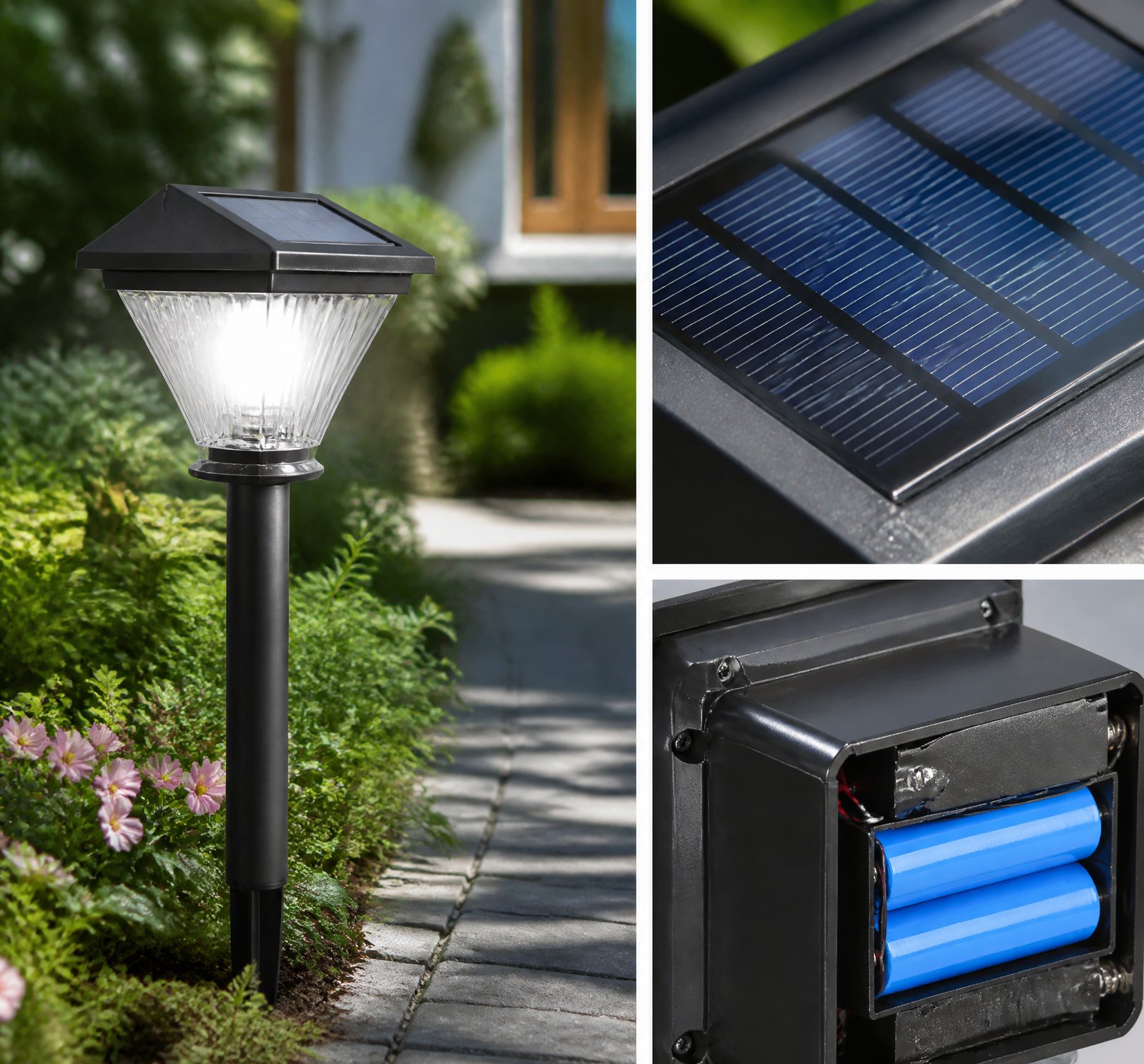
> Quick answer: LiFePO4 batteries tolerate cold and deep cycling better due to their stable two-phase reaction mechanism, robust olivine structure, and inherent thermal safety [21][3]. Unlike cobalt-based chemistries, LiFePO4 exhibits excellent thermal stability without exothermic decomposition [5]. This makes them ideal for solar lamps in various conditions.
LiFePO4 batteries are becoming increasingly popular for applications that demand reliability under harsh conditions. Their performance is not solely determined by chemistry but heavily influenced by material engineering such as nanostructuring and carbon coating [24][3].
The Electrochemistry of LiFePO4 Charge/Discharge
The electrochemistry of LiFePO4 charge/discharge involves a reversible transformation between lithium iron phosphate (LiFePO4) and iron phosphate (FePO4), supported by high structural similarity between the two phases [24]. This phase transformation allows for high reversibility, contributing to long cycle life [24].
Voltage Profile
The voltage profile of LiFePO4 is notably flat with a nominal voltage of approximately 3.2–3.5 V vs lithium metal, lower than the 4.2 V typical in cobalt-based chemistries [5][23]. This flat discharge curve ensures consistent power delivery throughout most of the cycle, making it suitable for applications requiring stable output [23].
Capacity and Performance
The theoretical capacity of LiFePO4 is 170 mAh/g, but early implementations achieved only about 60% due to kinetic limitations such as low lithium-ion diffusion rates and poor electronic conductivity [3][24]. These issues were addressed through nanostructuring and carbon coating, enhancing performance significantly by improving electronic conductivity and facilitating lithium-ion transport [24][20].
Superior Tolerance in Cold Environments
LiFePO4’s tolerance to cold compared to cobalt-based batteries is primarily due to its thermal and chemical stability. Unlike cobalt-based chemistries prone to thermal runaway, LiFePO4 remains stable even at elevated temperatures [5][21]. It operates effectively from -22°F (-30°C) to 131°F (55°C), much broader than traditional lithium-ion batteries [5].
Structural Stability
The robust olivine crystal structure and absence of reactive, high-energy cathode materials like cobalt oxide contribute to LiFePO4’s resilience in cold environments where conventional batteries fail [5][23]. The two-phase reaction mechanism between LiFePO4 and FePO4 is highly reversible with minimal lattice strain, reducing mechanical degradation over time [24].
Deep Cycling Performance
LiFePO4’s ability to withstand deep cycling is linked to its structural stability during charge/discharge cycles. This allows the batteries to endure tens of thousands of cycles without significant capacity loss [3][21]. In contrast, cobalt-based chemistries degrade more rapidly under deep discharge or high-rate cycling due to electrolyte decomposition and lithium plating [23].
Safety Advantages
LiFePO4 operates at a lower voltage, reducing oxidative stress on the cathode and minimizing the risk of electrolyte breakdown and lithium plating [23]. This makes LiFePO4 safer for overcharging and prolonged storage at high states of charge compared to NiCd or cobalt-based batteries.
Environmental and Safety Benefits
The material contains no heavy metals such as cadmium, making it safer to handle, dispose of, and recycle [1][25]. It also has a lower self-discharge rate, retaining charge over long periods without requiring constant top-up—ideal for solar lighting systems that may remain idle for extended durations [8][9][10].
Comparison Table: LiFePO4 vs. Cobalt-Based Chemistries
| Feature | LiFePO4 Batteries | Cobalt-Based Batteries |
|–––––––––|––––––––––-|–––––––––––-|
| Voltage (V) | 3.2–3.5 | 4.2 |
| Operating Temp Range | -30°C to 55°C | Narrow range |
| Cycle Life | >30,000 cycles | <10,000 cycles |
| Thermal Stability | High | Prone to thermal runaway |
| Environmental Impact | Low | Contains toxic metals |
Key Takeaways
- LiFePO4 batteries are more tolerant of cold and deep cycling due to their stable electrochemistry.
- Advanced material engineering such as nanostructuring and carbon coating significantly enhance performance.
- These batteries offer better safety, environmental benefits, and consistent power delivery compared to cobalt-based chemistries.
References
- [1] The_Changing_Landscape_of_Battery_Technology_-_EdisonReport__4d1d8253 — magazine
source passage
# The Changing Landscape of Battery Technology Source: Blog/Web URL: https://edisonreport.com/2023/02/07/the-changing-landscape-of-battery-technology/ Author: Industry Announcement Date: 2023-02-07 Richard Raeburn, Emergency Specialist, at Tridonic, explores the reasons why the demand for Lithium Iron Phosphate battery technology is growing, as well as the future developments that will impact the emergency lighting industry. While Nickel Metal Hydride and Nickel Cadmium batteries are still incredibly popular in emergency lighting, there is a definite shift towards Lithium Iron Phosphate (LiFePO4) technology. When compared to the legacy technologies, this newer solution offers a number of benefits. Firstly, this newer technology does not contain Cadmium – a toxic heavy metal that is classified as hazardous waste. LiFePO4 contains no heavy metals so it doesn’t have the same toxicity, making it safer to handle and easier to deal with once it comes to the end of its life. With the fact that LiFePO4 batteries can be recycled to recover the materials used in their electrodes, wiring, and casings, they are considered to have the lowest impact on the environment. In addition, LiFePO4 batteries offer a lower self-discharge rate. This means they operate with periodic top-ups, rather than the constant charge that a nickel battery needs to be able to function. This reduces the power required for charging which lowers overall power consumption. LiFePO4 batteries are hardy and robust, maki
- [3] The Li-ion rechargeable battery_ a perspective — book
source passage
on the X atom of the polyanion, competitive cost and energy densities have not been obtained with this framework host. Ontheotherhand,theLiMPO4 orderedolivines havingonlya1DLi motion, Figure 7, have provided LiFePO4 with a V = 3.5 V vs Li.39 If prepared as nanoparticle platelets having the 1D channels perpendicular to the platelets, this cathode material is safe and has been cycled at a 5C rate for over 30 000 cycles with a large fraction of its theoretical capacity of 170 mAh g−1.2 The FePO4 framework is inexpensive and environmentally friendly, but the cost of quality control of the LiFePO4 electrodes is presently too high. LiFePO4 illustrates use of the inductive effect associated with a countercation, in this case P(V), to tune the energy of the active redox couple, in this case the Fe(III)/Fe(II) couple. However, at the surface under-coordination of the Fe and/or longer P−O bonds raises the energy of the Fe(III)/Fe(II) couples near the surface. Raising the energy of the redox couple introduces an added activation energy for Li+ transport across the electrode/ electrolyte interface. In the case of LiFePO4, exposing the surface to S or N anions has been shown40 to lower the surface charge- transfer impedance, thereby increasing the capacity at higher rates of charge/discharge. These effects on other active particles remain unexplored. LiFePO4 has also directed attention to the electronic con- ductivity of a cathode host. Where the active redox couple of the host is near the
- [5] Cyansky_Carbon_review_LiFePO4_flashlight_with_2000_1Lumencom__a2f24f3e — authority
source passage
walls/banks, UPS arrays, renewable energy setups, and SLA retrofits, but not portable lighting (there’s a reason why…read on). These batteries have a much higher cycle life, are more stable (less prone to thermal runaway and fire/explosion-type behavior), more resistant to extreme cold and heat without losing capacity or output. Traditional li-ions almost stop working in very cold temperatures. Cyansky lists the operating temperature of their cell down to -22 F and up to 131 F. The LiFePO4 can handle higher discharge loads with minimal voltage sag and less overheating. They can sit at near full charge longer without degrading. They’re better for the environment since the iron phosphate electrolyte doesn’t contain hazardous materials like lithium cobalt, and the more plentiful metal doesn't require mining large amounts of ore. There are downsides though, mainly lower energy density (90-120 Wh/kg vs 150-200 Wh/kg) which requires a larger, heavier battery, and their lower fully charged open circuit voltage (3.5 vs 4.2), which requires more series cells. Obviously, these aren’t ideal for flashlights. 15 Ah is high capacity, but requires a heavy battery to do achieve it. By itself the BL3815 cell weighs 339 grams. The huge 46950 battery weighs about 100 grams more, but with double the capacity. For comparison, three 5000 mAh 21700s (Samsung 50S) weigh 211 grams. Iron is heavy…who knew? For the charging, you get onboard USB C set to QC speeds with bidirectional charging (power bank
- [8] Solar_Light_Batteries_-_The_Solar_Battery_Store__037027c4 — reddit
source passage
density, long cycle life, and excellent thermal stability, LiFePO4 battery packs are perfect for those seeking the best in outdoor solar lighting power solutions. While they come at a higher upfront cost, their overall performance and lifespan make them a valuable investment. Selecting the Right Battery for Your Outdoor Solar Light: When choosing a battery for your outdoor solar light, consider the following factors: 1. Chemistry: Evaluate the pros and cons of each battery chemistry (NiCd, NiMH, and LiFePO4) and determine which one best suits your needs, budget, and environmental concerns. 2. Size: Ensure the battery size is compatible with your solar light. Smaller-sized batteries, such as 1/3 AAA, 2/3 AAA, and 2/3 AA, may be ideal for compact solar lights, while larger sizes, such as 18650 and 32700, are suitable for high-performance lighting systems. 3. Capacity: Choose a battery capacity that meets your desired runtime between charges. Higher-capacity batteries will provide longer runtimes but may be larger and heavier. 4. Temperature Performance: If you live in an area with extreme temperatures, opt for a battery chemistry that performs well in those conditions. NiCad and NiMH batteries generally have good performance in a wide range of temperatures. 5. Cycle Life: Consider the expected cycle life of the battery. While NiCad batteries have a longer cycle life than NiMH, LiFePO4 batteries boast the longest cycle life, making them ideal for long-term outdoor solar lighting
- [9] Solar_Light_Batteries_-_The_Solar_Battery_Store__143f8301 — reddit
source passage
density, long cycle life, and excellent thermal stability, LiFePO4 battery packs are perfect for those seeking the best in outdoor solar lighting power solutions. While they come at a higher upfront cost, their overall performance and lifespan make them a valuable investment. Selecting the Right Battery for Your Outdoor Solar Light: When choosing a battery for your outdoor solar light, consider the following factors: 1. Chemistry: Evaluate the pros and cons of each battery chemistry (NiCd, NiMH, and LiFePO4) and determine which one best suits your needs, budget, and environmental concerns. 2. Size: Ensure the battery size is compatible with your solar light. Smaller-sized batteries, such as 1/3 AAA, 2/3 AAA, and 2/3 AA, may be ideal for compact solar lights, while larger sizes, such as 18650 and 32700, are suitable for high-performance lighting systems. 3. Capacity: Choose a battery capacity that meets your desired runtime between charges. Higher-capacity batteries will provide longer runtimes but may be larger and heavier. 4. Temperature Performance: If you live in an area with extreme temperatures, opt for a battery chemistry that performs well in those conditions. NiCad and NiMH batteries generally have good performance in a wide range of temperatures. 5. Cycle Life: Consider the expected cycle life of the battery. While NiCad batteries have a longer cycle life than NiMH, LiFePO4 batteries boast the longest cycle life, making them ideal for long-term outdoor solar lighting
- [10] Solar_Light_Batteries_-_Solar_Batteries__b06b3c80 — reddit
source passage
density, long cycle life, and excellent thermal stability, LiFePO4 battery packs are perfect for those seeking the best in outdoor solar lighting power solutions. While they come at a higher upfront cost, their overall performance and lifespan make them a valuable investment. Selecting the Right Battery for Your Outdoor Solar Light: When choosing a battery for your outdoor solar light, consider the following factors: 1. Chemistry: Evaluate the pros and cons of each battery chemistry (NiCd, NiMH, and LiFePO4) and determine which one best suits your needs, budget, and environmental concerns. 2. Size: Ensure the battery size is compatible with your solar light. Smaller-sized batteries, such as 1/3 AAA, 2/3 AAA, and 2/3 AA, may be ideal for compact solar lights, while larger sizes, such as 18650 and 32700, are suitable for high-performance lighting systems. 3. Capacity: Choose a battery capacity that meets your desired runtime between charges. Higher-capacity batteries will provide longer runtimes but may be larger and heavier. 4. Temperature Performance: If you live in an area with extreme temperatures, opt for a battery chemistry that performs well in those conditions. NiCad and NiMH batteries generally have good performance in a wide range of temperatures. 5. Cycle Life: Consider the expected cycle life of the battery. While NiCad batteries have a longer cycle life than NiMH, LiFePO4 batteries boast the longest cycle life, making them ideal for long-term outdoor solar lighting
- [20] Lithium batteries and cathode materials — book
source passage
by modifying the synthesis conditions, for example, by adding a reducing agent such as ascorbic acid328 to prevent surface ferric films; the hydrothermal method can also produce material with excellent electrochemical behavior even without a carbon coating,329 as is necessary in most instances as discussed below. As this material has a very low conductivity at room temperature, it could achieve the theoretical capacity only at a very low current density315 or at elevated temperatures,317 as suggested by Padhi309 due to the low lithium diffusion at the interface. Ravet et al.318 showed that a carbon coating signifi- cantly improves the electrochemical performance of this material; sucrose was proposed319 as one carbon precursor, and it was used on the initial hydrother- mal samples.50 Many other studies have been made on finding means to improve the electronic conduc- tivity of the LiFePO4 particles.49,198,320,321,323-326 Very pure LiFePO4 samples are reported to have an electronic conductivity of 10-9 S/cm,324 whereas samples made from reagent-grade carbon-containing materials have a conductivity of around 10-5-10-6 S/cm.198 Huang et al.320 proposed coating the material with carbon-gel during the synthesis step and found capacities approaching 100% at very low cathode loadings, 5 mg/cm2, and rather high carbon contents, 20%. They obtained 800 cycles at around 120 mAh/g at high rates. Masquelier proposed321 extensive mill- ing of the material with carbon and then found high ca
- [21] Advantages_of_Lithium_Iron_Phosphate_LiFePO4_batteries_in__7fd41ec6 — magazine
source passage
# Advantages of Lithium Iron Phosphate (LiFePO4) batteries in solar applications explained Source: Blog/Web URL: https://solarbuildermag.com/batteries/advantages-of-lithium-iron-phosphate-lifepo4-batteries-in-solar-applications-explained/ Author: Contributing Author Date: 2021-03-09 The future of energy storage relies on pushing the envelope. We need battery solutions that have greater capacity, a high power potential, a longer lifespan, are sustainable, safe, and fit into the needs and wants of today’s conscientious consumers. Lithium ion batteries have become a go-to option in on-grid solar power backup systems, and it’s easy to understand why. However, as technology has advanced, a new winner in the race for energy storage solutions has emerged: lithium iron phosphate batteries (LiFePO4). Lithium iron phosphate use similar chemistry to lithium-ion, with iron as the cathode material, and they have a number of advantages over their lithium-ion counterparts. Let’s explore the many reasons that lithium iron phosphate batteries are the future of solar energy storage. Battery Life. Lithium iron phosphate batteries have a lifecycle two to four times longer than lithium-ion. This is in part because the lithium iron phosphate option is more stable at high temperatures, so they are resilient to over charging. Additionally, lithium iron phosphate batteries can be stored for longer periods of time without degrading. The longer life cycle helps in solar power setups in particular, wher
- [23] A_Beginners_Guide_To_Lithium_Rechargeable_BatteriesLithium-Ion_Batteri__262fa22a — authority
source passage
batteries. Lithium-Iron-Phosphate, or LiFePO4 batteries are an altered lithium-ion chemistry, which offers the benefits of withstanding more charge/discharge cycles, while losing some energy density in the tradeoff. They operate ideally between 3.0V-3.65V, instead of the more typical 3.0-4.2V range of a standard lithium-ion chemistry. This, combined with a very flat discharge voltage curve, makes them ideal replacements for 12V lead-acid batteries in many applications, where four cells substitute for the original six. They’re generally more stable, with lower rates of self-discharge and capacity loss over time. Respect The Limits Moreso than most battery types, lithium cells are not tolerant of mistreatment. Discharging cells below their low voltage limit leads to the formation of copper dendrites, which can reduce cell capacity or short circuit them entirely. Overcharging cells causes damage to the anode by lithium plating out of solution, creating lithium dendrites, often leading to a short circuit or full thermal runaway of the battery, leading to a release of smoke and flames. Each cell in a pack must also be kept at the same voltage as its neighbors, to avoid cells getting damaged prematurely. It’s important not to charge lithium cells too quickly. Ambient temperatures also play a big role in battery performance. Lithium batteries don’t appreciate being taken down below freezing, particularly when they’re already fully charged. Below 0°C, charging is impractical, as meta
- [24] Advances in Lithium-Ion Batteries — book
source passage
stability limits. The use of LiFePO4 as a positive electrode material has been reviewed extensively [22–26], including reviews with focus on synthesis procedures [27] and carbon coating [28]. Electrochemical delithiation of LiFePO4 and lithiation of FePO4 was first reported in 1997 by Goodenough and coworkers [29]. The cycling mechanism is not intercalation based and requires phase transformation between LiFePO4 and FePO4. However, the structural similarity between the two phases results in a high degree of reversibility [25]. Despite the promise of efficient cycling, only ∼0.6 lithium ions per iron atom were able to be inserted or extracted, and the full capacity of 170 mAh/g was not achieved [29]. The problem was attributed to extreme rate limitations from the intrinsically low conductivity of the material. The advantages of nanostructure became apparent when nanocomposites of carbon and LiFePO4 were introduced and exhibited capacities much closer to theoretical values [30,31]. Nazar and coworkers concluded that synthesis with a carbon precursor and reduction of particle size to the submicron range were both necessary for improved performance [30]. Armand and coworkers found that similar performance improvements could be achieved by heat-treating the as-synthesized LiFePO4 in the presence of a carbon source to create carbon-coated particles [31]. The presence of carbon facilitated electron and ion transport between particles, and the decrease in particle size reduced the tr
- [25] Luxbox_pledges_to_phase_out_cadmium_-_Lux_Review__5bcf6f82 — magazine
source passage
# Luxbox pledges to phase out cadmium – Lux Review Source: Blog/Web URL: https://www.luxreview.com/2018/11/12/luxbox-pledges-to-phase-out-cadmium/topic-6615/ Author: Date: 2018-11-12 Luxbox has announced its LiFePO4 pledge: by 2020, it will no longer use NiCd batteries for emergency lighting. Instead, it will use LiFePO4 batteries. Why choose LiFePO4? LiFePO4 batteries offer many technical, economic and environmental advantages. Not only do they save energy and last longer, but due to their higher energy density, packaging and transport costs are drastically reduced. Thanks to the pulse charging technology, energy consumption is reduced by up to 95 per cent and battery temperature can be reduced by around 5°C, which greatly extends life expectancy. But perhaps the most important factor for our planet is the elimination of the toxic heavy metal, cadmium. We pledge to switch to LiFePO4 by 2020 because it’s the right thing to do. Will you join us? Superior performance LiFePO4 batteries offer an operational life up to double that of NiCd and NiMH batteries. Unlike NiCd and NiMH cells, which can be damaged by excessive charging and discharging, LiFePO4 batteries benefit from being cycled and don’t suffer from ‘memory effect’ in the same way that NiCd can. They also have better resilience to high and low temperatures (0-60°C acceptable range). Ultimate reliability LiFePO4 cells are produced in a highly automated climate-controlled environment, ensuring consistently high quality lev
# The Changing Landscape of Battery Technology Source: Blog/Web URL: https://edisonreport.com/2023/02/07/the-changing-landscape-of-battery-technology/ Author: Industry Announcement Date: 2023-02-07 Richard Raeburn, Emergency Specialist, at Tridonic, explores the reasons why the demand for Lithium Iron Phosphate battery technology is growing, as well as the future developments that will impact the emergency lighting industry. While Nickel Metal Hydride and Nickel Cadmium batteries are still incredibly popular in emergency lighting, there is a definite shift towards Lithium Iron Phosphate (LiFePO4) technology. When compared to the legacy technologies, this newer solution offers a number of benefits. Firstly, this newer technology does not contain Cadmium – a toxic heavy metal that is classified as hazardous waste. LiFePO4 contains no heavy metals so it doesn’t have the same toxicity, making it safer to handle and easier to deal with once it comes to the end of its life. With the fact that LiFePO4 batteries can be recycled to recover the materials used in their electrodes, wiring, and casings, they are considered to have the lowest impact on the environment. In addition, LiFePO4 batteries offer a lower self-discharge rate. This means they operate with periodic top-ups, rather than the constant charge that a nickel battery needs to be able to function. This reduces the power required for charging which lowers overall power consumption. LiFePO4 batteries are hardy and robust, maki
on the X atom of the polyanion, competitive cost and energy densities have not been obtained with this framework host. Ontheotherhand,theLiMPO4 orderedolivines havingonlya1DLi motion, Figure 7, have provided LiFePO4 with a V = 3.5 V vs Li.39 If prepared as nanoparticle platelets having the 1D channels perpendicular to the platelets, this cathode material is safe and has been cycled at a 5C rate for over 30 000 cycles with a large fraction of its theoretical capacity of 170 mAh g−1.2 The FePO4 framework is inexpensive and environmentally friendly, but the cost of quality control of the LiFePO4 electrodes is presently too high. LiFePO4 illustrates use of the inductive effect associated with a countercation, in this case P(V), to tune the energy of the active redox couple, in this case the Fe(III)/Fe(II) couple. However, at the surface under-coordination of the Fe and/or longer P−O bonds raises the energy of the Fe(III)/Fe(II) couples near the surface. Raising the energy of the redox couple introduces an added activation energy for Li+ transport across the electrode/ electrolyte interface. In the case of LiFePO4, exposing the surface to S or N anions has been shown40 to lower the surface charge- transfer impedance, thereby increasing the capacity at higher rates of charge/discharge. These effects on other active particles remain unexplored. LiFePO4 has also directed attention to the electronic con- ductivity of a cathode host. Where the active redox couple of the host is near the
walls/banks, UPS arrays, renewable energy setups, and SLA retrofits, but not portable lighting (there’s a reason why…read on). These batteries have a much higher cycle life, are more stable (less prone to thermal runaway and fire/explosion-type behavior), more resistant to extreme cold and heat without losing capacity or output. Traditional li-ions almost stop working in very cold temperatures. Cyansky lists the operating temperature of their cell down to -22 F and up to 131 F. The LiFePO4 can handle higher discharge loads with minimal voltage sag and less overheating. They can sit at near full charge longer without degrading. They’re better for the environment since the iron phosphate electrolyte doesn’t contain hazardous materials like lithium cobalt, and the more plentiful metal doesn't require mining large amounts of ore. There are downsides though, mainly lower energy density (90-120 Wh/kg vs 150-200 Wh/kg) which requires a larger, heavier battery, and their lower fully charged open circuit voltage (3.5 vs 4.2), which requires more series cells. Obviously, these aren’t ideal for flashlights. 15 Ah is high capacity, but requires a heavy battery to do achieve it. By itself the BL3815 cell weighs 339 grams. The huge 46950 battery weighs about 100 grams more, but with double the capacity. For comparison, three 5000 mAh 21700s (Samsung 50S) weigh 211 grams. Iron is heavy…who knew? For the charging, you get onboard USB C set to QC speeds with bidirectional charging (power bank
density, long cycle life, and excellent thermal stability, LiFePO4 battery packs are perfect for those seeking the best in outdoor solar lighting power solutions. While they come at a higher upfront cost, their overall performance and lifespan make them a valuable investment. Selecting the Right Battery for Your Outdoor Solar Light: When choosing a battery for your outdoor solar light, consider the following factors: 1. Chemistry: Evaluate the pros and cons of each battery chemistry (NiCd, NiMH, and LiFePO4) and determine which one best suits your needs, budget, and environmental concerns. 2. Size: Ensure the battery size is compatible with your solar light. Smaller-sized batteries, such as 1/3 AAA, 2/3 AAA, and 2/3 AA, may be ideal for compact solar lights, while larger sizes, such as 18650 and 32700, are suitable for high-performance lighting systems. 3. Capacity: Choose a battery capacity that meets your desired runtime between charges. Higher-capacity batteries will provide longer runtimes but may be larger and heavier. 4. Temperature Performance: If you live in an area with extreme temperatures, opt for a battery chemistry that performs well in those conditions. NiCad and NiMH batteries generally have good performance in a wide range of temperatures. 5. Cycle Life: Consider the expected cycle life of the battery. While NiCad batteries have a longer cycle life than NiMH, LiFePO4 batteries boast the longest cycle life, making them ideal for long-term outdoor solar lighting
density, long cycle life, and excellent thermal stability, LiFePO4 battery packs are perfect for those seeking the best in outdoor solar lighting power solutions. While they come at a higher upfront cost, their overall performance and lifespan make them a valuable investment. Selecting the Right Battery for Your Outdoor Solar Light: When choosing a battery for your outdoor solar light, consider the following factors: 1. Chemistry: Evaluate the pros and cons of each battery chemistry (NiCd, NiMH, and LiFePO4) and determine which one best suits your needs, budget, and environmental concerns. 2. Size: Ensure the battery size is compatible with your solar light. Smaller-sized batteries, such as 1/3 AAA, 2/3 AAA, and 2/3 AA, may be ideal for compact solar lights, while larger sizes, such as 18650 and 32700, are suitable for high-performance lighting systems. 3. Capacity: Choose a battery capacity that meets your desired runtime between charges. Higher-capacity batteries will provide longer runtimes but may be larger and heavier. 4. Temperature Performance: If you live in an area with extreme temperatures, opt for a battery chemistry that performs well in those conditions. NiCad and NiMH batteries generally have good performance in a wide range of temperatures. 5. Cycle Life: Consider the expected cycle life of the battery. While NiCad batteries have a longer cycle life than NiMH, LiFePO4 batteries boast the longest cycle life, making them ideal for long-term outdoor solar lighting
density, long cycle life, and excellent thermal stability, LiFePO4 battery packs are perfect for those seeking the best in outdoor solar lighting power solutions. While they come at a higher upfront cost, their overall performance and lifespan make them a valuable investment. Selecting the Right Battery for Your Outdoor Solar Light: When choosing a battery for your outdoor solar light, consider the following factors: 1. Chemistry: Evaluate the pros and cons of each battery chemistry (NiCd, NiMH, and LiFePO4) and determine which one best suits your needs, budget, and environmental concerns. 2. Size: Ensure the battery size is compatible with your solar light. Smaller-sized batteries, such as 1/3 AAA, 2/3 AAA, and 2/3 AA, may be ideal for compact solar lights, while larger sizes, such as 18650 and 32700, are suitable for high-performance lighting systems. 3. Capacity: Choose a battery capacity that meets your desired runtime between charges. Higher-capacity batteries will provide longer runtimes but may be larger and heavier. 4. Temperature Performance: If you live in an area with extreme temperatures, opt for a battery chemistry that performs well in those conditions. NiCad and NiMH batteries generally have good performance in a wide range of temperatures. 5. Cycle Life: Consider the expected cycle life of the battery. While NiCad batteries have a longer cycle life than NiMH, LiFePO4 batteries boast the longest cycle life, making them ideal for long-term outdoor solar lighting
by modifying the synthesis conditions, for example, by adding a reducing agent such as ascorbic acid328 to prevent surface ferric films; the hydrothermal method can also produce material with excellent electrochemical behavior even without a carbon coating,329 as is necessary in most instances as discussed below. As this material has a very low conductivity at room temperature, it could achieve the theoretical capacity only at a very low current density315 or at elevated temperatures,317 as suggested by Padhi309 due to the low lithium diffusion at the interface. Ravet et al.318 showed that a carbon coating signifi- cantly improves the electrochemical performance of this material; sucrose was proposed319 as one carbon precursor, and it was used on the initial hydrother- mal samples.50 Many other studies have been made on finding means to improve the electronic conduc- tivity of the LiFePO4 particles.49,198,320,321,323-326 Very pure LiFePO4 samples are reported to have an electronic conductivity of 10-9 S/cm,324 whereas samples made from reagent-grade carbon-containing materials have a conductivity of around 10-5-10-6 S/cm.198 Huang et al.320 proposed coating the material with carbon-gel during the synthesis step and found capacities approaching 100% at very low cathode loadings, 5 mg/cm2, and rather high carbon contents, 20%. They obtained 800 cycles at around 120 mAh/g at high rates. Masquelier proposed321 extensive mill- ing of the material with carbon and then found high ca
# Advantages of Lithium Iron Phosphate (LiFePO4) batteries in solar applications explained Source: Blog/Web URL: https://solarbuildermag.com/batteries/advantages-of-lithium-iron-phosphate-lifepo4-batteries-in-solar-applications-explained/ Author: Contributing Author Date: 2021-03-09 The future of energy storage relies on pushing the envelope. We need battery solutions that have greater capacity, a high power potential, a longer lifespan, are sustainable, safe, and fit into the needs and wants of today’s conscientious consumers. Lithium ion batteries have become a go-to option in on-grid solar power backup systems, and it’s easy to understand why. However, as technology has advanced, a new winner in the race for energy storage solutions has emerged: lithium iron phosphate batteries (LiFePO4). Lithium iron phosphate use similar chemistry to lithium-ion, with iron as the cathode material, and they have a number of advantages over their lithium-ion counterparts. Let’s explore the many reasons that lithium iron phosphate batteries are the future of solar energy storage. Battery Life. Lithium iron phosphate batteries have a lifecycle two to four times longer than lithium-ion. This is in part because the lithium iron phosphate option is more stable at high temperatures, so they are resilient to over charging. Additionally, lithium iron phosphate batteries can be stored for longer periods of time without degrading. The longer life cycle helps in solar power setups in particular, wher
batteries. Lithium-Iron-Phosphate, or LiFePO4 batteries are an altered lithium-ion chemistry, which offers the benefits of withstanding more charge/discharge cycles, while losing some energy density in the tradeoff. They operate ideally between 3.0V-3.65V, instead of the more typical 3.0-4.2V range of a standard lithium-ion chemistry. This, combined with a very flat discharge voltage curve, makes them ideal replacements for 12V lead-acid batteries in many applications, where four cells substitute for the original six. They’re generally more stable, with lower rates of self-discharge and capacity loss over time. Respect The Limits Moreso than most battery types, lithium cells are not tolerant of mistreatment. Discharging cells below their low voltage limit leads to the formation of copper dendrites, which can reduce cell capacity or short circuit them entirely. Overcharging cells causes damage to the anode by lithium plating out of solution, creating lithium dendrites, often leading to a short circuit or full thermal runaway of the battery, leading to a release of smoke and flames. Each cell in a pack must also be kept at the same voltage as its neighbors, to avoid cells getting damaged prematurely. It’s important not to charge lithium cells too quickly. Ambient temperatures also play a big role in battery performance. Lithium batteries don’t appreciate being taken down below freezing, particularly when they’re already fully charged. Below 0°C, charging is impractical, as meta
stability limits. The use of LiFePO4 as a positive electrode material has been reviewed extensively [22–26], including reviews with focus on synthesis procedures [27] and carbon coating [28]. Electrochemical delithiation of LiFePO4 and lithiation of FePO4 was first reported in 1997 by Goodenough and coworkers [29]. The cycling mechanism is not intercalation based and requires phase transformation between LiFePO4 and FePO4. However, the structural similarity between the two phases results in a high degree of reversibility [25]. Despite the promise of efficient cycling, only ∼0.6 lithium ions per iron atom were able to be inserted or extracted, and the full capacity of 170 mAh/g was not achieved [29]. The problem was attributed to extreme rate limitations from the intrinsically low conductivity of the material. The advantages of nanostructure became apparent when nanocomposites of carbon and LiFePO4 were introduced and exhibited capacities much closer to theoretical values [30,31]. Nazar and coworkers concluded that synthesis with a carbon precursor and reduction of particle size to the submicron range were both necessary for improved performance [30]. Armand and coworkers found that similar performance improvements could be achieved by heat-treating the as-synthesized LiFePO4 in the presence of a carbon source to create carbon-coated particles [31]. The presence of carbon facilitated electron and ion transport between particles, and the decrease in particle size reduced the tr
# Luxbox pledges to phase out cadmium – Lux Review Source: Blog/Web URL: https://www.luxreview.com/2018/11/12/luxbox-pledges-to-phase-out-cadmium/topic-6615/ Author: Date: 2018-11-12 Luxbox has announced its LiFePO4 pledge: by 2020, it will no longer use NiCd batteries for emergency lighting. Instead, it will use LiFePO4 batteries. Why choose LiFePO4? LiFePO4 batteries offer many technical, economic and environmental advantages. Not only do they save energy and last longer, but due to their higher energy density, packaging and transport costs are drastically reduced. Thanks to the pulse charging technology, energy consumption is reduced by up to 95 per cent and battery temperature can be reduced by around 5°C, which greatly extends life expectancy. But perhaps the most important factor for our planet is the elimination of the toxic heavy metal, cadmium. We pledge to switch to LiFePO4 by 2020 because it’s the right thing to do. Will you join us? Superior performance LiFePO4 batteries offer an operational life up to double that of NiCd and NiMH batteries. Unlike NiCd and NiMH cells, which can be damaged by excessive charging and discharging, LiFePO4 batteries benefit from being cycled and don’t suffer from ‘memory effect’ in the same way that NiCd can. They also have better resilience to high and low temperatures (0-60°C acceptable range). Ultimate reliability LiFePO4 cells are produced in a highly automated climate-controlled environment, ensuring consistently high quality lev