
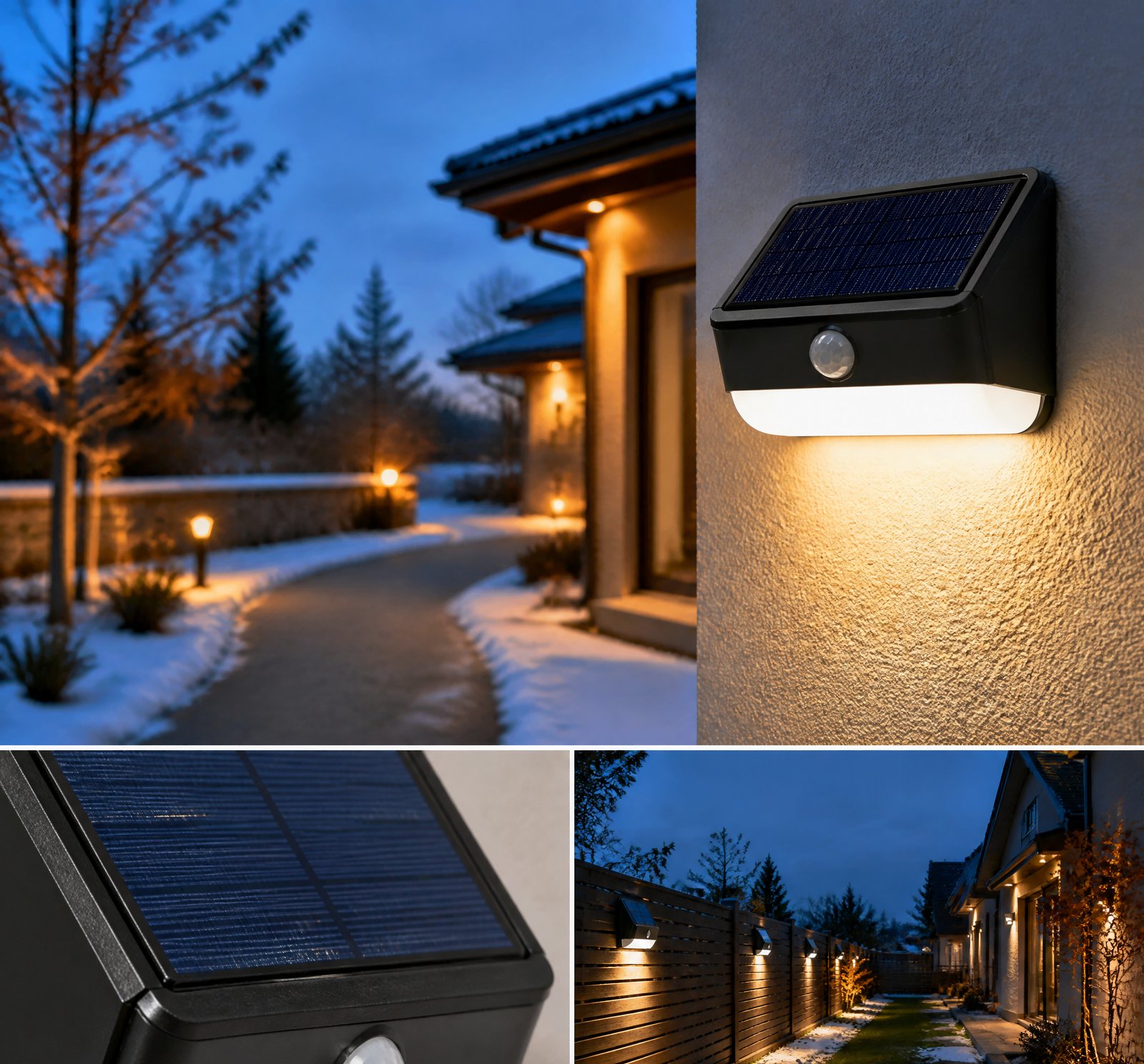
> Quick answer: Lumen output, CCT, and lifetime claims of solar lamps are regulated by IES standards such as LM-79 and LM-80. Buyers can verify these claims with independent test reports from DOE-certified labs and cross-reference them with Energy Star’s LED Lighting Facts database.
When shopping for solar lamps in Romania, it’s crucial to ensure that the lumen output, correlated color temperature (CCT), and lifetime claims are credible. This guide breaks down how these measurements are standardized and what steps you can take to verify product specifications.
Standardization of Lumen Output and CCT
The Illuminating Engineering Society of North America (IES) sets forth standards like IES LM-79-08, which mandates absolute photometric testing under controlled conditions, ensuring that lumen output, efficacy, CCT, and color rendering index (CRI) are measured accurately [2][17]. This standard is critical for reliable product comparisons.
Lifetime Claims: Understanding IES LM-80
For lifetime claims specifically related to lumen maintenance, IES LM-80-08 plays a pivotal role. It tests how LED light sources maintain their luminous flux over time, with data collected every 1,000 hours for at least 6,000 hours [7][25]. However, this standard only measures the LED source itself, not the entire luminaire [17].
Projecting Long-Term Performance: IES TM-21
To bridge the gap between short-term testing and long-term performance projections, IES TM-21-11 uses mathematical models to extrapolate data from LM-80 tests. This method allows manufacturers to claim extended lifespans like 50,000 hours based on the initial decay curve observed over 6,000 hours [15][24].
CCT and Color Consistency
CCT claims are standardized through the same frameworks as lumen output. LM-79-08 reports CCT under standard conditions, while LM-80 monitors chromaticity shifts to track color consistency over time [7]. This is particularly important for applications requiring consistent lighting quality.
Verifying Credibility: Independent Test Reports
Buyers can ensure the credibility of claims by requesting full LM-79 test reports from DOE-certified laboratories. The Energy Star LED Lighting Facts database and the CALiPER program offer third-party validation, allowing you to cross-reference manufacturer claims with real-world data [16][2].
Challenges in Real-World Performance
Despite robust standards, challenges remain. LM-80 does not account for the thermal and electrical stresses present in actual luminaires, meaning a luminaire’s lifespan might be shorter than projected [5][17]. Additionally, there is no universal pass/fail criterion for lumen maintenance testing, leading to varied interpretations of „long life” claims.
Key Takeaways
- IES standards like LM-79 and LM-80 provide the framework for credible lumen and CCT measurements.
- Independent test reports from DOE-certified labs are essential for verifying product claims.
- Cross-reference with Energy Star’s LED Lighting Facts database to validate real-world performance.
- Be aware that projected lifespans may not always reflect actual conditions due to thermal and electrical stresses.
Frequently Asked Questions
[
{
„q”: „What is the significance of IES LM-79 in solar lamp testing?”,
„a”: „IES LM-79 mandates absolute photometric testing under controlled conditions, ensuring that lumen output, efficacy, and CCT are measured accurately [2]. This allows for reliable comparisons between different products.”
},
{
„q”: „How does IES TM-21 project long-term performance?”,
„a”: „IES TM-21 uses mathematical modeling to extrapolate data from LM-80 tests, allowing manufacturers to claim extended lifespans based on initial decay curves observed over 6,000 hours [15][24].”
},
{
„q”: „What should buyers look for in independent test reports?”,
„a”: Buyers should demand full LM-79 and LM-80 test reports from DOE-certified labs. These reports can be cross-referenced with the Energy Star LED Lighting Facts database to ensure real-world performance [16][2].”
}
]
References
- [2] Knowledge_Base__d64b9e2d — authority
source passage
of solid-state components is significantly affected by the design parameters of the lighting fixture, so a new photometric testing standard was established called LM-79-08. This testing standard, referred to as “Absolute Photometry”, requires that all components be tested within the luminaire under standard operating and environmental conditions, allowing for meaningful comparisons of fixture performance. LM-79-08 reports lumen output, efficacy, color temperature (CCT) and color rendering (CRI). Our LED products are tested in accordance with LM-79-08 by independent testing laboratories certified by the United States Department of Energy to ensure accuracy.
- [5] Lumen-maintenance_testing_for_LED_lamps_light_engines_Buildings__ea530613 — authority
source passage
auxiliary equipment and fixtures. These conditions are not accounted for in the LM-80 testing of LED sources. As a result, it may become necessary for the IES to provide recommendations on these test conditions, and test methods would need to be designed to give comparable results when adopted by various testing laboratories. A lumen-maintenance test standard for LED lamps, engines and luminaires is still being developed, with multiple drafts created, and some preliminary balloting already completed. Different from the LM-80 test standard, this new document will address the tests that are more uniquely applicable to LED lighting systems, including temperature conditions, operational duty cycle and test duration. For LED sources, LM-80 recommends three case temperatures at which testing is performed. Often, the LEDs being tested are placed in temperature-controlled thermal chambers with sophisticated active-cooling systems. These precisely set the LED case temperatures to meet test requirements, with each test running for a minimum of 6000 hours at each case temperature. It can be cost-prohibitive and impractical to test entire LED light systems – such as large luminaires for outdoor roadway lighting fixtures or chandeliers for indoor lighting – in the temperature-controlled chamber for long periods of time. Instead, the TPC recommends LED lighting systems be tested in a condition as close as possible to the installation orientation and mounting method, which in many cases is
- [7] Knowledge_Base__d64b9e2d — authority
source passage
environment. The gasket will not shrink over time giving year after year of reliable service. LED Testing Standards LM-80-08 LM-80-08 is the latest testing standard for LED diodes and applies to the LED sources in a standard test environment, independent of a specific lighting fixture. Testing is performed for a minimum of 6,000 hours with data collection every 1,000 hours. During testing, LEDs are assessed for failure, chromaticity, luminous flux, color temperature (CCT) and color rendering (CRI). LM-80-08 allows the creation, by LED manufacturers, of predicted life charts to establish expected design life. It is not a direct measure of LED system performance, but it will provide the lighting professional with assurance that the LEDs used in our products have been tested for chromaticity stability and predicted lumen maintenance. We only use chips that have been tested to this standard. TM-21-11 TM-21-11is an industry accepted statistical method that utilizes LM-80-08 data combined with specific fixture measurements to project long-term lumen maintenance of LED light sources. LEDs, by their nature, will last a very long time when utilized in a properly designed environment, but this performance is dependent on the design parameters of the actual fixture. Drive current, in-situ temperature and other environmental factors can dramatically affect useful LED life. TM-21-11 gives the lighting professional a basis to judge long-term lumen maintenance life expectancy of a specific
- [15] Understanding_the_difference_between_LED_rated_life_and_Buildings__730bf80c — authority
source passage
# Understanding the difference between LED rated life and lumen-maintenance life (MAGAZINE) Source: Blog/Web URL: https://www.buildings.com/home/article/55259473/understanding-the-difference-between-led-rated-life-and-lumen-maintenance-life-magazine Author: Date: 2011-10-21 With the completion of the IES test method TM-21-11 (see page 9), the SSL industry now has a standard method of obtaining long-term lumen-maintenance information for LED light sources. The method is made up of two steps. First, the LED light sources must be tested per LM-80. The new TM-21 method is then applied to the collected measurement data to make lumen-maintenance projections, including in-situ temperature calculations. However, there is still one measure that is missing: the rated life for LED light sources. Rated life is an essential reliability property for LED integrators that design LED luminaires, providing luminaire users with warranty and usage information Rated life The rated life of a lamp or light source is defined, per ANSI/IES RP-16, as “the life value assigned to a particular type lamp. This is commonly a statistically-determined estimate of median operational life.” The rated life in hours of an LED lamp or light source, specified by the manufacturer, applies under certain operational conditions and for defined failure criteria. The statistical measure for the rated life is designated Bp and is measured in hours, where p is a percentage. For example, a B50 rated life of 1,000 hours mea
- [16] LED_Lighting_in_Museums_and_Art_Galleries_Technical_-_Canadaca__7f9b6307 — authority
source passage
Obtain LM-79 reports (lamp characteristics) from lamp manufacturers. – Check the DOE CALiPER website for impartial test data. – Check the EnergyStar Light Bulbs website and the LED Lighting Facts database (consult endnote 1) for characteristics of products currently available on the market. – Consult Technical details for larger projects. Purchase trial lamps – Once you have made preliminary decisions on several candidate lamps, purchase a few and evaluate them in situ, preferably with colleagues. Check the appearance of the lamp from the side for glare. Check the appearance of the light on blank walls. Check the appearance of the objects illuminated by the lamp. Check the appearance of your skin under the lamp (we are especially attuned to how our skin should look under good-quality light). – If you purchased dimmers, test them with the lamps. Check for flicker across the whole range of intensities. – Test trial lamps, especially those you are considering for purchase, in the fixtures planned for use for as long as possible, and at least a week, to see if they change colour or overheat and fail. Before purchasing large numbers of lamps – Ask for products from companies you know or whom you trust or that have a documented support history. – Get a written warranty that encompasses light output, colour variation (Duv) over time as well as failure of chips and electronics, and which includes labour. A one-year warranty is common, but for longer periods of time the coverage may b
- [17] LED_Life_Standards_In_And_Out_Of_Luminaires_-_Electronic_Design__258a2761 — magazine
source passage
is progress. An Illuminating Engineering Society of North America standard (designated LM-80, IESNA Approved Method for Measuring Lumen Maintenance of LED Light Sources) will provide a common procedure for making lumen maintenance measurements at the LED device, array, or module levels. As of last September, the IES committee that developed LM-80 voted to move the initiative to the IES board of directors for final approval. Still, the DoE notes, as “the lifetime of an LED source is one important indicator of LED luminaire life, it would be misleading to rate the entire LED luminaire based solely on the LED source. There is often a huge gap between the warranted life of a product and the expected life of the LED source in that product. Further, reliability of fixtures that include replaceable LED engines and replaceable components should be assessed differently than reliability of entirely integrated fixtures.” Don Tuite (retired) writes about Analog and Power issues for Electronic Design’s magazine and website. He has a BSEE and an M.S in Technical Communication, and has worked for companies in aerospace, broadcasting, test equipment, semiconductors, publishing, and media relations, focusing on developing insights that link technology, business, and communications. Don is also a ham radio operator (NR7X), private pilot, and motorcycle rider, and he’s not half bad on the 5-string banjo.
- [24] Understanding_the_difference_between_LED_rated_life_and_Buildings__730bf80c — authority
source passage
samples that failed to produce light, then B50L70 (in hours) is obtained. Obviously, as is the case with lumen maintenance, it is not practical to conduct real-life tests to get B50L70 values when such a value can be as long as 30,000 hours, or nearly three and a half years. The challenge is how to make a projection using the data obtained in a shorter testing period. Projections LED manufacturers have been conducting studies and establishing practices for reliable approaches to project the rated life for LEDs; in general, there are two approaches. The first approach is to conduct LM-80 testing with a large sample size. The test data are collected for both light-output changes and failures. The data is then fitted into a mathematical model with a statistical-certainty band. In addition to the lumen-maintenance projection curve, the associated sample distribution bandwidth is also plotted. By analyzing the curve and bandwidth, an estimated B50L70 life is projected. The second approach is to conduct the lumen-maintenance (LM-80) test separately from the accelerated-failure-modes test. Using TM-21, the lumen-maintenance projection can be established. The data collected in the accelerated-failure-modes test are modeled with a different mathematical expression. The rated life is then projected by mathematically combining both models. There are some discussions in standardization organizations regarding development of a document or recommendation to address LEDs’ rated life. To hel
- [25] Lumen-maintenance_testing_for_LED_lamps_light_engines_Buildings__ea530613 — authority
source passage
# Lumen-maintenance testing for LED lamps, light engines and luminaires (MAGAZINE) Source: Blog/Web URL: https://www.buildings.com/architecture/interiors/article/55255355/lumen-maintenance-testing-for-led-lamps-light-engines-and-luminaires-magazine Author: Date: 2012-02-02 +++++ This article was published in the February 2012 issue of LEDs Magazine. View the Table of Contents and download the PDF file of the complete February 2012 issue. +++++ It is widely understood that measuring lumen maintenance is critically important for determining the life of LED lighting products. In the past few years, the Illuminating Engineering Society of North America (IESNA) has developed two test methods that address the lumen maintenance of LED light sources used in such products. LM-80 is an approved method for measuring lumen depreciation of LED light sources, and TM-21 is a technical memorandum which specifies how to extrapolate the LM-80 data in order to make long-term lumen-maintenance projections. Beyond the LED, other components at the LED lighting-system level also can impact the long-term lumen maintenance. These components include, but are not limited to, LED lamps, engines, luminaires, drivers, thermal-management devices and optical components. Over time, these components may experience some change or degradation. In particular, the plastic elements used in the optics may change in several ways, including light transmittance, haze and undesired color change. In turn, the overall li
of solid-state components is significantly affected by the design parameters of the lighting fixture, so a new photometric testing standard was established called LM-79-08. This testing standard, referred to as “Absolute Photometry”, requires that all components be tested within the luminaire under standard operating and environmental conditions, allowing for meaningful comparisons of fixture performance. LM-79-08 reports lumen output, efficacy, color temperature (CCT) and color rendering (CRI). Our LED products are tested in accordance with LM-79-08 by independent testing laboratories certified by the United States Department of Energy to ensure accuracy.
auxiliary equipment and fixtures. These conditions are not accounted for in the LM-80 testing of LED sources. As a result, it may become necessary for the IES to provide recommendations on these test conditions, and test methods would need to be designed to give comparable results when adopted by various testing laboratories. A lumen-maintenance test standard for LED lamps, engines and luminaires is still being developed, with multiple drafts created, and some preliminary balloting already completed. Different from the LM-80 test standard, this new document will address the tests that are more uniquely applicable to LED lighting systems, including temperature conditions, operational duty cycle and test duration. For LED sources, LM-80 recommends three case temperatures at which testing is performed. Often, the LEDs being tested are placed in temperature-controlled thermal chambers with sophisticated active-cooling systems. These precisely set the LED case temperatures to meet test requirements, with each test running for a minimum of 6000 hours at each case temperature. It can be cost-prohibitive and impractical to test entire LED light systems – such as large luminaires for outdoor roadway lighting fixtures or chandeliers for indoor lighting – in the temperature-controlled chamber for long periods of time. Instead, the TPC recommends LED lighting systems be tested in a condition as close as possible to the installation orientation and mounting method, which in many cases is
environment. The gasket will not shrink over time giving year after year of reliable service. LED Testing Standards LM-80-08 LM-80-08 is the latest testing standard for LED diodes and applies to the LED sources in a standard test environment, independent of a specific lighting fixture. Testing is performed for a minimum of 6,000 hours with data collection every 1,000 hours. During testing, LEDs are assessed for failure, chromaticity, luminous flux, color temperature (CCT) and color rendering (CRI). LM-80-08 allows the creation, by LED manufacturers, of predicted life charts to establish expected design life. It is not a direct measure of LED system performance, but it will provide the lighting professional with assurance that the LEDs used in our products have been tested for chromaticity stability and predicted lumen maintenance. We only use chips that have been tested to this standard. TM-21-11 TM-21-11is an industry accepted statistical method that utilizes LM-80-08 data combined with specific fixture measurements to project long-term lumen maintenance of LED light sources. LEDs, by their nature, will last a very long time when utilized in a properly designed environment, but this performance is dependent on the design parameters of the actual fixture. Drive current, in-situ temperature and other environmental factors can dramatically affect useful LED life. TM-21-11 gives the lighting professional a basis to judge long-term lumen maintenance life expectancy of a specific
# Understanding the difference between LED rated life and lumen-maintenance life (MAGAZINE) Source: Blog/Web URL: https://www.buildings.com/home/article/55259473/understanding-the-difference-between-led-rated-life-and-lumen-maintenance-life-magazine Author: Date: 2011-10-21 With the completion of the IES test method TM-21-11 (see page 9), the SSL industry now has a standard method of obtaining long-term lumen-maintenance information for LED light sources. The method is made up of two steps. First, the LED light sources must be tested per LM-80. The new TM-21 method is then applied to the collected measurement data to make lumen-maintenance projections, including in-situ temperature calculations. However, there is still one measure that is missing: the rated life for LED light sources. Rated life is an essential reliability property for LED integrators that design LED luminaires, providing luminaire users with warranty and usage information Rated life The rated life of a lamp or light source is defined, per ANSI/IES RP-16, as “the life value assigned to a particular type lamp. This is commonly a statistically-determined estimate of median operational life.” The rated life in hours of an LED lamp or light source, specified by the manufacturer, applies under certain operational conditions and for defined failure criteria. The statistical measure for the rated life is designated Bp and is measured in hours, where p is a percentage. For example, a B50 rated life of 1,000 hours mea
Obtain LM-79 reports (lamp characteristics) from lamp manufacturers. – Check the DOE CALiPER website for impartial test data. – Check the EnergyStar Light Bulbs website and the LED Lighting Facts database (consult endnote 1) for characteristics of products currently available on the market. – Consult Technical details for larger projects. Purchase trial lamps – Once you have made preliminary decisions on several candidate lamps, purchase a few and evaluate them in situ, preferably with colleagues. Check the appearance of the lamp from the side for glare. Check the appearance of the light on blank walls. Check the appearance of the objects illuminated by the lamp. Check the appearance of your skin under the lamp (we are especially attuned to how our skin should look under good-quality light). – If you purchased dimmers, test them with the lamps. Check for flicker across the whole range of intensities. – Test trial lamps, especially those you are considering for purchase, in the fixtures planned for use for as long as possible, and at least a week, to see if they change colour or overheat and fail. Before purchasing large numbers of lamps – Ask for products from companies you know or whom you trust or that have a documented support history. – Get a written warranty that encompasses light output, colour variation (Duv) over time as well as failure of chips and electronics, and which includes labour. A one-year warranty is common, but for longer periods of time the coverage may b
is progress. An Illuminating Engineering Society of North America standard (designated LM-80, IESNA Approved Method for Measuring Lumen Maintenance of LED Light Sources) will provide a common procedure for making lumen maintenance measurements at the LED device, array, or module levels. As of last September, the IES committee that developed LM-80 voted to move the initiative to the IES board of directors for final approval. Still, the DoE notes, as “the lifetime of an LED source is one important indicator of LED luminaire life, it would be misleading to rate the entire LED luminaire based solely on the LED source. There is often a huge gap between the warranted life of a product and the expected life of the LED source in that product. Further, reliability of fixtures that include replaceable LED engines and replaceable components should be assessed differently than reliability of entirely integrated fixtures.” Don Tuite (retired) writes about Analog and Power issues for Electronic Design’s magazine and website. He has a BSEE and an M.S in Technical Communication, and has worked for companies in aerospace, broadcasting, test equipment, semiconductors, publishing, and media relations, focusing on developing insights that link technology, business, and communications. Don is also a ham radio operator (NR7X), private pilot, and motorcycle rider, and he’s not half bad on the 5-string banjo.
samples that failed to produce light, then B50L70 (in hours) is obtained. Obviously, as is the case with lumen maintenance, it is not practical to conduct real-life tests to get B50L70 values when such a value can be as long as 30,000 hours, or nearly three and a half years. The challenge is how to make a projection using the data obtained in a shorter testing period. Projections LED manufacturers have been conducting studies and establishing practices for reliable approaches to project the rated life for LEDs; in general, there are two approaches. The first approach is to conduct LM-80 testing with a large sample size. The test data are collected for both light-output changes and failures. The data is then fitted into a mathematical model with a statistical-certainty band. In addition to the lumen-maintenance projection curve, the associated sample distribution bandwidth is also plotted. By analyzing the curve and bandwidth, an estimated B50L70 life is projected. The second approach is to conduct the lumen-maintenance (LM-80) test separately from the accelerated-failure-modes test. Using TM-21, the lumen-maintenance projection can be established. The data collected in the accelerated-failure-modes test are modeled with a different mathematical expression. The rated life is then projected by mathematically combining both models. There are some discussions in standardization organizations regarding development of a document or recommendation to address LEDs’ rated life. To hel
# Lumen-maintenance testing for LED lamps, light engines and luminaires (MAGAZINE) Source: Blog/Web URL: https://www.buildings.com/architecture/interiors/article/55255355/lumen-maintenance-testing-for-led-lamps-light-engines-and-luminaires-magazine Author: Date: 2012-02-02 +++++ This article was published in the February 2012 issue of LEDs Magazine. View the Table of Contents and download the PDF file of the complete February 2012 issue. +++++ It is widely understood that measuring lumen maintenance is critically important for determining the life of LED lighting products. In the past few years, the Illuminating Engineering Society of North America (IESNA) has developed two test methods that address the lumen maintenance of LED light sources used in such products. LM-80 is an approved method for measuring lumen depreciation of LED light sources, and TM-21 is a technical memorandum which specifies how to extrapolate the LM-80 data in order to make long-term lumen-maintenance projections. Beyond the LED, other components at the LED lighting-system level also can impact the long-term lumen maintenance. These components include, but are not limited to, LED lamps, engines, luminaires, drivers, thermal-management devices and optical components. Over time, these components may experience some change or degradation. In particular, the plastic elements used in the optics may change in several ways, including light transmittance, haze and undesired color change. In turn, the overall li