
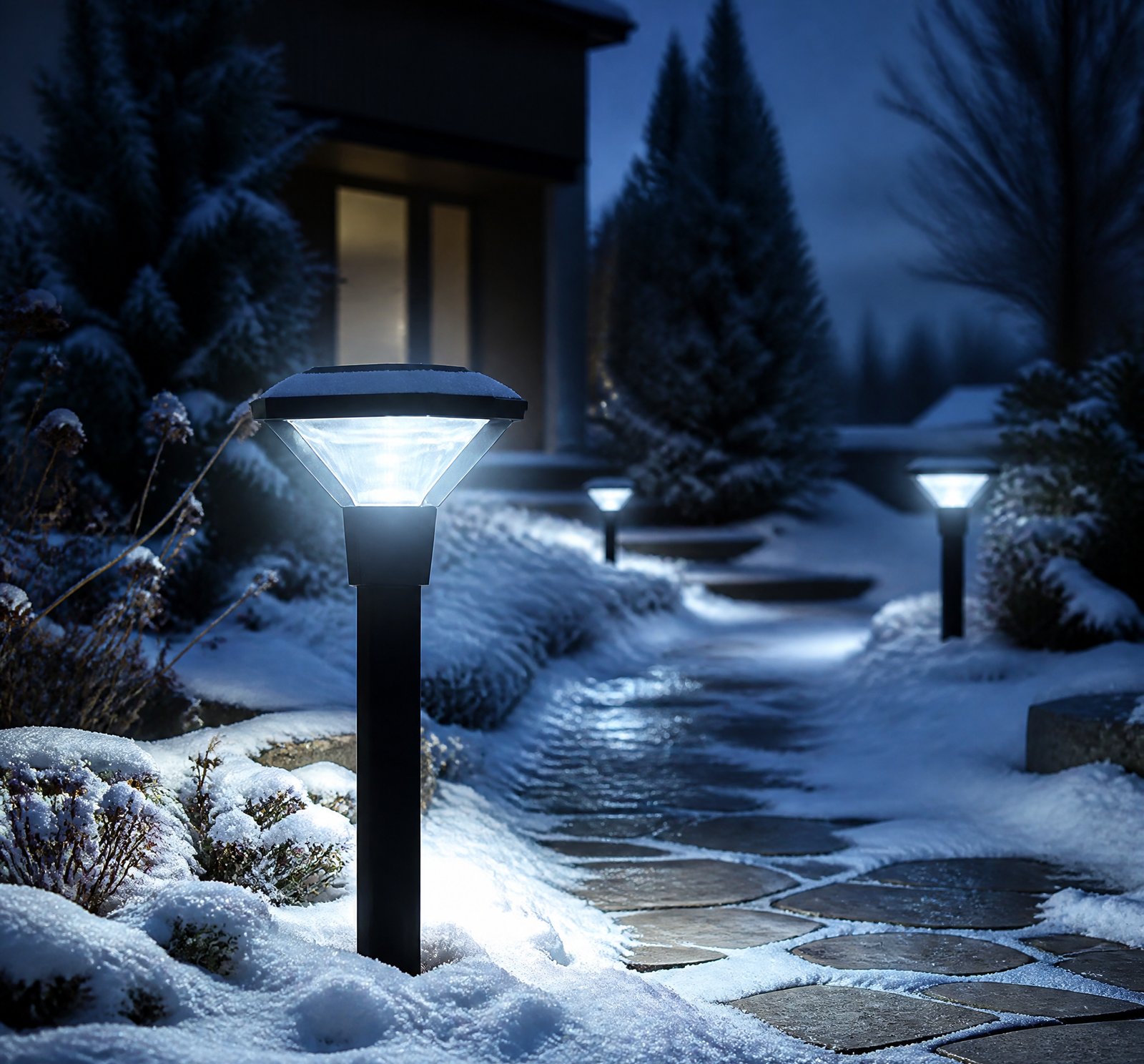
> Quick answer: The most commonly exaggerated solar lamp specs are light output, battery capacity, and durability. Buyers should rely on independent testing databases like Lighting Global for accurate verification [1][22].
In the quest for reliable solar lamps in Romania, discerning consumers face a challenge: separating marketing hype from reality. This guide reveals which specifications are most often exaggerated by manufacturers and provides practical steps to verify their claims.
Commonly Exaggerated Specifications in Solar Lamp Marketing
The specifications most frequently exaggerated in solar lamp marketing include light output, battery performance, and overall system durability [3][18]. These exaggerations are not accidental but systemic, often due to poor design, inadequate testing, and the lack of standardized, verifiable data.
Light Output Misrepresentation
Independent tests show that many solar lanterns fail to meet their advertised light output. A 2008–2009 test found that five out of twelve solar lanterns failed basic quality checks, with insufficient light output being a major issue [3][18]. Manufacturers often inflate lumen ratings or neglect real-world degradation of LED performance.
Battery and Solar Panel Misrepresentation
Solar panels and batteries are also frequently misrepresented. Tests reveal that actual performance falls short of nominal values, such as advertised wattage or battery capacity (e.g., 2000 mAh) [3][13]. This misrepresentation can be due to inaccurate solar resource assessment or overly optimistic component sizing.
Product Robustness and Durability
Product robustness is another area where marketing often falls short. Field tests across multiple countries found that cables, plugs, input jacks, switches, and connection parts are the most common failure points [6][11]. These components face extreme daily stress but are rarely highlighted in marketing materials.
How to Verify Solar Lamp Specifications
To verify these specifications, buyers should rely on independent third-party testing databases such as the DOE CALiPER website, EnergyStar Light Bulbs site, and the LED Lighting Facts database [1]. These sources provide impartial test data on lamp characteristics like luminous flux, color temperature, and efficiency.
Third-Party Databases
The Lighting Global platform by the World Bank Group is another essential resource. It maintains a database of solar lighting products meeting minimum quality standards and provides ongoing updates [22].
LM-79 Reports
For more technical verification, buyers can request LM-79 reports, which detail lamp characteristics in depth [1]. These reports are crucial for validating claims about light output and spectral quality.
In Situ Testing: Real-World Performance Evaluation
In situ testing is critical for assessing off-grid solar lamps. This involves real-world evaluation over at least a week to detect color shifts, overheating, or early failure [1][7]. The GIZ and Fraunhofer ISE methodology recommends thorough field tests to capture temperature fluctuations, dust exposure, and frequent handling impacts.
Testing Recommendations
Field testing should include checking for flicker across all intensities, which can cause eye strain and headaches. Additionally, assessing glare and light distribution on walls and objects is essential [1].
Key Components of Durability
A surprising insight from the research is that the most common failure points are not solar panels or LEDs but connectors and switches [6][11]. Buyers should inspect these components for robust materials, water resistance, and overall build quality.
Critical Inspection Points
Evaluate the finish and durability of cables, plugs, input jacks, and switches. Products described as “portable” or having “multi-use” capabilities often neglect to mention these critical inspection points [8].
Key Takeaways
- Light Output: Independent tests show many solar lanterns fail basic quality checks.
- Battery Capacity: Actual performance often falls short of advertised values due to inaccurate resource assessment and optimistic sizing.
- Durability: Connectors and switches are the most common failure points, not core components.
Compact Comparison Table
| Specification | Common Misrepresentation |
|––––––|–––––––––––––-|
| Light Output | Inflated lumen ratings |
| Battery Capacity | Underperformance in real-world use |
| Durability | Neglected connectors and switches |
Frequently Asked Questions
[{„q”: „How can I verify the light output of a solar lamp?”, „a”: „Request LM-79 reports from manufacturers or check independent databases like DOE CALiPER [1]. These provide detailed testing results.”}, {„q”: „Which components are most likely to fail in solar lamps?”, „a”: „Connectors, plugs, and switches commonly fail due to daily stress and poor build quality [6][11].”}, {„q”: „What is the best method for assessing real-world performance?”, „a”: „Field testing over a week with GIZ and Fraunhofer ISE methodology captures all real-life stressors [1][7].”}]
References
- [1] LED_Lighting_in_Museums_and_Art_Galleries_Technical_-_Canadaca__7f9b6307 — authority
source passage
Obtain LM-79 reports (lamp characteristics) from lamp manufacturers. – Check the DOE CALiPER website for impartial test data. – Check the EnergyStar Light Bulbs website and the LED Lighting Facts database (consult endnote 1) for characteristics of products currently available on the market. – Consult Technical details for larger projects. Purchase trial lamps – Once you have made preliminary decisions on several candidate lamps, purchase a few and evaluate them in situ, preferably with colleagues. Check the appearance of the lamp from the side for glare. Check the appearance of the light on blank walls. Check the appearance of the objects illuminated by the lamp. Check the appearance of your skin under the lamp (we are especially attuned to how our skin should look under good-quality light). – If you purchased dimmers, test them with the lamps. Check for flicker across the whole range of intensities. – Test trial lamps, especially those you are considering for purchase, in the fixtures planned for use for as long as possible, and at least a week, to see if they change colour or overheat and fail. Before purchasing large numbers of lamps – Ask for products from companies you know or whom you trust or that have a documented support history. – Get a written warranty that encompasses light output, colour variation (Duv) over time as well as failure of chips and electronics, and which includes labour. A one-year warranty is common, but for longer periods of time the coverage may b
- [3] Solar_Laterns_Test_-_energypedia__6e1cce5f — authority
source passage
phone charging, massive market growth can be expected in the near future. – In light of the mixed test results, informing potential consumers about lantern quality will be of great importance for a healthy market development. In the initial Test Level 1, ISE examined all twelve systems for quality of workmanship. Five lamps did not pass test level one. In general the tests show that a majority of the available lights are not suitable for “Off-Grid Lighting” ion developing countries due to their very poor quality, which would lead to very short lifetimes and bad lighting service for poor rural customers.[2] The main quality issues determined were: – Poor mechanical design and workmanship – Missing over-current protection of the LED – Poor electrical design – Insufficient light output – Bad quality of LEDs: rapid degradation of light output – Solar panels and batteries did not show their nominal values or were sized too small – Defective protection of battery – Defective ballast for LEDs or CFLs[2] Testing Criteria The following table shows the testing criteria and maint test evaluation of types of lanterns. [1] Taking the different evaluations into consideratin, the winner of the technical test was the sun x-set mobile. E ven if the two lanterns do not show the best workmanship, the system functions with the largest and most powerful module by far and with an outstandingly good and versatile charging station. The extremely high purchase price and consequently huge operating co
- [6] Impacts_of_PicoPV_and_Consumer_Research_-_energypedia__2ed9d7cd — authority
source passage
Outstanding Products). Particular technical improvements concluded from the Ugandan field tests are: manufacturers need to improve products’ solar fraction, equip lamps only with advanced charge controllers, and work on the robustness of the products, and of the connection parts in particular. Problems were: frequent deep-discharge of batteries, low battery life-spans and overall unsatisfactory lighting service were the frequently observed. Apart from that, the components that most often caused lamps to fail were cables, plugs, input jacks and switches. These parts are obviously under extreme stress when lamps are in everyday use by extended families with several children, and when modules are put down for charging on the ground in the courtyard (while lamps are kept inside to protect them against thieves). [1] In Ethiopia, broken switches and deeply discharged batteries were a frequent problem. Robustness has to be improved as well, because users often carry their systems around due to fear of theft. General Experiences Field Tests The GIZ PicoPV country survey results underpin that an ‘one-size-fits-all’ lamp model does not exist. The lamp models were rated differently by users across different continents, and they were liked and disliked for different reasons. However, there are some aspects that turned out to be important for consumers in all the test countries. Aspect's Customers Above all, light quality, including the size of the light cone and light intensity, mattered
- [7] Solar_Laterns_Test_-_energypedia__6e1cce5f — authority
source passage
# Solar Laterns Test Source: Blog/Web URL: https://energypedia.info/wiki/Solar_Laterns_Test Author: Date: 2015-09-08 Solar Laterns Test Overview Experience in development cooperation shows that one thing must be avoided at the outset: that users of cheap and inadequate devices should become so disillusioned that the entire technology is discredited. Therefore, Deutsche Gesellschaft für Internationale Zusammenarbeit (GIZ) has developed a methodology in cooperation with Fraunhofer Institute for Solar Energy Systems (ISE) Freiburg, Germany. Solar lanterns could replace environmentally damaging kerosene lamps in many developing countries and supply high quality light to a large proportion of poor households. To meet this end, the products must be well-made and priced within the reach of the poorest. The lab test implemented by GIZ and Fraunhofer ISE in 2008 and 2009 shows that there are too few solar lanterns that meet both criteria. Status Quo The quality of solar lanterns on the market is mixed, and prices are still too high for them to sell in great numbers in view of the low saving rates of poor households. However, we expect prices to drop below 50% of 2008 values over the next few years. As they offer higher quality lighting, better handling, environmental advantages and sometimes radio or mobile phone charging, massive market growth can be expected in the near future. In light of the mixed test results, informing potential consumers about lantern quality will be of great i
- [8] Best_Solar_Lamp_Post_Our_Top_5_Picks_Reviewed__86196132 — blog
source passage
ones that can obscure the glow and pose a greater challenge to illuminating the area around it. Functionality If there’s one thing you can say about the best solar lamp post, it’s that it will likely have more than one use. Some simply work as outdoor lighting and nothing more. Others include planters or pots to increase their practicality. These other features aren’t necessarily of the deal breaker category, but you may find they can give an edge to one item over another. We’d suggest that you consider these possibilities, especially if it can bring added value to your purchase and enhance your landscaping. Materials and Dimensions These two specs are some of the most critical when deciding which solar lamp post outdoor to buy. Consider the quality of the construction and the materials. Look at the finish as well which can give you additional clues about its practicality. Pay attention for descriptors that identify its water resistance or waterproof traits. Also, look at the type of solar cells. Each varies in their efficiency which can tip the scales for one over another. You’ll usually see monocrystalline or polycrystalline silicon cells. Others exist but often have specific applications other than residential use. Don’t forget to measure and even better, check it twice if there is any question of a solar garden lamp post fitting the intended space. The same caution applies to a solar lamp post top. You can add some wood biscuits for any gaps that could affect its fit and
- [11] Impacts_of_PicoPV_and_Consumer_Research_-_energypedia__2ed9d7cd — authority
source passage
# Impacts of PicoPV and Consumer Research Source: Blog/Web URL: https://energypedia.info/wiki/Impacts_of_PicoPV_and_Consumer_Research Author: Date: 2018-08-01 Impacts of PicoPV and Consumer Research Overview As experience with other renewable technologies show, lack of social acceptance and incongruity with cultural values and norms are common barriers during the implementation phase. Therefore, it is important to investigate in users needs and behavior patterns. Additionally, experience shows that laboratory test have to be complemented with field tests in order to test the solar lanterns under real-life conditions. Due to the fact that many bad quality products exists, it is also important to test selected products in a field test. GIZ Energising Development has conducted various tests in different countries, such as Bangladesh, Bolivia, Ethiopia, Mozambique, Nicaragua, Peru, Senegal and Uganda. Approaches of these tests differ, results and outlook are presented within this articles. Performance of Solar Lamps More than 100 firms are offering PicoPV products in developing countries today, but most products are of very low quality, with serious implications for consumer trust in the new technology. Early lab tests have focused the awareness of governments and donors on the importance of quality control and customer information – however, field tests in sufficient countries with sufficient sample sizes are needed for a better understanding of PicoPV performance under real-lif
- [13] Accurate_solar_resource_assessment_Paving_the_way_for_profitable__95621f16 — magazine
source passage
to overestimated or underestimated predictions, jeopardizing the project’s bankability. – System sizing and configuration: Solar resource assessment data is used to optimize the design of the solar power plant, including the selection of equipment, the layout of the panels and the sizing of the system components. Incorrect data can lead to suboptimal system designs and reduced energy production. – Risk mitigation: Understanding solar resource variability and potential uncertainties (such as weather patterns) allows for better risk management, helping identify potential challenges and develop contingency plans to reduce financial risks and enhance project resilience. – Performance optimization: During the operational phase, solar irradiance and weather data are crucial for monitoring the performance of the solar power plant and identifying any deviations from expected energy yield. Accurate data enables timely corrective actions and maximizes the plant’s operational efficiency. Inaccurate solar data impacts stakeholders at each stage of the project life cycle. For developers, a low-quality assessment will affect long-term performance, and thus the P50 and P90 estimates, possibly making the financial indicators less attractive. For the EPC, inaccurate solar data can reduce the PR, potentially leading to liquid damage, long performance discussions and even payment delays. For the O&M, inaccurate solar data could lead to unnecessary interventions on-site, with each visit costing
- [18] Basic_Energy_Services_-_Solar_PV_SHS_Solar_Lanterns_-_energypedia__0ac0436c — authority
source passage
of solar lanterns through laboratory tests of 12 solar lanterns on the market in 2009. From this tests, some of the technical problems that were observed with solar lanterns include: Poor mechanical design and workmanship; Missing over-current protection of the LED; Poor electrical design; Insufficient light output; Bad quality of the LEDs; Solar panels and batteries did not show nominal values; Defective protection of the battery; and Defective ballast for CFLs or LEDs.[2] As a result, a detailed test procedure is recommended as well as a series of technical requirements to improve the quality and the sustainability of the lanterns.Lighting Africa also rigorously tests the various lighting products on the market and they their specifications that should give the customer satisfaction for the products.The system should give a bright light, be affordable, multipurpose (lighting two rooms, charging a phone), portable, easy to use, safe and secure and have a long battery life.[8] Costs of PicoPV Systems Initial investment cost of PicoPV systems ranges from 36 US$ to 120 US$. Such relatively high initial investment costs prevents the large-scale diffusion of PicoPV lanterns among low income strata for the time being, given their severely restricted household budgets (typically US$ 2-5 per month for lighting, with no buffer for savings) and lack of access to financial services.[2] In contrast, monthly costs are low (2 US$ to 9 US$, except for the poorest price performer) in compar
- [22] D-Lab_Off-Grid_Energy_Group_launches_Solar_Lighting_Product__84d6451b — authority
source passage
and programs working to increase access to solar energy products where they are most needed,” Verploegen says. “Our job was to figure out what was missing.” Verploegen was intrigued by the work coming out of MIT’s Comprehensive Initiative on Technology Evaluation (CITE). CITE has developed and piloted a methodology for evaluating products intended for the developing world focusing on the dimensions of suitability, scalability, and sustainability. Their first study of solar lanterns available in Uganda, published in early 2015, included a comparative chart of solar lanterns available in Uganda. “CITE is pioneering a rigorous methodology for evaluation,” comments Verploegen. “What D-Lab’s Off-Grid Energy wanted to bring to the table was the rapid dissemination of comparable product specifications linked to geographically organized distributor contact information around the world.” Verploegen didn’t have to start from scratch. Inspired by CITE’s Uganda Solar Lantern study, Verploegen researched the availability of solar lighting product information that was global in scale. He found Lighting Global, the World Bank Group platform, which has been providing basic information on solar lighting products that meet minimum quality standards since 2009 and continuously updates their database. In developing this resource, D-Lab’s Off-Grid Energy Group working from Lighting Global’s database (in fact, they will include only products that have passed Lighting Global’s quality assurance sta
Obtain LM-79 reports (lamp characteristics) from lamp manufacturers. – Check the DOE CALiPER website for impartial test data. – Check the EnergyStar Light Bulbs website and the LED Lighting Facts database (consult endnote 1) for characteristics of products currently available on the market. – Consult Technical details for larger projects. Purchase trial lamps – Once you have made preliminary decisions on several candidate lamps, purchase a few and evaluate them in situ, preferably with colleagues. Check the appearance of the lamp from the side for glare. Check the appearance of the light on blank walls. Check the appearance of the objects illuminated by the lamp. Check the appearance of your skin under the lamp (we are especially attuned to how our skin should look under good-quality light). – If you purchased dimmers, test them with the lamps. Check for flicker across the whole range of intensities. – Test trial lamps, especially those you are considering for purchase, in the fixtures planned for use for as long as possible, and at least a week, to see if they change colour or overheat and fail. Before purchasing large numbers of lamps – Ask for products from companies you know or whom you trust or that have a documented support history. – Get a written warranty that encompasses light output, colour variation (Duv) over time as well as failure of chips and electronics, and which includes labour. A one-year warranty is common, but for longer periods of time the coverage may b
phone charging, massive market growth can be expected in the near future. – In light of the mixed test results, informing potential consumers about lantern quality will be of great importance for a healthy market development. In the initial Test Level 1, ISE examined all twelve systems for quality of workmanship. Five lamps did not pass test level one. In general the tests show that a majority of the available lights are not suitable for “Off-Grid Lighting” ion developing countries due to their very poor quality, which would lead to very short lifetimes and bad lighting service for poor rural customers.[2] The main quality issues determined were: – Poor mechanical design and workmanship – Missing over-current protection of the LED – Poor electrical design – Insufficient light output – Bad quality of LEDs: rapid degradation of light output – Solar panels and batteries did not show their nominal values or were sized too small – Defective protection of battery – Defective ballast for LEDs or CFLs[2] Testing Criteria The following table shows the testing criteria and maint test evaluation of types of lanterns. [1] Taking the different evaluations into consideratin, the winner of the technical test was the sun x-set mobile. E ven if the two lanterns do not show the best workmanship, the system functions with the largest and most powerful module by far and with an outstandingly good and versatile charging station. The extremely high purchase price and consequently huge operating co
Outstanding Products). Particular technical improvements concluded from the Ugandan field tests are: manufacturers need to improve products’ solar fraction, equip lamps only with advanced charge controllers, and work on the robustness of the products, and of the connection parts in particular. Problems were: frequent deep-discharge of batteries, low battery life-spans and overall unsatisfactory lighting service were the frequently observed. Apart from that, the components that most often caused lamps to fail were cables, plugs, input jacks and switches. These parts are obviously under extreme stress when lamps are in everyday use by extended families with several children, and when modules are put down for charging on the ground in the courtyard (while lamps are kept inside to protect them against thieves). [1] In Ethiopia, broken switches and deeply discharged batteries were a frequent problem. Robustness has to be improved as well, because users often carry their systems around due to fear of theft. General Experiences Field Tests The GIZ PicoPV country survey results underpin that an ‘one-size-fits-all’ lamp model does not exist. The lamp models were rated differently by users across different continents, and they were liked and disliked for different reasons. However, there are some aspects that turned out to be important for consumers in all the test countries. Aspect's Customers Above all, light quality, including the size of the light cone and light intensity, mattered
# Solar Laterns Test Source: Blog/Web URL: https://energypedia.info/wiki/Solar_Laterns_Test Author: Date: 2015-09-08 Solar Laterns Test Overview Experience in development cooperation shows that one thing must be avoided at the outset: that users of cheap and inadequate devices should become so disillusioned that the entire technology is discredited. Therefore, Deutsche Gesellschaft für Internationale Zusammenarbeit (GIZ) has developed a methodology in cooperation with Fraunhofer Institute for Solar Energy Systems (ISE) Freiburg, Germany. Solar lanterns could replace environmentally damaging kerosene lamps in many developing countries and supply high quality light to a large proportion of poor households. To meet this end, the products must be well-made and priced within the reach of the poorest. The lab test implemented by GIZ and Fraunhofer ISE in 2008 and 2009 shows that there are too few solar lanterns that meet both criteria. Status Quo The quality of solar lanterns on the market is mixed, and prices are still too high for them to sell in great numbers in view of the low saving rates of poor households. However, we expect prices to drop below 50% of 2008 values over the next few years. As they offer higher quality lighting, better handling, environmental advantages and sometimes radio or mobile phone charging, massive market growth can be expected in the near future. In light of the mixed test results, informing potential consumers about lantern quality will be of great i
ones that can obscure the glow and pose a greater challenge to illuminating the area around it. Functionality If there’s one thing you can say about the best solar lamp post, it’s that it will likely have more than one use. Some simply work as outdoor lighting and nothing more. Others include planters or pots to increase their practicality. These other features aren’t necessarily of the deal breaker category, but you may find they can give an edge to one item over another. We’d suggest that you consider these possibilities, especially if it can bring added value to your purchase and enhance your landscaping. Materials and Dimensions These two specs are some of the most critical when deciding which solar lamp post outdoor to buy. Consider the quality of the construction and the materials. Look at the finish as well which can give you additional clues about its practicality. Pay attention for descriptors that identify its water resistance or waterproof traits. Also, look at the type of solar cells. Each varies in their efficiency which can tip the scales for one over another. You’ll usually see monocrystalline or polycrystalline silicon cells. Others exist but often have specific applications other than residential use. Don’t forget to measure and even better, check it twice if there is any question of a solar garden lamp post fitting the intended space. The same caution applies to a solar lamp post top. You can add some wood biscuits for any gaps that could affect its fit and
# Impacts of PicoPV and Consumer Research Source: Blog/Web URL: https://energypedia.info/wiki/Impacts_of_PicoPV_and_Consumer_Research Author: Date: 2018-08-01 Impacts of PicoPV and Consumer Research Overview As experience with other renewable technologies show, lack of social acceptance and incongruity with cultural values and norms are common barriers during the implementation phase. Therefore, it is important to investigate in users needs and behavior patterns. Additionally, experience shows that laboratory test have to be complemented with field tests in order to test the solar lanterns under real-life conditions. Due to the fact that many bad quality products exists, it is also important to test selected products in a field test. GIZ Energising Development has conducted various tests in different countries, such as Bangladesh, Bolivia, Ethiopia, Mozambique, Nicaragua, Peru, Senegal and Uganda. Approaches of these tests differ, results and outlook are presented within this articles. Performance of Solar Lamps More than 100 firms are offering PicoPV products in developing countries today, but most products are of very low quality, with serious implications for consumer trust in the new technology. Early lab tests have focused the awareness of governments and donors on the importance of quality control and customer information – however, field tests in sufficient countries with sufficient sample sizes are needed for a better understanding of PicoPV performance under real-lif
to overestimated or underestimated predictions, jeopardizing the project’s bankability. – System sizing and configuration: Solar resource assessment data is used to optimize the design of the solar power plant, including the selection of equipment, the layout of the panels and the sizing of the system components. Incorrect data can lead to suboptimal system designs and reduced energy production. – Risk mitigation: Understanding solar resource variability and potential uncertainties (such as weather patterns) allows for better risk management, helping identify potential challenges and develop contingency plans to reduce financial risks and enhance project resilience. – Performance optimization: During the operational phase, solar irradiance and weather data are crucial for monitoring the performance of the solar power plant and identifying any deviations from expected energy yield. Accurate data enables timely corrective actions and maximizes the plant’s operational efficiency. Inaccurate solar data impacts stakeholders at each stage of the project life cycle. For developers, a low-quality assessment will affect long-term performance, and thus the P50 and P90 estimates, possibly making the financial indicators less attractive. For the EPC, inaccurate solar data can reduce the PR, potentially leading to liquid damage, long performance discussions and even payment delays. For the O&M, inaccurate solar data could lead to unnecessary interventions on-site, with each visit costing
of solar lanterns through laboratory tests of 12 solar lanterns on the market in 2009. From this tests, some of the technical problems that were observed with solar lanterns include: Poor mechanical design and workmanship; Missing over-current protection of the LED; Poor electrical design; Insufficient light output; Bad quality of the LEDs; Solar panels and batteries did not show nominal values; Defective protection of the battery; and Defective ballast for CFLs or LEDs.[2] As a result, a detailed test procedure is recommended as well as a series of technical requirements to improve the quality and the sustainability of the lanterns.Lighting Africa also rigorously tests the various lighting products on the market and they their specifications that should give the customer satisfaction for the products.The system should give a bright light, be affordable, multipurpose (lighting two rooms, charging a phone), portable, easy to use, safe and secure and have a long battery life.[8] Costs of PicoPV Systems Initial investment cost of PicoPV systems ranges from 36 US$ to 120 US$. Such relatively high initial investment costs prevents the large-scale diffusion of PicoPV lanterns among low income strata for the time being, given their severely restricted household budgets (typically US$ 2-5 per month for lighting, with no buffer for savings) and lack of access to financial services.[2] In contrast, monthly costs are low (2 US$ to 9 US$, except for the poorest price performer) in compar
and programs working to increase access to solar energy products where they are most needed,” Verploegen says. “Our job was to figure out what was missing.” Verploegen was intrigued by the work coming out of MIT’s Comprehensive Initiative on Technology Evaluation (CITE). CITE has developed and piloted a methodology for evaluating products intended for the developing world focusing on the dimensions of suitability, scalability, and sustainability. Their first study of solar lanterns available in Uganda, published in early 2015, included a comparative chart of solar lanterns available in Uganda. “CITE is pioneering a rigorous methodology for evaluation,” comments Verploegen. “What D-Lab’s Off-Grid Energy wanted to bring to the table was the rapid dissemination of comparable product specifications linked to geographically organized distributor contact information around the world.” Verploegen didn’t have to start from scratch. Inspired by CITE’s Uganda Solar Lantern study, Verploegen researched the availability of solar lighting product information that was global in scale. He found Lighting Global, the World Bank Group platform, which has been providing basic information on solar lighting products that meet minimum quality standards since 2009 and continuously updates their database. In developing this resource, D-Lab’s Off-Grid Energy Group working from Lighting Global’s database (in fact, they will include only products that have passed Lighting Global’s quality assurance sta