
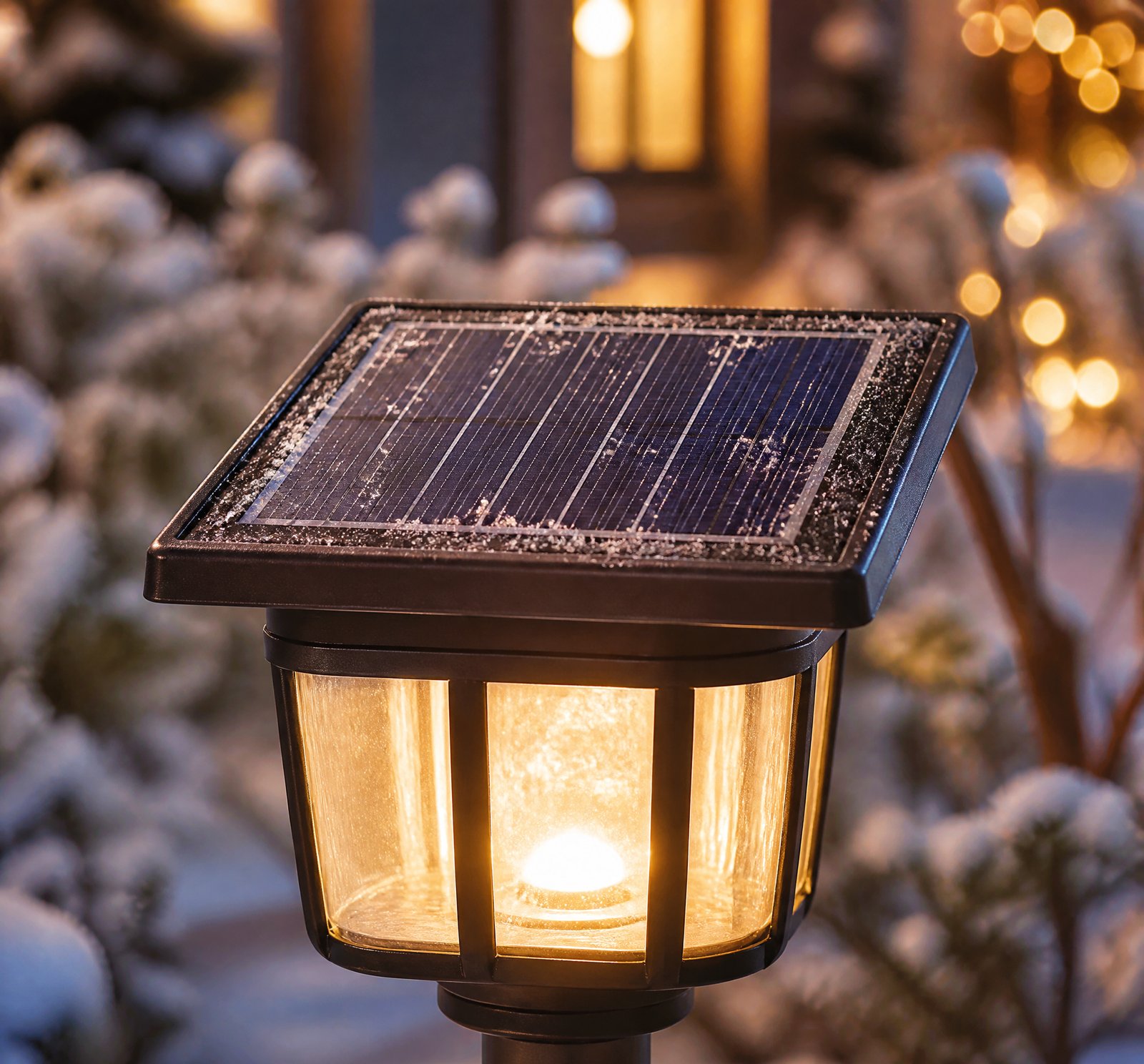
> Quick answer: Romanian buyers are frustrated by winter dimming, battery failure, and inadequate brightness due to inefficiencies like poor power management and low-quality components [1][22]. High-efficiency panels and robust design can address these issues effectively.
Winter dimming, dead batteries, weak brightness—these frustrations with solar lamps in Romania are common across many developing regions. However, they aren’t insurmountable if you understand the underlying technical shortcomings and know which specs to look for in your next purchase [1][22].
Winter Dimming: The Challenge of Low-Light Conditions
Winter dimming occurs when solar lamps fail to provide consistent illumination during the long, dark winter nights. This issue is not just about reduced sunlight but also poor energy harvesting and storage mechanisms. Polycrystalline solar panels, commonly found in low-cost models, have an efficiency of only 17%, making it difficult for them to generate sufficient voltage on cloudy or short winter days [11]. As a result, the battery remains undercharged, leading to premature dimming or shutdown.
To mitigate this challenge, consider high-efficiency solar panels like monocrystalline or amorphous silicon, which maintain performance in low-light conditions. Monocrystalline panels can achieve efficiencies of up to 22%, while amorphous silicon has an efficiency range of 10-16% even in bright sunshine [24]. Additionally, advanced charge controllers using Maximum Power Point Tracking (MPPT) can significantly improve charging efficiency under low-light conditions by dynamically adjusting the voltage to extract maximum power from the panel [15][11].
Dead Batteries: A Common Frustration
Dead or degraded batteries are a recurring failure point across multiple field studies. In Uganda and Ethiopia, deeply discharged batteries were frequent problems due to lack of proper battery protection circuits [1][22]. Poor-quality batteries with inadequate over-discharge protection fail prematurely [1][12].
Using robust battery protection circuits that include safeguards against both overcharging and deep discharge can extend the lifespan of a solar lamp’s battery. Additionally, gel electrolyte batteries are noted for high performance in deep discharging and extreme temperatures [2]. The ability to replace batteries with standard AA cells can also extend product life, though this is not always supported by manufacturers [25].
Weak Brightness: Poor Component Quality and Inefficient Design
Weak brightness is often tied to low-quality components and inefficient system design. Many solar lanterns fail to meet their nominal light output, delivering only a fraction of the advertised brightness due to low-efficiency solar panels, poor electrical design, and low-quality LEDs that degrade rapidly [12][18]. The use of inefficient charge controllers and poor power management leads to inconsistent power delivery to the LEDs, resulting in flickering or dimming during use [7][24].
High-quality LEDs with stable lumen maintenance are essential. Additionally, a well-designed boost converter can help sustain brightness even as the battery depletes. Smart dimming strategies based on battery voltage or historical energy collection can optimize light output during low-energy periods [24]. For example, a system that measures battery voltage at dusk and dims LEDs appropriately during the night when energy is low can prevent premature shutdown.
Key Takeaways
- High-Efficiency Panels are crucial for winter dimming.
- Robust Battery Protection Circuits extend battery life.
- Quality Components and Efficient Design ensure consistent brightness.
References
- [1] Impacts_of_PicoPV_and_Consumer_Research_-_energypedia__2ed9d7cd — authority
source passage
Outstanding Products). Particular technical improvements concluded from the Ugandan field tests are: manufacturers need to improve products’ solar fraction, equip lamps only with advanced charge controllers, and work on the robustness of the products, and of the connection parts in particular. Problems were: frequent deep-discharge of batteries, low battery life-spans and overall unsatisfactory lighting service were the frequently observed. Apart from that, the components that most often caused lamps to fail were cables, plugs, input jacks and switches. These parts are obviously under extreme stress when lamps are in everyday use by extended families with several children, and when modules are put down for charging on the ground in the courtyard (while lamps are kept inside to protect them against thieves). [1] In Ethiopia, broken switches and deeply discharged batteries were a frequent problem. Robustness has to be improved as well, because users often carry their systems around due to fear of theft. General Experiences Field Tests The GIZ PicoPV country survey results underpin that an ‘one-size-fits-all’ lamp model does not exist. The lamp models were rated differently by users across different continents, and they were liked and disliked for different reasons. However, there are some aspects that turned out to be important for consumers in all the test countries. Aspect's Customers Above all, light quality, including the size of the light cone and light intensity, mattered
- [2] Solar_lamp_-_Wikipedia__3c516988 — wikipedia
source passage
could cause problems.[6] A battery is usually housed within a metal or plastic case. Inside the case are electrodes including cathodes and anodes where chemical reactions occur. A separator also exists between cathode and anode which stops the electrodes reacting together at the same time as allowing electrical charge to flow freely between the two. Lastly, the collector conducts a charge from the battery to outside.[7] Batteries inside solar lamps usually use gel electrolyte technology with high performance in deep discharging, in order to enable use in extreme ranges of temperature.[citation needed] It may also use lead-acid, nickel metal hydride, nickel cadmium, or lithium. This part of the lamp saves up energy from the solar panel and provides power when needed at night when there is no light energy available. In general, the efficiency of photovoltaic energy conversion is limited for physical reasons. Around 24% of solar radiation of a long wavelength is not absorbed. 33% is heat lost to surroundings, and further losses are of approximately 15-20%. Only 23% is absorbed, which means a battery is a crucial part of solar lamp.[8] This section controls the entire working systems to protect battery charge. It ensures, under any circumstances including extreme weather conditions with large temperature difference, the battery does not overcharge or over discharge and damage the battery even further.[citation needed] This section also includes additional parts such as light cont
- [7] Flicker_Problem_-_Everyone_Stumped_-_Solar_Panels_-_Solar__eb0663d0 — reddit
source passage
# Flicker Problem – Everyone Stumped! Source: Blog/Web URL: https://www.solarpaneltalk.com/forum/solar-panels-for-home/solar-panel-installation/21158-flicker-problem-everyone-stumped Author: Justsosolar Date: 2015-08-02 Long story short, I had a system installed that consists of 28 280 watt Itek energy panels with a Solectria 7600tl inverter. 3 strings of 10, 10, and 8. Since day 1 after install, all lighting tied to dimmers flicker badly when dimmed with inverter "on" (not in night mode or manually shut off). Some affected circuits are incandescent, some are LED, some are a mix. I have 2 different types of dimmers (GE, Lutron), both are affected. Flicker is by far the worst when solar output is low, 0-200 watts. It gets increasingly better as solar output increases, and is barely noticeable at output above 5KW. My house was built in 2007 and had no issues prior to the solar; the dimmers and lighting has been there for years. I can watch the lights flicker and have someone else turn the inverter off and BAM, lights are perfect. I can shut every circuit off in the house aside from one lighting circuit and the solar but there is no improvement (pretty much eliminates external issues). The installers have been out a few times trying to figure out the issue. They adjusted settings, added some ferrites thinking it was interference, but that did not help. Apparently they have another house with a similar issue and replaced the inverter without any improvement, so they hesitate to r
- [11] Solar_Street_Light_From_Germany__Why_Solar_Street_Lights_Fail_in_Winter_Ultimate_Technical_Guide_for_B2B_Projects__Ua7I1YwH3DU — youtube
source passage
# Why Solar Street Lights Fail in Winter? (Ultimate Technical Guide for B2B Projects) Source: YouTube — Solar Street Light From Germany URL: https://www.youtube.com/watch?v=Ua7I1YwH3DU Video ID: Ua7I1YwH3DU Transcript: generated You've invested thousands of dollars in a large-scale solar project, but just 3 months later, the streets are dark by midnight. No light, no security. This isn't just a technical glitch, it's a total project failure and a massive financial loss for your company. Why does the battery fail to charge even with expensive systems? Today, we reveal the silent killer, the technical reasons behind charging failure and how to stop it forever. The biggest culprit is the use of polycrystalline panels. With an efficiency of only 17%, they are a disaster for B2B projects. On cloudy days or during winter, these panels fail to generate the minimum voltage required to trigger the charging process. This leads to battery starvation. When a battery stays partially charged for weeks, internal chemical layers build up, causing permanent damage. This is exactly why your lights shut off in the middle of the night. Even if the panel generates some power, an outdated PWM controller wastes 40% of it. It's like trying to fill a bucket with a massive hole in the bottom. Enough energy never reaches the battery. This leaves the streets dark, increasing the risk of accidents and crime. In a professional B2B environment, these small technical mistakes can destroy your company's enti
- [12] Basic_Energy_Services_-_Solar_PV_SHS_Solar_Lanterns_-_energypedia__0ac0436c — authority
source passage
of solar lanterns through laboratory tests of 12 solar lanterns on the market in 2009. From this tests, some of the technical problems that were observed with solar lanterns include: Poor mechanical design and workmanship; Missing over-current protection of the LED; Poor electrical design; Insufficient light output; Bad quality of the LEDs; Solar panels and batteries did not show nominal values; Defective protection of the battery; and Defective ballast for CFLs or LEDs.[2] As a result, a detailed test procedure is recommended as well as a series of technical requirements to improve the quality and the sustainability of the lanterns.Lighting Africa also rigorously tests the various lighting products on the market and they their specifications that should give the customer satisfaction for the products.The system should give a bright light, be affordable, multipurpose (lighting two rooms, charging a phone), portable, easy to use, safe and secure and have a long battery life.[8] Costs of PicoPV Systems Initial investment cost of PicoPV systems ranges from 36 US$ to 120 US$. Such relatively high initial investment costs prevents the large-scale diffusion of PicoPV lanterns among low income strata for the time being, given their severely restricted household budgets (typically US$ 2-5 per month for lighting, with no buffer for savings) and lack of access to financial services.[2] In contrast, monthly costs are low (2 US$ to 9 US$, except for the poorest price performer) in compar
- [15] US9128506B2_-_Power_tracking_device_and_power_-_Google_Patents__88eec67f — patent
source passage
experimental example of the invention when the solar battery is exposed to different luminances; – FIG. 5 is a block diagram of a power tracking device according to an embodiment of the invention. – FIG. 6 is an electrical circuit diagram of the power tracking device in FIG. 5 . – FIG. 7 is an electrical circuit diagram of the power tracking device in FIG. 5 in according to another embodiment. – FIG. 1 is an I-V graph of a solar battery according to an experimental example of the invention. – the open circuit voltage (Voc) is the voltage when the current of the solar battery is zero, and a short circuit current is the current when the voltage of the solar battery is zero. – FIG. 2 is a graph illustrating different values K when a solar battery according to an experimental example of the invention is exposed to different luminances. As shown in FIG. 2 , in this kind of solar battery, the value K is high when the solar battery is exposed to a low luminance, and on the other hand, the value K is relatively low when the solar battery is exposed to a high luminance. As noted above, different solar batteries correspond to different values K. – the value K can be determined to be a certain value (for example, an average value 68%) so as to make the solar battery work in a condition that the output voltage is 68% of the open circuit voltage (Voc). That is, although the luminance is different, the solar battery uses 68% as the working condition. – the value K of the solar battery vari
- [18] Solar_Laterns_Test_-_energypedia__6e1cce5f — authority
source passage
phone charging, massive market growth can be expected in the near future. – In light of the mixed test results, informing potential consumers about lantern quality will be of great importance for a healthy market development. In the initial Test Level 1, ISE examined all twelve systems for quality of workmanship. Five lamps did not pass test level one. In general the tests show that a majority of the available lights are not suitable for “Off-Grid Lighting” ion developing countries due to their very poor quality, which would lead to very short lifetimes and bad lighting service for poor rural customers.[2] The main quality issues determined were: – Poor mechanical design and workmanship – Missing over-current protection of the LED – Poor electrical design – Insufficient light output – Bad quality of LEDs: rapid degradation of light output – Solar panels and batteries did not show their nominal values or were sized too small – Defective protection of battery – Defective ballast for LEDs or CFLs[2] Testing Criteria The following table shows the testing criteria and maint test evaluation of types of lanterns. [1] Taking the different evaluations into consideratin, the winner of the technical test was the sun x-set mobile. E ven if the two lanterns do not show the best workmanship, the system functions with the largest and most powerful module by far and with an outstandingly good and versatile charging station. The extremely high purchase price and consequently huge operating co
- [22] Impacts_of_PicoPV_and_Consumer_Research_-_energypedia__2ed9d7cd — authority
source passage
think ahead and are not interested in products that may be relatively cheap but have to be replaced after a short time. There is also concern among all potential retailers that maintenance and repair services may be a major hurdle towards the development of PicoPV markets in rural areas, where there is no local expertise on these new kinds of products. The field survey also revealed certain reservations by different consumer groups against some visual design features that will have to be taken into account for any successful PicoPV marketing strategy. For example, people had very particular positive or negative associations with certain colors or forms which might have an impact on their purchasing decision even though they said that these product features were not decisive factors. One lantern, for example, reminded Ugandan women of a camera, which limited its attractiveness, while in Nicaragua people particularly liked the handy format of the lamp. In Mozambique, one of the lamp models was described as “masculine” so that women would hesitate to use it. In Uganda, white is associated with religious ceremonies like funerals and therefore not regarded an appropriate color for a lamp. In Ethiopia, a large angle of radiation was preferred over a high number of lumens. Portable lamps were favored. Users preferred a built-in switch instead of a pull switch. Furthermore, bright, white light was clearly chosen over yellow colored light. Regulators in order to adjust the level of br
- [24] WO2010057138A2_-_Energy-efficient_solar-powered_outdoor_lighting__593d23e6 — patent
source passage
1 – 2 volts above a minimum safe battery voltage, said minimum safe battery voltage being a voltage below which battery damage occurs. 18. A method as in Claim 15, wherein said solar collector has an efficiency in bright sunshine in the range of 10 – 16 %. 19. A method as in Claim 15 wherein said solar-collector is amorphous silicon photovoltaic material having an efficiency in bright sunshine in the range of 10 – 16 %. 20. A method as in Claim 15, further comprising determining an amount to dim said LEDs, during a nighttime when said at least one motion sensor is not sensing motion near the pole, based on a method comprising measuring battery voltage of said at least one battery at dusk prior to said nighttime. I l l 21. A method as in Claim 15, further comprising determining an amount to dim said LEDs, during a nighttime when said at least one motion sensor is not sensing motion near the pole, based on a method comprising measuring and recording energy production in amp-hours by said solar collector panel in a previous time period comprising one or more days. 22. A method as in Claim 15, further comprising determining an amount to dim said LEDs, during a nighttime when said at least one motion sensor is not sensing motion near the pole, based on a method comprising measuring and recording historical data of energy collection by the solar collector panel over a period one year earlier. 23. A method as in Claim 15, wherein said first fraction is 25% or less of full brightness
- [25] Teardown_And_Analysis_Of_A_Cheap_Solar_Lamp_-_Hackaday__43564506 — authority
source passage
# Teardown And Analysis Of A Cheap Solar Lamp Source: Blog/Web URL: https://hackaday.com/2020/01/26/teardown-and-analysis-of-a-cheap-solar-lamp/ Author: Jenny List Date: 2020-01-26 If you walk the aisles of a dollar store one constant that you will see worldwide is the Chinese solar lamp. Your dollar gets you a white LED behind plastic, mounted on a spike to stick into the ground, and with a solar cell on top. It charges in the sunlight during the day and then lights the LED for a few hours at nightfall. They are in gardens everywhere, and no doubt landfill sites are full of them because they do not last very long. [Giovanni Bernardo] had one that stopped working, so he subjected it to a teardown to find out what was up, and what made it tick (Italian, Google Translate link). As expected, the culprit proved to be a leaking and corroded 1.2 volt NiMh cell, and its replacement with an AA cell brought the lamp back to life. But the interesting part of this tale comes from his teardown and analysis of the lamp’s components. It’s centered around a YX8016 battery charger and power management chip. The device has an amazing economy of design with only four components including the solar cell and the LED. The final component is a small inductor that forms part of the boost converter to keep the LED lit as the battery voltage falls. The chip switches at 580kHz, and produces a 3.2 volt supply. If this is a subject that interests you, don’t forget to take a look at the power harvesting
Outstanding Products). Particular technical improvements concluded from the Ugandan field tests are: manufacturers need to improve products’ solar fraction, equip lamps only with advanced charge controllers, and work on the robustness of the products, and of the connection parts in particular. Problems were: frequent deep-discharge of batteries, low battery life-spans and overall unsatisfactory lighting service were the frequently observed. Apart from that, the components that most often caused lamps to fail were cables, plugs, input jacks and switches. These parts are obviously under extreme stress when lamps are in everyday use by extended families with several children, and when modules are put down for charging on the ground in the courtyard (while lamps are kept inside to protect them against thieves). [1] In Ethiopia, broken switches and deeply discharged batteries were a frequent problem. Robustness has to be improved as well, because users often carry their systems around due to fear of theft. General Experiences Field Tests The GIZ PicoPV country survey results underpin that an ‘one-size-fits-all’ lamp model does not exist. The lamp models were rated differently by users across different continents, and they were liked and disliked for different reasons. However, there are some aspects that turned out to be important for consumers in all the test countries. Aspect's Customers Above all, light quality, including the size of the light cone and light intensity, mattered
could cause problems.[6] A battery is usually housed within a metal or plastic case. Inside the case are electrodes including cathodes and anodes where chemical reactions occur. A separator also exists between cathode and anode which stops the electrodes reacting together at the same time as allowing electrical charge to flow freely between the two. Lastly, the collector conducts a charge from the battery to outside.[7] Batteries inside solar lamps usually use gel electrolyte technology with high performance in deep discharging, in order to enable use in extreme ranges of temperature.[citation needed] It may also use lead-acid, nickel metal hydride, nickel cadmium, or lithium. This part of the lamp saves up energy from the solar panel and provides power when needed at night when there is no light energy available. In general, the efficiency of photovoltaic energy conversion is limited for physical reasons. Around 24% of solar radiation of a long wavelength is not absorbed. 33% is heat lost to surroundings, and further losses are of approximately 15-20%. Only 23% is absorbed, which means a battery is a crucial part of solar lamp.[8] This section controls the entire working systems to protect battery charge. It ensures, under any circumstances including extreme weather conditions with large temperature difference, the battery does not overcharge or over discharge and damage the battery even further.[citation needed] This section also includes additional parts such as light cont
# Flicker Problem – Everyone Stumped! Source: Blog/Web URL: https://www.solarpaneltalk.com/forum/solar-panels-for-home/solar-panel-installation/21158-flicker-problem-everyone-stumped Author: Justsosolar Date: 2015-08-02 Long story short, I had a system installed that consists of 28 280 watt Itek energy panels with a Solectria 7600tl inverter. 3 strings of 10, 10, and 8. Since day 1 after install, all lighting tied to dimmers flicker badly when dimmed with inverter "on" (not in night mode or manually shut off). Some affected circuits are incandescent, some are LED, some are a mix. I have 2 different types of dimmers (GE, Lutron), both are affected. Flicker is by far the worst when solar output is low, 0-200 watts. It gets increasingly better as solar output increases, and is barely noticeable at output above 5KW. My house was built in 2007 and had no issues prior to the solar; the dimmers and lighting has been there for years. I can watch the lights flicker and have someone else turn the inverter off and BAM, lights are perfect. I can shut every circuit off in the house aside from one lighting circuit and the solar but there is no improvement (pretty much eliminates external issues). The installers have been out a few times trying to figure out the issue. They adjusted settings, added some ferrites thinking it was interference, but that did not help. Apparently they have another house with a similar issue and replaced the inverter without any improvement, so they hesitate to r
# Why Solar Street Lights Fail in Winter? (Ultimate Technical Guide for B2B Projects) Source: YouTube — Solar Street Light From Germany URL: https://www.youtube.com/watch?v=Ua7I1YwH3DU Video ID: Ua7I1YwH3DU Transcript: generated You've invested thousands of dollars in a large-scale solar project, but just 3 months later, the streets are dark by midnight. No light, no security. This isn't just a technical glitch, it's a total project failure and a massive financial loss for your company. Why does the battery fail to charge even with expensive systems? Today, we reveal the silent killer, the technical reasons behind charging failure and how to stop it forever. The biggest culprit is the use of polycrystalline panels. With an efficiency of only 17%, they are a disaster for B2B projects. On cloudy days or during winter, these panels fail to generate the minimum voltage required to trigger the charging process. This leads to battery starvation. When a battery stays partially charged for weeks, internal chemical layers build up, causing permanent damage. This is exactly why your lights shut off in the middle of the night. Even if the panel generates some power, an outdated PWM controller wastes 40% of it. It's like trying to fill a bucket with a massive hole in the bottom. Enough energy never reaches the battery. This leaves the streets dark, increasing the risk of accidents and crime. In a professional B2B environment, these small technical mistakes can destroy your company's enti
of solar lanterns through laboratory tests of 12 solar lanterns on the market in 2009. From this tests, some of the technical problems that were observed with solar lanterns include: Poor mechanical design and workmanship; Missing over-current protection of the LED; Poor electrical design; Insufficient light output; Bad quality of the LEDs; Solar panels and batteries did not show nominal values; Defective protection of the battery; and Defective ballast for CFLs or LEDs.[2] As a result, a detailed test procedure is recommended as well as a series of technical requirements to improve the quality and the sustainability of the lanterns.Lighting Africa also rigorously tests the various lighting products on the market and they their specifications that should give the customer satisfaction for the products.The system should give a bright light, be affordable, multipurpose (lighting two rooms, charging a phone), portable, easy to use, safe and secure and have a long battery life.[8] Costs of PicoPV Systems Initial investment cost of PicoPV systems ranges from 36 US$ to 120 US$. Such relatively high initial investment costs prevents the large-scale diffusion of PicoPV lanterns among low income strata for the time being, given their severely restricted household budgets (typically US$ 2-5 per month for lighting, with no buffer for savings) and lack of access to financial services.[2] In contrast, monthly costs are low (2 US$ to 9 US$, except for the poorest price performer) in compar
experimental example of the invention when the solar battery is exposed to different luminances; – FIG. 5 is a block diagram of a power tracking device according to an embodiment of the invention. – FIG. 6 is an electrical circuit diagram of the power tracking device in FIG. 5 . – FIG. 7 is an electrical circuit diagram of the power tracking device in FIG. 5 in according to another embodiment. – FIG. 1 is an I-V graph of a solar battery according to an experimental example of the invention. – the open circuit voltage (Voc) is the voltage when the current of the solar battery is zero, and a short circuit current is the current when the voltage of the solar battery is zero. – FIG. 2 is a graph illustrating different values K when a solar battery according to an experimental example of the invention is exposed to different luminances. As shown in FIG. 2 , in this kind of solar battery, the value K is high when the solar battery is exposed to a low luminance, and on the other hand, the value K is relatively low when the solar battery is exposed to a high luminance. As noted above, different solar batteries correspond to different values K. – the value K can be determined to be a certain value (for example, an average value 68%) so as to make the solar battery work in a condition that the output voltage is 68% of the open circuit voltage (Voc). That is, although the luminance is different, the solar battery uses 68% as the working condition. – the value K of the solar battery vari
phone charging, massive market growth can be expected in the near future. – In light of the mixed test results, informing potential consumers about lantern quality will be of great importance for a healthy market development. In the initial Test Level 1, ISE examined all twelve systems for quality of workmanship. Five lamps did not pass test level one. In general the tests show that a majority of the available lights are not suitable for “Off-Grid Lighting” ion developing countries due to their very poor quality, which would lead to very short lifetimes and bad lighting service for poor rural customers.[2] The main quality issues determined were: – Poor mechanical design and workmanship – Missing over-current protection of the LED – Poor electrical design – Insufficient light output – Bad quality of LEDs: rapid degradation of light output – Solar panels and batteries did not show their nominal values or were sized too small – Defective protection of battery – Defective ballast for LEDs or CFLs[2] Testing Criteria The following table shows the testing criteria and maint test evaluation of types of lanterns. [1] Taking the different evaluations into consideratin, the winner of the technical test was the sun x-set mobile. E ven if the two lanterns do not show the best workmanship, the system functions with the largest and most powerful module by far and with an outstandingly good and versatile charging station. The extremely high purchase price and consequently huge operating co
think ahead and are not interested in products that may be relatively cheap but have to be replaced after a short time. There is also concern among all potential retailers that maintenance and repair services may be a major hurdle towards the development of PicoPV markets in rural areas, where there is no local expertise on these new kinds of products. The field survey also revealed certain reservations by different consumer groups against some visual design features that will have to be taken into account for any successful PicoPV marketing strategy. For example, people had very particular positive or negative associations with certain colors or forms which might have an impact on their purchasing decision even though they said that these product features were not decisive factors. One lantern, for example, reminded Ugandan women of a camera, which limited its attractiveness, while in Nicaragua people particularly liked the handy format of the lamp. In Mozambique, one of the lamp models was described as “masculine” so that women would hesitate to use it. In Uganda, white is associated with religious ceremonies like funerals and therefore not regarded an appropriate color for a lamp. In Ethiopia, a large angle of radiation was preferred over a high number of lumens. Portable lamps were favored. Users preferred a built-in switch instead of a pull switch. Furthermore, bright, white light was clearly chosen over yellow colored light. Regulators in order to adjust the level of br
1 – 2 volts above a minimum safe battery voltage, said minimum safe battery voltage being a voltage below which battery damage occurs. 18. A method as in Claim 15, wherein said solar collector has an efficiency in bright sunshine in the range of 10 – 16 %. 19. A method as in Claim 15 wherein said solar-collector is amorphous silicon photovoltaic material having an efficiency in bright sunshine in the range of 10 – 16 %. 20. A method as in Claim 15, further comprising determining an amount to dim said LEDs, during a nighttime when said at least one motion sensor is not sensing motion near the pole, based on a method comprising measuring battery voltage of said at least one battery at dusk prior to said nighttime. I l l 21. A method as in Claim 15, further comprising determining an amount to dim said LEDs, during a nighttime when said at least one motion sensor is not sensing motion near the pole, based on a method comprising measuring and recording energy production in amp-hours by said solar collector panel in a previous time period comprising one or more days. 22. A method as in Claim 15, further comprising determining an amount to dim said LEDs, during a nighttime when said at least one motion sensor is not sensing motion near the pole, based on a method comprising measuring and recording historical data of energy collection by the solar collector panel over a period one year earlier. 23. A method as in Claim 15, wherein said first fraction is 25% or less of full brightness
# Teardown And Analysis Of A Cheap Solar Lamp Source: Blog/Web URL: https://hackaday.com/2020/01/26/teardown-and-analysis-of-a-cheap-solar-lamp/ Author: Jenny List Date: 2020-01-26 If you walk the aisles of a dollar store one constant that you will see worldwide is the Chinese solar lamp. Your dollar gets you a white LED behind plastic, mounted on a spike to stick into the ground, and with a solar cell on top. It charges in the sunlight during the day and then lights the LED for a few hours at nightfall. They are in gardens everywhere, and no doubt landfill sites are full of them because they do not last very long. [Giovanni Bernardo] had one that stopped working, so he subjected it to a teardown to find out what was up, and what made it tick (Italian, Google Translate link). As expected, the culprit proved to be a leaking and corroded 1.2 volt NiMh cell, and its replacement with an AA cell brought the lamp back to life. But the interesting part of this tale comes from his teardown and analysis of the lamp’s components. It’s centered around a YX8016 battery charger and power management chip. The device has an amazing economy of design with only four components including the solar cell and the LED. The final component is a small inductor that forms part of the boost converter to keep the LED lit as the battery voltage falls. The chip switches at 580kHz, and produces a 3.2 volt supply. If this is a subject that interests you, don’t forget to take a look at the power harvesting