
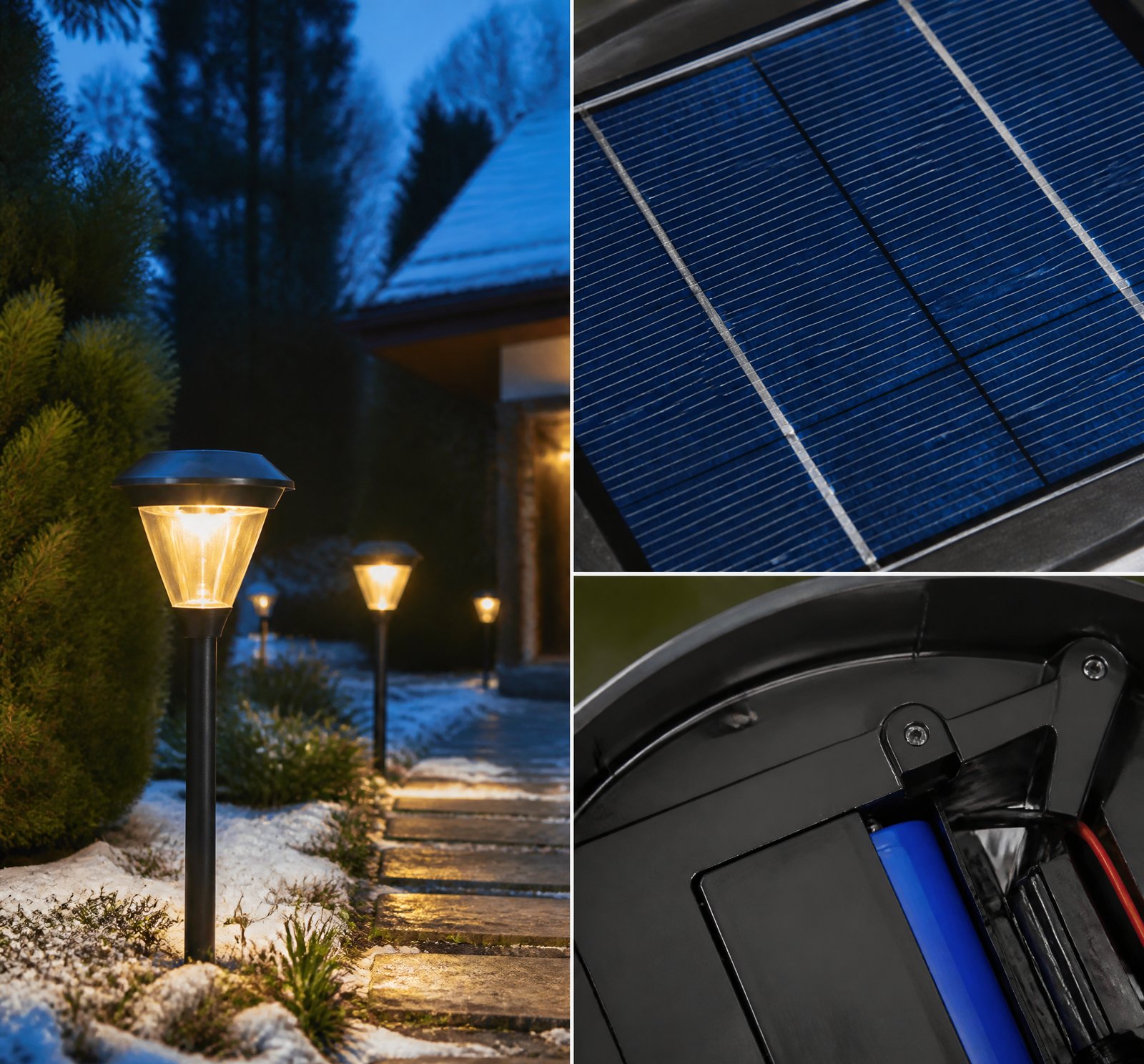
Quick answer: La temperaturi sub zero grade Celsius, ionii de litiu din bateriile Li-ion standard nu se integrează corect în anod, ci se depun sub formă de metal solid, cunoscute ca dendrite [3]. Acest proces, numit „plăcarea cu litiu”, poate duce la scurtcircuitare și degradare rapidă a performanței [1][3]. Chimia LiFePO4 este mai rezistentă la acest fenomen datorită stabilității structurale și a comportamentului electrochimic favorabil [1].
În timpul iernii românești, când temperaturile scad sub zero, mulți utilizatori de echipamente electrice portabile sau sistemelor de iluminat solar se confruntă cu un fenomen frustrant: bateriile care nu mai funcționează cum trebuie. Ce se întâmplă în interiorul bateriilor Li-ion când frigul devine prea intens? Răspunsul este în chimia electrochimică care se modifică la temperaturi scăzute, ducând la un pericol latent: depunerea de litiu pe electrodul negativ.
Mecanismul electrochimic al bateriilor Li-ion
Bateriile Li-ion funcționează prin mișcarea ionilor de litiu între anod (electrodul negativ) și catod (electrodul pozitiv). În timpul încărcării, ionii de litiu migrează din catod în anod, unde sunt stocați în structura lor cristalină. La descărcare, procesul se inversează, iar energia este eliberată sub formă de curent electric [1]. Această mișcare controlată este esențială pentru performanța și durabilitatea bateriei.
Depunerea de litiu la temperaturi sub zero
La temperaturi sub zero grade Celsius, procesul de intercalare a ionilor de litiu în anod devine instabil. În loc să fie integrati uniform în structura anodului, ionii de litiu se depun pe suprafața acestuia sub formă de metal solid, formând structuri asemănătoare cu ace, cunoscute ca dendrite [3]. Acest fenomen, numit „plăcarea cu litiu”, este cauzat de rata redusă de difuziune a ionilor și de instabilitatea chimică a anodului la temperaturi scăzute [1][3]. Dendritele pot crește suficient de mult încât să penetreze separatorul dintre electrozi, provocând un scurtcircuit [1][3]. Acest proces poate duce la scăderea capacității bateriei, înlocuirea prematură și chiar riscuri de incendiu [1][3].
De ce LiFePO4 este rezistent la temperaturi scăzute
Chimia LiFePO4 (fosfat de fier și litiu) oferă o soluție semnificativă la aceste probleme. Aceste baterii funcționează ideal între 3,0 V și 3,65 V, spre deosebire de intervalul tipic de 3,0–4,2 V al bateriilor Li-ion standard [1]. Acest interval stabil este îngrijit de o curbă de descărcare foarte plată, ceea ce le face ideale pentru aplicații precum iluminatul solar, sistemele de stocare în rețea sau vehicule electrice în mediul rural românesc [1]. În plus, LiFePO4 are rate mai mici de autodischarge și pierdere a capacității în timp, oferind o durabilitate superioară [1].
Mecanismul de rezistență al LiFePO4
În timpul ciclurilor de încărcare și descărcare, depunerea litiu se produce prin intermediul unei reacții cu două faze [2]. Există o zonă îngustă de soluție solidă în apropierea membrilor finali LiFePO4 și FePO4 [2]. Extinderea acestor domenii este puternic legată de dimensiunea particulelor și influențează semnificativ comportamentul electrochimic [2][9]. Unul dintre avantajele LiFePO4 este capacitatea sa de a funcționa eficient la rate ridicate de încărcare-descărcare, datorită particulelor mici și distribuției defectelor în zonele intercalate și dezintercalate [22].
Compararea chimiei LiFePO4 cu alte tipuri de baterii
| Tip baterie | Densitate energetică | Rezistență la temperaturi scăzute | Cicluri de viață | Riscuri la sub zero |
|---|---|---|---|---|
| Li-ion standard | Mare [1] | Scăzută [3] | Medie | Depunere litiu, scurtcircuit [1][3] |
| LiFePO4 | Ușor mai mică [1] | Foarte bună [1] | Foarte mare [1] | Redusă [1] |
| LiCoO2 / LiNiO2 | Foarte mare [18] | Scăzută [18] | Medie | Ardere, scurtcircuit [18] |
Chimia LiFePO4 oferă mai multe cicluri de încărcare-descărcare și o stabilitate superioară la temperaturi scăzute, în ciuda unei densități energetice ușor mai mici [1]. În schimb, alternativele precum LiCoO2 sau LiNiO2 oferă o densitate energetică mai mare, dar sunt mai sensibile la frig și prezintă riscuri de siguranță semnificative, inclusiv incendii și scurtcircuitare [18].
Concluzii cheie
- Bateriile Li-ion standard prezintă riscul de depunere a litiului la temperaturi sub zero grade Celsius, ducând la scurtcircuitare și degradare rapidă [1][3].
- Chimia LiFePO4 este mult mai rezistentă la temperaturi scăzute datorită stabilității structurale și a comportamentului electrochimic favorabil [1].
- Deși au o densitate energetică ușor mai mică, bateriile LiFePO4 oferă o durabilitate superioară și o siguranță crescută, fiind ideale pentru aplicațiile de iluminat solar în România, în special în zonele muntoase sau rurale unde temperaturile scad sub zero [1].
References
- [1] A Beginners Guide To Lithium Rechargeable BatteriesLithium-Ion Batteri — authority
source passage
batteries. Lithium-Iron-Phosphate, or LiFePO4 batteries are an altered lithium-ion chemistry, which offers the benefits of withstanding more charge/discharge cycles, while losing some energy density in the tradeoff. They operate ideally between 3.0V-3.65V, instead of the more typical 3.0-4.2V range of a standard lithium-ion chemistry. This, combined with a very flat discharge voltage curve, makes them ideal replacements for 12V lead-acid batteries in many applications, where four cells substitute for the original six. They’re generally more stable, with lower rates of self-discharge and capacity loss over time. Respect The Limits Moreso than most battery types, lithium cells are not tolerant of mistreatment. Discharging cells below their low voltage limit leads to the formation of copper dendrites, which can reduce cell capacity or short circuit them entirely. Overcharging cells causes damage to the anode by lithium plating out of solution, creating lithium dendrites, often leading to a short circuit or full thermal runaway of the battery, leading to a release of smoke and flames. Each cell in a pack must also be kept at the same voltage as its neighbors, to avoid cells getting damaged prematurely. It’s important not to charge lithium cells too quickly. Ambient temperatures also play a big role in battery performance. Lithium batteries don’t appreciate being taken down below freezing, particularly when they’re already fully charged. Below 0°C, charging is impractical, as meta
- [2] Materials for Sustainable Energy A Collection of Peer-Reviewed Research and Review Articles from Nature Journals — book
source passage
structural constraints occurring just at the reaction interface: the minimization of the elastic energy enhances the deintercalation (intercalation) process that occurs as a wave moving through the entire crystal. This model opens new perspectives in the search for new electrode materials even with poor ionic and electronic conductivities. Since the pioneering work of Goodenough and co-workers1 on the electrochemical behaviour of LiFePO4, many studies have been devoted to optimizing the material for better electrochemical performances and to trying to understand the lithium intercalation/deintercalation mechanism2–9. Armand and co-workers made a significant breakthrough when they showed that a carbon coating formed during LiFePO4 synthesis simultaneously increases the electronic conductivity of this electrode material and prevents particle growth10. During cycling, lithium intercalation/deintercalation occurs through a two-phase reaction1,6 with, as mentioned for the first time by Yamada and co-workers11,12, the existence of very narrow solid solutions in the vicinity of the endmembers LiFePO4 and FePO4. The extent of these solid-solution domains is strongly related to the particle size, as recently shown by Meethong et al.13 and has a strong impact on the electrochemical behaviour14,15. One of the fascinating peculiarities of LiFePO4 concerns its ability to be used at very high cycling rates, although both involved phases exhibit very low ionic and electronic conductivities. T
- [3] Lithium-ion battery – Wikipedia — wikipedia
source passage
discharge current.[135] Poor internal ventilation may increase temperatures. For large batteries consisting of multiple cells, non-uniform temperatures can lead to non-uniform and accelerated degradation.[136] In contrast, the calendar life of LiFePO Positive SEI layer in lithium-ion batteries is much less understood than the negative SEI. It is believed to have a low-ionic conductivity and shows up as an increased interfacial resistance of the cathode during cycling and calendar aging.[115][116][114] 4 cells is not affected by high charge states.[137][138] – Lithium plating is a phenomenon in which certain conditions lead to metallic lithium forming and depositing onto the surface of the battery's anode rather than intercalating within the anode material's structure. Low temperatures, overcharging and high charging rates can exacerbate this occurrence.[139][140] During these conditions, lithium ions may not intercalate uniformly into the anode material and form layers of lithium ion on the surface in the form of dendrites. Lithium dendrites are tiny needle-like structures that can accumulate and pierce the separator, causing a short circuit can initiate thermal runaway.[115] This cascade of rapid and uncontrolled energy can lead to battery swelling, increased heat, fires and or explosions.[141] Additionally, this dendritic growth can lead to side reactions with the electrolyte and convert the fresh plated lithium into electrochemically inert dead lithium.[142] Moreover, the
- [9] Lithium-Ion Batteries Developments in Chemistry, Materials, and Design — book
source passage
368, 3255, 2010. With permission.) 75 Cathode Materials for Lithium-Ion Batteries temperatures below 60°C except the close to the end-composition. In fact the solid solution LixFePO4 does not exist under “normal” conditions in par- ticles that are large enough so that size effects are negligible [157,158]. Upon the delithiation, electrode material particle contains both the LiFePO4 and FePO4 phases, and the phase transition mechanism model during lithium deintercalation consists of the “frontal movement” of a new FePO4 phase through the “original” lithiated phase, that is, upon lithium removal a new phase is developed along the lithium ions diffusion direction. These obser- vations suggest that the motions of neighboring Li ions are correlated. Also, the loss of capacity of LiFePO4 with increasing current density is associated with diffusion-controlled kinetics of the electrochemical process. As it was mentioned above, these discussions correlate with the experimental data for the large enough particles of LiFePO4. Due to the use of nanosized particles of this material to improve the lithium diffusion conditions, in this case the phase transformation processes could be affected by the change in the reac- tivity of the material due to the large portion of the surface molecules and the effect of high interface energies. 2.4.2 Preparation and Electrochemical Properties of LiFePO4 The very low ionic and electronic conductivity of LiFePO4 has restricted its performance as a lithiu
- [18] US8872519B2 – System and method to determine the state of charge — patent
source passage
in free ions of the iron-group series, actinide-series, and rare-earth series elements on the periodic table. Compounds incorporating these elements also exhibit susceptibility, and some of these compounds find use as active materials for electrochemical energy storage in batteries. They often belong to a class known as intercalation compounds, which are characterized by the ability to have small ions (such as Li) readily inserted into and withdrawn from their solid-state structures. This behavior provides for the charge and discharge processes of the batteries. Common metal oxides for lithium ion batteries that are intercalation materials include lithium cobalt oxide (LiCoO2), lithium nickel oxide (LiNiO2), and variants of the form LiCoxNiyMnzO2, where the cobalt, nickel, and manganese species occupy the same lattice and x+y+z=1. On the other hand, some materials form two phases and are referred to as simply insertion electrodes, a more general term that also comprises intercalation materials. An example of a two-phase insertion electrode presently being considered for use as a cathode in lithium ion batteries is iron phosphate (FePO4). The relevant electrochemical reaction is Li(1-n)FePO4 +nLi+ +ne −=LinFePO4, (2) Li(1-n)FePO4 +nLi+ +ne −=LinFePO4, (2) where n is the number of lithium ions and electrons involved in the reaction. During discharge of the battery, lithium is inserted into the iron phosphate, and while the battery is being charged, lithium is removed. The fract
- [22] Materials for Sustainable Energy A Collection of Peer-Reviewed Research and Review Articles from Nature Journals — book
source passage
in the structure and their very low mobility due to their strong binding to the lithium vacancies in Li1−εFePO4 (or to the lithium ions in Liε′FePO4) prevent high electronic conductivity because both species (Li+ and e−) have to move simultaneously during the intercalation process18. A very interesting electron microscopy study of Li0.50FePO4— which is in fact a mixture of LiFePO4 and FePO4—was carried out by Chen et al.8, who showed that in quite large primary particles, obtained by chemical lithium deintercalation, there are alternating domains of intercalated and deintercalated phases with intermediate zones where defects are concentrated. Moreover, they confirmed the results of Ceder and co-workers16 concerning the easy diffusion of lithium in the tunnels parallel to the b direction and showed that lithium is extracted at the phase boundary parallel to the bc plane that progresses in the a direction on reaction. More recently, an electron energy-loss spectroscopy (EELS) study carried out by Laffont et al.9 confirmed that the shrinking core–shell model1,6 is not relevant to explain lithium deintercalation/intercalation in the olivine structure owing to the strong anisotropy of lithium diffusion. From the EELS results, they showed that there is no solid solution in the interfacial zone between the two endmembers. They proposed an elegant model to describe the deintercalation (intercalation) process, where for partially deintercalated platelet particles lying on the ac plane, the
batteries. Lithium-Iron-Phosphate, or LiFePO4 batteries are an altered lithium-ion chemistry, which offers the benefits of withstanding more charge/discharge cycles, while losing some energy density in the tradeoff. They operate ideally between 3.0V-3.65V, instead of the more typical 3.0-4.2V range of a standard lithium-ion chemistry. This, combined with a very flat discharge voltage curve, makes them ideal replacements for 12V lead-acid batteries in many applications, where four cells substitute for the original six. They’re generally more stable, with lower rates of self-discharge and capacity loss over time. Respect The Limits Moreso than most battery types, lithium cells are not tolerant of mistreatment. Discharging cells below their low voltage limit leads to the formation of copper dendrites, which can reduce cell capacity or short circuit them entirely. Overcharging cells causes damage to the anode by lithium plating out of solution, creating lithium dendrites, often leading to a short circuit or full thermal runaway of the battery, leading to a release of smoke and flames. Each cell in a pack must also be kept at the same voltage as its neighbors, to avoid cells getting damaged prematurely. It’s important not to charge lithium cells too quickly. Ambient temperatures also play a big role in battery performance. Lithium batteries don’t appreciate being taken down below freezing, particularly when they’re already fully charged. Below 0°C, charging is impractical, as meta
structural constraints occurring just at the reaction interface: the minimization of the elastic energy enhances the deintercalation (intercalation) process that occurs as a wave moving through the entire crystal. This model opens new perspectives in the search for new electrode materials even with poor ionic and electronic conductivities. Since the pioneering work of Goodenough and co-workers1 on the electrochemical behaviour of LiFePO4, many studies have been devoted to optimizing the material for better electrochemical performances and to trying to understand the lithium intercalation/deintercalation mechanism2–9. Armand and co-workers made a significant breakthrough when they showed that a carbon coating formed during LiFePO4 synthesis simultaneously increases the electronic conductivity of this electrode material and prevents particle growth10. During cycling, lithium intercalation/deintercalation occurs through a two-phase reaction1,6 with, as mentioned for the first time by Yamada and co-workers11,12, the existence of very narrow solid solutions in the vicinity of the endmembers LiFePO4 and FePO4. The extent of these solid-solution domains is strongly related to the particle size, as recently shown by Meethong et al.13 and has a strong impact on the electrochemical behaviour14,15. One of the fascinating peculiarities of LiFePO4 concerns its ability to be used at very high cycling rates, although both involved phases exhibit very low ionic and electronic conductivities. T
discharge current.[135] Poor internal ventilation may increase temperatures. For large batteries consisting of multiple cells, non-uniform temperatures can lead to non-uniform and accelerated degradation.[136] In contrast, the calendar life of LiFePO Positive SEI layer in lithium-ion batteries is much less understood than the negative SEI. It is believed to have a low-ionic conductivity and shows up as an increased interfacial resistance of the cathode during cycling and calendar aging.[115][116][114] 4 cells is not affected by high charge states.[137][138] – Lithium plating is a phenomenon in which certain conditions lead to metallic lithium forming and depositing onto the surface of the battery's anode rather than intercalating within the anode material's structure. Low temperatures, overcharging and high charging rates can exacerbate this occurrence.[139][140] During these conditions, lithium ions may not intercalate uniformly into the anode material and form layers of lithium ion on the surface in the form of dendrites. Lithium dendrites are tiny needle-like structures that can accumulate and pierce the separator, causing a short circuit can initiate thermal runaway.[115] This cascade of rapid and uncontrolled energy can lead to battery swelling, increased heat, fires and or explosions.[141] Additionally, this dendritic growth can lead to side reactions with the electrolyte and convert the fresh plated lithium into electrochemically inert dead lithium.[142] Moreover, the
368, 3255, 2010. With permission.) 75 Cathode Materials for Lithium-Ion Batteries temperatures below 60°C except the close to the end-composition. In fact the solid solution LixFePO4 does not exist under “normal” conditions in par- ticles that are large enough so that size effects are negligible [157,158]. Upon the delithiation, electrode material particle contains both the LiFePO4 and FePO4 phases, and the phase transition mechanism model during lithium deintercalation consists of the “frontal movement” of a new FePO4 phase through the “original” lithiated phase, that is, upon lithium removal a new phase is developed along the lithium ions diffusion direction. These obser- vations suggest that the motions of neighboring Li ions are correlated. Also, the loss of capacity of LiFePO4 with increasing current density is associated with diffusion-controlled kinetics of the electrochemical process. As it was mentioned above, these discussions correlate with the experimental data for the large enough particles of LiFePO4. Due to the use of nanosized particles of this material to improve the lithium diffusion conditions, in this case the phase transformation processes could be affected by the change in the reac- tivity of the material due to the large portion of the surface molecules and the effect of high interface energies. 2.4.2 Preparation and Electrochemical Properties of LiFePO4 The very low ionic and electronic conductivity of LiFePO4 has restricted its performance as a lithiu
in free ions of the iron-group series, actinide-series, and rare-earth series elements on the periodic table. Compounds incorporating these elements also exhibit susceptibility, and some of these compounds find use as active materials for electrochemical energy storage in batteries. They often belong to a class known as intercalation compounds, which are characterized by the ability to have small ions (such as Li) readily inserted into and withdrawn from their solid-state structures. This behavior provides for the charge and discharge processes of the batteries. Common metal oxides for lithium ion batteries that are intercalation materials include lithium cobalt oxide (LiCoO2), lithium nickel oxide (LiNiO2), and variants of the form LiCoxNiyMnzO2, where the cobalt, nickel, and manganese species occupy the same lattice and x+y+z=1. On the other hand, some materials form two phases and are referred to as simply insertion electrodes, a more general term that also comprises intercalation materials. An example of a two-phase insertion electrode presently being considered for use as a cathode in lithium ion batteries is iron phosphate (FePO4). The relevant electrochemical reaction is Li(1-n)FePO4 +nLi+ +ne −=LinFePO4, (2) Li(1-n)FePO4 +nLi+ +ne −=LinFePO4, (2) where n is the number of lithium ions and electrons involved in the reaction. During discharge of the battery, lithium is inserted into the iron phosphate, and while the battery is being charged, lithium is removed. The fract
in the structure and their very low mobility due to their strong binding to the lithium vacancies in Li1−εFePO4 (or to the lithium ions in Liε′FePO4) prevent high electronic conductivity because both species (Li+ and e−) have to move simultaneously during the intercalation process18. A very interesting electron microscopy study of Li0.50FePO4— which is in fact a mixture of LiFePO4 and FePO4—was carried out by Chen et al.8, who showed that in quite large primary particles, obtained by chemical lithium deintercalation, there are alternating domains of intercalated and deintercalated phases with intermediate zones where defects are concentrated. Moreover, they confirmed the results of Ceder and co-workers16 concerning the easy diffusion of lithium in the tunnels parallel to the b direction and showed that lithium is extracted at the phase boundary parallel to the bc plane that progresses in the a direction on reaction. More recently, an electron energy-loss spectroscopy (EELS) study carried out by Laffont et al.9 confirmed that the shrinking core–shell model1,6 is not relevant to explain lithium deintercalation/intercalation in the olivine structure owing to the strong anisotropy of lithium diffusion. From the EELS results, they showed that there is no solid solution in the interfacial zone between the two endmembers. They proposed an elegant model to describe the deintercalation (intercalation) process, where for partially deintercalated platelet particles lying on the ac plane, the