
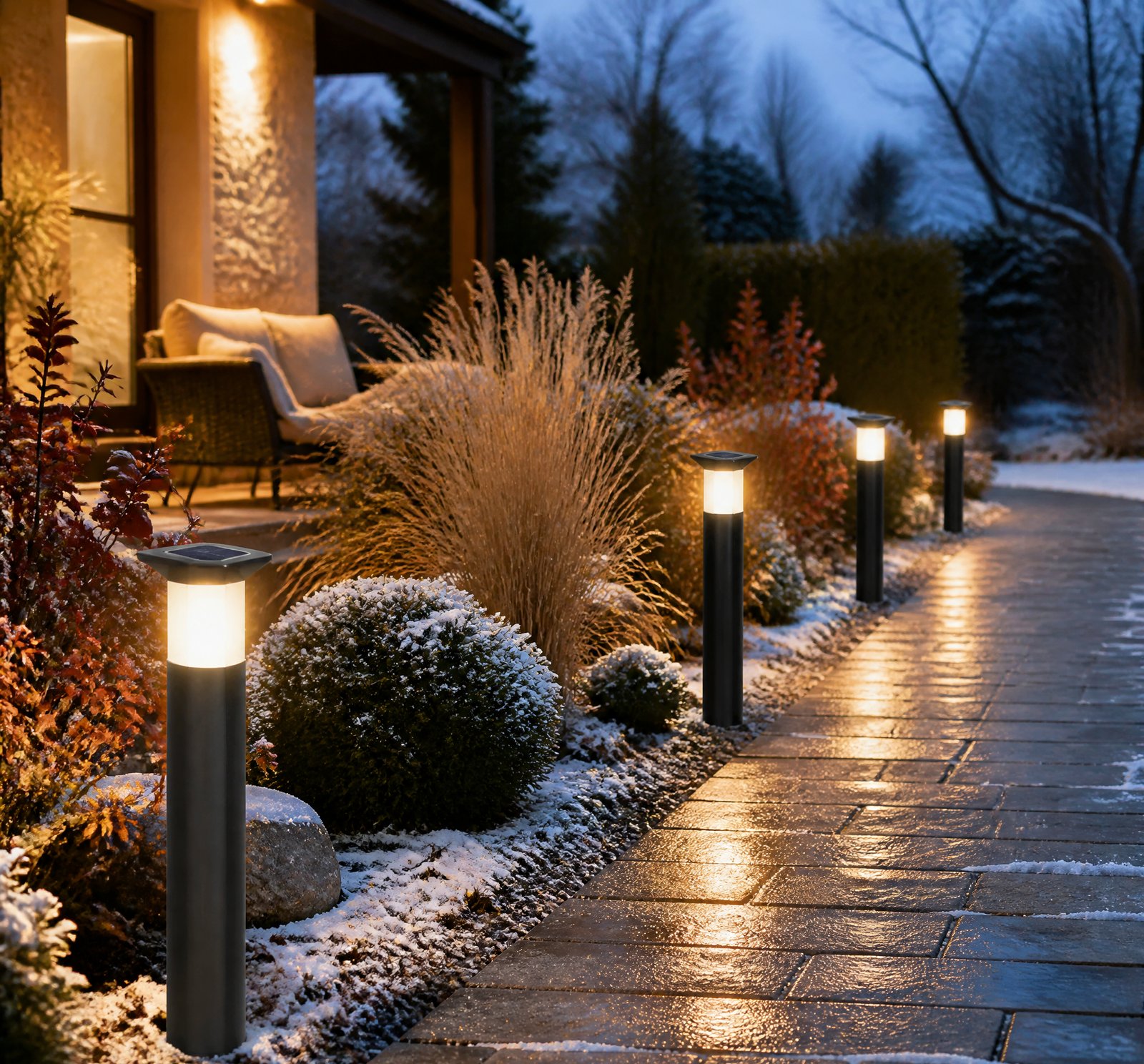
Quick answer: Panoul solar este componenta care contribuie cel mai mult la costul total al unei lămpi solare de calitate, datorită eficienței sale mari și durabilității pe termen lung. Panourile monocristaline sunt mai eficiente și durabile decât cele policristaline, dar sunt și mai scumpe [15][8][20].
Lumina solară nu mai e doar o promisiune pentru viitor – e o realitate la porțile fiecărei case din România. Într-un context de creștere a prețurilor la energie și de creștere a conștientizării ecologice, lămpile solare devin o alegere inteligentă, durabilă și economică pe termen lung. Totuși, una dintre întrebările cele mai frecvente este: „Ce face ca o lampă solară să fie scumpă?” Răspunsul, conform cercetărilor recente, este clar: panoul solar.
Panourile solare: inima sistemului
Panourile solare sunt componentele esențiale ale oricărui sistem de iluminat solar, transformând energia soarelui în energie electrică [15]. În esență, ele acționează ca o “centrală electrică” a sistemului, furnizând puterea necesară pentru funcționarea lămpii. Calitatea și eficiența panourilor solare sunt factori critici care determină costul total al unei lămpi solare [8][20][24]. Fără un panou eficient, chiar și o baterie de înaltă calitate nu poate oferi o iluminare sigură și constantă.
Tipuri de panouri: monocristalin vs. policristalin
Există două tipuri principale de panouri solare: monocristalin și policristalin. Panourile monocristaline sunt considerate superioare datorită eficienței lor mai mari și a duratei de viață mai lungi, dar sunt și mai scumpe decât cele policristaline [15]. Procesul de fabricație al celulelor monocristaline este mai complex și mai costisitor, ceea ce se reflectă direct în preț. Cu toate acestea, eficiența mai mare permite o producție mai mare de energie, ceea ce poate compensa diferența de preț pe termen lung [8][20].
| Tip panou | Eficiență | Durată de viață | Cost | [15][8][20] |
|---|---|---|---|---|
| Monocristalin | Mai mare | Mai lungă | Mai scump | [15][8][20] |
| Policristalin | Mai mică | Mai scurtă | Mai ieftin | [15][8][20] |
Costuri de producție, instalare și eficiență
Costurile de producție ale panourilor solare variază în funcție de tehnologia utilizată, dimensiunea lor și calitatea materialelor [15]. Panourile policristaline sunt mai ieftine decât cele monocristaline, deoarece procesul de fabricație este mai simplu [15]. Totuși, eficiența mai mare a panourilor monocristaline poate duce la economii majore pe termen lung, deoarece pot produce mai multă energie din aceeași cantitate de lumină solară [8][20]. Costul instalării trebuie, de asemenea, luat în considerare, deoarece include nu numai prețul echipamentului, ci și munca necesară pentru montarea și conectarea sa la sistemul de iluminat [20].
Tehnologia și inovații în panouri solare
În afară de tehnologiile tradiționale (siliciu policristalin și monocristalin), noile tehnologii folosesc celule solare subțiri, care sunt mai ușoare și mai flexibile [15]. Acestea pot reduce costurile de producție și instalare, făcând panourile solare accesibile mai multor utilizatori. În plus, inovațiile în domeniul eficienței energetice a panourilor solare continuă să îmbunătățească performanța acestora, ceea ce poate duce la o reducere a costurilor pe termen lung [15].
Costul total al sistemului de iluminat solar
Costurile unui sistem de iluminat solar nu se limitează doar la panoul solar. Alte componente importante includ bateriile, controlerul de încărcare și sistemul de management al bateriei (BMS) [9][24]. Totuși, panourile solare rămân o componentă cheie care contribuie semnificativ la costul total al sistemului [15][8][20]. Chiar și atunci când prețul inițial al unei lămpi solare este mai mare decât al unei lămpi tradiționale, economiile pe termen lung sunt semnificative datorită energiei solare gratuite și regenerabile [4][15].
Compararea cu alte surse de iluminat
În comparație cu alte surse de iluminat, cum ar fi lămpile cu kerosen sau cele electrice tradiționale, lămpile solare au un cost inițial mai mare [4][15]. Cu toate acestea, pe termen lung, ele pot duce la economii semnificative datorită faptului că energia solară este gratuită și regenerabilă. În plus, lămpile solare nu produc poluare a aerului în interior, spre deosebire de sursele tradiționale de iluminat cu combustibili fosili [4][15].
Concluzii cheie
- Panoul solar este componenta care contribuie cel mai mult la costul total al unei lămpi solare de calitate [15][8][20].
- Eficiența și durabilitatea panourilor solare joacă un rol crucial în determinarea costului real al sistemului [8][20].
- Panourile monocristaline sunt mai eficiente și durabile, dar mai scumpe; cele policristaline sunt mai ieftine, dar mai puțin eficiente [15][8][20].
- Inovațiile tehnologice, cum ar fi celulele subțiri, pot reduce costurile pe termen lung [15].
- Pe termen lung, lămpile solare oferă economii semnificative și o reducere a poluării [4][15].
References
- [4] Impact of Solar Home Systems on Rural Livelihoods — book
source passage
about 10– 100 lu, compact fluorescent (solar lamp, 7 W) gives about 340–560 lu [18]. It can be expected that neighbours use their light sources more economically since, for them, there is a price per time unit. With the solar lamps there is no run- ning cost of the lamps, but a monthly sum, independent of the use of the system. For example, a number of households kept a lamp on throughout the night as a security measure. The improved quality in lighting is visible in the changes in study routines among children. In neighbour households with children in school age, 42% reported that the children were able to study at night, compared to 89% of the households with solar power. The most common source of reading light in the neighbouring house- holds was candles (60%) followed by kerosene or paraffin lamps (30%). In about half of these cases, the respondents reported that the children complained about the light. These complaints were smearing eyes, lack of candles or paraffin and that the light was too dim to read in. Children in households with solar power study in the light of solar lamps. Only in 15% of the cases did these children complain about the light, and these complaints concerned blackouts, and in some cases restrictions in the use of the power. Unexpected, but encouraging, results were reported from one village where chil- dren gathered in one of the houses with an SHS to study together in the light from a solar lamp. In this village, also children from households without a
- [8] Solar Lighting Design and Applications — book
source passage
illumination 160 5 Acceptability of Solar Powered LED Lighting 5.5 Case Study for Solar LED Lighting in Tibet Despite the high rates of electrification in China, 25–30 million people remain without access to electricity. Fuel-based lighting has shown to be significantly more costly than solar powered CFLs and solar powered LEDs alternatives. Thus, there is a need to explore off-grid technologies for lighting in China. In this case study, they examined the lighting pattern in the off-grid population in rural regions of the province of Tibet (see Table 5.3) [11]. 5.5.1 Findings of the Project 1. The success of solar powered CFL is dominated by the solar panel and battery components and scale with the power output needed. 2. The retail costs of these systems to the end user are often prohibitive. As a result, the potential for these systems has remained highly dependent on subsidy. Table 5.3 Case-study—Solar-based LED lighting for semi-nomadic populations of rural Tibet Current lighting systems Solar home system or diesel fuel lamps Solar home systems (CFL) 1. Donated or subsidized by the central or local governments or outside organizations (like USDOE, WB, etc.) 2. Villagers pay fee between no fee and $ 150/-for their systems, depending on the amount of subsidy. 3. Solar panel—10 or 20 W solar panel to operate 2 CFL bulbs. Sometimes radio, tape player, or television CFL costs: 2–3 $, replacement time varies from 2 months to 2 years. Diesel lamps 1. Small Jars of fuel with a thic
- [9] Solar Photovoltaic Energy Systems and Design — book
source passage
Components of a Solar Electric System Solar panels Batteries Controller Inverter Electrical devices Connecting everything together A stand-alone system A grid-tie system using a single central inverter A grid-tie system using multiple micro-inverters In conclusion The Design Process Short-cutting the design work Solar energy and emotions In conclusion Scoping the Project Designing grid-tie or grid fallback systems Comparing supply with demand Fleshing out the scope Producing a power analysis A word of warning When you are ready to proceed Calculating inefficiencies Adding the inefficiencies to our power analysis When do you need to use the solar system? Keeping it simple Improving the scope In conclusion Calculating Solar Energy What is solar energy? Why is this useful? Calculating solar irradiance Capturing more of the sun’s energy The impact of tilting solar panels on solar irradiance Calculating the optimum tilt for solar panels Getting the best from solar panels at different times of the year Positioning your solar panels Using solar irradiance to work out how much energy a solar panel will generate Using solar irradiance to give you an approximate guide for the required power capacity of your solar array Solar panels and shade Solar array power point efficiencies The effects of temperature on solar panels Temperature impact on solar performance in Austin, Texas during the summer months Working out an approximate cost What if the figures do not add up? Working out dimensi
- [15] Solar lamp – Wikipedia — wikipedia
source passage
# Solar lamp – Wikipedia Source: Blog/Web URL: https://en.wikipedia.org/wiki/Solar_lamp Author: Date: 2008-05-29 A solar lamp, also known as a solar light or solar lantern, is a lighting system composed of an LED lamp, solar panels, battery, charge controller and there may also be an inverter. The lamp operates on electricity from batteries, charged through the use of a solar photovoltaic panel. Solar-powered household lighting can replace other light sources like candles or kerosene lamps. Solar lamps have a lower operating cost than kerosene lamps because renewable energy from the sun is free, unlike fuel. In addition, solar lamps produce no indoor air pollution unlike kerosene lamps. However, solar lamps generally have a higher initial cost, and are weather dependent. Solar lamps for use in rural situations often have the capability of providing a supply of electricity for other devices, such as for charging cell phones. The costs of solar lamps have continued to fall in recent years as the components and lamps have been mass-produced in ever greater numbers. Some solar photovoltaics use Monocrystalline silicon or poly-crystalline silicon panels, while newer technologies have used thin-film solar cells.[1] Since modern solar cells were introduced in 1954 at Bell labs,[2] advances in solar cell efficiency at converting light into electric power, and modern manufacturing techniques combined with efficiencies of scale have led to an international growth of photovoltaics. The
- [20] Solar Engineering of Thermal Processes — book
source passage
solar energy equipment are important factors in solar process economics. These include the delivered price of equipment such as collectors, storage unit, pumps and blowers, controls, pipes and ducts, heat exchangers, and all other 447 Solar Engineering of Thermal Processes, Fourth Edition. John A. Duffie and William A. Beckman © 2013 John Wiley & Sons, Inc. Published 2013 by John Wiley & Sons, Inc. 448 Solar Process Economics equipment associated with the solar installation. Costs of installing this equipment must also be considered, as these can match or exceed the purchase price. Also to be included are costs of structures to support collectors and other alterations made necessary by the solar energy equipment. Under some circumstances credits may be taken for the solar process if its installation results in reduction of costs; for example, a collector may serve as part of the weatherproof envelope of a building, eliminating the need for some of the conventional siding or roofing. Installed costs of solar equipment can be shown as the sum of two terms, one proportional to collector area and the other independent of collector area: CS = CAAc + CE (11.1.1) where CS = total cost of installed solar energy equipment ($) CA = total area-dependent costs ($/m2) Ac = collector area (m2) CE = total cost of equipment which is independent of collector area ($) The area-dependent costs CA include such items as the purchase and installation of the collector and a portion of storage costs.
- [24] Lighting Design Basics — book
source passage
As is typical for all light sources, over a lamp’s lifetime, the light that is produced is reduced. Lumen maintenance evaluates how much of that light is lost by the end of the lamp’s life. This number becomes especially important when evaluating LED lamps and fixtures since LEDs do not fail like other light sources do. As described, the life span of an LED is determined when the lumen output has been reduced to 70 percent. Initial Cost Versus Operating Cost The initial cost is the amount that the client will spend to purchase and install the lighting. The operating cost includes the electricity to run it and the cost to purchase and replace the lamps. Generally speaking, the initial cost is minor compared to the cost of the energy required to operate the lamps over the life of the system. If a life cycle cost analysis is completed, the efficacy and life of the lamps become very important to keep the operating costs down. When selecting light sources for a project, it is important to understand which of the attributes discussed are the most important. Once the requirements are prioritized, it is much easier to select the most appropriate source. Chapter 5 evaluates the major lamp families using the criteria established here. Chapter 4 DAYLIGHTING Before the appropriate artificial light source can be selected, it is important to consider how daylight can be used effectively. Daylight is highly desirable as a light source because people respond very positively to it. Also, with
about 10– 100 lu, compact fluorescent (solar lamp, 7 W) gives about 340–560 lu [18]. It can be expected that neighbours use their light sources more economically since, for them, there is a price per time unit. With the solar lamps there is no run- ning cost of the lamps, but a monthly sum, independent of the use of the system. For example, a number of households kept a lamp on throughout the night as a security measure. The improved quality in lighting is visible in the changes in study routines among children. In neighbour households with children in school age, 42% reported that the children were able to study at night, compared to 89% of the households with solar power. The most common source of reading light in the neighbouring house- holds was candles (60%) followed by kerosene or paraffin lamps (30%). In about half of these cases, the respondents reported that the children complained about the light. These complaints were smearing eyes, lack of candles or paraffin and that the light was too dim to read in. Children in households with solar power study in the light of solar lamps. Only in 15% of the cases did these children complain about the light, and these complaints concerned blackouts, and in some cases restrictions in the use of the power. Unexpected, but encouraging, results were reported from one village where chil- dren gathered in one of the houses with an SHS to study together in the light from a solar lamp. In this village, also children from households without a
illumination 160 5 Acceptability of Solar Powered LED Lighting 5.5 Case Study for Solar LED Lighting in Tibet Despite the high rates of electrification in China, 25–30 million people remain without access to electricity. Fuel-based lighting has shown to be significantly more costly than solar powered CFLs and solar powered LEDs alternatives. Thus, there is a need to explore off-grid technologies for lighting in China. In this case study, they examined the lighting pattern in the off-grid population in rural regions of the province of Tibet (see Table 5.3) [11]. 5.5.1 Findings of the Project 1. The success of solar powered CFL is dominated by the solar panel and battery components and scale with the power output needed. 2. The retail costs of these systems to the end user are often prohibitive. As a result, the potential for these systems has remained highly dependent on subsidy. Table 5.3 Case-study—Solar-based LED lighting for semi-nomadic populations of rural Tibet Current lighting systems Solar home system or diesel fuel lamps Solar home systems (CFL) 1. Donated or subsidized by the central or local governments or outside organizations (like USDOE, WB, etc.) 2. Villagers pay fee between no fee and $ 150/-for their systems, depending on the amount of subsidy. 3. Solar panel—10 or 20 W solar panel to operate 2 CFL bulbs. Sometimes radio, tape player, or television CFL costs: 2–3 $, replacement time varies from 2 months to 2 years. Diesel lamps 1. Small Jars of fuel with a thic
Components of a Solar Electric System Solar panels Batteries Controller Inverter Electrical devices Connecting everything together A stand-alone system A grid-tie system using a single central inverter A grid-tie system using multiple micro-inverters In conclusion The Design Process Short-cutting the design work Solar energy and emotions In conclusion Scoping the Project Designing grid-tie or grid fallback systems Comparing supply with demand Fleshing out the scope Producing a power analysis A word of warning When you are ready to proceed Calculating inefficiencies Adding the inefficiencies to our power analysis When do you need to use the solar system? Keeping it simple Improving the scope In conclusion Calculating Solar Energy What is solar energy? Why is this useful? Calculating solar irradiance Capturing more of the sun’s energy The impact of tilting solar panels on solar irradiance Calculating the optimum tilt for solar panels Getting the best from solar panels at different times of the year Positioning your solar panels Using solar irradiance to work out how much energy a solar panel will generate Using solar irradiance to give you an approximate guide for the required power capacity of your solar array Solar panels and shade Solar array power point efficiencies The effects of temperature on solar panels Temperature impact on solar performance in Austin, Texas during the summer months Working out an approximate cost What if the figures do not add up? Working out dimensi
# Solar lamp – Wikipedia Source: Blog/Web URL: https://en.wikipedia.org/wiki/Solar_lamp Author: Date: 2008-05-29 A solar lamp, also known as a solar light or solar lantern, is a lighting system composed of an LED lamp, solar panels, battery, charge controller and there may also be an inverter. The lamp operates on electricity from batteries, charged through the use of a solar photovoltaic panel. Solar-powered household lighting can replace other light sources like candles or kerosene lamps. Solar lamps have a lower operating cost than kerosene lamps because renewable energy from the sun is free, unlike fuel. In addition, solar lamps produce no indoor air pollution unlike kerosene lamps. However, solar lamps generally have a higher initial cost, and are weather dependent. Solar lamps for use in rural situations often have the capability of providing a supply of electricity for other devices, such as for charging cell phones. The costs of solar lamps have continued to fall in recent years as the components and lamps have been mass-produced in ever greater numbers. Some solar photovoltaics use Monocrystalline silicon or poly-crystalline silicon panels, while newer technologies have used thin-film solar cells.[1] Since modern solar cells were introduced in 1954 at Bell labs,[2] advances in solar cell efficiency at converting light into electric power, and modern manufacturing techniques combined with efficiencies of scale have led to an international growth of photovoltaics. The
solar energy equipment are important factors in solar process economics. These include the delivered price of equipment such as collectors, storage unit, pumps and blowers, controls, pipes and ducts, heat exchangers, and all other 447 Solar Engineering of Thermal Processes, Fourth Edition. John A. Duffie and William A. Beckman © 2013 John Wiley & Sons, Inc. Published 2013 by John Wiley & Sons, Inc. 448 Solar Process Economics equipment associated with the solar installation. Costs of installing this equipment must also be considered, as these can match or exceed the purchase price. Also to be included are costs of structures to support collectors and other alterations made necessary by the solar energy equipment. Under some circumstances credits may be taken for the solar process if its installation results in reduction of costs; for example, a collector may serve as part of the weatherproof envelope of a building, eliminating the need for some of the conventional siding or roofing. Installed costs of solar equipment can be shown as the sum of two terms, one proportional to collector area and the other independent of collector area: CS = CAAc + CE (11.1.1) where CS = total cost of installed solar energy equipment ($) CA = total area-dependent costs ($/m2) Ac = collector area (m2) CE = total cost of equipment which is independent of collector area ($) The area-dependent costs CA include such items as the purchase and installation of the collector and a portion of storage costs.
As is typical for all light sources, over a lamp’s lifetime, the light that is produced is reduced. Lumen maintenance evaluates how much of that light is lost by the end of the lamp’s life. This number becomes especially important when evaluating LED lamps and fixtures since LEDs do not fail like other light sources do. As described, the life span of an LED is determined when the lumen output has been reduced to 70 percent. Initial Cost Versus Operating Cost The initial cost is the amount that the client will spend to purchase and install the lighting. The operating cost includes the electricity to run it and the cost to purchase and replace the lamps. Generally speaking, the initial cost is minor compared to the cost of the energy required to operate the lamps over the life of the system. If a life cycle cost analysis is completed, the efficacy and life of the lamps become very important to keep the operating costs down. When selecting light sources for a project, it is important to understand which of the attributes discussed are the most important. Once the requirements are prioritized, it is much easier to select the most appropriate source. Chapter 5 evaluates the major lamp families using the criteria established here. Chapter 4 DAYLIGHTING Before the appropriate artificial light source can be selected, it is important to consider how daylight can be used effectively. Daylight is highly desirable as a light source because people respond very positively to it. Also, with