
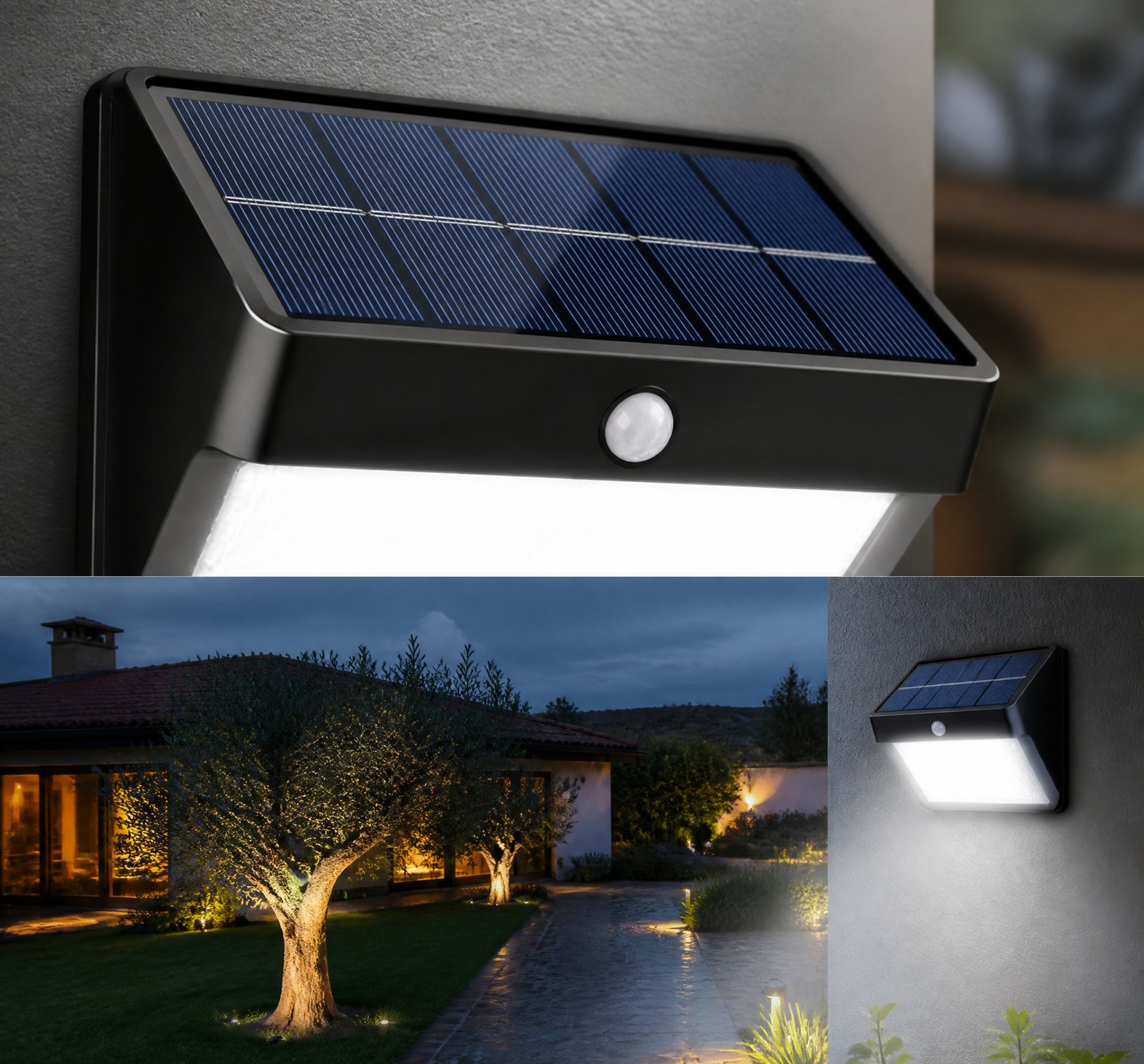
> Quick answer: Manufacturers most commonly cut costs in solar lamp panels and seal integrity, using thin-film tech and weak seals that degrade faster. These shortcuts cause early failures, reduced lifespan, and poor lighting—especially in harsh conditions like Romania’s winters [18]. Cheap drivers and low-grade cells also accelerate performance decline [15].
Solar lamps are a growing solution for off-grid lighting in Romania, but not all models deliver on their promise. Behind the low price tags lies a hidden reality: many manufacturers cut corners in ways that compromise long-term reliability. Understanding where these shortcuts occur—and how they affect real-world performance—is essential for buyers seeking durable, efficient lighting.
Where Manufacturers Cut Costs in Solar Lamps
The most common cost-cutting areas in solar lamps are panel grade, cell quality, driver components, and seal integrity [18]. While price reductions of up to 85% have occurred since 2010 [4], this has driven a race to cut costs at the expense of durability. Thin-film panels, such as cadmium telluride (CdTe) and amorphous silicon (a-Si), are often used due to their lower production cost [10]. However, CdTe raises environmental concerns due to toxic cadmium content [10], while both types generally have lower efficiency than crystalline silicon panels.
| Feature | High-Quality Option | Low-Cost Shortcut | Risk |
|–––|–––––––-|––––––-|––|
| Panel Type | Crystalline Silicon | Thin-Film (CdTe/a-Si) | Lower efficiency, faster degradation [10] |
| Frame Design | Reinforced, sealed | Thinner glass, weak edges | Higher breakage risk [18] |
| Seals | IP65+ rated, robust | Low-grade connectors | Moisture ingress [3] |
| Drivers | Integrated, optimized | Generic, resistive | Energy loss, early failure [6] |
Panel Grade: Thin-Film Trade-Offs
Thin-film panels are popular for their affordability, but their performance suffers over time. While CdTe panels achieve 9–11% efficiency [10], they are vulnerable to degradation and environmental stress. Amorphous silicon (a-Si), though less efficient (6–8%), is more durable and less toxic [10]. However, when paired with weak frame designs and poor laminated edge seals, even a-Si panels are prone to mechanical failure [18]. This is especially critical in Romania’s variable climate, where temperature swings and humidity can accelerate breakdowns.
Cell Quality: Degradation Rates Matter
Cell quality determines long-term performance. SunPower’s P-Series panels degrade at just 0.2% per year [1], a benchmark for reliability. In contrast, low-quality cells often degrade at rates exceeding 1% annually, erasing any cost savings over time [4]. When manufacturers cut corners on materials or design, initial brightness may seem acceptable—but within 2–3 years, output drops significantly, leading to poor light levels at night [4].
Driver Components: Hidden Efficiency Losses
Drivers manage power flow from panels to batteries and LEDs. High-quality drivers eliminate balancing resistors, boosting efficiency by nearly 10% [6]. But budget models often use generic, poorly rated drivers that fail under deep discharge cycles. This leads to battery over-discharge, reduced lifespan, and inconsistent lighting [15]. Poor cable quality, loose plugs, and fragile switches are common in low-cost lamps, especially where theft fears lead to frequent handling [15].
Seal Integrity: The Silent Killer
Seal integrity is vital for outdoor durability. Low-quality connectors and seals allow moisture and dust to enter, causing corrosion and short circuits [3]. In humid climates like Romania’s, this is a major failure point. Some manufacturers use metals susceptible to high humidity, increasing long-term risk [3]. Even minor seal damage can lead to complete system failure within months.
Field Performance: What Romania Users Experience
In real-world use, especially in developing regions, poor-quality lamps fail fast. Field tests in Uganda and Ethiopia show frequent switch failures and deeply discharged batteries [15]. In Romania, similar issues arise during winter months when solar input is low and reliability is tested. Lack of quality control has led to consumer distrust in solar lighting [2]. Without rigorous field testing, lab performance doesn’t reflect real-world durability [2].
Ensuring Quality: What Buyers Should Look For
To avoid failure, buyers must prioritize more than just price. Look for panels with low degradation rates [1], robust IP-rated seals [3], and drivers with built-in protection [6]. Independent quality audits and extended warranties are indicators of manufacturer confidence [19]. Trina Solar warns that choosing cheap modules can increase long-term operations and maintenance costs [23], especially if the supplier fails or the product fails early.
Key Takeaways
- Thin-film panels reduce upfront cost but degrade faster and break more easily [18].
- Cheap drivers and poor seals cause early failure, especially in harsh climates [3].
- High degradation rates in low-quality cells erase cost savings within 2–3 years [4].
- Real-world field performance often fails to match lab specs without rigorous testing [2].
- Warranty, degradation rate, and IP rating are better indicators of quality than price per watt [23].
References
- [1] Photovoltaic-aways_Solar_module_manufacturers_share_7_insights_on__736b82ec — magazine
source passage
SunPower hit the industry’s lowest solar panel degradation rate, according to a calculation method developed in partnership with the National Renewable Energy Laboratory (NREL). When this method was applied to eight years of energy performance data from 264 SunPower solar systems operating at various locations worldwide, it proved that SunPower panels degrade at a median rate of 0.2 percent per year. The company’s P-Series solar panels will soon to be manufactured in America. 6. Aesthetics Value is often in the eye of the beholder, and as residential solar adoption widens and as the new build market explodes in California, aesthetics of rooftop panels will matter more and more. This is why all of the top residential module manufacturers now have an all-black version of their flagship product, which are often priced a tad higher. Similarly, thin-film PV could be on the upswing in the U.S. residential solar sector. Swedish solar energy company Midsummer reports that it has received an order from Sunflare for equipment for the production of thin film solar cells worth over $7 million. Midsummer’s DUO system is one of the most widely distributed manufacturing tools for flexible CIGS solar cells in the world. Sunflare, with global headquarters in La Verne, Calif., is a provider of flexible mass-produced thin film solar products that are especially suitable for weak roofs and new roofs for private homes. “The demand for our products in the U.S. has exceeded our expectations and we
- [2] Impacts_of_PicoPV_and_Consumer_Research_-_energypedia__2ed9d7cd — authority
source passage
# Impacts of PicoPV and Consumer Research Source: Blog/Web URL: https://energypedia.info/wiki/Impacts_of_PicoPV_and_Consumer_Research Author: Date: 2018-08-01 Impacts of PicoPV and Consumer Research Overview As experience with other renewable technologies show, lack of social acceptance and incongruity with cultural values and norms are common barriers during the implementation phase. Therefore, it is important to investigate in users needs and behavior patterns. Additionally, experience shows that laboratory test have to be complemented with field tests in order to test the solar lanterns under real-life conditions. Due to the fact that many bad quality products exists, it is also important to test selected products in a field test. GIZ Energising Development has conducted various tests in different countries, such as Bangladesh, Bolivia, Ethiopia, Mozambique, Nicaragua, Peru, Senegal and Uganda. Approaches of these tests differ, results and outlook are presented within this articles. Performance of Solar Lamps More than 100 firms are offering PicoPV products in developing countries today, but most products are of very low quality, with serious implications for consumer trust in the new technology. Early lab tests have focused the awareness of governments and donors on the importance of quality control and customer information – however, field tests in sufficient countries with sufficient sample sizes are needed for a better understanding of PicoPV performance under real-lif
- [3] PV_Connectors_Energy__075705d0 — authority
source passage
of some metals to high humidity and other environmental stressors; – Supply-chain pressures that lead to cost-cuts in manufacturing, including materials substitution and reduction; – Prevalence of low-quality replacement connectors that are vulnerable to ingress of moisture /and particulates. A Four-Part Investigation Our research spans these topic areas: Onsite inspections include visual inspections for evidence of cross-mating, separation or loose connections, and signs of heat deformation; and thermal inspection via a handheld long-wave infrared camera. Onsite data collection will include connector type, manufacturer and serial number, if known, location of connector in the array, and site metadata, including module make and model, system age, climate zone, exposure to extreme weather, etc. This task will also include development of a master spreadsheet to ensure thorough and consistent data across multiple sites. Connectors removed from photovoltaic systems as a result of onsite inspections, commercially off-the-shelf connectors and connectors obtained via the project’s mail-in program, will be subjected to materials characterization and forensics analysis. The COTS connectors will represent a statistically significant number of each type, based on such data as market share, unit price, morphology and country of origin, and will provide important data on the variation in quality of connectors being sold in the US. Techno-economic analysis (TEA) data will be collected in p
- [4] Most_new_solar_panels_retain_80_production_-_pv_magazine_Global__81e9d468 — authority
source passage
# Most new solar panels retain 80% production after 30 years – pv magazine Global Source: Blog/Web URL: https://www.pv-magazine.com/2022/11/08/most-new-solar-panels-retain-80-production-after-30-years/ Author: Ryan Kennedy Date: 2022-11-08 From pv magazine USA The US Department of Energy’s Sandia National Laboratories has concluded a five-year, early-life solar module degradation study that examined 834 fielded PV modules, representing 13 types from seven manufacturers in three climates. The report, recently published in Progress in Photovoltaics, studied 23 systems in total. Six of the studied were determined to have degradation rates that will exceed panel warranty limits in the future, while 13 systems demonstrated the ability to extend their lifetime beyond 30 years. “Lifetime” in this study is defined as the amount of time a panel produces electricity above 80% of its beginning-of-life rate. The report said that module costs have fallen by 85% since 2010 due to economies of scale, higher efficiencies in cell designs, production line automation, larger modules, and changes to bill of materials components like backsheets. It said that lower costs have led to solar becoming a central part of energy infrastructure buildout today, but noted that cost-cutting design and material changes could lead to a lowered degradation rate, which in-turn could cancel out many of the positive results of lower module costs. The degradation study showed that degradation is highly nonlinear ov
- [6] The_case_for_solar-powered_LED_lighting_Buildings__1496c42d — authority
source passage
lighting (assuming that the lighting design incorporates multiple LED installations to compensate for shadows in a space measuring 4 feet square). The relatively low lumen output ratings of LED lamps are often times compensated for when looking at the foot-candle levels at the illuminated surfaces. In other words, for outdoor lighting applications, SolarOne estimates that an LED lamp rated at 45 lumens per watt will perform equivalently to a fluorescent bulb rated at 75 lumens per watt. This facet of LEDs offer an enormous side benefit to areas with dark-sky mandates. 2. Optimized system efficiency Solar cells and LEDs share many characteristics – even in the assembly process. For example, both solar cells and LEDs require sorting and balancing to optimize performance. The SOLED mc2 LED Lamp and Lamp Driver is configured to effectively eliminate the need for balancing resistors and their associated losses. Perhaps more significantly, through its range of testing and field experience, SolarOne has identified "sweet spots" in LED operation that optimize current flows and light levels with solar panel and battery costs. The trade-offs are quite different than grid-connected or even automotive applications. This translates into almost a 10% improvement in overall system efficiency. 3. Fine tuned to user needs
- [10] Everything_You_Need_To_Know_About_Thin-Film_Solar_Panels__a75fe65e — authority
source passage
to $1 per watt for the materials. For example, an average thin-film system would consist of ten panels. The total cost of these panels including materials and installation averages between $2,000 and $8,800, depending on the thin-film technology you use and how many you install. The quality of the panels you use will also affect the price. What are the different types of thin-film solar panel technology? Thin-film solar panels are differentiated by what they’re made of. There are four different types of materials used for thin-film solar panels: Cadmium telluride (CdTe) Cadmium telluride is the most commonly used substrate in manufacturing thin-film panels. In fact, it holds 50% of market share. These panels have an efficiency range between 9% and 11%, but some have seen up to 18.7% efficiency ratings. However, the issue with using thin-film panels with CdTe is that they contain large amounts of cadmium, a toxic element. Amorphous silicon (a-Si) Solar cells manufactured with a-Si are typically less efficient than other types and are geared more toward small-scale applications. Through the manufacturing process of “stacking” several layers, the efficiency of a-Si thin-film solar panels has gone up to 6% to 8%. Amorphous silicon is the second most commonly used in thin-film technology. It is also less toxic and has better durability for thin-film panels. The word “amorphous” literally means shapeless. The silicon material is not structured or crystalized on a molecular level, a
- [15] Impacts_of_PicoPV_and_Consumer_Research_-_energypedia__2ed9d7cd — authority
source passage
Outstanding Products). Particular technical improvements concluded from the Ugandan field tests are: manufacturers need to improve products’ solar fraction, equip lamps only with advanced charge controllers, and work on the robustness of the products, and of the connection parts in particular. Problems were: frequent deep-discharge of batteries, low battery life-spans and overall unsatisfactory lighting service were the frequently observed. Apart from that, the components that most often caused lamps to fail were cables, plugs, input jacks and switches. These parts are obviously under extreme stress when lamps are in everyday use by extended families with several children, and when modules are put down for charging on the ground in the courtyard (while lamps are kept inside to protect them against thieves). [1] In Ethiopia, broken switches and deeply discharged batteries were a frequent problem. Robustness has to be improved as well, because users often carry their systems around due to fear of theft. General Experiences Field Tests The GIZ PicoPV country survey results underpin that an ‘one-size-fits-all’ lamp model does not exist. The lamp models were rated differently by users across different continents, and they were liked and disliked for different reasons. However, there are some aspects that turned out to be important for consumers in all the test countries. Aspect's Customers Above all, light quality, including the size of the light cone and light intensity, mattered
- [18] Module_reliability_scorecard_reveals_widespread_quality_risk__c7271aa4 — magazine
source passage
up from just 7% in both the 2023 and 2024 scorecards, and that the load testing conducted as part of the Reliability Scorecard goes up to 1800 pascals of pressure, rather than the 2400 specified in IEC testing standards. “These are the types of conditions that with wind loads and snow loads can occur in the field. And I don’t know what other industry would accept a 20% failure rate.” These increased breakage rates have been seen in the field already in recent years, and the move to larger module formats, made with thinner glass, is one part of the problem. But it also comes down to cost cutting efforts as manufacturers look to cut back on material consumption in times of low prices for PV components. “Probably the biggest concerning aspect of this report is that module breakage has really increased, which has a direct correlation to cost cutting,” said Erion-Lorico. In some cases, lack of encapsulant material at the edge of a module was shown to be enough to cause glass breakage, with solder points on the glass creating stress concentration points. With these, even day-to-day temperature changes could be enough to cause glass to break at the edges. “There’s a range of causes, whether that’s glass strengthening issues, flaws within the glass, weaker frame designs, edge pinch on the laminates, poor frame sealant approaches, and more aggressive mounting systems,” Erion-Lorico added. The tests also showed an increase in overall failure rate, with products from 83% of manufacturer
- [19] Solar_modules_under_pressure_The_growing_risk_of_spontaneous__d1711215 — magazine
source passage
identify tempering flaws or uneven stress – Clear acceptance criteria defining the size, type, and location of permissible defects Stricter quality requirements are essential to maintaining the profitability and long-term performance of solar assets. Ongoing price pressure in the module market continues to push manufacturers to reduce costs, sometimes at the expense of component quality, making independent quality control by buyers increasingly important. By raising their standards and sharing best practices, project developers and investors can help improve reliability across the industry. About the authors: Gauthier Dambrine is a project manager at Skyray with 15 years of experience in the wind and solar PV sectors. He has held technical roles in the design, development, certification, and installation of solar tracking systems across Europe, the Middle East, Africa, and Asia. Alexia Chappond has worked in the renewable energy sector since 2010, covering project development, construction, and operation. In recent years, she has focused on technical due diligence, performance analysis, construction supervision, and commissioning of PV power plants. The views and opinions expressed in this article are the author’s own, and do not necessarily reflect those held by pv magazine. This content is protected by copyright and may not be reused. If you want to cooperate with us and would like to reuse some of our content, please contact: [email protected].
- [23] Photovoltaic-aways_Solar_module_manufacturers_share_7_insights_on__736b82ec — magazine
source passage
partner, recognize better revenues in cost-conscious scenarios (like larger system sizes) and recognize better margins on the remainder of the system in terms of premium value/wattage without premium pricing,” Silfab tells us. 4. Lifetime value Efficiency numbers in lab conditions and coming out of the box get the biggest headlines, but for an investment that degrades over its 25-year lifetime, it’s not the most impactful metric on its own. Other module lifetime considerations such as warranty terms, temperature coefficients and degradation rates are now winning the day in many segments but especially in residential. EPCs and installers that only look at one facet, such as price or rated DC capacity, are doing themselves and their customers a disservice. While those factors are important, selling certainty over 25 years is more valuable overall. “Often we hear from our customers that they made the mistake of only looking at the price per watt when choosing a PV module,” notes the team at Trina Solar. “Then they found that they had increased operations and maintenance costs down the road, and that the company they had bought from is no longer around to honor the warranty. Unit cost is important to consider, but if you neglect to look at things like performance, quality standards and company bankability, you may end up paying for it later.” 5. Reduced degradation Pay attention to that temperature coefficient and light induced degradation (LID) rate because these are huge factor
SunPower hit the industry’s lowest solar panel degradation rate, according to a calculation method developed in partnership with the National Renewable Energy Laboratory (NREL). When this method was applied to eight years of energy performance data from 264 SunPower solar systems operating at various locations worldwide, it proved that SunPower panels degrade at a median rate of 0.2 percent per year. The company’s P-Series solar panels will soon to be manufactured in America. 6. Aesthetics Value is often in the eye of the beholder, and as residential solar adoption widens and as the new build market explodes in California, aesthetics of rooftop panels will matter more and more. This is why all of the top residential module manufacturers now have an all-black version of their flagship product, which are often priced a tad higher. Similarly, thin-film PV could be on the upswing in the U.S. residential solar sector. Swedish solar energy company Midsummer reports that it has received an order from Sunflare for equipment for the production of thin film solar cells worth over $7 million. Midsummer’s DUO system is one of the most widely distributed manufacturing tools for flexible CIGS solar cells in the world. Sunflare, with global headquarters in La Verne, Calif., is a provider of flexible mass-produced thin film solar products that are especially suitable for weak roofs and new roofs for private homes. “The demand for our products in the U.S. has exceeded our expectations and we
# Impacts of PicoPV and Consumer Research Source: Blog/Web URL: https://energypedia.info/wiki/Impacts_of_PicoPV_and_Consumer_Research Author: Date: 2018-08-01 Impacts of PicoPV and Consumer Research Overview As experience with other renewable technologies show, lack of social acceptance and incongruity with cultural values and norms are common barriers during the implementation phase. Therefore, it is important to investigate in users needs and behavior patterns. Additionally, experience shows that laboratory test have to be complemented with field tests in order to test the solar lanterns under real-life conditions. Due to the fact that many bad quality products exists, it is also important to test selected products in a field test. GIZ Energising Development has conducted various tests in different countries, such as Bangladesh, Bolivia, Ethiopia, Mozambique, Nicaragua, Peru, Senegal and Uganda. Approaches of these tests differ, results and outlook are presented within this articles. Performance of Solar Lamps More than 100 firms are offering PicoPV products in developing countries today, but most products are of very low quality, with serious implications for consumer trust in the new technology. Early lab tests have focused the awareness of governments and donors on the importance of quality control and customer information – however, field tests in sufficient countries with sufficient sample sizes are needed for a better understanding of PicoPV performance under real-lif
of some metals to high humidity and other environmental stressors; – Supply-chain pressures that lead to cost-cuts in manufacturing, including materials substitution and reduction; – Prevalence of low-quality replacement connectors that are vulnerable to ingress of moisture /and particulates. A Four-Part Investigation Our research spans these topic areas: Onsite inspections include visual inspections for evidence of cross-mating, separation or loose connections, and signs of heat deformation; and thermal inspection via a handheld long-wave infrared camera. Onsite data collection will include connector type, manufacturer and serial number, if known, location of connector in the array, and site metadata, including module make and model, system age, climate zone, exposure to extreme weather, etc. This task will also include development of a master spreadsheet to ensure thorough and consistent data across multiple sites. Connectors removed from photovoltaic systems as a result of onsite inspections, commercially off-the-shelf connectors and connectors obtained via the project’s mail-in program, will be subjected to materials characterization and forensics analysis. The COTS connectors will represent a statistically significant number of each type, based on such data as market share, unit price, morphology and country of origin, and will provide important data on the variation in quality of connectors being sold in the US. Techno-economic analysis (TEA) data will be collected in p
# Most new solar panels retain 80% production after 30 years – pv magazine Global Source: Blog/Web URL: https://www.pv-magazine.com/2022/11/08/most-new-solar-panels-retain-80-production-after-30-years/ Author: Ryan Kennedy Date: 2022-11-08 From pv magazine USA The US Department of Energy’s Sandia National Laboratories has concluded a five-year, early-life solar module degradation study that examined 834 fielded PV modules, representing 13 types from seven manufacturers in three climates. The report, recently published in Progress in Photovoltaics, studied 23 systems in total. Six of the studied were determined to have degradation rates that will exceed panel warranty limits in the future, while 13 systems demonstrated the ability to extend their lifetime beyond 30 years. “Lifetime” in this study is defined as the amount of time a panel produces electricity above 80% of its beginning-of-life rate. The report said that module costs have fallen by 85% since 2010 due to economies of scale, higher efficiencies in cell designs, production line automation, larger modules, and changes to bill of materials components like backsheets. It said that lower costs have led to solar becoming a central part of energy infrastructure buildout today, but noted that cost-cutting design and material changes could lead to a lowered degradation rate, which in-turn could cancel out many of the positive results of lower module costs. The degradation study showed that degradation is highly nonlinear ov
lighting (assuming that the lighting design incorporates multiple LED installations to compensate for shadows in a space measuring 4 feet square). The relatively low lumen output ratings of LED lamps are often times compensated for when looking at the foot-candle levels at the illuminated surfaces. In other words, for outdoor lighting applications, SolarOne estimates that an LED lamp rated at 45 lumens per watt will perform equivalently to a fluorescent bulb rated at 75 lumens per watt. This facet of LEDs offer an enormous side benefit to areas with dark-sky mandates. 2. Optimized system efficiency Solar cells and LEDs share many characteristics – even in the assembly process. For example, both solar cells and LEDs require sorting and balancing to optimize performance. The SOLED mc2 LED Lamp and Lamp Driver is configured to effectively eliminate the need for balancing resistors and their associated losses. Perhaps more significantly, through its range of testing and field experience, SolarOne has identified "sweet spots" in LED operation that optimize current flows and light levels with solar panel and battery costs. The trade-offs are quite different than grid-connected or even automotive applications. This translates into almost a 10% improvement in overall system efficiency. 3. Fine tuned to user needs
to $1 per watt for the materials. For example, an average thin-film system would consist of ten panels. The total cost of these panels including materials and installation averages between $2,000 and $8,800, depending on the thin-film technology you use and how many you install. The quality of the panels you use will also affect the price. What are the different types of thin-film solar panel technology? Thin-film solar panels are differentiated by what they’re made of. There are four different types of materials used for thin-film solar panels: Cadmium telluride (CdTe) Cadmium telluride is the most commonly used substrate in manufacturing thin-film panels. In fact, it holds 50% of market share. These panels have an efficiency range between 9% and 11%, but some have seen up to 18.7% efficiency ratings. However, the issue with using thin-film panels with CdTe is that they contain large amounts of cadmium, a toxic element. Amorphous silicon (a-Si) Solar cells manufactured with a-Si are typically less efficient than other types and are geared more toward small-scale applications. Through the manufacturing process of “stacking” several layers, the efficiency of a-Si thin-film solar panels has gone up to 6% to 8%. Amorphous silicon is the second most commonly used in thin-film technology. It is also less toxic and has better durability for thin-film panels. The word “amorphous” literally means shapeless. The silicon material is not structured or crystalized on a molecular level, a
Outstanding Products). Particular technical improvements concluded from the Ugandan field tests are: manufacturers need to improve products’ solar fraction, equip lamps only with advanced charge controllers, and work on the robustness of the products, and of the connection parts in particular. Problems were: frequent deep-discharge of batteries, low battery life-spans and overall unsatisfactory lighting service were the frequently observed. Apart from that, the components that most often caused lamps to fail were cables, plugs, input jacks and switches. These parts are obviously under extreme stress when lamps are in everyday use by extended families with several children, and when modules are put down for charging on the ground in the courtyard (while lamps are kept inside to protect them against thieves). [1] In Ethiopia, broken switches and deeply discharged batteries were a frequent problem. Robustness has to be improved as well, because users often carry their systems around due to fear of theft. General Experiences Field Tests The GIZ PicoPV country survey results underpin that an ‘one-size-fits-all’ lamp model does not exist. The lamp models were rated differently by users across different continents, and they were liked and disliked for different reasons. However, there are some aspects that turned out to be important for consumers in all the test countries. Aspect's Customers Above all, light quality, including the size of the light cone and light intensity, mattered
up from just 7% in both the 2023 and 2024 scorecards, and that the load testing conducted as part of the Reliability Scorecard goes up to 1800 pascals of pressure, rather than the 2400 specified in IEC testing standards. “These are the types of conditions that with wind loads and snow loads can occur in the field. And I don’t know what other industry would accept a 20% failure rate.” These increased breakage rates have been seen in the field already in recent years, and the move to larger module formats, made with thinner glass, is one part of the problem. But it also comes down to cost cutting efforts as manufacturers look to cut back on material consumption in times of low prices for PV components. “Probably the biggest concerning aspect of this report is that module breakage has really increased, which has a direct correlation to cost cutting,” said Erion-Lorico. In some cases, lack of encapsulant material at the edge of a module was shown to be enough to cause glass breakage, with solder points on the glass creating stress concentration points. With these, even day-to-day temperature changes could be enough to cause glass to break at the edges. “There’s a range of causes, whether that’s glass strengthening issues, flaws within the glass, weaker frame designs, edge pinch on the laminates, poor frame sealant approaches, and more aggressive mounting systems,” Erion-Lorico added. The tests also showed an increase in overall failure rate, with products from 83% of manufacturer
identify tempering flaws or uneven stress – Clear acceptance criteria defining the size, type, and location of permissible defects Stricter quality requirements are essential to maintaining the profitability and long-term performance of solar assets. Ongoing price pressure in the module market continues to push manufacturers to reduce costs, sometimes at the expense of component quality, making independent quality control by buyers increasingly important. By raising their standards and sharing best practices, project developers and investors can help improve reliability across the industry. About the authors: Gauthier Dambrine is a project manager at Skyray with 15 years of experience in the wind and solar PV sectors. He has held technical roles in the design, development, certification, and installation of solar tracking systems across Europe, the Middle East, Africa, and Asia. Alexia Chappond has worked in the renewable energy sector since 2010, covering project development, construction, and operation. In recent years, she has focused on technical due diligence, performance analysis, construction supervision, and commissioning of PV power plants. The views and opinions expressed in this article are the author’s own, and do not necessarily reflect those held by pv magazine. This content is protected by copyright and may not be reused. If you want to cooperate with us and would like to reuse some of our content, please contact: [email protected].
partner, recognize better revenues in cost-conscious scenarios (like larger system sizes) and recognize better margins on the remainder of the system in terms of premium value/wattage without premium pricing,” Silfab tells us. 4. Lifetime value Efficiency numbers in lab conditions and coming out of the box get the biggest headlines, but for an investment that degrades over its 25-year lifetime, it’s not the most impactful metric on its own. Other module lifetime considerations such as warranty terms, temperature coefficients and degradation rates are now winning the day in many segments but especially in residential. EPCs and installers that only look at one facet, such as price or rated DC capacity, are doing themselves and their customers a disservice. While those factors are important, selling certainty over 25 years is more valuable overall. “Often we hear from our customers that they made the mistake of only looking at the price per watt when choosing a PV module,” notes the team at Trina Solar. “Then they found that they had increased operations and maintenance costs down the road, and that the company they had bought from is no longer around to honor the warranty. Unit cost is important to consider, but if you neglect to look at things like performance, quality standards and company bankability, you may end up paying for it later.” 5. Reduced degradation Pay attention to that temperature coefficient and light induced degradation (LID) rate because these are huge factor