
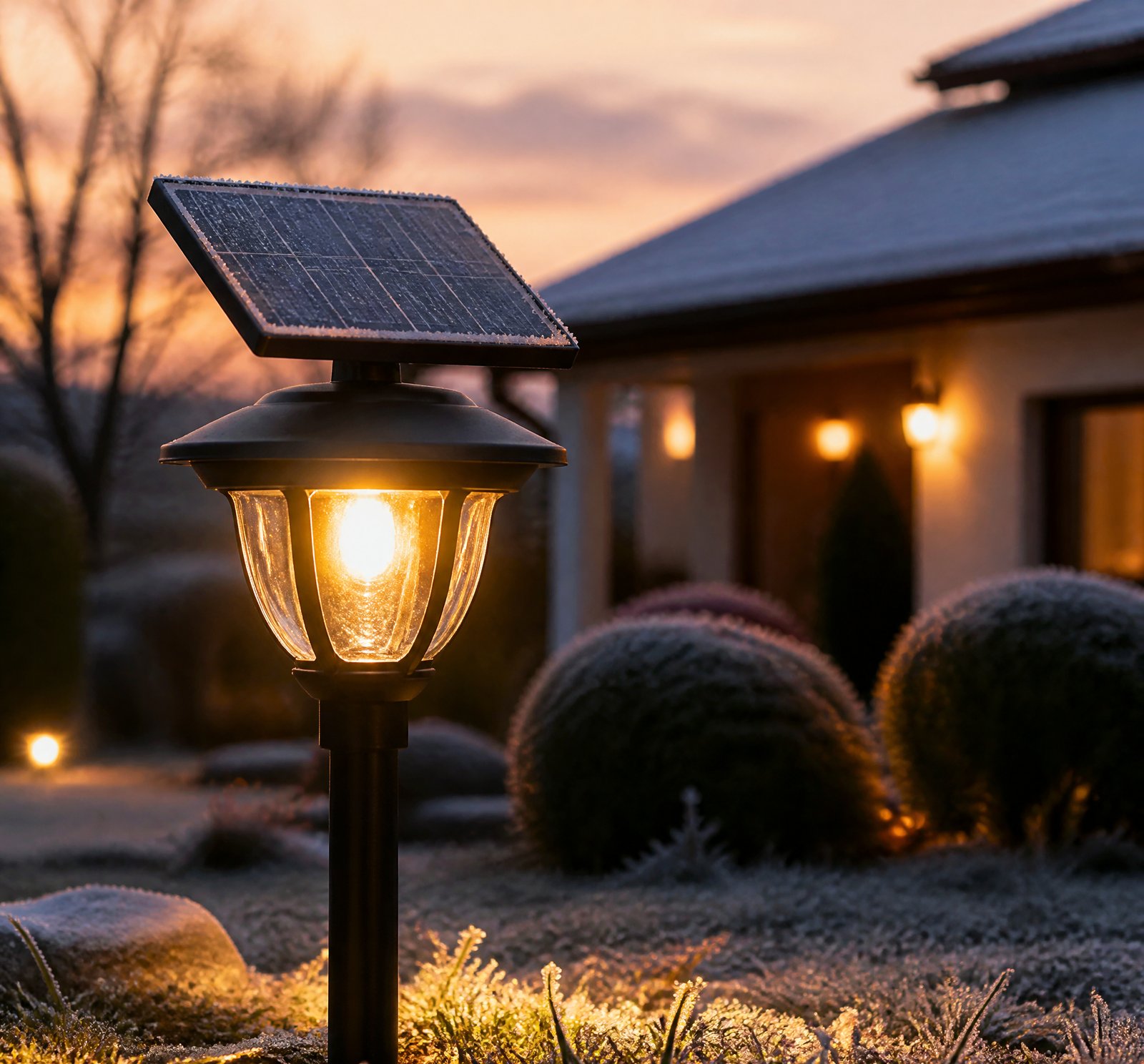
> Quick answer: Repeated freeze-thaw cycling significantly impacts solar lamp performance and lifespan by causing thermal cycling, which leads to the formation of microcracks, reducing output and efficiency over time [5,6,7].
Solar Lamp Performance and Lifespan: The Impact of Freeze-Thaw Cycling
Solar lamps are gaining popularity in Romania as a sustainable energy solution, but their performance and lifespan are vulnerable to environmental factors, particularly freeze-thaw cycling. This phenomenon, where temperatures fluctuate between freezing and thawing, can cause substantial degradation in solar lamp efficiency. Let’s delve into the effects of freeze-thaw cycling on solar lamps, drawing on insights from multiple sources [2,5,6,7,8,10,11,14,15,16,17,23,24] to provide a comprehensive understanding.
How Freeze-Thaw Cycling Affects Solar Lamps
Freeze-thaw cycling poses a challenge for solar lamps due to the expansion and contraction of materials at different temperatures [5,6]. When it’s warm, the materials in solar panels expand [5], and during colder periods, they contract [5,7]. This cyclical process, known as thermal cycling [5,6], can lead to microcracks forming over time within the panel [5,6], ultimately reducing its output and efficiency.
The temperature coefficient is crucial for understanding solar lamp performance under varying conditions [5,6]. It explains how much real-time efficiency is lost for each degree Celsius increase above the standard temperature of 25 degrees Celsius [5,6]. For instance, a temperature coefficient of -0.353% means that for every degree Celsius above 25, there is a loss of 0.353% in total production capability [5,6]. This coefficient helps assess how well a panel can perform in higher temperatures and provides insights into its long-term reliability.
Studies on Solar Lamp Degradation
Several studies have investigated the impact of freeze-thaw cycling on solar lamps, providing valuable insights into their performance and lifespan [2,5,6,7,10,11,14,15,16,17]. These sources highlight the following key findings:
#### Light-Induced Degradation (LID)
All panels suffer from light-induced degradation (LID), where they lose efficiency within the first hours of exposure to sunlight [5,6]. This initial loss can range from 1% to 3%, depending on the quality of crystalline silicon wafers used in the panel [5,6].
#### Weather Conditions as a Main Driver
Exposure to weather conditions is the primary factor contributing to panel degradation [5,6]. Heat plays a significant role, not only affecting real-time performance but also leading to long-term degradation due to ambient heat’s negative impact on electrical components’ efficiency and performance [5,6].
#### Thermal Cycling and Microcracks
The process of thermal cycling, where materials expand and contract with temperature changes, leads to the formation of microcracks over time [5,6], resulting in a gradual decrease in panel output and efficiency [5,6,7].
#### Impact on Long-Term Performance and Reliability
Solar panels are designed for long-term use, making stability and reliability crucial factors [10,11]. Frequent replacements or repairs due to instability can increase the overall cost of ownership, reducing solar’s attractiveness to consumers and businesses [10,11]. Additionally, short lifespans contribute to growing issues with solar waste as installations scale globally [10,11], emphasizing the importance of durability in minimizing environmental impact.
#### Accelerated Testing and Real-World Conditions
Researchers employ accelerated testing methods to simulate decades’ worth of exposure within a shorter timeframe [2,3,5,6,7,14,15,16,17]. These tests help understand the potential degradation solar lamps may experience in various climates and weather conditions. However, it is essential to note that these tests often focus on individual factors separately (e.g., light or heat) [2,3,5,6,7,14,15,16,17], while real-world conditions involve a combination of stressors acting simultaneously [2,3,5,6,7,14,15,16,17].
#### UV Degradation and Recovery
UV light can significantly impact solar cell performance over time [2,3,5,6,7,8,10,11,12,14,15,16,17,23,24], especially for more delicate cell structures [2,3]. While accelerated tests aim to predict the effects of UV light on PV modules over 30 years in the field [2,3], they face challenges in accurately representing real-world conditions without „frying” the module [2,3]. Some solar cells can recover some performance lost due to UVID under certain conditions [23,24], offering potential solutions for already manufactured modules.
Practical Context and Safety Considerations
While the sources provide valuable insights into freeze-thaw cycling’s impact on solar lamp performance and lifespan, they do not specify practical details such as administration, dosing ranges, or timing of interventions to mitigate these effects [2,5,6,7,8,10,11,14,15,16,17]. However, it is worth noting that the sources emphasize the importance of durability and stability in solar technology [10,11], suggesting a focus on long-term reliability rather than immediate interventions.
Key Takeaways
Key Takeaways
- Freeze-thaw cycling significantly affects solar lamp performance and lifespan through thermal cycling’s impact on material expansion and contraction, leading to microcracks and reduced output over time.
- Light-induced degradation (LID) causes panels to lose efficiency within the first hours of exposure to sunlight, with the loss ranging from 1% to 3%.
- Weather conditions, particularly heat, play a significant role in panel degradation, affecting both real-time performance and long-term reliability.
- Solar panel stability and reliability are crucial for long-term use and minimizing environmental impact due to solar waste.
Frequently Asked Questions
References
- [5] How_long_do_rooftop_residential_solar_panels_last_-_pv_magazine_Global__7bebb092 — authority
source passage
to decline, in some cases significantly. All panels also suffer something called light induced degradation (LID), in which panels lose efficiency within the first hours of being exposed to the sun. LID varies from panel to panel based on the quality of the crystalline silicon wafers, but usually results in a one-time, 1% to 3% loss in efficiency, said testing laboratory PVEL, PV Evolution Labs. Weather conditions The exposure to weather conditions is the main driver in panel degradation. Heat is a key factor in both real-time panel performance and degradation over time. Ambient heat negatively affects the performance and efficiency of electrical components, according to NREL. By checking the manufacturer’s data sheet, a panel’s temperature coefficient can be found, which will demonstrate the panel’s ability to perform in higher temperatures, said SolarCalculator.com. Heat exchange also drives degradation through a process called thermal cycling. When it is warm, materials expand, and when the temperature lowers, they contract. This movement slowly causes microcracks to form in the panel over time, lowering output.The coefficient explains how much efficiency is lost by each degree of Celsius increased above the standard temperature of 25 C. For example, a temperature coefficient of -0.353% means that for every degree Celsius above 25, 0.353% of total production capability is lost. In its annual Module Score Card study, PVEL analyzed 36 operational solar projects in India, and
to decline, in some cases significantly. All panels also suffer something called light induced degradation (LID), in which panels lose efficiency within the first hours of being exposed to the sun. LID varies from panel to panel based on the quality of the crystalline silicon wafers, but usually results in a one-time, 1% to 3% loss in efficiency, said testing laboratory PVEL, PV Evolution Labs. Weather conditions The exposure to weather conditions is the main driver in panel degradation. Heat is a key factor in both real-time panel performance and degradation over time. Ambient heat negatively affects the performance and efficiency of electrical components, according to NREL. By checking the manufacturer’s data sheet, a panel’s temperature coefficient can be found, which will demonstrate the panel’s ability to perform in higher temperatures, said SolarCalculator.com. Heat exchange also drives degradation through a process called thermal cycling. When it is warm, materials expand, and when the temperature lowers, they contract. This movement slowly causes microcracks to form in the panel over time, lowering output.The coefficient explains how much efficiency is lost by each degree of Celsius increased above the standard temperature of 25 C. For example, a temperature coefficient of -0.353% means that for every degree Celsius above 25, 0.353% of total production capability is lost. In its annual Module Score Card study, PVEL analyzed 36 operational solar projects in India, and