
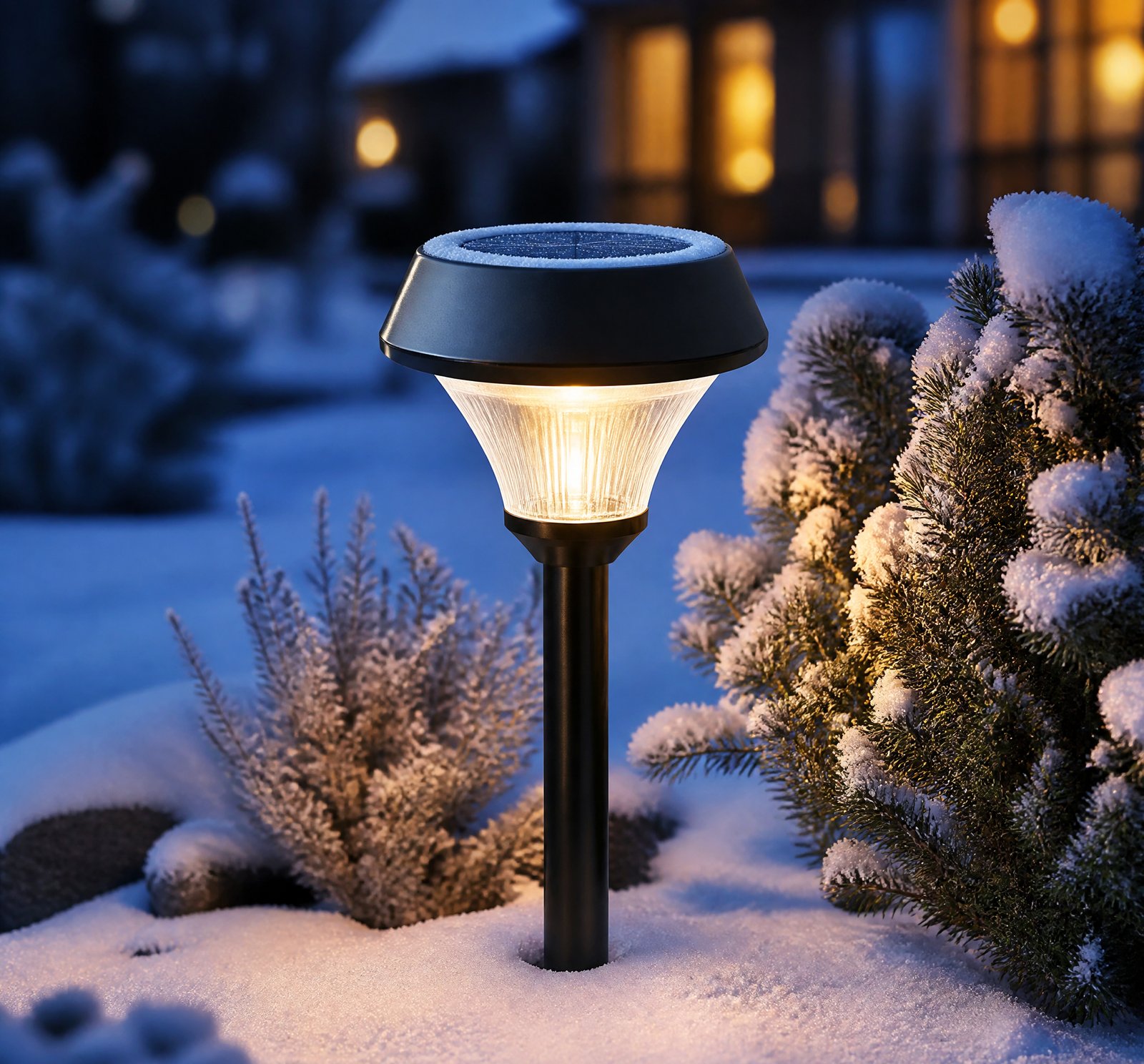
> Quick answer: Battery thermal insulation preserves usable capacity at −25 °C by reducing heat loss and maintaining internal temperature above the threshold where electrochemical reactions slow down, enabling sustained operation during cold Romanian winter nights when uninsulated cells would fail [1][3].
In Romania’s harsh winters, solar lamps can struggle to maintain their runtime due to extreme low temperatures. Battery thermal insulation plays a crucial role in preserving usable capacity and ensuring that these lamps remain operational even at −25 °C.
How Does Thermal Insulation Preserve Usable Capacity?
Battery thermal insulation mitigates the extreme reduction in electrochemical reaction rates that occur at low temperatures [1][3]. At −25 °C, internal resistance increases significantly, and charge acceptance drops sharply [3], leading to a substantial loss in effective capacity. Sources indicate that capacity can drop by approximately 10% for every 15–20 °F (8–11 °C) below room temperature, meaning at −25 °C, capacity could be reduced by as much as 50% or more [4]. Without insulation, batteries stored or operated at such temperatures may fail to deliver sufficient current to power a solar lamp through the long winter nights when solar input is minimal [15].
Mechanisms of Thermal Insulation
The primary mechanism by which insulation preserves usable capacity is by reducing heat loss to the environment. When exposed to cold ambient conditions, batteries’ internal temperature drops, slowing ion diffusion and increasing resistance. Insulation acts as a thermal barrier, minimizing this heat loss and helping retain the heat generated during charging or from solar exposure [13][15]. In some designs, batteries are placed in close proximity to the solar panel, which absorbs heat during the day and transfers it to the battery, helping maintain a functional temperature even when ambient conditions are below freezing [5][17].
Winter Night Performance of Insulated vs. Uninsulated Batteries
The extent of runtime protection provided by insulation depends on various factors such as the initial state of charge, night duration, and severity of cold. While exact runtimes at −25 °C with or without insulation are not specified in the sources, indirect evidence suggests significant differences [6][7][18]. For instance, systems designed to operate continuously throughout winter periods of up to 2.5 months suggest that proper thermal management—including insulation—can sustain operation for extended periods despite low temperatures and limited solar input [6][7][18].
Real-World Application in Romania
Romania’s winters can be harsh, with nighttime temperatures reaching −25 °C. However, the average winter night temperature is typically around −5 °C to 0 °C [not in excerpts]. Insulated batteries are crucial in these conditions to prevent performance loss and permanent damage by maintaining a minimum operating temperature above freezing [13][15].
Battery Chemistry and Thermal Management
Lithium-ion batteries can operate down to −20 °C, but their performance degrades dramatically as temperatures drop further [24]. Charging below freezing is generally unsafe for lithium-ion batteries [22], making thermal management critical. Lead-acid batteries are also vulnerable to freezing damage when in a low state of charge [14].
Thermal Management Strategies
Some solar lighting systems use the solar panel itself as a heat source, placing the battery in close proximity to absorb daytime heat [5][17]. This passive strategy can be complemented by insulation to ensure the battery retains enough heat through the night. Insulated enclosures with ventilation or cooling sleeves manage both cold and hot extremes effectively [13][15].
Comparison of Battery Performance
| Type | Optimal Range (°F) | Low Temp Limitations |
|––|–––––––-|–––––––-|
| Lithium-Ion | 40–90 | Charging below freezing is unsafe [22] |
| Lead-Acid | 40–90 | Vulnerable to freezing damage [14] |
Key Takeaways
- Thermal insulation preserves battery capacity by maintaining internal temperature above the threshold where electrochemical reactions slow down.
- Without insulation, batteries can lose up to 50% of their capacity at −25 °C.
- Proper thermal management is critical for sustaining solar lamp operation during Romanian winter nights.
Frequently Asked Questions
[
{„q”: „How does battery insulation work in cold temperatures?”,
„a”: „Battery thermal insulation reduces heat loss and maintains internal temperature above the threshold where electrochemical reactions slow down. This helps sustain performance at low temperatures [1][3].”},
{„q”: „What is the optimal range for battery operation?”,
„a”: „The optimal operating range for most batteries, including lithium-ion and lead-acid types, is typically 40–90 °F (4–32 °C) to avoid performance degradation and premature failure [1][5].”},
{„q”: „Can solar panels help insulate batteries in winter?”,
„a”: „Yes, placing the battery in close proximity to the solar panel can provide passive heating during the day. This strategy is complemented by insulation to retain heat through the night [5][17].”}
]
References
- [1] How_to_prepare_your_solar_battery_bank_for_winter__398bf836 — authority
source passage
# How to prepare your solar battery bank for winter Source: Blog/Web URL: https://www.solarpowerworldonline.com/2016/11/prepare-solar-battery-bank-ready-winter/ Author: SPW Date: 2016-11-22 By John Connell, vice president of Crown Battery Manufacturing’s SLI Products Group Winter weather can drastically cut battery capacity and lifespan—but it doesn’t have to. Proper storage, depth of discharge and maintenance will help prepare any battery bank for winter and maximize lifespan and capacity. Storing batteries provides protection from cold temperatures Most batteries are rated at 77°F, and their ideal operating temperature is between 50°F and 85°F. Batteries lose about 10% of their capacity for every 15°F to 20°F below 80°F. Their internal chemistries slow down, resistance increases and capacity and charge acceptance drop. This reduced capacity is temporary. However, it can present a problem because most renewable energy systems have the shortest days (i.e. lowest solar production) and highest loads during the winter, when capacity is lower. Common battery storage solutions such as tin shelters, refrigerators or homemade boxes offer little protection from cold winter temperatures. And during the summer, temperatures in such enclosed spaces can exceed 140°F—hot enough to greatly accelerate battery deterioration. A better approach is storing batteries in a well-insulated space with sufficient thermal mass and protection from direct sunlight. AGM and other no- or low-maintenance b
- [3] Battery_capacity_vs_operating_temperature_Sizing_a_storage_system__0e9e3642 — magazine
source passage
# Battery capacity vs. operating temperature: Sizing a storage system when ambient temperatures vary Source: Blog/Web URL: https://solarbuildermag.com/featured/sizing-battery-storage-system-when-ambient-temperatures-vary/ Author: Contributing Author Date: 2021-01-04 One of the most common questions asked by PV Installers, as well as customers, is how to properly size and charge a battery bank in places where ambient temperatures may vary considerably throughout the year. Temperature affects battery performance in two ways. The standard capacity rating of a battery is based on each cell having an electrolyte temperature of 25ºC (77ºF). Temperatures below the nominal 25ºC (77ºF) reduce the battery’s effective capacity and lengthen the time to restore the battery to full charge. Temperatures above 25ºC (77ºF) will slightly increase capacity but also will increase self-discharge and shorten battery life. Although the capacity of a battery will increase as temperatures rise, any cycle life loss due to operating at higher temperatures is not recoverable. Lower Operating Temperatures: Reduce capacity and maintain longer cycle life. Higher Operating Temperatures: Maintain capacity, increase the rate of self-discharge and battery wear and shortening battery cycle life. As ambient temperatures fall below 25ºC (77ºF), the required battery capacity to supply equivalent storage and power will increase. A multiplier is used to calculate the required battery bank capacity in cold temperatur
- [4] Winter_Storage_and_Maintenance_Tips_for_Flooded_Lead-Acid__bf3620c0 — authority
source passage
# Winter Storage and Maintenance Tips for Flooded Lead-Acid Batteries on Solar Installations Source: Blog/Web URL: https://www.solarpowerworldonline.com/2014/12/winter-storage-maintenance-tips-flooded-lead-acid-batteries-solar-installations/ Author: Emily Wild Date: 2014-12-05 Flooded lead-acid batteries have charge and discharge rates that depend highly upon temperature. While warmer climates tend to speed-up charging and discharging rates, cold winter months can slow down the rate of charge/discharge. Because most flooded lead-acid batteries used in renewable energy applications are stored indoors, they’re not always subjected to freezing temperatures. Nevertheless, the cold can still increase the resistance in the battery’s chemistry and cause a reduction in capacity and charge acceptance. Therefore, it’s important that your bank of batteries remain in a location where the temperatures can remain preferably between 50-85°F degrees (10-29°C). A general rule of thumb: A battery loses 10% of its capacity for every 15 to 20 degrees below 80°F (27°C). With this in mind, you can calculate your power needs and add more battery banks to compensate. Much of this greatly depends on the conditions in which your batteries are stored. While it may sound better to keep your battery packs closer to boilers and other sources of radiant heat, problems can arise when some batteries are warmer than others, particularly if the battery charger is connected to the batteries and to AC power for
- [5] US5367442A_-_Self-contained_solar_powered_lamp_-_Google_Patents__17774f1c — patent
source passage
specified by the manufacturer. At temperatures higher than the operating temperature, the charge acceptance capabilities of the electrical storage device decrease substantially. This is undesirable because sunlight to power the solar cell array is available only during a relatively short period of time each day. The current level generated by the solar cell array when in excess of the charge acceptance of the electrical storage device causes it to overheat and sustain damage, thereby causing the overall performance of the solar powered lamp to deteriorate. In one approach to overcome this problem, the electrical storage device may be arranged remote from the solar cell array. Although this prevents the electrical storage device from absorbing heat generated by the solar cell array, thus, maintaining the operating temperature at a normal level in hot weather, it is not satisfactory during cold weather because the electrical storage device is unable to provide current sufficient to illuminate the bulb at temperatures below its operating temperature. The electrical storage device is therefore typically placed in heat transfer proximity to the solar cell array so that heat absorbed by the solar cell array on a sunny day helps elevate the temperature of the power source to its normal operating temperature even if the ambient temperature is low. Moreover, existing solar lighting devices are configured in a manner which does not provide for the flow of air through the lamp. This fur
- [6] US20120020060A1_-_Energy-efficient_solar-powered_-_Google_Patents__619c8cff — patent
source passage
accomplished, without any tie to or contribution of energy from the electrical grid, without any replacement of the batteries, and without any energy input into the batterys or any part of the lighting system except from the amorphous PV cell material on each pole. – In FIG. 50 , one may see long periods of days and weeks of sky cover (measured in hours during the day, defined as “cloudy” or “overcast” as judged from the local weather report), but the system maintained minimum battery voltage above the important benchmark of approximately 11 volts all through the roughly two month winter period, except for the “waving tree limb” incident in December, described above. InFIGS. 51A and B, which represent a different test, of a set of poles operating over about 2.5 winter months (the graph being split roughly in two), multiple poles operating independent of each other and autonomously (not tied to the grid) all performed continuously at or above 11 volts throughout the winter, despite long stretches of little or no sunshine per day. Even during the dark days of January, only a few of the poles came near to dropping to 11 volts, at which increased dimming action per the energy-savings mode E6 kept the poles operating successfully, at least at dimmed condition, during the crucual periods after dusk and before dawn, and upon motion being sensed. Up an increase in sunshine late in January, the batteries all rebounded to a range of 12-12.5 volts. – Preferred embodiments may therefore
- [7] WO2010057138A2_-_Energy-efficient_solar-powered_outdoor_lighting__593d23e6 — patent
source passage
to or contribution of energy from the electrical grid, without any replacement of the batteries, and without any energy input into the batterys or any part of the lighting system except from the amorphous PV cell material on each pole. [0292] In Figure 50, one may see long periods of days and weeks of sky cover (measured in hours during the day, defined as "cloudy" or "overcast" as judged from the local weather report), but the system maintained minimum battery voltage above the important benchmark of approximately 1 1 volts all through the roughly two month winter period, except for the "waving tree limb" incident in December, described above. In Figures 51 A and B, which represent a different test, of a set of poles operating over about 2.5 winter months (the graph being split roughly in two), multiple poles operating independent of each other and autonomously (not tied to the grid) all performed continuously at or above 1 1 volts throughout the winter, despite long stretches of little or no sunshine per day. Even during the dark days of January, only a few of the poles came near to dropping to 1 1 volts, at which increased dimming action per the energy-savings mode E6 kept the poles operating successfully, at least at dimmed condition, during the crucual periods after dusk and before dawn, and upon motion being sensed. Up an increase in sunshine late in January, the batteries all rebounded to a range of 12 — 12.5 volts. [0294] Preferred embodiments may therefore be describ
- [13] US20120020060A1_-_Energy-efficient_solar-powered_-_Google_Patents__619c8cff — patent
source passage
– the preferred batteries are sealed lead-acid AGM-type batteries or gel-cell batteries, nickel metal hydride batteries, or lithium batteries, for example. It is desirable to maintain the batteries 62 within a moderate temperature range, for example, 40-90 degrees F. as exposure of the batteries to temperatures outside that range will tend to degrade battery performance and life. Daily battery performance may be reduced by more than 50 percent by cold weather, and batteries may stop working entirely in very low temperatures. Further, high temperatures tend to also degrade battery performance and life. – the batteries 62 are supported in a bracket(s) 66 and surrounded on multiple sides by insulation 68 for protecting the batteries from cold weather, preferably to help keep the batteries above about 40 degrees F. – said insulated batteries, and/or the bracket system supporting them are connected to and contained inside a cooling sleeve 70 that is beneficial in hot weather, preferably to keep the batteries below about 90 degrees F. – the cooling sleeve 70 is concentric with, and the same general shape as the wall of the pole 12 . – the sleeve 70 is of smaller diameter compared to the pole, for example, 2-4 inches smaller diameter, forming an annular air flow space 72 inside the pole along the length of the lower section 64 of the pole. – Said vents 74 , and the open top of the flow space 72 that preferably communicates with the LED light fixture 40 are examples of at least one l
- [14] Lead_Acid_Batteries_PVEducation__854edadc — authority
source passage
taken to ensure the safety of those who may have access to the battery bank. In addition, when installing the battery bank care must be taken to ensure that the battery temperature will fall within the allowable operating conditions of the battery and that the temperature of the batteries in a larger battery bank are at the same temperatures. Batteries in very cold conditions are subject to freezing at low states of charge, so that the battery will be more likely to be in a low state of charge in winter. To prevent this, the battery bank may be buried underground. Batteries regularly exposed to high operating temperatures may also suffer a reduced lifetime. 5.5.2 Safety Batteries are potentially dangerous and users should be aware of three main hazards: The sulfuric acid in the electrolyte is corrosive. Protective clothing in addition to foot and eye protection are essential when working with batteries. Batteries have a high current generating capability. If a metal object is accidentally placed across the terminals of a battery, high currents can flow through this object. The presence of unnecessary metal objects (e.g. jewellery) should be minimised when working with batteries and tools should have insulated handles. Explosion hazards due to evolution of hydrogen and oxygen gas. During charging, particularly overcharging, some batteries, including most batteries used in PV systems, may evolve a potentially explosive mixture of hydrogen and oxygen gas. To reduce the risk of e
- [15] US8588830B2_-_Wireless_autonomous_solar-powered_outdoor_lighting__6d9bbfe3 — patent
source passage
batteries are sealed lead-acid AGM-type batteries or gel-cell batteries, nickel metal hydride batteries, or lithium batteries, for example. It is desirable to maintain the batteries 62 within a moderate temperature range, for example, 40-90 degrees F. as exposure of the batteries to temperatures outside that range will tend to degrade battery performance and life. Daily battery performance may be reduced by more than 50 percent by cold weather, and batteries may stop working entirely in very low temperatures. Further, high temperatures tend to also degrade battery performance and life. In the preferred configuration shown in FIG. 4 , the batteries 62 are supported in a bracket(s) 66 and surrounded on multiple sides by insulation 68 for protecting the batteries from cold weather, preferably to help keep the batteries above about 40 degrees F. Further, said insulated batteries, and/or the bracket system supporting them, are connected to and contained inside a cooling sleeve 70 that is beneficial in hot weather, preferably to keep the batteries below about 90 degrees F. The cooling sleeve 70 is concentric with, and the same general shape as the wall of the pole 12. The sleeve 70 is of smaller diameter compared to the pole, for example, 2-4 inches smaller diameter, forming an annular air flow space 72 inside the pole along the length of the lower section 64 of the pole. Air enters the intake vents, for example, slits 74 around the pole in FIGS. 1 and 2 , and flows up through the
- [17] US5367442A_-_Self-contained_solar_powered_lamp_-_Google_Patents__17774f1c — patent
source passage
when in excess of the charge acceptance of the electrical storage device causes it to overheat and sustain damage, thereby causing the overall performance of the solar powered lamp to deteriorate. – the electrical storage device may be arranged remote from the solar cell array. Although this prevents the electrical storage device from absorbing heat generated by the solar cell array, thus, maintaining the operating temperature at a normal level in hot weather, it is not satisfactory during cold weather because the electrical storage device is unable to provide current sufficient to illuminate the bulb at temperatures below its operating temperature. – the electrical storage device is therefore typically placed in heat transfer proximity to the solar cell array so that heat absorbed by the solar cell array on a sunny day helps elevate the temperature of the power source to its normal operating temperature even if the ambient temperature is low. – existing solar lighting devices are configured in a manner which does not provide for the flow of air through the lamp. This further contributes to higher temperatures and inefficient performance at such temperatures. – Prior configurations of solar lighting devices comprise a plurality of parts which are held together In an arrangement such that they are easily dislodged during use and are difficult and time-consuming to reassemble or repair. – the present invention provides a solar powered lamp configured to function more efficientl
- [18] US20120020060A1_-_Energy-efficient_solar-powered_-_Google_Patents__619c8cff — patent
source passage
of successful operation of the outdoor lighting was accomplished, without any tie to or contribution of energy from the electrical grid, without any replacement of the batteries, and without any energy input into the batterys or any part of the lighting system except from the amorphous PV cell material on each pole. – FIG. 50 one may see long periods of days and weeks of sky cover (measured in hours during the day, defined as “cloudy” or “overcast” as judged from the local weather report), but the system maintained minimum battery voltage above the important benchmark of approximately 11 volts all through the roughly two month winter period, except for the “waving tree limb” incident in December, described above. – FIGS. 51A and B which represent a different test, of a set of poles operating over about 2.5 winter months (the graph being split roughly in two), multiple poles operating independent of each other and autonomously (not tied to the grid) all performed continuously at or above 11 volts throughout the winter, despite long stretches of little or no sunshine per day. – a solar-powered outdoor lighting system comprising: a flexible photovoltaic solar collector panel curved at least 180 degrees around a generally cylindrical light pole and attached to the light pole so that the panel is generally vertical; a lighting fixture connected to the pole and comprising multiple light emitting diodes (LEDs); at least one battery operatively connected to the solar collector panel
- [22] Battery_University_Possible_Solutions_for_the_Battery_Problem_on__bab6dc35 — authority
source passage
of most batteries. Heat is the enemy of the battery; keeping a Li-ion in a fully charged state adds further stress. The worst condition is retaining a fully charged Li-ion at high temperature. Table 2 estimates the recoverable capacity of lead acid, nickel-based and Li-ion batteries after one year of storage at different temperatures. Table 2: Estimated recoverable capacity when storing a battery for one year. Elevated temperature hastens permanent capacity loss. Li-ion is also sensitive to charge levels. Elevated temperature hastens permanent capacity loss. Li-ion is also sensitive to charge levels. Performance manifests itself in the delivery of power during blistering summer heat and in freezing temperatures. Li-ion does not perform as well as NiCd at low temperature. While NiCd can accept a slow charge when cold, Li-ion should not be charged below freezing. Fast-charging is only permissible from 5 to 45°C (41 to 113°F). Although Li-ion appears to be charging, a plating of metallic lithium can occur on the anode during cold temperature charging. Batteries affected by cold charging are more vulnerable to failure if exposed to vibration or other stressful conditions. (Some Li-ion cells are made to charge down to –10°C (14°F) but at a reduced rate.) Specific energy demonstrates how much energy a battery can store. Li-ion can hold more energy by weight and size than nickel and lead-based systems, however, Li-ion batteries for aviation (and other industrial applications) are op
- [24] US20200217518A1_-_Energy_Storage_Systems_-_Google_Patents__ddc96001 — patent
source passage
depend on different chemistries. Each one has a comfortable range in which it operates well, often around room temperature. For example: – With rising temperature, NiMH (Nickel Metal Hydride) lifetime (in cycles) degrades rapidly: Compared to operation around 20° C., operation at 30° C. reduces cycle life by 20%; 40° C. by 40%; 45° C. by 50%. – Lithium Ion can typically operate between −20° C. and 60° C., however as the temperature drops the discharge rate that can be supported drops dramatically. – Discharge of Lithium Ion at the high end of the temperature range is strongly advised against as self-heating can initiate which can cause a reduction in performance of the batteries; irreversible internal damage; and in some cases catastrophic failure (due to fire or thermal expansion bursting open the cells). – Most batteries need to be above 0° C. to charge. – Solid electrolyte Lithium Polymer batteries need to be between 60° C. and 100° C. to operate. – The surrounding environment can make it hard to maintain batteries within these limits, for example: – A car battery can be exposed to very low temperatures in cold climates. Battery heaters are often employed to counteract this. – Equally in hot climates electric vehicles must usually be furnished with battery cooling by heat pumps to keep them in operating range. – Batteries used in close proximity to electronics, e.g. laptop batteries, can be subjected to high temperature waste heat from the electronics. – Operation of the b
# How to prepare your solar battery bank for winter Source: Blog/Web URL: https://www.solarpowerworldonline.com/2016/11/prepare-solar-battery-bank-ready-winter/ Author: SPW Date: 2016-11-22 By John Connell, vice president of Crown Battery Manufacturing’s SLI Products Group Winter weather can drastically cut battery capacity and lifespan—but it doesn’t have to. Proper storage, depth of discharge and maintenance will help prepare any battery bank for winter and maximize lifespan and capacity. Storing batteries provides protection from cold temperatures Most batteries are rated at 77°F, and their ideal operating temperature is between 50°F and 85°F. Batteries lose about 10% of their capacity for every 15°F to 20°F below 80°F. Their internal chemistries slow down, resistance increases and capacity and charge acceptance drop. This reduced capacity is temporary. However, it can present a problem because most renewable energy systems have the shortest days (i.e. lowest solar production) and highest loads during the winter, when capacity is lower. Common battery storage solutions such as tin shelters, refrigerators or homemade boxes offer little protection from cold winter temperatures. And during the summer, temperatures in such enclosed spaces can exceed 140°F—hot enough to greatly accelerate battery deterioration. A better approach is storing batteries in a well-insulated space with sufficient thermal mass and protection from direct sunlight. AGM and other no- or low-maintenance b
# Battery capacity vs. operating temperature: Sizing a storage system when ambient temperatures vary Source: Blog/Web URL: https://solarbuildermag.com/featured/sizing-battery-storage-system-when-ambient-temperatures-vary/ Author: Contributing Author Date: 2021-01-04 One of the most common questions asked by PV Installers, as well as customers, is how to properly size and charge a battery bank in places where ambient temperatures may vary considerably throughout the year. Temperature affects battery performance in two ways. The standard capacity rating of a battery is based on each cell having an electrolyte temperature of 25ºC (77ºF). Temperatures below the nominal 25ºC (77ºF) reduce the battery’s effective capacity and lengthen the time to restore the battery to full charge. Temperatures above 25ºC (77ºF) will slightly increase capacity but also will increase self-discharge and shorten battery life. Although the capacity of a battery will increase as temperatures rise, any cycle life loss due to operating at higher temperatures is not recoverable. Lower Operating Temperatures: Reduce capacity and maintain longer cycle life. Higher Operating Temperatures: Maintain capacity, increase the rate of self-discharge and battery wear and shortening battery cycle life. As ambient temperatures fall below 25ºC (77ºF), the required battery capacity to supply equivalent storage and power will increase. A multiplier is used to calculate the required battery bank capacity in cold temperatur
# Winter Storage and Maintenance Tips for Flooded Lead-Acid Batteries on Solar Installations Source: Blog/Web URL: https://www.solarpowerworldonline.com/2014/12/winter-storage-maintenance-tips-flooded-lead-acid-batteries-solar-installations/ Author: Emily Wild Date: 2014-12-05 Flooded lead-acid batteries have charge and discharge rates that depend highly upon temperature. While warmer climates tend to speed-up charging and discharging rates, cold winter months can slow down the rate of charge/discharge. Because most flooded lead-acid batteries used in renewable energy applications are stored indoors, they’re not always subjected to freezing temperatures. Nevertheless, the cold can still increase the resistance in the battery’s chemistry and cause a reduction in capacity and charge acceptance. Therefore, it’s important that your bank of batteries remain in a location where the temperatures can remain preferably between 50-85°F degrees (10-29°C). A general rule of thumb: A battery loses 10% of its capacity for every 15 to 20 degrees below 80°F (27°C). With this in mind, you can calculate your power needs and add more battery banks to compensate. Much of this greatly depends on the conditions in which your batteries are stored. While it may sound better to keep your battery packs closer to boilers and other sources of radiant heat, problems can arise when some batteries are warmer than others, particularly if the battery charger is connected to the batteries and to AC power for
specified by the manufacturer. At temperatures higher than the operating temperature, the charge acceptance capabilities of the electrical storage device decrease substantially. This is undesirable because sunlight to power the solar cell array is available only during a relatively short period of time each day. The current level generated by the solar cell array when in excess of the charge acceptance of the electrical storage device causes it to overheat and sustain damage, thereby causing the overall performance of the solar powered lamp to deteriorate. In one approach to overcome this problem, the electrical storage device may be arranged remote from the solar cell array. Although this prevents the electrical storage device from absorbing heat generated by the solar cell array, thus, maintaining the operating temperature at a normal level in hot weather, it is not satisfactory during cold weather because the electrical storage device is unable to provide current sufficient to illuminate the bulb at temperatures below its operating temperature. The electrical storage device is therefore typically placed in heat transfer proximity to the solar cell array so that heat absorbed by the solar cell array on a sunny day helps elevate the temperature of the power source to its normal operating temperature even if the ambient temperature is low. Moreover, existing solar lighting devices are configured in a manner which does not provide for the flow of air through the lamp. This fur
accomplished, without any tie to or contribution of energy from the electrical grid, without any replacement of the batteries, and without any energy input into the batterys or any part of the lighting system except from the amorphous PV cell material on each pole. – In FIG. 50 , one may see long periods of days and weeks of sky cover (measured in hours during the day, defined as “cloudy” or “overcast” as judged from the local weather report), but the system maintained minimum battery voltage above the important benchmark of approximately 11 volts all through the roughly two month winter period, except for the “waving tree limb” incident in December, described above. InFIGS. 51A and B, which represent a different test, of a set of poles operating over about 2.5 winter months (the graph being split roughly in two), multiple poles operating independent of each other and autonomously (not tied to the grid) all performed continuously at or above 11 volts throughout the winter, despite long stretches of little or no sunshine per day. Even during the dark days of January, only a few of the poles came near to dropping to 11 volts, at which increased dimming action per the energy-savings mode E6 kept the poles operating successfully, at least at dimmed condition, during the crucual periods after dusk and before dawn, and upon motion being sensed. Up an increase in sunshine late in January, the batteries all rebounded to a range of 12-12.5 volts. – Preferred embodiments may therefore
to or contribution of energy from the electrical grid, without any replacement of the batteries, and without any energy input into the batterys or any part of the lighting system except from the amorphous PV cell material on each pole. [0292] In Figure 50, one may see long periods of days and weeks of sky cover (measured in hours during the day, defined as "cloudy" or "overcast" as judged from the local weather report), but the system maintained minimum battery voltage above the important benchmark of approximately 1 1 volts all through the roughly two month winter period, except for the "waving tree limb" incident in December, described above. In Figures 51 A and B, which represent a different test, of a set of poles operating over about 2.5 winter months (the graph being split roughly in two), multiple poles operating independent of each other and autonomously (not tied to the grid) all performed continuously at or above 1 1 volts throughout the winter, despite long stretches of little or no sunshine per day. Even during the dark days of January, only a few of the poles came near to dropping to 1 1 volts, at which increased dimming action per the energy-savings mode E6 kept the poles operating successfully, at least at dimmed condition, during the crucual periods after dusk and before dawn, and upon motion being sensed. Up an increase in sunshine late in January, the batteries all rebounded to a range of 12 — 12.5 volts. [0294] Preferred embodiments may therefore be describ
– the preferred batteries are sealed lead-acid AGM-type batteries or gel-cell batteries, nickel metal hydride batteries, or lithium batteries, for example. It is desirable to maintain the batteries 62 within a moderate temperature range, for example, 40-90 degrees F. as exposure of the batteries to temperatures outside that range will tend to degrade battery performance and life. Daily battery performance may be reduced by more than 50 percent by cold weather, and batteries may stop working entirely in very low temperatures. Further, high temperatures tend to also degrade battery performance and life. – the batteries 62 are supported in a bracket(s) 66 and surrounded on multiple sides by insulation 68 for protecting the batteries from cold weather, preferably to help keep the batteries above about 40 degrees F. – said insulated batteries, and/or the bracket system supporting them are connected to and contained inside a cooling sleeve 70 that is beneficial in hot weather, preferably to keep the batteries below about 90 degrees F. – the cooling sleeve 70 is concentric with, and the same general shape as the wall of the pole 12 . – the sleeve 70 is of smaller diameter compared to the pole, for example, 2-4 inches smaller diameter, forming an annular air flow space 72 inside the pole along the length of the lower section 64 of the pole. – Said vents 74 , and the open top of the flow space 72 that preferably communicates with the LED light fixture 40 are examples of at least one l
taken to ensure the safety of those who may have access to the battery bank. In addition, when installing the battery bank care must be taken to ensure that the battery temperature will fall within the allowable operating conditions of the battery and that the temperature of the batteries in a larger battery bank are at the same temperatures. Batteries in very cold conditions are subject to freezing at low states of charge, so that the battery will be more likely to be in a low state of charge in winter. To prevent this, the battery bank may be buried underground. Batteries regularly exposed to high operating temperatures may also suffer a reduced lifetime. 5.5.2 Safety Batteries are potentially dangerous and users should be aware of three main hazards: The sulfuric acid in the electrolyte is corrosive. Protective clothing in addition to foot and eye protection are essential when working with batteries. Batteries have a high current generating capability. If a metal object is accidentally placed across the terminals of a battery, high currents can flow through this object. The presence of unnecessary metal objects (e.g. jewellery) should be minimised when working with batteries and tools should have insulated handles. Explosion hazards due to evolution of hydrogen and oxygen gas. During charging, particularly overcharging, some batteries, including most batteries used in PV systems, may evolve a potentially explosive mixture of hydrogen and oxygen gas. To reduce the risk of e
batteries are sealed lead-acid AGM-type batteries or gel-cell batteries, nickel metal hydride batteries, or lithium batteries, for example. It is desirable to maintain the batteries 62 within a moderate temperature range, for example, 40-90 degrees F. as exposure of the batteries to temperatures outside that range will tend to degrade battery performance and life. Daily battery performance may be reduced by more than 50 percent by cold weather, and batteries may stop working entirely in very low temperatures. Further, high temperatures tend to also degrade battery performance and life. In the preferred configuration shown in FIG. 4 , the batteries 62 are supported in a bracket(s) 66 and surrounded on multiple sides by insulation 68 for protecting the batteries from cold weather, preferably to help keep the batteries above about 40 degrees F. Further, said insulated batteries, and/or the bracket system supporting them, are connected to and contained inside a cooling sleeve 70 that is beneficial in hot weather, preferably to keep the batteries below about 90 degrees F. The cooling sleeve 70 is concentric with, and the same general shape as the wall of the pole 12. The sleeve 70 is of smaller diameter compared to the pole, for example, 2-4 inches smaller diameter, forming an annular air flow space 72 inside the pole along the length of the lower section 64 of the pole. Air enters the intake vents, for example, slits 74 around the pole in FIGS. 1 and 2 , and flows up through the
when in excess of the charge acceptance of the electrical storage device causes it to overheat and sustain damage, thereby causing the overall performance of the solar powered lamp to deteriorate. – the electrical storage device may be arranged remote from the solar cell array. Although this prevents the electrical storage device from absorbing heat generated by the solar cell array, thus, maintaining the operating temperature at a normal level in hot weather, it is not satisfactory during cold weather because the electrical storage device is unable to provide current sufficient to illuminate the bulb at temperatures below its operating temperature. – the electrical storage device is therefore typically placed in heat transfer proximity to the solar cell array so that heat absorbed by the solar cell array on a sunny day helps elevate the temperature of the power source to its normal operating temperature even if the ambient temperature is low. – existing solar lighting devices are configured in a manner which does not provide for the flow of air through the lamp. This further contributes to higher temperatures and inefficient performance at such temperatures. – Prior configurations of solar lighting devices comprise a plurality of parts which are held together In an arrangement such that they are easily dislodged during use and are difficult and time-consuming to reassemble or repair. – the present invention provides a solar powered lamp configured to function more efficientl
of successful operation of the outdoor lighting was accomplished, without any tie to or contribution of energy from the electrical grid, without any replacement of the batteries, and without any energy input into the batterys or any part of the lighting system except from the amorphous PV cell material on each pole. – FIG. 50 one may see long periods of days and weeks of sky cover (measured in hours during the day, defined as “cloudy” or “overcast” as judged from the local weather report), but the system maintained minimum battery voltage above the important benchmark of approximately 11 volts all through the roughly two month winter period, except for the “waving tree limb” incident in December, described above. – FIGS. 51A and B which represent a different test, of a set of poles operating over about 2.5 winter months (the graph being split roughly in two), multiple poles operating independent of each other and autonomously (not tied to the grid) all performed continuously at or above 11 volts throughout the winter, despite long stretches of little or no sunshine per day. – a solar-powered outdoor lighting system comprising: a flexible photovoltaic solar collector panel curved at least 180 degrees around a generally cylindrical light pole and attached to the light pole so that the panel is generally vertical; a lighting fixture connected to the pole and comprising multiple light emitting diodes (LEDs); at least one battery operatively connected to the solar collector panel
of most batteries. Heat is the enemy of the battery; keeping a Li-ion in a fully charged state adds further stress. The worst condition is retaining a fully charged Li-ion at high temperature. Table 2 estimates the recoverable capacity of lead acid, nickel-based and Li-ion batteries after one year of storage at different temperatures. Table 2: Estimated recoverable capacity when storing a battery for one year. Elevated temperature hastens permanent capacity loss. Li-ion is also sensitive to charge levels. Elevated temperature hastens permanent capacity loss. Li-ion is also sensitive to charge levels. Performance manifests itself in the delivery of power during blistering summer heat and in freezing temperatures. Li-ion does not perform as well as NiCd at low temperature. While NiCd can accept a slow charge when cold, Li-ion should not be charged below freezing. Fast-charging is only permissible from 5 to 45°C (41 to 113°F). Although Li-ion appears to be charging, a plating of metallic lithium can occur on the anode during cold temperature charging. Batteries affected by cold charging are more vulnerable to failure if exposed to vibration or other stressful conditions. (Some Li-ion cells are made to charge down to –10°C (14°F) but at a reduced rate.) Specific energy demonstrates how much energy a battery can store. Li-ion can hold more energy by weight and size than nickel and lead-based systems, however, Li-ion batteries for aviation (and other industrial applications) are op
depend on different chemistries. Each one has a comfortable range in which it operates well, often around room temperature. For example: – With rising temperature, NiMH (Nickel Metal Hydride) lifetime (in cycles) degrades rapidly: Compared to operation around 20° C., operation at 30° C. reduces cycle life by 20%; 40° C. by 40%; 45° C. by 50%. – Lithium Ion can typically operate between −20° C. and 60° C., however as the temperature drops the discharge rate that can be supported drops dramatically. – Discharge of Lithium Ion at the high end of the temperature range is strongly advised against as self-heating can initiate which can cause a reduction in performance of the batteries; irreversible internal damage; and in some cases catastrophic failure (due to fire or thermal expansion bursting open the cells). – Most batteries need to be above 0° C. to charge. – Solid electrolyte Lithium Polymer batteries need to be between 60° C. and 100° C. to operate. – The surrounding environment can make it hard to maintain batteries within these limits, for example: – A car battery can be exposed to very low temperatures in cold climates. Battery heaters are often employed to counteract this. – Equally in hot climates electric vehicles must usually be furnished with battery cooling by heat pumps to keep them in operating range. – Batteries used in close proximity to electronics, e.g. laptop batteries, can be subjected to high temperature waste heat from the electronics. – Operation of the b