
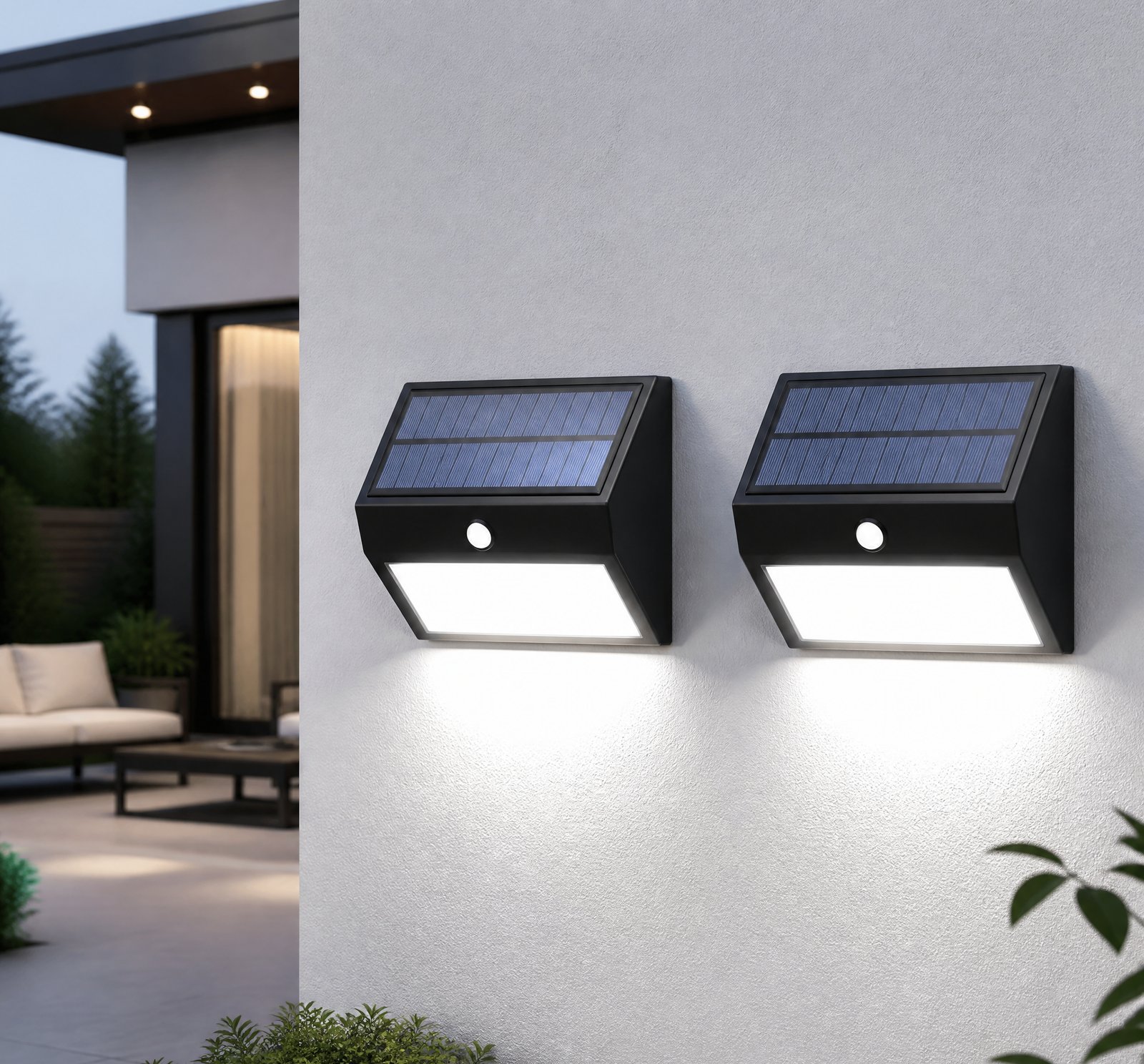
Quick answer: Când compari lămpi solare la prețuri similare în România, valorile IP65, funcționarea la -25 °C sau menținerea fluxului luminos nu se exprimă direct în euro, dar sunt esențiale pentru durabilitate, eficiență și acceptabilitate în condiții reale [6][21]. Aceste caracteristici reduc eșecul în teren, prelungesc viața utilă și scad costul total de posesie, chiar dacă prețul inițial este mai mare [17].
În România, cu condiții climatice variabile și o cerere crescută pentru iluminat eco-friendly, alegerea unei lămpi solare nu se poate face doar pe baza prețului. Când două produse au prețuri apropiate, diferențele tehnice – cum ar fi IP65, menținerea fluxului luminos sau funcționarea în frig – pot face diferența între un produs care durează 2 ani și unul care funcționează 10 ani. Chiar dacă sursele nu oferă o conversie directă în euro pentru aceste caracteristici [1][5], ele evidențiază clar impactul lor asupra durabilității și acceptabilității pe piață, mai ales în zonele rurale sau cu temperaturi extreme [6][21].
Protecția IP65: nu doar o etichetă, ci o condiție pentru funcționare
O carcasă rezistentă la apă IP65 nu este doar o specificație tehnică, ci o condiție esențială pentru funcționarea în condiții de ploaie, praf sau umiditate crescută – factori care pot duce la scurtcircuitare și eșec total al sistemului [6][21]. Testele de teren din Africa au arătat că lipsa acestei protecții este un factor major de eșec în piața de dezvoltare [21]. În România, cu iernile umede și vară pluvioasă, o lampă fără IP65 este vulnerabilă la deteriorare rapidă, chiar dacă este promovată ca soluție de energie regenerabilă [21].
Funcționarea în frig și durabilitatea bateriei
Deși nu există o valoare în euro pentru funcționarea la -25 °C, sursele subliniază importanța robusteții în condiții extreme [6]. În Uganda și Ethiopia, descărcarea profundă a bateriilor și defectele de comutator au fost cauze frecvente de eșec [6]. O baterie cu izolație termică care funcționează la -25 °C poate preveni descărcarea profundă și crește durabilitatea sistemului, reducând astfel costul total de posesie pe termen lung [17]. Această caracteristică este esențială în zonele montane sau în zonele rurale românești cu temperaturi sub zero.
Menținerea fluxului luminos – calitatea luminii pe termen lung
Degradarea rapidă a luminanței este o problemă majoră în produsele de calitate scăzută [21]. Un exemplu concret este menținerea la 70% după 50.000 de ore, ceea ce înseamnă o pierdere de 30% a fluxului luminos [5]. O lampă cu o menținere bună a fluxului luminos oferă o iluminare stabilă, crucială pentru siguranță, muncă sau studiu. Un studiu de teren din Africa a arătat că utilizatorii preferă un unghi larg de radiație față de un număr ridicat de lumeni, sugerând că distribuția și calitatea luminii sunt mai importante decât intensitatea maximă [3].
Evaluarea în condiții reale: mai mult decât un test de laborator
Testele de teren au arătat că o majoritate a lămpilor solare disponibile nu sunt potrivite pentru utilizarea în zonele rurale din țările în curs de dezvoltare din cauza calității slabe [21]. Aceasta înseamnă că o caracteristică tehnică precum IP65 sau izolația termică nu este doar un avantaj, ci o condiție pentru acceptabilitatea pe piață [6][21]. În plus, utilizatorii sunt sensibili la design, culoare și formă – anumite modele au fost respinse din cauza asociărilor culturale negative [3]. O lampă care arată ca o cameră digitală în Uganda a fost respinsă chiar dacă avea performanță tehnică bună.
| Caracteristică | Importanță în România | Impact asupra costului total | Sursă |
|---|---|---|---|
| IP65 | Ridicată (ploaie, praf) | Reduce eșecul în teren | [6][21] |
| Funcționare la -25 °C | Medie-ridicată (ierni reci) | Prevenire descărcare profundă | [6] |
| Menținere flux luminos (70% după 50.000 h) | Ridicată (calitate iluminat) | Reducere costuri de înlocuire | [5] |
Concluzii cheie
- Protecția IP65 și izolația termică nu se convertesc direct în euro, dar sunt critice pentru durabilitate în condiții reale [6][21].
- Menținerea fluxului luminos de 70% după 50.000 de ore este o măsură clară de performanță pe termen lung [5].
- Costul total de posesie (TCO) este influențat mai mult de durabilitate și performanță decât de prețul inițial [17].
- Evaluarea în situs este esențială pentru a verifica calitatea luminii și distribuția [1][10].
- O garanție scrisă care acoperă degradarea luminanței și defectele de componentă este esențială pentru încredere [1].
Întrebări frecvente
Ce înseamnă IP65 pentru o lampă solară?
IP65 înseamnă protecție completă împotriva prafului și jeturi de apă din orice direcție. Este esențial pentru funcționarea în condiții de ploaie, praf sau umiditate crescută, prevenind scurtcircuitarea [6][21].
De ce menținerea fluxului luminos e importantă?
Degradarea rapidă a luminanței reduce calitatea iluminatului, afectând siguranța și eficiența. O lampă cu menținere bună (70% după 50.000 de ore) oferă iluminare stabilă pe termen lung [5].
Poate o lampă solară funcționa în frigul românesc?
Da, dar doar dacă are izolație termică adecvată. Bateriile fără izolație se descarcă profund în frig, reducând viața utilă. Funcționarea la -25 °C este un indicator de robustețe [6].
References
- [1] LED Lighting in Museums and Art Galleries Technical – Canadaca — authority
source passage
Obtain LM-79 reports (lamp characteristics) from lamp manufacturers. – Check the DOE CALiPER website for impartial test data. – Check the EnergyStar Light Bulbs website and the LED Lighting Facts database (consult endnote 1) for characteristics of products currently available on the market. – Consult Technical details for larger projects. Purchase trial lamps – Once you have made preliminary decisions on several candidate lamps, purchase a few and evaluate them in situ, preferably with colleagues. Check the appearance of the lamp from the side for glare. Check the appearance of the light on blank walls. Check the appearance of the objects illuminated by the lamp. Check the appearance of your skin under the lamp (we are especially attuned to how our skin should look under good-quality light). – If you purchased dimmers, test them with the lamps. Check for flicker across the whole range of intensities. – Test trial lamps, especially those you are considering for purchase, in the fixtures planned for use for as long as possible, and at least a week, to see if they change colour or overheat and fail. Before purchasing large numbers of lamps – Ask for products from companies you know or whom you trust or that have a documented support history. – Get a written warranty that encompasses light output, colour variation (Duv) over time as well as failure of chips and electronics, and which includes labour. A one-year warranty is common, but for longer periods of time the coverage may b
- [3] Impacts of PicoPV and Consumer Research – energypedia — authority
source passage
think ahead and are not interested in products that may be relatively cheap but have to be replaced after a short time. There is also concern among all potential retailers that maintenance and repair services may be a major hurdle towards the development of PicoPV markets in rural areas, where there is no local expertise on these new kinds of products. The field survey also revealed certain reservations by different consumer groups against some visual design features that will have to be taken into account for any successful PicoPV marketing strategy. For example, people had very particular positive or negative associations with certain colors or forms which might have an impact on their purchasing decision even though they said that these product features were not decisive factors. One lantern, for example, reminded Ugandan women of a camera, which limited its attractiveness, while in Nicaragua people particularly liked the handy format of the lamp. In Mozambique, one of the lamp models was described as “masculine” so that women would hesitate to use it. In Uganda, white is associated with religious ceremonies like funerals and therefore not regarded an appropriate color for a lamp. In Ethiopia, a large angle of radiation was preferred over a high number of lumens. Portable lamps were favored. Users preferred a built-in switch instead of a pull switch. Furthermore, bright, white light was clearly chosen over yellow colored light. Regulators in order to adjust the level of br
- [5] Lighting community outlines challenges for LED industry – News — magazine
source passage
development manager with Lumileds, says that his company specifies its white and colored Luxeon LEDs as having an average lumen maintenance of 70% (i.e. the lumen output drops by 30%) at 50,000 h. This is a useful starting point, although this level of degradation is unsuitable for some applications. (It should be pointed out that other light sources also experience lumen degradation.) Conversely, some applications simply don t require such long lifetimes. Carsten Schaffarz, manager of product management and marketing with Vossloh-Schwabe, identified the lack of standardization in the LED industry as a problem for companies trying to evaluate the cost benefit of using LEDs rather than other light sources. "There are few standards, and performance varies from one manufacturer to another," he said. "The cost benefit is difficult to define and it is down to the end-user to undertake the final evaluation." LEDs will only be used to replace existing light sources if the advantages are clear and if higher costs are justifiable. Fortunately, acceptable benefits can be psychological as well as economic, especially in Europe, where in general more value is placed on light quality. An example was given by Alan Oliver, sales and marketing director for Telectra, a company that has installed lighting systems in aircraft for airlines including Virgin Atlantic and KLM. The principal advantages of LED-based lights in this application are ease of maintenance, safety, and the ability to adjust
- [6] Impacts of PicoPV and Consumer Research – energypedia — authority
source passage
Outstanding Products). Particular technical improvements concluded from the Ugandan field tests are: manufacturers need to improve products’ solar fraction, equip lamps only with advanced charge controllers, and work on the robustness of the products, and of the connection parts in particular. Problems were: frequent deep-discharge of batteries, low battery life-spans and overall unsatisfactory lighting service were the frequently observed. Apart from that, the components that most often caused lamps to fail were cables, plugs, input jacks and switches. These parts are obviously under extreme stress when lamps are in everyday use by extended families with several children, and when modules are put down for charging on the ground in the courtyard (while lamps are kept inside to protect them against thieves). [1] In Ethiopia, broken switches and deeply discharged batteries were a frequent problem. Robustness has to be improved as well, because users often carry their systems around due to fear of theft. General Experiences Field Tests The GIZ PicoPV country survey results underpin that an ‘one-size-fits-all’ lamp model does not exist. The lamp models were rated differently by users across different continents, and they were liked and disliked for different reasons. However, there are some aspects that turned out to be important for consumers in all the test countries. Aspect's Customers Above all, light quality, including the size of the light cone and light intensity, mattered
- [10] LED Lighting in Museums and Art Galleries Technical – Canadaca — authority
source passage
lamps section. This section briefly reviews the many visual phenomena that are in play and suggests a method for evaluation that has been used successfully in museums and art galleries that were considering LED lamps. Why do a detailed evaluation? An in situ evaluation of various lamps selected for trial strengthens an institutional decision by showing how the lamps will actually look in the end. It is not intended to be a rigorous perceptual study, although institutions wanting to invest time to do carefully designed tests and share them with the museum community are welcomed to do so. The following provides ideas about how to conduct your own evaluation of lamps purchased for trial. There are several colour perception effects that depend on light intensity (lux level). The Bezold–Brücke effect shifts the perception of hue. The Hunt effect increases colourfulness at higher light intensity. The Stevens effect increases colour contrast at higher light levels. For all these reasons, it is essential to keep lux levels constant when comparing lamps, and it is useful to repeat the evaluation at the various lux levels for which the lamps are intended (for example, 50 lux and 150 lux). The angle of the light falling on the object can dramatically affect seemingly unrelated visual judgements. Mangum (1998) carried out an assessment of a doll dressed in materials that varied in colour, texture and reflective properties at 50 lux. Observers were asked to report their perceptions of the
- [17] Photovoltaic-aways Solar module manufacturers share 7 insights on — magazine
source passage
partner, recognize better revenues in cost-conscious scenarios (like larger system sizes) and recognize better margins on the remainder of the system in terms of premium value/wattage without premium pricing,” Silfab tells us. 4. Lifetime value Efficiency numbers in lab conditions and coming out of the box get the biggest headlines, but for an investment that degrades over its 25-year lifetime, it’s not the most impactful metric on its own. Other module lifetime considerations such as warranty terms, temperature coefficients and degradation rates are now winning the day in many segments but especially in residential. EPCs and installers that only look at one facet, such as price or rated DC capacity, are doing themselves and their customers a disservice. While those factors are important, selling certainty over 25 years is more valuable overall. “Often we hear from our customers that they made the mistake of only looking at the price per watt when choosing a PV module,” notes the team at Trina Solar. “Then they found that they had increased operations and maintenance costs down the road, and that the company they had bought from is no longer around to honor the warranty. Unit cost is important to consider, but if you neglect to look at things like performance, quality standards and company bankability, you may end up paying for it later.” 5. Reduced degradation Pay attention to that temperature coefficient and light induced degradation (LID) rate because these are huge factor
- [21] Solar Laterns Test – energypedia — authority
source passage
phone charging, massive market growth can be expected in the near future. – In light of the mixed test results, informing potential consumers about lantern quality will be of great importance for a healthy market development. In the initial Test Level 1, ISE examined all twelve systems for quality of workmanship. Five lamps did not pass test level one. In general the tests show that a majority of the available lights are not suitable for “Off-Grid Lighting” ion developing countries due to their very poor quality, which would lead to very short lifetimes and bad lighting service for poor rural customers.[2] The main quality issues determined were: – Poor mechanical design and workmanship – Missing over-current protection of the LED – Poor electrical design – Insufficient light output – Bad quality of LEDs: rapid degradation of light output – Solar panels and batteries did not show their nominal values or were sized too small – Defective protection of battery – Defective ballast for LEDs or CFLs[2] Testing Criteria The following table shows the testing criteria and maint test evaluation of types of lanterns. [1] Taking the different evaluations into consideratin, the winner of the technical test was the sun x-set mobile. E ven if the two lanterns do not show the best workmanship, the system functions with the largest and most powerful module by far and with an outstandingly good and versatile charging station. The extremely high purchase price and consequently huge operating co
Obtain LM-79 reports (lamp characteristics) from lamp manufacturers. – Check the DOE CALiPER website for impartial test data. – Check the EnergyStar Light Bulbs website and the LED Lighting Facts database (consult endnote 1) for characteristics of products currently available on the market. – Consult Technical details for larger projects. Purchase trial lamps – Once you have made preliminary decisions on several candidate lamps, purchase a few and evaluate them in situ, preferably with colleagues. Check the appearance of the lamp from the side for glare. Check the appearance of the light on blank walls. Check the appearance of the objects illuminated by the lamp. Check the appearance of your skin under the lamp (we are especially attuned to how our skin should look under good-quality light). – If you purchased dimmers, test them with the lamps. Check for flicker across the whole range of intensities. – Test trial lamps, especially those you are considering for purchase, in the fixtures planned for use for as long as possible, and at least a week, to see if they change colour or overheat and fail. Before purchasing large numbers of lamps – Ask for products from companies you know or whom you trust or that have a documented support history. – Get a written warranty that encompasses light output, colour variation (Duv) over time as well as failure of chips and electronics, and which includes labour. A one-year warranty is common, but for longer periods of time the coverage may b
think ahead and are not interested in products that may be relatively cheap but have to be replaced after a short time. There is also concern among all potential retailers that maintenance and repair services may be a major hurdle towards the development of PicoPV markets in rural areas, where there is no local expertise on these new kinds of products. The field survey also revealed certain reservations by different consumer groups against some visual design features that will have to be taken into account for any successful PicoPV marketing strategy. For example, people had very particular positive or negative associations with certain colors or forms which might have an impact on their purchasing decision even though they said that these product features were not decisive factors. One lantern, for example, reminded Ugandan women of a camera, which limited its attractiveness, while in Nicaragua people particularly liked the handy format of the lamp. In Mozambique, one of the lamp models was described as “masculine” so that women would hesitate to use it. In Uganda, white is associated with religious ceremonies like funerals and therefore not regarded an appropriate color for a lamp. In Ethiopia, a large angle of radiation was preferred over a high number of lumens. Portable lamps were favored. Users preferred a built-in switch instead of a pull switch. Furthermore, bright, white light was clearly chosen over yellow colored light. Regulators in order to adjust the level of br
development manager with Lumileds, says that his company specifies its white and colored Luxeon LEDs as having an average lumen maintenance of 70% (i.e. the lumen output drops by 30%) at 50,000 h. This is a useful starting point, although this level of degradation is unsuitable for some applications. (It should be pointed out that other light sources also experience lumen degradation.) Conversely, some applications simply don t require such long lifetimes. Carsten Schaffarz, manager of product management and marketing with Vossloh-Schwabe, identified the lack of standardization in the LED industry as a problem for companies trying to evaluate the cost benefit of using LEDs rather than other light sources. "There are few standards, and performance varies from one manufacturer to another," he said. "The cost benefit is difficult to define and it is down to the end-user to undertake the final evaluation." LEDs will only be used to replace existing light sources if the advantages are clear and if higher costs are justifiable. Fortunately, acceptable benefits can be psychological as well as economic, especially in Europe, where in general more value is placed on light quality. An example was given by Alan Oliver, sales and marketing director for Telectra, a company that has installed lighting systems in aircraft for airlines including Virgin Atlantic and KLM. The principal advantages of LED-based lights in this application are ease of maintenance, safety, and the ability to adjust
Outstanding Products). Particular technical improvements concluded from the Ugandan field tests are: manufacturers need to improve products’ solar fraction, equip lamps only with advanced charge controllers, and work on the robustness of the products, and of the connection parts in particular. Problems were: frequent deep-discharge of batteries, low battery life-spans and overall unsatisfactory lighting service were the frequently observed. Apart from that, the components that most often caused lamps to fail were cables, plugs, input jacks and switches. These parts are obviously under extreme stress when lamps are in everyday use by extended families with several children, and when modules are put down for charging on the ground in the courtyard (while lamps are kept inside to protect them against thieves). [1] In Ethiopia, broken switches and deeply discharged batteries were a frequent problem. Robustness has to be improved as well, because users often carry their systems around due to fear of theft. General Experiences Field Tests The GIZ PicoPV country survey results underpin that an ‘one-size-fits-all’ lamp model does not exist. The lamp models were rated differently by users across different continents, and they were liked and disliked for different reasons. However, there are some aspects that turned out to be important for consumers in all the test countries. Aspect's Customers Above all, light quality, including the size of the light cone and light intensity, mattered
lamps section. This section briefly reviews the many visual phenomena that are in play and suggests a method for evaluation that has been used successfully in museums and art galleries that were considering LED lamps. Why do a detailed evaluation? An in situ evaluation of various lamps selected for trial strengthens an institutional decision by showing how the lamps will actually look in the end. It is not intended to be a rigorous perceptual study, although institutions wanting to invest time to do carefully designed tests and share them with the museum community are welcomed to do so. The following provides ideas about how to conduct your own evaluation of lamps purchased for trial. There are several colour perception effects that depend on light intensity (lux level). The Bezold–Brücke effect shifts the perception of hue. The Hunt effect increases colourfulness at higher light intensity. The Stevens effect increases colour contrast at higher light levels. For all these reasons, it is essential to keep lux levels constant when comparing lamps, and it is useful to repeat the evaluation at the various lux levels for which the lamps are intended (for example, 50 lux and 150 lux). The angle of the light falling on the object can dramatically affect seemingly unrelated visual judgements. Mangum (1998) carried out an assessment of a doll dressed in materials that varied in colour, texture and reflective properties at 50 lux. Observers were asked to report their perceptions of the
partner, recognize better revenues in cost-conscious scenarios (like larger system sizes) and recognize better margins on the remainder of the system in terms of premium value/wattage without premium pricing,” Silfab tells us. 4. Lifetime value Efficiency numbers in lab conditions and coming out of the box get the biggest headlines, but for an investment that degrades over its 25-year lifetime, it’s not the most impactful metric on its own. Other module lifetime considerations such as warranty terms, temperature coefficients and degradation rates are now winning the day in many segments but especially in residential. EPCs and installers that only look at one facet, such as price or rated DC capacity, are doing themselves and their customers a disservice. While those factors are important, selling certainty over 25 years is more valuable overall. “Often we hear from our customers that they made the mistake of only looking at the price per watt when choosing a PV module,” notes the team at Trina Solar. “Then they found that they had increased operations and maintenance costs down the road, and that the company they had bought from is no longer around to honor the warranty. Unit cost is important to consider, but if you neglect to look at things like performance, quality standards and company bankability, you may end up paying for it later.” 5. Reduced degradation Pay attention to that temperature coefficient and light induced degradation (LID) rate because these are huge factor
phone charging, massive market growth can be expected in the near future. – In light of the mixed test results, informing potential consumers about lantern quality will be of great importance for a healthy market development. In the initial Test Level 1, ISE examined all twelve systems for quality of workmanship. Five lamps did not pass test level one. In general the tests show that a majority of the available lights are not suitable for “Off-Grid Lighting” ion developing countries due to their very poor quality, which would lead to very short lifetimes and bad lighting service for poor rural customers.[2] The main quality issues determined were: – Poor mechanical design and workmanship – Missing over-current protection of the LED – Poor electrical design – Insufficient light output – Bad quality of LEDs: rapid degradation of light output – Solar panels and batteries did not show their nominal values or were sized too small – Defective protection of battery – Defective ballast for LEDs or CFLs[2] Testing Criteria The following table shows the testing criteria and maint test evaluation of types of lanterns. [1] Taking the different evaluations into consideratin, the winner of the technical test was the sun x-set mobile. E ven if the two lanterns do not show the best workmanship, the system functions with the largest and most powerful module by far and with an outstandingly good and versatile charging station. The extremely high purchase price and consequently huge operating co