
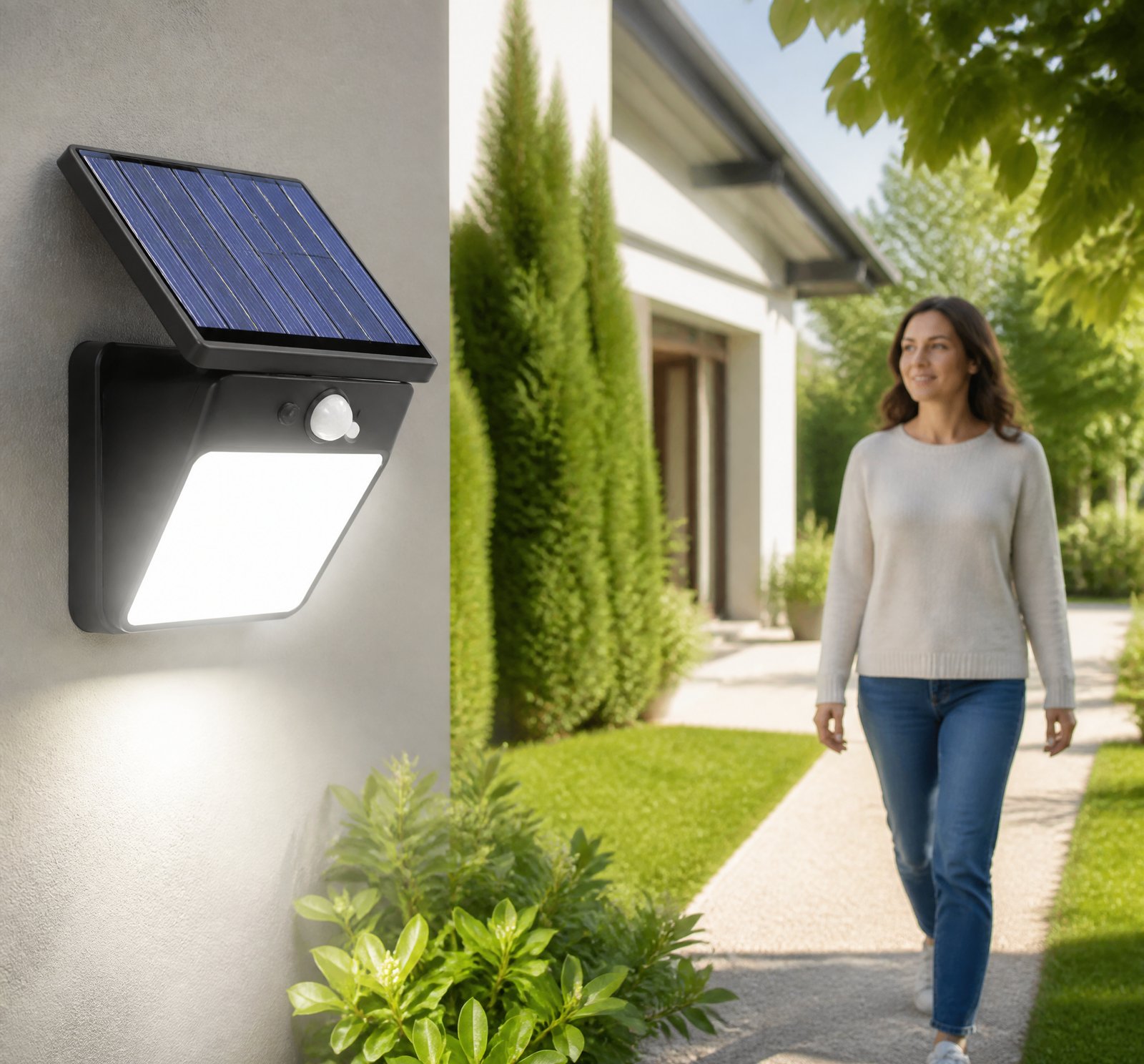
> Quick answer: Integrated garden solar lamps often use MPPT (Maximum Power Point Tracking), which is more efficient than PWM (Pulse Width Modulation) by 15–20% in winter and 10–15% in summer under low-light conditions like those in Romania [3][6][9][19]. MPPT maximizes energy recovery.
Understanding Charge-Control Methods for Solar Lamps
In regions with variable or low solar irradiance, such as northern latitudes during winter, the choice between PWM and MPPT charge-control methods can significantly impact the performance of garden solar lamps. Romania’s diffuse winter light presents unique challenges that these systems must overcome to ensure reliable operation [14][15].
What is MPPT?
MPPT (Maximum Power Point Tracking) is a sophisticated method used in modern solar energy systems, particularly designed for conditions where sunlight is inconsistent or weak. It continuously monitors the voltage and current from the photovoltaic panel, adjusting the system to maintain optimal power output [7][17]. This method ensures that even under low-light conditions, such as those common in Romania during winter, the lamp can harvest more energy compared to simpler technologies like PWM.
What is PWM?
PWM (Pulse Width Modulation) is a more basic charge-control method. It regulates voltage and current by rapidly switching the power on and off to provide steady voltage levels. While effective in regions with consistent, high-intensity sunlight, it lacks the adaptability needed for environments with fluctuating light conditions [14][15].
Comparing MPPT vs PWM
| Method | Efficiency Gain (Winter) | Complexity | Cost |
|–––|–––––––––|––––|––|
| MPPT | 15–20% | High | Higher |
| PWM | N/A | Low | Lower |
Benefits of MPPT in Romanian Winter Conditions
MPPT is particularly beneficial under Romania’s diffuse winter light conditions. The method can increase system efficiency by 15–20% compared to PWM, ensuring that garden solar lamps operate reliably even when sunlight is minimal [3][6][9][19]. This improvement is critical for maintaining consistent performance throughout the day and night.
How MPPT Works in Low-Light Conditions
MPPT controllers continuously sample photovoltaic panel voltage and current, adjusting the DC-DC conversion module to maintain operation at the maximum power point. This ensures that even when solar irradiance is low or variable—as it often is during Romanian winters—the system can still harvest a significant amount of energy [7][17].
Efficiency Under Diffuse Light
The efficiency gain from MPPT under diffuse light conditions, such as those in Romania’s winter, is well-documented. The method tracks the maximum power point in real-time, converting excess voltage into amperage to ensure optimal performance even when sunlight is not direct [3][6][9][19].
Key Takeaways
- MPPT is preferred: MPPT charge-control methods are more efficient and reliable under low-light conditions.
- Winter Performance: In winter, MPPT can increase energy recovery by 15–20% compared to PWM.
- Adaptability: MPPT excels in adapting to real-world variability, making it ideal for diffuse light environments.
Frequently Asked Questions
[{„q”: „Why is MPPT better than PWM for Romanian winters?”, „a”: „MPPT increases efficiency by 15–20% in winter compared to PWM due to its ability to track the maximum power point under low-light conditions [3][6].”},
{„q”: „How does MPPT work in low-light environments?”, „a”: „MPPT continuously tracks and adjusts voltage and current to maintain optimal operation, even when sunlight is minimal or diffuse [7][17].”},
{„q”: „What are the main differences between PWM and MPPT controllers?”, „a”: „PWM uses simpler on/off switching for steady voltage levels, while MPPT continuously monitors and adjusts power output for higher efficiency under variable conditions [14][15].”}]
References
- [3] 2000W_APSW_X_Series_24VDC_230V_Sinewave_Inverter_Charger__56ab2efa — authority
source passage
solves this problem by continuously tracking the maximum power point of the solar panel and adjusting the voltage and current accordingly. The advantage of using an MPPT Solar Charge Controller over a more traditional PWM (Pulse Width Modulation) controller is that MPPT controllers can convert excess voltage into amperage, allowing your solar power system to make use of a higher percentage of the power produced by the solar panels. This can result in a 15-20% increase in efficiency in winter and a 10-15% increase in efficiency in summer. Moreover, the MPPT controllers can handle higher voltage input from solar panels, which can be beneficial for systems with long cable runs where voltage drop can be an issue. They can also accommodate for larger systems and different types of batteries, making them more flexible for various solar power system configurations. A sine wave inverter is a device that converts DC power (like the power stored in a battery) into AC power (like the power used in your home). There are two types of inverters that are commonly used: pure sine wave inverters and modified sine wave inverters. Here's how they compare: 1. Pure Sine Wave Inverters Pure sine wave inverters generate an output that is identical to the smooth, sinusoidal wave of AC grid power. This is the type of electricity you'd typically receive from an electrical outlet in a home or business. Advantages: – Better compatibility with all kinds of devices, appliances, and technologies. – More ef
- [6] 3200W_48VDC_220230240V_Solar_Sinewave_InverterCharger_MPPT__847a0f0b — authority
source passage
to the battery. The primary function of an MPPT Solar Charge Controller is to ensure that your solar power system is operating at its maximum efficiency. Solar panels can produce varying amounts of power depending on the intensity of sunlight, the angle of the sun, the temperature, and other factors. The power produced by a solar panel at any given moment might not be the ideal or maximum power that the panel is capable of producing. An MPPT controller solves this problem by continuously tracking the maximum power point of the solar panel and adjusting the voltage and current accordingly. The advantage of using an MPPT Solar Charge Controller over a more traditional PWM (Pulse Width Modulation) controller is that MPPT controllers can convert excess voltage into amperage, allowing your solar power system to make use of a higher percentage of the power produced by the solar panels. This can result in a 15-20% increase in efficiency in winter and a 10-15% increase in efficiency in summer. Moreover, the MPPT controllers can handle higher voltage input from solar panels, which can be beneficial for systems with long cable runs where voltage drop can be an issue. They can also accommodate for larger systems and different types of batteries, making them more flexible for various solar power system configurations. A sine wave inverter is a device that converts DC power (like the power stored in a battery) into AC power (like the power used in your home). There are two types of invert
- [7] CN104244540A_-_MPPT_maximum_power_point_tracking_based__8f08e614 — patent
source passage
solar energy resources, provides a kind of solar street lamp controller based on MPPT. This solar street lamp controller based on MPPT, comprise photovoltaic panel, batteries, it is characterized in that, adopt high-power output running technology MPPT, CPU connects photovoltaic panel interface, DC-DC conversion module, charging module respectively, further, CPU connects loading interfaces and storage battery interface respectively; Charging module connects storage battery interface, and loading interfaces connects storage battery interface. Described photovoltaic panel interface comprises PV protection module, PV voltage detecting, PV current detecting. Described loading interfaces comprises load protection module. Described storage battery interface comprises battery protection module, battery tension detects, battery current detects. Beneficial effect of the present invention: 1, PV panel input voltage range is wide, both can be greater than cell voltage and also can be less than cell voltage; 2, owing to adopting maximum power output running technology, the transfer ratio of solar energy increases substantially, and maximum conversion efficiency is up to 98% after testing; 3, multiple charge mode is comprised: Boost quick charge, Absorption boost charge, Float constant voltage floating charge electricity, Equalization equalizing charge; 4, abundant load operating mode: as time control, pure light-operated, light-operated+time control, manually, debugging mode, long on-mod
- [9] Tripp_Lite_series_5500W_48VDC_230V_Sine_Wave_Solar_Inverter__bbc01308 — authority
source passage
An MPPT (Maximum Power Point Tracking) Solar Charge Controller is a device that regulates the voltage and current coming from the solar panels going to the battery. The primary function of an MPPT Solar Charge Controller is to ensure that your solar power system is operating at its maximum efficiency. Solar panels can produce varying amounts of power depending on the intensity of sunlight, the angle of the sun, the temperature, and other factors. The power produced by a solar panel at any given moment might not be the ideal or maximum power that the panel is capable of producing. An MPPT controller solves this problem by continuously tracking the maximum power point of the solar panel and adjusting the voltage and current accordingly. The advantage of using an MPPT Solar Charge Controller over a more traditional PWM (Pulse Width Modulation) controller is that MPPT controllers can convert excess voltage into amperage, allowing your solar power system to make use of a higher percentage of the power produced by the solar panels. This can result in a 15-20% increase in efficiency in winter and a 10-15% increase in efficiency in summer. Moreover, the MPPT controllers can handle higher voltage input from solar panels, which can be beneficial for systems with long cable runs where voltage drop can be an issue. They can also accommodate for larger systems and different types of batteries, making them more flexible for various solar power system configurations. A sine wave inverter is
- [14] How_to_select_a_solar_charge_controller_for_your_PV_system__97277523 — magazine
source passage
PWM or MPPT really depends on one’s application and location. If there is not a long wire run and nominal voltage solar modules are being used, a PWM controller often is the best choice. The same is true in locations that may also have a lot of constant, dependable sunshine — in deserts or the tropics. In these locations, PWM controllers are the right tool for the job since some wasted solar electricity isn’t critical. Any advantage in using an MPPT controller may be minimal since the array voltage is lower in warm conditions. Another consideration is the size of the system. PWM controllers are often used in smaller, cost-sensitive systems where the added cost with MPPT is not worth it. In places with variable sunshine, fluctuating temperatures and shading, in northern or southern latitudes with snowfall in winter, MPPT is by far more desirable since it can maximize output under challenging conditions. It all gets down to the right tool for the job. Things to look for in a charge controller It’s important to choose the right charge controller in terms of size and features. For remote systems, reliability and performance are very important considerations. Lower cost solar controllers are often not going to be the most reliable and may not meet vital charging requirements. Poor performance or reliability can end up costing many times over the cost of the solar controller in terms of replacement of the battery bank, site visits and loss of operating time. Solar charge controller
- [15] How_to_select_a_solar_charge_controller_for_your_PV_system__97277523 — authority
source passage
PWM or MPPT really depends on one’s application and location. If there is not a long wire run and nominal voltage solar modules are being used, a PWM controller often is the best choice. The same is true in locations that may also have a lot of constant, dependable sunshine — in deserts or the tropics. In these locations, PWM controllers are the right tool for the job since some wasted solar electricity isn’t critical. Any advantage in using an MPPT controller may be minimal since the array voltage is lower in warm conditions. Another consideration is the size of the system. PWM controllers are often used in smaller, cost-sensitive systems where the added cost with MPPT is not worth it. In places with variable sunshine, fluctuating temperatures and shading, in northern or southern latitudes with snowfall in winter, MPPT is by far more desirable since it can maximize output under challenging conditions. It all gets down to the right tool for the job. Things to look for in a charge controller It’s important to choose the right charge controller in terms of size and features. For remote systems, reliability and performance are very important considerations. Lower cost solar controllers are often not going to be the most reliable and may not meet vital charging requirements. Poor performance or reliability can end up costing many times over the cost of the solar controller in terms of replacement of the battery bank, site visits and loss of operating time. Solar charge controller
- [17] CN104244540A_-_MPPT_maximum_power_point_tracking_based__8f08e614 — patent
source passage
tension detects, battery current detects. MPPT, the i.e. abbreviation of Maximum Power Point Tracking MPPT, it is the technology that a kind of MPPT maximum power point tracking controls from searching process, namely by measuring electric current, voltage and power, determine the position relationship of present operating point and peak point, and regulate quiescent potential or electric current, make it draw close to peak power point, thus photovoltaic system is operated near peak power point, solar energy utilization ratio is significantly improved. After photovoltaic panel interface 1 is transformed into the suitable voltage of storage battery by DC-DC conversion module 2, by charging module 3 and storage battery interface 4 pairs of charge in batteries.Wherein, photovoltaic panel interface 1 provides PV reverse connecting protection, PV overcurrent protection; Storage battery interface 4 provides battery reverse connecting protection, battery overvoltage protection, battery Cross prevention. DC-DC conversion module 2 has MPPT function, according to the power adjustment direct impedance of photovoltaic panel, can obtain maximum power, the utilance of solar energy increased substantially. CPU6 obtains maximum power point according to the real-time sampling of photovoltaic panel interface 1 pair of photovoltaic panel voltage, electric current, thus adjustment DC-DC conversion module 2 voltage, electric current make it obtain maximum power reaches more than 98%, substantiall
- [19] 3000W_APSW_X_Series_24VDC_230V_Solar_InverterCharger_Eaton__707d4ea6 — authority
source passage
panels can produce varying amounts of power depending on the intensity of sunlight, the angle of the sun, the temperature, and other factors. The power produced by a solar panel at any given moment might not be the ideal or maximum power that the panel is capable of producing. An MPPT controller solves this problem by continuously tracking the maximum power point of the solar panel and adjusting the voltage and current accordingly. The advantage of using an MPPT Solar Charge Controller over a more traditional PWM (Pulse Width Modulation) controller is that MPPT controllers can convert excess voltage into amperage, allowing your solar power system to make use of a higher percentage of the power produced by the solar panels. This can result in a 15-20% increase in efficiency in winter and a 10-15% increase in efficiency in summer. Moreover, the MPPT controllers can handle higher voltage input from solar panels, which can be beneficial for systems with long cable runs where voltage drop can be an issue. They can also accommodate for larger systems and different types of batteries, making them more flexible for various solar power system configurations. A sine wave inverter is a device that converts DC power (like the power stored in a battery) into AC power (like the power used in your home). There are two types of inverters that are commonly used: pure sine wave inverters and modified sine wave inverters. Here's how they compare: 1. Pure Sine Wave Inverters Pure sine wave inver
solves this problem by continuously tracking the maximum power point of the solar panel and adjusting the voltage and current accordingly. The advantage of using an MPPT Solar Charge Controller over a more traditional PWM (Pulse Width Modulation) controller is that MPPT controllers can convert excess voltage into amperage, allowing your solar power system to make use of a higher percentage of the power produced by the solar panels. This can result in a 15-20% increase in efficiency in winter and a 10-15% increase in efficiency in summer. Moreover, the MPPT controllers can handle higher voltage input from solar panels, which can be beneficial for systems with long cable runs where voltage drop can be an issue. They can also accommodate for larger systems and different types of batteries, making them more flexible for various solar power system configurations. A sine wave inverter is a device that converts DC power (like the power stored in a battery) into AC power (like the power used in your home). There are two types of inverters that are commonly used: pure sine wave inverters and modified sine wave inverters. Here's how they compare: 1. Pure Sine Wave Inverters Pure sine wave inverters generate an output that is identical to the smooth, sinusoidal wave of AC grid power. This is the type of electricity you'd typically receive from an electrical outlet in a home or business. Advantages: – Better compatibility with all kinds of devices, appliances, and technologies. – More ef
to the battery. The primary function of an MPPT Solar Charge Controller is to ensure that your solar power system is operating at its maximum efficiency. Solar panels can produce varying amounts of power depending on the intensity of sunlight, the angle of the sun, the temperature, and other factors. The power produced by a solar panel at any given moment might not be the ideal or maximum power that the panel is capable of producing. An MPPT controller solves this problem by continuously tracking the maximum power point of the solar panel and adjusting the voltage and current accordingly. The advantage of using an MPPT Solar Charge Controller over a more traditional PWM (Pulse Width Modulation) controller is that MPPT controllers can convert excess voltage into amperage, allowing your solar power system to make use of a higher percentage of the power produced by the solar panels. This can result in a 15-20% increase in efficiency in winter and a 10-15% increase in efficiency in summer. Moreover, the MPPT controllers can handle higher voltage input from solar panels, which can be beneficial for systems with long cable runs where voltage drop can be an issue. They can also accommodate for larger systems and different types of batteries, making them more flexible for various solar power system configurations. A sine wave inverter is a device that converts DC power (like the power stored in a battery) into AC power (like the power used in your home). There are two types of invert
solar energy resources, provides a kind of solar street lamp controller based on MPPT. This solar street lamp controller based on MPPT, comprise photovoltaic panel, batteries, it is characterized in that, adopt high-power output running technology MPPT, CPU connects photovoltaic panel interface, DC-DC conversion module, charging module respectively, further, CPU connects loading interfaces and storage battery interface respectively; Charging module connects storage battery interface, and loading interfaces connects storage battery interface. Described photovoltaic panel interface comprises PV protection module, PV voltage detecting, PV current detecting. Described loading interfaces comprises load protection module. Described storage battery interface comprises battery protection module, battery tension detects, battery current detects. Beneficial effect of the present invention: 1, PV panel input voltage range is wide, both can be greater than cell voltage and also can be less than cell voltage; 2, owing to adopting maximum power output running technology, the transfer ratio of solar energy increases substantially, and maximum conversion efficiency is up to 98% after testing; 3, multiple charge mode is comprised: Boost quick charge, Absorption boost charge, Float constant voltage floating charge electricity, Equalization equalizing charge; 4, abundant load operating mode: as time control, pure light-operated, light-operated+time control, manually, debugging mode, long on-mod
An MPPT (Maximum Power Point Tracking) Solar Charge Controller is a device that regulates the voltage and current coming from the solar panels going to the battery. The primary function of an MPPT Solar Charge Controller is to ensure that your solar power system is operating at its maximum efficiency. Solar panels can produce varying amounts of power depending on the intensity of sunlight, the angle of the sun, the temperature, and other factors. The power produced by a solar panel at any given moment might not be the ideal or maximum power that the panel is capable of producing. An MPPT controller solves this problem by continuously tracking the maximum power point of the solar panel and adjusting the voltage and current accordingly. The advantage of using an MPPT Solar Charge Controller over a more traditional PWM (Pulse Width Modulation) controller is that MPPT controllers can convert excess voltage into amperage, allowing your solar power system to make use of a higher percentage of the power produced by the solar panels. This can result in a 15-20% increase in efficiency in winter and a 10-15% increase in efficiency in summer. Moreover, the MPPT controllers can handle higher voltage input from solar panels, which can be beneficial for systems with long cable runs where voltage drop can be an issue. They can also accommodate for larger systems and different types of batteries, making them more flexible for various solar power system configurations. A sine wave inverter is
PWM or MPPT really depends on one’s application and location. If there is not a long wire run and nominal voltage solar modules are being used, a PWM controller often is the best choice. The same is true in locations that may also have a lot of constant, dependable sunshine — in deserts or the tropics. In these locations, PWM controllers are the right tool for the job since some wasted solar electricity isn’t critical. Any advantage in using an MPPT controller may be minimal since the array voltage is lower in warm conditions. Another consideration is the size of the system. PWM controllers are often used in smaller, cost-sensitive systems where the added cost with MPPT is not worth it. In places with variable sunshine, fluctuating temperatures and shading, in northern or southern latitudes with snowfall in winter, MPPT is by far more desirable since it can maximize output under challenging conditions. It all gets down to the right tool for the job. Things to look for in a charge controller It’s important to choose the right charge controller in terms of size and features. For remote systems, reliability and performance are very important considerations. Lower cost solar controllers are often not going to be the most reliable and may not meet vital charging requirements. Poor performance or reliability can end up costing many times over the cost of the solar controller in terms of replacement of the battery bank, site visits and loss of operating time. Solar charge controller
PWM or MPPT really depends on one’s application and location. If there is not a long wire run and nominal voltage solar modules are being used, a PWM controller often is the best choice. The same is true in locations that may also have a lot of constant, dependable sunshine — in deserts or the tropics. In these locations, PWM controllers are the right tool for the job since some wasted solar electricity isn’t critical. Any advantage in using an MPPT controller may be minimal since the array voltage is lower in warm conditions. Another consideration is the size of the system. PWM controllers are often used in smaller, cost-sensitive systems where the added cost with MPPT is not worth it. In places with variable sunshine, fluctuating temperatures and shading, in northern or southern latitudes with snowfall in winter, MPPT is by far more desirable since it can maximize output under challenging conditions. It all gets down to the right tool for the job. Things to look for in a charge controller It’s important to choose the right charge controller in terms of size and features. For remote systems, reliability and performance are very important considerations. Lower cost solar controllers are often not going to be the most reliable and may not meet vital charging requirements. Poor performance or reliability can end up costing many times over the cost of the solar controller in terms of replacement of the battery bank, site visits and loss of operating time. Solar charge controller
tension detects, battery current detects. MPPT, the i.e. abbreviation of Maximum Power Point Tracking MPPT, it is the technology that a kind of MPPT maximum power point tracking controls from searching process, namely by measuring electric current, voltage and power, determine the position relationship of present operating point and peak point, and regulate quiescent potential or electric current, make it draw close to peak power point, thus photovoltaic system is operated near peak power point, solar energy utilization ratio is significantly improved. After photovoltaic panel interface 1 is transformed into the suitable voltage of storage battery by DC-DC conversion module 2, by charging module 3 and storage battery interface 4 pairs of charge in batteries.Wherein, photovoltaic panel interface 1 provides PV reverse connecting protection, PV overcurrent protection; Storage battery interface 4 provides battery reverse connecting protection, battery overvoltage protection, battery Cross prevention. DC-DC conversion module 2 has MPPT function, according to the power adjustment direct impedance of photovoltaic panel, can obtain maximum power, the utilance of solar energy increased substantially. CPU6 obtains maximum power point according to the real-time sampling of photovoltaic panel interface 1 pair of photovoltaic panel voltage, electric current, thus adjustment DC-DC conversion module 2 voltage, electric current make it obtain maximum power reaches more than 98%, substantiall
panels can produce varying amounts of power depending on the intensity of sunlight, the angle of the sun, the temperature, and other factors. The power produced by a solar panel at any given moment might not be the ideal or maximum power that the panel is capable of producing. An MPPT controller solves this problem by continuously tracking the maximum power point of the solar panel and adjusting the voltage and current accordingly. The advantage of using an MPPT Solar Charge Controller over a more traditional PWM (Pulse Width Modulation) controller is that MPPT controllers can convert excess voltage into amperage, allowing your solar power system to make use of a higher percentage of the power produced by the solar panels. This can result in a 15-20% increase in efficiency in winter and a 10-15% increase in efficiency in summer. Moreover, the MPPT controllers can handle higher voltage input from solar panels, which can be beneficial for systems with long cable runs where voltage drop can be an issue. They can also accommodate for larger systems and different types of batteries, making them more flexible for various solar power system configurations. A sine wave inverter is a device that converts DC power (like the power stored in a battery) into AC power (like the power used in your home). There are two types of inverters that are commonly used: pure sine wave inverters and modified sine wave inverters. Here's how they compare: 1. Pure Sine Wave Inverters Pure sine wave inver