
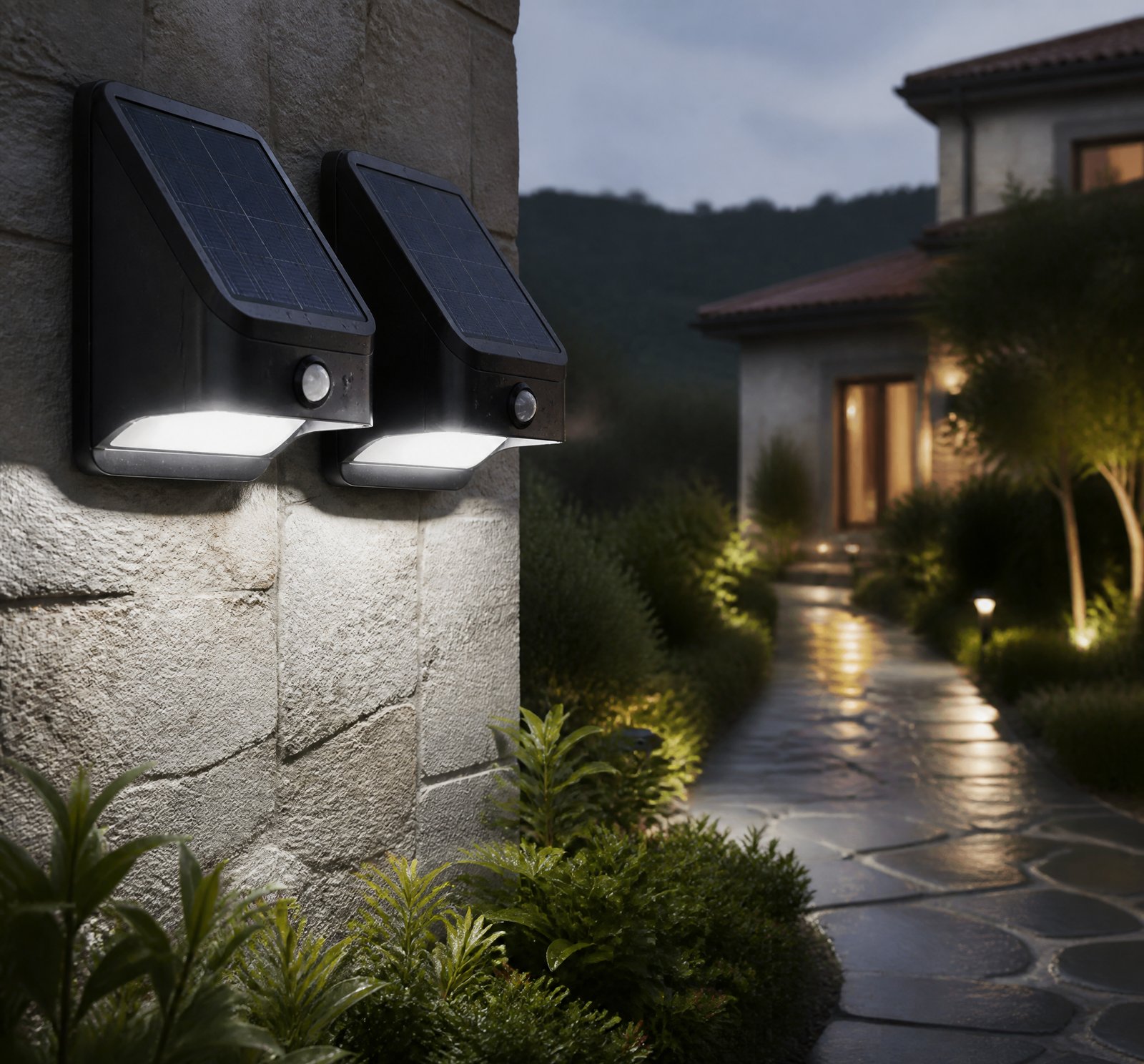
Quick answer: Performanța unei lămpi solare după 3–5 ani depinde mai mult de gestionarea căldurii și de fiabilitatea componentelor secundare (driver, baterie, panou solar) decât de durata de viață a LED-ului în sine, iar scăderea fluxului luminos este un proces lent care poate face o lampă inutilă chiar dacă LED-ul nu s-a defectat [2][3][10][12][16].
În România, oamenii aleg tot mai des lămpi solare pentru iluminat exterioară, fie că e vorba de terase, garaje sau drumuri de acces. Dar ce se întâmplă când, după 3 sau 5 ani, lumina e prea slabă? O mulțime dintr-acestea devin inutilizabile – nu din cauza unui defect brusc, ci din cauza unei degradări lente a luminosității. Acest fenomen, cunoscut ca deprecierea luminoasă (lumen depreciation), este controlat nu doar de LED, ci de întregul sistem: designul termic, calitatea driverului și starea bateriei.
Cum funcționează deprecierea luminoasă în lămpile solare?
LED-urile nu „se ard” repede ca becurile clasice, ci își reduc treptat fluxul luminos în timp – un proces cunoscut sub numele de degradare a luminozității [5]. Industria a adoptat standardul L70, care definește durata de viață ca momentul în care luminozitatea scade la 70% din valoarea inițială [4][5]. Acesta este un punct de referință acceptat, chiar dacă nu există un protocol universal pentru evaluarea duratei de viață a luminarelor LED [2][3][6]. Deși unele surse menționează că LED-urile pot avea o durată de viață de până la 100.000 de ore [1][5], acestea sunt adesea estimări bazate doar pe degradarea fluxului luminos al LED-urilor în sine, nu pe performanța totală a sistemului [2][3]. Astfel, o afirmație de „100.000 de ore” poate fi înșelătoare dacă nu este însoțită de informații despre condițiile de operare [3][23].
De ce gestionarea căldurii este decisivă?
Temperaturile ridicate accelerează degradarea luminozității [3][10][23]. Un LED montat într-un cadru închis, unde căldura se acumulează, poate degrada mult mai repede decât preconizat [23]. Eficiența termică – inclusiv designul de transfer al căldurii și alegerea materialelor – are un impact direct asupra menținerii fluxului luminos în timp [7][8]. De exemplu, o lampă solară așezată într-un spațiu ventilat va avea o degradare mai lentă decât una montată într-o învelitoare închisă [16]. Aceasta înseamnă că, chiar dacă LED-ul are o durată teoretică de 100.000 de ore, o gestionare termică slabă poate face ca acesta să devină inutil după doar câteva mii de ore [23].
Care sunt componentele care determină viața utilă a luminarei?
LED-ul nu este singurul element responsabil. Driverul electric este unul dintre cele mai vulnerabile componente, iar viața sa este sensibilă la temperatură și stresul electric [16]. Deși unii fabricanți promit 50.000 de ore pentru driver, aceasta este o valoare condiționată de condițiile de operare [16]. Bateriile, de asemenea, au o durată limitată: pot începe să se degrada după 1–3 ani [12]. Panourile solare pot pierde eficiență după mai mulți ani de expunere la elemente [12]. Într-o lampă solară bine proiectată, LED-ul nu va fi cel care va determina sfârșitul utilității, ci mai degrabă bateria sau sistemul de gestionare a energiei [12].
Diferența între „funcționare” și „utilitate”
Oare utilizatorul observă scăderea de 30% a luminosității? Studiile arată că majoritatea nu o percep [5]. Acest lucru înseamnă că o lampă poate funcționa încă, dar să nu mai îndeplinească cerințele de iluminare pentru siguranță sau funcționalitate. De aceea, standardul L70 este considerat un punct de referință util, chiar dacă nu este perfect [4][5].
Compararea performanței reale după 3–5 ani
| Caracteristică | Performanță după 3–5 ani (bună) | Performanță după 3–5 ani (proastă) |
|---|---|---|
| Flux luminos | Peste 70% din valoarea inițială [4][5] | Sub 70% din valoarea inițială [2][3] |
| Temperatura internă | Controlată (ex: IP65, izolație termică) | Ridicată (ex: cadru închis, lipsă ventilație) |
| Baterie | LiFePO4, rezistentă la -25 °C [12] | Ni-MH sau baterie slabă, durată scurtă |
| Driver | Cu protecție termică și suprasolicitare [16] | Fără protecție, defect rapid |
| Panou solar | Policristalin, rezistent la UV și umiditate [12] | Plastic slab, degradare rapidă |
Concluzii cheie
- Performanța unei lămpi solare după 3–5 ani depinde mai mult de gestionarea căldurii și de fiabilitatea componentelor secundare decât de durata de viață a LED-ului în sine [2][3][10][12][16].
- Scăderea fluxului luminos este un proces lent care poate face o lampă inutilă chiar dacă LED-ul nu s-a defectat [2][3][10][12][16].
- Un LED cu 100.000 de ore de viață poate deveni inutil după câteva mii de ore dacă este montat într-un cadru cu gestionare termică slabă [23].
- Bateria și panoul solar sunt adesea primele componente care se deteriorează, nu LED-ul [12].
- Alegerea unui model cu izolație termică, carcasa IP65 și baterie LiFePO4 este crucială pentru durabilitatea pe termen lung [12].
Întrebări frecvente
Poate o lampă solară să funcționeze după 5 ani dacă LED-ul are 100.000 de ore de viață?
Da, dar doar dacă sistemul are o gestionare termică bună și componente durabile. Temperaturile ridicate pot reduce durata de viață utilă chiar dacă LED-ul are o durată teoretică de 100.000 de ore [23].
Ce înseamnă standardul L70 în ceea ce privește durata de viață a unei lămpi solare?
Standardul L70 definește durata de viață ca fiind momentul în care fluxul luminos scade la 70% din valoarea inițială [4][5]. Este un punct de referință acceptat în industrie, chiar dacă nu este perfect [4][5].
Care componentă a unei lămpi solare se deteriorează cel mai repede?
Bateria este adesea prima componentă care se degrada, după 1–3 ani [12]. Panourile solare și driverii pot avea durată mai lungă, dar depind de condițiile de operare [12][16].
References
- [1] New IDA LED Lighting Practical Guide DarkSky International — authority
source passage
of potentially harmful blue light. (see below). Relative to other commonly-used outdoor lamps, LEDs are thought to be extremely long-lived. Laboratory studies indicate lifetime ratings in the range of 25,000-100,000 hours of continuous operation, making them virtually maintenance-free. When turned on, LEDs are instantly at full brightness, unlike HID lamps that have a significant time delay. LEDs also have very low minimum energy thresholds to produce light, meaning they can be dimmed to much lower illumination levels when less light is needed, resulting in further energy savings. Product Selection Considerations Choosing LED products for outdoor lighting applications involves a series of considerations and tradeoffs. These include: – Luminous Efficiency (Watts-to-lumens): How many lumens of light are produced per input Watt of electricity? More importantly, how many lumens from the light source are meeting the task (“Fixture Lumens” vs. “Lamp Lumens”) – Lumen Output: How much light is produced relative to the amount required for a particular task? When replacing existing fixtures it is important to use the only level of illumination needed, and not to adopt unneeded increases in brightness. – Correlated Color Temperature (CCT): Does the light have a “warm” or “cool” color quality? – Color Rendering Index (CRI): How accurately does the light render colors to the human eye? A high CRI is not needed for all situations. The need for good color rendition should be considered rela
- [2] LED Life Standards In And Out Of Luminaires – Electronic Design — magazine
source passage
# LED Life Standards In And Out Of Luminaires Source: Blog/Web URL: https://www.electronicdesign.com/technologies/industrial/boards/article/21789940/led-life-standards-in-and-out-of-luminaires Author: Don Tuite Date: 2009-03-26 The U.S. Department of Energy (DoE) notes that LED luminaires and replacement lamps available today often claim long life, usually 50,000 hours, based solely on the estimated lumen depreciation of the LED. But the DoE also says that life claims ought to account for the whole system. The lifetimes of incandescent, fluorescent, and high-intensity discharge lamps are generally estimated through industry standards. Typically, a large, statistically significant sample of lamps is operated until 50% have failed. That point, in terms of operating hours, defines the “rated life” for that lamp. LEDs are different. They usually don’t fail abruptly. Their light output slowly diminishes over time. Moreover, they can have such long lives that life testing and acquiring real application data on long-term reliability becomes problematic—new versions of products are available before current ones can be fully tested. Finally, they’re often integrated permanently into the fixture, making their replacement difficult or impossible. Coupled with that, the light output and useful life of individual LEDs are more influenced by electrical and thermal conditions determined by the luminaire and system design, rather than by native properties of the LEDs themselves. All of that
- [3] How to measure LED lamp life – Electronic Design — magazine
source passage
# How to measure LED lamp life Source: Blog/Web URL: https://www.electronicdesign.com/technologies/components/lighting/lighting-systems/article/21193520/how-to-measure-led-lamp-life Author: Date: 2011-07-22 In fact, LED lumen depreciation quite often doesn't determine the lifetime of a well-made luminaire. The report further says many manufacturers estimate luminaire lifetime using LED lumen maintenance figures, which can give misleading results. This practice can be particularly bad for fixture manufacturers because it impacts whether or not the fixture will last as long as the manufacturer's warranty. "The statement '100,000 hours of LED luminaire lifetime' is gradually giving way to the realization that there is little consistency, very little published data, and few hard facts around so-called luminaire lifetime numbers," says the report. But the situation is better at the LED package level, it says, where reputable manufacturers have thousands of hours of data under varying conditions. All in all, there is still no accepted protocol for measuring and characterizing LED fixture lifetime. One reason is that it can be costly to make such measurements due to the large number of product samples such tests require. "But as we learn more about the behavior of these LED 'systems,' it becomes evident that the life of a fixture may be considerably shorter than what is indicated by nominal light depreciation, albeit still generally longer than many incumbent lighting solutions," th
- [4] LED Lighting in Museums and Art Galleries Technical – Canadaca — authority
source passage
replacement. The convention for defining LED lifetime is 70% of original brightness, abbreviated as L70. The lifespan (L70) of LED lamps is so much longer than all previous lamps (Table 1) that it changes the way one thinks of bulb replacement. Instead of the twice-a-year replacement needed for halogens, LED lamps will need changing just once a decade. Long lamp lifetime offers several advantages to museums, not just the reduction of labour but also the reduction of the risk to collections due to accidents during lamp changes. Lumen output (brightness of LEDs) Initially, white LEDs only came in low lumen (lm) ratings, often as low as 50 lm. For the museum situation of low-intensity lighting at close quarters (such as in display cases), this was a boon. For lighting at a distance from high ceilings, it was a problem. Those who considered LED lamps in 2011 faced problems finding ones with sufficient intensity, not to mention good-quality light. Today, most manufacturers provide reliable advice on which LED lamp to use when replacing a particular size of incandescent lamp. More sophisticated users can rely on the lumen and beam intensity data provided by manufacturers. Why warranties matter To make good LEDs, manufacturers must select phosphors with the right spectrum, arrange the phosphors and the blue (or violet) LEDs so that the correct portion of the LEDs is absorbed by the phosphors, manufacture them in large quantities that are identical and make sure the mix remains stabl
- [5] What Happened To The 100000-Hour LED Bulbs – Hackaday — authority
source passage
in Douglas MacArthur’s famous line, old LEDs don’t die, they just fade away. We all know what an incandescent lamp failure looks like: one second it’s burning bright; the next, it’s not (and every once-in-a-while, you hear a pop followed by a faint jingling as the liberated filament richochets inside the bulb). Power supplies aside, LEDs typically don’t fail with so much fanfare. Instead, they gradually lose brightness as they age. In the lighting industry, this is known as lumen depreciation, and is a separate failure mode from the catastrophic failure we usually think about. As it turns out, lumen depreciation happens to incandescent bulbs, too. By the end of their 1,000 hour life, the output has typically dropped 10-15%, but nobody ever notices. With LEDs, the effect is much worse, and the output continues to fall as the device ages. At some point, the LED is no longer producing enough light to fulfill its original purpose, even though it hasn’t “burned out.” Research says that most users won’t notice a gradual 30% drop in light levels; accordingly the industry has defined L70, the time at which the output has dropped to 70% of its initial level, as an endpoint for measuring LED bulb lifetime. Based on how it’s estimated, this measure is typically stated as B50-L70, the point at which 50% of an initial sample of bulbs will retain 70% of their rated output. Color Shift Happens But is Unpredictable Something else happens as phosphor-based white LEDs age: they change color. T
- [6] DOE Publishes Updated Recommendations for Testing and — authority
source passage
# DOE Publishes Updated Recommendations for Testing and Reporting LED Luminaire Lifetime Source: Blog/Web URL: https://www.led-professional.com/resources-1/led-reports-roadmaps/doe-publishes-updated-recommendations-for-testing-and-reporting-led-luminaire-lifetime Author: Date: 2011-07-21 What for the Guideline is intended: Like the first edition of the guide, this second edition is a set of recommendations for reporting and demonstrating luminaire product lifetime. Initially, we sought to provide guidance for the Lighting Facts® program, which gives users, retailers, and manufacturers a common short-form reporting mechanism to improve the quality of solid-state lighting products on the market. The Lighting Facts label provides a summary of key performance criteria but does not include lifetime, for which there have been numerous requests. Ideally, it would be the addition of a single number, e.g., “eight years.” We attempted, in the first edition, to suggest some descriptions which would better describe lifetime, and it is fair to say that there are fewer wild claims in the marketplace. Yet there is still not an accepted protocol for measuring and characterizing lifetime. In part, this is due to cost, as a fair number of product samples must be tested to get good numbers, but it is also due in some measure to the industry’s early emphasis on lumen depreciation. Until recently, LED products have been described as “different” from conventional technologies—LEDs will just get di
- [7] LED package designs tackle lumen depreciation issues – News — magazine
source passage
# LED package designs tackle lumen depreciation issues – News Source: Blog/Web URL: https://compoundsemiconductor.net/article/81641/LED_package_designs_tackle_lumen_depreciation_issues Author: Date: 2002-02-06 LED package designs tackle lumen depreciation issues LEDs as efficient light sources For most people, the term LED simply refers to the small indicator lights commonly found in electronic equipment, such as radios and remote controls. Although LEDs were first developed in the late 1960s, it took nearly three decades for researchers and developers to produce white light using this technology. During this period, however, the brightness of colored LEDs increased significantly, allowing them to be used in a wider variety of applications. During the latter part of the 1990s, LEDs began to replace incandescent lamps in traffic signals. In this application LEDs have been shown to save over 80% of the energy used compared with their incandescent counterparts. Such large energy savings are realized because the conventional colored signals use optical filters over incandescent lamps. These filters absorb, and thereby waste, a significant portion of the radiant energy generated by the light source. LEDs, on the other hand, emit light in a narrow wavelength band, and they can efficiently produce colored light. As LEDs replaced incandescent lamps in traffic signals, it emerged that they were more than just energy-efficient; in fact some manufacturers claimed that their LEDs would l
- [8] LED package designs tackle lumen depreciation issues – News — magazine
source passage
lumen depreciation issues by properly extracting the heat and by packaging the LEDs in materials that do not degrade over time. Even traditional light sources, such as incandescent, halogen, fluorescent and metal halide lamps exhibit light output degradation over their operating life. Figure 3 shows a comparison of light output variation over time for different white-light sources. The high-power LEDs have very low light output degradation, according to the preliminary data in figure 3. Advances in device construction, light extraction and heat sinking have enabled the development of high-power LEDs that offer improved luminous efficacy and better lumen maintenance. These advances have made white LED technology more feasible for general lighting applications. If the LED industry can sustain these development trends, solid-state lighting could have significant market penetration in the next 5 to 10 years. The future of LEDs in lighting With LED performance improving, solid-state lighting is attracting more attention from the lighting world. The general illumination marketplace is huge, but penetrating that marketplace will require higher value LED products. Manufacturers will have to continue working on longer-lasting white LEDs with higher efficacy, higher luminous flux and improved color properties. The Lighting Research Center is currently identifying the parameters that can be improved to provide quality lighting that is acceptable to human subjects. Illumination using LED
- [10] Lumen-maintenance testing for LED lamps light engines Buildings — authority
source passage
# Lumen-maintenance testing for LED lamps, light engines and luminaires (MAGAZINE) Source: Blog/Web URL: https://www.buildings.com/architecture/interiors/article/55255355/lumen-maintenance-testing-for-led-lamps-light-engines-and-luminaires-magazine Author: Date: 2012-02-02 +++++ This article was published in the February 2012 issue of LEDs Magazine. View the Table of Contents and download the PDF file of the complete February 2012 issue. +++++ It is widely understood that measuring lumen maintenance is critically important for determining the life of LED lighting products. In the past few years, the Illuminating Engineering Society of North America (IESNA) has developed two test methods that address the lumen maintenance of LED light sources used in such products. LM-80 is an approved method for measuring lumen depreciation of LED light sources, and TM-21 is a technical memorandum which specifies how to extrapolate the LM-80 data in order to make long-term lumen-maintenance projections. Beyond the LED, other components at the LED lighting-system level also can impact the long-term lumen maintenance. These components include, but are not limited to, LED lamps, engines, luminaires, drivers, thermal-management devices and optical components. Over time, these components may experience some change or degradation. In particular, the plastic elements used in the optics may change in several ways, including light transmittance, haze and undesired color change. In turn, the overall li
- [12] The Best Solar Path Lights Family Handyman — reddit
source passage
lights do wear out over time, but their lifespan can vary depending on several factors,” Price says. “The batteries in these lights typically last between one to three years. Over time, the battery’s capacity will diminish, leading to shorter illumination periods. Solar panels themselves can also degrade, losing efficiency after several years of exposure to the elements. The materials used in the lights, such as plastics and metals, will also experience wear and tear due to weather conditions like UV exposure, rain, and temperature changes.” Price also notes that the LEDs used in solar lights tend to “have a long lifespan, often up to 50,000 hours, so they are unlikely to be the first component to fail. Regular maintenance, such as cleaning the solar panels and checking the battery connections, can help prolong the life of your solar path lights.” How long do solar path lights last? Solar path lights span two to five years, depending on the materials they’re crafted from. The update of the lighted also dictates their longevity. What is the downside of solar path lights? The only downside to solar-powered lights is that when seasons begin to change, and darkness sets in earlier, the lights can lose their charge, which normally lasts for eight to twelve hours. Once the weather changes, the light’s performance can also change temporarily. Also, don’t forget to check out these awesome solar fence lights and solar lights for camping.
- [16] Article LED Driver Lifetime Economic and Environmental Issue — authority
source passage
the maximum rated power output of the driver, the fixture manufacturer reduces the electrical and thermal stress on the driver – Fixture Position: The simple measure of mounting the fixture in shade rather than in direct sunlight reduces its operating temperature and extends its lifetime What this means is that the lifetime rating in the LED driver’s datasheet and the fixture’s compliance with the DLC 50,000 hours requirement are not a definitive guarantee of the lifetime of the luminaire. Rather, they are a scientifically tested data point which allows the user to calculate an exact estimate of the lifetime of the luminaire when used in the conditions specific to their application. How to Evaluate Competing LED Drivers for Lifetime Value The 50,000 hour lifetime rating, then, is one important indicator of a driver’s reliability. If all reputable drivers offer a 50,000 hour rating, how can you compare the reliability of competing drivers? As stated above, take note of the case temperature qualifier to the 50,000 hour statement. The higher the case temperature, the longer the driver’s lifetime under any given operating conditions. Evaluation can also take account of other standard measures of reliability. Some drivers’ datasheets will display a Telcordia lifetime rating, a calculated measure derived from analysis of all the components inside a system. Prospective buyers can also learn from the lived experience of users. We pride ourselves on providing reliable LED drivers in t
- [23] LED package designs tackle lumen depreciation issues – News — magazine
source passage
et al. 2000 and 2001a). Yet, despite this information, as well as numerous articles which have shown that 5 mm white LEDs degrade very rapidly, many manufacturers continue to claim that they will last 100,000 hours. Another recent publication showed that even the different colored 5 mm LEDs do not degrade the same way over time (Narendran et al. 2001b). These LEDs were tested in a temperature-controlled room, and they were mounted on printed circuit boards as shown in figure 1. The light output degradation of LEDs with different colors is shown in figure 2. The light output of the red LEDs depreciated at a much slower rate than that of the white LEDs, while green and blue LEDs degraded at an intermediate rate. LEDs packaged inside an enclosed fixture, where the ambient temperature is higher than in the temperature-controlled study, will experience higher degradation rates. Therefore, the claim of 100,000 hours life for LED fixtures that use housed arrays of 5 mm LEDs, white or colored, is deceiving. The LEDs may indeed last 100,000 hours, but their light output may not be sufficient for the fixture s intended application. A useful life of 5000 hours may be more appropriate for the 5 mm LED fixtures. Newer LED packages Standard 5 mm LED packages were originally designed for use in indicator applications, but their design does not allow for sufficient heat transfer from the LED chip to keep it cool during operation. As the temperature of the chip increases, the device degrades
of potentially harmful blue light. (see below). Relative to other commonly-used outdoor lamps, LEDs are thought to be extremely long-lived. Laboratory studies indicate lifetime ratings in the range of 25,000-100,000 hours of continuous operation, making them virtually maintenance-free. When turned on, LEDs are instantly at full brightness, unlike HID lamps that have a significant time delay. LEDs also have very low minimum energy thresholds to produce light, meaning they can be dimmed to much lower illumination levels when less light is needed, resulting in further energy savings. Product Selection Considerations Choosing LED products for outdoor lighting applications involves a series of considerations and tradeoffs. These include: – Luminous Efficiency (Watts-to-lumens): How many lumens of light are produced per input Watt of electricity? More importantly, how many lumens from the light source are meeting the task (“Fixture Lumens” vs. “Lamp Lumens”) – Lumen Output: How much light is produced relative to the amount required for a particular task? When replacing existing fixtures it is important to use the only level of illumination needed, and not to adopt unneeded increases in brightness. – Correlated Color Temperature (CCT): Does the light have a “warm” or “cool” color quality? – Color Rendering Index (CRI): How accurately does the light render colors to the human eye? A high CRI is not needed for all situations. The need for good color rendition should be considered rela
# LED Life Standards In And Out Of Luminaires Source: Blog/Web URL: https://www.electronicdesign.com/technologies/industrial/boards/article/21789940/led-life-standards-in-and-out-of-luminaires Author: Don Tuite Date: 2009-03-26 The U.S. Department of Energy (DoE) notes that LED luminaires and replacement lamps available today often claim long life, usually 50,000 hours, based solely on the estimated lumen depreciation of the LED. But the DoE also says that life claims ought to account for the whole system. The lifetimes of incandescent, fluorescent, and high-intensity discharge lamps are generally estimated through industry standards. Typically, a large, statistically significant sample of lamps is operated until 50% have failed. That point, in terms of operating hours, defines the “rated life” for that lamp. LEDs are different. They usually don’t fail abruptly. Their light output slowly diminishes over time. Moreover, they can have such long lives that life testing and acquiring real application data on long-term reliability becomes problematic—new versions of products are available before current ones can be fully tested. Finally, they’re often integrated permanently into the fixture, making their replacement difficult or impossible. Coupled with that, the light output and useful life of individual LEDs are more influenced by electrical and thermal conditions determined by the luminaire and system design, rather than by native properties of the LEDs themselves. All of that
# How to measure LED lamp life Source: Blog/Web URL: https://www.electronicdesign.com/technologies/components/lighting/lighting-systems/article/21193520/how-to-measure-led-lamp-life Author: Date: 2011-07-22 In fact, LED lumen depreciation quite often doesn't determine the lifetime of a well-made luminaire. The report further says many manufacturers estimate luminaire lifetime using LED lumen maintenance figures, which can give misleading results. This practice can be particularly bad for fixture manufacturers because it impacts whether or not the fixture will last as long as the manufacturer's warranty. "The statement '100,000 hours of LED luminaire lifetime' is gradually giving way to the realization that there is little consistency, very little published data, and few hard facts around so-called luminaire lifetime numbers," says the report. But the situation is better at the LED package level, it says, where reputable manufacturers have thousands of hours of data under varying conditions. All in all, there is still no accepted protocol for measuring and characterizing LED fixture lifetime. One reason is that it can be costly to make such measurements due to the large number of product samples such tests require. "But as we learn more about the behavior of these LED 'systems,' it becomes evident that the life of a fixture may be considerably shorter than what is indicated by nominal light depreciation, albeit still generally longer than many incumbent lighting solutions," th
replacement. The convention for defining LED lifetime is 70% of original brightness, abbreviated as L70. The lifespan (L70) of LED lamps is so much longer than all previous lamps (Table 1) that it changes the way one thinks of bulb replacement. Instead of the twice-a-year replacement needed for halogens, LED lamps will need changing just once a decade. Long lamp lifetime offers several advantages to museums, not just the reduction of labour but also the reduction of the risk to collections due to accidents during lamp changes. Lumen output (brightness of LEDs) Initially, white LEDs only came in low lumen (lm) ratings, often as low as 50 lm. For the museum situation of low-intensity lighting at close quarters (such as in display cases), this was a boon. For lighting at a distance from high ceilings, it was a problem. Those who considered LED lamps in 2011 faced problems finding ones with sufficient intensity, not to mention good-quality light. Today, most manufacturers provide reliable advice on which LED lamp to use when replacing a particular size of incandescent lamp. More sophisticated users can rely on the lumen and beam intensity data provided by manufacturers. Why warranties matter To make good LEDs, manufacturers must select phosphors with the right spectrum, arrange the phosphors and the blue (or violet) LEDs so that the correct portion of the LEDs is absorbed by the phosphors, manufacture them in large quantities that are identical and make sure the mix remains stabl
in Douglas MacArthur’s famous line, old LEDs don’t die, they just fade away. We all know what an incandescent lamp failure looks like: one second it’s burning bright; the next, it’s not (and every once-in-a-while, you hear a pop followed by a faint jingling as the liberated filament richochets inside the bulb). Power supplies aside, LEDs typically don’t fail with so much fanfare. Instead, they gradually lose brightness as they age. In the lighting industry, this is known as lumen depreciation, and is a separate failure mode from the catastrophic failure we usually think about. As it turns out, lumen depreciation happens to incandescent bulbs, too. By the end of their 1,000 hour life, the output has typically dropped 10-15%, but nobody ever notices. With LEDs, the effect is much worse, and the output continues to fall as the device ages. At some point, the LED is no longer producing enough light to fulfill its original purpose, even though it hasn’t “burned out.” Research says that most users won’t notice a gradual 30% drop in light levels; accordingly the industry has defined L70, the time at which the output has dropped to 70% of its initial level, as an endpoint for measuring LED bulb lifetime. Based on how it’s estimated, this measure is typically stated as B50-L70, the point at which 50% of an initial sample of bulbs will retain 70% of their rated output. Color Shift Happens But is Unpredictable Something else happens as phosphor-based white LEDs age: they change color. T
# DOE Publishes Updated Recommendations for Testing and Reporting LED Luminaire Lifetime Source: Blog/Web URL: https://www.led-professional.com/resources-1/led-reports-roadmaps/doe-publishes-updated-recommendations-for-testing-and-reporting-led-luminaire-lifetime Author: Date: 2011-07-21 What for the Guideline is intended: Like the first edition of the guide, this second edition is a set of recommendations for reporting and demonstrating luminaire product lifetime. Initially, we sought to provide guidance for the Lighting Facts® program, which gives users, retailers, and manufacturers a common short-form reporting mechanism to improve the quality of solid-state lighting products on the market. The Lighting Facts label provides a summary of key performance criteria but does not include lifetime, for which there have been numerous requests. Ideally, it would be the addition of a single number, e.g., “eight years.” We attempted, in the first edition, to suggest some descriptions which would better describe lifetime, and it is fair to say that there are fewer wild claims in the marketplace. Yet there is still not an accepted protocol for measuring and characterizing lifetime. In part, this is due to cost, as a fair number of product samples must be tested to get good numbers, but it is also due in some measure to the industry’s early emphasis on lumen depreciation. Until recently, LED products have been described as “different” from conventional technologies—LEDs will just get di
# LED package designs tackle lumen depreciation issues – News Source: Blog/Web URL: https://compoundsemiconductor.net/article/81641/LED_package_designs_tackle_lumen_depreciation_issues Author: Date: 2002-02-06 LED package designs tackle lumen depreciation issues LEDs as efficient light sources For most people, the term LED simply refers to the small indicator lights commonly found in electronic equipment, such as radios and remote controls. Although LEDs were first developed in the late 1960s, it took nearly three decades for researchers and developers to produce white light using this technology. During this period, however, the brightness of colored LEDs increased significantly, allowing them to be used in a wider variety of applications. During the latter part of the 1990s, LEDs began to replace incandescent lamps in traffic signals. In this application LEDs have been shown to save over 80% of the energy used compared with their incandescent counterparts. Such large energy savings are realized because the conventional colored signals use optical filters over incandescent lamps. These filters absorb, and thereby waste, a significant portion of the radiant energy generated by the light source. LEDs, on the other hand, emit light in a narrow wavelength band, and they can efficiently produce colored light. As LEDs replaced incandescent lamps in traffic signals, it emerged that they were more than just energy-efficient; in fact some manufacturers claimed that their LEDs would l
lumen depreciation issues by properly extracting the heat and by packaging the LEDs in materials that do not degrade over time. Even traditional light sources, such as incandescent, halogen, fluorescent and metal halide lamps exhibit light output degradation over their operating life. Figure 3 shows a comparison of light output variation over time for different white-light sources. The high-power LEDs have very low light output degradation, according to the preliminary data in figure 3. Advances in device construction, light extraction and heat sinking have enabled the development of high-power LEDs that offer improved luminous efficacy and better lumen maintenance. These advances have made white LED technology more feasible for general lighting applications. If the LED industry can sustain these development trends, solid-state lighting could have significant market penetration in the next 5 to 10 years. The future of LEDs in lighting With LED performance improving, solid-state lighting is attracting more attention from the lighting world. The general illumination marketplace is huge, but penetrating that marketplace will require higher value LED products. Manufacturers will have to continue working on longer-lasting white LEDs with higher efficacy, higher luminous flux and improved color properties. The Lighting Research Center is currently identifying the parameters that can be improved to provide quality lighting that is acceptable to human subjects. Illumination using LED
# Lumen-maintenance testing for LED lamps, light engines and luminaires (MAGAZINE) Source: Blog/Web URL: https://www.buildings.com/architecture/interiors/article/55255355/lumen-maintenance-testing-for-led-lamps-light-engines-and-luminaires-magazine Author: Date: 2012-02-02 +++++ This article was published in the February 2012 issue of LEDs Magazine. View the Table of Contents and download the PDF file of the complete February 2012 issue. +++++ It is widely understood that measuring lumen maintenance is critically important for determining the life of LED lighting products. In the past few years, the Illuminating Engineering Society of North America (IESNA) has developed two test methods that address the lumen maintenance of LED light sources used in such products. LM-80 is an approved method for measuring lumen depreciation of LED light sources, and TM-21 is a technical memorandum which specifies how to extrapolate the LM-80 data in order to make long-term lumen-maintenance projections. Beyond the LED, other components at the LED lighting-system level also can impact the long-term lumen maintenance. These components include, but are not limited to, LED lamps, engines, luminaires, drivers, thermal-management devices and optical components. Over time, these components may experience some change or degradation. In particular, the plastic elements used in the optics may change in several ways, including light transmittance, haze and undesired color change. In turn, the overall li
lights do wear out over time, but their lifespan can vary depending on several factors,” Price says. “The batteries in these lights typically last between one to three years. Over time, the battery’s capacity will diminish, leading to shorter illumination periods. Solar panels themselves can also degrade, losing efficiency after several years of exposure to the elements. The materials used in the lights, such as plastics and metals, will also experience wear and tear due to weather conditions like UV exposure, rain, and temperature changes.” Price also notes that the LEDs used in solar lights tend to “have a long lifespan, often up to 50,000 hours, so they are unlikely to be the first component to fail. Regular maintenance, such as cleaning the solar panels and checking the battery connections, can help prolong the life of your solar path lights.” How long do solar path lights last? Solar path lights span two to five years, depending on the materials they’re crafted from. The update of the lighted also dictates their longevity. What is the downside of solar path lights? The only downside to solar-powered lights is that when seasons begin to change, and darkness sets in earlier, the lights can lose their charge, which normally lasts for eight to twelve hours. Once the weather changes, the light’s performance can also change temporarily. Also, don’t forget to check out these awesome solar fence lights and solar lights for camping.
the maximum rated power output of the driver, the fixture manufacturer reduces the electrical and thermal stress on the driver – Fixture Position: The simple measure of mounting the fixture in shade rather than in direct sunlight reduces its operating temperature and extends its lifetime What this means is that the lifetime rating in the LED driver’s datasheet and the fixture’s compliance with the DLC 50,000 hours requirement are not a definitive guarantee of the lifetime of the luminaire. Rather, they are a scientifically tested data point which allows the user to calculate an exact estimate of the lifetime of the luminaire when used in the conditions specific to their application. How to Evaluate Competing LED Drivers for Lifetime Value The 50,000 hour lifetime rating, then, is one important indicator of a driver’s reliability. If all reputable drivers offer a 50,000 hour rating, how can you compare the reliability of competing drivers? As stated above, take note of the case temperature qualifier to the 50,000 hour statement. The higher the case temperature, the longer the driver’s lifetime under any given operating conditions. Evaluation can also take account of other standard measures of reliability. Some drivers’ datasheets will display a Telcordia lifetime rating, a calculated measure derived from analysis of all the components inside a system. Prospective buyers can also learn from the lived experience of users. We pride ourselves on providing reliable LED drivers in t
et al. 2000 and 2001a). Yet, despite this information, as well as numerous articles which have shown that 5 mm white LEDs degrade very rapidly, many manufacturers continue to claim that they will last 100,000 hours. Another recent publication showed that even the different colored 5 mm LEDs do not degrade the same way over time (Narendran et al. 2001b). These LEDs were tested in a temperature-controlled room, and they were mounted on printed circuit boards as shown in figure 1. The light output degradation of LEDs with different colors is shown in figure 2. The light output of the red LEDs depreciated at a much slower rate than that of the white LEDs, while green and blue LEDs degraded at an intermediate rate. LEDs packaged inside an enclosed fixture, where the ambient temperature is higher than in the temperature-controlled study, will experience higher degradation rates. Therefore, the claim of 100,000 hours life for LED fixtures that use housed arrays of 5 mm LEDs, white or colored, is deceiving. The LEDs may indeed last 100,000 hours, but their light output may not be sufficient for the fixture s intended application. A useful life of 5000 hours may be more appropriate for the 5 mm LED fixtures. Newer LED packages Standard 5 mm LED packages were originally designed for use in indicator applications, but their design does not allow for sufficient heat transfer from the LED chip to keep it cool during operation. As the temperature of the chip increases, the device degrades