
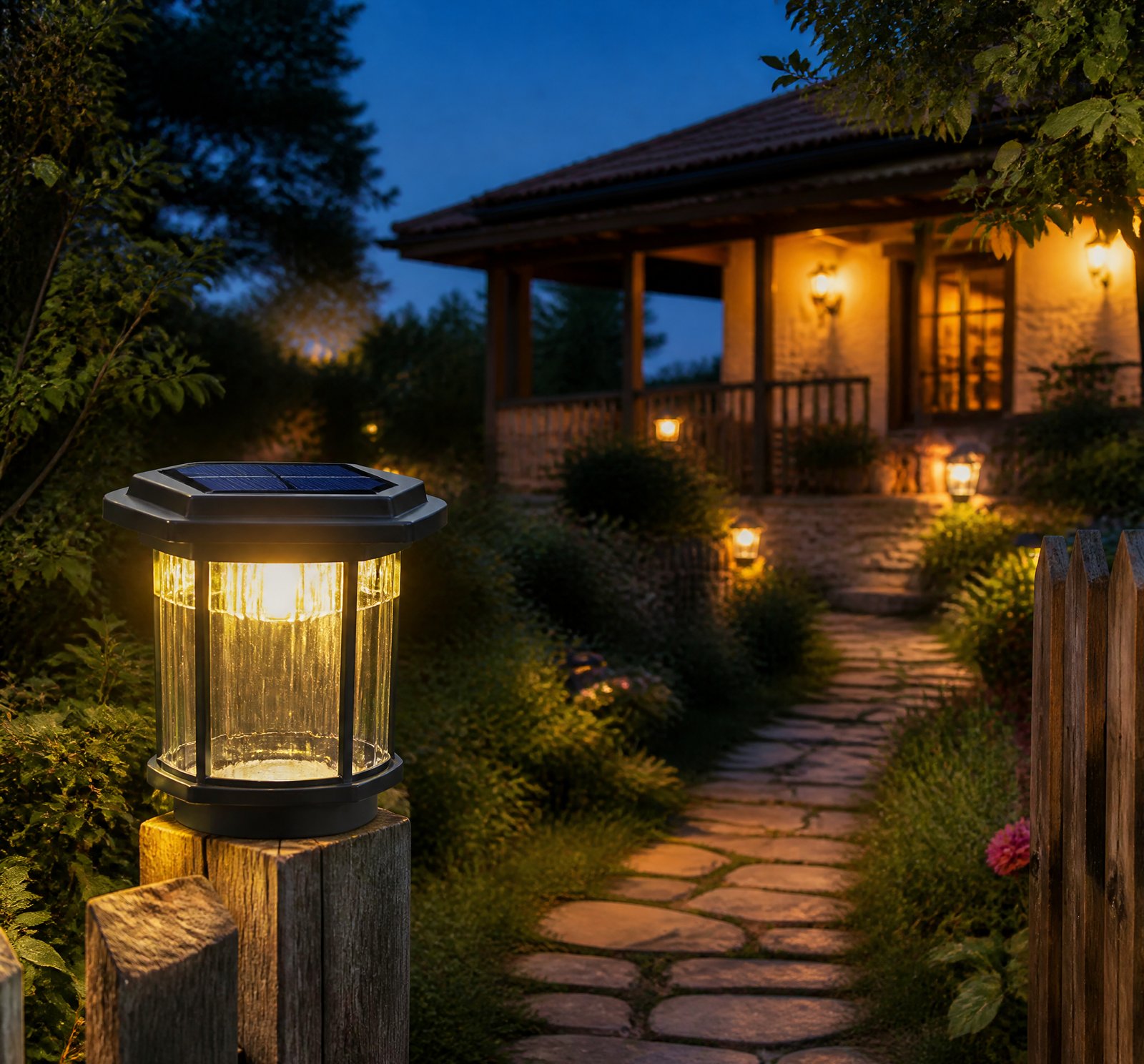
> Quick answer: A 6500K cool-white light resembles midday daylight [5], enhancing alertness but increasing glare. For Romanian courtyards, a warmer CCT (2700–3000K) is preferable for comfort and reduced light pollution [2][3][13][23][24].
A 6500K cool-white color temperature mimics the bluish hue of midday sunlight, offering increased alertness but posing challenges in terms of glare. This article delves into the implications of such a high CCT for visibility and comfort, particularly in Romanian courtyards where warmer lighting is often preferred.
What Does 6500K Cool-White Mean?
A 6500K cool-white color temperature corresponds to a bluish-white light, closely resembling daylight at midday [5]. This spectral composition features more blue light and less red and yellow wavelengths compared to lower CCTs [5][14]. Higher CCTs like 6500K are associated with increased visual acuity and alertness due to the stimulating effect of blue-rich light on the circadian system [13].
Perceived Brightness Under 6500K Light
Higher CCTs, including 6500K, do not necessarily equate to greater perceived brightness in all contexts. Human perception of luminance is influenced by both spectral power distribution and ambient conditions [13]. Although higher CCTs are linked to heightened alertness and improved visual performance for tasks requiring focus, objective brightness comparisons at the same luminous flux remain unspecified [13].
Visibility Under 6500K Lighting
Visibility under 6500K lighting is enhanced for tasks involving fine detail or color discrimination due to the spectral output closely matching the photopic response of the human eye [18]. However, this does not guarantee superior visibility in all conditions. While some studies suggest that cooler CCTs improve material perception, such as in museum settings, specific confirmation for 6500K is lacking [22].
Glare Concerns with 6500K Lighting
Glare is a significant concern with 6500K lighting due to its high blue content. Blue light scatters more within the eye and atmosphere, increasing veiling luminance and reducing contrast perception [23][24]. This is particularly problematic in outdoor settings where light spills into the sky or adjacent areas, contributing to light pollution and reduced visibility of celestial objects [23][24].
Why Warm CCT (2700–3000K) Is Preferable for Romanian Courtyards
Psychological Comfort and Relaxation
Warm white light (around 2700–3000K) is associated with relaxation and comfort, making it suitable for residential outdoor spaces like courtyards where people gather or unwind [13][17]. Since courtyard lighting is typically not very bright (likely below 100 lux), warm CCTs are more likely to be perceived as pleasing [3].
Reduced Light Pollution
Warm CCTs reduce the risk of light pollution and its ecological impacts. High blue content in 6500K lighting contributes to skyglow, disrupts nocturnal ecosystems, and reduces star visibility [23][24]. In contrast, lower CCTs emit less blue light and are less disruptive to circadian rhythms and wildlife.
Aesthetic Appeal
Warm light enhances the appearance of human skin tones and creates a more inviting atmosphere, ideal for private outdoor spaces. Cool white light can make surfaces appear harsh or unnatural, which is not suitable for illuminating traditional Romanian courtyard materials like stone, wood, and plants [22].
Comparison Table: 6500K vs Warm White (2700–3000K) Lighting
| Feature | 6500K Cool-White | 2700–3000K Warm White |
|––––––|–––––––––––|–––––––––––-|
| Color Hue | Bluish | Warm, Yellowish |
| Alertness | High | Moderate |
| Glare Potential | High | Low |
| Light Pollution | High | Low |
| Visual Comfort | Variable | Consistent |
Key Takeaways
- Perceived Brightness: Higher CCTs like 6500K do not necessarily appear brighter but enhance alertness and visual acuity [13].
- Visibility: Visibility is enhanced under cooler lighting for fine detail tasks, but it can vary based on conditions [18][22].
- Glare Concerns: High blue content in 6500K increases glare potential and light pollution [23][24].
Frequently Asked Questions
[{„q”: „How does the color temperature affect visual comfort?”, „a”: „Higher CCTs like 6500K increase alertness but can cause discomfort due to high glare. Warm CCTs (2700–3000K) are more comfortable and reduce light pollution [13][23][24].”}, {„q”: „What are the environmental impacts of using cool-white lighting?”, „a”: „Cool white lighting with high blue content contributes significantly to light pollution, disrupting nocturnal ecosystems and reducing star visibility [23][24].”}, {„q”: „Why is warm CCT preferred for residential outdoor spaces?”, „a”: „Warm CCTs (2700–3000K) enhance relaxation, reduce glare, and improve aesthetic appeal for traditional Romanian courtyard materials [13][22][24].” }]
References
- [2] Human-Focused_Outdoor_Illumination_Trade-Off_Between_Pleasing__d9d16d41 — authority
source passage
# Human-Focused Outdoor Illumination: Trade-Off Between Pleasing Color and Circadian Action, by the Vilnius University Source: Blog/Web URL: https://www.led-professional.com/resources-1/articles/human-focused-outdoor-illumination-trade-off-between-pleasing-color-and-circadian-action Author: Date: 2016-05-17 The correlated color temperature (CCT) of a light source is defined as the temperature of an ideal black-body radiator that radiates light of the same hue as the light source under test. The light within the range of 2,500 to 10,000 K is usually treated as “white” with warm yellowish and cool bluish hues at the low and high ends of the CCT range, respectively. Until the era of solid-state lighting, the available colour temperatures were limited to a finite number of choices due to the technological limitations of incandescent, fluorescent and discharge lamp technology. In 1941 A. A. Kruithof, the researcher of Philips Labs, raised the hypothesis that humans prefer light of different CCT under certain conditions of illuminance [1]. Despite the incomplete experimental data, the key point of the Kruithof hypothesis is the existence of the regions of illuminance levels and colour temperatures that are perceived by an observer as “pleasing” (Figure 1). According to this work the “pleasing” lighting conditions are achieved within the narrow area between the red and blue curves in figure 1, while the upper and lower areas are perceived as unpleasantly yellowish and bluish, respec
- [3] LED_Lighting_in_Museums_and_Art_Galleries_Technical_-_Canadaca__7f9b6307 — authority
source passage
simply the temperature of the filament, about 2800 K for traditional incandescent lamps and 3000 K for quartz halogen lamps. The sun radiates at about 5900 K, but daylight varies from 3000 K to 10,000 K, depending on the time of day and cloud cover. Our visual system evolved to accommodate this wide range of colour temperatures and to still see the colours of the world as constant, more or less. The question of which CCT is best for museum lighting, and how much it matters, is complicated. With the advent of fluorescent lamps in the 1950s, manufacturers were no longer restricted by the maximum temperature of an incandescent filament; they could simulate daylight and every other CCT in between it and an incandescent filament. Since then, advice has relied on a graph known as the Kruithof curve. It indicated that people preferred warm light (2800 to 3000 K) when illumination was at the low levels of museums (50 to 200 lux). This was a convenient conclusion for museums since incandescent (2800 K) and quartz halogen (3000 K) lamps operated in this range. The majority of LED lamps still cater to these two traditional temperatures (Figure 3), but since LEDs can be made at any CCT, the question of what is best for museums is once again under examination. Boyce and Cuttle (1990) studied “pleasantness” of the space and the ability to discriminate colours, and they found no significant relation to CCT. A recent literature review simply concluded that the Kruithof diagram had been misun
- [5] Architectural_lighting_design_-_Wikipedia__f8fb0fee — wikipedia
source passage
intended.[35] They will also be able to determine the contrast ratio between light and dark areas. In many cases these studies are referenced against IESNA or CIBSE recommended lighting practices for the type of application. Depending on the type of area, different design aspects may be emphasized for safety or practicality (i.e. such as maintaining uniform light levels, avoiding glare or highlighting certain areas). A specialized lighting design application is often used to create these, which typically combine the use of two-dimensional digital CAD drawings and lighting simulation software. Color temperature for white light sources also affects their use for certain applications. The color temperature of a white light source is the temperature in kelvin of a theoretical black body emitter that most closely matches the spectral characteristics of the lamp. Incandescent light bulbs have a color temperature around 2700 to 3000 kelvin; daylight is around 6500 kelvin. Lower color temperature lamps have relatively more energy in the yellow and red part of the visible spectrum, while high color temperatures correspond to lamps with more of a blue-white appearance. For critical inspection or color matching tasks, or for retail displays of food and clothing, the color temperature of the lamps will be selected for the best overall lighting effect. Color may also be used for functional reasons. For example, blue light makes it difficult to see veins and thus may be used to discourage
- [13] Light-Emitting_Diodes_LEDs_-_Berkeley_Lab_EHS__86f5e17f — authority
source passage
to greater exposure to blue/short-wavelength light. Higher correlated color temperature (CCT) (“cool” light) is thought to increase alertness, whereas lower CCT (“warm” light) is expected to induce relaxation/calmness. The CCTs of early LEDs were 6,000 K or higher and were not well accepted by the public because the bluish-white light was described as harsh, with poor color rendering. A warmer CCT of approximately 3,000–4,000 K is more acceptable. For comparison, consider that the CCT of clear daylight is in the range of 6,000–7,000 K, while on a cloudy day, it is in the range of 4,000–5,000 K, and the CCTs of incandescent lamps are around 2,700 K. Exposure Assessment and Limits As mentioned above, LEDs are regulated by the lamps standard (IEC/EN 62471, Photobiological Safety of Lamps and Lamp Systems). The standard provides the methods for the classification of lamps into one of four risk groups (RGs), RG0, RG1, RG2, and RG3, which are based on established exposure limits. If a lamp is classified as RG0 (also known as “exempt”), no risk is associated with exposure to it. The risk from exposure to lamps in risk groups above RG0 increases gradually to RG3. The focus of a safety assessment is RG3, which is high risk. Typically, the manufacturer labels LED lamps according to their risk group. LEDs have a spectral bandwidth much greater than that of lasers, and because they are not “point sources,” they should be treated as incoherent optical sources. For broadband incoherent sou
- [14] US7178941B2_-_Lighting_methods_and_systems_-_Google_Patents__3273f439 — patent
source passage
different wavelength components and/or bandwidths. It also should be appreciated that the term “color” may be used in connection with both white and non-white light. The term “color temperature” generally is used herein in connection with white light, although this usage is not intended to limit the scope of this term. Color temperature essentially refers to a particular color content or shade (e.g., reddish, bluish) of white light. The color temperature of a given radiation sample conventionally is characterized according to the temperature in degrees Kelvin (K) of a black body radiator that radiates essentially the same spectrum as the radiation sample in question. The color temperature of white light generally falls within a range of from approximately 700 degrees K (generally considered the first visible to the human eye) to over 10,000 degrees K. Lower color temperatures generally indicate white light having a more significant red component or a “warmer feel,” while higher color temperatures generally indicate white light having a more significant blue component or a “cooler feel.” By way of example, a wood burning fire has a color temperature of approximately 1,800 degrees K, a conventional incandescent bulb has a color temperature of approximately 2848 degrees K, early morning daylight has a color temperature of approximately 3,000 degrees K, and overcast midday skies have a color temperature of approximately 10,000 degrees K. A color image viewed under white light hav
- [17] Architectural_lighting_design_-_Wikipedia__f8fb0fee — wikipedia
source passage
is conventionally stated in the SI unit of absolute temperature, the kelvin, having the unit symbol K. For lighting building interiors, it is often important to take into account the color temperature of illumination. For example, a warmer (i.e. lower color temperature) light is often used in public areas to promote relaxation, while a cooler (higher color temperature) light is used to enhance concentration in offices.[39] CCT dimming for LED technology is regarded as a difficult task, since binning, age and temperature drift effects of LEDs change the actual color value output. Here feedback loop systems can be used for example with color sensors, to actively monitor and control the color output of multiple color mixing LEDs.[40] The color temperature of the electromagnetic radiation emitted from an ideal black body is defined as its surface temperature in Kelvin, or alternatively in mireds (micro-reciprocal kelvin).[41] This permits the definition of a standard by which light sources are compared. For simple installations, hand-calculations based on tabular data can be used to provide an acceptable lighting design. More critical or optimized designs now routinely use mathematical modeling on a computer. Based on the positions and mounting heights of the fixtures, and their photometric characteristics, the proposed lighting layout can be checked for uniformity and quantity of illumination. For larger projects or those with irregular floor plans, lighting design software can
- [18] US20080252197A1_-_Color_temperature_tunable_white_light__014d4a4c — patent
source passage
which appears to the eye as being white in color. The CCT of a white LED is determined by the phosphor composition incorporated in the LED. – It is predicted that white LEDs could potentially replace incandescent, fluorescent and neon light sources due to their long operating lifetimes, potentially many 100,000 of hours, and their high efficiency in terms of low power consumption. Recently high brightness white LEDs have been used to replace conventional white fluorescent, mercury vapor lamps and neon lights. Like other lighting sources the CCT of a white LED is fixed and is determined by the phosphor composition used to fabricate the LED. – U.S. Pat. No. 7,014,336 discloses systems and methods of generating high-quality white light, that is white light having a substantially continuous spectrum within the photopic response (spectral transfer function) of the human eye. Since the eye's photopic response gives a measure of the limits of what the eye can see this sets boundaries on high-quality white light having a wavelength range 400 nm (ultraviolet) to 700 nm (infrared). One system for creating white light comprises three hundred LEDs each of which has a narrow spectral width and a maximum spectral peak spanning a predetermined portion of the 400 to 700 nm wavelength range. By selectively controlling the intensity of each of the LEDs the color temperature (and also color) can be controlled. A further lighting fixture comprises nine LEDs having a spectral width of 25 nm space
- [22] LED_Lighting_in_Museums_and_Art_Galleries_Technical_-_Canadaca__7f9b6307 — authority
source passage
colours “correctly” in such lighting. The answer to the question of which CCT is best for low-level museum lighting has shifted from “only warm light is successful” to “warm light is pleasant but cooler light (5000 K) may be better for seeing some objects.” Museums have other considerations besides allowing for paintings to be viewed in a neutral space. In historic buildings, especially for decorative arts, one may want to replicate the warm light of historic lighting. Most people prefer the appearance of human skin tones in warm light. In conclusion, our current best advice is to test lamps with various colour temperatures in situ and to select the one that you and your colleagues prefer for the type of objects on display. The only fixed advice is to be consistent within each space. Our ability to adapt to a wide range of colour temperatures and see them all as white relies on visual adaptation, which takes many minutes to occur. Select only lamps of good or excellent colour rendering. Currently, the largest selection of good and excellent lamps occurs near 3000 K (yellow squares in Figure 3), and until manufacturers respond to the new evidence supporting higher CCT, 3000 K remains a very successful general-purpose choice for museums that do not wish to face a complex selection process. Historically accurate lighting, artists’ intent, fluorescent paints and optical brighteners Long before LED lamps, the issue arose of how to light artworks made by artists under their own pre
- [23] Protect_the_Night_Sky_and_Enable_Comfortable_Safe_Lighting__699e86b0 — authority
source passage
# Protect the Night Sky and Enable Comfortable & Safe Lighting Environments with Nichia's 1800K Warm White LEDs Source: Blog/Web URL: https://led-ld.nichia.co.jp/cn/blog/m000028.html Author: Date: 2026-05-20 20 May 2026 Protect the Night Sky and Enable Comfortable & Safe Lighting Environments with Nichia's 1800K Warm White LEDs The transition to LED outdoor lighting is progressing worldwide due to benefits such as energy efficiency and long life. However, at the same time, new challenges have begun to attract growing attention; these are commonly referred to as light pollution, which includes glare from bluish light, impacts on ecosystems, and the increasing brightness of the night sky. In particular, outdoor lighting that is brighter than necessary at night and contains a high proportion of blue light has been pointed out as potentially affecting both human visual comfort and the natural environment. As part of Nichia's sustainabLED™ initiative, this post will introduce LEDs designed to help mitigate light pollution and contribute to spaces that are environmentally friendly and more comfortable. What is Light Pollution? Light pollution refers to the phenomenon in which artificial light, such as outdoor lighting, has undesirable effects on the nighttime environment. Major impacts include the following: – Brightening of the night sky, making stars harder to see – Reduced visibility and comfort due to glare – Negative effects on wildlife and plant life Particularly, high correl
- [24] Protect_the_Night_Sky_and_Enable_Comfortable_Safe_Lighting__000cd223 — authority
source passage
# Protect the Night Sky and Enable Comfortable & Safe Lighting Environments with Nichia's 1800K Warm White LEDs Source: Blog/Web URL: https://led-ld.nichia.co.jp/en/blog/m000028.html Author: Date: 2026-05-20 20 May 2026 Protect the Night Sky and Enable Comfortable & Safe Lighting Environments with Nichia's 1800K Warm White LEDs The transition to LED outdoor lighting is progressing worldwide due to benefits such as energy efficiency and long life. However, at the same time, new challenges have begun to attract growing attention; these are commonly referred to as light pollution, which includes glare from bluish light, impacts on ecosystems, and the increasing brightness of the night sky. In particular, outdoor lighting that is brighter than necessary at night and contains a high proportion of blue light has been pointed out as potentially affecting both human visual comfort and the natural environment. As part of Nichia's sustainabLED™ initiative, this post will introduce LEDs designed to help mitigate light pollution and contribute to spaces that are environmentally friendly and more comfortable. What is Light Pollution? Light pollution refers to the phenomenon in which artificial light, such as outdoor lighting, has undesirable effects on the nighttime environment. Major impacts include the following: – Brightening of the night sky, making stars harder to see – Reduced visibility and comfort due to glare – Negative effects on wildlife and plant life Particularly, high correl
# Human-Focused Outdoor Illumination: Trade-Off Between Pleasing Color and Circadian Action, by the Vilnius University Source: Blog/Web URL: https://www.led-professional.com/resources-1/articles/human-focused-outdoor-illumination-trade-off-between-pleasing-color-and-circadian-action Author: Date: 2016-05-17 The correlated color temperature (CCT) of a light source is defined as the temperature of an ideal black-body radiator that radiates light of the same hue as the light source under test. The light within the range of 2,500 to 10,000 K is usually treated as “white” with warm yellowish and cool bluish hues at the low and high ends of the CCT range, respectively. Until the era of solid-state lighting, the available colour temperatures were limited to a finite number of choices due to the technological limitations of incandescent, fluorescent and discharge lamp technology. In 1941 A. A. Kruithof, the researcher of Philips Labs, raised the hypothesis that humans prefer light of different CCT under certain conditions of illuminance [1]. Despite the incomplete experimental data, the key point of the Kruithof hypothesis is the existence of the regions of illuminance levels and colour temperatures that are perceived by an observer as “pleasing” (Figure 1). According to this work the “pleasing” lighting conditions are achieved within the narrow area between the red and blue curves in figure 1, while the upper and lower areas are perceived as unpleasantly yellowish and bluish, respec
simply the temperature of the filament, about 2800 K for traditional incandescent lamps and 3000 K for quartz halogen lamps. The sun radiates at about 5900 K, but daylight varies from 3000 K to 10,000 K, depending on the time of day and cloud cover. Our visual system evolved to accommodate this wide range of colour temperatures and to still see the colours of the world as constant, more or less. The question of which CCT is best for museum lighting, and how much it matters, is complicated. With the advent of fluorescent lamps in the 1950s, manufacturers were no longer restricted by the maximum temperature of an incandescent filament; they could simulate daylight and every other CCT in between it and an incandescent filament. Since then, advice has relied on a graph known as the Kruithof curve. It indicated that people preferred warm light (2800 to 3000 K) when illumination was at the low levels of museums (50 to 200 lux). This was a convenient conclusion for museums since incandescent (2800 K) and quartz halogen (3000 K) lamps operated in this range. The majority of LED lamps still cater to these two traditional temperatures (Figure 3), but since LEDs can be made at any CCT, the question of what is best for museums is once again under examination. Boyce and Cuttle (1990) studied “pleasantness” of the space and the ability to discriminate colours, and they found no significant relation to CCT. A recent literature review simply concluded that the Kruithof diagram had been misun
intended.[35] They will also be able to determine the contrast ratio between light and dark areas. In many cases these studies are referenced against IESNA or CIBSE recommended lighting practices for the type of application. Depending on the type of area, different design aspects may be emphasized for safety or practicality (i.e. such as maintaining uniform light levels, avoiding glare or highlighting certain areas). A specialized lighting design application is often used to create these, which typically combine the use of two-dimensional digital CAD drawings and lighting simulation software. Color temperature for white light sources also affects their use for certain applications. The color temperature of a white light source is the temperature in kelvin of a theoretical black body emitter that most closely matches the spectral characteristics of the lamp. Incandescent light bulbs have a color temperature around 2700 to 3000 kelvin; daylight is around 6500 kelvin. Lower color temperature lamps have relatively more energy in the yellow and red part of the visible spectrum, while high color temperatures correspond to lamps with more of a blue-white appearance. For critical inspection or color matching tasks, or for retail displays of food and clothing, the color temperature of the lamps will be selected for the best overall lighting effect. Color may also be used for functional reasons. For example, blue light makes it difficult to see veins and thus may be used to discourage
to greater exposure to blue/short-wavelength light. Higher correlated color temperature (CCT) (“cool” light) is thought to increase alertness, whereas lower CCT (“warm” light) is expected to induce relaxation/calmness. The CCTs of early LEDs were 6,000 K or higher and were not well accepted by the public because the bluish-white light was described as harsh, with poor color rendering. A warmer CCT of approximately 3,000–4,000 K is more acceptable. For comparison, consider that the CCT of clear daylight is in the range of 6,000–7,000 K, while on a cloudy day, it is in the range of 4,000–5,000 K, and the CCTs of incandescent lamps are around 2,700 K. Exposure Assessment and Limits As mentioned above, LEDs are regulated by the lamps standard (IEC/EN 62471, Photobiological Safety of Lamps and Lamp Systems). The standard provides the methods for the classification of lamps into one of four risk groups (RGs), RG0, RG1, RG2, and RG3, which are based on established exposure limits. If a lamp is classified as RG0 (also known as “exempt”), no risk is associated with exposure to it. The risk from exposure to lamps in risk groups above RG0 increases gradually to RG3. The focus of a safety assessment is RG3, which is high risk. Typically, the manufacturer labels LED lamps according to their risk group. LEDs have a spectral bandwidth much greater than that of lasers, and because they are not “point sources,” they should be treated as incoherent optical sources. For broadband incoherent sou
different wavelength components and/or bandwidths. It also should be appreciated that the term “color” may be used in connection with both white and non-white light. The term “color temperature” generally is used herein in connection with white light, although this usage is not intended to limit the scope of this term. Color temperature essentially refers to a particular color content or shade (e.g., reddish, bluish) of white light. The color temperature of a given radiation sample conventionally is characterized according to the temperature in degrees Kelvin (K) of a black body radiator that radiates essentially the same spectrum as the radiation sample in question. The color temperature of white light generally falls within a range of from approximately 700 degrees K (generally considered the first visible to the human eye) to over 10,000 degrees K. Lower color temperatures generally indicate white light having a more significant red component or a “warmer feel,” while higher color temperatures generally indicate white light having a more significant blue component or a “cooler feel.” By way of example, a wood burning fire has a color temperature of approximately 1,800 degrees K, a conventional incandescent bulb has a color temperature of approximately 2848 degrees K, early morning daylight has a color temperature of approximately 3,000 degrees K, and overcast midday skies have a color temperature of approximately 10,000 degrees K. A color image viewed under white light hav
is conventionally stated in the SI unit of absolute temperature, the kelvin, having the unit symbol K. For lighting building interiors, it is often important to take into account the color temperature of illumination. For example, a warmer (i.e. lower color temperature) light is often used in public areas to promote relaxation, while a cooler (higher color temperature) light is used to enhance concentration in offices.[39] CCT dimming for LED technology is regarded as a difficult task, since binning, age and temperature drift effects of LEDs change the actual color value output. Here feedback loop systems can be used for example with color sensors, to actively monitor and control the color output of multiple color mixing LEDs.[40] The color temperature of the electromagnetic radiation emitted from an ideal black body is defined as its surface temperature in Kelvin, or alternatively in mireds (micro-reciprocal kelvin).[41] This permits the definition of a standard by which light sources are compared. For simple installations, hand-calculations based on tabular data can be used to provide an acceptable lighting design. More critical or optimized designs now routinely use mathematical modeling on a computer. Based on the positions and mounting heights of the fixtures, and their photometric characteristics, the proposed lighting layout can be checked for uniformity and quantity of illumination. For larger projects or those with irregular floor plans, lighting design software can
which appears to the eye as being white in color. The CCT of a white LED is determined by the phosphor composition incorporated in the LED. – It is predicted that white LEDs could potentially replace incandescent, fluorescent and neon light sources due to their long operating lifetimes, potentially many 100,000 of hours, and their high efficiency in terms of low power consumption. Recently high brightness white LEDs have been used to replace conventional white fluorescent, mercury vapor lamps and neon lights. Like other lighting sources the CCT of a white LED is fixed and is determined by the phosphor composition used to fabricate the LED. – U.S. Pat. No. 7,014,336 discloses systems and methods of generating high-quality white light, that is white light having a substantially continuous spectrum within the photopic response (spectral transfer function) of the human eye. Since the eye's photopic response gives a measure of the limits of what the eye can see this sets boundaries on high-quality white light having a wavelength range 400 nm (ultraviolet) to 700 nm (infrared). One system for creating white light comprises three hundred LEDs each of which has a narrow spectral width and a maximum spectral peak spanning a predetermined portion of the 400 to 700 nm wavelength range. By selectively controlling the intensity of each of the LEDs the color temperature (and also color) can be controlled. A further lighting fixture comprises nine LEDs having a spectral width of 25 nm space
colours “correctly” in such lighting. The answer to the question of which CCT is best for low-level museum lighting has shifted from “only warm light is successful” to “warm light is pleasant but cooler light (5000 K) may be better for seeing some objects.” Museums have other considerations besides allowing for paintings to be viewed in a neutral space. In historic buildings, especially for decorative arts, one may want to replicate the warm light of historic lighting. Most people prefer the appearance of human skin tones in warm light. In conclusion, our current best advice is to test lamps with various colour temperatures in situ and to select the one that you and your colleagues prefer for the type of objects on display. The only fixed advice is to be consistent within each space. Our ability to adapt to a wide range of colour temperatures and see them all as white relies on visual adaptation, which takes many minutes to occur. Select only lamps of good or excellent colour rendering. Currently, the largest selection of good and excellent lamps occurs near 3000 K (yellow squares in Figure 3), and until manufacturers respond to the new evidence supporting higher CCT, 3000 K remains a very successful general-purpose choice for museums that do not wish to face a complex selection process. Historically accurate lighting, artists’ intent, fluorescent paints and optical brighteners Long before LED lamps, the issue arose of how to light artworks made by artists under their own pre
# Protect the Night Sky and Enable Comfortable & Safe Lighting Environments with Nichia's 1800K Warm White LEDs Source: Blog/Web URL: https://led-ld.nichia.co.jp/cn/blog/m000028.html Author: Date: 2026-05-20 20 May 2026 Protect the Night Sky and Enable Comfortable & Safe Lighting Environments with Nichia's 1800K Warm White LEDs The transition to LED outdoor lighting is progressing worldwide due to benefits such as energy efficiency and long life. However, at the same time, new challenges have begun to attract growing attention; these are commonly referred to as light pollution, which includes glare from bluish light, impacts on ecosystems, and the increasing brightness of the night sky. In particular, outdoor lighting that is brighter than necessary at night and contains a high proportion of blue light has been pointed out as potentially affecting both human visual comfort and the natural environment. As part of Nichia's sustainabLED™ initiative, this post will introduce LEDs designed to help mitigate light pollution and contribute to spaces that are environmentally friendly and more comfortable. What is Light Pollution? Light pollution refers to the phenomenon in which artificial light, such as outdoor lighting, has undesirable effects on the nighttime environment. Major impacts include the following: – Brightening of the night sky, making stars harder to see – Reduced visibility and comfort due to glare – Negative effects on wildlife and plant life Particularly, high correl
# Protect the Night Sky and Enable Comfortable & Safe Lighting Environments with Nichia's 1800K Warm White LEDs Source: Blog/Web URL: https://led-ld.nichia.co.jp/en/blog/m000028.html Author: Date: 2026-05-20 20 May 2026 Protect the Night Sky and Enable Comfortable & Safe Lighting Environments with Nichia's 1800K Warm White LEDs The transition to LED outdoor lighting is progressing worldwide due to benefits such as energy efficiency and long life. However, at the same time, new challenges have begun to attract growing attention; these are commonly referred to as light pollution, which includes glare from bluish light, impacts on ecosystems, and the increasing brightness of the night sky. In particular, outdoor lighting that is brighter than necessary at night and contains a high proportion of blue light has been pointed out as potentially affecting both human visual comfort and the natural environment. As part of Nichia's sustainabLED™ initiative, this post will introduce LEDs designed to help mitigate light pollution and contribute to spaces that are environmentally friendly and more comfortable. What is Light Pollution? Light pollution refers to the phenomenon in which artificial light, such as outdoor lighting, has undesirable effects on the nighttime environment. Major impacts include the following: – Brightening of the night sky, making stars harder to see – Reduced visibility and comfort due to glare – Negative effects on wildlife and plant life Particularly, high correl