
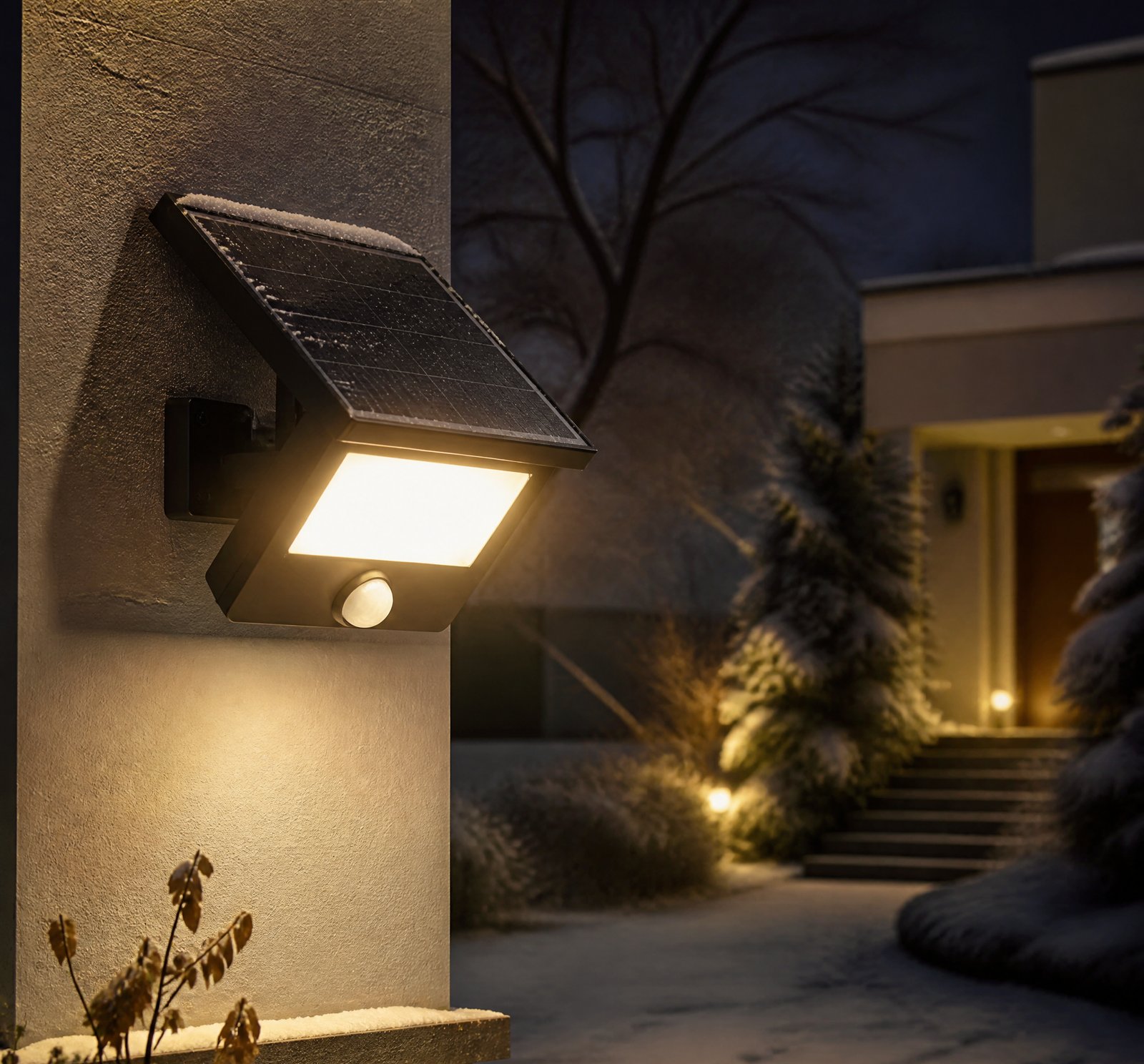
Quick answer: Nu există o durată exactă stabilită pentru o baterie LiFePO4 izolată termic la -15 °C cu ieșire de 2000 lumeni înainte de oprirea BMS-ului, deoarece aceasta depinde de ciclarea zilnică, temperatura medie anuală și eficiența sistemului BMS [1][8]. Cu izolație termică adecvată și BMS optimizat, performanța poate fi menținută pe termen lung [11].
Bateriile LiFePO4 sunt o alegere excelentă pentru iluminatul solar în România, mai ales în regiunile cu ierni reci. Dar cât durează în practică o astfel de baterie când trebuie să alimenteze o sursă luminiscentă de 2000 lumeni în condiții de -15 °C? Răspunsul nu este simplu — depinde de mai mulți factori tehnici și de proiectarea sistemului.
Performanța bateriilor LiFePO4 la temperaturi sub zero
Bateriile LiFePO4 sunt cunoscute pentru rezistența lor la temperaturi scăzute, cu o capacitate de descărcare mai mare decât majoritatea tipurilor standard de baterii litiu-ion chiar și la -20 °C și -40 °C [12]. Acestea pot funcționa eficient la temperaturi sub 0 °C [6], ceea ce le face ideale pentru aplicații solare în zonele de munte sau nordice din România.
Totuși, chiar și cu această rezistență, performanța scade la temperaturi extrem de joase. La -15 °C, rata de descărcare poate fi redusă semnificativ, iar tensiunea scade mai repede. Astfel, un sistem BMS (Management al Bateriei) va declanșa oprirea pentru protecția bateriei chiar înainte de epuizarea completă, în funcție de pragul de tensiune setat [11].
Impactul izolației termice și al BMS-ului
Izolația termică este esențială pentru menținerea temperaturii optime a bateriei în iarna [2]. Fără izolație, bateria se răcește rapid, ceea ce duce la scăderea eficienței și la o durată mai scurtă de viață. Cu izolație, temperatura interioară poate fi menținută într-o gamă mai favorabilă, prevenind astfel declanșarea prematură a BMS-ului.
Un sistem BMS bine proiectat poate ajusta tensiunea și monitoriza starea de încărcare în funcție de temperatură [11], asigurând o descărcare stabilă chiar și la -15 °C. Acest lucru prelungeste durata de viață a bateriei și permite funcționarea la putere maximă pentru perioade mai lungi în condiții extreme.
Compararea cu alte tipuri de baterii
| Tip baterie | Performanță la -15°C | Durată de viață (cicluri) | Rezistență la temperaturi extreme |
|---|---|---|---|
| LiFePO4 | Bună [6][12] | 3000–7000 cicluri | Foarte bună [5] |
| Litiu-ion standard | Slabă la <10°C [2] | 500–1000 cicluri | Dificilă sub 10°C |
| Plumb-acid | Foarte slabă [5] | 500–1000 cicluri | Dificilă sub 0°C |
Bateriile LiFePO4 depășesc în mod semnificativ plumb-acid și litiu-ion standard în condiții de iarnă rece [5]. În special, bateriile plumb-acid pot pierde până la 70% din capacitate la -15 °C [5], în timp ce LiFePO4 mențin o performanță mult mai stabilă.
Concluzii cheie
- Bateriile LiFePO4 sunt potrivite pentru iluminat solar în România, chiar și în iernile reci [6][12].
- Durata exactă la -15 °C nu este specificată în surse, dar este influențată de ciclarea zilnică, temperatura medie anuală și eficiența BMS-ului [1][8].
- Izolația termică și un BMS optimizat sunt esențiale pentru menținerea performanței și prelungirea duratei de viață [2][11].
- În comparație cu alte tipuri, LiFePO4 oferă o rezistență superioară la temperaturi scăzute și o durată de viață mult mai lungă [5].
Întrebări frecvente
Poate o baterie LiFePO4 să funcționeze la -20 °C?
Da, bateriile LiFePO4 pot funcționa chiar și la -20 °C, menținând o capacitate de descărcare mai mare decât alte baterii litiu-ion [12].
Ce rol are BMS-ul în funcționarea bateriei la temperaturi scăzute?
BMS-ul ajustează tensiunea și monitorizează starea de încărcare în funcție de temperatură, prevenind daunele și optimizând descărcarea la -15 °C [11].
De ce sunt bateriile LiFePO4 mai bune decât cele plumb-acid în iarnă?
LiFePO4 au o rezistență mult mai bună la temperaturi sub zero și o durată de viață mai lungă, în timp ce plumb-acidul pierde capacitate rapid sub 0 °C [5].
References
- [1] Photovoltaics From Fundamentals to Applications — book
source passage
autonomy reserve, such as in telecommunications, the cycling will be quite shallow, whereas in systems with less autonomy, such as lighting systems, the daily cycling will be higher. As shown, earlier, the typical range of daily cycling is of the order of 2–30%, except in some hybrid PV-diesel systems, where it can be much deeper. Similarly, there can be quite a wide range of operating temperatures experienced by batteries in PV systems, depending on the climate at the site and also the nature of the battery enclosure. For predicting the lifetime limit due to corrosion, the annual average battery temperature should be considered, and in a well-designed system this should be close to (probably a few degrees above) the average annual ambient temperature. Figure 11 illustrates the different limits for typical PV systems of different types. We plot the corrosion-limited lifetime against battery temperature, and also display the cycle limit for different numbers of days of autonomy on the same graph. Figure 11 Predicted corrosion and cycle life limits in different types of PV system. (a) Professional PV system with continuous load, tubular batteries. (b) PV rural lighting system with flat-plate batteries. (c) Vaccine Refrigerator CFS, tubular batteries The upper graph shows the situation in a ‘professional’ PV system with a continuous load and tubular-plate batteries, typical of a remote telecommunications or cathodic protection PV system. The number of days of autonomy required f
- [2] Solar Street Light From Germany The Science of Solar Battery Failure How to Achieve a 12 Year Lifespan lu n9o8-I80 — youtube
source passage
# The Science of Solar Battery Failure: How to Achieve a 12 Year Lifespan Source: YouTube — Solar Street Light From Germany URL: https://www.youtube.com/watch?v=lu_n9o8-I80 Video ID: lu_n9o8-I80 Transcript: generated The success of a solar street light project largely depends on its battery. However, statistics show that 80% of projects suffer battery failure within just 2 years. Why do solar batteries lose their ability to hold charge so quickly? Today, we will analyze the deep technical reasons behind battery failure and explore how a proper design can solve this problem for good. Most low-cost solar lights use lead-acid batteries or recycled lithium cells. These have a very low cycle life, typically only 300 to 500 full charge cycles. As a result, the batteries often swell or become completely dead even before reaching 2 years of use. This creates a significant financial risk, especially for large-scale B2B projects. Batteries are most heavily affected by temperature. Below 10°C or above 50°C, standard lithium batteries struggle to charge properly. In extreme desert heat or polar cold conditions, these batteries can suffer permanent damage. As a result, the maintenance cost of the entire project increases significantly. A battery pack consists of multiple individual cells. Without a smart BMS, battery management system, the voltage between these cells becomes unbalanced. This imbalance can lead to overcharging or even short circuits. Without a robust management system, it
- [5] Solar Electricity — book
source passage
periods when the sun or wind and sun (in hybrid systems) are not as readily available. In sunnier locations, like Colorado, Wyoming, and Utah, battery banks in off-grid applications are often sized to meet the need for electricity for three days. Longer reserve periods—five days or more—may be required in other areas, for example, the cloudier Midwest, Northeast, and Southeastern states and much of Canada. As noted in Chapter 5, backup fossil-fuel generators are often included in off-grid systems. Backup generators can reduce the size of the battery bank. For more details on wiring and sizing battery banks for off-grid systems, you may want to check out the second edition of my book, Power from the Sun. Bear in mind that because batteries are expensive, it’s a good idea to make your home as efficient as possible to reduce the size of your battery bank. Battery Maintenance, Safety, and Proper Installation Battery care and maintenance are vital to the long-term success of battery-based renewable energy systems. Proper installation and maintenance increase the service life of a battery. Longer service life results in lower operating costs over the long haul and cheaper electricity. Keep Them Warm Batteries like to be kept warm. In fact, batteries like to “live” in the temperature range that most human beings find comfortable. For optimal function, lead-acid batteries should be kept at around 75°to 80°F (24° to 27°C). In this range, they’ll accept and deliver tons more electricit
- [6] US20200217518A1 – Energy Storage Systems – Google Patents — patent
source passage
depend on different chemistries. Each one has a comfortable range in which it operates well, often around room temperature. For example: – With rising temperature, NiMH (Nickel Metal Hydride) lifetime (in cycles) degrades rapidly: Compared to operation around 20° C., operation at 30° C. reduces cycle life by 20%; 40° C. by 40%; 45° C. by 50%. – Lithium Ion can typically operate between −20° C. and 60° C., however as the temperature drops the discharge rate that can be supported drops dramatically. – Discharge of Lithium Ion at the high end of the temperature range is strongly advised against as self-heating can initiate which can cause a reduction in performance of the batteries; irreversible internal damage; and in some cases catastrophic failure (due to fire or thermal expansion bursting open the cells). – Most batteries need to be above 0° C. to charge. – Solid electrolyte Lithium Polymer batteries need to be between 60° C. and 100° C. to operate. – The surrounding environment can make it hard to maintain batteries within these limits, for example: – A car battery can be exposed to very low temperatures in cold climates. Battery heaters are often employed to counteract this. – Equally in hot climates electric vehicles must usually be furnished with battery cooling by heat pumps to keep them in operating range. – Batteries used in close proximity to electronics, e.g. laptop batteries, can be subjected to high temperature waste heat from the electronics. – Operation of the b
- [8] Photovoltaics From Fundamentals to Applications — book
source passage
needed will be type A: (200/1.1)=182 Ah; type B: (200/1.4)=143 Ah. We do not need to correct these capacities for other operating temperatures, since the annual average temperature of the battery is around 20°C. Particularly if this operating temperature was lower, we would need to correct for the capacity variation with temperature. • Batteries do not come in such precise capacities as the above. The nearest actual sizes are 200 Ah for type A (actually 2×100 Ah batteries in parallel) and 150 Ah for type B. Lifetime Limit Since the annual average temperature of the battery is around 20°C, if the batteries were operated as standby batteries, the highest lifetime expected would be 5 years for type A and 12 years for type B. However, in PV use we derate this to about 80% of these values, giving maximum expected daily lifetimes of 4 years and about 10 years (actually 9.6), respectively. If the expected battery temperature would be higher than 20°C, then we would need to reduce these lifetime limits. Now we check the daily cycling. Since it is all at night, the batteries will be discharged by 40 Ah each night. This is equivalent to (40/200)=20% of the nominal capacity for type A and (40/150)=26.7% for type B. If the load was continuous, or at least did not all occur at nighttime, the daily cycling would be less than the above, since, for some of the time, the battery would not be discharging whilst the load was being delivered. • Battery type A gives a maximum ‘capacity turnover’
- [11] How to prepare your solar battery bank for winter — authority
source passage
lithium-ion batteries to approximately 40% of capacity and store at temperatures between 41°F and 68°F. Refer to the battery manual for specifics. Using battery monitors and battery management systems Technology also plays a key role in protecting batteries from harsh temperatures. Sensors can provide early warning if battery temperatures drop below recommended levels. Also, high-quality charge controllers can adjust voltage based on battery temperature to help cells reach 100% state of charge. This is important because cold batteries should be charged to a higher voltage than warm batteries to achieve the same state of charge. For lithium-ion batteries, a battery management system (BMS) is a necessity. A BMS ensures lower-capacity cells aren’t overcharged and reduces the risk of lithium-ion batteries going into thermal runaway and causing fires and explosions. Other battery chemistries also benefit from the monitoring capabilities of BMS. These may include total and per-cell voltage, temperature, depth of discharge and more. BMS can even help maximize capacity and protect against extreme temperatures. Playing it safe with depth of discharge (DOD) Some battery makers tout their technology’s ability to discharge 100% and recommend sizing battery banks based on this unrealistic number. To ensure longevity and to keep the lights on, never discharge batteries below 80% DOD—50% DOD or lower is ideal. All batteries require extra power reserves for days with low renewable energy pro
- [12] Battery Technology Advanced Materials and Systems — book
source passage
Batteries should be avoided long-term using at above 50 ℃. Ideal temperature of lithium-ion batteries should be between 18℃ and 50 ℃, in order to ensure efficiency of discharge is above 80%, and to meet the power requirements of the vehicle. Known from a number of technical manuals and references, in order to ensure the life of the battery itself, the working temperature should be controlled between 20℃and 50℃[6]. From Fig.3 and Fig.4, at -20 ℃, the discharge capacity of the two different LiFePO4 Power Batteries rated 75.01 percent and 64.01 percent, nano LiFePO4 Batterry’s performance is better than ordinary LiFePO4 battery; Nano LiFePO4 batteries’ temperature performance were tested at different ambient temperature, at -40 ℃ the discharge capacity is about the 25℃’s 47.1%, While the ordinary LiFePO4 battery is only 37.5%. Therefore, in the making process of LiFePO4 positive electrode film, part of electrical carbon was replaced by some carbon nano tubes(CNTs), its electrochemical performance was improved greatly. 1080 Advanced Energy Technology Conclusions New energy vehicles is one of the increasingly serious energy crisis and environmental Problems’ solving approaches, as hybrid cars and electric vehicles energy systems, LiFePO4 power batteries favored by the majority of car manufacturers, many research institutes are constantly studying how to further improve the performance of LiFePO4 batteries. Fund: National Science and Technology Support Program of China (2011BAG02B1
autonomy reserve, such as in telecommunications, the cycling will be quite shallow, whereas in systems with less autonomy, such as lighting systems, the daily cycling will be higher. As shown, earlier, the typical range of daily cycling is of the order of 2–30%, except in some hybrid PV-diesel systems, where it can be much deeper. Similarly, there can be quite a wide range of operating temperatures experienced by batteries in PV systems, depending on the climate at the site and also the nature of the battery enclosure. For predicting the lifetime limit due to corrosion, the annual average battery temperature should be considered, and in a well-designed system this should be close to (probably a few degrees above) the average annual ambient temperature. Figure 11 illustrates the different limits for typical PV systems of different types. We plot the corrosion-limited lifetime against battery temperature, and also display the cycle limit for different numbers of days of autonomy on the same graph. Figure 11 Predicted corrosion and cycle life limits in different types of PV system. (a) Professional PV system with continuous load, tubular batteries. (b) PV rural lighting system with flat-plate batteries. (c) Vaccine Refrigerator CFS, tubular batteries The upper graph shows the situation in a ‘professional’ PV system with a continuous load and tubular-plate batteries, typical of a remote telecommunications or cathodic protection PV system. The number of days of autonomy required f
# The Science of Solar Battery Failure: How to Achieve a 12 Year Lifespan Source: YouTube — Solar Street Light From Germany URL: https://www.youtube.com/watch?v=lu_n9o8-I80 Video ID: lu_n9o8-I80 Transcript: generated The success of a solar street light project largely depends on its battery. However, statistics show that 80% of projects suffer battery failure within just 2 years. Why do solar batteries lose their ability to hold charge so quickly? Today, we will analyze the deep technical reasons behind battery failure and explore how a proper design can solve this problem for good. Most low-cost solar lights use lead-acid batteries or recycled lithium cells. These have a very low cycle life, typically only 300 to 500 full charge cycles. As a result, the batteries often swell or become completely dead even before reaching 2 years of use. This creates a significant financial risk, especially for large-scale B2B projects. Batteries are most heavily affected by temperature. Below 10°C or above 50°C, standard lithium batteries struggle to charge properly. In extreme desert heat or polar cold conditions, these batteries can suffer permanent damage. As a result, the maintenance cost of the entire project increases significantly. A battery pack consists of multiple individual cells. Without a smart BMS, battery management system, the voltage between these cells becomes unbalanced. This imbalance can lead to overcharging or even short circuits. Without a robust management system, it
periods when the sun or wind and sun (in hybrid systems) are not as readily available. In sunnier locations, like Colorado, Wyoming, and Utah, battery banks in off-grid applications are often sized to meet the need for electricity for three days. Longer reserve periods—five days or more—may be required in other areas, for example, the cloudier Midwest, Northeast, and Southeastern states and much of Canada. As noted in Chapter 5, backup fossil-fuel generators are often included in off-grid systems. Backup generators can reduce the size of the battery bank. For more details on wiring and sizing battery banks for off-grid systems, you may want to check out the second edition of my book, Power from the Sun. Bear in mind that because batteries are expensive, it’s a good idea to make your home as efficient as possible to reduce the size of your battery bank. Battery Maintenance, Safety, and Proper Installation Battery care and maintenance are vital to the long-term success of battery-based renewable energy systems. Proper installation and maintenance increase the service life of a battery. Longer service life results in lower operating costs over the long haul and cheaper electricity. Keep Them Warm Batteries like to be kept warm. In fact, batteries like to “live” in the temperature range that most human beings find comfortable. For optimal function, lead-acid batteries should be kept at around 75°to 80°F (24° to 27°C). In this range, they’ll accept and deliver tons more electricit
depend on different chemistries. Each one has a comfortable range in which it operates well, often around room temperature. For example: – With rising temperature, NiMH (Nickel Metal Hydride) lifetime (in cycles) degrades rapidly: Compared to operation around 20° C., operation at 30° C. reduces cycle life by 20%; 40° C. by 40%; 45° C. by 50%. – Lithium Ion can typically operate between −20° C. and 60° C., however as the temperature drops the discharge rate that can be supported drops dramatically. – Discharge of Lithium Ion at the high end of the temperature range is strongly advised against as self-heating can initiate which can cause a reduction in performance of the batteries; irreversible internal damage; and in some cases catastrophic failure (due to fire or thermal expansion bursting open the cells). – Most batteries need to be above 0° C. to charge. – Solid electrolyte Lithium Polymer batteries need to be between 60° C. and 100° C. to operate. – The surrounding environment can make it hard to maintain batteries within these limits, for example: – A car battery can be exposed to very low temperatures in cold climates. Battery heaters are often employed to counteract this. – Equally in hot climates electric vehicles must usually be furnished with battery cooling by heat pumps to keep them in operating range. – Batteries used in close proximity to electronics, e.g. laptop batteries, can be subjected to high temperature waste heat from the electronics. – Operation of the b
needed will be type A: (200/1.1)=182 Ah; type B: (200/1.4)=143 Ah. We do not need to correct these capacities for other operating temperatures, since the annual average temperature of the battery is around 20°C. Particularly if this operating temperature was lower, we would need to correct for the capacity variation with temperature. • Batteries do not come in such precise capacities as the above. The nearest actual sizes are 200 Ah for type A (actually 2×100 Ah batteries in parallel) and 150 Ah for type B. Lifetime Limit Since the annual average temperature of the battery is around 20°C, if the batteries were operated as standby batteries, the highest lifetime expected would be 5 years for type A and 12 years for type B. However, in PV use we derate this to about 80% of these values, giving maximum expected daily lifetimes of 4 years and about 10 years (actually 9.6), respectively. If the expected battery temperature would be higher than 20°C, then we would need to reduce these lifetime limits. Now we check the daily cycling. Since it is all at night, the batteries will be discharged by 40 Ah each night. This is equivalent to (40/200)=20% of the nominal capacity for type A and (40/150)=26.7% for type B. If the load was continuous, or at least did not all occur at nighttime, the daily cycling would be less than the above, since, for some of the time, the battery would not be discharging whilst the load was being delivered. • Battery type A gives a maximum ‘capacity turnover’
lithium-ion batteries to approximately 40% of capacity and store at temperatures between 41°F and 68°F. Refer to the battery manual for specifics. Using battery monitors and battery management systems Technology also plays a key role in protecting batteries from harsh temperatures. Sensors can provide early warning if battery temperatures drop below recommended levels. Also, high-quality charge controllers can adjust voltage based on battery temperature to help cells reach 100% state of charge. This is important because cold batteries should be charged to a higher voltage than warm batteries to achieve the same state of charge. For lithium-ion batteries, a battery management system (BMS) is a necessity. A BMS ensures lower-capacity cells aren’t overcharged and reduces the risk of lithium-ion batteries going into thermal runaway and causing fires and explosions. Other battery chemistries also benefit from the monitoring capabilities of BMS. These may include total and per-cell voltage, temperature, depth of discharge and more. BMS can even help maximize capacity and protect against extreme temperatures. Playing it safe with depth of discharge (DOD) Some battery makers tout their technology’s ability to discharge 100% and recommend sizing battery banks based on this unrealistic number. To ensure longevity and to keep the lights on, never discharge batteries below 80% DOD—50% DOD or lower is ideal. All batteries require extra power reserves for days with low renewable energy pro
Batteries should be avoided long-term using at above 50 ℃. Ideal temperature of lithium-ion batteries should be between 18℃ and 50 ℃, in order to ensure efficiency of discharge is above 80%, and to meet the power requirements of the vehicle. Known from a number of technical manuals and references, in order to ensure the life of the battery itself, the working temperature should be controlled between 20℃and 50℃[6]. From Fig.3 and Fig.4, at -20 ℃, the discharge capacity of the two different LiFePO4 Power Batteries rated 75.01 percent and 64.01 percent, nano LiFePO4 Batterry’s performance is better than ordinary LiFePO4 battery; Nano LiFePO4 batteries’ temperature performance were tested at different ambient temperature, at -40 ℃ the discharge capacity is about the 25℃’s 47.1%, While the ordinary LiFePO4 battery is only 37.5%. Therefore, in the making process of LiFePO4 positive electrode film, part of electrical carbon was replaced by some carbon nano tubes(CNTs), its electrochemical performance was improved greatly. 1080 Advanced Energy Technology Conclusions New energy vehicles is one of the increasingly serious energy crisis and environmental Problems’ solving approaches, as hybrid cars and electric vehicles energy systems, LiFePO4 power batteries favored by the majority of car manufacturers, many research institutes are constantly studying how to further improve the performance of LiFePO4 batteries. Fund: National Science and Technology Support Program of China (2011BAG02B1