
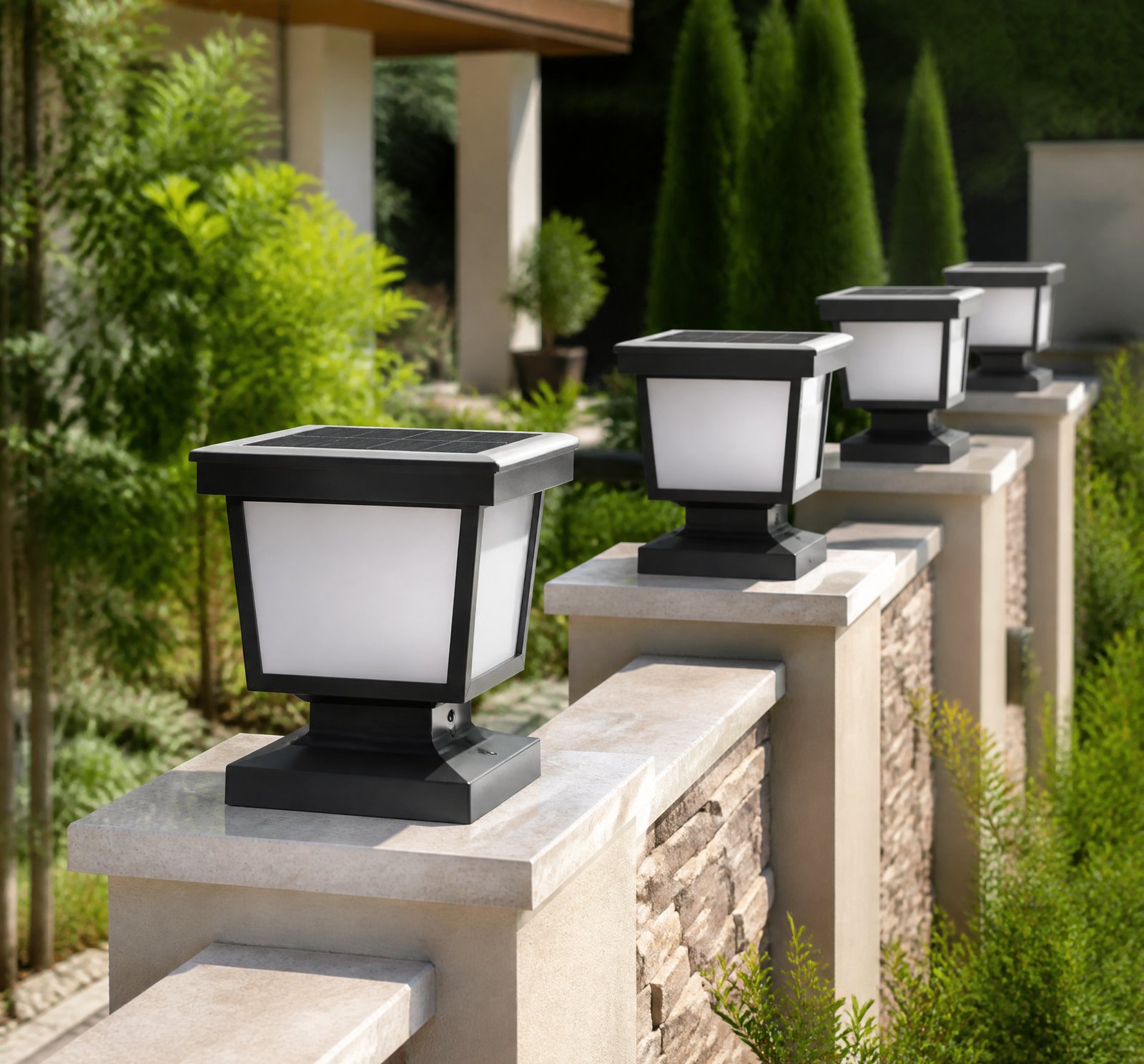
Quick answer: Perioada de recuperare a unei lămpi solare în România nu poate fi calculată exact din sursele disponibile, deoarece lipsesc date specifice despre prețul energiei electrice, costul instalării cablurilor sau performanța bateriilor în iarna. Totuși, în scenarii cu instalare dificilă, costul inițial mai mare al sistemului solar poate fi compensat de economiile de instalare — de exemplu, o soluție solară a costat doar 10% dintr-o soluție cablată [5].
În România, decizia de a instala o lampă solară în loc de una alimentată prin cablu depinde nu doar de eficiență, ci și de calculul economic pe termen lung. Întrebarea esențială: cât durează până se recuperează investiția inițială într-o lampă solară față de o lumină LED cablată? Răspunsul este complex și este influențat de factori precum costul energiei, condițiile climatice, durata de viață a componentelor și costurile de instalare. Deși sursele nu oferă un calcul direct pentru România, potrivit analizelor, diferite scenarii arată că soluțiile solare pot fi mai economice chiar și dacă costul inițial este mai mare.
Costuri de instalare: diferențele majore
Unul dintre cele mai mari factori care influențează recuperarea este costul instalării cablurilor electrice. În proiecte de iluminat landscape, o soluție cu cabluri a fost cotată între 12.000 și 18.000 de dolari, în timp ce o soluție cu luminile solare a costat doar 1.200 de dolari — adică doar 10% din costul sistemului cablat [5]. Această diferență semnificativă arată că, în zone cu acces dificil sau terenuri neasfaltate, lămpile solare pot fi o alegere economică chiar și dacă prețul unitar este mai mare. De asemenea, costurile de întreținere și reparații ale cablurilor sunt adesea ignorate, dar pot crește semnificativ costul total pe termen lung [4].
Economii de energie și eficiență LED
Iluminatul LED este mult mai eficient decât sursele tradiționale. O lampă LED consumă doar 0,82 dolari pe an pentru a ilumina un copac, în comparație cu 10 dolari pentru becuri incandescente [8]. În proiecte stradale, înlocuirea lămpilor HPS cu LED-uri a dus la o reducere de 80% a consumului și la o economie anuală de 21.000 de dolari, cu o perioadă de recuperare de trei ani pentru un investiție de 65.000 de dolari [3]. Aceste date sugerează că și sistemele cablate pot avea o recuperare rapidă, în 3–5 ani, în funcție de costul inițial și economiile realizate.
Performanță și durata de viață în condiții românești
Luminile solare moderne pot oferi peste 9.000 de lumeni pentru un sistem de 50 W, iar eficiența LED-urilor poate depăși 200 lm/W [16]. Totuși, performanța în iarna românească, cu insolație redusă și temperaturi scăzute, rămâne o necunoscută majoră în sursele analizate. Deși panourile solare au o perioadă de recuperare energetică între 1,5 și 4,1 ani, acestea se referă la panouri pentru rețea, nu la luminile solare pentru exterior [20]. În plus, bateriile LiFePO4, folosite în unele modele precum cele Neosimply, sunt rezistente la -25 °C și oferă o autonomie stabilă în iernile lungi [17], dar durata de viață a acestora în condiții extreme nu este clar definită în surse.
Compararea sistemelor: soluții cablate vs. solare
| Criteriu | Lumină LED cablată | Lumină solară |
|---|---|---|
| Cost instalare | Ridicat (12.000–18.000 USD în proiecte landscaping) [5] | Scăzut (doar 10% din costul cablat) [5] |
| Consum energie | Depinde de prețul curent (nu specificat în România) | 0 (energie gratuită) |
| Durată de viață LED | Până la 100.000 de ore [2] | Similară, dar influențată de baterie |
| Cost baterie înlocuită | Nu necesară | Diverse, dar pot necesita înlocuire în timp [18] |
| Performanță iarnă | Stabilă dacă alimentate | Depinde de design și baterie [17] |
Concluzii cheie
- Costul de instalare este cel mai mare factor care poate face ca lămpile solare să fie mai economice chiar și cu cost inițial mai mare [5].
- Iluminatul LED este eficient, dar recuperarea pentru sistem cablat depinde de prețul energiei electrice, care nu este specificat în surse pentru România.
- Bateriile LiFePO4 și designul rezistent la frig (ex: -25 °C) pot asigura funcționare stabilă în iarna românească [17].
- Nu există date directe despre perioada de recuperare în România din cauza lipsei datelor specifice (preț energie, cost instalare, performanță iarnă).
- Investiții în soluții solare pot fi justificate în zone cu acces dificil, unde costurile de cablare sunt exorbitante.
Întrebări frecvente
Cât costă o lampă solară în România?
Prețurile variază în funcție de model și performanță. Exemple de proiecte arată că o soluție solară a costat doar 10% dintr-o soluție cablată [5].
Poate o lampă solară funcționa în iarna românească?
Da, dacă este echipată cu baterii LiFePO4 rezistente la frig, cum sunt cele din lămpile Neosimply, care funcționează până la -25 °C [17].
Cât durează o baterie solară în condiții românești?
Durata de viață a bateriilor nu este clar specificată în surse pentru România, dar pot necesita înlocuire în timp [18].
References
- [2] SIL program spans LED technology to the breadth of Buildings — authority
source passage
upfront cost of the luminaires, installation, and energy and maintenance costs. The solar-powered LED option was 10% lower in TCO than grid-powered metal-halide lighting. Grid-powered LED lighting came in a few percentage points below the solar alternative but the two were close. Furthermore, Azzam said that by 2016, the solar LED TCO will drop by 30% with additional technology developments. He said, "That's exciting and transformative." Ironically, the cost picture improves when you consider the usage of adaptive controls. Azzam said a wireless network brings additional energy savings that offset the requirements for the battery, solar panels, and size of the pole required. Essentially the additional savings cover the cost of adding networks and controls, whereas the controls and network account for an added cost in grid-powered applications. UV LED chase Solar was also described as a potentially good match for developing ultraviolet (UV) LED technology in the presentation that followed. We'll explain why momentarily, but first let's cover the basics of UV LED technology. The UV spectrum is broken into UV-A (315–400 nm), UV-B (280–315 nm), and UV-C (100–280 nm). UV-A LEDs are relatively commonplace and used in curing applications, as we covered in a recent feature. The efficiency of UV-B and UV-C LEDs, however, drops rather drastically. SIL presenter Yitao Liao, a scientist at startup Rayvio Corp, said that under 300 nm, efficiency is in the 10% range. But it's at the UV-C w
- [3] Aging Lighting Replace or Retrofit Buildings — authority
source passage
labor costs. “The worst case scenario is that they’ll get up into the ceiling plenum and spot some asbestos,” Vogel says. “What started as a simple fixture replacement now becomes a big abatement project that’s very expensive.” 4) Overlooking code compliance costs: When a fixture is changed, the contractor has to bring the new installation up to current code, which can be a costly proposition in some cases. “This potentially means new sizing requirements and doing work to support the fixture, which isn’t always anticipated,” Vogel notes. North Carolina Central University is proof, having started two affordable LED retrofits with fellows from the Environmental Defense Fund’s Climate Corps, a program that places specially trained students in companies, schools, and municipalities to find opportunities for cost savings and develop plans for implementation. One Climate Corps initiative to replace 100 metal halide street lamps with LEDs will cut the school’s energy use by 80% and save $21,000 annually, paying for the $65,000 project in three years. Similarly, a retrofit of 30,000 emergency circuit lamps that must run 24/7 is costing the university $2 million but will save over $600,000 annually, resulting in a payback period of three and a half years. The payback period on both retrofits is a little longer than the two years many FMs target, though it’s by no means an insurmountable obstacle. However, while cost numbers are important, they’re not the only issue to consider, especi
- [4] Best practices for solar street lighting systems Buildings — authority
source passage
output as that of a grid-connected LED light for that duration. This is the general operating principle of solar lights available in the marketplace. However, the technology is in its infancy, and different manufacturers are adopting different product designs. A solar lighting system offers several benefits, including ease of installation, cost savings, and energy savings. The installation is comparatively straightforward for stand-alone solar lights, which are available in two different categories: an all-in-one solar light package, which includes a PV panel, battery, controller, and LED light module; and a remote solar, or split, system, which has a remote PV or controller, battery, and a light head mounted onto the fixture’s arm. Neither of these types requires a mains connection with AC input or the related electrical wiring or cabling. While the overall overhead expense is less, the unit hardware cost is higher than that of most conventional lights. For grid-connected solar lighting systems, the benefit is limited to the cost savings of electricity from the grid. Grid-tied solar lights are wired to the grid and operate similarly as a stand-alone solar streetlight for a specified period, say nighttime peak hours, or until the battery storage drops to a set value; the system then switches to grid power. They typically do not require huge battery storage or a large PV panel, which reduces the unit cost as compared to nongrid-connected, portable solar streetlights. Like many
- [5] Create Stylish Garden Lighting on a Budget with Solar Lights — reddit
source passage
especially love incorporating solar uplights in large pots where we plant trees," Przygoda notes. "They're easy to pop in, and they instantly add depth to a dark corner or a grouping of containers. Uplighting within layered plantings inside pots creates beautiful dimension and shadow play that really elevates the space." Sign up for the Gardening Know How newsletter today and receive a free copy of our e-book "How to Grow Delicious Tomatoes". The Budget Reality These days, any economic argument is highly compelling. Professional wired landscaping can set you back thousands, which can be almost impossible for most homeowners. Przygoda shared a recent example: "We recently had a project that was quoted between $12,000 and $18,000 for a wired lighting system. By using solar fixtures strategically, we were able to achieve the look and function the client needed for around $1,200." That means you get the same functional results at just 10% of the cost, which is crazy. She does acknowledge a slight downside, telling me, "You won't get the same longevity or smart-system control you would with a fully integrated wired system, but for the price point, it's hard to beat. It's a great way to get impactful lighting when budget is a primary consideration." Where Solar Makes the Most Sense "Solar is also ideal in areas where running wiring would be difficult, disruptive, or cost-prohibitive," Przygoda explains. "It gives us options in spots that might otherwise go unlit." This can include
- [8] Best Solar Lamp Post Our Top 5 Picks Reviewed — blog
source passage
made the prototypes. It’s interesting to think that it’s been around since Einstein’s day, although it would take decades before you could find a solar lamppost for your backyard. Related Article: How Long Do Solar Lights Last? The Advantages of Using an Outside Solar Lamp Post The benefits of using this type of outdoor lighting are evident. You can put them wherever you need someplace illuminated even if you don’t have an outlet nearby. Even so, a wireless option is the better choice without having to worry about securing it or wildlife chewing on an exposed cord. Then, there are the energy savings. Let’s put it into context with lighting a tree in your front yard with a variety of light sources. According to the US Department of Energy, it’ll cost you about $10 a year to illuminate it using incandescent C-9 bulbs. LEDs bring it down to only $0.82. If you have a lot of area to cover, those expenses add up quickly. There are other pros in favor of this LED-solar option including: – Less heat generation – Better long-term investment – Durability for everyday use Of course, you can’t discount the convenience factor. Most products will turn on when the ambient light reaches a specific level. That means that you needn’t remember to flip a switch, especially because you’ll likely figure out that it’s off at the most impractical time like when you’re coming home with an armful of groceries. Been there, done that. And the prices of bright solar post lights are much more reasonable t
- [16] 6 Trends In Solar Area Lighting – EdisonReport — magazine
source passage
# 6 Trends In Solar Area Lighting Source: Blog/Web URL: https://edisonreport.com/2020/08/18/6-trends-in-solar-area-lighting/ Author: Randy Reid Date: 2020-08-18 Emeryville, CA | August 18, 2020 Distributors, contractors, and specifiers have to keep up with many changes in lighting technology. One of the growing outdoor lighting categories is solar area lights. The global solar lighting market is projected to more than double to $10.8 billion USD by 2024, up from $5.2 billion USD in 2019, a compound annual growth rate (CAGR) of 15.6%, according to the research firm Markets and Markets. Here are six trends in solar area luminaires to be aware of: – Independently aim-able solar panels and LED modules. This allows optimization of solar collection as well as directing light where it is most needed. Placing the solar panel on an angle, equal to the local latitude, will maximize solar energy collection, year-round (https://www.soltechlighting.com/blog/solar-panel-optimization/ ). Angling the solar panel also allows rain, wind, and gravity to naturally clean the solar panel surface. – Increased light output. LED fixture efficacy can now exceed 200 lpW, for some models. This LED efficiency is combining with dramatically improving solar panel and battery power+efficiency, so that some solar area lights can now achieve 9,000+ lumens for a 50W floodlight fixture. – Increased LED run times. The same combination of dramatic efficiency improvements for the LEDs, solar panels, and battery te
- [17] Rewiring solar lighting electrical forum at permies — reddit
source passage
# Rewiring solar lighting? Source: Blog/Web URL: https://permies.com/t/87499/Rewiring-solar-lighting Author: Date: 2018-06-12 Anyone here "rewired" a standard house lighting system by using solar powered shed /landscape lights? So the system is no longer centralized (the panel just drilled to the outsideof each room or something? If so, how'd it work? I see it can be done for like $30/room and am tempted. I got some lighting for the outside of our home and was so impressed with the improvements since the last time I used solar for lighting I've been inspired. I should also mention our power bill is about $100/mo and the average person here spends about 8% in lighting, so that means we're spending about $100/yr on lighting currently. The conversion would thereby pay for itself in 6 years if nothing needed subsequent replacement, or no replacement more than the cost of the light bulbs. I doubt the garden lights (their battiers to be precise) will last 6 years, or produce enough light to be of much use. A reasonably bright LED lamp requires 3-10W. To keep a 6W LED running for 5 hours (which I find not enough), it needs 30Wh. This is the capacity of a 10Ah LiFePo4 cell. (cost 10€). The average garden light will have a much smaller battery. Another problem is that during winter, when most artificial light is needed, the batteries are charged the least. The tiny solar cell of a garden light is not nearly enough. If 92% of the energy is not spend on lighting, it sounds like there ar
- [18] Solar traffic light – Wikipedia — wikipedia
source passage
higher as equipment costs are comparatively higher. – Snow or dust, combined with moisture can accumulate on horizontal PV-panels and reduce or even stop energy production. – Rechargeable batteries will need to be replaced several times over the lifetime of the fixtures adding to the total lifetime cost of the light. The charge and discharge cycles of the battery are important considering the overall cost of the project. – "Solar Traffic Lights". weblisting. globalecopower.org. Retrieved 2011-08-03. – "LED light bulbs-LED has advantages but also drawbacks". consumersearch.com. Retrieved 2011-08-03. – "Photovoltaics-Student Guide" (PDF). need.org. Retrieved 2011-08-03. – Diba, Keyvan T (22 July 2010). "ELECTRONIC TRAFFIC SIGNAGE". Patent Application Number: 20100182164. Los Angeles, California, United States: faqs.org: 1. Retrieved 2011-08-03. – "Police in New Delhi give thumbs up to BEL PV-powered traffic signal". photonlaboratory.org. Retrieved 2011-08-03. – "LED Area Lights". – Diba, Keyvan (23 October 2008). "Emergency traffic light system". Patent Application Number: 20100182164. Los Angeles, California, United States: faqs.org: 1. Retrieved 2011-08-03. – "March Madness for the Mind-E-Team Exhibition" (PDF). nciia.org. Retrieved 2011-08-03. – Venkatachalam, A.R.; Gittell, Ross (29 April 2011). "Launching the Next Industrial Revolution in New England: New Hampshire's Green Launching Pad 1.0 and 2.0". The New England Journal of Higher Education. England: New England Board o
- [20] Solar-cell efficiency – Wikipedia — wikipedia
source passage
than conventional systems (often < 1 year).[45] A study published in 2013 found that energy payback time was between 0.75 and 3.5 years with thin film cells being at the lower end and multicrystalline silicon (multi-Si) cells having a payback time of 1.5–2.6 years.[46] A 2015 review assessed the energy payback time and EROI of solar photovoltaics. In this meta study, which uses an insolation of 1,700 kWh/m2/year and a system lifetime of 30 years, mean harmonized EROIs between 8.7 and 34.2 were found. Mean harmonized energy payback time varied from 1.0 to 4.1 years.[47] Crystalline silicon devices achieve on average an energy payback period of 2 years.[41][48] Like any other technology, solar cell manufacture is dependent on the existence of a complex global industrial manufacturing system. This includes the fabrication systems typically accounted for in estimates of manufacturing energy; the contingent mining, refining and global transportation systems; and other energy intensive support systems including finance, information, and security systems. The difficulty in measuring such energy overhead confers some uncertainty on any estimate of payback times.[49] The illuminated side of some types of solar cells, thin films, have a transparent conducting film to allow light to enter into the active material and to collect the generated charge carriers. Typically, films with high transmittance and high electrical conductance such as indium tin oxide, conducting polymers or conducti
upfront cost of the luminaires, installation, and energy and maintenance costs. The solar-powered LED option was 10% lower in TCO than grid-powered metal-halide lighting. Grid-powered LED lighting came in a few percentage points below the solar alternative but the two were close. Furthermore, Azzam said that by 2016, the solar LED TCO will drop by 30% with additional technology developments. He said, "That's exciting and transformative." Ironically, the cost picture improves when you consider the usage of adaptive controls. Azzam said a wireless network brings additional energy savings that offset the requirements for the battery, solar panels, and size of the pole required. Essentially the additional savings cover the cost of adding networks and controls, whereas the controls and network account for an added cost in grid-powered applications. UV LED chase Solar was also described as a potentially good match for developing ultraviolet (UV) LED technology in the presentation that followed. We'll explain why momentarily, but first let's cover the basics of UV LED technology. The UV spectrum is broken into UV-A (315–400 nm), UV-B (280–315 nm), and UV-C (100–280 nm). UV-A LEDs are relatively commonplace and used in curing applications, as we covered in a recent feature. The efficiency of UV-B and UV-C LEDs, however, drops rather drastically. SIL presenter Yitao Liao, a scientist at startup Rayvio Corp, said that under 300 nm, efficiency is in the 10% range. But it's at the UV-C w
labor costs. “The worst case scenario is that they’ll get up into the ceiling plenum and spot some asbestos,” Vogel says. “What started as a simple fixture replacement now becomes a big abatement project that’s very expensive.” 4) Overlooking code compliance costs: When a fixture is changed, the contractor has to bring the new installation up to current code, which can be a costly proposition in some cases. “This potentially means new sizing requirements and doing work to support the fixture, which isn’t always anticipated,” Vogel notes. North Carolina Central University is proof, having started two affordable LED retrofits with fellows from the Environmental Defense Fund’s Climate Corps, a program that places specially trained students in companies, schools, and municipalities to find opportunities for cost savings and develop plans for implementation. One Climate Corps initiative to replace 100 metal halide street lamps with LEDs will cut the school’s energy use by 80% and save $21,000 annually, paying for the $65,000 project in three years. Similarly, a retrofit of 30,000 emergency circuit lamps that must run 24/7 is costing the university $2 million but will save over $600,000 annually, resulting in a payback period of three and a half years. The payback period on both retrofits is a little longer than the two years many FMs target, though it’s by no means an insurmountable obstacle. However, while cost numbers are important, they’re not the only issue to consider, especi
output as that of a grid-connected LED light for that duration. This is the general operating principle of solar lights available in the marketplace. However, the technology is in its infancy, and different manufacturers are adopting different product designs. A solar lighting system offers several benefits, including ease of installation, cost savings, and energy savings. The installation is comparatively straightforward for stand-alone solar lights, which are available in two different categories: an all-in-one solar light package, which includes a PV panel, battery, controller, and LED light module; and a remote solar, or split, system, which has a remote PV or controller, battery, and a light head mounted onto the fixture’s arm. Neither of these types requires a mains connection with AC input or the related electrical wiring or cabling. While the overall overhead expense is less, the unit hardware cost is higher than that of most conventional lights. For grid-connected solar lighting systems, the benefit is limited to the cost savings of electricity from the grid. Grid-tied solar lights are wired to the grid and operate similarly as a stand-alone solar streetlight for a specified period, say nighttime peak hours, or until the battery storage drops to a set value; the system then switches to grid power. They typically do not require huge battery storage or a large PV panel, which reduces the unit cost as compared to nongrid-connected, portable solar streetlights. Like many
especially love incorporating solar uplights in large pots where we plant trees," Przygoda notes. "They're easy to pop in, and they instantly add depth to a dark corner or a grouping of containers. Uplighting within layered plantings inside pots creates beautiful dimension and shadow play that really elevates the space." Sign up for the Gardening Know How newsletter today and receive a free copy of our e-book "How to Grow Delicious Tomatoes". The Budget Reality These days, any economic argument is highly compelling. Professional wired landscaping can set you back thousands, which can be almost impossible for most homeowners. Przygoda shared a recent example: "We recently had a project that was quoted between $12,000 and $18,000 for a wired lighting system. By using solar fixtures strategically, we were able to achieve the look and function the client needed for around $1,200." That means you get the same functional results at just 10% of the cost, which is crazy. She does acknowledge a slight downside, telling me, "You won't get the same longevity or smart-system control you would with a fully integrated wired system, but for the price point, it's hard to beat. It's a great way to get impactful lighting when budget is a primary consideration." Where Solar Makes the Most Sense "Solar is also ideal in areas where running wiring would be difficult, disruptive, or cost-prohibitive," Przygoda explains. "It gives us options in spots that might otherwise go unlit." This can include
made the prototypes. It’s interesting to think that it’s been around since Einstein’s day, although it would take decades before you could find a solar lamppost for your backyard. Related Article: How Long Do Solar Lights Last? The Advantages of Using an Outside Solar Lamp Post The benefits of using this type of outdoor lighting are evident. You can put them wherever you need someplace illuminated even if you don’t have an outlet nearby. Even so, a wireless option is the better choice without having to worry about securing it or wildlife chewing on an exposed cord. Then, there are the energy savings. Let’s put it into context with lighting a tree in your front yard with a variety of light sources. According to the US Department of Energy, it’ll cost you about $10 a year to illuminate it using incandescent C-9 bulbs. LEDs bring it down to only $0.82. If you have a lot of area to cover, those expenses add up quickly. There are other pros in favor of this LED-solar option including: – Less heat generation – Better long-term investment – Durability for everyday use Of course, you can’t discount the convenience factor. Most products will turn on when the ambient light reaches a specific level. That means that you needn’t remember to flip a switch, especially because you’ll likely figure out that it’s off at the most impractical time like when you’re coming home with an armful of groceries. Been there, done that. And the prices of bright solar post lights are much more reasonable t
# 6 Trends In Solar Area Lighting Source: Blog/Web URL: https://edisonreport.com/2020/08/18/6-trends-in-solar-area-lighting/ Author: Randy Reid Date: 2020-08-18 Emeryville, CA | August 18, 2020 Distributors, contractors, and specifiers have to keep up with many changes in lighting technology. One of the growing outdoor lighting categories is solar area lights. The global solar lighting market is projected to more than double to $10.8 billion USD by 2024, up from $5.2 billion USD in 2019, a compound annual growth rate (CAGR) of 15.6%, according to the research firm Markets and Markets. Here are six trends in solar area luminaires to be aware of: – Independently aim-able solar panels and LED modules. This allows optimization of solar collection as well as directing light where it is most needed. Placing the solar panel on an angle, equal to the local latitude, will maximize solar energy collection, year-round (https://www.soltechlighting.com/blog/solar-panel-optimization/ ). Angling the solar panel also allows rain, wind, and gravity to naturally clean the solar panel surface. – Increased light output. LED fixture efficacy can now exceed 200 lpW, for some models. This LED efficiency is combining with dramatically improving solar panel and battery power+efficiency, so that some solar area lights can now achieve 9,000+ lumens for a 50W floodlight fixture. – Increased LED run times. The same combination of dramatic efficiency improvements for the LEDs, solar panels, and battery te
# Rewiring solar lighting? Source: Blog/Web URL: https://permies.com/t/87499/Rewiring-solar-lighting Author: Date: 2018-06-12 Anyone here "rewired" a standard house lighting system by using solar powered shed /landscape lights? So the system is no longer centralized (the panel just drilled to the outsideof each room or something? If so, how'd it work? I see it can be done for like $30/room and am tempted. I got some lighting for the outside of our home and was so impressed with the improvements since the last time I used solar for lighting I've been inspired. I should also mention our power bill is about $100/mo and the average person here spends about 8% in lighting, so that means we're spending about $100/yr on lighting currently. The conversion would thereby pay for itself in 6 years if nothing needed subsequent replacement, or no replacement more than the cost of the light bulbs. I doubt the garden lights (their battiers to be precise) will last 6 years, or produce enough light to be of much use. A reasonably bright LED lamp requires 3-10W. To keep a 6W LED running for 5 hours (which I find not enough), it needs 30Wh. This is the capacity of a 10Ah LiFePo4 cell. (cost 10€). The average garden light will have a much smaller battery. Another problem is that during winter, when most artificial light is needed, the batteries are charged the least. The tiny solar cell of a garden light is not nearly enough. If 92% of the energy is not spend on lighting, it sounds like there ar
higher as equipment costs are comparatively higher. – Snow or dust, combined with moisture can accumulate on horizontal PV-panels and reduce or even stop energy production. – Rechargeable batteries will need to be replaced several times over the lifetime of the fixtures adding to the total lifetime cost of the light. The charge and discharge cycles of the battery are important considering the overall cost of the project. – "Solar Traffic Lights". weblisting. globalecopower.org. Retrieved 2011-08-03. – "LED light bulbs-LED has advantages but also drawbacks". consumersearch.com. Retrieved 2011-08-03. – "Photovoltaics-Student Guide" (PDF). need.org. Retrieved 2011-08-03. – Diba, Keyvan T (22 July 2010). "ELECTRONIC TRAFFIC SIGNAGE". Patent Application Number: 20100182164. Los Angeles, California, United States: faqs.org: 1. Retrieved 2011-08-03. – "Police in New Delhi give thumbs up to BEL PV-powered traffic signal". photonlaboratory.org. Retrieved 2011-08-03. – "LED Area Lights". – Diba, Keyvan (23 October 2008). "Emergency traffic light system". Patent Application Number: 20100182164. Los Angeles, California, United States: faqs.org: 1. Retrieved 2011-08-03. – "March Madness for the Mind-E-Team Exhibition" (PDF). nciia.org. Retrieved 2011-08-03. – Venkatachalam, A.R.; Gittell, Ross (29 April 2011). "Launching the Next Industrial Revolution in New England: New Hampshire's Green Launching Pad 1.0 and 2.0". The New England Journal of Higher Education. England: New England Board o
than conventional systems (often < 1 year).[45] A study published in 2013 found that energy payback time was between 0.75 and 3.5 years with thin film cells being at the lower end and multicrystalline silicon (multi-Si) cells having a payback time of 1.5–2.6 years.[46] A 2015 review assessed the energy payback time and EROI of solar photovoltaics. In this meta study, which uses an insolation of 1,700 kWh/m2/year and a system lifetime of 30 years, mean harmonized EROIs between 8.7 and 34.2 were found. Mean harmonized energy payback time varied from 1.0 to 4.1 years.[47] Crystalline silicon devices achieve on average an energy payback period of 2 years.[41][48] Like any other technology, solar cell manufacture is dependent on the existence of a complex global industrial manufacturing system. This includes the fabrication systems typically accounted for in estimates of manufacturing energy; the contingent mining, refining and global transportation systems; and other energy intensive support systems including finance, information, and security systems. The difficulty in measuring such energy overhead confers some uncertainty on any estimate of payback times.[49] The illuminated side of some types of solar cells, thin films, have a transparent conducting film to allow light to enter into the active material and to collect the generated charge carriers. Typically, films with high transmittance and high electrical conductance such as indium tin oxide, conducting polymers or conducti