
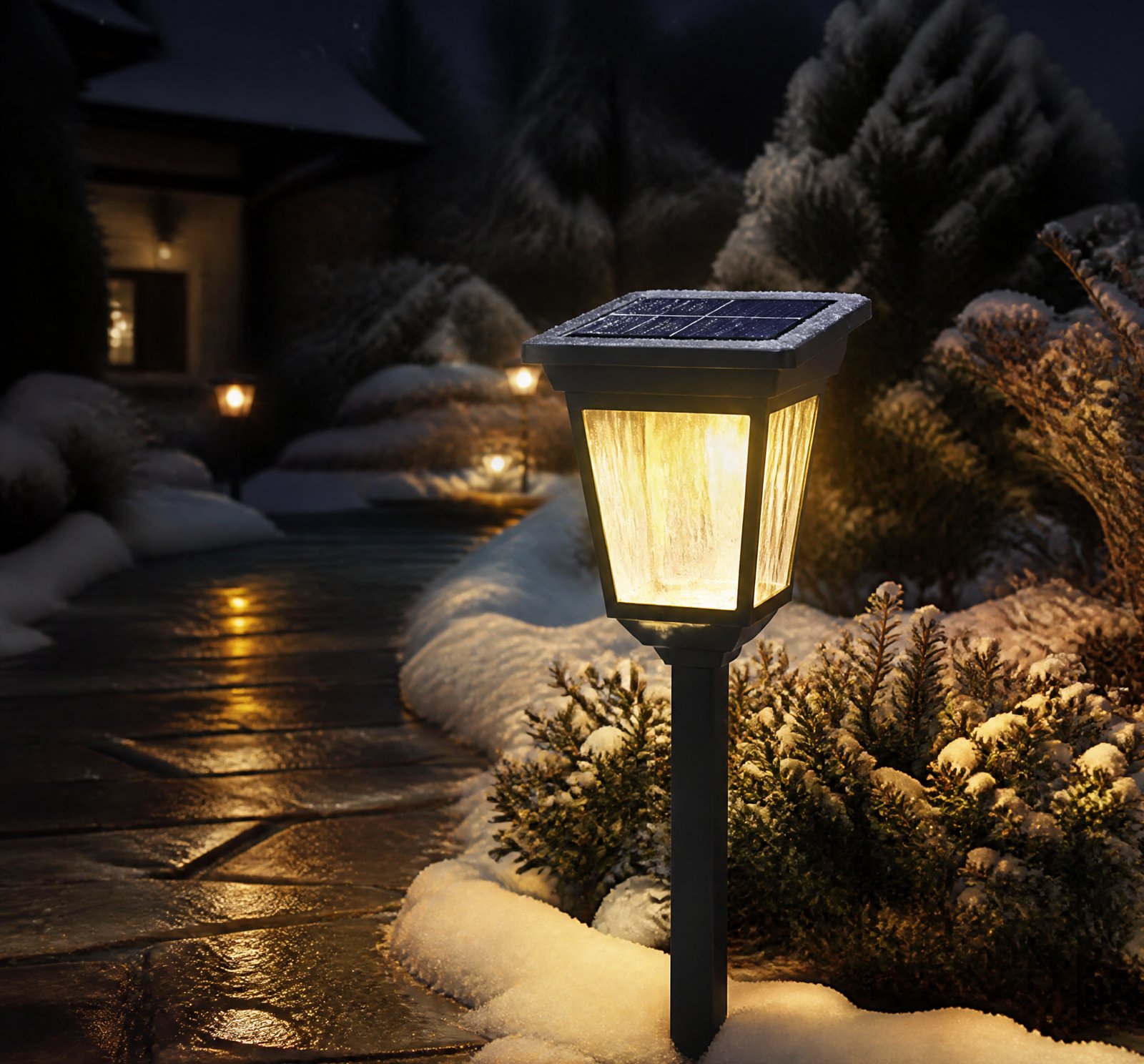
> Quick answer: Colder temperatures enhance solar panel efficiency, leading to higher instantaneous power output on sunny winter days compared to hot summer afternoons [1][4][7]. However, specific polycrystalline silicon temperature coefficients are not verified by available sources.
Solar panels are highly sensitive to temperature fluctuations, and the performance can vary significantly depending on whether it’s a cold winter day or a hot summer afternoon. In Romania, this variance can be particularly pronounced due to the country’s climate extremes. This article will delve into how these factors affect polycrystalline silicon solar lamps.
How Temperature Affects Solar Panel Efficiency
Solar panels operate at their optimal performance around 25°C [1][4][7]. As temperatures rise above this point, the open-circuit voltage decreases due to the temperature dependence of the semiconductor’s bandgap [20]. This reduction results in a decline in efficiency, with most crystalline silicon cells losing about 0.5% of their output per degree Celsius increase above 25°C [3][8].
However, not all panels are created equal. Some have lower temperature coefficients as low as −0.35%/°C, meaning they perform better in hot climates [4][7]. The exact coefficient for polycrystalline silicon is unclear from the provided sources, but it generally indicates that colder temperatures improve performance.
Polycrystalline Silicon vs. Monocrystalline Silicon
Polycrystalline panels are often assumed to be less efficient and more temperature-sensitive than monocrystalline ones [3][14]. However, the provided sources do not explicitly differentiate between polycrystalline and monocrystalline variants in terms of their temperature coefficients. The typical coefficient for crystalline silicon cells is around −0.35%/°C, but this does not specify whether it applies to both types [3][4].
Performance on Cold Winter Days vs. Hot Summer Afternoons
On cold, sunny winter days, the lower temperatures can significantly boost solar panel efficiency by reducing electrical resistance and maintaining higher voltage output [2][13]. For example, perovskite modules have been observed to achieve higher efficiency in the morning at lower temperatures under similar irradiance levels [22]. This implies that polycrystalline silicon panels would also benefit from colder conditions.
However, some sources suggest real-world losses can be closer to 1% per °C above 25°C, especially under extreme heat [8]. While voltage is more affected by temperature, current increases slightly with higher temperatures due to thermally generated carriers [3][5].
Additional Factors Affecting Performance
The performance of solar lamps and storage systems is also influenced by battery behavior. Batteries lose charge acceptance capability at high temperatures and may not deliver sufficient current in cold weather unless heated [12]. This means that even if panels produce more power in winter, the storage system might underperform.
Snow cover can further complicate matters, as it can block sunlight entirely, reducing output despite low temperatures [15][23].
Weather Patterns and Real-World Performance
Romania’s weather patterns play a significant role. While cold temperatures enhance efficiency, shorter daylight hours in winter can offset these gains. Additionally, snow accumulation can significantly reduce energy production by blocking sunlight.
Some of the coldest regions on Earth have been found to have some of the best solar potential due to high altitude and clear skies [13]. This suggests that Romania’s high-altitude areas could achieve high instantaneous output on sunny winter days despite shorter days.
Comparison Table
| Factor | Winter (Cold) | Summer (Hot) |
|–––––––-|––––––––-|–––––––––|
| Temperature Impact | Higher Efficiency | Reduced Efficiency |
| Daylight Hours | Shorter | Longer |
| Snow Cover | Potential Blockage | No Blockage |
Key Takeaways
- Cold temperatures improve solar panel performance by reducing electrical resistance and maintaining higher voltage output.
- Winter days can yield higher instantaneous power due to improved efficiency, but shorter daylight hours may offset these gains.
- Polycrystalline silicon’s exact temperature coefficient remains unverified by the provided sources.
Frequently Asked Questions
[
{
„q”: „How does snow affect solar panel performance?”,
„a”: „Snow can block sunlight entirely, reducing output regardless of cold temperatures [15][23].”
},
{
„q”: „What is the typical temperature coefficient for crystalline silicon cells?”,
„a”: „The typical temperature coefficient for crystalline silicon cells is around −0.35%/°C [3].”
},
{
„q”: „How does battery performance vary with temperature?”,
„a”: „Batteries lose charge acceptance capability at high temperatures and may not deliver sufficient current in cold weather unless heated [12].”
}
]
References
- [1] Projects_With_Everyday_Dave__HEAT_-The_Enemy_of_SOLAR-_Are_Vertical_Solar_Panels_Better__Tr8llj-0Fjw — youtube
source passage
how much energy it takes to push them out where they can move around gets lower and as this band Gap energy decreases the energy of the photons that can push it up there also decreases so if we're getting the same number of photons coming in from the Sun if we only absorb the lower energy parts of them we're going to get less energy overall well I hope that's as helpful for you as it was for me the reality is the higher energy in the Silicon we can't absorb As Much from the Sun yep okay so moving on the temperature effect is well documented in the industry and most panels come with a temperature coefficient rating the units for solar panels temperature coefficient is typically expressed as percent power per degree Celsius this indicates the percentage change in the solar panels performance usually power output for every degree Celsius in temperature change above or below the standard test condition which is 25° C or 77° F because all the specs are in Celsius and all the calculations are in Celsius I'll be doing all of today's analysis in Celsius apologies to those who love Freedom Units this rating typically varies from 3% per degree Celsius to 0.5% per degree Celsius for example in today's data I have temperatures that range from 10° CSUS in the morning to 50° C in the afternoon or a 40° swing in temperature change if if we assume a 400W panel with a coefficient of 4% per degree C we would see a 16% change in performance over that temperature swing typically we don't notice
- [2] Solar_panel_-_Wikipedia__afb0eaf3 — wikipedia
source passage
high temperatures negatively impact efficiency, colder temperatures can improve solar panel performance due to reduced electrical resistance within the cells. However, winter conditions introduce additional challenges such as snow accumulation and reduced daylight hours, which can offset the efficiency benefits of lower temperatures. Solar panels are still capable of generating power in winter, but overall output may be lower due to limited sunlight exposure and potential obstructions.[68] The ability of solar modules to withstand damage by rain, hail, heavy snow load, and cycles of heat and cold varies by manufacturer, although most solar panels on the U.S. market are UL listed, meaning they have gone through testing to withstand hail.[69] Potential-induced degradation (also called PID) is a potential-induced performance degradation in crystalline photovoltaic modules, caused by so-called stray currents.[70] This effect may cause power loss of up to 30%.[71] The power output of a photovoltaic (PV) device decreases over time due to exposure to solar radiation as well as other external conditions. The degradation index, defined as the annual percentage of output power loss, is a key factor in determining the long-term production of a photovoltaic plant. To estimate this degradation, the percentage of decrease associated with each of the electrical parameters is calculated. Individual degradation of a solar panel can negatively influence the performance of a complete string.[72
- [3] Theory_of_solar_cells_-_Wikipedia__238deba4 — wikipedia
source passage
highest-efficiency crystalline silicon cells is around −0.35%/°C. By way of comparison, the rate for amorphous silicon solar cells is −0.20 to −0.30%/°C, depending on how the cell is made. The amount of photogenerated current IL increases slightly with increasing temperature because of an increase in the number of thermally generated carriers in the cell. This effect is slight, however: about 0.065%/°C for crystalline silicon cells and 0.09% for amorphous silicon cells. The overall effect of temperature on cell efficiency can be computed using these factors in combination with the characteristic equation. However, since the change in voltage is much stronger than the change in current, the overall effect on efficiency tends to be similar to that on voltage. Most crystalline silicon solar cells decline in efficiency by 0.50%/°C and most amorphous cells decline by 0.15−0.25%/°C. The figure above shows I-V curves that might typically be seen for a crystalline silicon solar cell at various temperatures. As series resistance increases, the voltage drop between the junction voltage and the terminal voltage becomes greater for the same current. The result is that the current-controlled portion of the I-V curve begins to sag toward the origin, producing a significant decrease in and a slight reduction in ISC, the short-circuit current. Very high values of RS will also produce a significant reduction in ISC; in these regimes, series resistance dominates and the behavior of the solar c
- [4] How_long_do_residential_solar_panels_last_pv_magazine_International__a1e59f16 — authority
source passage
materials in their glass, encapsulation, and diffusion barriers. All panels also suffer something called light-induced degradation (LID), in which panels lose efficiency within the first hours of being exposed to the sun. LID varies from panel to panel based on the quality of the crystalline silicon wafers, but usually results in a one-time, 1-3% loss in efficiency, said testing laboratory PVEL, PV Evolution Labs. Weathering The exposure to weather conditions is the main driver in panel degradation. Heat is a key factor in both real-time panel performance and degradation over time. Ambient heat negatively affects the performance and efficiency of electrical components, according to NREL. By checking the manufacturer’s data sheet, a panel’s temperature coefficient can be found, which will demonstrate the panel’s ability to perform in higher temperatures. The coefficient explains how much real-time efficiency is lost by each degree Celsius increase above the standard temperature of 25 degrees Celsius. For example, a temperature coefficient of -0.353% means that for every degree Celsius above 25, 0.353% of total production capability is lost. Heat exchange drives panel degradation through a process called thermal cycling. When it is warm, materials expand, and when the temperature lowers, they contract. This movement slowly causes microcracks to form in the panel over time, lowering output. In its annual Module Score Card study, PVEL analyzed 36 operational solar projects in Ind
- [5] Solar_Photovoltaic_Performance_and_Efficiency_Basics__974f2aa6 — authority
source passage
heat. – Temperature—Solar cells generally work best at low temperatures. Higher temperatures cause the semiconductor properties to shift, resulting in a slight increase in current, but a much larger decrease in voltage. Extreme increases in temperature can also damage the cell and other module materials, leading to shorter operating lifetimes. Since much of the sunlight shining on cells becomes heat, proper thermal management improves both efficiency and lifetime. – Reflection—A cell's efficiency can be increased by minimizing the amount of light reflected away from the cell's surface. For example, untreated silicon reflects more than 30% of incident light. Anti-reflection coatings and textured surfaces help decrease reflection. A high-efficiency cell will appear dark blue or black. Determining Conversion Efficiency Researchers measure the performance of a PV device to predict the power the cell will produce. Electrical power is the product of current and voltage. Current-voltage relationships measure the electrical characteristics of PV devices. If a certain "load" resistance is connected to the two terminals of a cell or module, the current and voltage being produced will adjust according to Ohm's law (the current through a conductor between two points is directly proportional to the potential difference across the two points). Efficiencies are obtained by exposing the cell to a constant, standard level of light while maintaining a constant cell temperature, and measuring t
- [7] How_long_do_rooftop_residential_solar_panels_last_-_pv_magazine_Global__7bebb092 — authority
source passage
to decline, in some cases significantly. All panels also suffer something called light induced degradation (LID), in which panels lose efficiency within the first hours of being exposed to the sun. LID varies from panel to panel based on the quality of the crystalline silicon wafers, but usually results in a one-time, 1% to 3% loss in efficiency, said testing laboratory PVEL, PV Evolution Labs. Weather conditions The exposure to weather conditions is the main driver in panel degradation. Heat is a key factor in both real-time panel performance and degradation over time. Ambient heat negatively affects the performance and efficiency of electrical components, according to NREL. By checking the manufacturer’s data sheet, a panel’s temperature coefficient can be found, which will demonstrate the panel’s ability to perform in higher temperatures, said SolarCalculator.com. Heat exchange also drives degradation through a process called thermal cycling. When it is warm, materials expand, and when the temperature lowers, they contract. This movement slowly causes microcracks to form in the panel over time, lowering output.The coefficient explains how much efficiency is lost by each degree of Celsius increased above the standard temperature of 25 C. For example, a temperature coefficient of -0.353% means that for every degree Celsius above 25, 0.353% of total production capability is lost. In its annual Module Score Card study, PVEL analyzed 36 operational solar projects in India, and
- [8] Shining_a_light_on_extreme_weather_events_and_the_need_for__1e46177b — magazine
source passage
impact of extreme heat can be more nuanced. According to CED Greentech, a solar equipment supplier in the US, hot temperatures can reduce the output efficiency of solar modules by 10%-25%. With most solar modules having an 85-degree Celsius temperature limit, they are most efficient when operating at low temperatures. Despite countries such as Germany announcing record-breaking solar power generation last summer, solar cells are likely not meeting their maximum capacity during such extremes – though these losses are more than offset by the additional yield. When temperatures soar above average, voltage is reduced, and the efficiency of the panels is presumed to decrease by 0.5 percentage points for every degree Celsius rise in temperature. Interestingly, while a lot of operators assume this is the case, data shows that the reality is closer to 1%. While the impact of heat on solar cells is well understood, its effect on solar inverters is less clear. Although inverters contain semiconductor parts which lose efficiency as they heat up, these can tolerate high heat without breaking down – as evidenced by their presence in desert regions. Despite naturally generating heat through the conversion of DC power to AC power, heat in an inverter module needs to stay below a certain level to avoid degradation. If an inverter becomes too hot, it usually switches itself off or reduces its power to such an extent that the higher ambient temperature does not cause it harm. This is known as
- [12] US5367442A_-_Self-contained_solar_powered_lamp_-_Google_Patents__17774f1c — patent
source passage
specified by the manufacturer. At temperatures higher than the operating temperature, the charge acceptance capabilities of the electrical storage device decrease substantially. This is undesirable because sunlight to power the solar cell array is available only during a relatively short period of time each day. The current level generated by the solar cell array when in excess of the charge acceptance of the electrical storage device causes it to overheat and sustain damage, thereby causing the overall performance of the solar powered lamp to deteriorate. In one approach to overcome this problem, the electrical storage device may be arranged remote from the solar cell array. Although this prevents the electrical storage device from absorbing heat generated by the solar cell array, thus, maintaining the operating temperature at a normal level in hot weather, it is not satisfactory during cold weather because the electrical storage device is unable to provide current sufficient to illuminate the bulb at temperatures below its operating temperature. The electrical storage device is therefore typically placed in heat transfer proximity to the solar cell array so that heat absorbed by the solar cell array on a sunny day helps elevate the temperature of the power source to its normal operating temperature even if the ambient temperature is low. Moreover, existing solar lighting devices are configured in a manner which does not provide for the flow of air through the lamp. This fur
- [13] Coldest_Parts_of_Earth_Have_the_Best_Solar_PV_Potential_Study_Finds__812724cf — authority
source passage
# Coldest Parts of Earth Have the Best Solar (PV) Potential, Study Finds – CleanTechnica Source: Blog/Web URL: https://cleantechnica.com/2011/10/23/coldest-parts-of-earth-have-the-best-solar-pv-potential-study-finds/ Author: Nicholas Brown Date: 2011-10-23 Support CleanTechnica's work through a Substack subscription or on Stripe. According to a new study, some of the coldest geographic locations on earth have the best solar power generation potential if using photovoltaic panels. Some of the regions include the southern Andes and the Himalayas. The two main reasons why some of the coldest regions on earth have the best solar power generation potential are: – They are at high altitudes, which are exposed to more sunlight. – Some types of solar cells (the electricity-generating part of solar panels) generate electricity more efficiently at cold temperatures. Traditional silicon wafer solar cells are affected by heat more than others and, like all solar panels, are exposed to reasonably high temperatures all day long. I should also add that, according to a study, heat from solar radiation (sunlight) is what degrades solar cells as well as the transparent panels that they are protected behind, and more so than any other environmental factor by far. Heat is almost the exclusive destroyer of solar cells. Because solar cells do not exhibit any measurable degradation without much heat, it is reasonable to assume that they will last longer in colder climates. It is important, however,
- [14] Projects_With_Everyday_Dave__How_to_Get_MORE_POWER_With_Bifacial_Solar_Panels__x5o90l5Lu_0 — youtube
source passage
much space for light to leak between the cells I took some data for both panels without any blocking then for today's Focus I took data with the backsides block I covered cardboard with black plastic to reduce any reflection back to the panels I had to fit the cardboard tightly to the panels to prevent any light leakage but that also insulates them resulting in a significant temperature rise you can see from the front side it's completely dark between the cells and I'm pretty confident we'll see almost no gain from the back side you're probably thinking Dave the rise in temperature caused by blocking the backside with cardboard will degrade the performance and again you'd be right so I've made this plot here to show the impact of temperature on solar panel output the left side of the scale is the power output as a percentage of the rated output and the bottom is temperature in degrees Celsius and we have to use degrees Celsius because that's how all the measurements are done and the standard measurement is taken at 25° C which is 77° f typically as panels get warmer their performance degrades and that's this slope downward we see here and the flatter this curve the less effect temperature has on the panel so a 3% per degree Celsius is this blue curve here fairly flat and 0.5% per degree Celsius which is pretty close to the panels we're testing today is this little steeper curve here now the one advantage is if you live in a cold climate panels with a high temperature coeffici
- [15] Bifacial_solar_modules_shine_in_snowy_-_pv_magazine_Global__308ec4a1 — authority
source passage
# Bifacial solar modules shine in snowy environments – pv magazine Global Source: Blog/Web URL: https://www.pv-magazine.com/2022/05/23/bifacial-solar-modules-shine-in-snowy-environments/ Author: Anne Fischer Date: 2022-05-23 From pv magazine USA As solar costs have dropped, it now makes economic sense to implement them even in the deep north, yet there is concern about the effects of snow on energy generation. While solar panels operate best in colder temperatures, panels covered in snow will generate less energy, known as snow loss. A study conducted at Western University in Ontario, Canada, shows how to beat snow losses using solar energy systems. The difference between bifacial and monofacial modules is that bifacial modules absorb light from the front and back, while monofacial only collect sunlight on the front. The study analyzed snow losses on these two types of systems using hourly data including energy, solar irradiation and albedo, the measure of the diffuse reflection of solar radiation. The researchers found by using bifacial solar modules instead of trading monofacial, snow losses could be cut from double digits to just 2% on an annual basis. The bifacial solar installation had a 19% gain largely from the reflection of the snow compared to the traditional monofacial systems. The study was conducted at a pair of solar arrays that used both monofacial and bifacial modules, and data was generated in both summer and winter to determine snow loss. A camera was aimed a
- [20] Effect_of_Temperature_-_PVEducationorg__62755497 — authority
source passage
# Effect of Temperature Source: Blog/Web URL: https://www.pveducation.org/pvcdrom/solar-cell-operation/effect-of-temperature Author: A B Sproul; Green; M A Date: 2010-10-08 Like all other semiconductor devices, solar cells are sensitive to temperature. Increases in temperature reduce the bandgap of a semiconductor, thereby effecting most of the semiconductor material parameters. The decrease in the band gap of a semiconductor with increasing temperature can be viewed as increasing the energy of the electrons in the material. Lower energy is therefore needed to break the bond. In the bond model of a semiconductor bandgap, a reduction in the bond energy also reduces the bandgap. Therefore increasing the temperature reduces the bandgap. In a solar cell, the parameter most affected by an increase in temperature is the open-circuit voltage. The impact of increasing temperature is shown in the figure below. The open-circuit voltage decreases with temperature because of the temperature dependence of I0. The equation for I0 from one side of a p-n junction is given by; where: q is the electronic charge given in the constants page; A is the area; D is the diffusivity of the minority carrier given for silicon as a function of doping in the Silicon Material Parameters page; L is the minority carrier diffusion length; ND is the doping; and ni is the intrinsic carrier concentration given for silicon in the Silicon Material Parameters page. In the above equation, many of the parameters have
- [22] One-year_perovskite_solar_module_testing_shows_promising_outdoor__5f9ecd0d — magazine
source passage
from June 2024 to June 2025. The panels were deployed on fixed structures with a tilt angle of 45° and were labeled as YZ517 and YZ518. In addition, a third reference module called YZ519 was used during the measurement protocol investigations Prior to outdoor installation under natural sunlight, the modules were characterized indoors under simulated illumination. For the outdoor measurements, the group used an ESTI sensor, an anemometer, temperature sensors, a pyranometer and conventional monitoring instrumentation. The testing showed that the YZ518 module suffered significant degradation, with efficiency dropping below 7% by May 2025 compared to its initial indoor value. In contrast, YZ517 remains more stable, maintaining efficiency values around 12–13% in May 2025 after peaking above 15% in June–July 2024. Moreover, YZ517 was found to have a pronounced seasonal variation, with efficiency decreasing during winter and recovering in spring but, overall, it demonstrated “stable” performance and was therefore selected for further analysis as a function of irradiance, temperature, and time of day. This analysis showed that, during warm summer periods following several sunny days, the YZ517 panel achieved higher efficiency values in the morning at lower temperatures compared to the afternoon at similar irradiance. However, seasonal effects were present: on sunny days in November and December following cloudy periods, deviations occurred in efficiency performance as a function of i
- [23] Solar_Energy_Technologies_Office_Lab_Call_Department_of_Energy__082d0893 — authority
source passage
Performance and Reliability Lab: Sandia National Laboratories Location: Albuquerque, NM Principal Investigator: Laurie Burnham Project Summary: As solar markets expand, there is a growing interest in the impact of snow on the energy productivity of solar PV installations. The buildup of snow and ice on solar panels can restrain electrical output, reduce reliability, and decrease lifetime performance. To better understand and combat these effects, this project will identify and quantify the factors that contribute to snow-induced energy losses and gains using field measurements, snow adhesion force characterization, and modeling. The team will validate the efficiency of technological hardware improvements like advanced coatings and design configurations that can increase annual energy yields and refine existing predictive models to bring greater accuracy to levelized cost of energy (LCOE) calculations. This research will inform product development, improve system designs, and lead to more accurate performance models, helping to boost confidence in LCOE calculations. Project Name: PVInsight: A Tool Kit for Unsupervised PV System Loss Factor Analysis Lab: SLAC National Accelerator Laboratory Location: Menlo Park, CA Principal Investigator: Sila Kiliccote Project Summary: Evaluating the performance of a PV system under varying, real-world environmental conditions informs the design of system components and highlights potential causes of degradation. But detailed and accurate perf
how much energy it takes to push them out where they can move around gets lower and as this band Gap energy decreases the energy of the photons that can push it up there also decreases so if we're getting the same number of photons coming in from the Sun if we only absorb the lower energy parts of them we're going to get less energy overall well I hope that's as helpful for you as it was for me the reality is the higher energy in the Silicon we can't absorb As Much from the Sun yep okay so moving on the temperature effect is well documented in the industry and most panels come with a temperature coefficient rating the units for solar panels temperature coefficient is typically expressed as percent power per degree Celsius this indicates the percentage change in the solar panels performance usually power output for every degree Celsius in temperature change above or below the standard test condition which is 25° C or 77° F because all the specs are in Celsius and all the calculations are in Celsius I'll be doing all of today's analysis in Celsius apologies to those who love Freedom Units this rating typically varies from 3% per degree Celsius to 0.5% per degree Celsius for example in today's data I have temperatures that range from 10° CSUS in the morning to 50° C in the afternoon or a 40° swing in temperature change if if we assume a 400W panel with a coefficient of 4% per degree C we would see a 16% change in performance over that temperature swing typically we don't notice
high temperatures negatively impact efficiency, colder temperatures can improve solar panel performance due to reduced electrical resistance within the cells. However, winter conditions introduce additional challenges such as snow accumulation and reduced daylight hours, which can offset the efficiency benefits of lower temperatures. Solar panels are still capable of generating power in winter, but overall output may be lower due to limited sunlight exposure and potential obstructions.[68] The ability of solar modules to withstand damage by rain, hail, heavy snow load, and cycles of heat and cold varies by manufacturer, although most solar panels on the U.S. market are UL listed, meaning they have gone through testing to withstand hail.[69] Potential-induced degradation (also called PID) is a potential-induced performance degradation in crystalline photovoltaic modules, caused by so-called stray currents.[70] This effect may cause power loss of up to 30%.[71] The power output of a photovoltaic (PV) device decreases over time due to exposure to solar radiation as well as other external conditions. The degradation index, defined as the annual percentage of output power loss, is a key factor in determining the long-term production of a photovoltaic plant. To estimate this degradation, the percentage of decrease associated with each of the electrical parameters is calculated. Individual degradation of a solar panel can negatively influence the performance of a complete string.[72
highest-efficiency crystalline silicon cells is around −0.35%/°C. By way of comparison, the rate for amorphous silicon solar cells is −0.20 to −0.30%/°C, depending on how the cell is made. The amount of photogenerated current IL increases slightly with increasing temperature because of an increase in the number of thermally generated carriers in the cell. This effect is slight, however: about 0.065%/°C for crystalline silicon cells and 0.09% for amorphous silicon cells. The overall effect of temperature on cell efficiency can be computed using these factors in combination with the characteristic equation. However, since the change in voltage is much stronger than the change in current, the overall effect on efficiency tends to be similar to that on voltage. Most crystalline silicon solar cells decline in efficiency by 0.50%/°C and most amorphous cells decline by 0.15−0.25%/°C. The figure above shows I-V curves that might typically be seen for a crystalline silicon solar cell at various temperatures. As series resistance increases, the voltage drop between the junction voltage and the terminal voltage becomes greater for the same current. The result is that the current-controlled portion of the I-V curve begins to sag toward the origin, producing a significant decrease in and a slight reduction in ISC, the short-circuit current. Very high values of RS will also produce a significant reduction in ISC; in these regimes, series resistance dominates and the behavior of the solar c
materials in their glass, encapsulation, and diffusion barriers. All panels also suffer something called light-induced degradation (LID), in which panels lose efficiency within the first hours of being exposed to the sun. LID varies from panel to panel based on the quality of the crystalline silicon wafers, but usually results in a one-time, 1-3% loss in efficiency, said testing laboratory PVEL, PV Evolution Labs. Weathering The exposure to weather conditions is the main driver in panel degradation. Heat is a key factor in both real-time panel performance and degradation over time. Ambient heat negatively affects the performance and efficiency of electrical components, according to NREL. By checking the manufacturer’s data sheet, a panel’s temperature coefficient can be found, which will demonstrate the panel’s ability to perform in higher temperatures. The coefficient explains how much real-time efficiency is lost by each degree Celsius increase above the standard temperature of 25 degrees Celsius. For example, a temperature coefficient of -0.353% means that for every degree Celsius above 25, 0.353% of total production capability is lost. Heat exchange drives panel degradation through a process called thermal cycling. When it is warm, materials expand, and when the temperature lowers, they contract. This movement slowly causes microcracks to form in the panel over time, lowering output. In its annual Module Score Card study, PVEL analyzed 36 operational solar projects in Ind
heat. – Temperature—Solar cells generally work best at low temperatures. Higher temperatures cause the semiconductor properties to shift, resulting in a slight increase in current, but a much larger decrease in voltage. Extreme increases in temperature can also damage the cell and other module materials, leading to shorter operating lifetimes. Since much of the sunlight shining on cells becomes heat, proper thermal management improves both efficiency and lifetime. – Reflection—A cell's efficiency can be increased by minimizing the amount of light reflected away from the cell's surface. For example, untreated silicon reflects more than 30% of incident light. Anti-reflection coatings and textured surfaces help decrease reflection. A high-efficiency cell will appear dark blue or black. Determining Conversion Efficiency Researchers measure the performance of a PV device to predict the power the cell will produce. Electrical power is the product of current and voltage. Current-voltage relationships measure the electrical characteristics of PV devices. If a certain "load" resistance is connected to the two terminals of a cell or module, the current and voltage being produced will adjust according to Ohm's law (the current through a conductor between two points is directly proportional to the potential difference across the two points). Efficiencies are obtained by exposing the cell to a constant, standard level of light while maintaining a constant cell temperature, and measuring t
to decline, in some cases significantly. All panels also suffer something called light induced degradation (LID), in which panels lose efficiency within the first hours of being exposed to the sun. LID varies from panel to panel based on the quality of the crystalline silicon wafers, but usually results in a one-time, 1% to 3% loss in efficiency, said testing laboratory PVEL, PV Evolution Labs. Weather conditions The exposure to weather conditions is the main driver in panel degradation. Heat is a key factor in both real-time panel performance and degradation over time. Ambient heat negatively affects the performance and efficiency of electrical components, according to NREL. By checking the manufacturer’s data sheet, a panel’s temperature coefficient can be found, which will demonstrate the panel’s ability to perform in higher temperatures, said SolarCalculator.com. Heat exchange also drives degradation through a process called thermal cycling. When it is warm, materials expand, and when the temperature lowers, they contract. This movement slowly causes microcracks to form in the panel over time, lowering output.The coefficient explains how much efficiency is lost by each degree of Celsius increased above the standard temperature of 25 C. For example, a temperature coefficient of -0.353% means that for every degree Celsius above 25, 0.353% of total production capability is lost. In its annual Module Score Card study, PVEL analyzed 36 operational solar projects in India, and
impact of extreme heat can be more nuanced. According to CED Greentech, a solar equipment supplier in the US, hot temperatures can reduce the output efficiency of solar modules by 10%-25%. With most solar modules having an 85-degree Celsius temperature limit, they are most efficient when operating at low temperatures. Despite countries such as Germany announcing record-breaking solar power generation last summer, solar cells are likely not meeting their maximum capacity during such extremes – though these losses are more than offset by the additional yield. When temperatures soar above average, voltage is reduced, and the efficiency of the panels is presumed to decrease by 0.5 percentage points for every degree Celsius rise in temperature. Interestingly, while a lot of operators assume this is the case, data shows that the reality is closer to 1%. While the impact of heat on solar cells is well understood, its effect on solar inverters is less clear. Although inverters contain semiconductor parts which lose efficiency as they heat up, these can tolerate high heat without breaking down – as evidenced by their presence in desert regions. Despite naturally generating heat through the conversion of DC power to AC power, heat in an inverter module needs to stay below a certain level to avoid degradation. If an inverter becomes too hot, it usually switches itself off or reduces its power to such an extent that the higher ambient temperature does not cause it harm. This is known as
specified by the manufacturer. At temperatures higher than the operating temperature, the charge acceptance capabilities of the electrical storage device decrease substantially. This is undesirable because sunlight to power the solar cell array is available only during a relatively short period of time each day. The current level generated by the solar cell array when in excess of the charge acceptance of the electrical storage device causes it to overheat and sustain damage, thereby causing the overall performance of the solar powered lamp to deteriorate. In one approach to overcome this problem, the electrical storage device may be arranged remote from the solar cell array. Although this prevents the electrical storage device from absorbing heat generated by the solar cell array, thus, maintaining the operating temperature at a normal level in hot weather, it is not satisfactory during cold weather because the electrical storage device is unable to provide current sufficient to illuminate the bulb at temperatures below its operating temperature. The electrical storage device is therefore typically placed in heat transfer proximity to the solar cell array so that heat absorbed by the solar cell array on a sunny day helps elevate the temperature of the power source to its normal operating temperature even if the ambient temperature is low. Moreover, existing solar lighting devices are configured in a manner which does not provide for the flow of air through the lamp. This fur
# Coldest Parts of Earth Have the Best Solar (PV) Potential, Study Finds – CleanTechnica Source: Blog/Web URL: https://cleantechnica.com/2011/10/23/coldest-parts-of-earth-have-the-best-solar-pv-potential-study-finds/ Author: Nicholas Brown Date: 2011-10-23 Support CleanTechnica's work through a Substack subscription or on Stripe. According to a new study, some of the coldest geographic locations on earth have the best solar power generation potential if using photovoltaic panels. Some of the regions include the southern Andes and the Himalayas. The two main reasons why some of the coldest regions on earth have the best solar power generation potential are: – They are at high altitudes, which are exposed to more sunlight. – Some types of solar cells (the electricity-generating part of solar panels) generate electricity more efficiently at cold temperatures. Traditional silicon wafer solar cells are affected by heat more than others and, like all solar panels, are exposed to reasonably high temperatures all day long. I should also add that, according to a study, heat from solar radiation (sunlight) is what degrades solar cells as well as the transparent panels that they are protected behind, and more so than any other environmental factor by far. Heat is almost the exclusive destroyer of solar cells. Because solar cells do not exhibit any measurable degradation without much heat, it is reasonable to assume that they will last longer in colder climates. It is important, however,
much space for light to leak between the cells I took some data for both panels without any blocking then for today's Focus I took data with the backsides block I covered cardboard with black plastic to reduce any reflection back to the panels I had to fit the cardboard tightly to the panels to prevent any light leakage but that also insulates them resulting in a significant temperature rise you can see from the front side it's completely dark between the cells and I'm pretty confident we'll see almost no gain from the back side you're probably thinking Dave the rise in temperature caused by blocking the backside with cardboard will degrade the performance and again you'd be right so I've made this plot here to show the impact of temperature on solar panel output the left side of the scale is the power output as a percentage of the rated output and the bottom is temperature in degrees Celsius and we have to use degrees Celsius because that's how all the measurements are done and the standard measurement is taken at 25° C which is 77° f typically as panels get warmer their performance degrades and that's this slope downward we see here and the flatter this curve the less effect temperature has on the panel so a 3% per degree Celsius is this blue curve here fairly flat and 0.5% per degree Celsius which is pretty close to the panels we're testing today is this little steeper curve here now the one advantage is if you live in a cold climate panels with a high temperature coeffici
# Bifacial solar modules shine in snowy environments – pv magazine Global Source: Blog/Web URL: https://www.pv-magazine.com/2022/05/23/bifacial-solar-modules-shine-in-snowy-environments/ Author: Anne Fischer Date: 2022-05-23 From pv magazine USA As solar costs have dropped, it now makes economic sense to implement them even in the deep north, yet there is concern about the effects of snow on energy generation. While solar panels operate best in colder temperatures, panels covered in snow will generate less energy, known as snow loss. A study conducted at Western University in Ontario, Canada, shows how to beat snow losses using solar energy systems. The difference between bifacial and monofacial modules is that bifacial modules absorb light from the front and back, while monofacial only collect sunlight on the front. The study analyzed snow losses on these two types of systems using hourly data including energy, solar irradiation and albedo, the measure of the diffuse reflection of solar radiation. The researchers found by using bifacial solar modules instead of trading monofacial, snow losses could be cut from double digits to just 2% on an annual basis. The bifacial solar installation had a 19% gain largely from the reflection of the snow compared to the traditional monofacial systems. The study was conducted at a pair of solar arrays that used both monofacial and bifacial modules, and data was generated in both summer and winter to determine snow loss. A camera was aimed a
# Effect of Temperature Source: Blog/Web URL: https://www.pveducation.org/pvcdrom/solar-cell-operation/effect-of-temperature Author: A B Sproul; Green; M A Date: 2010-10-08 Like all other semiconductor devices, solar cells are sensitive to temperature. Increases in temperature reduce the bandgap of a semiconductor, thereby effecting most of the semiconductor material parameters. The decrease in the band gap of a semiconductor with increasing temperature can be viewed as increasing the energy of the electrons in the material. Lower energy is therefore needed to break the bond. In the bond model of a semiconductor bandgap, a reduction in the bond energy also reduces the bandgap. Therefore increasing the temperature reduces the bandgap. In a solar cell, the parameter most affected by an increase in temperature is the open-circuit voltage. The impact of increasing temperature is shown in the figure below. The open-circuit voltage decreases with temperature because of the temperature dependence of I0. The equation for I0 from one side of a p-n junction is given by; where: q is the electronic charge given in the constants page; A is the area; D is the diffusivity of the minority carrier given for silicon as a function of doping in the Silicon Material Parameters page; L is the minority carrier diffusion length; ND is the doping; and ni is the intrinsic carrier concentration given for silicon in the Silicon Material Parameters page. In the above equation, many of the parameters have
from June 2024 to June 2025. The panels were deployed on fixed structures with a tilt angle of 45° and were labeled as YZ517 and YZ518. In addition, a third reference module called YZ519 was used during the measurement protocol investigations Prior to outdoor installation under natural sunlight, the modules were characterized indoors under simulated illumination. For the outdoor measurements, the group used an ESTI sensor, an anemometer, temperature sensors, a pyranometer and conventional monitoring instrumentation. The testing showed that the YZ518 module suffered significant degradation, with efficiency dropping below 7% by May 2025 compared to its initial indoor value. In contrast, YZ517 remains more stable, maintaining efficiency values around 12–13% in May 2025 after peaking above 15% in June–July 2024. Moreover, YZ517 was found to have a pronounced seasonal variation, with efficiency decreasing during winter and recovering in spring but, overall, it demonstrated “stable” performance and was therefore selected for further analysis as a function of irradiance, temperature, and time of day. This analysis showed that, during warm summer periods following several sunny days, the YZ517 panel achieved higher efficiency values in the morning at lower temperatures compared to the afternoon at similar irradiance. However, seasonal effects were present: on sunny days in November and December following cloudy periods, deviations occurred in efficiency performance as a function of i
Performance and Reliability Lab: Sandia National Laboratories Location: Albuquerque, NM Principal Investigator: Laurie Burnham Project Summary: As solar markets expand, there is a growing interest in the impact of snow on the energy productivity of solar PV installations. The buildup of snow and ice on solar panels can restrain electrical output, reduce reliability, and decrease lifetime performance. To better understand and combat these effects, this project will identify and quantify the factors that contribute to snow-induced energy losses and gains using field measurements, snow adhesion force characterization, and modeling. The team will validate the efficiency of technological hardware improvements like advanced coatings and design configurations that can increase annual energy yields and refine existing predictive models to bring greater accuracy to levelized cost of energy (LCOE) calculations. This research will inform product development, improve system designs, and lead to more accurate performance models, helping to boost confidence in LCOE calculations. Project Name: PVInsight: A Tool Kit for Unsupervised PV System Loss Factor Analysis Lab: SLAC National Accelerator Laboratory Location: Menlo Park, CA Principal Investigator: Sila Kiliccote Project Summary: Evaluating the performance of a PV system under varying, real-world environmental conditions informs the design of system components and highlights potential causes of degradation. But detailed and accurate perf