
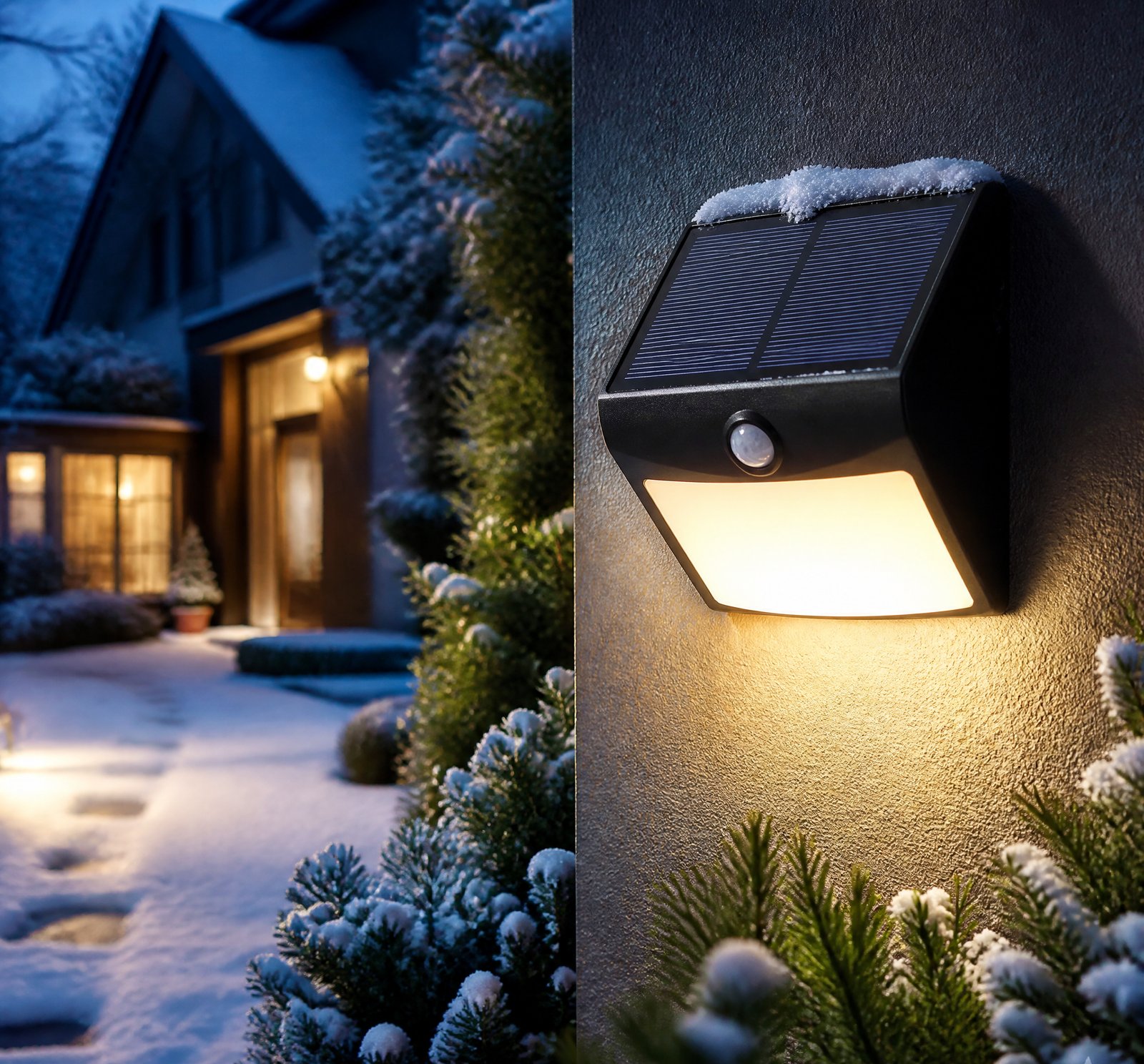
> Quick answer: A fully charged battery from a 6-hour summer charge can provide more than 6 hours of full brightness [5][13]. However, a 4-hour winter charge likely results in less than 6 hours due to limited sunlight and colder temperatures.
Solar lamps are a popular choice for outdoor lighting in Romania due to their energy efficiency and ease of use. While the technology behind these lamps is straightforward, understanding how seasonal changes affect runtime can be complex. This article delves into the effective runtime of solar lamps after both summer and winter charging conditions.
Understanding Solar Lamp Runtime
The runtime of a fully charged battery from a 6-hour summer charge in direct sunlight is likely to exceed 6 hours [5][13]. This duration ensures optimal illumination for most nighttime activities. However, winter conditions significantly impact this performance due to shorter daylight hours and lower temperatures.
Summer Charging Conditions
During the summer months, solar lamps benefit from longer days and abundant sunlight. A standard 6-hour charge under direct sunlight is sufficient to provide more than 6 hours of full-brightness runtime [5][13]. This extended illumination supports various outdoor activities well into the night without the need for additional charging.
Winter Charging Conditions
Winter presents a different set of challenges due to reduced daylight and colder temperatures. A 4-hour winter charge often results in insufficient energy storage, leading to less than 6 hours of full-brightness runtime [3]. The lower sunlight intensity combined with decreased battery capacity under cold conditions can significantly reduce the overall performance.
Impact of Temperature on Battery Performance
Temperature plays a crucial role in determining the effective capacity and charging time of solar lamp batteries. Lower temperatures decrease the effective capacity, making it harder for the battery to charge fully even within the recommended timeframe [4][23].
Cold Weather Effects
Cold weather reduces the effectiveness of solar lamps by slowing down the charging process and reducing the overall energy storage capacity [18][23]. This means that a 4-hour winter charge is often insufficient, resulting in shorter runtime compared to summer conditions.
Dynamic Brightness Control Systems
To optimize energy use, many solar lamps feature dynamic brightness control systems. These systems adjust light output based on time of night or motion detection, ensuring the batteries are conserved for critical periods [15][20].
Energy-Saving Modes
Energy-saving modes such as dimming during low-demand periods can help extend runtime in winter months when full-brightness is not necessary. This adaptive functionality ensures that the lamps remain functional even under challenging conditions.
Comparison of Summer and Winter Charging Conditions
| Condition | Description |
|––––––|–––––––––––––––––––|
| Summer (6 hrs) | More than 6 hours of full brightness [5][13] |
| Winter (4 hrs) | Less than 6 hours due to limited sunlight, cold temps |
Key Takeaways
- A fully charged battery from a summer charge provides over 6 hours of runtime.
- Winter charging conditions limit runtime significantly.
- Cold temperatures and reduced daylight decrease effective capacity and charging efficiency.
References
- [3] Garden_Light_Rechargeable_Battery_Forum__89f35fc5 — reddit
source passage
# EEVblog® Electronics Community Forum Source: Blog/Web URL: https://www.eevblog.com/forum/beginners/garden-light-rechargeable-battery/ Author: Author Date: 2014-08-12 Right now they seem to be bit weak 1) Don't judge the garden light performance by what you see in winter. I did some testing on a solar garden light in January here in Melbourne and at midday under the direct summer sun the charging rate was 26 mA. Today under bright overcast conditions in winter the Sun was behind a white cloud and very bright to look at directly. The garden light is only getting indirect lighting in these conditions and the charging rate was only 2mA. This particular garden light runs the LED at between 9 and 8 mA so on overcast days in winter the battery is only going to charge up enough to run the LED for a couple of hours each night. The size of the battery is not going to make any difference to the performance during these overcast days. [EDIT] 12pm Monday Melbourne is full overcast. The charging current for the same garden light under these conditions was only 6.4uA. Would it be OK to put some 1800mAh NiMh low self-discharge batteries or it makes no sense? 2) You can test your own garden light to see what you can expect with an AA battery during summer. You may not need to go the trouble of adding Li-ion cells or multiple AA batteries. You may find you will get enough from a single large capacity AA. I have an Arlec Trillium garden light that uses a single AA battery that I did a differe
- [4] WikipediaReference_deskArchivesScience2010_-_Wikipedia__66e32724 — wikipedia
source passage
# Wikipedia:Reference desk/Archives/Science/2010 November 11 – Wikipedia Source: Blog/Web URL: https://en.wikipedia.org/wiki/Wikipedia:Reference_desk/Archives/Science/2010_November_11 Author: Date: 2010-11-11 —Preceding unsigned comment added by Kright19 (talk • contribs) 03:37, 11 November 2010 (UTC) – Ariel. (talk) 03:53, 11 November 2010 (UTC) – One more formula you might find helpful in planning is this. Battery capacities are often expressed in amp-hours rather than watt-hours; to convert amp-hour capacities to watt-hours, multiply the amp-hour rating by the voltage of the battery (usually 12 volts). For example, a 100 amp-hour (A·hr) 12 volt battery has a capacity of 1200 watt-hours. Worth remembering, too, is that you should aim to exhaust no more than about 50% of the capacity of a deep-cycle battery before recharging; repeated deep or full discharges will shorten the battery life significantly. (So that 100 amp-hour battery should only be thought of as good for 600 watt-hours storage.) Battery performance may also be poorer under cold-weather conditions, and deeply discharged batteries are prone to freezing damage. On the bright side, if your battery and inverter are inside the coop with the chickens (but protected from pecking!) then all of the charging, discharging, and inverter inefficiencies that would show up as 'waste' heat will at least be going into keeping the coop warm. – To sum up — for winter heating use, you're probably going to need significantly more c
- [5] US9194563B2_-_Inflatable_solar_powered_lamp_-_Google_Patents__d4ff4a04 — patent
source passage
optimum operating voltage of 2.6 V. Generally, when the solar panel is laid flat in direct sunlight, the rechargeable battery is completely charged in 4 to 8 hours, with sufficient charge to yield more than 6 hours of light and preferably more than 8 hours of light once fully charged. Although any number of LEDs may be used within the scope of the invention, 6 to 10 LEDs is preferable, and 8 is most preferred. The LEDs provide a 4000 mcd light source, sufficient to illuminate a 10 square foot area with usable lighting. In embodiments, multicolored LEDs may be used. Use of multicolor LEDs may be functional, such as red or yellow to indicate emergency condition, or decorative. The rechargeable battery 40 is preferably a lithium-ion polymer battery with a thin profile that can be readily incorporated onto a printed circuit board. In the most preferred embodiments, the rechargeable battery has a thickness of no more than about 5 mm, a capacity of 1000 mAh, and a nominal operating voltage of 3.7 V. wherein the planar array of LEDs consists of eight LEDs arranged in a circle and powered by the battery. In a preferred embodiment, each LED has a maximum operating current of 320 mA at 90 lumens (high power) and 220 mA at 70 lumens (low power). The printed circuit board 200 controls the powering of the LEDs by the battery 40. A user activates a power switch 204 located on the exterior of the lamp to power the LEDs. In embodiments, the circuit board controls three levels of illumination
- [13] WO2014070291A1_-_Inflatable_solar_powered_lamp_-_Google_Patents__ae93c58e — patent
source passage
when the solar panel is laid flat in direct sunlight, the rechargeable battery is completely charged in 4 to 8 hours, with sufficient charge to yield more than 6 hours of light and preferably more than 8 hours of light once fully charged. Although any number of LEDs may be used within the scope of the invention, 6 to 10 LEDs is preferable, and 8 is most preferred. The LEDs provide a 4000 mcd light source, sufficient to illuminate a 10 square foot area with usable lighting. In embodiments, multicolored LEDs may be used. Use of multicolor LEDs may be functional, such as red or yellow to indicate emergency condition, or decorative. [0013] The rechargeable battery 40 is preferably a lithium-ion polymer battery with a thin profile that can be readily incorporated onto a printed circuit board. In the most preferred embodiments, the rechargeable battery has a thickness of no more than about 5 mm, a capacity of 1000 mAh, and a nominal operating voltage of 3.7 V. wherein the planar array of LEDs consists of eight LEDs arranged in a circle and powered by the battery. In a preferred embodiment, each LED has a maximum operating current of 320 mA at 90 lumens (high power) and 220 mA at 70 lumens (low power). [0014] The printed circuit board 200 controls the powering of the LEDs by the battery 40. A user activates a power switch 204 located on the exterior of the lamp to power the LEDs. In embodiments, the circuit board controls three levels of illumination: low power, high power and inter
- [15] US10563827B2_-_Solar_powered_illumination_system_-_Google_Patents__f82b6692 — patent
source passage
charging of the rechargeable battery and energy conservation. – the illumination system further implements a programmable charge controller or a motion sensor in areas where the daytime is too short. – the illumination system increases a power back-up to 14-20 days. – the motion sensor detects an object movement from a specific distance, the illumination system starts working with 100% of power, otherwise the illumination system works at 20-40% of a rated power value based on pre-defined programming. – the charge controllers are programmed based on duration of a night in a geographical location such as 8 hours in summer and 12-14 hours in winter. – a light intensity is programmed to be at 100% for the first 4 hours, 50% for the following 4 hours and 20% for the rest of the night until the sunrise. – the illumination unit is primarily made up of Light Emitting Diode (LED) module. – the LED modules have standard luminous flux and low power intake. – the LED module is housed in a metallic casing comprising heat sink that exchanges a heat generated during illumination of the LED module. – a load on the rechargeable battery reduces as the LED module keeps functioning at optimal rating for a longer time period without heat loss. – the reduction in heat loss also prevents the LED lamps from getting damaged resulting in maintenance of lowest offset percentage with reference to loss-of-load probability (LOLP) index. – LOLP loss-of-load probability – the reduction in heat effect on the
- [18] How_long_do_residential_energy_storage_batteries_last_pv_magazine__9d58703b — authority
source passage
Battery life Solar installer Sunrun said batteries can last anywhere between five to 15 years. That means a replacement likely will be needed during the 20 to 30 year life of a solar system. Battery life expectancy is mostly driven by usage cycles. As demonstrated by the LG and Tesla product warranties, thresholds of 60% or 70% capacity are warranted through a certain number of charge cycles. Two use-scenarios drive this degradation: over charge and trickle charge, said the Faraday Institution. Overcharge is the act of pushing current into a battery that is fully charged. Doing this can cause it to overheat, or even potentially catch fire. Trickle charge involves a process in which the battery is continually charged up to 100%, and inevitably losses take place. The bounce between 100% and just under 100% can elevate internal temperatures, diminishing capacity and lifetime. Another cause of degradation over time is the loss of mobile lithium-ions in the battery, said Faraday. Side reactions in the battery can trap free usable lithium, thereby lowering capacity gradually. While cold temperatures can halt a lithium-ion battery from performing, they do not actually degrade the battery or shorten its effective life. Overall battery lifetime is, however, diminished at high temperatures, said Faraday. This is because the electrolyte that sits between the electrodes breaks down at elevated temperatures, causing the battery to lose its capacity for Li-ion shuttling. This can reduce th
- [20] US10563827B2_-_Solar_powered_illumination_system_-_Google_Patents__f82b6692 — patent
source passage
possesses high efficiency in cloudy, rainy, snowy and dusty areas due to efficient charging of the rechargeable battery and energy conservation. The illumination system further implements a programmable charge controller or a motion sensor in areas where the daytime is too short. The illumination system increases a power back-up to 14-20 days. When the motion sensor detects an object movement from a specific distance, the illumination system starts working with 100% of power, otherwise the illumination system works at 20-40% of a rated power value based on pre-defined programming. Furthermore, the charge controllers are programmed based on duration of a night in a geographical location such as 8 hours in summer and 12-14 hours in winter. On the basis of night duration, a light intensity is programmed to be at 100% for the first 4 hours, 50% for the following 4 hours and 20% for the rest of the night until the sunrise. According to one embodiment herein, for installing the illumination system in desert or snowy areas following customizations are adopted: – – a. Increasing a tilt angle of the solar panels during installation without decrease in the solar light absorption. The solution reduces an accumulation of dust, snow and rain on the surface of the solar panel. – b. Using a self-cleansing Nano-coating on the solar panels to decrease a friction on the surface of the solar panel which also prevents the accumulation of dust, snow and rain on the surface of the solar panel. Acc
- [23] Battery_capacity_vs_operating_temperature_Sizing_a_storage_system__0e9e3642 — magazine
source passage
# Battery capacity vs. operating temperature: Sizing a storage system when ambient temperatures vary Source: Blog/Web URL: https://solarbuildermag.com/featured/sizing-battery-storage-system-when-ambient-temperatures-vary/ Author: Contributing Author Date: 2021-01-04 One of the most common questions asked by PV Installers, as well as customers, is how to properly size and charge a battery bank in places where ambient temperatures may vary considerably throughout the year. Temperature affects battery performance in two ways. The standard capacity rating of a battery is based on each cell having an electrolyte temperature of 25ºC (77ºF). Temperatures below the nominal 25ºC (77ºF) reduce the battery’s effective capacity and lengthen the time to restore the battery to full charge. Temperatures above 25ºC (77ºF) will slightly increase capacity but also will increase self-discharge and shorten battery life. Although the capacity of a battery will increase as temperatures rise, any cycle life loss due to operating at higher temperatures is not recoverable. Lower Operating Temperatures: Reduce capacity and maintain longer cycle life. Higher Operating Temperatures: Maintain capacity, increase the rate of self-discharge and battery wear and shortening battery cycle life. As ambient temperatures fall below 25ºC (77ºF), the required battery capacity to supply equivalent storage and power will increase. A multiplier is used to calculate the required battery bank capacity in cold temperatur
# EEVblog® Electronics Community Forum Source: Blog/Web URL: https://www.eevblog.com/forum/beginners/garden-light-rechargeable-battery/ Author: Author Date: 2014-08-12 Right now they seem to be bit weak 1) Don't judge the garden light performance by what you see in winter. I did some testing on a solar garden light in January here in Melbourne and at midday under the direct summer sun the charging rate was 26 mA. Today under bright overcast conditions in winter the Sun was behind a white cloud and very bright to look at directly. The garden light is only getting indirect lighting in these conditions and the charging rate was only 2mA. This particular garden light runs the LED at between 9 and 8 mA so on overcast days in winter the battery is only going to charge up enough to run the LED for a couple of hours each night. The size of the battery is not going to make any difference to the performance during these overcast days. [EDIT] 12pm Monday Melbourne is full overcast. The charging current for the same garden light under these conditions was only 6.4uA. Would it be OK to put some 1800mAh NiMh low self-discharge batteries or it makes no sense? 2) You can test your own garden light to see what you can expect with an AA battery during summer. You may not need to go the trouble of adding Li-ion cells or multiple AA batteries. You may find you will get enough from a single large capacity AA. I have an Arlec Trillium garden light that uses a single AA battery that I did a differe
# Wikipedia:Reference desk/Archives/Science/2010 November 11 – Wikipedia Source: Blog/Web URL: https://en.wikipedia.org/wiki/Wikipedia:Reference_desk/Archives/Science/2010_November_11 Author: Date: 2010-11-11 —Preceding unsigned comment added by Kright19 (talk • contribs) 03:37, 11 November 2010 (UTC) – Ariel. (talk) 03:53, 11 November 2010 (UTC) – One more formula you might find helpful in planning is this. Battery capacities are often expressed in amp-hours rather than watt-hours; to convert amp-hour capacities to watt-hours, multiply the amp-hour rating by the voltage of the battery (usually 12 volts). For example, a 100 amp-hour (A·hr) 12 volt battery has a capacity of 1200 watt-hours. Worth remembering, too, is that you should aim to exhaust no more than about 50% of the capacity of a deep-cycle battery before recharging; repeated deep or full discharges will shorten the battery life significantly. (So that 100 amp-hour battery should only be thought of as good for 600 watt-hours storage.) Battery performance may also be poorer under cold-weather conditions, and deeply discharged batteries are prone to freezing damage. On the bright side, if your battery and inverter are inside the coop with the chickens (but protected from pecking!) then all of the charging, discharging, and inverter inefficiencies that would show up as 'waste' heat will at least be going into keeping the coop warm. – To sum up — for winter heating use, you're probably going to need significantly more c
optimum operating voltage of 2.6 V. Generally, when the solar panel is laid flat in direct sunlight, the rechargeable battery is completely charged in 4 to 8 hours, with sufficient charge to yield more than 6 hours of light and preferably more than 8 hours of light once fully charged. Although any number of LEDs may be used within the scope of the invention, 6 to 10 LEDs is preferable, and 8 is most preferred. The LEDs provide a 4000 mcd light source, sufficient to illuminate a 10 square foot area with usable lighting. In embodiments, multicolored LEDs may be used. Use of multicolor LEDs may be functional, such as red or yellow to indicate emergency condition, or decorative. The rechargeable battery 40 is preferably a lithium-ion polymer battery with a thin profile that can be readily incorporated onto a printed circuit board. In the most preferred embodiments, the rechargeable battery has a thickness of no more than about 5 mm, a capacity of 1000 mAh, and a nominal operating voltage of 3.7 V. wherein the planar array of LEDs consists of eight LEDs arranged in a circle and powered by the battery. In a preferred embodiment, each LED has a maximum operating current of 320 mA at 90 lumens (high power) and 220 mA at 70 lumens (low power). The printed circuit board 200 controls the powering of the LEDs by the battery 40. A user activates a power switch 204 located on the exterior of the lamp to power the LEDs. In embodiments, the circuit board controls three levels of illumination
when the solar panel is laid flat in direct sunlight, the rechargeable battery is completely charged in 4 to 8 hours, with sufficient charge to yield more than 6 hours of light and preferably more than 8 hours of light once fully charged. Although any number of LEDs may be used within the scope of the invention, 6 to 10 LEDs is preferable, and 8 is most preferred. The LEDs provide a 4000 mcd light source, sufficient to illuminate a 10 square foot area with usable lighting. In embodiments, multicolored LEDs may be used. Use of multicolor LEDs may be functional, such as red or yellow to indicate emergency condition, or decorative. [0013] The rechargeable battery 40 is preferably a lithium-ion polymer battery with a thin profile that can be readily incorporated onto a printed circuit board. In the most preferred embodiments, the rechargeable battery has a thickness of no more than about 5 mm, a capacity of 1000 mAh, and a nominal operating voltage of 3.7 V. wherein the planar array of LEDs consists of eight LEDs arranged in a circle and powered by the battery. In a preferred embodiment, each LED has a maximum operating current of 320 mA at 90 lumens (high power) and 220 mA at 70 lumens (low power). [0014] The printed circuit board 200 controls the powering of the LEDs by the battery 40. A user activates a power switch 204 located on the exterior of the lamp to power the LEDs. In embodiments, the circuit board controls three levels of illumination: low power, high power and inter
charging of the rechargeable battery and energy conservation. – the illumination system further implements a programmable charge controller or a motion sensor in areas where the daytime is too short. – the illumination system increases a power back-up to 14-20 days. – the motion sensor detects an object movement from a specific distance, the illumination system starts working with 100% of power, otherwise the illumination system works at 20-40% of a rated power value based on pre-defined programming. – the charge controllers are programmed based on duration of a night in a geographical location such as 8 hours in summer and 12-14 hours in winter. – a light intensity is programmed to be at 100% for the first 4 hours, 50% for the following 4 hours and 20% for the rest of the night until the sunrise. – the illumination unit is primarily made up of Light Emitting Diode (LED) module. – the LED modules have standard luminous flux and low power intake. – the LED module is housed in a metallic casing comprising heat sink that exchanges a heat generated during illumination of the LED module. – a load on the rechargeable battery reduces as the LED module keeps functioning at optimal rating for a longer time period without heat loss. – the reduction in heat loss also prevents the LED lamps from getting damaged resulting in maintenance of lowest offset percentage with reference to loss-of-load probability (LOLP) index. – LOLP loss-of-load probability – the reduction in heat effect on the
Battery life Solar installer Sunrun said batteries can last anywhere between five to 15 years. That means a replacement likely will be needed during the 20 to 30 year life of a solar system. Battery life expectancy is mostly driven by usage cycles. As demonstrated by the LG and Tesla product warranties, thresholds of 60% or 70% capacity are warranted through a certain number of charge cycles. Two use-scenarios drive this degradation: over charge and trickle charge, said the Faraday Institution. Overcharge is the act of pushing current into a battery that is fully charged. Doing this can cause it to overheat, or even potentially catch fire. Trickle charge involves a process in which the battery is continually charged up to 100%, and inevitably losses take place. The bounce between 100% and just under 100% can elevate internal temperatures, diminishing capacity and lifetime. Another cause of degradation over time is the loss of mobile lithium-ions in the battery, said Faraday. Side reactions in the battery can trap free usable lithium, thereby lowering capacity gradually. While cold temperatures can halt a lithium-ion battery from performing, they do not actually degrade the battery or shorten its effective life. Overall battery lifetime is, however, diminished at high temperatures, said Faraday. This is because the electrolyte that sits between the electrodes breaks down at elevated temperatures, causing the battery to lose its capacity for Li-ion shuttling. This can reduce th
possesses high efficiency in cloudy, rainy, snowy and dusty areas due to efficient charging of the rechargeable battery and energy conservation. The illumination system further implements a programmable charge controller or a motion sensor in areas where the daytime is too short. The illumination system increases a power back-up to 14-20 days. When the motion sensor detects an object movement from a specific distance, the illumination system starts working with 100% of power, otherwise the illumination system works at 20-40% of a rated power value based on pre-defined programming. Furthermore, the charge controllers are programmed based on duration of a night in a geographical location such as 8 hours in summer and 12-14 hours in winter. On the basis of night duration, a light intensity is programmed to be at 100% for the first 4 hours, 50% for the following 4 hours and 20% for the rest of the night until the sunrise. According to one embodiment herein, for installing the illumination system in desert or snowy areas following customizations are adopted: – – a. Increasing a tilt angle of the solar panels during installation without decrease in the solar light absorption. The solution reduces an accumulation of dust, snow and rain on the surface of the solar panel. – b. Using a self-cleansing Nano-coating on the solar panels to decrease a friction on the surface of the solar panel which also prevents the accumulation of dust, snow and rain on the surface of the solar panel. Acc
# Battery capacity vs. operating temperature: Sizing a storage system when ambient temperatures vary Source: Blog/Web URL: https://solarbuildermag.com/featured/sizing-battery-storage-system-when-ambient-temperatures-vary/ Author: Contributing Author Date: 2021-01-04 One of the most common questions asked by PV Installers, as well as customers, is how to properly size and charge a battery bank in places where ambient temperatures may vary considerably throughout the year. Temperature affects battery performance in two ways. The standard capacity rating of a battery is based on each cell having an electrolyte temperature of 25ºC (77ºF). Temperatures below the nominal 25ºC (77ºF) reduce the battery’s effective capacity and lengthen the time to restore the battery to full charge. Temperatures above 25ºC (77ºF) will slightly increase capacity but also will increase self-discharge and shorten battery life. Although the capacity of a battery will increase as temperatures rise, any cycle life loss due to operating at higher temperatures is not recoverable. Lower Operating Temperatures: Reduce capacity and maintain longer cycle life. Higher Operating Temperatures: Maintain capacity, increase the rate of self-discharge and battery wear and shortening battery cycle life. As ambient temperatures fall below 25ºC (77ºF), the required battery capacity to supply equivalent storage and power will increase. A multiplier is used to calculate the required battery bank capacity in cold temperatur