
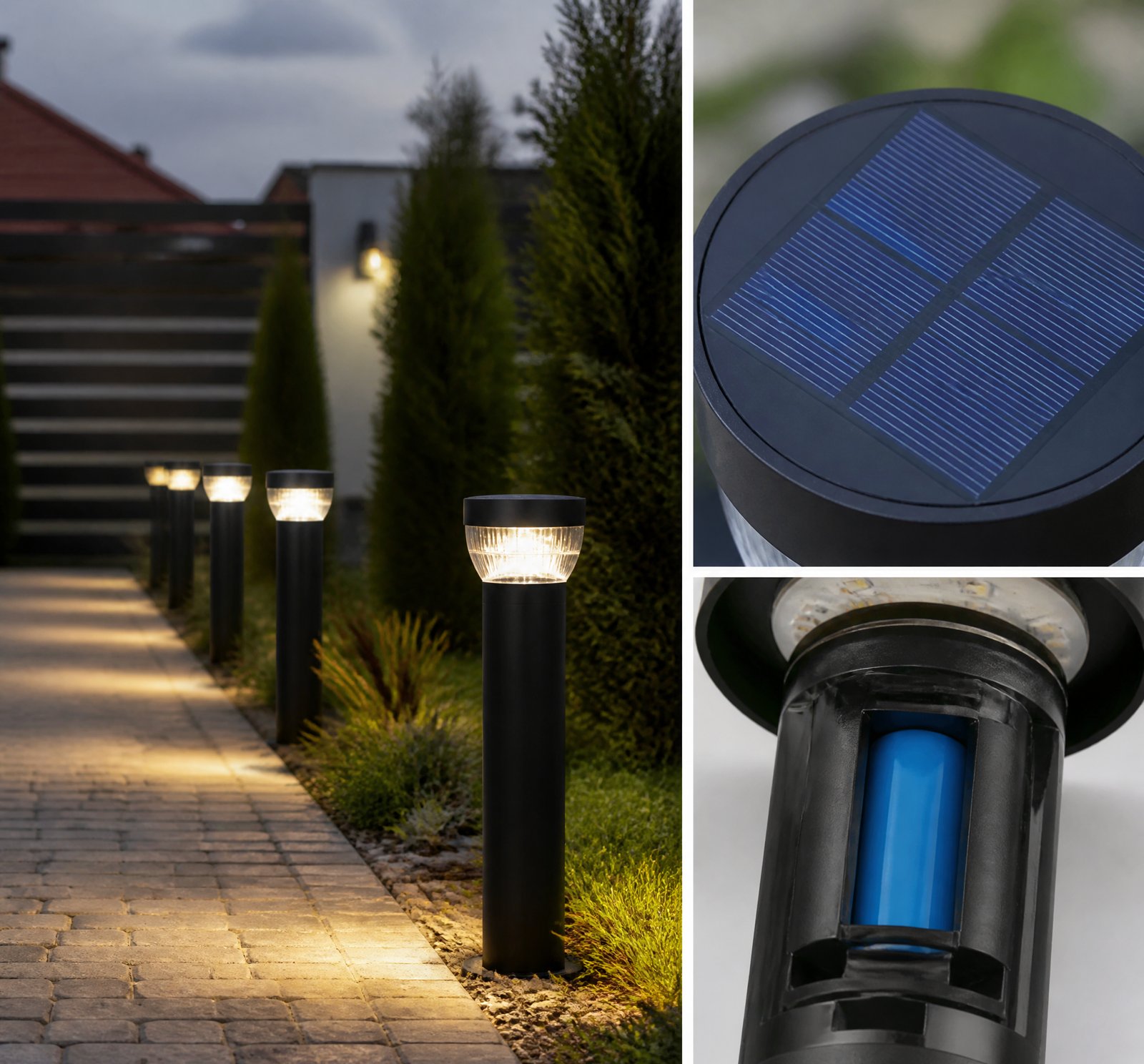
> Quick answer: To verify a solar lamp’s real-world runtime and brightness, cross-reference its specs with independent databases like Lighting Global [15], then test the lamp in your environment for at least a week. Observe performance under real conditions to detect long-term failures or degraded output [7][1].
When considering investing in a solar lamp, it’s crucial to ensure that you get what you pay for—especially when it comes to runtime and brightness. In Romania, where the sun can be inconsistent, verifying these features is particularly important. This article will guide you through practical tests to validate your purchase before trusting marketed specifications.
Cross-Referencing Specifications with Independent Databases
The most reliable starting point for verification is consulting independent databases that compile verified performance data. The DOE CALiPER website provides impartial test data on lighting products [1]. Similarly, the EnergyStar Light Bulbs website and the LED Lighting Facts database offer verified characteristics of currently available products [1]. These resources are designed to validate manufacturer claims against standardized testing protocols [1].
For solar lamps specifically, the Lighting Global platform—developed by the World Bank Group—has been compiling information on solar lighting products meeting minimum quality standards since 2009 [15]. This database is intended to help buyers globally compare products and link specifications to distributor contacts [15]. Begin your verification process by cross-referencing a lamp’s model number with these databases.
Real-World Usage Trial
After identifying promising candidates, the most actionable method for testing a lamp at home is conducting an extended real-world usage trial. It’s recommended that you purchase and test units in their intended environment for at least a week [1]. This step helps detect long-term performance issues such as color shift, overheating, or premature failure [1].
The recommendation to test lamps in the actual fixtures they will be used in is especially relevant for solar lamps, where the interaction between the solar panel, battery, and LED driver can affect performance [1]. For example, a lamp might claim 10 hours of runtime under ideal lab conditions but have significantly shorter runtimes in real use—such as high ambient temperatures or partial shading. Testing over time allows you to observe whether the lamp maintains its brightness and whether the battery degrades or fails prematurely.
Evaluating Brightness and Light Quality
Brightness and light quality can be evaluated through direct visual inspection. Check the appearance of the light on blank walls, illuminated objects, and even your own skin [1]. This is because humans are highly sensitive to how light affects skin tone and perceived space quality [1].
If the light appears harsh, uneven, or causes unnatural skin tones, it may indicate poor color rendering or inconsistent LED output—issues not always captured in technical specs. Additionally, assess glare from the side as this can indicate poor optical design or lack of diffusers [1]. These observations are simple and accessible, requiring only attention to visual experience.
Runtime Verification
Runtime verification is more challenging but can be approached through controlled, repeatable testing. One method involves monitoring voltage drop across a resistor in series with the lamp during a short test interval [2][4][19]. While this requires tools like a battery, resistor, and multimeter, it could be adapted by measuring the voltage drop across the battery during a fixed discharge period (e.g., 10 seconds) and comparing it to a known baseline [12][19].
However, this method’s practical implementation for home users remains unclear due to the lack of specified baselines for solar lamps with complex charge controllers and battery management systems. Therefore, while theoretically sound, this test may not be straightforward without specialized knowledge.
Indirect Methods: Side-by-Side Comparisons
An indirect method involves comparing the lamp’s output to known standards. Place the solar lamp near a known reference light (e.g., a calibrated LED flashlight or daylight window) and compare perceived brightness and color under similar conditions [13]. Though not quantitative, this kind of side-by-side comparison can reveal significant discrepancies.
Field Testing vs Lab Testing
Field testing over lab testing is crucial. Many low-quality solar lamps perform poorly in real-life conditions despite passing lab tests [7]. GIZ’s field tests in diverse environments like Bangladesh, Ethiopia, and Nicaragua have revealed issues such as poor battery life or inadequate charging under cloudy conditions [7].
Thus, do not rely solely on manufacturer claims or third-party lab data. Test the lamp in your own environment over time to ensure it meets real-world performance expectations.
Key Takeaways
- Cross-reference specs with independent databases like Lighting Global and LED Lighting Facts.
- Conduct extended usage trials of at least a week under actual conditions.
- Evaluate brightness by direct visual inspection on walls, objects, and skin tones.
- Use side-by-side comparisons for indirect assessments of light quality.
- Field testing is crucial to detect real-world performance issues.
Frequently Asked Questions
„`json
[
{„q”: „How long should I test a solar lamp at home?”, „a”: „It’s recommended to test the lamp in its intended environment for at least a week. This helps detect long-term performance issues such as color shift or battery degradation [1].”},
{„q”: „What tools are needed for runtime verification?”, „a”: „To measure voltage drop, you need a multimeter, resistor, and battery. However, practical implementation may be challenging without specialized knowledge [2][4][19].”},
{„q”: „How can I compare brightness with known standards at home?”, „a”: „Place the solar lamp next to a calibrated LED flashlight or near a daylight window and compare perceived brightness under similar conditions [13].”}
]
„`
References
- [1] LED_Lighting_in_Museums_and_Art_Galleries_Technical_-_Canadaca__7f9b6307 — authority
source passage
Obtain LM-79 reports (lamp characteristics) from lamp manufacturers. – Check the DOE CALiPER website for impartial test data. – Check the EnergyStar Light Bulbs website and the LED Lighting Facts database (consult endnote 1) for characteristics of products currently available on the market. – Consult Technical details for larger projects. Purchase trial lamps – Once you have made preliminary decisions on several candidate lamps, purchase a few and evaluate them in situ, preferably with colleagues. Check the appearance of the lamp from the side for glare. Check the appearance of the light on blank walls. Check the appearance of the objects illuminated by the lamp. Check the appearance of your skin under the lamp (we are especially attuned to how our skin should look under good-quality light). – If you purchased dimmers, test them with the lamps. Check for flicker across the whole range of intensities. – Test trial lamps, especially those you are considering for purchase, in the fixtures planned for use for as long as possible, and at least a week, to see if they change colour or overheat and fail. Before purchasing large numbers of lamps – Ask for products from companies you know or whom you trust or that have a documented support history. – Get a written warranty that encompasses light output, colour variation (Duv) over time as well as failure of chips and electronics, and which includes labour. A one-year warranty is common, but for longer periods of time the coverage may b
- [2] US5578998A_-_Method_and_apparatus_for_predicting_of_lamp__2a0b0bb6 — patent
source passage
for good lamps is used to establish a predetermined minimum value. The voltage drop across resistor 16 for test lamps 12 is compared to this predetermined minimum value. Accordingly, by simply monitoring the voltage across the resistor 16 and comparing the minimum value measured during the test time interval and comparing the minimum value with a predetermined value presenting a minimum threshold value for a good lamp, it can be determined whether the lamp 12 being tested is very likely to fail prematurely. There is thus provided by the method and apparatus of the present invention a means for testing the internal atmosphere of an electric lamp 12. The foregoing discussion discloses and describes merely an exemplary embodiment of the present invention. One skilled in the art will readily recognize from such discussion, and from the accompanying drawings and claims, that various changes, modifications and variations can be made therein without departing from the spirit and scope of the invention as defined in the following claims. Claims (8) 1. A lamp testing apparatus for testing an electrical lamp to predict whether the electrical lamp is likely to white-out, the apparatus comprising: a power supply for providing the electrical lamp with a source of power during a test interval of time, the power supply being electrically interconnected with the electrical lamp; a resistor in series with the power supply and the electrical lamp; and a data acquisition system for measuring a
- [4] US5578998A_-_Method_and_apparatus_for_predicting_of_lamp__2a0b0bb6 — patent
source passage
verifying the integrity of electric lamps by monitoring the internal resistance of the lamps over a short time interval. In a first aspect, the present invention is directed to an apparatus for testing an electric lamp of the type including an internal atmosphere. In the preferred embodiment, the apparatus includes a power supply for providing the electrical lamp with a source of power during a test interval of time. The power supply being electrically interconnected with the electrical lamp. The apparatus further includes a resistor in series with the power supply and the electric lamp. In the preferred embodiment, the apparatus of the present invention additionally includes a data acquisition system for comparing a drop in voltage across the resistor at a predetermined time with a predetermined minimum value. In a second aspect, the present invention is directed to a method for detecting lamp failures. In a preferred form thereof, the method of the present invention comprises the steps of providing a circuit having a battery and a resistor in series and establishing a predetermined minimum value of voltage drop across the resistor for acceptable bulbs. The method of the present invention further includes the steps of placing a test lamp in series with the battery and resistor, supplying voltage to the test lamp for a test interval of time, determining a voltage drop across the resistor at a predetermined time, and comparing the voltage drop across the resistor at the predet
- [7] Impacts_of_PicoPV_and_Consumer_Research_-_energypedia__2ed9d7cd — authority
source passage
# Impacts of PicoPV and Consumer Research Source: Blog/Web URL: https://energypedia.info/wiki/Impacts_of_PicoPV_and_Consumer_Research Author: Date: 2018-08-01 Impacts of PicoPV and Consumer Research Overview As experience with other renewable technologies show, lack of social acceptance and incongruity with cultural values and norms are common barriers during the implementation phase. Therefore, it is important to investigate in users needs and behavior patterns. Additionally, experience shows that laboratory test have to be complemented with field tests in order to test the solar lanterns under real-life conditions. Due to the fact that many bad quality products exists, it is also important to test selected products in a field test. GIZ Energising Development has conducted various tests in different countries, such as Bangladesh, Bolivia, Ethiopia, Mozambique, Nicaragua, Peru, Senegal and Uganda. Approaches of these tests differ, results and outlook are presented within this articles. Performance of Solar Lamps More than 100 firms are offering PicoPV products in developing countries today, but most products are of very low quality, with serious implications for consumer trust in the new technology. Early lab tests have focused the awareness of governments and donors on the importance of quality control and customer information – however, field tests in sufficient countries with sufficient sample sizes are needed for a better understanding of PicoPV performance under real-lif
- [12] US5578998A_-_Method_and_apparatus_for_predicting_of_lamp__2a0b0bb6 — patent
source passage
a constant voltage power supply. 4. The lamp testing apparatus of claim 2, wherein the test interval of time is approximately ten seconds or less. 5. A lamp testing apparatus for testing an electrical lamp of the type including an internal atmosphere to determine whether the internal atmosphere has been violated, to thereby predict whether the lamp is likely to prematurely tail, the apparatus comprising: a power supply for providing the lamp with a source of power during a test interval of time; a resistor in series with the power supply and the lamp; a data acquisition system for measuring a voltage drop across said resistor for said test time interval to determine a measure, minimum voltage drop across said resistor at the end of said test time interval, and comparing said minimum voltage drop across the resistor with a predetermined minimum voltage value; and an alarm mechanism for providing a failure indication such that the alarm mechanism is activated when the minimum voltage drop across the resistor is below the predetermined minimum voltage value in order to predict whether the lamp is likely to prematurely fail. 6. The lamp testing apparatus of claim 5, wherein the test interval of time is approximately ten seconds or less. 7. A method of testing an internal atmosphere of an electrical lamp to predict whether the lamp is likely to white-out, the method comprising the steps of: providing a circuit having battery and a resistor in series; establishing a predetermined m
- [13] US20220353972A1_-_Solar_Spectrum_Simulation_Device__f583bd9b — patent
source passage
Because of the included light meters 7 , installed outside, they measure the real-time solar spectrum and instructs the device 1 to radiate the correct spectrum by dynamically controlling the light source at the corresponding power-levels FIG. 3 . Man-made pollution can affect the real-time simulated solar spectrum received by the light meters 7 in a negative effect, but the device can override and adjust this problem and radiate a “healthier” spectrum inside than observed outside the space where the light panels 2 are installed by automatically adjusting the spectrum. – the Fraunhofer lines 35 can be represented within the device's 1 spectrum FIG. 3 . – sensor 6 in this case, a light sensor that measures the amount of UV light the individual/area has received. – the VIS Since wavelengths outside (UV & IR) the VIS are not detectable by the human eye, one cannot visually observe if the light panels 9 – 10 – 11 – 12 is radiating this energy at any given time since these [outside the VIS spectrum] LEDs radiate light our eyes cannot detect. – an indication is provided by visual feedback FIG. 10 to the end-user. In one configuration, this could be an LCD panel 30 displaying the device's radiated spectrum by using visible colors representing the invisible spectrum, e.g., purple/violet for UV and different shades of RED for IR. – the device 1 can, in a configuration, have several entertainment settings which can be used for different occasions like “mood” and “party” modes. E.g., th
- [15] D-Lab_Off-Grid_Energy_Group_launches_Solar_Lighting_Product__84d6451b — authority
source passage
and programs working to increase access to solar energy products where they are most needed,” Verploegen says. “Our job was to figure out what was missing.” Verploegen was intrigued by the work coming out of MIT’s Comprehensive Initiative on Technology Evaluation (CITE). CITE has developed and piloted a methodology for evaluating products intended for the developing world focusing on the dimensions of suitability, scalability, and sustainability. Their first study of solar lanterns available in Uganda, published in early 2015, included a comparative chart of solar lanterns available in Uganda. “CITE is pioneering a rigorous methodology for evaluation,” comments Verploegen. “What D-Lab’s Off-Grid Energy wanted to bring to the table was the rapid dissemination of comparable product specifications linked to geographically organized distributor contact information around the world.” Verploegen didn’t have to start from scratch. Inspired by CITE’s Uganda Solar Lantern study, Verploegen researched the availability of solar lighting product information that was global in scale. He found Lighting Global, the World Bank Group platform, which has been providing basic information on solar lighting products that meet minimum quality standards since 2009 and continuously updates their database. In developing this resource, D-Lab’s Off-Grid Energy Group working from Lighting Global’s database (in fact, they will include only products that have passed Lighting Global’s quality assurance sta
- [19] US5578998A_-_Method_and_apparatus_for_predicting_of_lamp__2a0b0bb6 — patent
source passage
electric lamp. – the apparatus of the present invention additionally includes a data acquisition system for comparing a drop in voltage across the resistor at a predetermined time with a predetermined minimum value. – the present invention is directed to a method for detecting lamp failures. – the method of the present invention comprises the steps of providing a circuit having a battery and a resistor in series and establishing a predetermined minimum value of voltage drop across the resistor for acceptable bulbs. – the method of the present invention further includes the steps of placing a test lamp in series with the battery and resistor, supplying voltage to the test lamp for a test interval of time, determining a voltage drop across the resistor at a predetermined time, and comparing the voltage drop across the resistor at the predetermined time with the predetermined minimum value. – the method of the present invention further includes rejecting the test lamp when the voltage drop across the resistor at the predetermined time is below the predetermined minimum value. – the step of establishing a predetermined minimum value of voltage drop across the resistor for acceptable lamps bulbs includes the steps of sequentially placing a plurality of good lamps in series with the battery resistor, and determining voltage drop across the resistor for each of the good lamps at the predetermined time. – FIG. 1 is an electrical schematic diagram of a lamp failure indicating circuit
Obtain LM-79 reports (lamp characteristics) from lamp manufacturers. – Check the DOE CALiPER website for impartial test data. – Check the EnergyStar Light Bulbs website and the LED Lighting Facts database (consult endnote 1) for characteristics of products currently available on the market. – Consult Technical details for larger projects. Purchase trial lamps – Once you have made preliminary decisions on several candidate lamps, purchase a few and evaluate them in situ, preferably with colleagues. Check the appearance of the lamp from the side for glare. Check the appearance of the light on blank walls. Check the appearance of the objects illuminated by the lamp. Check the appearance of your skin under the lamp (we are especially attuned to how our skin should look under good-quality light). – If you purchased dimmers, test them with the lamps. Check for flicker across the whole range of intensities. – Test trial lamps, especially those you are considering for purchase, in the fixtures planned for use for as long as possible, and at least a week, to see if they change colour or overheat and fail. Before purchasing large numbers of lamps – Ask for products from companies you know or whom you trust or that have a documented support history. – Get a written warranty that encompasses light output, colour variation (Duv) over time as well as failure of chips and electronics, and which includes labour. A one-year warranty is common, but for longer periods of time the coverage may b
for good lamps is used to establish a predetermined minimum value. The voltage drop across resistor 16 for test lamps 12 is compared to this predetermined minimum value. Accordingly, by simply monitoring the voltage across the resistor 16 and comparing the minimum value measured during the test time interval and comparing the minimum value with a predetermined value presenting a minimum threshold value for a good lamp, it can be determined whether the lamp 12 being tested is very likely to fail prematurely. There is thus provided by the method and apparatus of the present invention a means for testing the internal atmosphere of an electric lamp 12. The foregoing discussion discloses and describes merely an exemplary embodiment of the present invention. One skilled in the art will readily recognize from such discussion, and from the accompanying drawings and claims, that various changes, modifications and variations can be made therein without departing from the spirit and scope of the invention as defined in the following claims. Claims (8) 1. A lamp testing apparatus for testing an electrical lamp to predict whether the electrical lamp is likely to white-out, the apparatus comprising: a power supply for providing the electrical lamp with a source of power during a test interval of time, the power supply being electrically interconnected with the electrical lamp; a resistor in series with the power supply and the electrical lamp; and a data acquisition system for measuring a
verifying the integrity of electric lamps by monitoring the internal resistance of the lamps over a short time interval. In a first aspect, the present invention is directed to an apparatus for testing an electric lamp of the type including an internal atmosphere. In the preferred embodiment, the apparatus includes a power supply for providing the electrical lamp with a source of power during a test interval of time. The power supply being electrically interconnected with the electrical lamp. The apparatus further includes a resistor in series with the power supply and the electric lamp. In the preferred embodiment, the apparatus of the present invention additionally includes a data acquisition system for comparing a drop in voltage across the resistor at a predetermined time with a predetermined minimum value. In a second aspect, the present invention is directed to a method for detecting lamp failures. In a preferred form thereof, the method of the present invention comprises the steps of providing a circuit having a battery and a resistor in series and establishing a predetermined minimum value of voltage drop across the resistor for acceptable bulbs. The method of the present invention further includes the steps of placing a test lamp in series with the battery and resistor, supplying voltage to the test lamp for a test interval of time, determining a voltage drop across the resistor at a predetermined time, and comparing the voltage drop across the resistor at the predet
# Impacts of PicoPV and Consumer Research Source: Blog/Web URL: https://energypedia.info/wiki/Impacts_of_PicoPV_and_Consumer_Research Author: Date: 2018-08-01 Impacts of PicoPV and Consumer Research Overview As experience with other renewable technologies show, lack of social acceptance and incongruity with cultural values and norms are common barriers during the implementation phase. Therefore, it is important to investigate in users needs and behavior patterns. Additionally, experience shows that laboratory test have to be complemented with field tests in order to test the solar lanterns under real-life conditions. Due to the fact that many bad quality products exists, it is also important to test selected products in a field test. GIZ Energising Development has conducted various tests in different countries, such as Bangladesh, Bolivia, Ethiopia, Mozambique, Nicaragua, Peru, Senegal and Uganda. Approaches of these tests differ, results and outlook are presented within this articles. Performance of Solar Lamps More than 100 firms are offering PicoPV products in developing countries today, but most products are of very low quality, with serious implications for consumer trust in the new technology. Early lab tests have focused the awareness of governments and donors on the importance of quality control and customer information – however, field tests in sufficient countries with sufficient sample sizes are needed for a better understanding of PicoPV performance under real-lif
a constant voltage power supply. 4. The lamp testing apparatus of claim 2, wherein the test interval of time is approximately ten seconds or less. 5. A lamp testing apparatus for testing an electrical lamp of the type including an internal atmosphere to determine whether the internal atmosphere has been violated, to thereby predict whether the lamp is likely to prematurely tail, the apparatus comprising: a power supply for providing the lamp with a source of power during a test interval of time; a resistor in series with the power supply and the lamp; a data acquisition system for measuring a voltage drop across said resistor for said test time interval to determine a measure, minimum voltage drop across said resistor at the end of said test time interval, and comparing said minimum voltage drop across the resistor with a predetermined minimum voltage value; and an alarm mechanism for providing a failure indication such that the alarm mechanism is activated when the minimum voltage drop across the resistor is below the predetermined minimum voltage value in order to predict whether the lamp is likely to prematurely fail. 6. The lamp testing apparatus of claim 5, wherein the test interval of time is approximately ten seconds or less. 7. A method of testing an internal atmosphere of an electrical lamp to predict whether the lamp is likely to white-out, the method comprising the steps of: providing a circuit having battery and a resistor in series; establishing a predetermined m
Because of the included light meters 7 , installed outside, they measure the real-time solar spectrum and instructs the device 1 to radiate the correct spectrum by dynamically controlling the light source at the corresponding power-levels FIG. 3 . Man-made pollution can affect the real-time simulated solar spectrum received by the light meters 7 in a negative effect, but the device can override and adjust this problem and radiate a “healthier” spectrum inside than observed outside the space where the light panels 2 are installed by automatically adjusting the spectrum. – the Fraunhofer lines 35 can be represented within the device's 1 spectrum FIG. 3 . – sensor 6 in this case, a light sensor that measures the amount of UV light the individual/area has received. – the VIS Since wavelengths outside (UV & IR) the VIS are not detectable by the human eye, one cannot visually observe if the light panels 9 – 10 – 11 – 12 is radiating this energy at any given time since these [outside the VIS spectrum] LEDs radiate light our eyes cannot detect. – an indication is provided by visual feedback FIG. 10 to the end-user. In one configuration, this could be an LCD panel 30 displaying the device's radiated spectrum by using visible colors representing the invisible spectrum, e.g., purple/violet for UV and different shades of RED for IR. – the device 1 can, in a configuration, have several entertainment settings which can be used for different occasions like “mood” and “party” modes. E.g., th
and programs working to increase access to solar energy products where they are most needed,” Verploegen says. “Our job was to figure out what was missing.” Verploegen was intrigued by the work coming out of MIT’s Comprehensive Initiative on Technology Evaluation (CITE). CITE has developed and piloted a methodology for evaluating products intended for the developing world focusing on the dimensions of suitability, scalability, and sustainability. Their first study of solar lanterns available in Uganda, published in early 2015, included a comparative chart of solar lanterns available in Uganda. “CITE is pioneering a rigorous methodology for evaluation,” comments Verploegen. “What D-Lab’s Off-Grid Energy wanted to bring to the table was the rapid dissemination of comparable product specifications linked to geographically organized distributor contact information around the world.” Verploegen didn’t have to start from scratch. Inspired by CITE’s Uganda Solar Lantern study, Verploegen researched the availability of solar lighting product information that was global in scale. He found Lighting Global, the World Bank Group platform, which has been providing basic information on solar lighting products that meet minimum quality standards since 2009 and continuously updates their database. In developing this resource, D-Lab’s Off-Grid Energy Group working from Lighting Global’s database (in fact, they will include only products that have passed Lighting Global’s quality assurance sta
electric lamp. – the apparatus of the present invention additionally includes a data acquisition system for comparing a drop in voltage across the resistor at a predetermined time with a predetermined minimum value. – the present invention is directed to a method for detecting lamp failures. – the method of the present invention comprises the steps of providing a circuit having a battery and a resistor in series and establishing a predetermined minimum value of voltage drop across the resistor for acceptable bulbs. – the method of the present invention further includes the steps of placing a test lamp in series with the battery and resistor, supplying voltage to the test lamp for a test interval of time, determining a voltage drop across the resistor at a predetermined time, and comparing the voltage drop across the resistor at the predetermined time with the predetermined minimum value. – the method of the present invention further includes rejecting the test lamp when the voltage drop across the resistor at the predetermined time is below the predetermined minimum value. – the step of establishing a predetermined minimum value of voltage drop across the resistor for acceptable lamps bulbs includes the steps of sequentially placing a plurality of good lamps in series with the battery resistor, and determining voltage drop across the resistor for each of the good lamps at the predetermined time. – FIG. 1 is an electrical schematic diagram of a lamp failure indicating circuit