
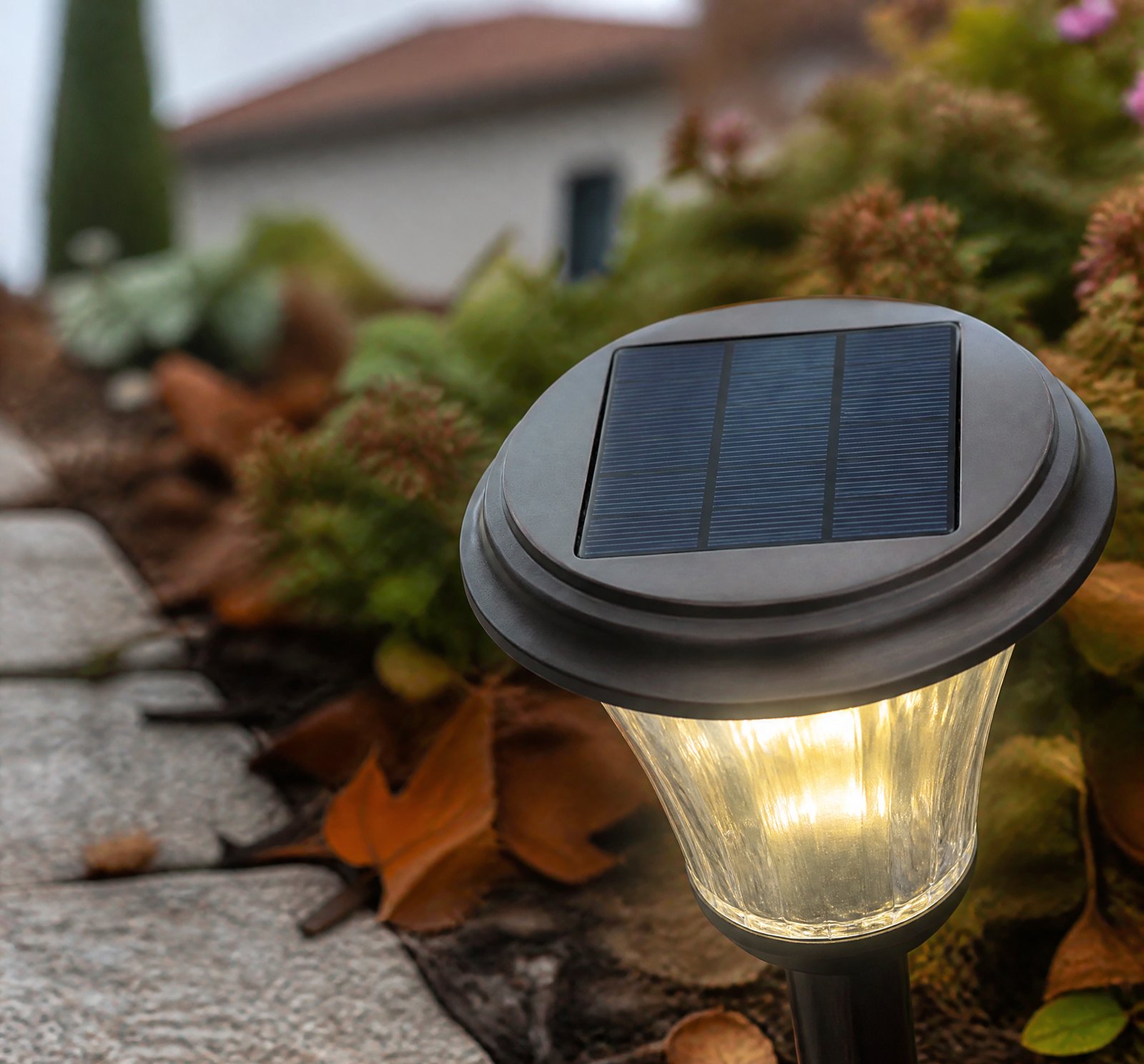
> Quick answer: To maximize photon transmission at 400–700 nm wavelengths on polycrystalline panels in diffuse skylight, use a broadband, multi-layered sol-gel silica-based anti-reflective coating. Silica-based coatings demonstrate superior durability and maintain adhesion over 10 years under rigorous testing [2][3][17].
In Romania, where sunlight varies widely throughout the year, optimizing solar lamps is crucial for efficiency and performance. To achieve this, understanding and applying the best anti-reflective coatings can significantly enhance photon transmission, especially in diffuse skylight conditions.
Broadband Multi-Layered Sol-Gel Coatings
To maximize photon transmission across the 400–700 nm range—dominant in diffuse skylight—a broadband, multi-layered sol-gel silica-based anti-reflective coating is optimal. These coatings are derived from silane precursors that form a durable Si–O–Si network [2][3][17]. Unlike conventional single-layer coatings, such as magnesium fluoride (n ≈ 1.38), which perform well only at normal incidence and specific wavelengths, multi-layer sol-gel systems cover the entire solar spectrum from 300 to 1100 nm [1][7][10].
Broadband Performance
The effectiveness of broadband coatings lies in their ability to achieve reflection losses below 1% across a broad band, encompassing the critical 400–700 nm range. Multi-layer films combining SiO₂ (low refractive index, n ≈ 1.4) and TiO₂ (higher n ≈ 1.7) are particularly effective at reducing reflection and enhancing transmission [6][8]. This is crucial for diffuse skylight, which lacks a single dominant peak wavelength.
Nanostructured Surfaces
In addition to multi-layer sol-gel coatings, nanostructured surfaces, such as pyramid-shaped textures or arrays of nano-sized plano-convex lenses etched into the glass surface, enhance transmission across various angles [8][23]. These structures trap light through multiple reflections and increase path length and absorption, which is particularly beneficial in diffuse lighting conditions [6][8].
Transmission Efficiency
Nano-lenses with diameters near 200 nm have been shown to minimize reflection and improve transmission by focusing light onto the solar cell surface [23]. This design ensures that even when direct beam light is intermittent, diffuse skylight can be effectively captured.
Durability Testing and Long-Term Performance
Durability is critical for ensuring long-term performance. Silica-based sol-gel coatings are robust due to their chemical stability and resistance to photolytic breakdown [2][3]. These coatings are also abrasion-resistant, meeting standards like EN-1096-2, and maintain performance under harsh weathering conditions [5].
Low-Temperature Curing
The ability to cure at low temperatures (20–200°C) enables application to untempered glass, reducing manufacturing constraints and energy costs [14][16]. This feature is a significant advantage over traditional high-temperature processes.
Self-Cleaning Properties
Self-cleaning properties enhance durability by reducing the need for manual cleaning, which can damage coatings. The hydrophilic nature of these coatings and resistance to dirt adhesion allow rainwater to wash away particulates, preventing film formation [1][15]. This is crucial in real-world applications where soiling can reduce efficiency by up to 20% [25].
Comparison Table
| Feature | Broadband Sol-Gel Coating | Nanostructured Surfaces |
|–––––––––|–––––––––|––––––––-|
| Reflectivity (400–700 nm)| <1% | <1% |
| Durability | High | High |
| Low-Temperature Curing | Yes | No |
| Self-Cleaning | Hydrophilic | Minimal |
Key Takeaways
- Broadband, multi-layered sol-gel silica-based coatings maximize photon transmission in diffuse skylight.
- Nanostructured surfaces enhance wide-angle transmission and minimize reflection.
- Low-temperature curing and self-cleaning properties ensure long-term durability.
Frequently Asked Questions
[
{„q”: „How do silica-based sol-gel coatings improve solar lamp efficiency?”, „a”: „Silica-based sol-gel coatings reduce reflection losses to below 1% across the 400–700 nm range, enhancing photon transmission [6][8].”},
{„q”: „What is the key benefit of nanostructured surfaces in diffuse lighting conditions?”, „a”: „Nanostructured surfaces trap light through multiple reflections, increasing path length and absorption, which is crucial for capturing diffuse skylight [23].”},
{„q”: „How do self-cleaning properties contribute to long-term performance?”, „a”: „Self-cleaning coatings resist dirt adhesion and allow rainwater to wash away particulates, preventing film formation and maintaining efficiency [15].” }
]
References
- [1] US8864897B2_-_Anti-reflective_and_anti-soiling_coatings_with__0ef42887 — patent
source passage
over the entire solar spectrum, particularly with respect to solar panels. While there are several anti-reflective coatings that are only effective in a narrow region of the solar spectrum, for maximum efficiency it is desirable that anti-reflective coatings perform equally well over the entire solar region from 300 nm to 1100 nm. Consequently, there exists a need in the art for a coating that can provide the combined benefits of anti-reflective properties, such as a coating that can reduce light reflection and scattering from the applicable optical surface; anti-soiling or self-cleaning properties, such as a coating surface that is resistant to binding and adsorption of dirt particles (e.g., resistant to chemical and physical bonding of dirt particles); abrasion resistant properties, such as stability against normal cleaning agents such as detergents, solvents, surfactants, and other chemical and physical abrasives; and UV stability or suitable performance over the entire solar region. Further, it would be beneficial for such coatings to be mechanically robust by exhibiting strength, abrasion resistance, and hardness sufficient to withstand the impact of physical objects in the environment such as sand, pebbles, leaves, branches, and other naturally occurring objects. It would be beneficial for such coatings to also exhibit mechanical stability such that newly manufactured coatings or films would be less likely to develop cracks and scratches that limit their optimum perform
- [2] US8864897B2_-_Anti-reflective_and_anti-soiling_coatings_with__0ef42887 — patent
source passage
and other particulate matter from the environment to boost the transmission of photons through the glass as well as to prevent reduction in photons associated with deposition of particulate matter onto the surface. The coatings for solar panel applications provide unique challenges that are not present with coatings typically utilized in other common applications. The use of anti-reflective coating in solar panels necessitates long term exposure of solar radiation that usually results in extensive degradation of polymeric materials under prolonged UV exposure due to photolytic breakdown of bonds in these materials. The coating compositions of the present invention utilize silane precursors that when hydrolyzed and dried and cured give rise to a network that is similar to glass with Si—O—Si bonds that are stable to radiative breakdown. An additional advantage of using silica based materials in solar applications is the intrinsic hardness of the material that makes the coating resistant to scratches, indentations, and abrasion. Further, the coatings of the present invention provide for enhanced light transmittance across the entire solar region from about 400 nm to about 1150 nm, which is desirable for solar applications. Further, it should be appreciated that the sols resulting from the coating compositions of this invention do not need to be applied to the solar panels during manufacturing and may be applied after manufacturing to avoid any interference with the solar panel m
- [3] US8864897B2_-_Anti-reflective_and_anti-soiling_coatings_with__0ef42887 — patent
source passage
of particulate matter onto the surface. – the coatings for solar panel applications provide unique challenges that are not present with coatings typically utilized in other common applications. – the use of anti-reflective coating in solar panels necessitates long term exposure of solar radiation that usually results in extensive degradation of polymeric materials under prolonged UV exposure due to photolytic breakdown of bonds in these materials. – the coating compositions of the present invention utilize silane precursors that when hydrolyzed and dried and cured give rise to a network that is similar to glass with Si—O—Si bonds that are stable to radiative breakdown. – An additional advantage of using silica based materials in solar applications is the intrinsic hardness of the material that makes the coating resistant to scratches, indentations, and abrasion. – the coatings of the present invention provide for enhanced light transmittance across the entire solar region from about 400 nm to about 1150 nm, which is desirable for solar applications. – the sols resulting from the coating compositions of this invention do not need to be applied to the solar panels during manufacturing and may be applied after manufacturing to avoid any interference with the solar panel manufacturing process. It is expected that the solar panel maker themselves may be able to use the composition of this invention to coat the modules at appropriate points within their manufacturing process. – the
- [5] US8864897B2_-_Anti-reflective_and_anti-soiling_coatings_with__0ef42887 — patent
source passage
by means of UV-vis absorption spectrophotometer equipped with an integrator accessory. The anti-reflective enhancement factor is measured as the relative percent increase in transmittance compared to untreated glass slides versus glass slides coated with compositions of this invention. ASTM E424 describes the solar transmission gain, which is defined as the relative percent difference in transmission of solar radiation before and after the application of the coating. The coatings exhibit about 1.5% to about 3.25% gain in solar transmission. The refractive index of the coating was measured by an ellipsometer. The abrasion resistance of the coating is measured by an abrader device according to European standard EN-1096-2 (glass in building coated glass). The coatings made according to Examples 1, 2, and 3, without any added composition modifying additives, are able to meet the passing criteria of the standard. The contact angle of the coatings is measured by means of goniometer wherein the contact angle of the water droplet is measured by means of a CCD camera. An average of three measurements is used for each sample. Table 2 presents the results of several performance tests performed on coatings made according to Example 1. In this Table, the “Spec” refers to the formal procedure for the test performed; the “Pass Criteria” refers to the allowable change in % transmittance (% T) in order for a sample to pass the test; “N” is the number of samples/experiments tested; and “Result
- [6] WO2012078765A2_-_Self-cleaning_solar_panels_and_-_Google_Patents__8226f0d9 — patent
source passage
coating. – Antireflection coatings using hybrid sols of Si0 2 and Ti0 2 can be used with film thickness of ⁇ /4 where ⁇ represents the wavelength of the solar radiation corresponding to the peak power. – the refractive indices can be adjusted in both cases; Si0 2 sol can be prepared to have a low refractive index n ⁇ 1.4 and Ti0 2 sol can be added to have film with n ⁇ 1.7. – a three-layer coating (medium, high and low refractive indices respectively) can be added to reduce the reflection loss below 1%. – Anti-ref ecting coating works best at the normal incidence and for the wavelength ( ⁇ ) chosen. – pyramid-shaped nanostructured surface may have superior transmittance over a relatively large range of angle of incidence compared to that of the anti-reflecting coating chosen for a single wavelength. – the outer surface structure of the fluoropolymer film 12 can be modified for improving transmission efficiency of solar radiation by adding an array of nano-sized plano-convex lenses 22 as shown in Figure 3. While pyramid shaped texturing of the front surface of the crystalline solar cells and PV panel cover glass is often done for reducing reflection loss and for trapping light, deposition of fine dust on the textured surface can make the application ineffective. – an EDS-integrated PV panel can be textured by incorporating an array of plano-convex lenses 22 with diameter close to 200 nm for minimizing light reflection losses and improving transmission by focusing light with th
- [7] US9353268B2_-_Anti-reflective_and_anti-soiling_coatings_for__cb3a4dd1 — patent
source passage
result, current anti-reflective coatings are characterized by an intrinsic affinity for physical and/or chemical interactions with dirt nanoparticles and other chemicals in the environment and suffer from severe disadvantages in maintaining a clean surface during their functional lifetime. Further, one of most common issue frequently associated with anti-reflective coatings is their performance over the entire solar spectrum, particularly with respect to solar panels. While there are several anti-reflective coatings that are only effective in a narrow region of the solar spectrum, for maximum efficiency it is desirable that anti-reflective coatings perform equally well over the entire solar region from 300 nm to 1100 nm. Consequently, there exists a need in the art for a coating that can provide the combined benefits of anti-reflective properties, such as a coating that can reduce light reflection and scattering from the applicable optical surface; anti-soiling or self-cleaning properties, such as a coating surface that is resistant to binding and adsorption of dirt particles (e.g., resistant to chemical and physical bonding of dirt particles); abrasion resistant properties, such as stability against normal cleaning agents such as detergents, solvents, surfactants, and other chemical and physical abrasives; and UV stability or suitable performance over the entire solar region. Further, it would be beneficial for such coatings to be mechanically robust by exhibiting strength,
- [8] US9433336B2_-_Self-cleaning_solar_panels_and_-_Google_Patents__22b92a64 — patent
source passage
respectively) can be added to reduce the reflection loss below 1%. Anti-reflecting coating works best at the normal incidence and for the wavelength (λ) chosen. (b) To achieve a broadband antireflection property of the surface and for trapping incident light, pyramid-shaped nanostructured surface may have superior transmittance over a relatively large range of angle of incidence compared to that of the anti-reflecting coating chosen for a single wavelength. The outer surface structure of the fluoropolymer film 12 can be modified for improving transmission efficiency of solar radiation by adding an array of nano-sized plano-convex lenses 22 as shown in FIG. 3 . While pyramid shaped texturing of the front surface of the crystalline solar cells and PV panel cover glass is often done for reducing reflection loss and for trapping light, deposition of fine dust on the textured surface can make the application ineffective. However, an EDS-integrated PV panel can be textured by incorporating an array of plano-convex lenses 22 with diameter close to 200 nm for minimizing light reflection losses and improving transmission by focusing light with the nano-lenses. Incorporation of nano-sized lenses (FIGS. 3 and 4 ) on the front surface of EDS provides both self-cleaning property of the glass and an improvement of the light trapping efficiency. Thus, when EDS is combined with nanostructured lenses (FIG. 3 ), the two processes have synergistic effects. 9. Integrated Manufacturing of Solar C
- [10] Fraunhofer_ISE_Develops_the_Worlds_Most_Efficient_Solar_Cell_with__61b245ee — authority
source passage
contact layer and a 4-layer antireflection coating were applied to the tandem cell structure in Fraunhofer ISE’s Center for High Efficiency Solar Cells. These measures reduce the resistance losses and the reflection on the front side of the cell, which is spectrally sensitive within a broad range of 300 and 1780 nanometers. Conventional solar cells made of silicon absorb sunlight only up to a wavelength of 1200 nanometers and thus do not require such a broadband antireflection coating. Multi-junction solar cells made of III-V compound semiconductors have always been among the most efficient solar cells in the world. They reach their highest potential when the incoming sunlight is concentrated by lenses onto miniature solar cell devices of just a few square millimeters in size. "Possible applications of such highly efficient tandem solar cells include concentrator photovoltaic systems, which contribute to efficient power generation in sun-rich countries,” says Prof. Dr. Stefan Glunz, division director of Photovoltaics Research at Fraunhofer ISE. "With tandem photovoltaics, it is possible to leave the limitations of single-junction solar cells behind and ultimately achieve a reduction in solar power costs." Last modified:
- [14] US8864897B2_-_Anti-reflective_and_anti-soiling_coatings_with__0ef42887 — patent
source passage
temperature of between 20° C. and 200° C. and between 20° C. and 130° C. and further between 80° C. and 200° C. This low temperature facilitates the coating of completed solar panels without damage to the panel. Thus it is an anti-reflective solution for users of untempered solar glass. The low temperature curing of the coatings of the present invention also provides substantial benefits to solar panel manufacturers beyond enabling untempered anti-reflective glass. By making possible the coating of the glass without the need for the tempering step, solar panel manufacturers are enabled to apply their own anti-reflective coating. Currently, the requirement for a large tempering oven means that solar panels manufacturers are restricted to buying anti-reflective glass from glass manufacturers. This means that they must maintain inventory of both anti-reflective coated and non-coated glass. As these cannot be used interchangeably, inventory flexibility is reduced necessitating keeping larger amounts of inventory on hand. The ability for the solar panel manufacturer to apply their own coating means that they can just hold a smaller inventory of non-coated glass and then apply the anti-reflective coating to that as needed. In addition, existing anti-reflective coatings are prone to scratching during the solar panel manufacturing process. Typically solar panel manufacturers must use a plastic or paper sheer to protect the coating. As the coating of the present invention can be appli
- [15] US8864897B2_-_Anti-reflective_and_anti-soiling_coatings_with__0ef42887 — patent
source passage
strongly (chemically) bonded to optical element, such as the glass or window surfaces. Furthermore, rain water usually contains dissolved matter that is absorbed from the environment during its descent that can leave a visible film when dried. As such, all externally exposed optical elements, such as window materials and solar panels in which the optimal transmission of light is important, require some form of routine cleaning efforts associated with their maintenance regimen. In fact, the surfaces of these items are cleaned during fabrication as well as routinely during use. The surfaces of these items, such as solar panels, are usually cleaned with water, detergent, or other industrial cleaners. As a result, anti-reflective coating materials applied to these optical elements need to be able to withstand the use of normal cleaning agents including detergents, acid, bases, solvents, surfactants, and other abrasives to maintain their anti-reflective effect. Abrasion of these coatings over time due to cleaning and the deposition of dirt or other environmental particulate may reduce their performance. Therefore, abrasion resistance is an important consideration for anti-reflective coatings. For example, resistance to abrasion is an important consideration for a coating used in connection with a solar panel, particularly for long term functional performance of the solar panel. A majority of anti-reflective coatings are based on oxides as preferred materials. Some anti-reflective
- [16] US8864897B2_-_Anti-reflective_and_anti-soiling_coatings_with__0ef42887 — patent
source passage
are prepared under temperatures not exceeding 120° C. in contrast to temperatures of 400-600° C. typically employed in curing silica-based anti-reflective coatings. – Another particularly advantageous feature of some of the coating compositions herein, particularly those of Table 1, as opposed to the coating mixtures that utilize more than one or more than two silane precursors, is that they do not require water as a specific component of the composition for the reaction or curing process to proceed. It is particularly advantageous that the coating compositions can be made to harden by reaction with moisture within the environment or alternatively by the trace amounts of water present in the solvent. The curing of the coating in a humid environment slows down the evaporation of water leading to a coating with improved cross-linking and better mechanical properties. – the coatings made as described herein have several desirable properties. – the coatings have anti-reflective properties that reduce the reflection of photons. – the transmittance of a glass substrate coated with a coating composition made according to the present invention can vary from about 92% to about 98%, from about 93% to about 96%, and from about 95% to about 98%. – the coatings also have anti-soiling properties, which are also important in maintaining sufficient transmittance when used in conjunction with a glass substrate. Soiling is due to adherence of particulate matter on surfaces exposed to environme
- [17] US8864897B2_-_Anti-reflective_and_anti-soiling_coatings_with__0ef42887 — patent
source passage
embodiments of the invention are directed to coatings and their uses. More particularly, the embodiments of the invention are directed to coating compositions that include silane-based precursors that are used to form coatings through a sol-gel process. The resulting coatings are characterized by anti-reflective, abrasion resistant, and anti-soiling properties. The coatings also have extended weatherability to heat and humidity and protection against ambient corrosives. The coatings formed from the compositions described herein have wide application, including, for example, use as coatings on the outer glass of solar cells or panels. 2. Description of Related Art Anti-reflective coatings are used in a wide variety of commercial applications ranging from sunglasses, windows, car windshields, camera lenses, solar panels, and architectural systems. These coatings minimize the reflections on the surface of the glass as the light rays travel through a discontinuous dielectric gradient. The reflection of light usually results in reduced transmittance of the light across the transparent material. For optical applications, it is important that a majority of incident light passes through the interface for maximum efficiency. In this context, anti-reflective coatings provide a useful benefit in optical applications. Anti-reflective coatings are normally used in glasses, acrylics, and other transparent materials that serve as windows and glass panels associated with architectural struct
- [23] US9433336B2_-_Self-cleaning_solar_panels_and_-_Google_Patents__22b92a64 — patent
source passage
the fluoropolymer film 12 can be modified for improving transmission efficiency of solar radiation by adding an array of nano-sized plano-convex lenses 22 as shown in FIG. 3 . While pyramid shaped texturing of the front surface of the crystalline solar cells and PV panel cover glass is often done for reducing reflection loss and for trapping light, deposition of fine dust on the textured surface can make the application ineffective. – an EDS-integrated PV panel can be textured by incorporating an array of plano-convex lenses 22 with diameter close to 200 nm for minimizing light reflection losses and improving transmission by focusing light with the nano-lenses. – Incorporation of nano-sized lenses ( FIGS. 3 and 4 ) on the front surface of EDS provides both self-cleaning property of the glass and an improvement of the light trapping efficiency. – the two processes have synergistic effects. – FIG. 5 shows an arrangement of installation of EDS on a back-surface reflecting mirror. – the silver coating is at the backside under the cover glass. – a thin film of SiO 2 is coated by using a sol-gel method before depositing the electrodes. – the electrodes are then coated with another thin layer of SiO 2 . – a thin layer of fluoropolymer is then applied to cover the electrode structures. The details of these methods have been discussed in items 1 through 6 above. – Stabilizers, blockers, and absorbers are often used to promote UV resistance. However, the modifications should not compro
- [25] US9353268B2_-_Anti-reflective_and_anti-soiling_coatings_for__cb3a4dd1 — patent
source passage
coatings are normally used in glasses, acrylics, and other transparent materials that serve as windows and glass panels associated with architectural structures or energy generating and saving systems. In building windows, they are used to maximize influx of incident light to maintain proper lighting or natural ambience as well as to minimize distracting reflections from glass surfaces. In energy generating and saving devices, such as solar panels and light collectors, the utility of anti-reflective coatings lies in the enhanced efficiency of these devices due to a greater degree of light transmittance and, therefore, increased energy generation for the same cost. – the dirt on ambiently exposed optical elements may be somewhat removed based upon natural cleaning phenomenon such as rain. – rain water is only effective at removing loosely (physically) held particulate matter and is not able to remove the particulate matter that may be strongly (chemically) bonded to optical element, such as the glass or window surfaces. – rain water usually contains dissolved matter that is absorbed from the environment during its descent that can leave a visible film when dried. – FIG. 3 a is an SEM cross-sectional view of a coating made from the composition of Example 1 on a glass slide substrate. – FIG. 4 a is an SEM cross-sectional view of a coating made from the composition of Example 2 on a glass slide substrate. – FIG. 4 b is a SEM oblique view of a coating made from the composition of
over the entire solar spectrum, particularly with respect to solar panels. While there are several anti-reflective coatings that are only effective in a narrow region of the solar spectrum, for maximum efficiency it is desirable that anti-reflective coatings perform equally well over the entire solar region from 300 nm to 1100 nm. Consequently, there exists a need in the art for a coating that can provide the combined benefits of anti-reflective properties, such as a coating that can reduce light reflection and scattering from the applicable optical surface; anti-soiling or self-cleaning properties, such as a coating surface that is resistant to binding and adsorption of dirt particles (e.g., resistant to chemical and physical bonding of dirt particles); abrasion resistant properties, such as stability against normal cleaning agents such as detergents, solvents, surfactants, and other chemical and physical abrasives; and UV stability or suitable performance over the entire solar region. Further, it would be beneficial for such coatings to be mechanically robust by exhibiting strength, abrasion resistance, and hardness sufficient to withstand the impact of physical objects in the environment such as sand, pebbles, leaves, branches, and other naturally occurring objects. It would be beneficial for such coatings to also exhibit mechanical stability such that newly manufactured coatings or films would be less likely to develop cracks and scratches that limit their optimum perform
and other particulate matter from the environment to boost the transmission of photons through the glass as well as to prevent reduction in photons associated with deposition of particulate matter onto the surface. The coatings for solar panel applications provide unique challenges that are not present with coatings typically utilized in other common applications. The use of anti-reflective coating in solar panels necessitates long term exposure of solar radiation that usually results in extensive degradation of polymeric materials under prolonged UV exposure due to photolytic breakdown of bonds in these materials. The coating compositions of the present invention utilize silane precursors that when hydrolyzed and dried and cured give rise to a network that is similar to glass with Si—O—Si bonds that are stable to radiative breakdown. An additional advantage of using silica based materials in solar applications is the intrinsic hardness of the material that makes the coating resistant to scratches, indentations, and abrasion. Further, the coatings of the present invention provide for enhanced light transmittance across the entire solar region from about 400 nm to about 1150 nm, which is desirable for solar applications. Further, it should be appreciated that the sols resulting from the coating compositions of this invention do not need to be applied to the solar panels during manufacturing and may be applied after manufacturing to avoid any interference with the solar panel m
of particulate matter onto the surface. – the coatings for solar panel applications provide unique challenges that are not present with coatings typically utilized in other common applications. – the use of anti-reflective coating in solar panels necessitates long term exposure of solar radiation that usually results in extensive degradation of polymeric materials under prolonged UV exposure due to photolytic breakdown of bonds in these materials. – the coating compositions of the present invention utilize silane precursors that when hydrolyzed and dried and cured give rise to a network that is similar to glass with Si—O—Si bonds that are stable to radiative breakdown. – An additional advantage of using silica based materials in solar applications is the intrinsic hardness of the material that makes the coating resistant to scratches, indentations, and abrasion. – the coatings of the present invention provide for enhanced light transmittance across the entire solar region from about 400 nm to about 1150 nm, which is desirable for solar applications. – the sols resulting from the coating compositions of this invention do not need to be applied to the solar panels during manufacturing and may be applied after manufacturing to avoid any interference with the solar panel manufacturing process. It is expected that the solar panel maker themselves may be able to use the composition of this invention to coat the modules at appropriate points within their manufacturing process. – the
by means of UV-vis absorption spectrophotometer equipped with an integrator accessory. The anti-reflective enhancement factor is measured as the relative percent increase in transmittance compared to untreated glass slides versus glass slides coated with compositions of this invention. ASTM E424 describes the solar transmission gain, which is defined as the relative percent difference in transmission of solar radiation before and after the application of the coating. The coatings exhibit about 1.5% to about 3.25% gain in solar transmission. The refractive index of the coating was measured by an ellipsometer. The abrasion resistance of the coating is measured by an abrader device according to European standard EN-1096-2 (glass in building coated glass). The coatings made according to Examples 1, 2, and 3, without any added composition modifying additives, are able to meet the passing criteria of the standard. The contact angle of the coatings is measured by means of goniometer wherein the contact angle of the water droplet is measured by means of a CCD camera. An average of three measurements is used for each sample. Table 2 presents the results of several performance tests performed on coatings made according to Example 1. In this Table, the “Spec” refers to the formal procedure for the test performed; the “Pass Criteria” refers to the allowable change in % transmittance (% T) in order for a sample to pass the test; “N” is the number of samples/experiments tested; and “Result
coating. – Antireflection coatings using hybrid sols of Si0 2 and Ti0 2 can be used with film thickness of ⁇ /4 where ⁇ represents the wavelength of the solar radiation corresponding to the peak power. – the refractive indices can be adjusted in both cases; Si0 2 sol can be prepared to have a low refractive index n ⁇ 1.4 and Ti0 2 sol can be added to have film with n ⁇ 1.7. – a three-layer coating (medium, high and low refractive indices respectively) can be added to reduce the reflection loss below 1%. – Anti-ref ecting coating works best at the normal incidence and for the wavelength ( ⁇ ) chosen. – pyramid-shaped nanostructured surface may have superior transmittance over a relatively large range of angle of incidence compared to that of the anti-reflecting coating chosen for a single wavelength. – the outer surface structure of the fluoropolymer film 12 can be modified for improving transmission efficiency of solar radiation by adding an array of nano-sized plano-convex lenses 22 as shown in Figure 3. While pyramid shaped texturing of the front surface of the crystalline solar cells and PV panel cover glass is often done for reducing reflection loss and for trapping light, deposition of fine dust on the textured surface can make the application ineffective. – an EDS-integrated PV panel can be textured by incorporating an array of plano-convex lenses 22 with diameter close to 200 nm for minimizing light reflection losses and improving transmission by focusing light with th
result, current anti-reflective coatings are characterized by an intrinsic affinity for physical and/or chemical interactions with dirt nanoparticles and other chemicals in the environment and suffer from severe disadvantages in maintaining a clean surface during their functional lifetime. Further, one of most common issue frequently associated with anti-reflective coatings is their performance over the entire solar spectrum, particularly with respect to solar panels. While there are several anti-reflective coatings that are only effective in a narrow region of the solar spectrum, for maximum efficiency it is desirable that anti-reflective coatings perform equally well over the entire solar region from 300 nm to 1100 nm. Consequently, there exists a need in the art for a coating that can provide the combined benefits of anti-reflective properties, such as a coating that can reduce light reflection and scattering from the applicable optical surface; anti-soiling or self-cleaning properties, such as a coating surface that is resistant to binding and adsorption of dirt particles (e.g., resistant to chemical and physical bonding of dirt particles); abrasion resistant properties, such as stability against normal cleaning agents such as detergents, solvents, surfactants, and other chemical and physical abrasives; and UV stability or suitable performance over the entire solar region. Further, it would be beneficial for such coatings to be mechanically robust by exhibiting strength,
respectively) can be added to reduce the reflection loss below 1%. Anti-reflecting coating works best at the normal incidence and for the wavelength (λ) chosen. (b) To achieve a broadband antireflection property of the surface and for trapping incident light, pyramid-shaped nanostructured surface may have superior transmittance over a relatively large range of angle of incidence compared to that of the anti-reflecting coating chosen for a single wavelength. The outer surface structure of the fluoropolymer film 12 can be modified for improving transmission efficiency of solar radiation by adding an array of nano-sized plano-convex lenses 22 as shown in FIG. 3 . While pyramid shaped texturing of the front surface of the crystalline solar cells and PV panel cover glass is often done for reducing reflection loss and for trapping light, deposition of fine dust on the textured surface can make the application ineffective. However, an EDS-integrated PV panel can be textured by incorporating an array of plano-convex lenses 22 with diameter close to 200 nm for minimizing light reflection losses and improving transmission by focusing light with the nano-lenses. Incorporation of nano-sized lenses (FIGS. 3 and 4 ) on the front surface of EDS provides both self-cleaning property of the glass and an improvement of the light trapping efficiency. Thus, when EDS is combined with nanostructured lenses (FIG. 3 ), the two processes have synergistic effects. 9. Integrated Manufacturing of Solar C
contact layer and a 4-layer antireflection coating were applied to the tandem cell structure in Fraunhofer ISE’s Center for High Efficiency Solar Cells. These measures reduce the resistance losses and the reflection on the front side of the cell, which is spectrally sensitive within a broad range of 300 and 1780 nanometers. Conventional solar cells made of silicon absorb sunlight only up to a wavelength of 1200 nanometers and thus do not require such a broadband antireflection coating. Multi-junction solar cells made of III-V compound semiconductors have always been among the most efficient solar cells in the world. They reach their highest potential when the incoming sunlight is concentrated by lenses onto miniature solar cell devices of just a few square millimeters in size. "Possible applications of such highly efficient tandem solar cells include concentrator photovoltaic systems, which contribute to efficient power generation in sun-rich countries,” says Prof. Dr. Stefan Glunz, division director of Photovoltaics Research at Fraunhofer ISE. "With tandem photovoltaics, it is possible to leave the limitations of single-junction solar cells behind and ultimately achieve a reduction in solar power costs." Last modified:
temperature of between 20° C. and 200° C. and between 20° C. and 130° C. and further between 80° C. and 200° C. This low temperature facilitates the coating of completed solar panels without damage to the panel. Thus it is an anti-reflective solution for users of untempered solar glass. The low temperature curing of the coatings of the present invention also provides substantial benefits to solar panel manufacturers beyond enabling untempered anti-reflective glass. By making possible the coating of the glass without the need for the tempering step, solar panel manufacturers are enabled to apply their own anti-reflective coating. Currently, the requirement for a large tempering oven means that solar panels manufacturers are restricted to buying anti-reflective glass from glass manufacturers. This means that they must maintain inventory of both anti-reflective coated and non-coated glass. As these cannot be used interchangeably, inventory flexibility is reduced necessitating keeping larger amounts of inventory on hand. The ability for the solar panel manufacturer to apply their own coating means that they can just hold a smaller inventory of non-coated glass and then apply the anti-reflective coating to that as needed. In addition, existing anti-reflective coatings are prone to scratching during the solar panel manufacturing process. Typically solar panel manufacturers must use a plastic or paper sheer to protect the coating. As the coating of the present invention can be appli
strongly (chemically) bonded to optical element, such as the glass or window surfaces. Furthermore, rain water usually contains dissolved matter that is absorbed from the environment during its descent that can leave a visible film when dried. As such, all externally exposed optical elements, such as window materials and solar panels in which the optimal transmission of light is important, require some form of routine cleaning efforts associated with their maintenance regimen. In fact, the surfaces of these items are cleaned during fabrication as well as routinely during use. The surfaces of these items, such as solar panels, are usually cleaned with water, detergent, or other industrial cleaners. As a result, anti-reflective coating materials applied to these optical elements need to be able to withstand the use of normal cleaning agents including detergents, acid, bases, solvents, surfactants, and other abrasives to maintain their anti-reflective effect. Abrasion of these coatings over time due to cleaning and the deposition of dirt or other environmental particulate may reduce their performance. Therefore, abrasion resistance is an important consideration for anti-reflective coatings. For example, resistance to abrasion is an important consideration for a coating used in connection with a solar panel, particularly for long term functional performance of the solar panel. A majority of anti-reflective coatings are based on oxides as preferred materials. Some anti-reflective
are prepared under temperatures not exceeding 120° C. in contrast to temperatures of 400-600° C. typically employed in curing silica-based anti-reflective coatings. – Another particularly advantageous feature of some of the coating compositions herein, particularly those of Table 1, as opposed to the coating mixtures that utilize more than one or more than two silane precursors, is that they do not require water as a specific component of the composition for the reaction or curing process to proceed. It is particularly advantageous that the coating compositions can be made to harden by reaction with moisture within the environment or alternatively by the trace amounts of water present in the solvent. The curing of the coating in a humid environment slows down the evaporation of water leading to a coating with improved cross-linking and better mechanical properties. – the coatings made as described herein have several desirable properties. – the coatings have anti-reflective properties that reduce the reflection of photons. – the transmittance of a glass substrate coated with a coating composition made according to the present invention can vary from about 92% to about 98%, from about 93% to about 96%, and from about 95% to about 98%. – the coatings also have anti-soiling properties, which are also important in maintaining sufficient transmittance when used in conjunction with a glass substrate. Soiling is due to adherence of particulate matter on surfaces exposed to environme
embodiments of the invention are directed to coatings and their uses. More particularly, the embodiments of the invention are directed to coating compositions that include silane-based precursors that are used to form coatings through a sol-gel process. The resulting coatings are characterized by anti-reflective, abrasion resistant, and anti-soiling properties. The coatings also have extended weatherability to heat and humidity and protection against ambient corrosives. The coatings formed from the compositions described herein have wide application, including, for example, use as coatings on the outer glass of solar cells or panels. 2. Description of Related Art Anti-reflective coatings are used in a wide variety of commercial applications ranging from sunglasses, windows, car windshields, camera lenses, solar panels, and architectural systems. These coatings minimize the reflections on the surface of the glass as the light rays travel through a discontinuous dielectric gradient. The reflection of light usually results in reduced transmittance of the light across the transparent material. For optical applications, it is important that a majority of incident light passes through the interface for maximum efficiency. In this context, anti-reflective coatings provide a useful benefit in optical applications. Anti-reflective coatings are normally used in glasses, acrylics, and other transparent materials that serve as windows and glass panels associated with architectural struct
the fluoropolymer film 12 can be modified for improving transmission efficiency of solar radiation by adding an array of nano-sized plano-convex lenses 22 as shown in FIG. 3 . While pyramid shaped texturing of the front surface of the crystalline solar cells and PV panel cover glass is often done for reducing reflection loss and for trapping light, deposition of fine dust on the textured surface can make the application ineffective. – an EDS-integrated PV panel can be textured by incorporating an array of plano-convex lenses 22 with diameter close to 200 nm for minimizing light reflection losses and improving transmission by focusing light with the nano-lenses. – Incorporation of nano-sized lenses ( FIGS. 3 and 4 ) on the front surface of EDS provides both self-cleaning property of the glass and an improvement of the light trapping efficiency. – the two processes have synergistic effects. – FIG. 5 shows an arrangement of installation of EDS on a back-surface reflecting mirror. – the silver coating is at the backside under the cover glass. – a thin film of SiO 2 is coated by using a sol-gel method before depositing the electrodes. – the electrodes are then coated with another thin layer of SiO 2 . – a thin layer of fluoropolymer is then applied to cover the electrode structures. The details of these methods have been discussed in items 1 through 6 above. – Stabilizers, blockers, and absorbers are often used to promote UV resistance. However, the modifications should not compro
coatings are normally used in glasses, acrylics, and other transparent materials that serve as windows and glass panels associated with architectural structures or energy generating and saving systems. In building windows, they are used to maximize influx of incident light to maintain proper lighting or natural ambience as well as to minimize distracting reflections from glass surfaces. In energy generating and saving devices, such as solar panels and light collectors, the utility of anti-reflective coatings lies in the enhanced efficiency of these devices due to a greater degree of light transmittance and, therefore, increased energy generation for the same cost. – the dirt on ambiently exposed optical elements may be somewhat removed based upon natural cleaning phenomenon such as rain. – rain water is only effective at removing loosely (physically) held particulate matter and is not able to remove the particulate matter that may be strongly (chemically) bonded to optical element, such as the glass or window surfaces. – rain water usually contains dissolved matter that is absorbed from the environment during its descent that can leave a visible film when dried. – FIG. 3 a is an SEM cross-sectional view of a coating made from the composition of Example 1 on a glass slide substrate. – FIG. 4 a is an SEM cross-sectional view of a coating made from the composition of Example 2 on a glass slide substrate. – FIG. 4 b is a SEM oblique view of a coating made from the composition of