
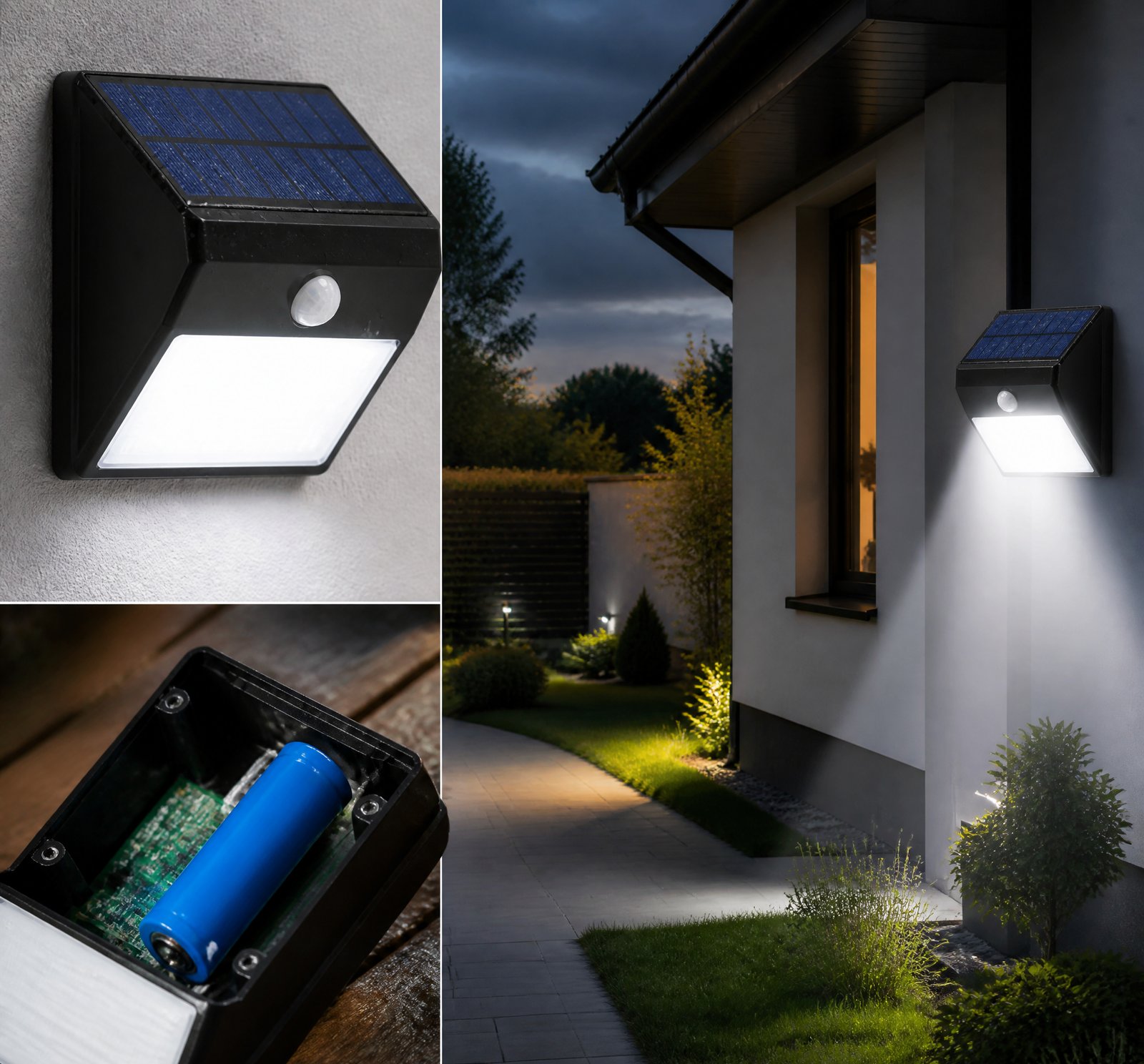
> Quick answer: For small polycrystalline solar garden lamps in Romania, tempered glass with UV-protective, anti-soiling coatings is the most reliable encapsulant material for enduring 5–10 years of harsh climate conditions [1][2]. PET and ETFE are less durable due to inferior UV resistance.
Romania’s variable climate offers a unique challenge for solar lamp durability. From intense UV exposure in summer to frequent hail and freeze–thaw cycles during winter, the encapsulant materials must endure these environmental factors over 5–10 years of use. This article explores which materials—tempered glass vs PET—are best suited for small polycrystalline panels used in garden lamps.
Tempered Glass: The Optimal Choice
Tempered glass is consistently recommended as the superior encapsulant material for solar garden lamps due to its robustness and UV resistance [1][2][6][7]. It offers unmatched durability against hail impacts, mechanical stress, and prolonged exposure to intense sunlight. In Romania’s sunny summers, where photolytic degradation can accelerate in polymers, tempered glass stands out as the most resilient option.
UV Resistance
Tempered glass boasts the highest UV resistance compared to PET, epoxy, or even ETFE [1][2][3]. This is crucial for maintaining the integrity of solar panels over long periods. The sacrificial foil concept described in one patent further reinforces the need for UV-absorbing materials that protect underlying cells from degradation [5].
Longevity and Durability
In Romania’s climate, tempered glass can last 5–10 years due to its superior mechanical resilience. It is significantly stronger than untempered glass, making it ideal for withstanding hail impacts and mechanical stress better than polymer films [6][7]. Additionally, tempered glass can be coated with anti-reflective, hydrophobic, and anti-soiling layers that enhance light transmission and self-cleaning properties, thereby improving long-term performance [11][13][22].
PET: A Lower-Tier Alternative
PET (polyethylene terephthalate), often marketed as Mylar or polyester, is a common but lower-tier encapsulant in budget solar lamps. While more durable than basic epoxy coatings, PET has the least UV resistance of any option and is not recommended for long-term outdoor use [1][2]. Manufacturers typically do not offer guarantees beyond two years for PET-based panels, despite potential real-world longevity [3][4].
Limitations
PET’s inferior UV resistance makes it ill-suited for Romania’s climate. The high UV index during summer and seasonal temperature extremes accelerate the degradation of PET over time. Additionally, there is a lack of empirical data on how freeze–thaw cycles affect PET in Romanian conditions [3][4], making long-term performance uncertain.
ETFE: A Costly Compromise
ETFE (ethylene tetrafluoroethylene) is considered a better alternative to PET due to its superior UV resistance and lighter weight. However, it still falls short of tempered glass’s UV resistance and can introduce delamination risks under thermal cycling [1][2]. High-quality versions are only expected to last five years outdoors—falling short of the decade-long durability needed.
Comparison Table
| Material | UV Resistance | Durability | Weight |
|–––-|–––––|––––|–––|
| Tempered Glass | Highest [1] | Exceptional [6] | Heavier [2] |
| PET (Mylar) | Lowest [1] | Moderate [4] | Lighter [2] |
| ETFE | Superior to PET [1] | Good [3] | Lightest [2] |
Key Takeaways
- Tempered glass offers the highest UV resistance and durability for solar garden lamps in Romania.
- PET is less durable due to inferior UV protection and lacks long-term guarantees.
- ETFE provides a balance between cost and performance but falls short of tempered glass’s longevity.
References
- [1] Solar_cell_outdoor_longevity_-_EEVblog__76d43900 — reddit
source passage
last up to 10 years in the sun with minimal power degradation. The urethane coating is poured or "potted" on the solar cells and leads to a highly waterproof panel. Each individual cell is completely encapsulated by the urethane. ETFE: Slightly less UV resistance than urethane, but lighter weight. ETFE and EVA are attached to the cells via a lamination process. With high quality materials (there is a difference in the production quality of ETFE and EVA), these panels have an expected life of 5 years outside. Epoxy or PET: Panels made with these coatings will be inexpensive, but we don't recommend this coating as it tends to have a relatively short lifetime. They are the least UV resistant of any of the options. Glass: Most UV resistant, but also the heaviest and can be challenging to mount in a streamlined manner. More marketing 'information': https://qookka.com/en/blog/etfe-and-pet-two-key-materials-in-the-field-of-semi-flexible-panels-n3 Here is another report about a 3M topcover material: https://www.osti.gov/servlets/purl/1166732 Although not particularly relevant to your problem, it would be interesting to know peoples experience with garden solar lights which are usually either epoxy encapsulated crystalline cells or amorphous glass panels. The former tend to crack or go cloudy with time and the latter suffer water damage – but I bet some people will have panels that worked fine for 5+ years whilst others have had numerous failures after only a year or so.
- [2] Solar_cell_outdoor_longevity_-_EEVblog__76d43900 — authority
source passage
last up to 10 years in the sun with minimal power degradation. The urethane coating is poured or "potted" on the solar cells and leads to a highly waterproof panel. Each individual cell is completely encapsulated by the urethane. ETFE: Slightly less UV resistance than urethane, but lighter weight. ETFE and EVA are attached to the cells via a lamination process. With high quality materials (there is a difference in the production quality of ETFE and EVA), these panels have an expected life of 5 years outside. Epoxy or PET: Panels made with these coatings will be inexpensive, but we don't recommend this coating as it tends to have a relatively short lifetime. They are the least UV resistant of any of the options. Glass: Most UV resistant, but also the heaviest and can be challenging to mount in a streamlined manner. More marketing 'information': https://qookka.com/en/blog/etfe-and-pet-two-key-materials-in-the-field-of-semi-flexible-panels-n3 Here is another report about a 3M topcover material: https://www.osti.gov/servlets/purl/1166732 Although not particularly relevant to your problem, it would be interesting to know peoples experience with garden solar lights which are usually either epoxy encapsulated crystalline cells or amorphous glass panels. The former tend to crack or go cloudy with time and the latter suffer water damage – but I bet some people will have panels that worked fine for 5+ years whilst others have had numerous failures after only a year or so.
- [3] Solar_cell_outdoor_longevity_-_EEVblog__76d43900 — reddit
source passage
# EEVblog® Electronics Community Forum Source: Blog/Web URL: https://www.eevblog.com/forum/projects/solar-cell-outdoor-longevity/ Author: Author Date: 2018-12-01 There are at least 3 main enemies here – UV degradation of the transparent cover, sealing against water ingress and damage due to thermal expansion/contraction cycles including seal failure, delamination and mechanical breakage of cells or interconnections. The panels you linked use PET which are better than the cheapest epoxy panels but I doubt that you'd get any manufacturer to guarantee them for much more than two years (they may well last much longer in practice for many users of course). ETFE is better, but more expensive than PET; glass is the best. It's not easy to find independant studies on the lifetimes of the various materials but module manufacturers and distributers put out marketing statements which may provide some guidance. The numbers vary wildly though with some claiming 25 year lifetimes for ETFE and others say 5 years. Similarly for PET (2 to 5 years). The actual operating conditions are going to have a big impact – a panel facing north in a location with lots of cloud cover (eg. northern europe) is going to be exposed to very much lower UV than one facing the sun in sunny climes. The temperature and water exposure conditions are going to be very different as well and thus it is very difficult for a manufacturer to specify how long a panel will last. I think you will need to look for panels with E
- [4] Solar_cell_outdoor_longevity_-_EEVblog__76d43900 — authority
source passage
# EEVblog® Electronics Community Forum Source: Blog/Web URL: https://www.eevblog.com/forum/projects/solar-cell-outdoor-longevity/ Author: Author Date: 2018-12-01 There are at least 3 main enemies here – UV degradation of the transparent cover, sealing against water ingress and damage due to thermal expansion/contraction cycles including seal failure, delamination and mechanical breakage of cells or interconnections. The panels you linked use PET which are better than the cheapest epoxy panels but I doubt that you'd get any manufacturer to guarantee them for much more than two years (they may well last much longer in practice for many users of course). ETFE is better, but more expensive than PET; glass is the best. It's not easy to find independant studies on the lifetimes of the various materials but module manufacturers and distributers put out marketing statements which may provide some guidance. The numbers vary wildly though with some claiming 25 year lifetimes for ETFE and others say 5 years. Similarly for PET (2 to 5 years). The actual operating conditions are going to have a big impact – a panel facing north in a location with lots of cloud cover (eg. northern europe) is going to be exposed to very much lower UV than one facing the sun in sunny climes. The temperature and water exposure conditions are going to be very different as well and thus it is very difficult for a manufacturer to specify how long a panel will last. I think you will need to look for panels with E
- [5] EP2754186A2_-_Collapsible_photovoltaic_module_for_-_Google_Patents__3d397480 — patent
source passage
in the relevant range of optical wavelengths (e.g. -400 nm to -1200 nm in the case of silicon), but it should also be strongly absorbing in the ultraviolet wavelength range (i.e. for wavelengths below -390 nm) in order to protect the underlying modules from UV-induced degradation. Such a sacrificial foil also provides extra protection against other types of weathering (such as that brought about by liquid water during rain) and also protects the modules from mechanical damage from for example sand storms, birds, hail or similar environmental factors. The sacrificial foil may be locally perforated or otherwise permeable to allow water, including trapped moisture, to escape. It is expected that although a sacrificial foil will need to be replaced with regular temporal intervals due to its own weathering its usage will allow the modules to constructed out of cheaper and perhaps more environmentally benign materials. Examples for such materials are PET/PETG, PVC (Polyvinyl Chloride), PC, PMMA, HDPE (High-Density PolyEthylene), LDPE (Low-Density PolyEthylene), PLA (PolyLactic Acid) or other transparent or translucent materials as frontal layer. Finally, a sacrificial foil may itself assist in the immobilization of the underlying modules; optionally in a combination with a system of guy wires and pegs in case of particularly challenging local weather conditions. It is also possible to metallize parts of the PV-module internally with for example aluminium (Al) or chromium (Cr) with
- [6] US8864897B2_-_Anti-reflective_and_anti-soiling_coatings_with__0ef42887 — patent
source passage
cause long term reliability problems when leached out by water. Other techniques to solve this problem are to deplete these ions in thin layers of the glass surface. Solar glass may also be coated with a reflective surface to form a mirror. Solar glass may be tempered or untempered. Tempered glass is significantly stronger, and solar panels manufactured using it typically only need one sheet of glass. Solar panels manufactured with untempered front glass typically need a back sheet of tempered glass to meet strength and safety requirements. Many thin-film solar photovoltaic technologies also use the front glass as a substrate upon which they deposit materials that comprise the solar cell. The processes used during the manufacturer of the solar cell may adversely affect the properties of any existing coatings on the glass, or existing coatings may interfere with the solar cell manufacturing process. The present invention is completely tolerant of the type of glass selected by the solar panel manufacturer. It works equally well on float or rolled glass. It is not affected by the presence tin contamination on float glass. One critical issue for solar panel manufacturers that use ITO (or similar) coated glass is tempering. It is very difficult to achieve low-cost, high quality ITO coated tempered glass. Therefore solar panel manufacturers that requite ITO coated glass use untempered glass, necessitating the use of a second sheet of tempered glass on the back side of the solar pan
- [7] US9259662B2_-_Photovoltaic_panel-interfaced_solar-greenhouse__c7a2275d — patent
source passage
advantages of the materials include design flexibility, corrosion and chemical resistance and reduction of secondary finishing operations in manufacturing of the photovoltaic-panel-interfaced solar-greenhouse distillation systems. – the heat-conducting transparent plate, film or membrane is made from a wide range of heat-conducting transparent materials that are selected from the group consisting of colorless glass, borosilicate glass, Pyrex glass, sol-gel, silicone rubber, quartz mineral, transparent cellulose nanofiber/epoxy resin nanocomposites, glass-ceramic, transparent ceramics and combinations thereof. – Many of the commercially available photovoltaic panels or modules often have a sheet of protective glass on the front, i.e., sun up, side, allowing light to pass while protecting the semiconductor wafers from environmental elements such as rain, hail and dusts. – the transparent vapor-condensing solarhouse ceiling is made from a number of transparent materials selected from the group consisting of colorless or clear transparent plastics, such as Acrylic (polymethylamethacrylate), Butyrate (cellulose acetate butyrate), Lexan (polycarbonate), and PETG (glycol modified polyethylene terephthalate), polypropylene, polyethylene (or polyethene) and polyethylene HD, thermally conductive transparent plastics, colorless and transparent conductive paint, colorless glass, borosilicate glass, Pyrex glass, sol-gel, silicone rubber, quartz mineral, transparent cellulose nanofiber/epo
- [11] US9353268B2_-_Anti-reflective_and_anti-soiling_coatings_for__cb3a4dd1 — patent
source passage
coatings are normally used in glasses, acrylics, and other transparent materials that serve as windows and glass panels associated with architectural structures or energy generating and saving systems. In building windows, they are used to maximize influx of incident light to maintain proper lighting or natural ambience as well as to minimize distracting reflections from glass surfaces. In energy generating and saving devices, such as solar panels and light collectors, the utility of anti-reflective coatings lies in the enhanced efficiency of these devices due to a greater degree of light transmittance and, therefore, increased energy generation for the same cost. – the dirt on ambiently exposed optical elements may be somewhat removed based upon natural cleaning phenomenon such as rain. – rain water is only effective at removing loosely (physically) held particulate matter and is not able to remove the particulate matter that may be strongly (chemically) bonded to optical element, such as the glass or window surfaces. – rain water usually contains dissolved matter that is absorbed from the environment during its descent that can leave a visible film when dried. – FIG. 3 a is an SEM cross-sectional view of a coating made from the composition of Example 1 on a glass slide substrate. – FIG. 4 a is an SEM cross-sectional view of a coating made from the composition of Example 2 on a glass slide substrate. – FIG. 4 b is a SEM oblique view of a coating made from the composition of
- [13] US9353268B2_-_Anti-reflective_and_anti-soiling_coatings_for__cb3a4dd1 — patent
source passage
coated glass-based article suitable for use as outer cover of a solar module assembly that is anti-reflective, hydrophobic and/or oleophobic and exhibits resistance to abrasion, uv light, heat, humidity, corrosives such as acids, bases, salts, and cleaning agents such as detergents, surfactants, solvents and other abrasives. Various embodiments of the disclosure are described below in conjunction with the Figures; however, this description should not be viewed as limiting the scope of the present disclosure. Rather, it should be considered as exemplary of various embodiments that fall within the scope of the present disclosure as defined by the claims. Further, it should also be appreciated that references to “the disclosure” or “the present disclosure” should not be construed as meaning that the description is directed to only one embodiment or that every embodiment must contain a given feature described in connection with a particular embodiment or described in connection with the use of such phrases. In fact, various embodiments with common and differing features are described herein. The present disclosure is generally directed to coatings that provide a combination of benefits including anti-reflective properties, anti-soiling properties, self-cleaning properties and manufacturing flexibility as well as other benefits. Accordingly, the coatings of the present disclosure may be used on substrates, such as transparent substrates, to increase the light transmittance through
- [22] US8864897B2_-_Anti-reflective_and_anti-soiling_coatings_with__0ef42887 — patent
source passage
for coatings made according to some embodiments of the present invention. – FIG. 10 illustrates the results of accelerated soiling studies on dirt adhesion for coatings made according to some embodiments of the present invention. – the present invention is generally directed to coatings that provide a combination of benefits including anti-reflective properties, anti-soiling properties, self cleaning properties and manufacturing flexibility as well as other benefits. Accordingly, the coatings of the present invention may be used on substrates, such as transparent substrates, to increase the light transmittance through the substrates. In particular, the coatings may be used on transparent substrates such as glass or the front cover glass of solar panels. – solar glass used in solar energy generation – solar energy generation includes solar photovoltaic and solar thermal, wherein solar insulation is used to produce heat either as an end-point or as an intermediate step to generate electricity. – solar glass may be used in any application where maximal transmission of solar energy through the glass is desired such as for example in greenhouses. – solar glass is high transmission low iron glass. It may be either float glass, that is, flat glass sheets formed on a molten tin bath, or rolled glass wherein the flat glass is formed by the action of rollers. Float glass is often characterized by the presence of tin contamination on the bottom (“tin side”) of the glass. – Rolled glass
last up to 10 years in the sun with minimal power degradation. The urethane coating is poured or "potted" on the solar cells and leads to a highly waterproof panel. Each individual cell is completely encapsulated by the urethane. ETFE: Slightly less UV resistance than urethane, but lighter weight. ETFE and EVA are attached to the cells via a lamination process. With high quality materials (there is a difference in the production quality of ETFE and EVA), these panels have an expected life of 5 years outside. Epoxy or PET: Panels made with these coatings will be inexpensive, but we don't recommend this coating as it tends to have a relatively short lifetime. They are the least UV resistant of any of the options. Glass: Most UV resistant, but also the heaviest and can be challenging to mount in a streamlined manner. More marketing 'information': https://qookka.com/en/blog/etfe-and-pet-two-key-materials-in-the-field-of-semi-flexible-panels-n3 Here is another report about a 3M topcover material: https://www.osti.gov/servlets/purl/1166732 Although not particularly relevant to your problem, it would be interesting to know peoples experience with garden solar lights which are usually either epoxy encapsulated crystalline cells or amorphous glass panels. The former tend to crack or go cloudy with time and the latter suffer water damage – but I bet some people will have panels that worked fine for 5+ years whilst others have had numerous failures after only a year or so.
last up to 10 years in the sun with minimal power degradation. The urethane coating is poured or "potted" on the solar cells and leads to a highly waterproof panel. Each individual cell is completely encapsulated by the urethane. ETFE: Slightly less UV resistance than urethane, but lighter weight. ETFE and EVA are attached to the cells via a lamination process. With high quality materials (there is a difference in the production quality of ETFE and EVA), these panels have an expected life of 5 years outside. Epoxy or PET: Panels made with these coatings will be inexpensive, but we don't recommend this coating as it tends to have a relatively short lifetime. They are the least UV resistant of any of the options. Glass: Most UV resistant, but also the heaviest and can be challenging to mount in a streamlined manner. More marketing 'information': https://qookka.com/en/blog/etfe-and-pet-two-key-materials-in-the-field-of-semi-flexible-panels-n3 Here is another report about a 3M topcover material: https://www.osti.gov/servlets/purl/1166732 Although not particularly relevant to your problem, it would be interesting to know peoples experience with garden solar lights which are usually either epoxy encapsulated crystalline cells or amorphous glass panels. The former tend to crack or go cloudy with time and the latter suffer water damage – but I bet some people will have panels that worked fine for 5+ years whilst others have had numerous failures after only a year or so.
# EEVblog® Electronics Community Forum Source: Blog/Web URL: https://www.eevblog.com/forum/projects/solar-cell-outdoor-longevity/ Author: Author Date: 2018-12-01 There are at least 3 main enemies here – UV degradation of the transparent cover, sealing against water ingress and damage due to thermal expansion/contraction cycles including seal failure, delamination and mechanical breakage of cells or interconnections. The panels you linked use PET which are better than the cheapest epoxy panels but I doubt that you'd get any manufacturer to guarantee them for much more than two years (they may well last much longer in practice for many users of course). ETFE is better, but more expensive than PET; glass is the best. It's not easy to find independant studies on the lifetimes of the various materials but module manufacturers and distributers put out marketing statements which may provide some guidance. The numbers vary wildly though with some claiming 25 year lifetimes for ETFE and others say 5 years. Similarly for PET (2 to 5 years). The actual operating conditions are going to have a big impact – a panel facing north in a location with lots of cloud cover (eg. northern europe) is going to be exposed to very much lower UV than one facing the sun in sunny climes. The temperature and water exposure conditions are going to be very different as well and thus it is very difficult for a manufacturer to specify how long a panel will last. I think you will need to look for panels with E
# EEVblog® Electronics Community Forum Source: Blog/Web URL: https://www.eevblog.com/forum/projects/solar-cell-outdoor-longevity/ Author: Author Date: 2018-12-01 There are at least 3 main enemies here – UV degradation of the transparent cover, sealing against water ingress and damage due to thermal expansion/contraction cycles including seal failure, delamination and mechanical breakage of cells or interconnections. The panels you linked use PET which are better than the cheapest epoxy panels but I doubt that you'd get any manufacturer to guarantee them for much more than two years (they may well last much longer in practice for many users of course). ETFE is better, but more expensive than PET; glass is the best. It's not easy to find independant studies on the lifetimes of the various materials but module manufacturers and distributers put out marketing statements which may provide some guidance. The numbers vary wildly though with some claiming 25 year lifetimes for ETFE and others say 5 years. Similarly for PET (2 to 5 years). The actual operating conditions are going to have a big impact – a panel facing north in a location with lots of cloud cover (eg. northern europe) is going to be exposed to very much lower UV than one facing the sun in sunny climes. The temperature and water exposure conditions are going to be very different as well and thus it is very difficult for a manufacturer to specify how long a panel will last. I think you will need to look for panels with E
in the relevant range of optical wavelengths (e.g. -400 nm to -1200 nm in the case of silicon), but it should also be strongly absorbing in the ultraviolet wavelength range (i.e. for wavelengths below -390 nm) in order to protect the underlying modules from UV-induced degradation. Such a sacrificial foil also provides extra protection against other types of weathering (such as that brought about by liquid water during rain) and also protects the modules from mechanical damage from for example sand storms, birds, hail or similar environmental factors. The sacrificial foil may be locally perforated or otherwise permeable to allow water, including trapped moisture, to escape. It is expected that although a sacrificial foil will need to be replaced with regular temporal intervals due to its own weathering its usage will allow the modules to constructed out of cheaper and perhaps more environmentally benign materials. Examples for such materials are PET/PETG, PVC (Polyvinyl Chloride), PC, PMMA, HDPE (High-Density PolyEthylene), LDPE (Low-Density PolyEthylene), PLA (PolyLactic Acid) or other transparent or translucent materials as frontal layer. Finally, a sacrificial foil may itself assist in the immobilization of the underlying modules; optionally in a combination with a system of guy wires and pegs in case of particularly challenging local weather conditions. It is also possible to metallize parts of the PV-module internally with for example aluminium (Al) or chromium (Cr) with
cause long term reliability problems when leached out by water. Other techniques to solve this problem are to deplete these ions in thin layers of the glass surface. Solar glass may also be coated with a reflective surface to form a mirror. Solar glass may be tempered or untempered. Tempered glass is significantly stronger, and solar panels manufactured using it typically only need one sheet of glass. Solar panels manufactured with untempered front glass typically need a back sheet of tempered glass to meet strength and safety requirements. Many thin-film solar photovoltaic technologies also use the front glass as a substrate upon which they deposit materials that comprise the solar cell. The processes used during the manufacturer of the solar cell may adversely affect the properties of any existing coatings on the glass, or existing coatings may interfere with the solar cell manufacturing process. The present invention is completely tolerant of the type of glass selected by the solar panel manufacturer. It works equally well on float or rolled glass. It is not affected by the presence tin contamination on float glass. One critical issue for solar panel manufacturers that use ITO (or similar) coated glass is tempering. It is very difficult to achieve low-cost, high quality ITO coated tempered glass. Therefore solar panel manufacturers that requite ITO coated glass use untempered glass, necessitating the use of a second sheet of tempered glass on the back side of the solar pan
advantages of the materials include design flexibility, corrosion and chemical resistance and reduction of secondary finishing operations in manufacturing of the photovoltaic-panel-interfaced solar-greenhouse distillation systems. – the heat-conducting transparent plate, film or membrane is made from a wide range of heat-conducting transparent materials that are selected from the group consisting of colorless glass, borosilicate glass, Pyrex glass, sol-gel, silicone rubber, quartz mineral, transparent cellulose nanofiber/epoxy resin nanocomposites, glass-ceramic, transparent ceramics and combinations thereof. – Many of the commercially available photovoltaic panels or modules often have a sheet of protective glass on the front, i.e., sun up, side, allowing light to pass while protecting the semiconductor wafers from environmental elements such as rain, hail and dusts. – the transparent vapor-condensing solarhouse ceiling is made from a number of transparent materials selected from the group consisting of colorless or clear transparent plastics, such as Acrylic (polymethylamethacrylate), Butyrate (cellulose acetate butyrate), Lexan (polycarbonate), and PETG (glycol modified polyethylene terephthalate), polypropylene, polyethylene (or polyethene) and polyethylene HD, thermally conductive transparent plastics, colorless and transparent conductive paint, colorless glass, borosilicate glass, Pyrex glass, sol-gel, silicone rubber, quartz mineral, transparent cellulose nanofiber/epo
coatings are normally used in glasses, acrylics, and other transparent materials that serve as windows and glass panels associated with architectural structures or energy generating and saving systems. In building windows, they are used to maximize influx of incident light to maintain proper lighting or natural ambience as well as to minimize distracting reflections from glass surfaces. In energy generating and saving devices, such as solar panels and light collectors, the utility of anti-reflective coatings lies in the enhanced efficiency of these devices due to a greater degree of light transmittance and, therefore, increased energy generation for the same cost. – the dirt on ambiently exposed optical elements may be somewhat removed based upon natural cleaning phenomenon such as rain. – rain water is only effective at removing loosely (physically) held particulate matter and is not able to remove the particulate matter that may be strongly (chemically) bonded to optical element, such as the glass or window surfaces. – rain water usually contains dissolved matter that is absorbed from the environment during its descent that can leave a visible film when dried. – FIG. 3 a is an SEM cross-sectional view of a coating made from the composition of Example 1 on a glass slide substrate. – FIG. 4 a is an SEM cross-sectional view of a coating made from the composition of Example 2 on a glass slide substrate. – FIG. 4 b is a SEM oblique view of a coating made from the composition of
coated glass-based article suitable for use as outer cover of a solar module assembly that is anti-reflective, hydrophobic and/or oleophobic and exhibits resistance to abrasion, uv light, heat, humidity, corrosives such as acids, bases, salts, and cleaning agents such as detergents, surfactants, solvents and other abrasives. Various embodiments of the disclosure are described below in conjunction with the Figures; however, this description should not be viewed as limiting the scope of the present disclosure. Rather, it should be considered as exemplary of various embodiments that fall within the scope of the present disclosure as defined by the claims. Further, it should also be appreciated that references to “the disclosure” or “the present disclosure” should not be construed as meaning that the description is directed to only one embodiment or that every embodiment must contain a given feature described in connection with a particular embodiment or described in connection with the use of such phrases. In fact, various embodiments with common and differing features are described herein. The present disclosure is generally directed to coatings that provide a combination of benefits including anti-reflective properties, anti-soiling properties, self-cleaning properties and manufacturing flexibility as well as other benefits. Accordingly, the coatings of the present disclosure may be used on substrates, such as transparent substrates, to increase the light transmittance through
for coatings made according to some embodiments of the present invention. – FIG. 10 illustrates the results of accelerated soiling studies on dirt adhesion for coatings made according to some embodiments of the present invention. – the present invention is generally directed to coatings that provide a combination of benefits including anti-reflective properties, anti-soiling properties, self cleaning properties and manufacturing flexibility as well as other benefits. Accordingly, the coatings of the present invention may be used on substrates, such as transparent substrates, to increase the light transmittance through the substrates. In particular, the coatings may be used on transparent substrates such as glass or the front cover glass of solar panels. – solar glass used in solar energy generation – solar energy generation includes solar photovoltaic and solar thermal, wherein solar insulation is used to produce heat either as an end-point or as an intermediate step to generate electricity. – solar glass may be used in any application where maximal transmission of solar energy through the glass is desired such as for example in greenhouses. – solar glass is high transmission low iron glass. It may be either float glass, that is, flat glass sheets formed on a molten tin bath, or rolled glass wherein the flat glass is formed by the action of rollers. Float glass is often characterized by the presence of tin contamination on the bottom (“tin side”) of the glass. – Rolled glass